Artwork
The two couples reach a foreign city where they make their home, from a Tuti-nama (Tales of a Parrot): Thirty-third Night
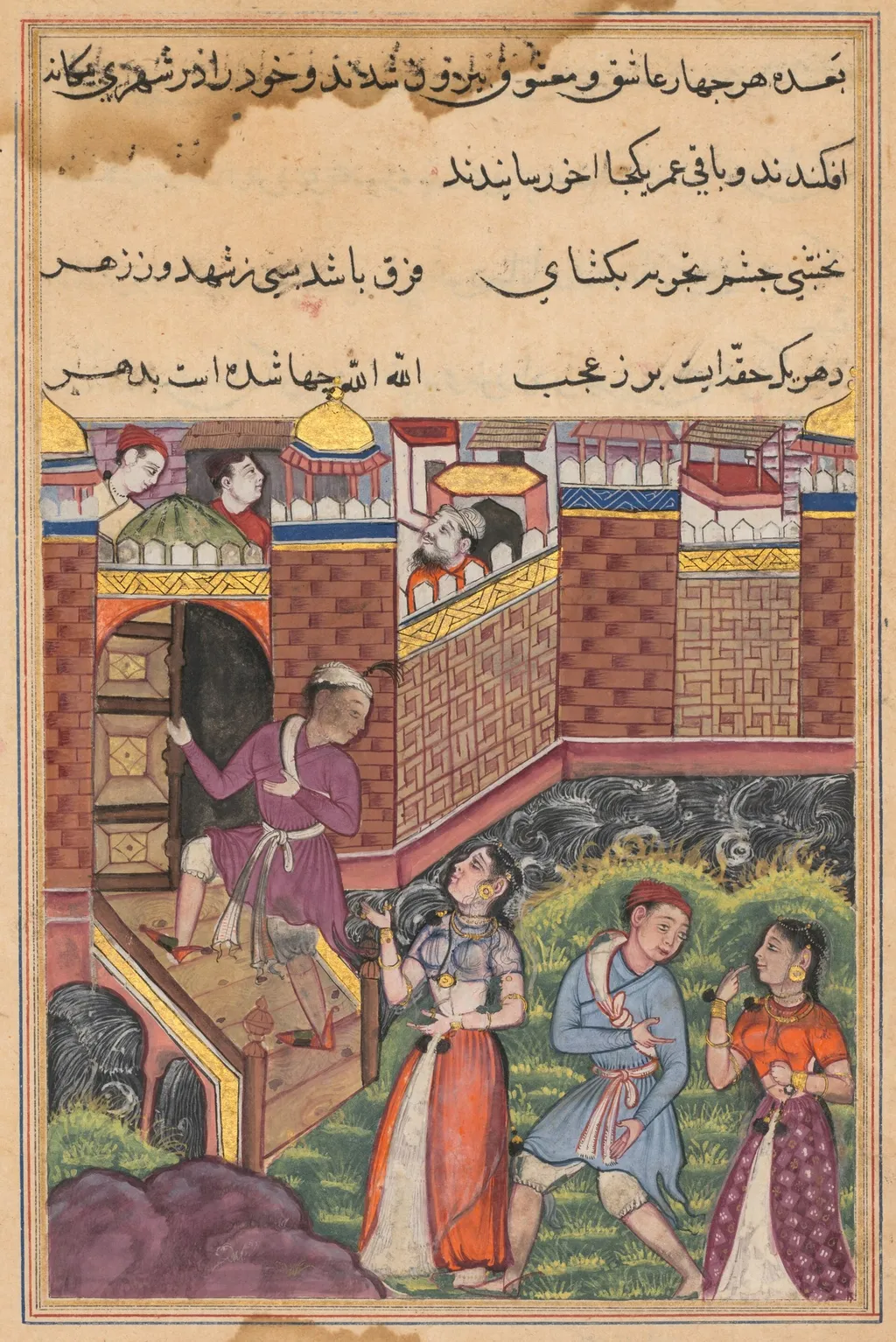
The two couples reach a foreign city where they make their home, from a Tuti-nama (Tales of a Parrot): Thirty-third Night is an unspecified painting. It dates from 1560 and is held in the collection of the Cleveland Museum of Art. The work illustrates a narrative episode from the Persian illustrated manuscript known as the Tuti‑nama, or "Tales of a Parrot.
About this work
Overview
The work illustrates a narrative episode from the Persian illustrated manuscript known as the Tuti‑nama, or "Tales of a Parrot." In this particular scene, four figures—two men and two women—are gathered outside a brick structure with arched windows and a domed roof, suggesting a settled urban setting.
Subject & Meaning
The composition captures the moment when two couples arrive in a foreign city and establish a home, a theme recurring in the tale’s thirty‑third night. The characters are engaged in casual interaction: a man in a purple robe leans on a balcony, another in blue trousers converses with a woman in orange, while a woman in white stands nearby and a figure in a green hat observes from above.
Technique & Style
Rendered in bright, flat pigments, the painting relies on bold color blocks rather than chiaroscuro to model form. The figures are outlined with clear lines, and the background features stylized trees and a dark, undulating area that may represent water or shadow, typical of Persian miniature conventions that prioritize decorative pattern over realistic depth.
History & Provenance
Created as part of a manuscript illumination, the piece originates from the Persian artistic tradition of the late medieval period. Though the exact date and workshop are uncertain, such illustrations were commonly produced for elite patrons and later entered European collections, eventually becoming part of the Cleveland Museum of Art’s holdings.
Context
The Tuti‑nama combines prose and poetry with elaborate miniatures to convey moral and romantic stories. This scene reflects the narrative’s focus on migration, settlement, and domestic harmony, themes that resonated with audiences across the Islamic world and later with collectors fascinated by exotic storytelling.
Artist & collection

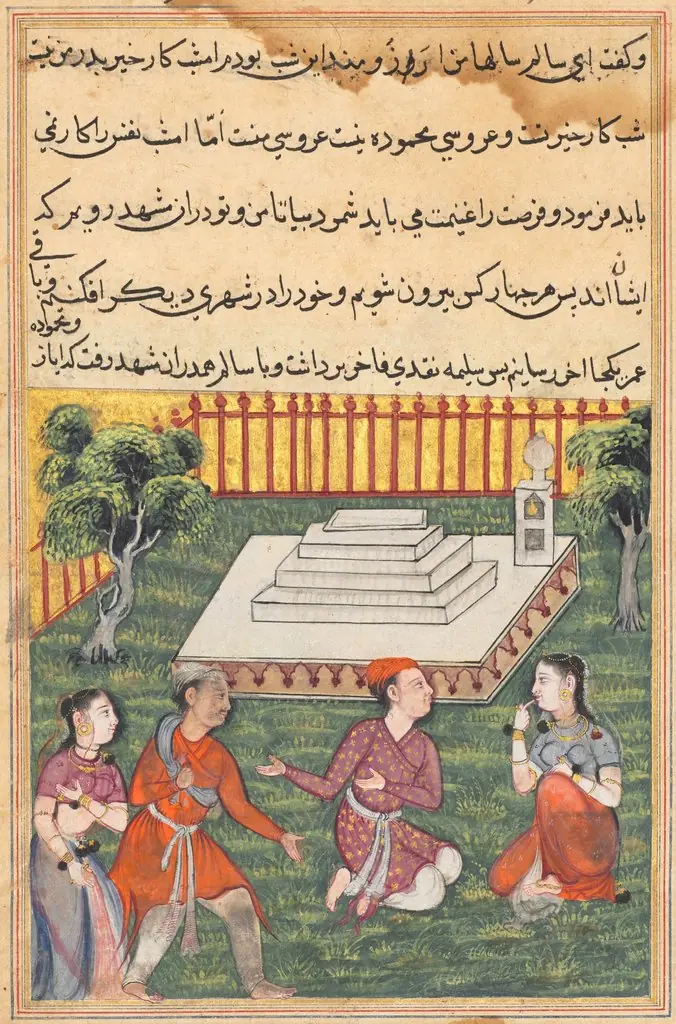 Salim and Salima return to Ayaz and Mahmuda in the sanctuary, from a Tuti-nama (Tales of a Parrot): Thirty-third Night
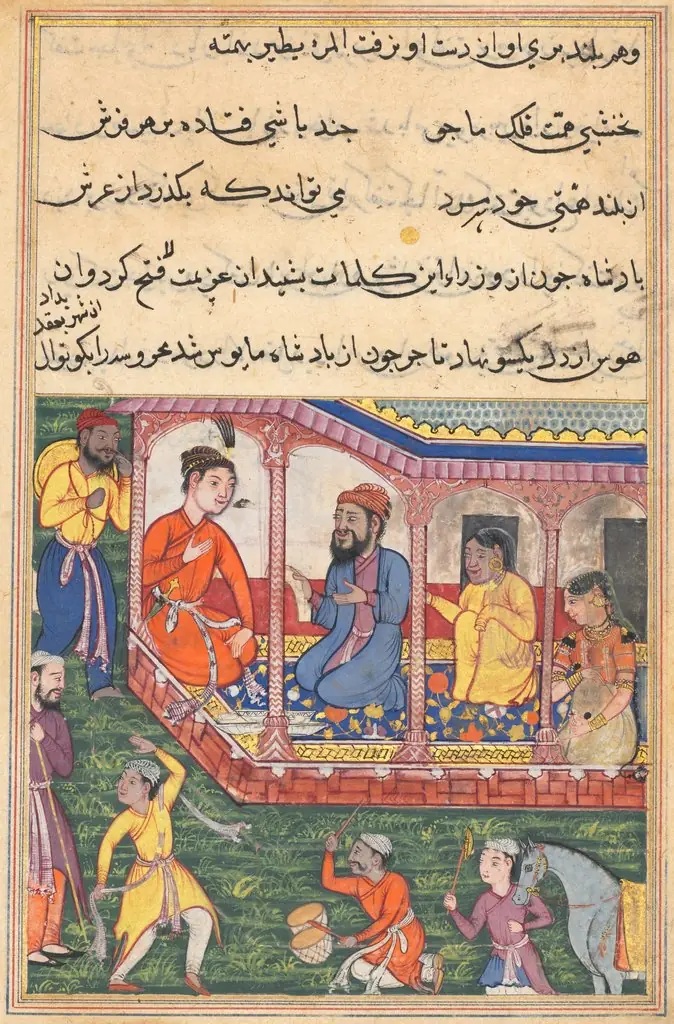 Mahrusa’s marriage to the prefect of the city, from a Tuti-nama (Tales of a Parrot): Thirty-sixth Night
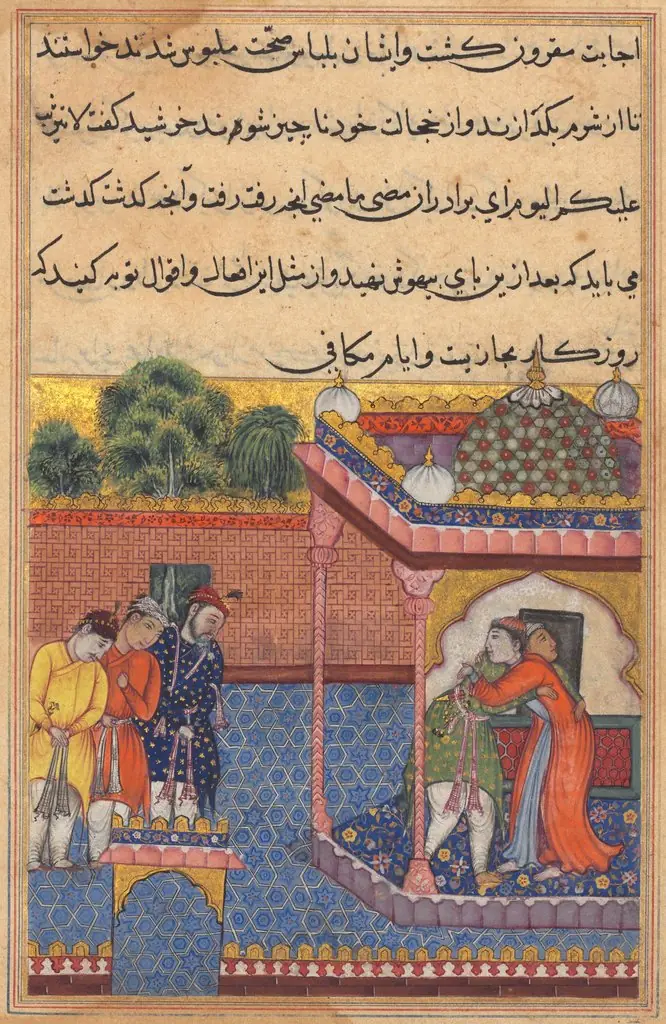 Khurshid reunited with her husband Utarid, from a Tuti-nama (Tales of a Parrot): Thirty-second Night
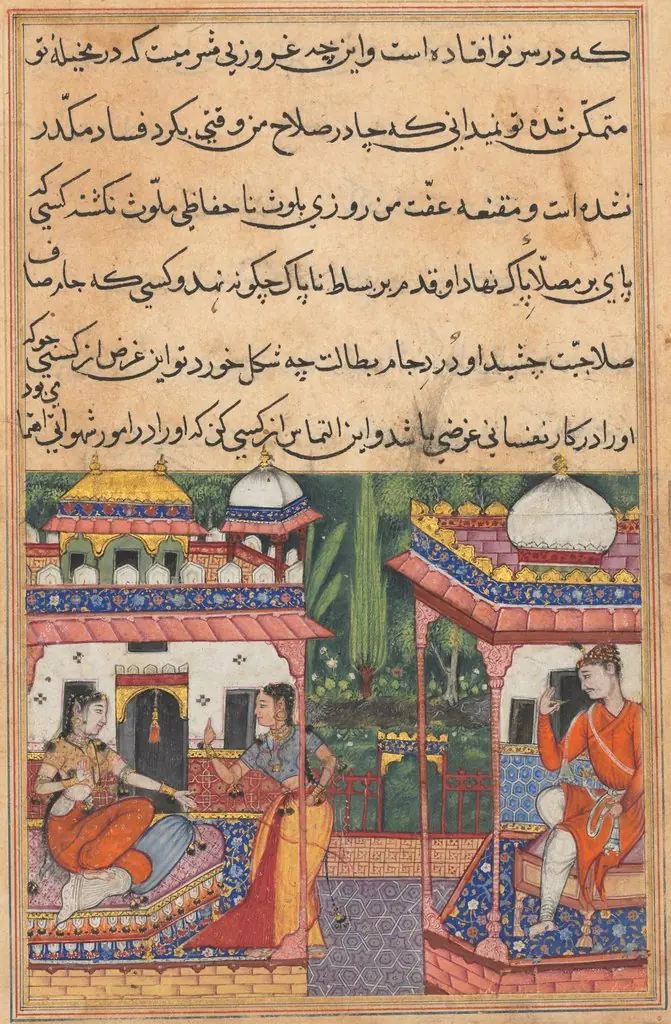 Kaiwan sends a message of love to Khurshid, wife of his brother Utarid who is away on a journey, from a Tuti-nama (Tales of a Parrot): Thirty-second Night
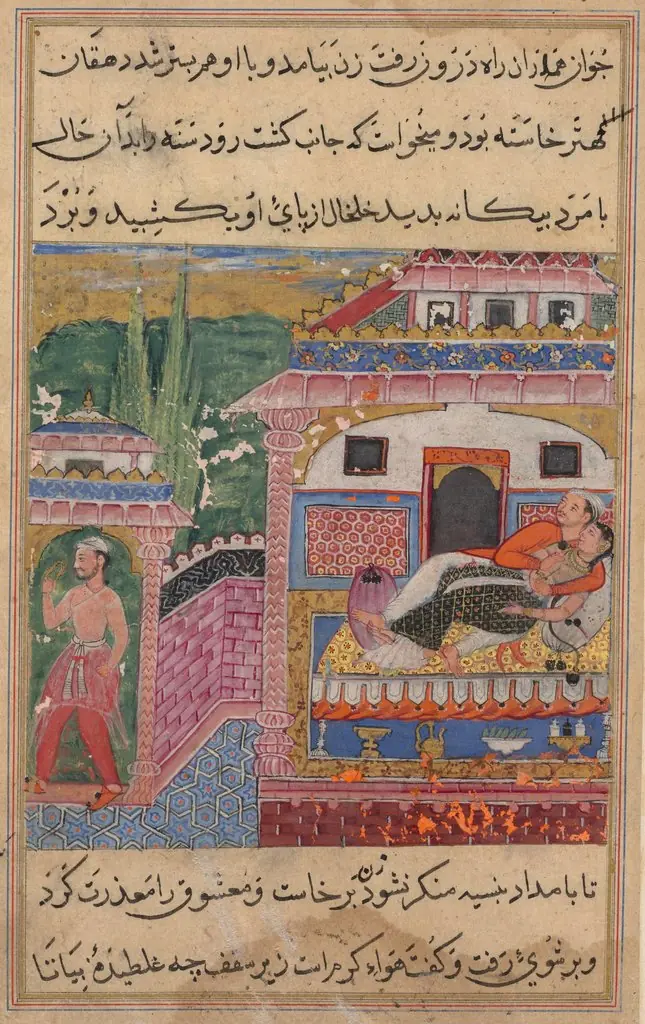 The deceitful wife persuades her husband to sleep in the same place where she had previously slept with her lover, from a Tuti-nama (Tales of a Parrot): Eighth Night
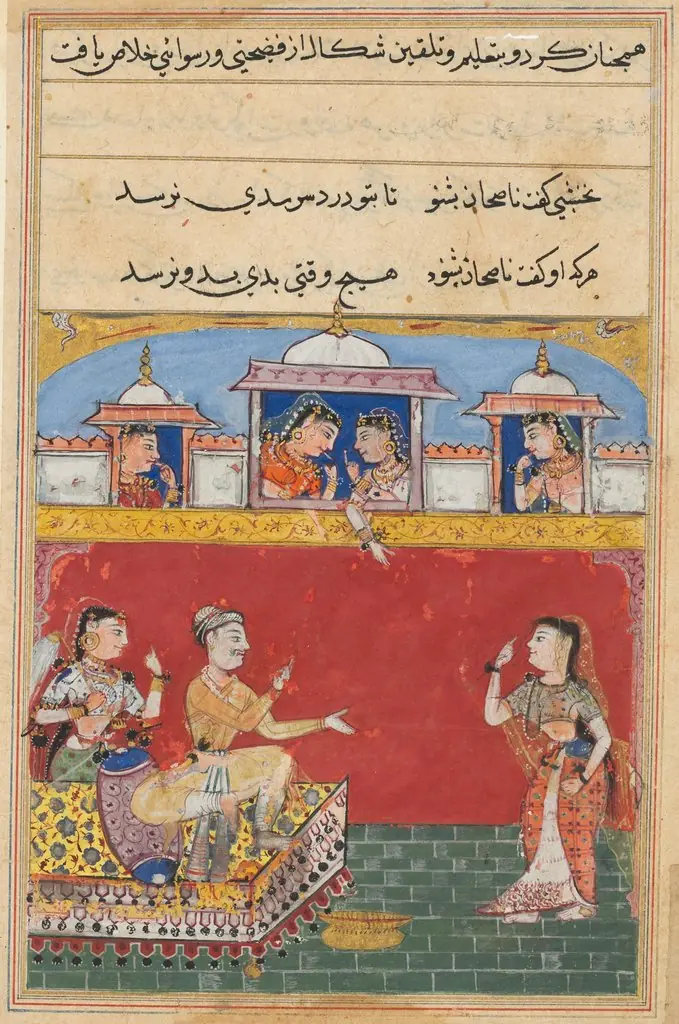 The daughter-in-law returns from her misadventure, feigning insanity, from a Tuti-nama (Tales of a Parrot): Sixteenth Night
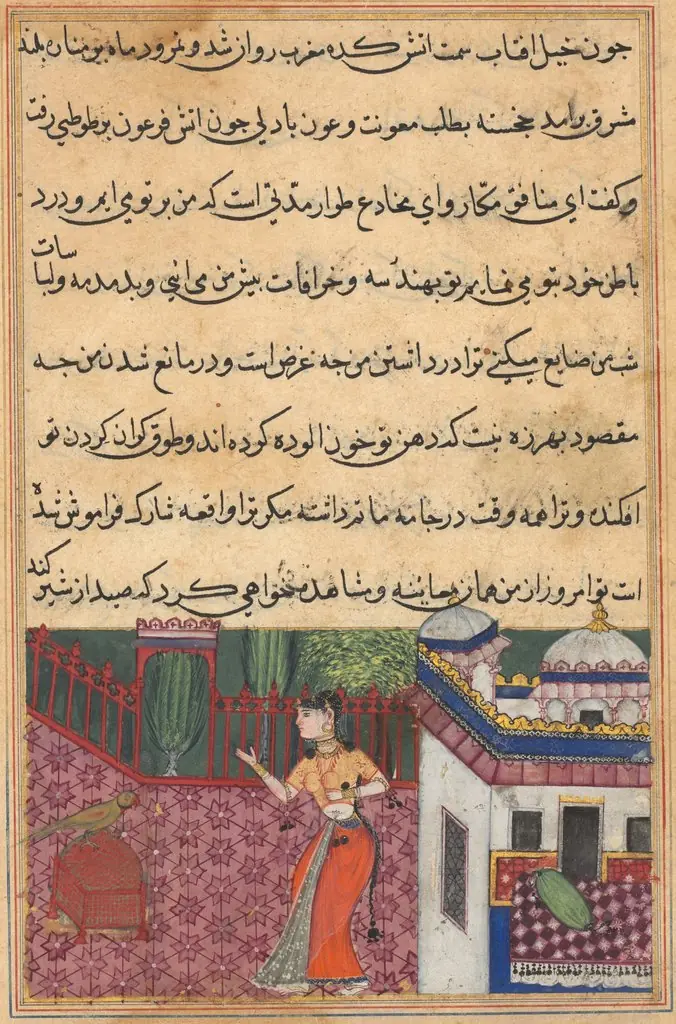 The parrot addresses Khujasta at the beginning of the thirty-third night, from a Tuti-nama (Tales of a Parrot)
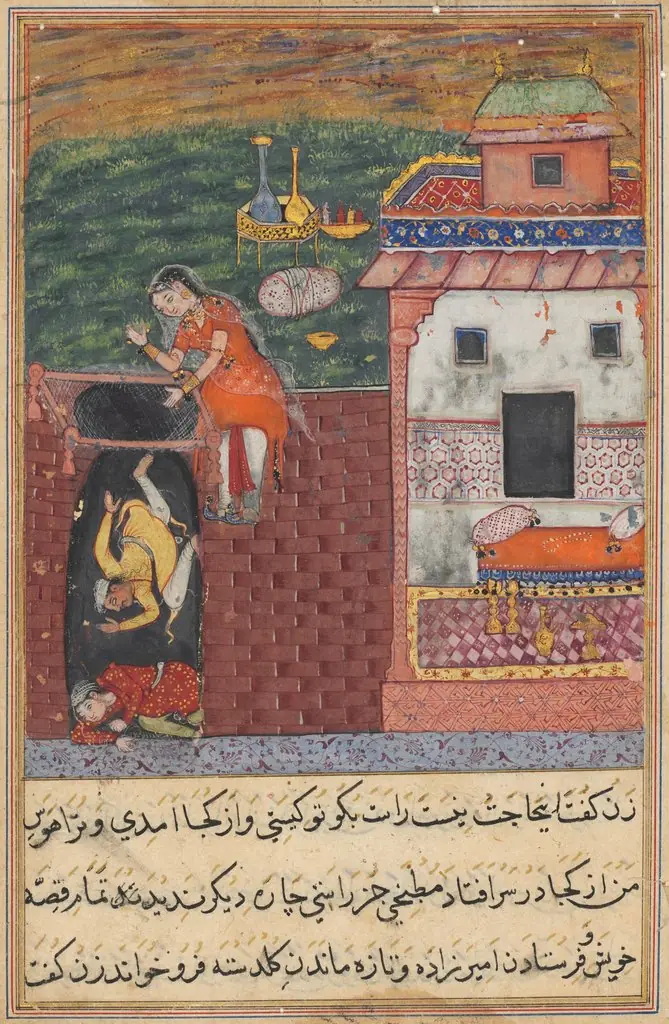 The two cooks, who attempt to seduce the warrior’s loyal wife, are trapped by her in a cellar, from a Tuti-nama (Tales of a Parrot): Fourth Night
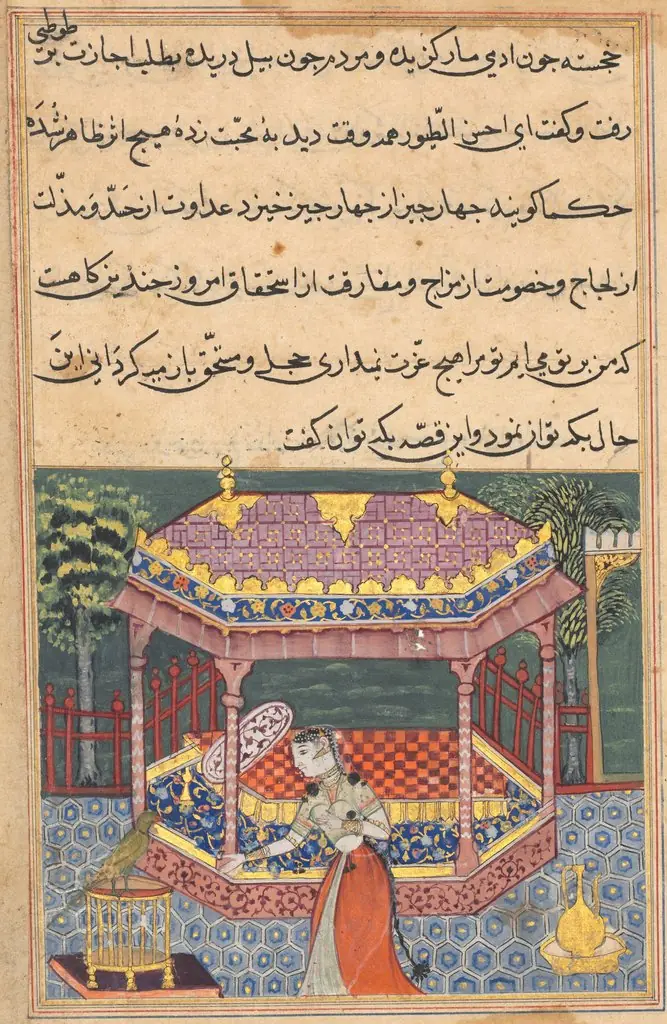 The parrot addresses Khujasta at the beginning of the thirty-seventh night, from a Tuti-nama (Tales of a Parrot)
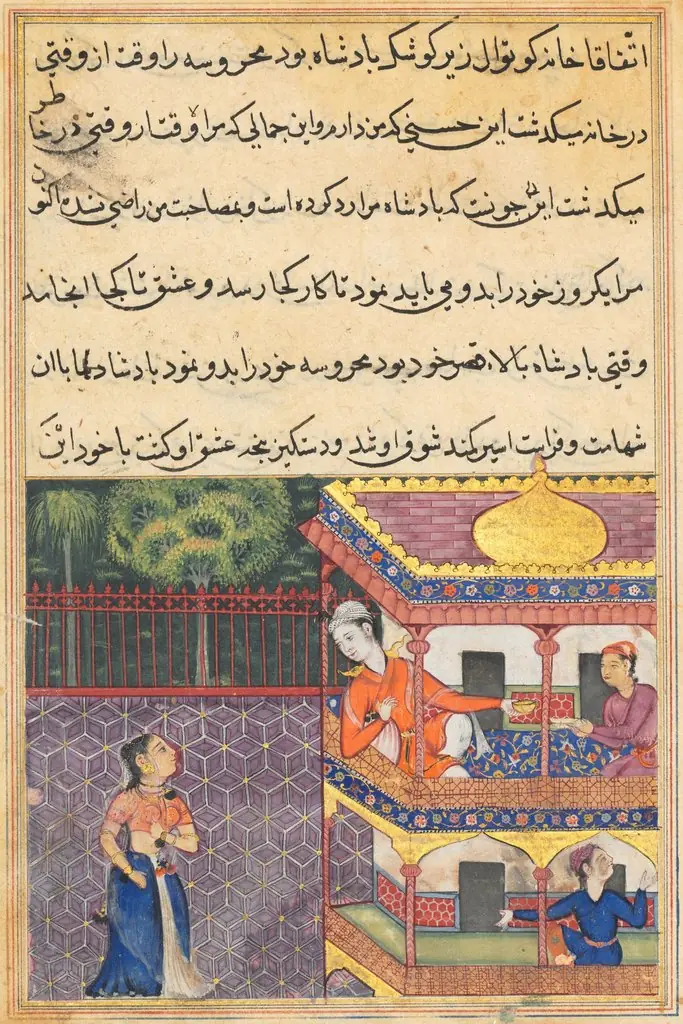 The king of Zabul sees Mahrusa from his palace balcony, from a Tuti-nama (Tales of a Parrot): Thirty-sixth Night
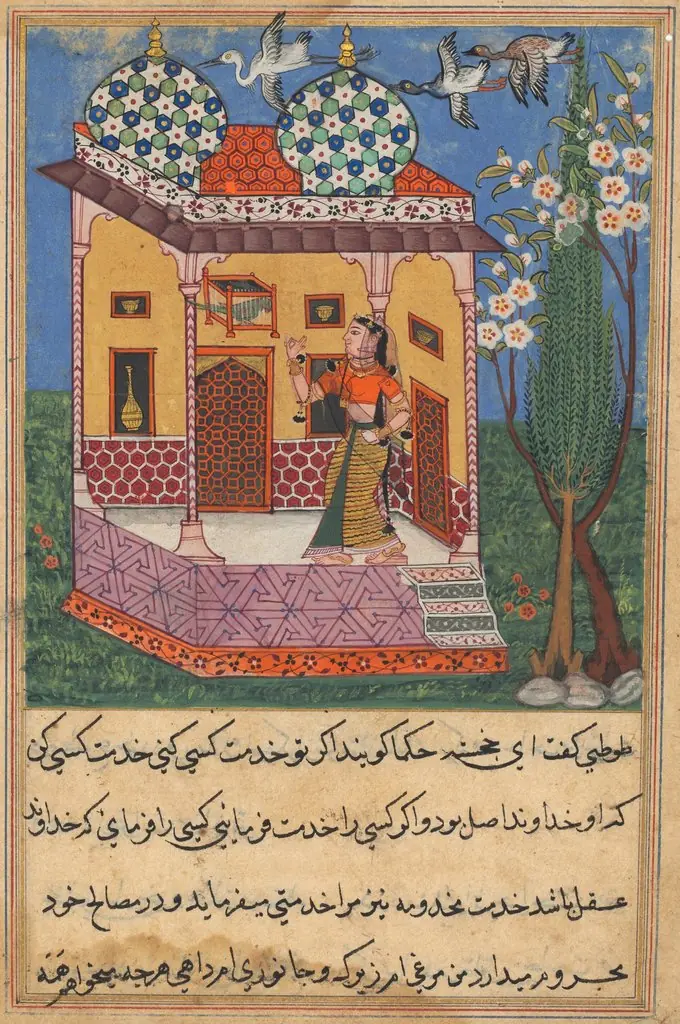 The Parrot Addresses Khujasta at the Beginning of the Twenty-sixth Night, from a Tuti-nama (Tales of a Parrot)
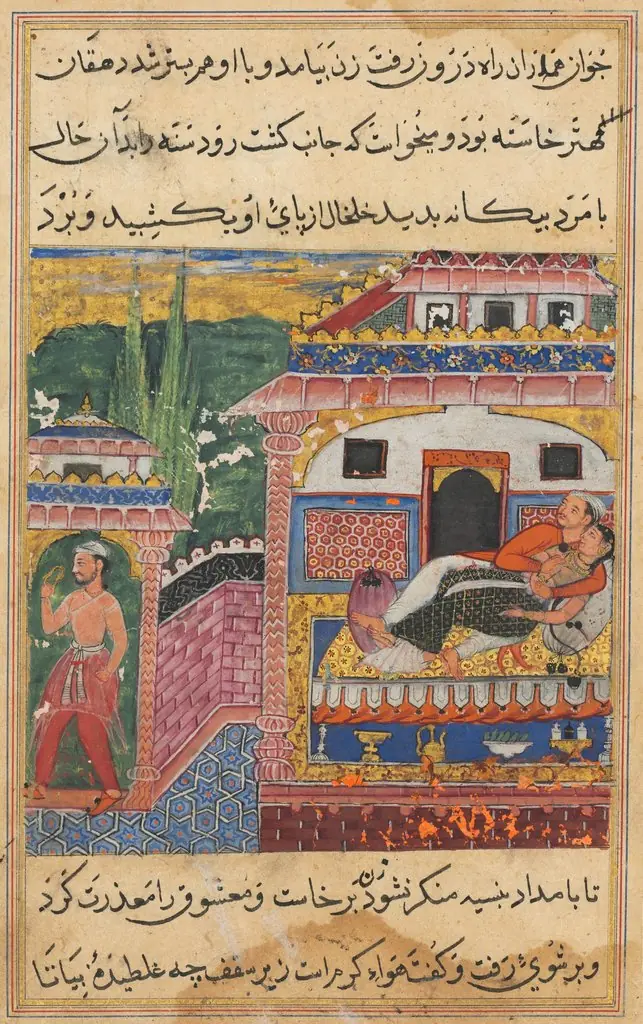 The farmer, father of the son with the deceitful wife, steals away with her anklet while she is in bed with her lover, from a Tuti-nama (Tales of a Parrot): Eighth Night
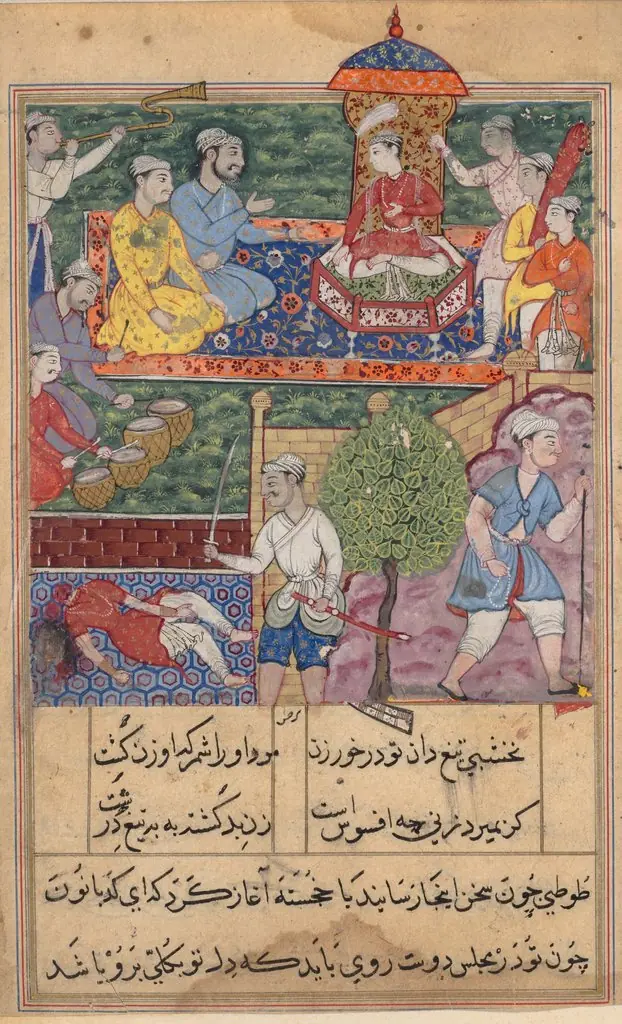 Page from Tales of a Parrot (Tuti-nama): text page
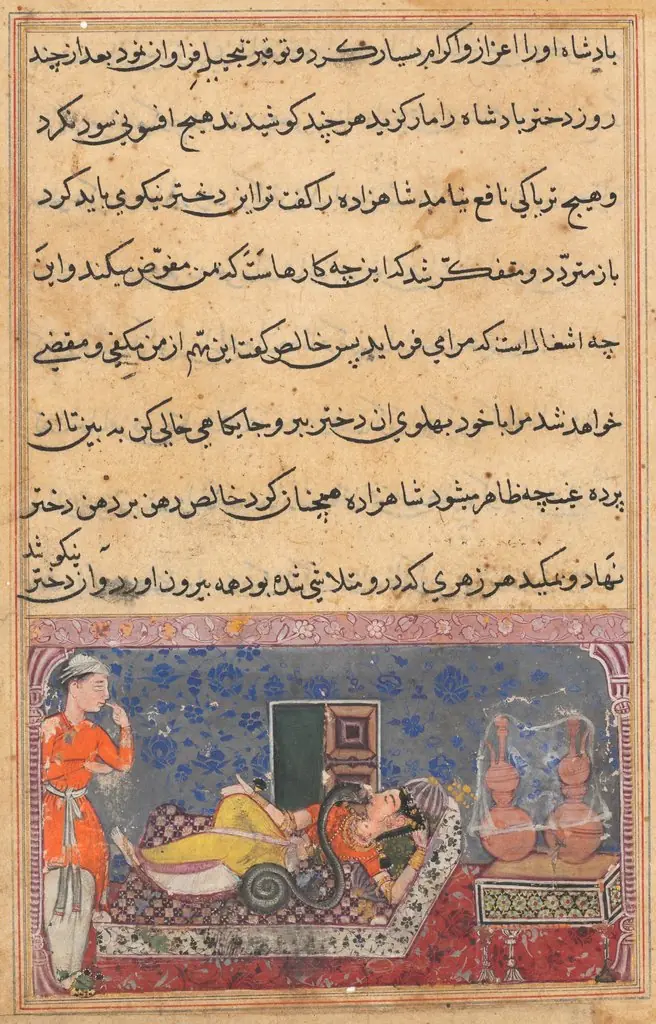 Khalis repays the prince for his kindness by changing into a snake and sucking the poison from the king’s daughter, from a Tuti-nama (Tales of a Parrot): Eighteenth Night