Artwork
Mahrusa’s marriage to the prefect of the city, from a Tuti-nama (Tales of a Parrot): Thirty-sixth Night
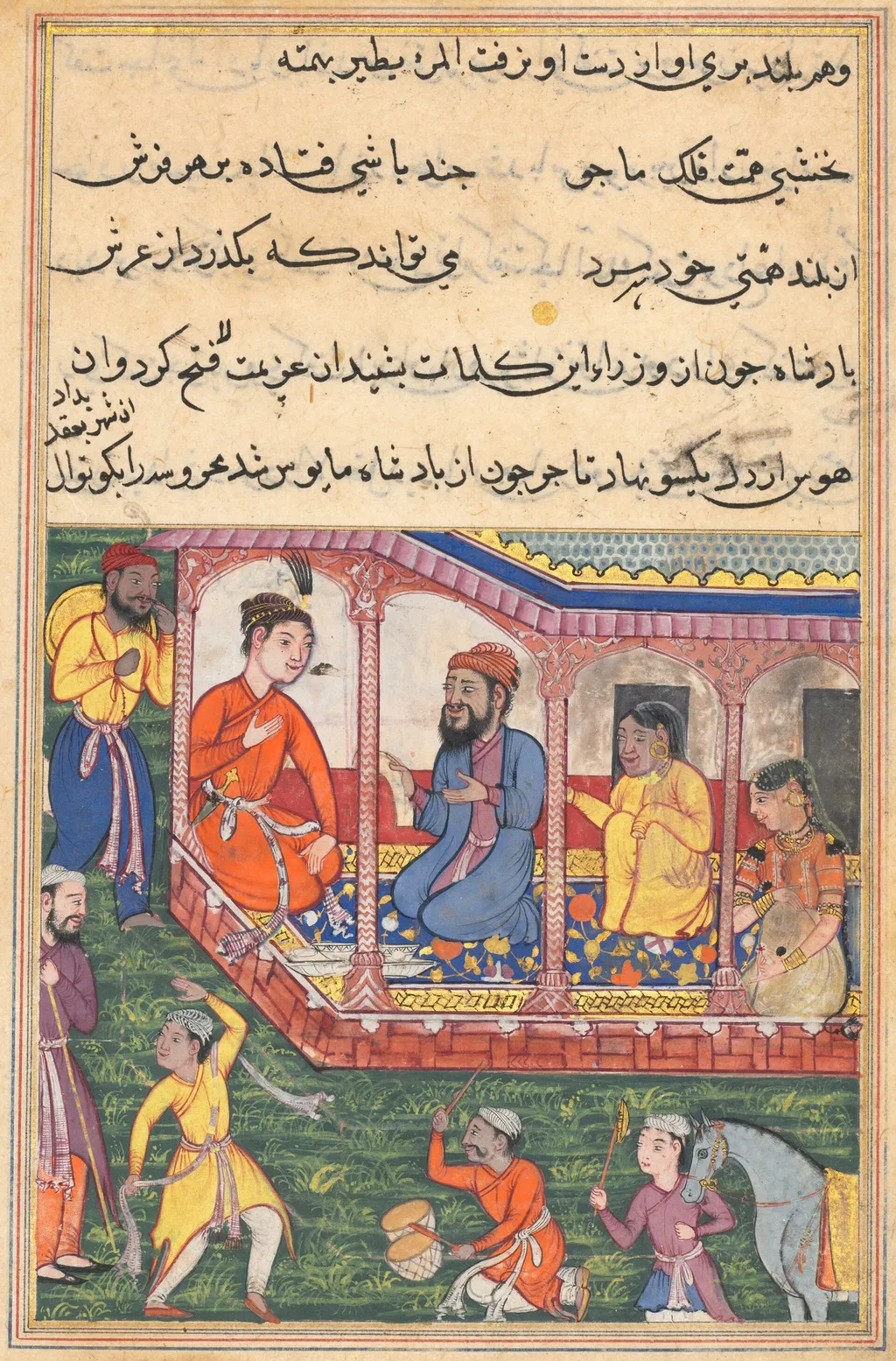
Mahrusa’s marriage to the prefect of the city, from a Tuti-nama (Tales of a Parrot): Thirty-sixth Night is an unspecified painting. It dates from 1560 and is held in the collection of the Cleveland Museum of Art.
About this work
Overview
The work illustrates a festive nuptial ceremony drawn from the thirty‑sixth night of the medieval Persian collection *Tuti‑nama* (Tales of a Parrot). Rendered in vivid hues, the scene captures a bustling celebration with a bride, groom, musicians, and attendants arranged around an ornate architectural backdrop.
Subject & Meaning
At the centre, a bride dressed in orange occupies a raised platform while her groom, clad in blue, leans toward her, emphasizing the intimate exchange of vows. Surrounding figures—musicians playing, servants caring for a horse—contribute to the communal atmosphere of marriage as a social and ceremonial rite.
Technique & Style
The composition employs bright, saturated pigments to differentiate clothing and architectural elements, creating a lively visual rhythm. Arabic calligraphic text crowns the scene, a typical feature of illustrated manuscripts of the period, linking image and narrative.
History & Provenance
The painting originates from a manuscript of the *Tuti‑nama*, a widely circulated collection of Persian tales that circulated throughout the Islamic world. Its Arabic inscription reflects the scriptural conventions of the era, and the piece is now part of the Cleveland Museum of Art’s collection.
Context
Illustrated manuscripts like this served both literary and decorative functions, providing visual accompaniment to stories that conveyed moral and cultural values. The depiction of a wedding aligns with the text’s focus on courtly life and social customs in medieval Persian society.
Legacy
As an example of Persian narrative art, the work demonstrates the integration of text and image that influenced later manuscript traditions across the Middle East and South Asia, informing contemporary understandings of medieval visual storytelling.
Artist & collection

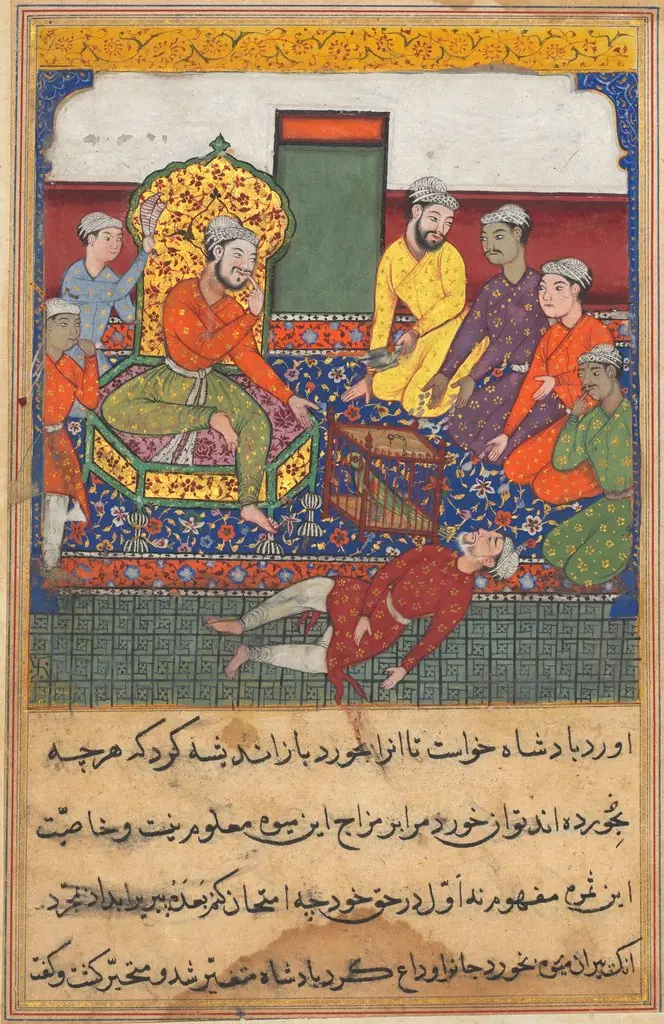 The old man eats of the fruit of the Tree of Life, but drops dead, from a Tuti-nama (Tales of a Parrot): Ninth Night
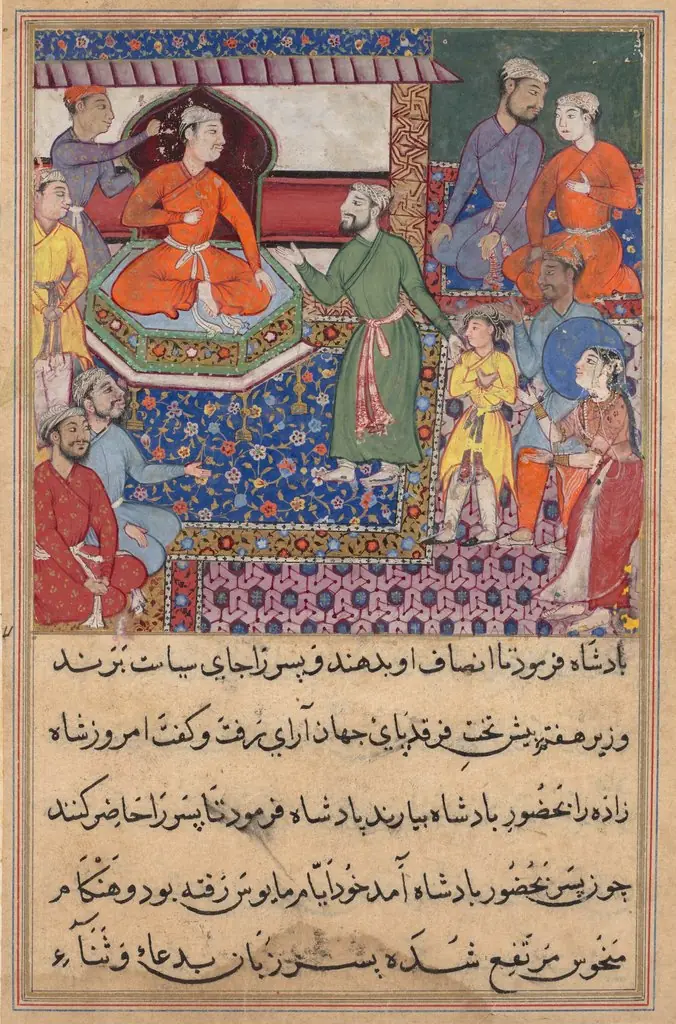 Page from Tales of a Parrot (Tuti-nama): text page
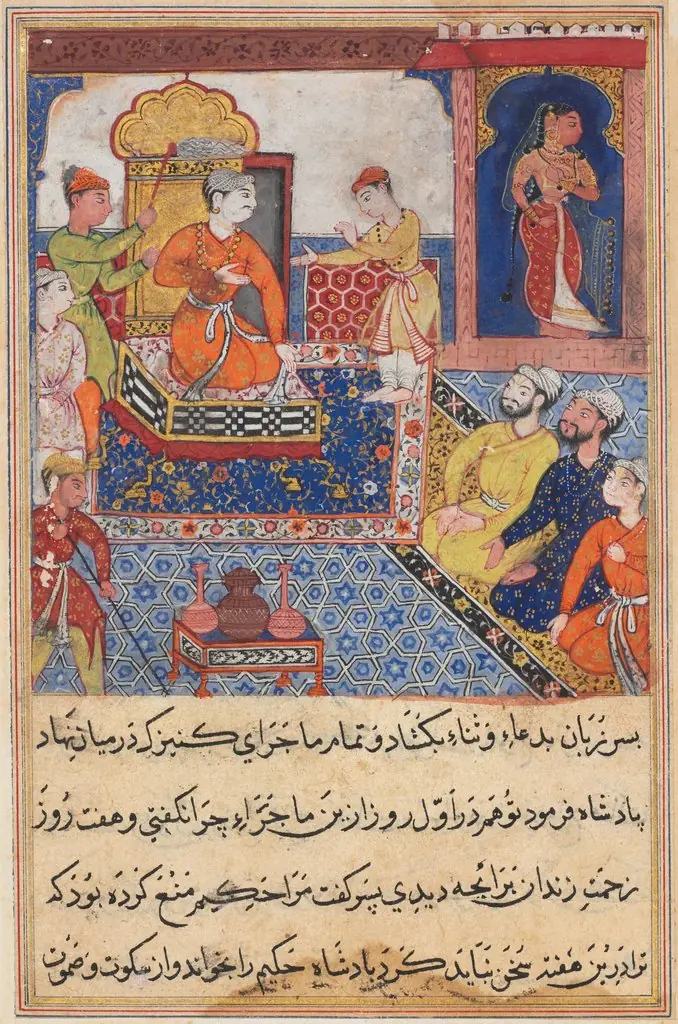 The young prince recounts his experiences to his father, the king, from a Tuti-nama (Tales of a Parrot): Eighth Night
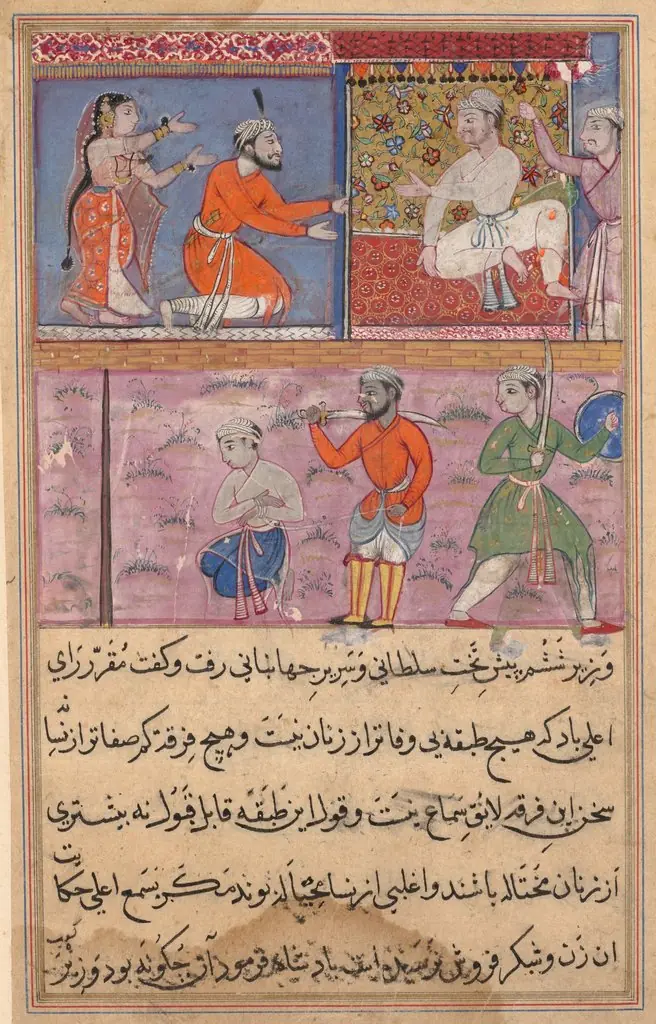 Page from Tales of a Parrot (Tuti-nama): text page
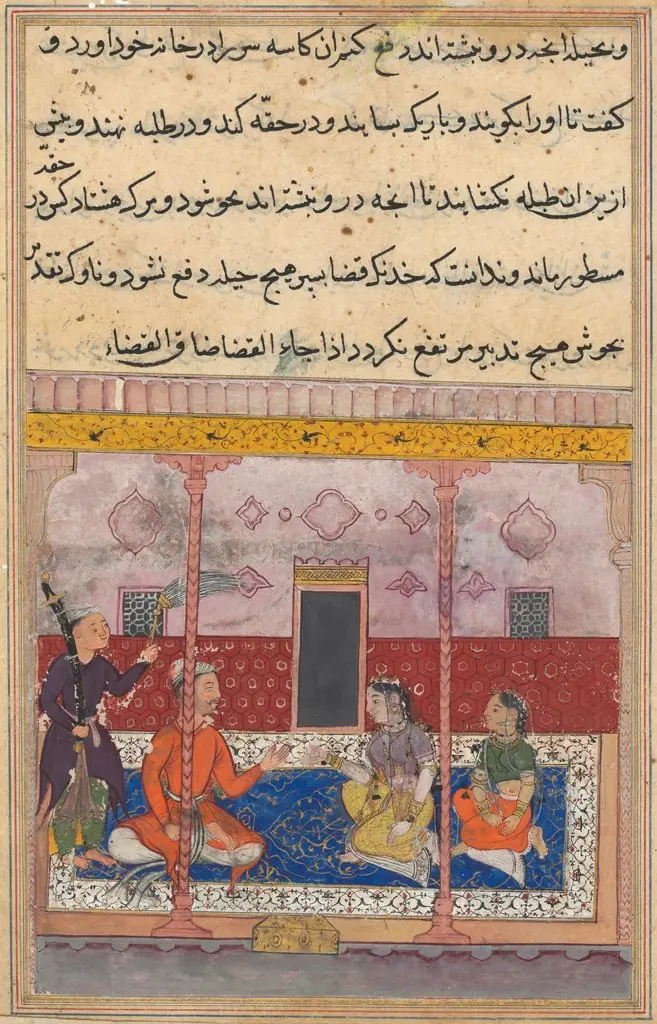 The merchant has the hateful skull ground and put into a box, from a Tuti-nama (Tales of a Parrot): Twenty-third Night
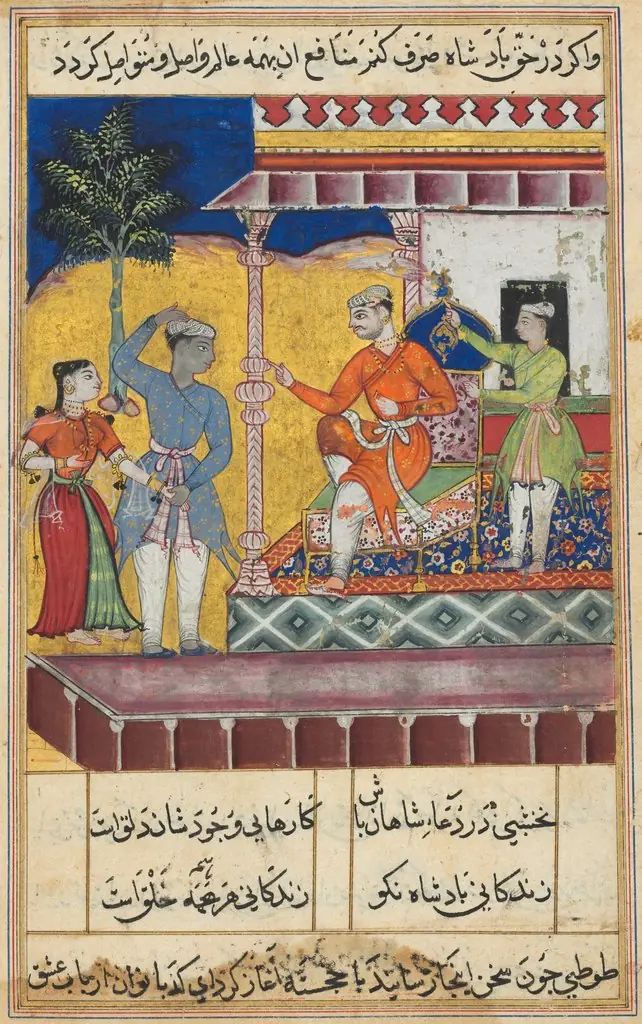 The rejuvenated old man and the daughter of the king of the jinns take leave of the King of Kings, from a Tuti-nama (Tales of a Parrot): Seventh Night
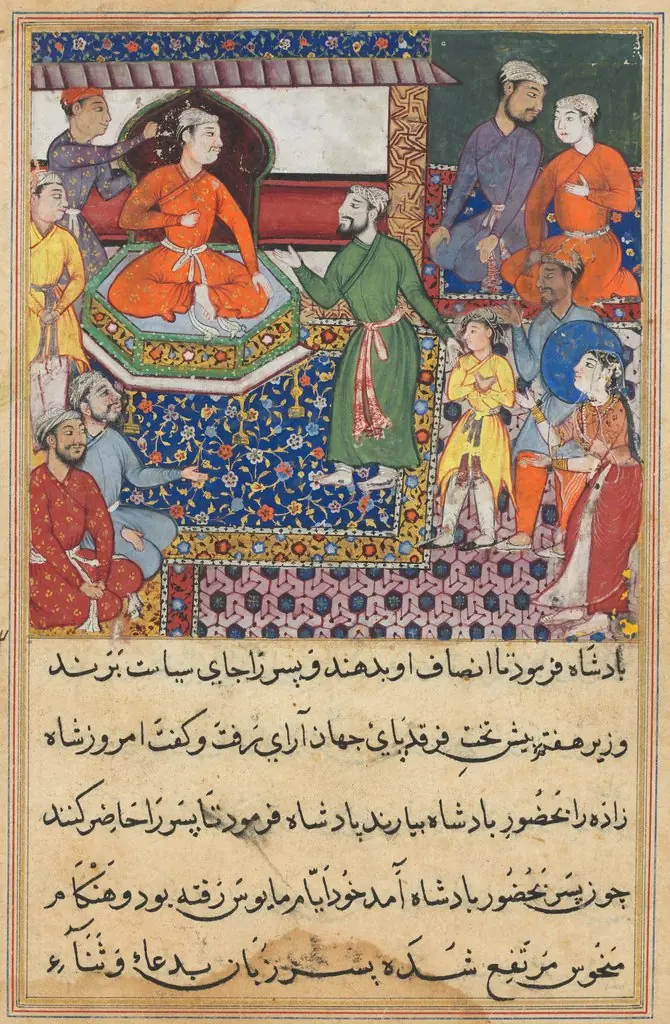 The handmaiden again pleads for the death of the prince, from a Tuti-nama (Tales of a Parrot): Eighth Night
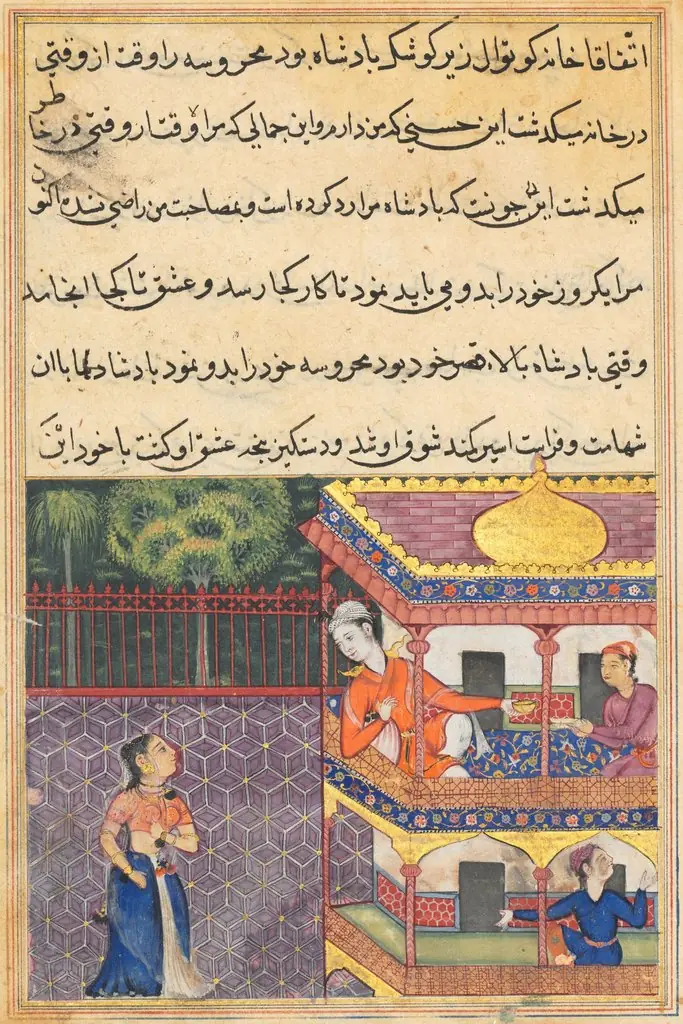 The king of Zabul sees Mahrusa from his palace balcony, from a Tuti-nama (Tales of a Parrot): Thirty-sixth Night
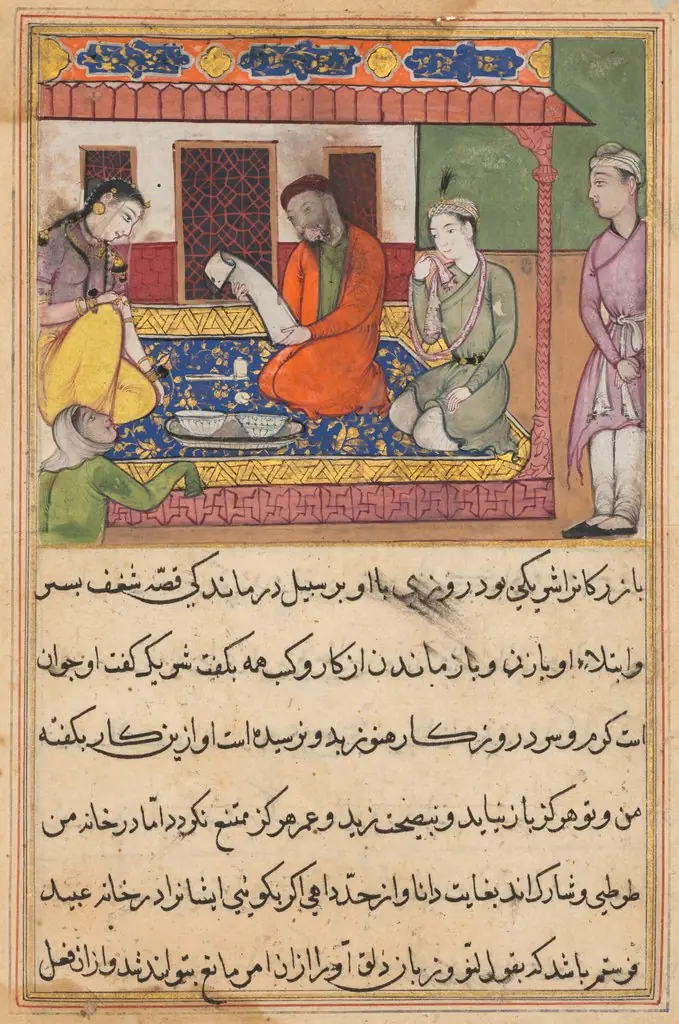 The marriage of ‘Ubaid, son of a merchant of Tirmiz, from a Tuti-nama (Tales of a Parrot): Forty-second Night
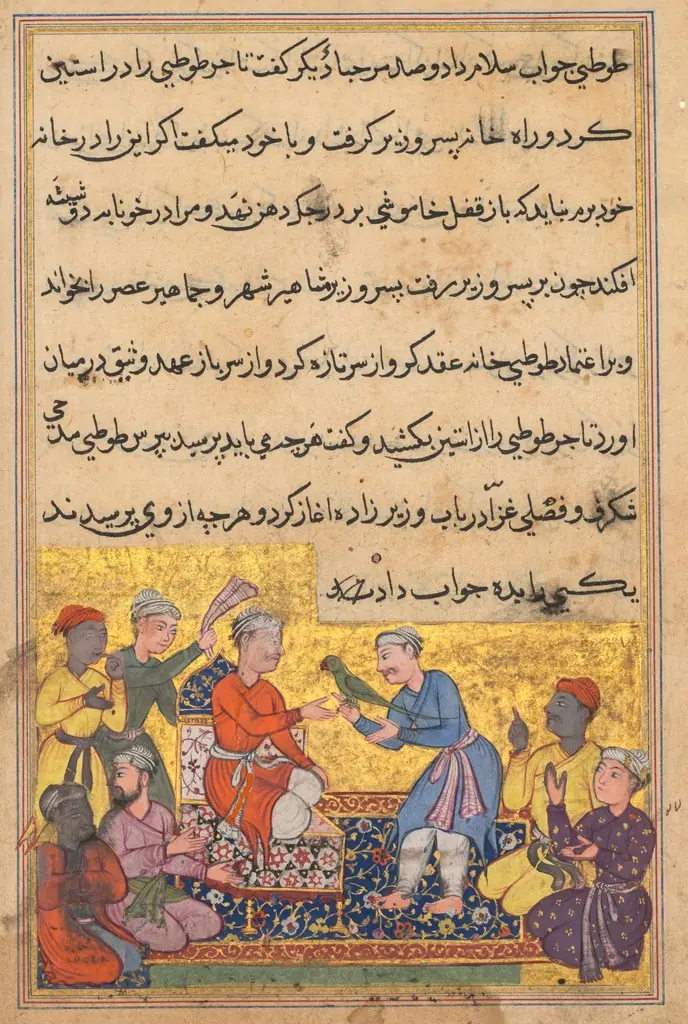 The magic parrot of the merchant talks to the vizier’s son, from a Tuti-nama (Tales of a Parrot): Tenth Night