Artwork
Tuti-Nama (Tales of a Parrot)
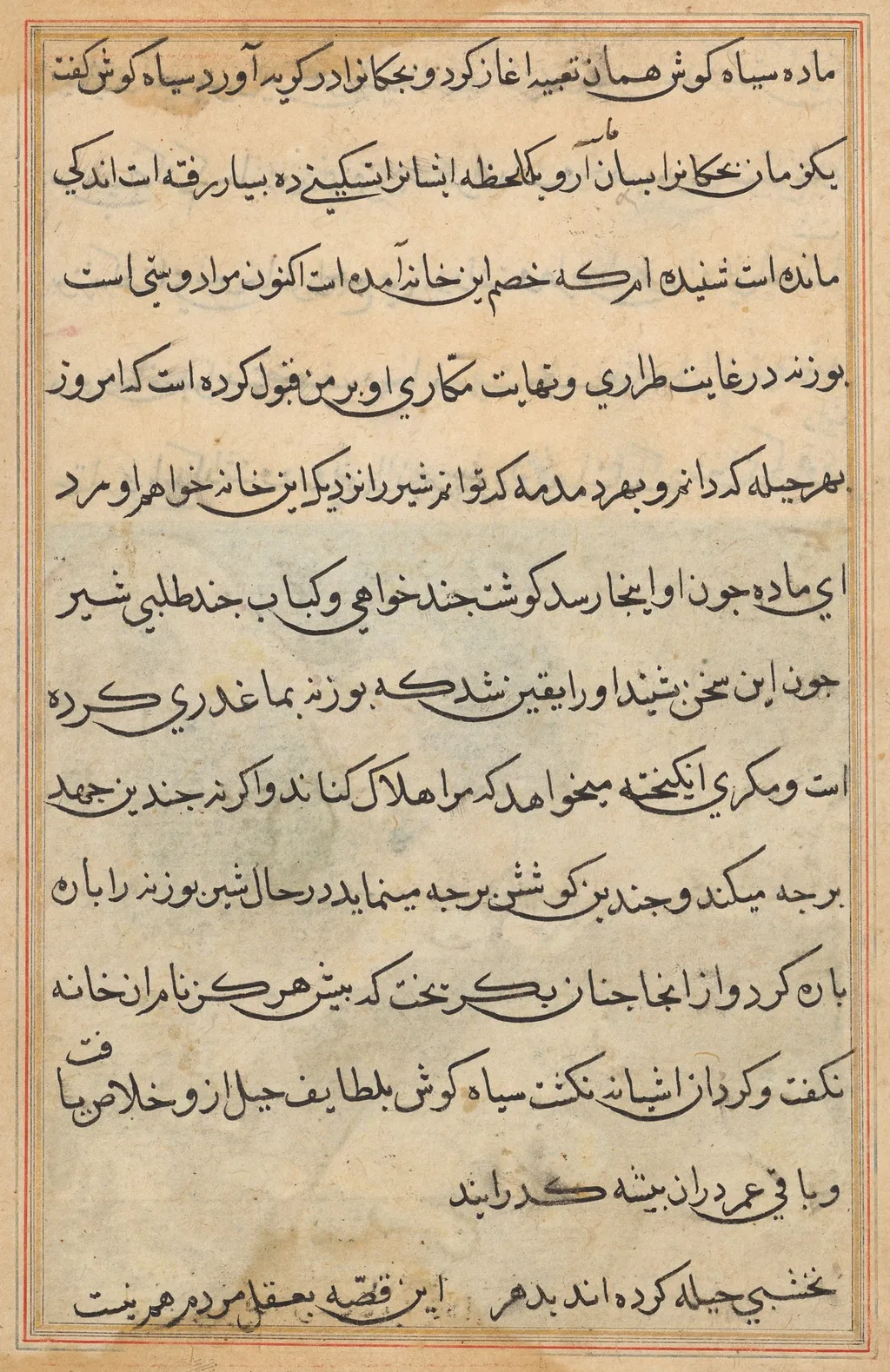
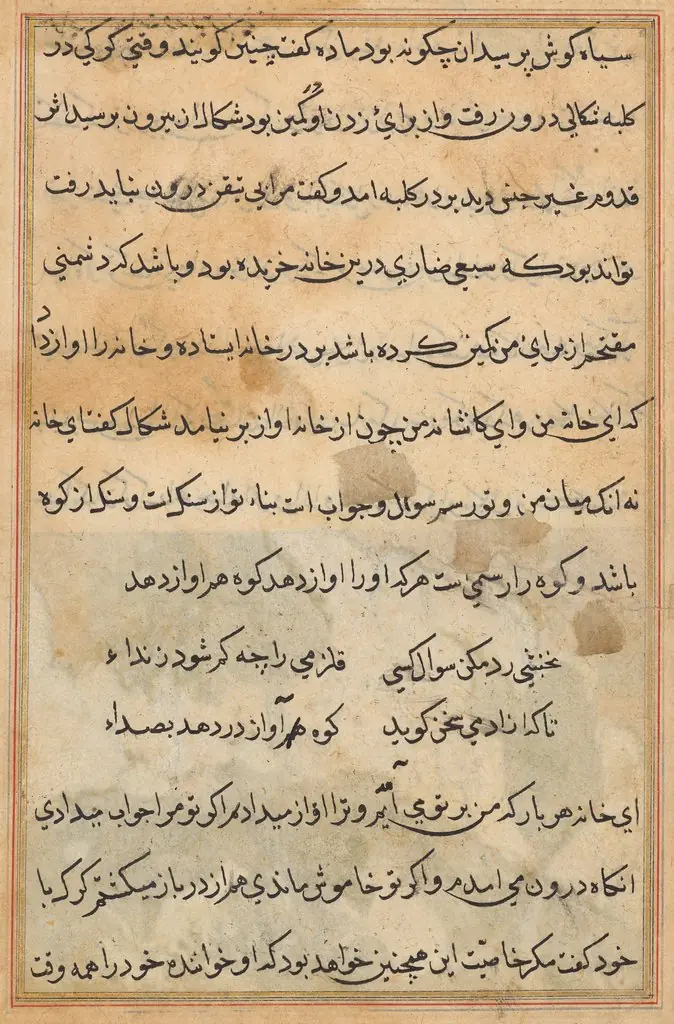
Tuti-Nama (Tales of a Parrot) is an unspecified painting. It dates from 1560 and is held in the collection of the Cleveland Museum of Art.
About this work
Overview
Tuti‑Nama, translated as “Tales of a Parrot,” is a painted work consisting primarily of black calligraphic script arranged in orderly rows that run from right to left. The surface is a sheet of aged paper, its edges tinged brown and framed by a thin red border, giving the piece a historic, document‑like appearance.
Subject & Meaning
The composition presents a continuous narrative written in a flowing script, suggesting a literary text rather than a visual illustration. Though the exact content is not depicted pictorially, the title indicates the story concerns a parrot, a motif that often carries symbolic associations with speech, mimicry, or wisdom in various cultural traditions.
Technique & Style
The calligraphy displays subtle variations in line weight, with some strokes rendered boldly and others more delicately, reflecting a skilled hand that balances emphasis and restraint. The script is executed with precision, occasionally linking words with small connecting lines, characteristic of meticulous manuscript practices.
History & Provenance
The work is part of the collection at the Cleveland Museum of Art, which holds comparable examples of similar scriptural paintings. Its provenance points to a museum acquisition, though specific details of its origin, date, or creator remain undocumented in the available description.
Context
Tuti‑Nama belongs to a broader tradition of illustrated or text‑dominant paintings where narrative is conveyed through script rather than imagery. Such pieces often served educational or devotional purposes, integrating literary content with the visual qualities of the medium.
Artist & collection

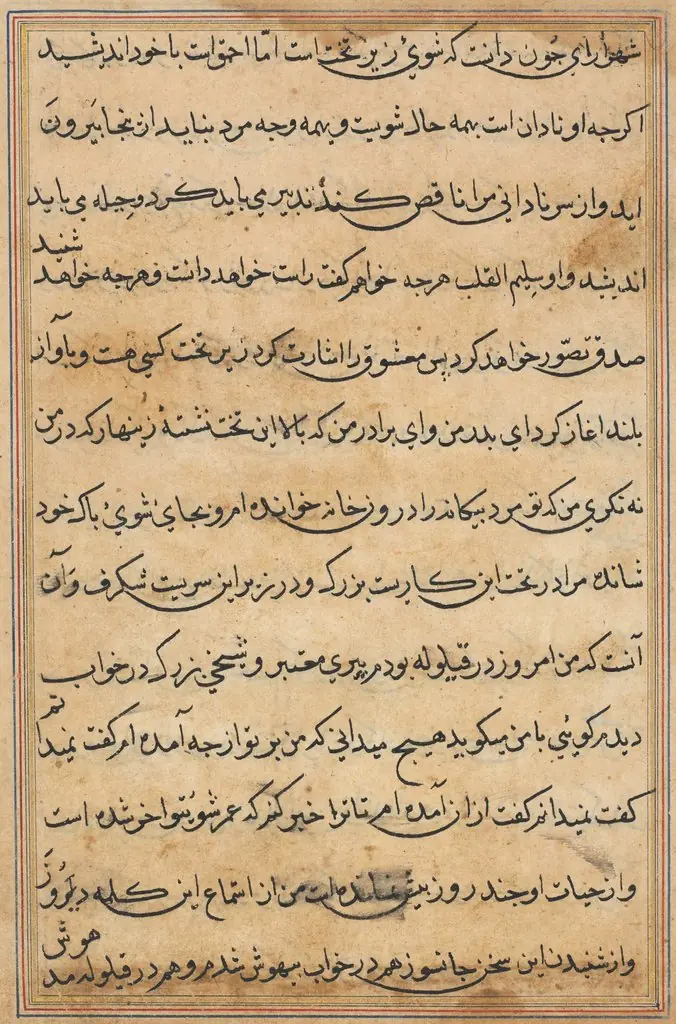 Page from Tales of a Parrot (Tuti-nama): text page
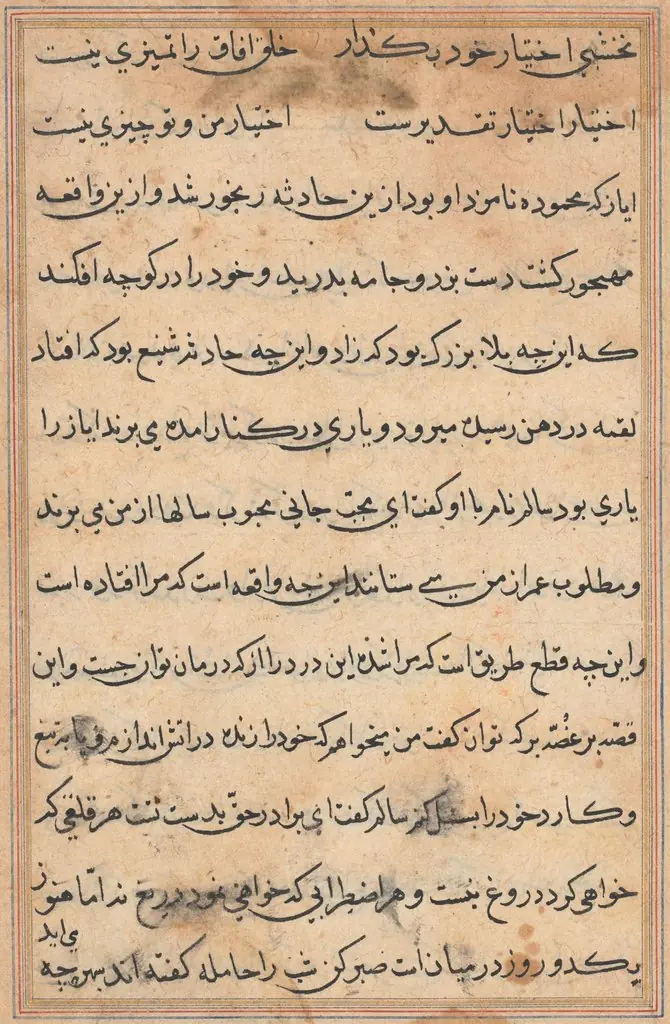 Page from Tales of a Parrot (Tuti-nama): text page
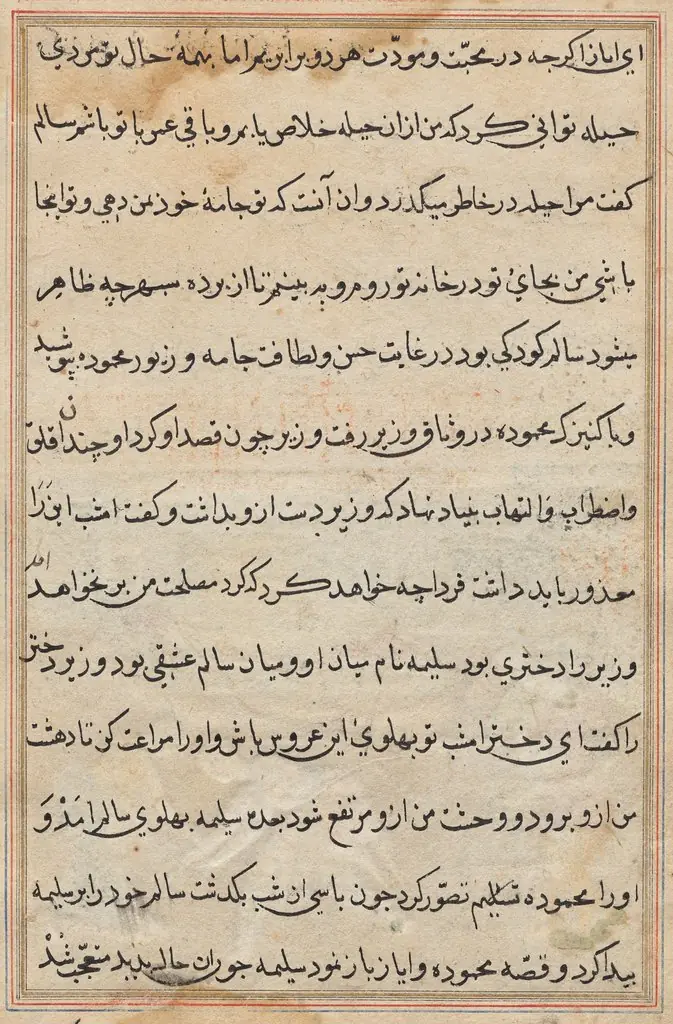 Page from Tales of a Parrot (Tuti-nama): text page
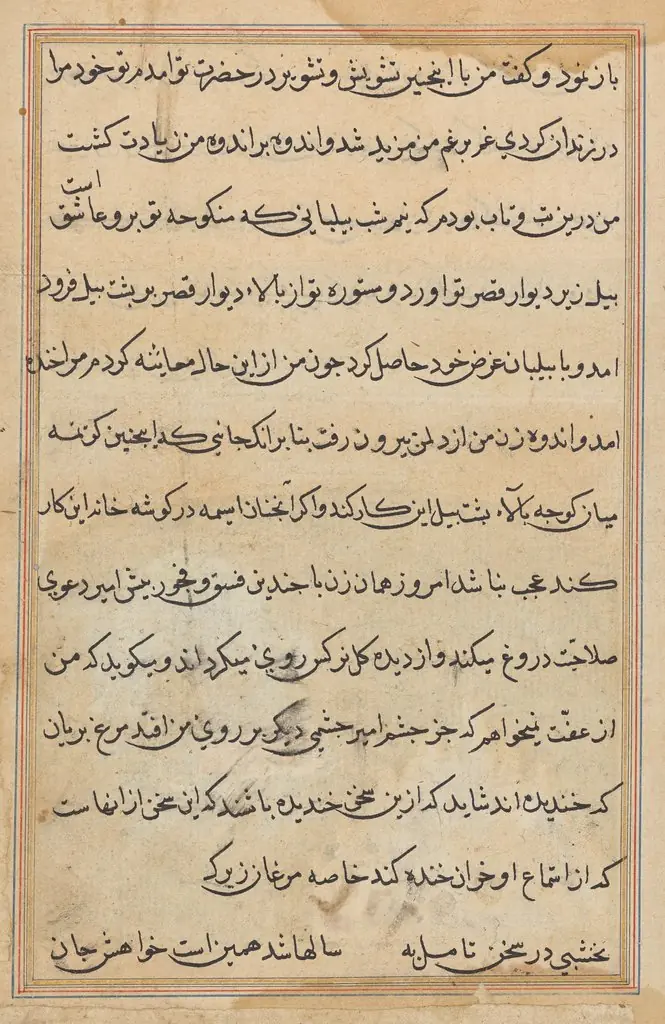 Page from Tales of a Parrot (Tuti-nama): text page
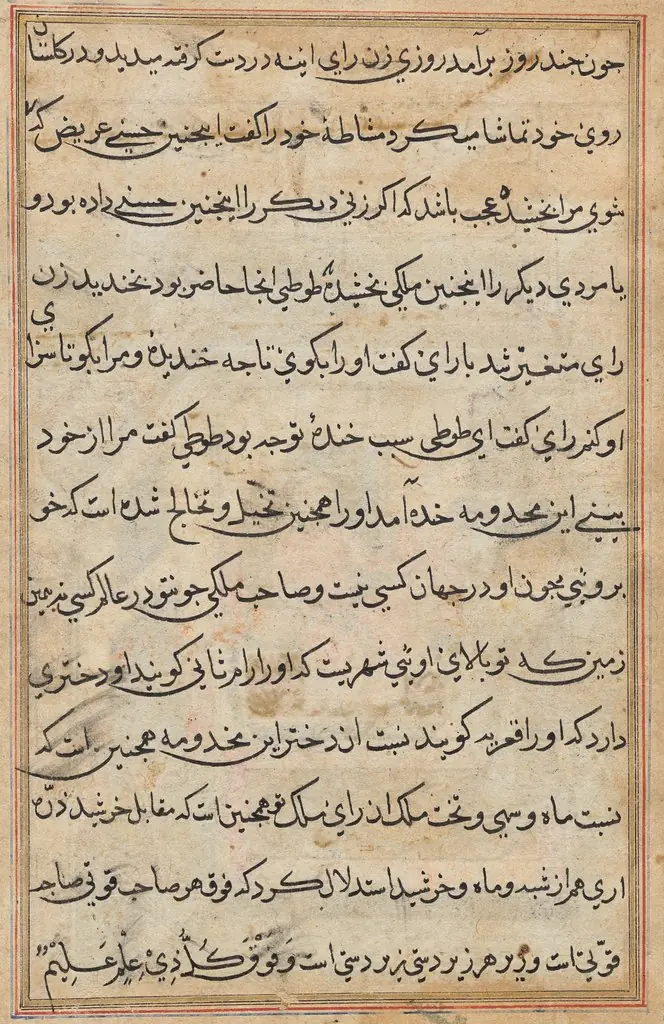 Page from Tales of a Parrot (Tuti-nama): text page
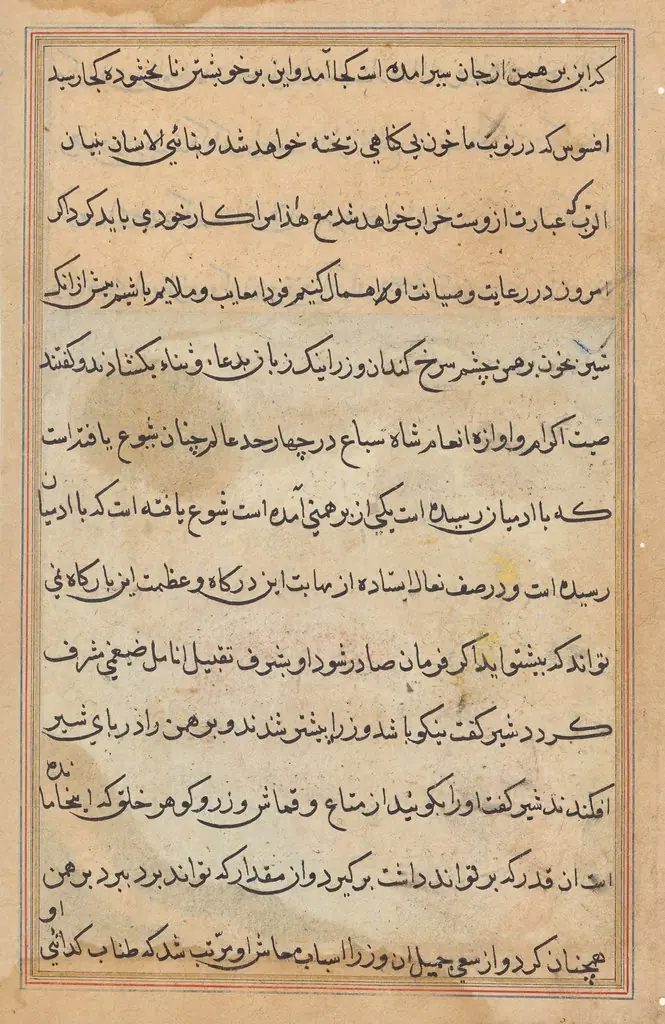 Page from Tales of a Parrot (Tuti-nama): text page
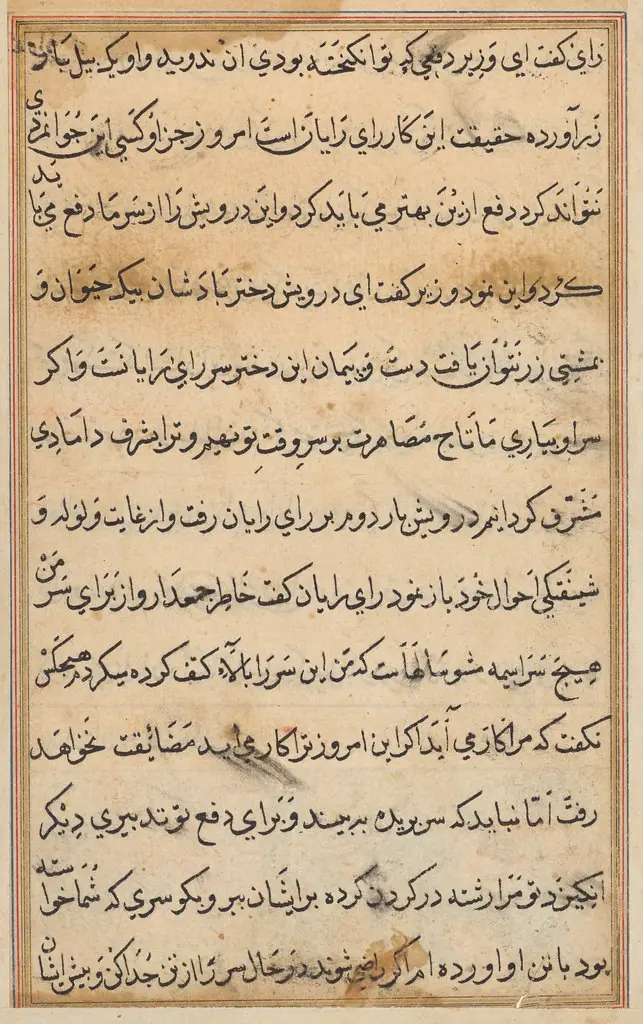 Page from Tales of a Parrot (Tuti-nama): text page
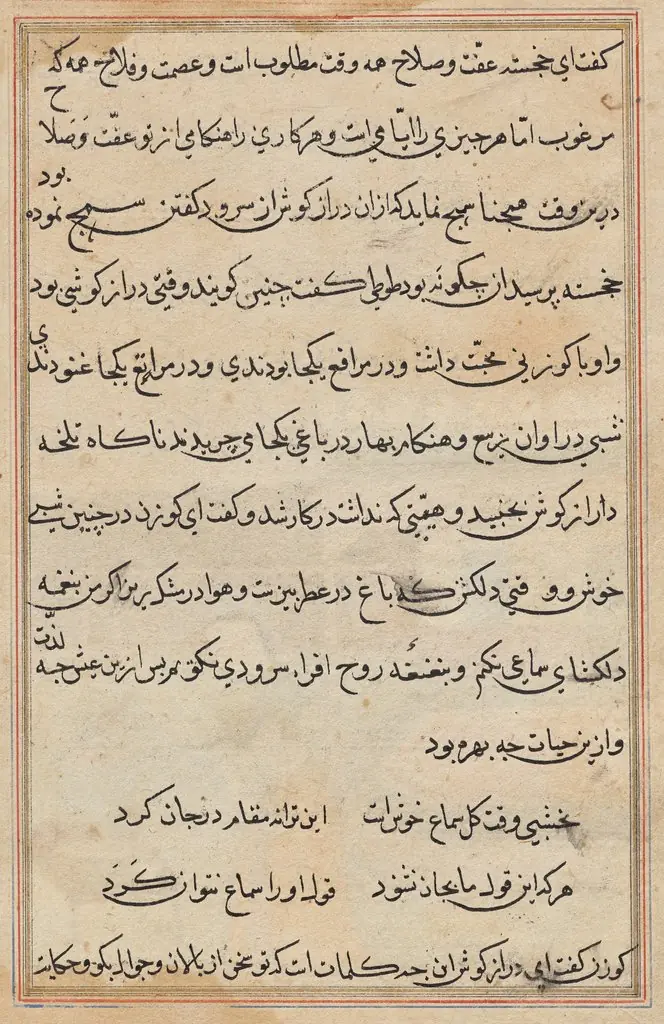 Page from Tales of a Parrot (Tuti-nama): text page
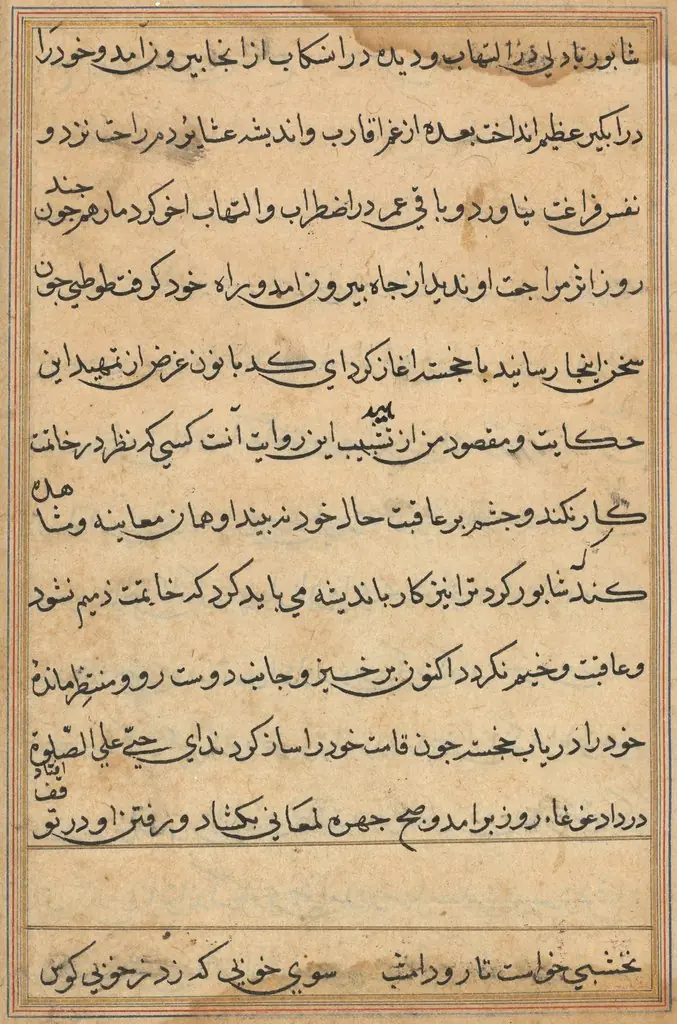 Page from Tales of a Parrot (Tuti-nama): text page
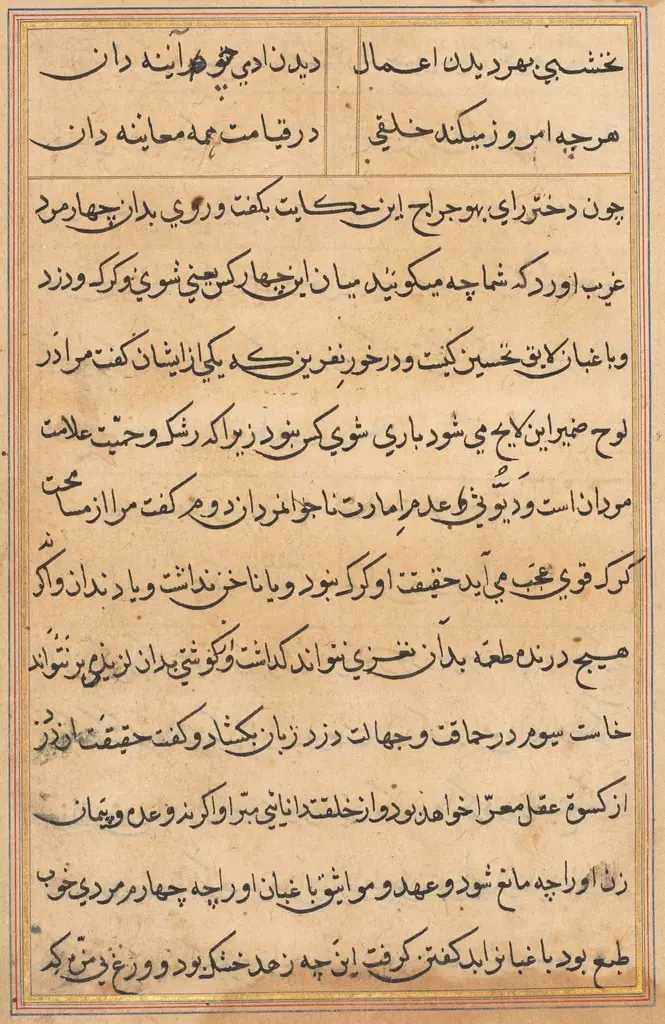 Page from Tales of a Parrot (Tuti-nama): text page
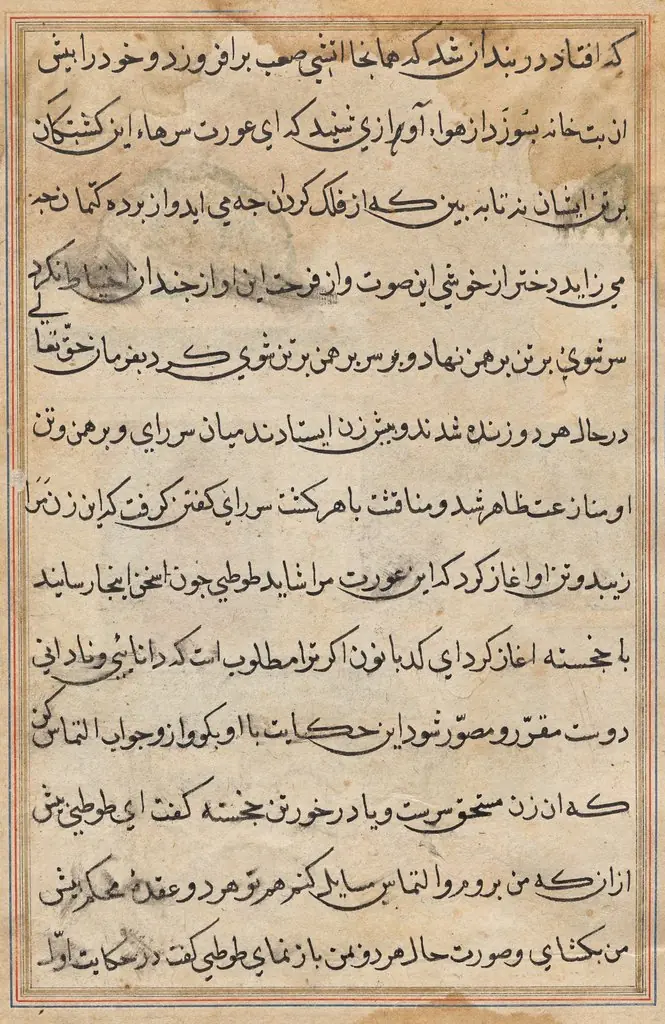 Page from Tales of a Parrot (Tuti-nama): text page
 Tuti-Nama (Tales of a Parrot)