Artwork
Slaughtered Ox
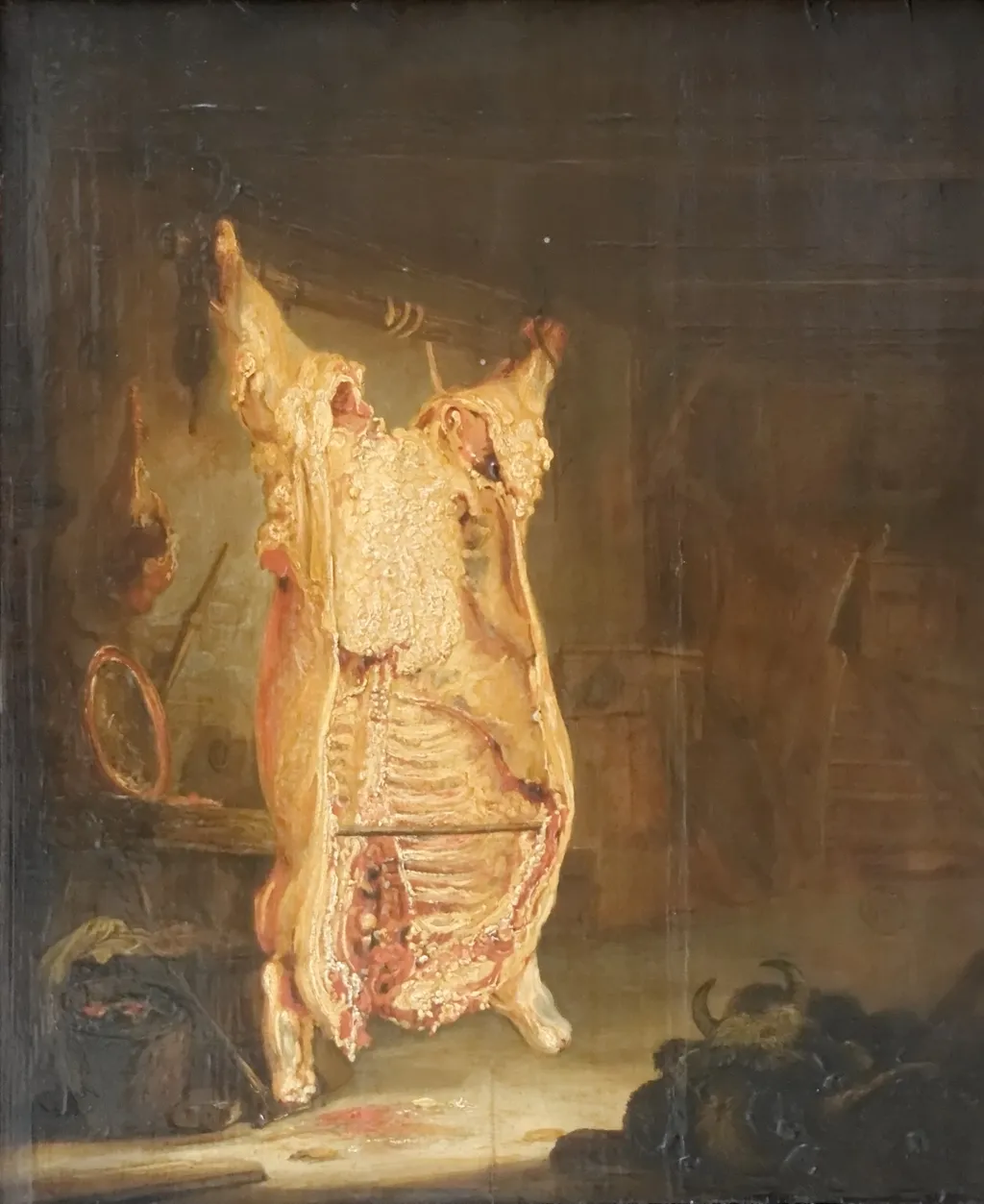
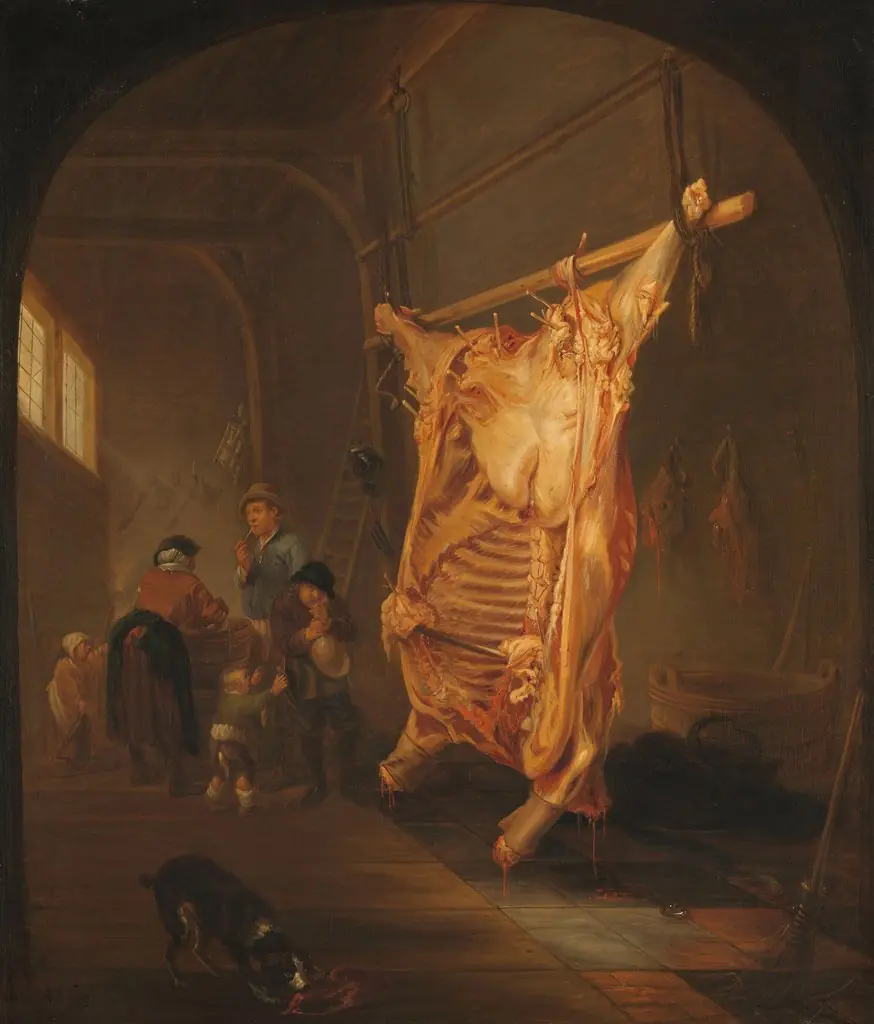
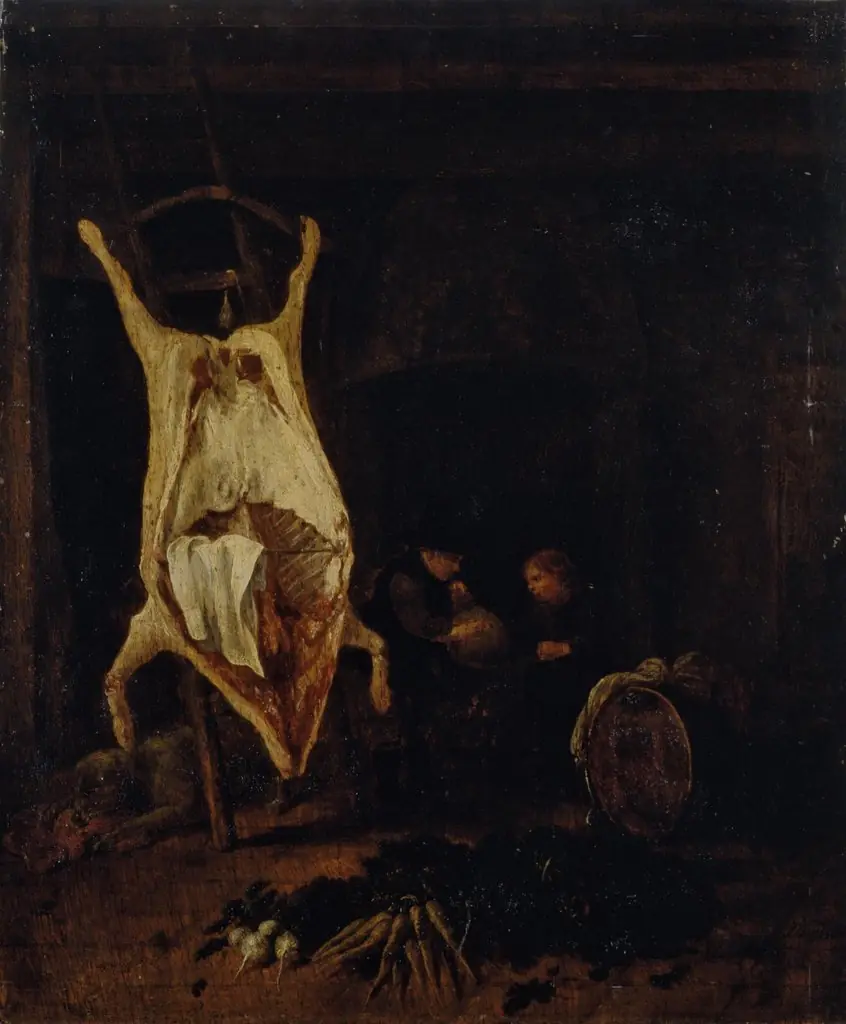
Slaughtered Ox is an oil painting by the Dutch Golden Age artist Isaac van Ostade. It dates from 1639 and is held in the collection of the Museum of Fine Arts, Budapest.
About this work
Overview
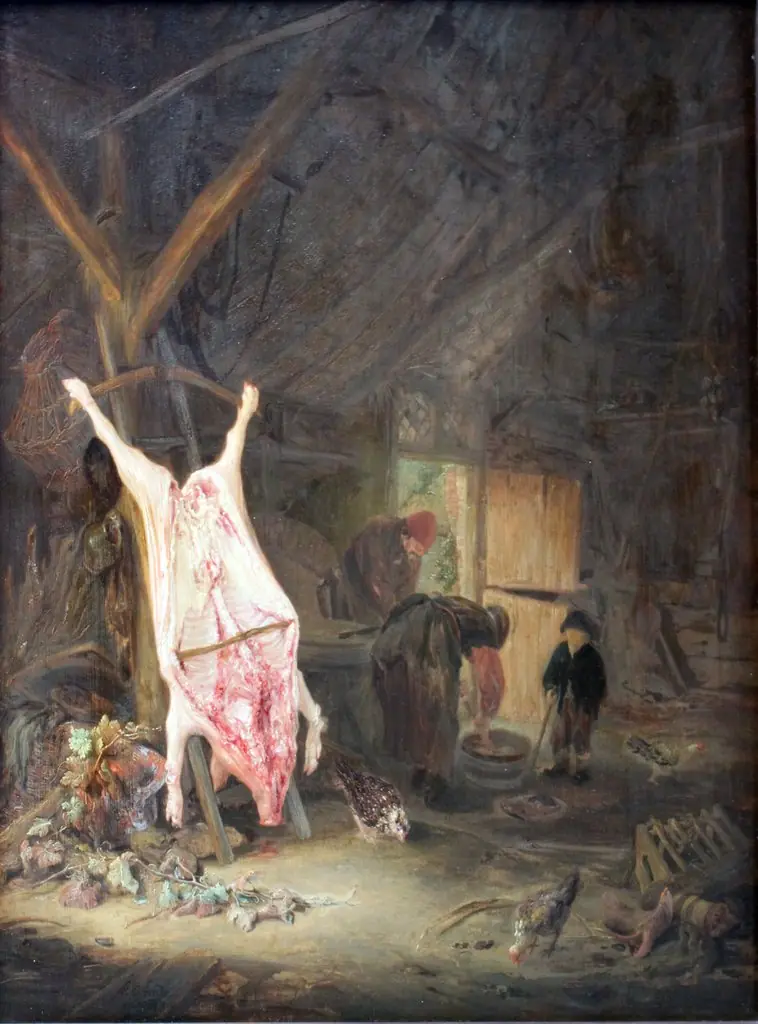
Isaac van Ostade’s 1639 oil painting, titled Slaughtered Ox, presents a stark interior scene in which a freshly butchered ox hangs from a ceiling beam. The composition is dominated by the animal’s exposed flesh and entrails, rendered in subdued browns and grays that emphasize the somber atmosphere of the work.
Subject & Meaning
The work captures a moment of rural labor, focusing on the aftermath of a slaughter. By isolating the carcass in a dimly lit space, van Ostade invites contemplation of the cycle of life and death, as well as the everyday realities of 17th‑century agrarian life.
Technique & Style
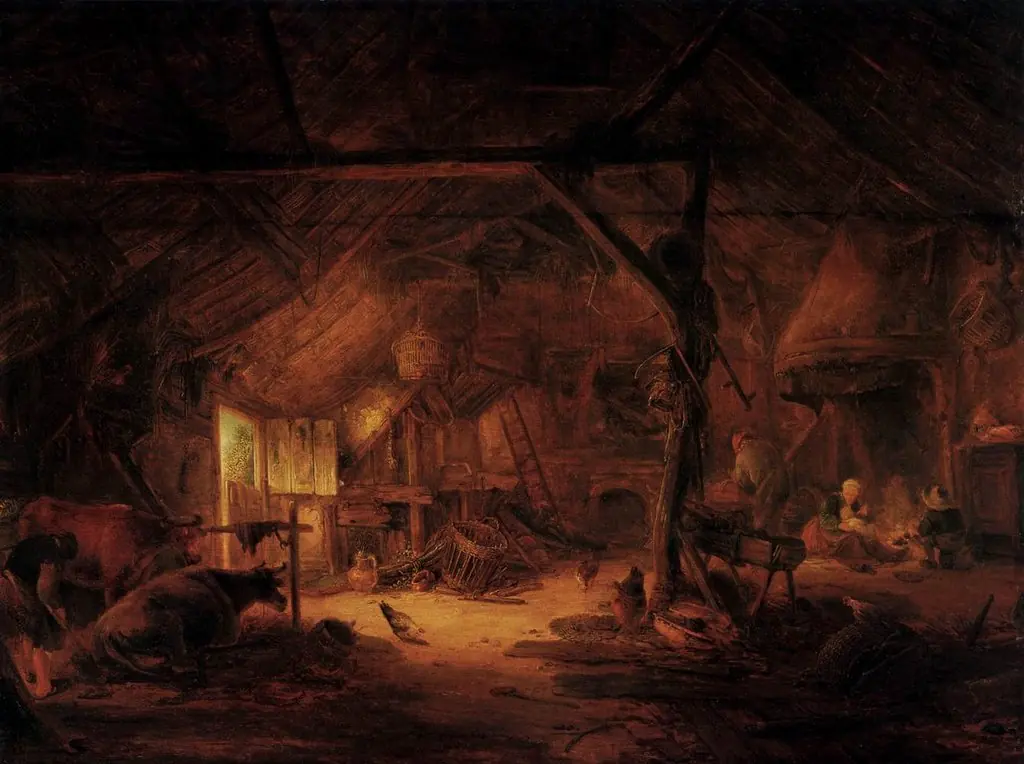
Van Ostade employs a chiaroscuro approach, allowing a faint light from the left to model the forms and reveal texture. Thick, impasto brushstrokes give the flesh a palpable quality, while the muted palette reinforces the scene’s quiet gravity.
History & Provenance
Created in 1639, the painting entered the collection of the Museum of Fine Arts in Budapest, where it remains on display. Its provenance traces back to the Dutch Golden Age, reflecting the period’s interest in genre scenes that document ordinary activities.
Context
The piece belongs to a tradition of Dutch genre painting that documented domestic and rural tasks with a realistic eye. Van Ostade, known for scenes of peasant life, often used such subjects to explore social conditions and the material culture of his time.
Artist & collection