Artwork
A Slaughtered Ox
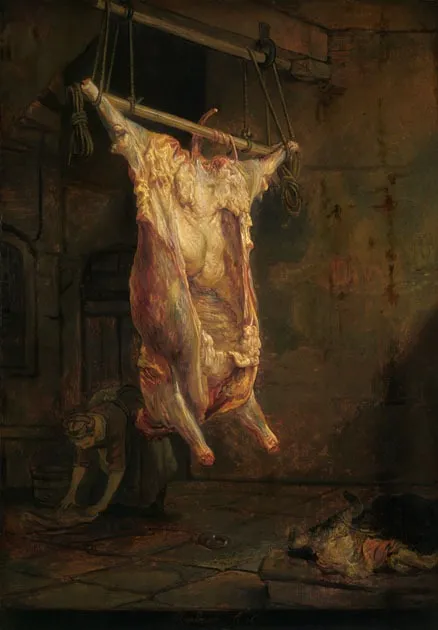
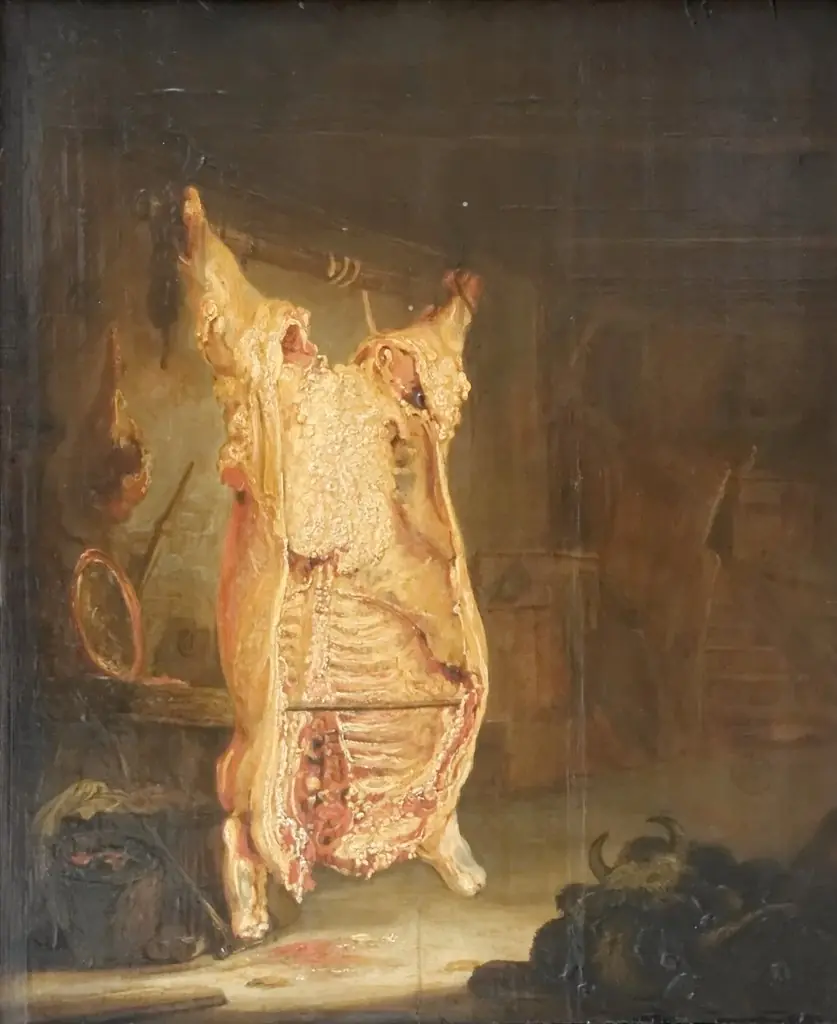
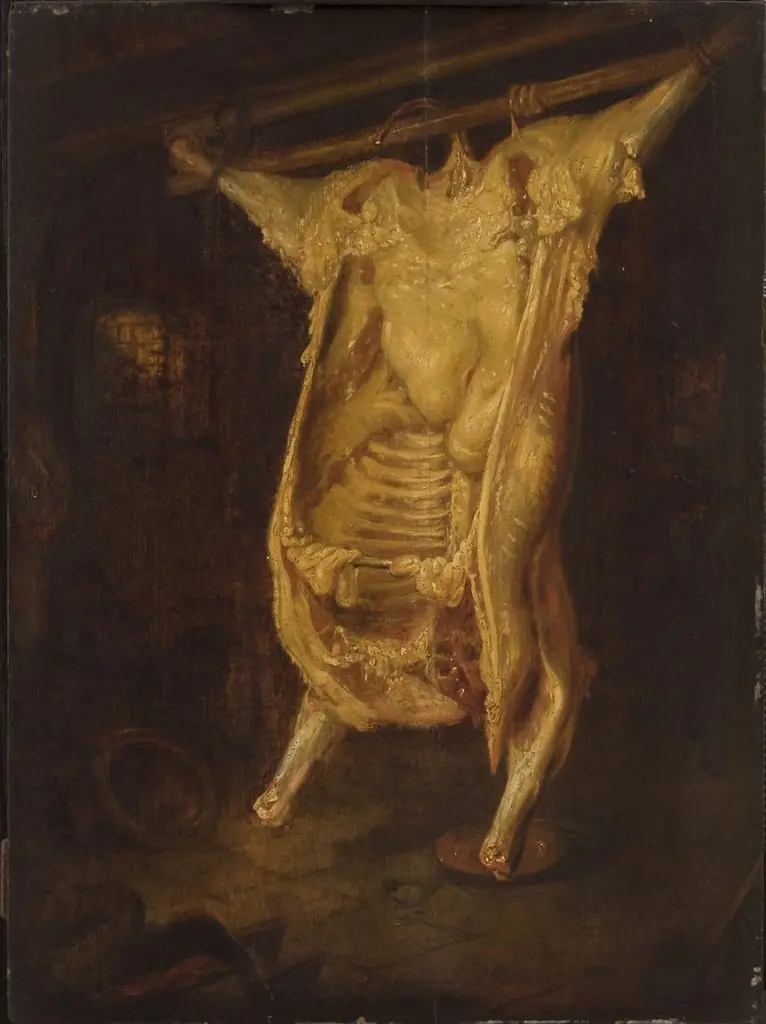
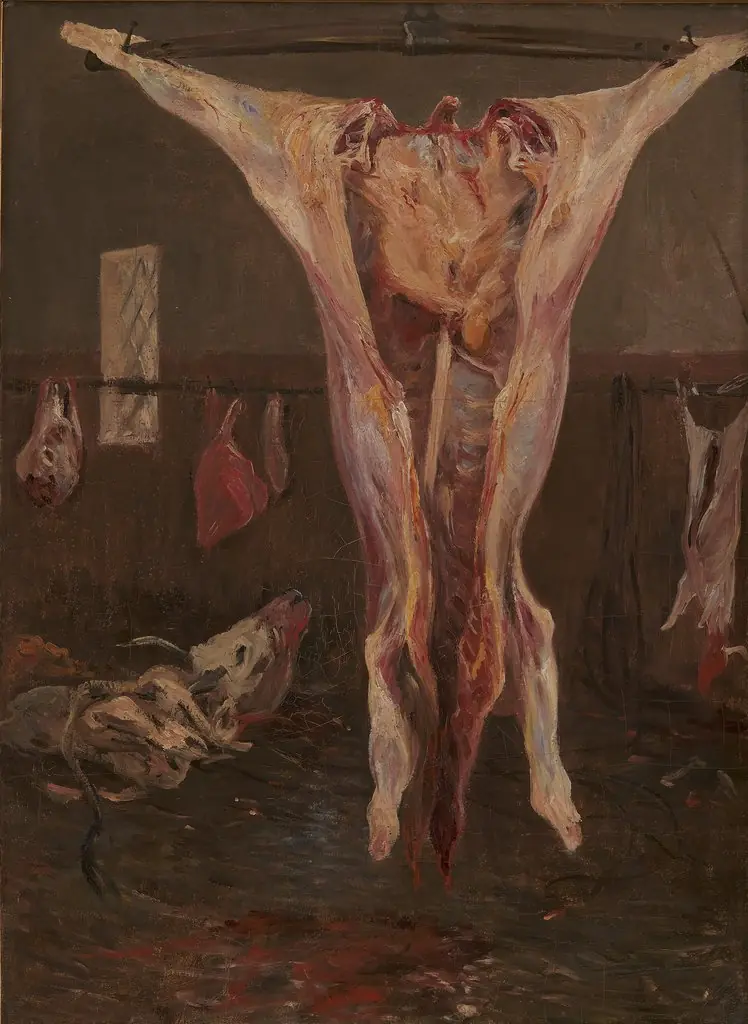
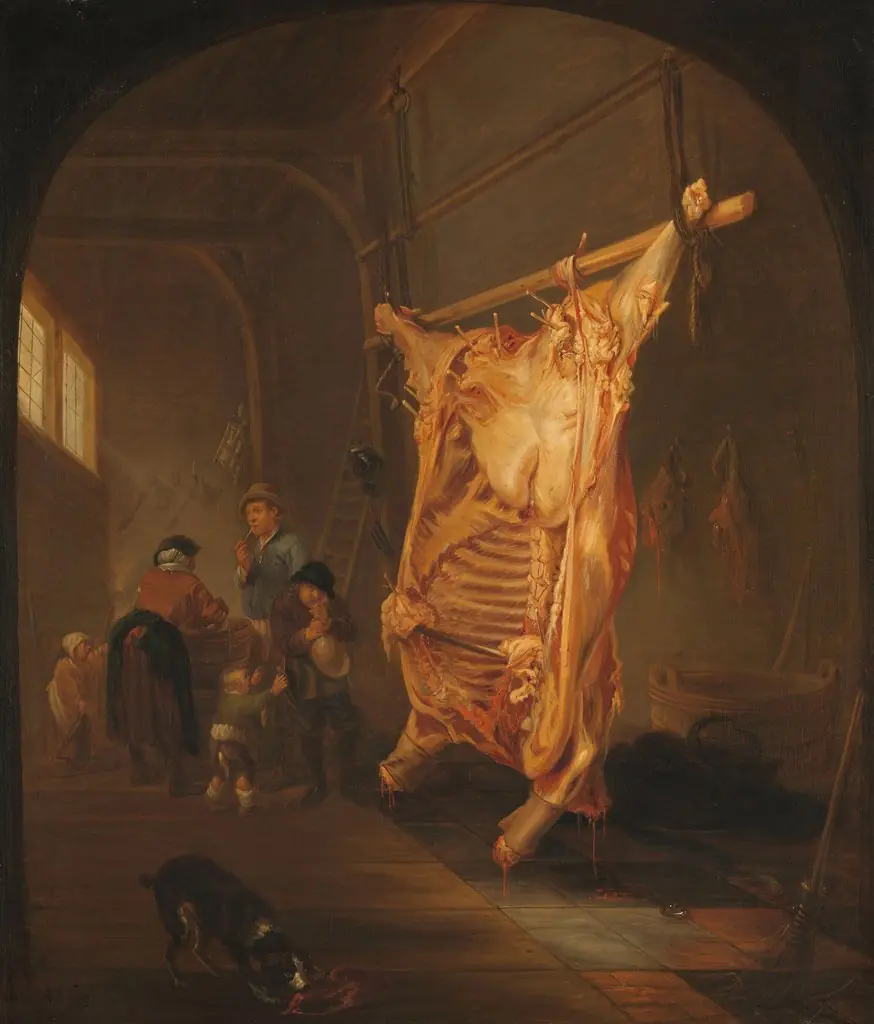
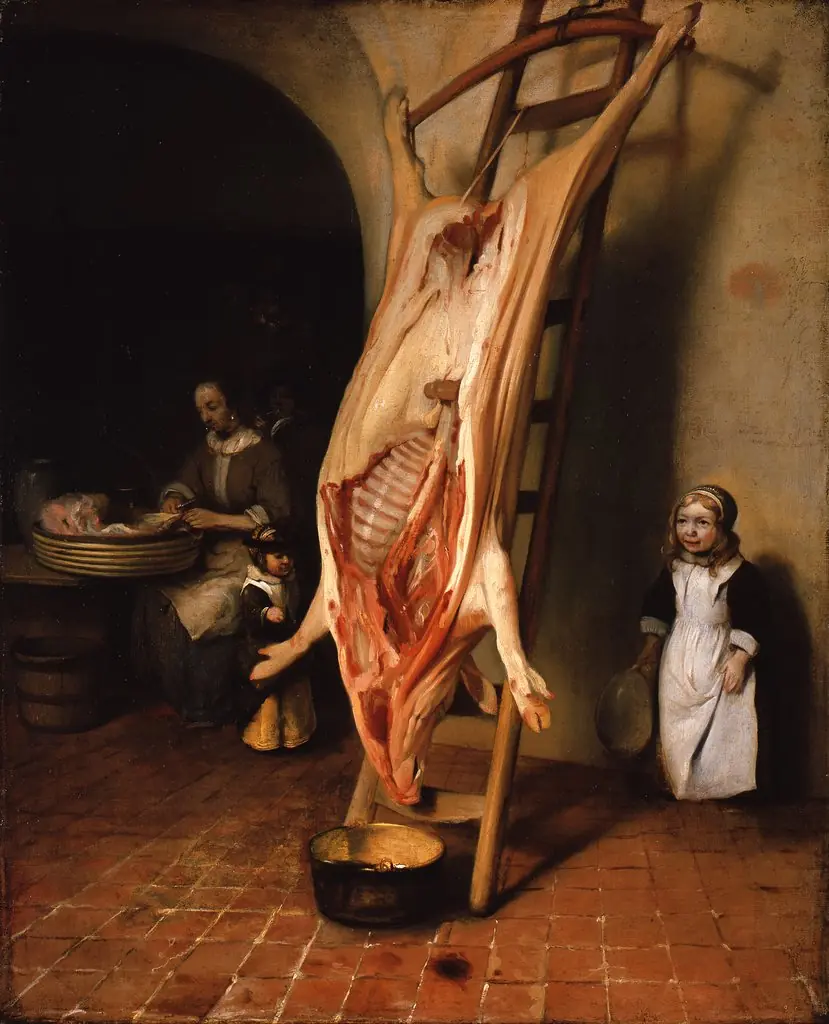
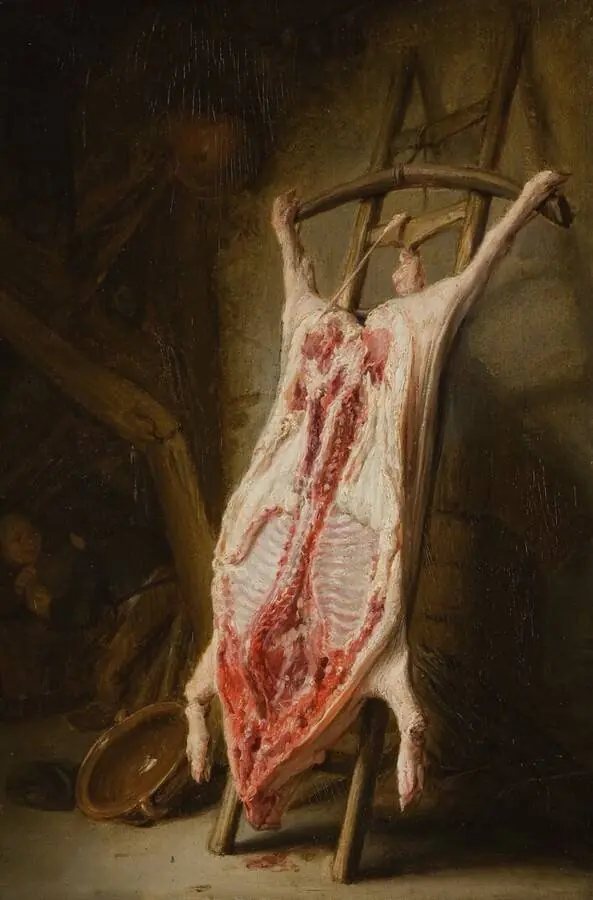
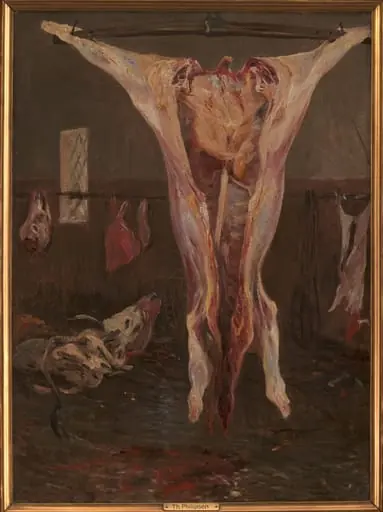
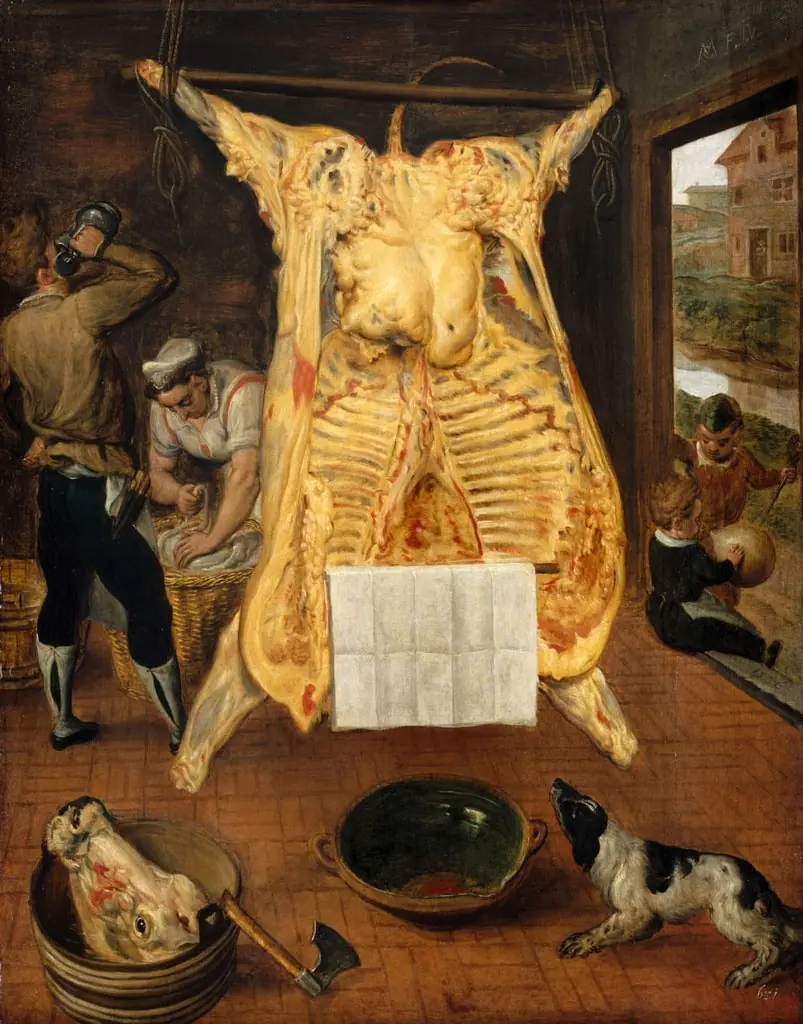
A Slaughtered Ox is an oil painting by the Dutch Golden Age artist Carel Fabritius. It dates from 1640 and is held in the collection of the Kelvingrove Art Gallery and Museum.
About this work
Overview
Carel Fabritius, a Dutch painter trained under Rembrandt, completed the oil painting *A Slaughtered Ox* in 1640. Executed during the height of the Dutch Golden Age, the work portrays a freshly butchered animal rendered with meticulous observation. The canvas now belongs to the Kelvingrove Art Gallery and Museum, where it is displayed among other seventeenth‑century Dutch pieces.
Subject & Meaning
The composition centers on an ox suspended from a timber beam, its hide stripped to expose the raw flesh. The animal’s head hangs low while its limbs are spread, emphasizing the physicality of the carcass. The surrounding interior—a wall, a window, and a doorway—provides a modest setting that underscores the everyday, utilitarian nature of the scene, inviting contemplation of mortality and labor.
Technique & Style
Fabritius employs chiaroscuro, contrasting bright illumination with deep shadows to model the ox’s musculature and the surrounding space.
Fabritius employs chiaroscuro, contrasting bright illumination with deep shadows to model the ox’s musculature and the surrounding space. The handling of oil paint captures subtle variations in texture, from the slickness of the meat to the grain of the wooden beam. His precise rendering of light falling across the flesh creates a palpable sense of three‑dimensionality, reflecting the Delft School’s interest in realistic detail.
History & Provenance
After its creation in the early 1640s, the painting entered private collections before being acquired by the Kelvingrove Art Gallery and Museum in Glasgow. The work has remained relatively obscure compared with Fabritius’s more famous pieces, yet its presence in a public institution ensures continued scholarly access and public viewing.
Context
*A Slaughtered Ox* belongs to a tradition of Dutch genre painting that documented ordinary life and work. Fabritius, known for experimenting with perspective and light, applied these interests here, offering a study of a butcher’s shop rather than a religious or mythological narrative. The piece reflects the period’s fascination with empirical observation and the moral undertones often associated with depictions of death and sustenance.
Artist & collection
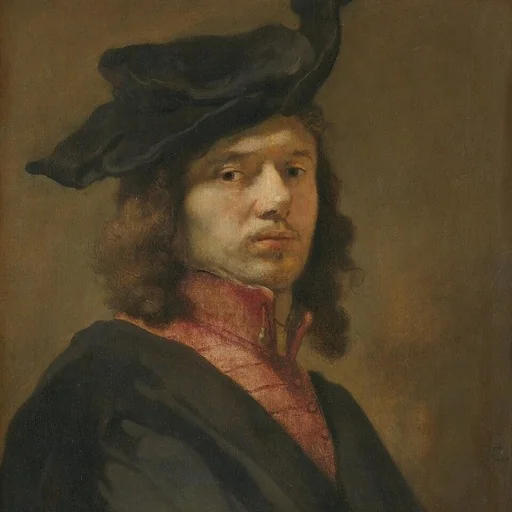
Artist
Carel Pieterszoon (abbr. Pietersz.) Fabritius (Dutch pronunciation: ; bapt. 27 February 1622 – 12 October 1654) was a Dutch painter. He was a pupil of Rembrandt and worked in his studio in Amsterdam. Fabritius, who was…