Artwork
Portret van een man
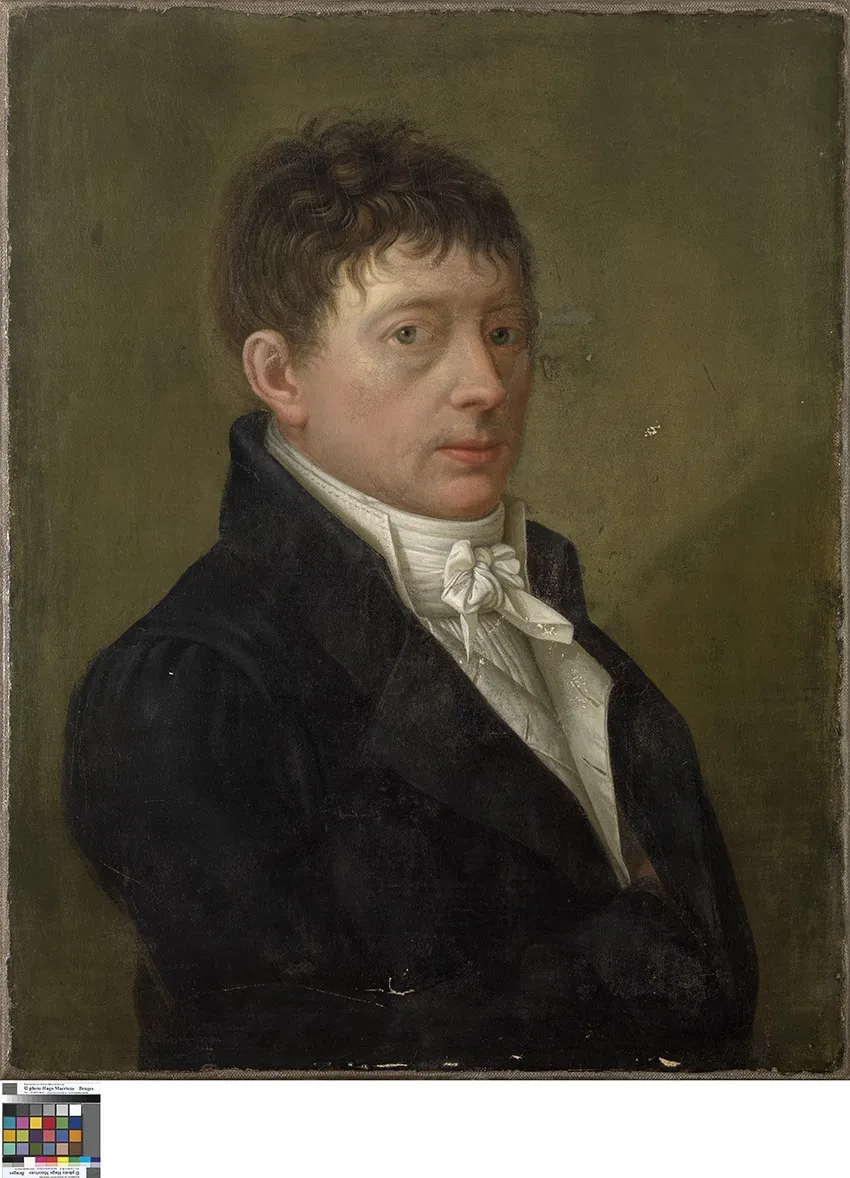
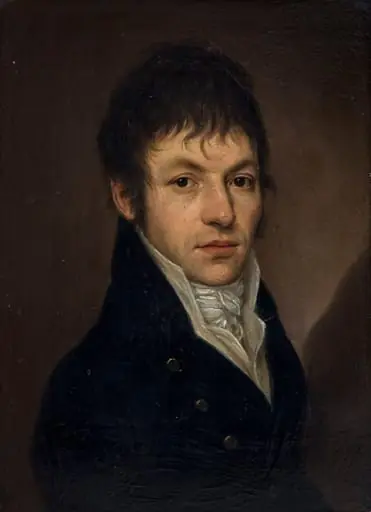
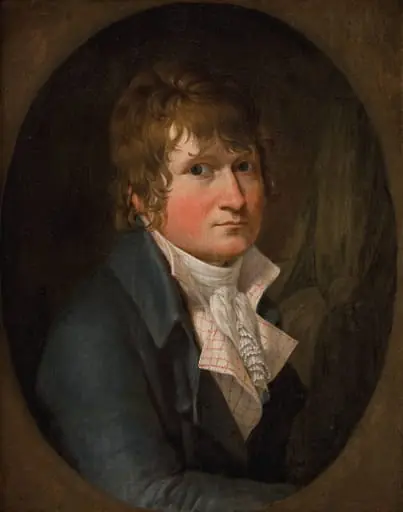
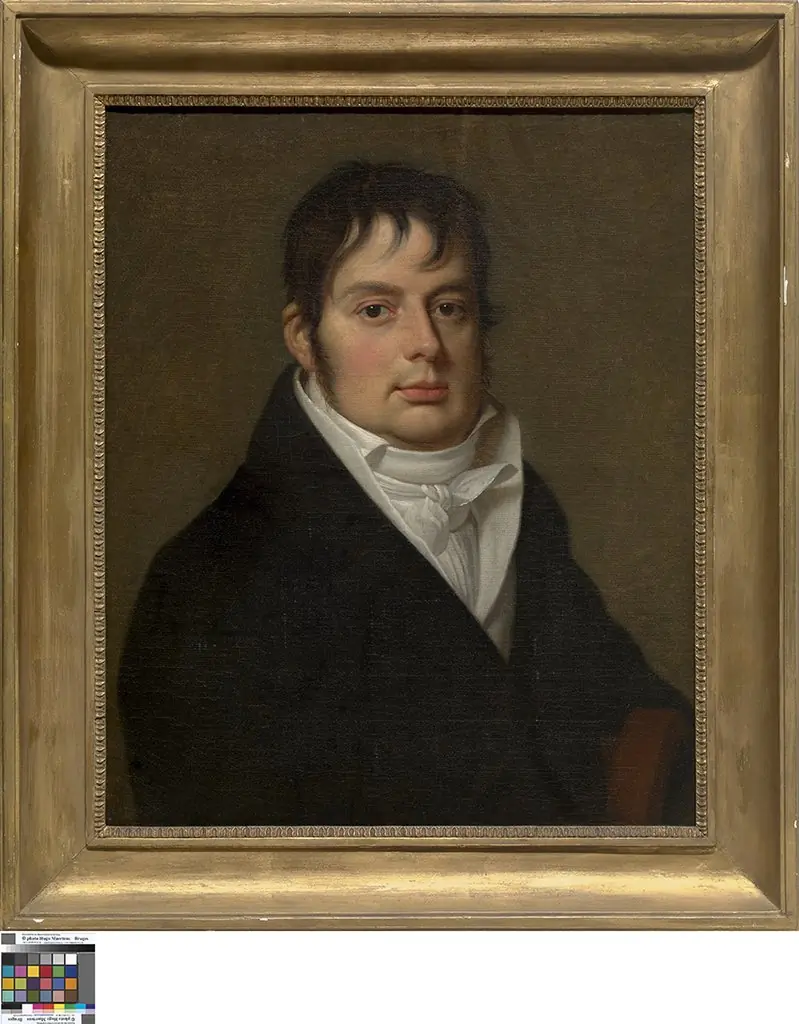
Portret van een man is an oil painting by Unknown. It dates from 1801 and is held in the collection of the Groeningemuseum. The work is an oil painting portraying a seated man in formal attire.
About this work
This portrait depicts a man with short, dark hair and a serious expression. He wears a black coat over a white shirt with a high collar and a white cravat tied in a bow. The background is a muted greenish-brown color. The man's attire and hairstyle suggest he may be from the early 19th century. His direct gaze and formal pose give the impression of a dignified individual.
Overview
The work is an oil painting portraying a seated man in formal attire. He is rendered against a muted green‑brown backdrop, his gaze directed straight at the viewer. The composition emphasizes the subject’s solemn expression and dignified bearing.
Subject & Meaning
The sitter is shown with short dark hair, a high‑collared white shirt, a white cravat tied in a bow, and a black coat. The restrained palette and direct stare suggest a portrait intended to convey status and seriousness, typical of early‑nineteenth‑century portraiture.
Technique & Style
Executed in oil on canvas, the painting employs a limited tonal range, allowing the figure’s features and clothing to stand out against the subdued background. Brushwork is smooth and controlled, highlighting the crisp lines of the coat and cravat while rendering the skin with subtle modeling.
Context
The attire and hairstyle correspond to male fashion of the early 1800s, indicating the work likely originates from that period. Such portraits were commonly commissioned to document personal identity and social rank within a modest, private setting.
Artist & collection

 Domestic Scene
 Giacomo and Cardinal Marco, investing Andrea, Abbot of San Zeno, with his Benefice
 The Nymph of Fontainebleau
 Portrait of a Woman
 Madonna and Child with Saints in the Enclosed Garden
 Venus and Minerva
 Family Group of Four on Sofa
 Wall painting from Room H of the Villa of P. Fannius Synistor at Boscoreale