Artwork
Portrait of the Artist's Father
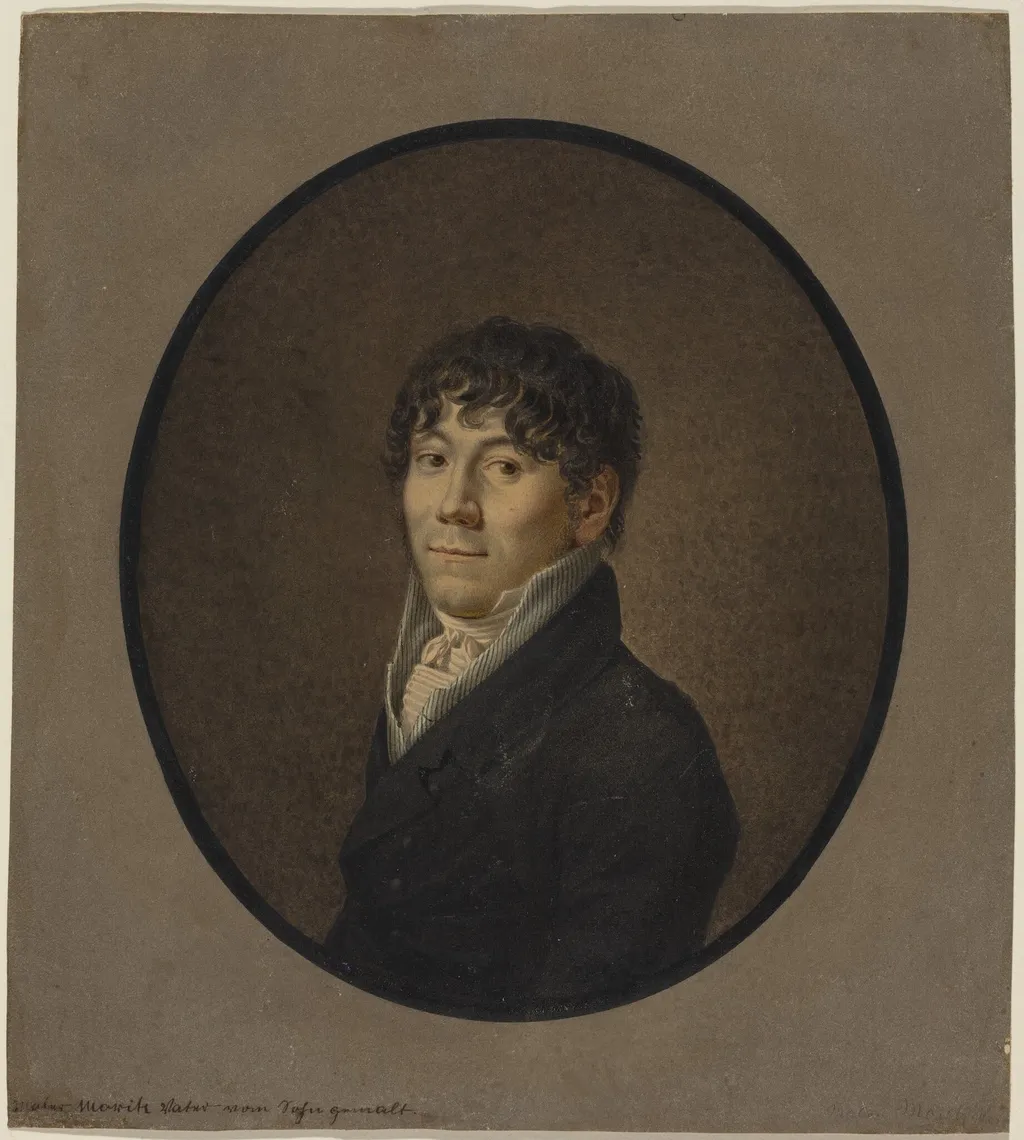
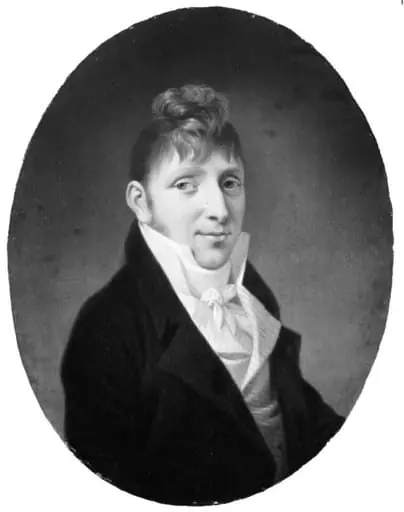
Portrait of the Artist's Father is a watercolor drawing by the Romanticist artist Friedrich Wilhelm Moritz. It dates from 1819 and is held in the collection of the National Gallery of Art.
About this work
Overview
Portrait of the Artist's Father is a watercolor drawing created by Friedrich Wilhelm Moritz in 1819. The work presents a circular, intimate portrait of a man, emphasizing his facial expression and attire.
Subject & Meaning
The subject is identified as the artist's father, depicted with curly hair, a serious demeanor, and dressed in a dark coat over a light-striped shirt with a high collar. The composition focuses attention on the sitter's face.
Technique & Style
Moritz employed watercolor with selective touches of varnish on light brown wove paper. Gentle brushstrokes and blended colors achieve a soft, subtly faded appearance, suggesting a deliberate use of layering for depth.
History & Provenance
Created in 1819, specific details about the artwork's history and ownership prior to its current location are not provided in the available information.
Context
The use of watercolor for portraiture in the early 19th century was less common than oil painting, indicating Moritz's choice for a more personal or experimental approach. The plain brown circular background further emphasizes the sitter.
Legacy
The artwork's impact or influence on subsequent artists or movements is not detailed in the provided information, focusing instead on its characteristics as a personal, familial portrait.
Own this work as a print
Artist & collection