Artwork
Page from Tales of a Parrot (Tuti-nama): text page
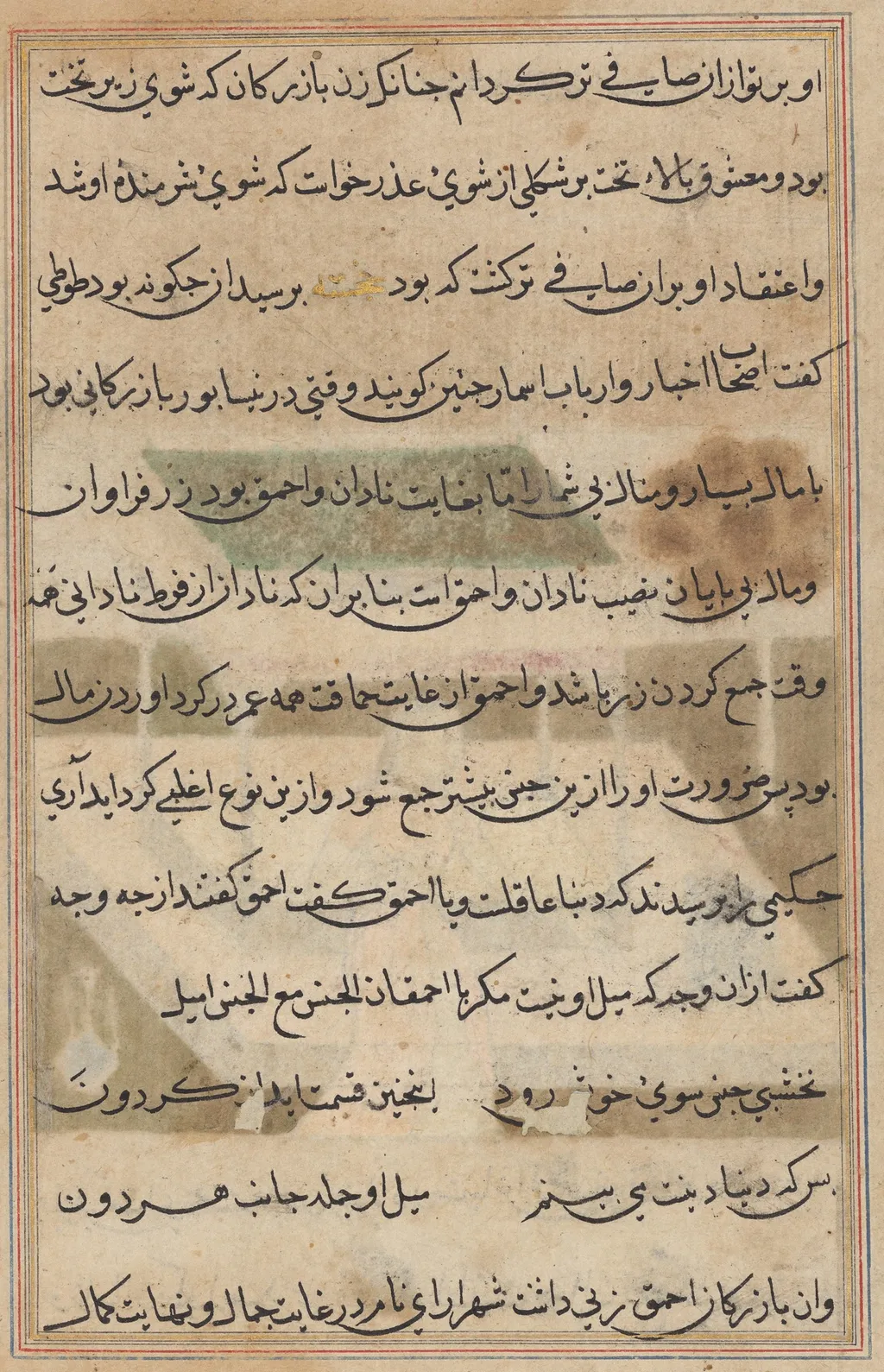
Page from Tales of a Parrot (Tuti-nama): text page is an unspecified painting. It dates from 1560 and is held in the collection of the Cleveland Museum of Art. This manuscript page originates from the illustrated work *Tales of a Parrot* (Tuti‑nama).
About this work
Overview
This manuscript page originates from the illustrated work *Tales of a Parrot* (Tuti‑nama). Executed on a single sheet of slightly yellowed paper, the surface is dominated by dense black ink forming a flowing Arabic script, bounded by a thin red line. Small, faint green and brown discolorations appear as occasional stains, suggesting age and handling.
Subject & Meaning
The page contains a segment of narrative prose from the *Tales of a Parrot*, a literary composition traditionally used for moral instruction and entertainment in Persian and Ottoman cultures. The text, rendered in elegant cursive, conveys a story about a parrot that serves as a vehicle for allegorical commentary on human behavior.
Technique & Style
The calligrapher employed a single‑brush technique, producing continuous, curved strokes that fill the page uniformly. The red border, likely added with a pigment paste, frames the composition and emphasizes the textual block. The occasional green and brown spots are likely natural paper blemishes or later pigment residues rather than intentional decoration.
History & Provenance
The manuscript page is part of a larger codex now held by the Cleveland Museum of Art. Its paper, ink, and pigment composition indicate a pre‑modern origin, with the yellowed substrate reflecting centuries of storage. The museum acquired the item as part of its collection of Islamic manuscripts, though the precise acquisition date is not specified in the available data.
Context
*Tales of a Parrot* belongs to a genre of didactic storytelling that flourished in the Islamic world from the medieval period onward. Such works were often copied by hand for private libraries, serving both literary and decorative functions. The use of Arabic script and the red framing line align with conventional manuscript aesthetics of the region.
Artist & collection

 Page from Tales of a Parrot (Tuti-nama): text page
 Page from Tales of a Parrot (Tuti-nama): text page
 Page from Tales of a Parrot (Tuti-nama): text page
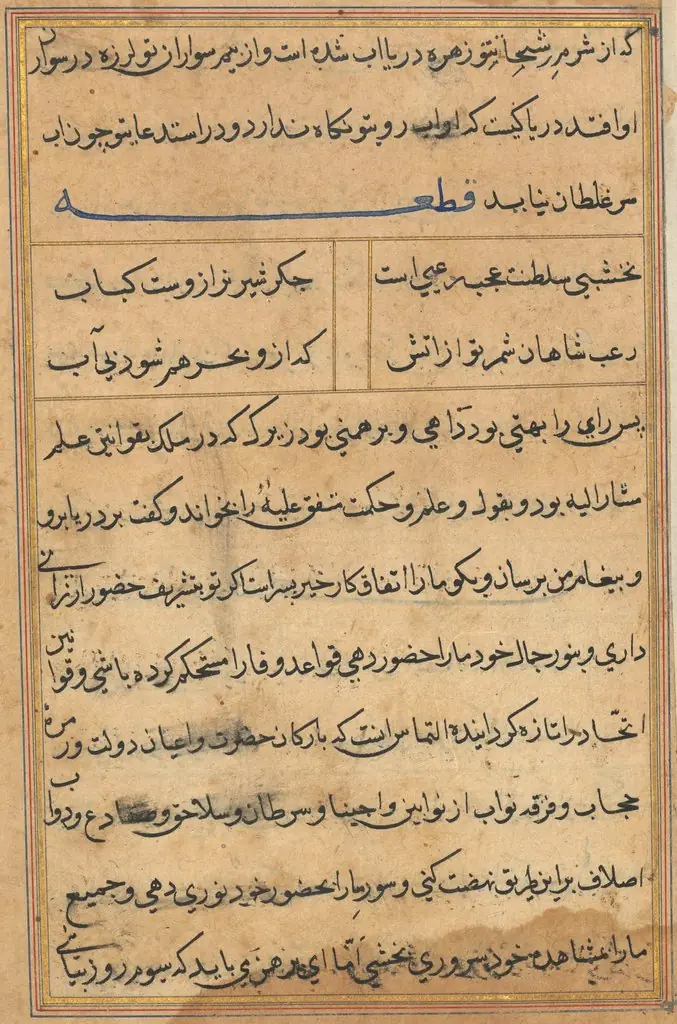 Page from Tales of a Parrot (Tuti-nama): text page
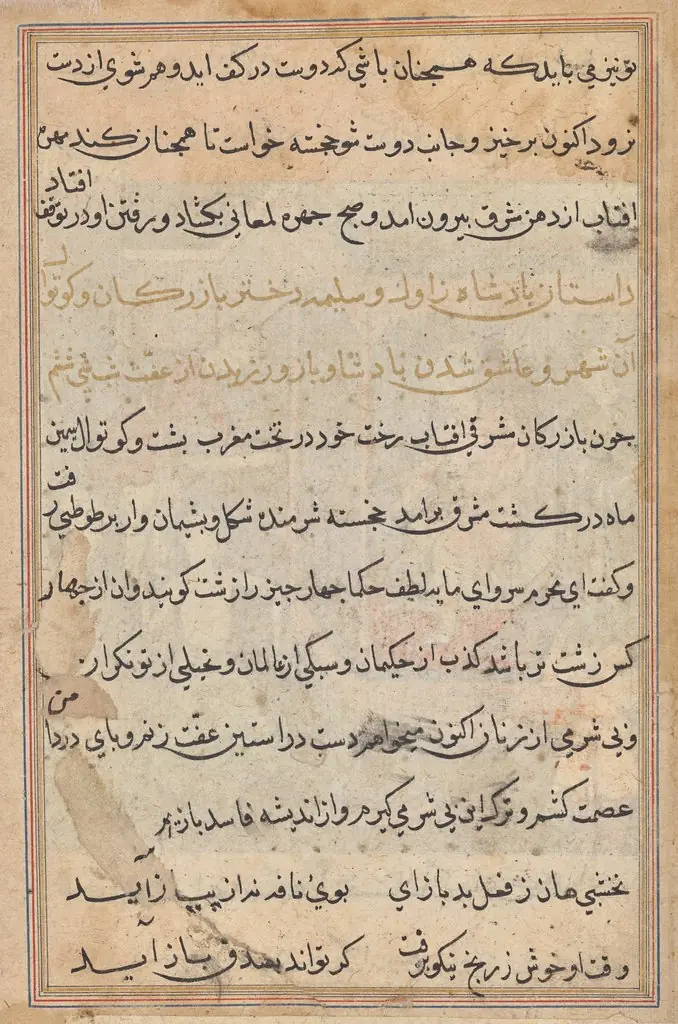 Page from Tales of a Parrot (Tuti-nama): text page
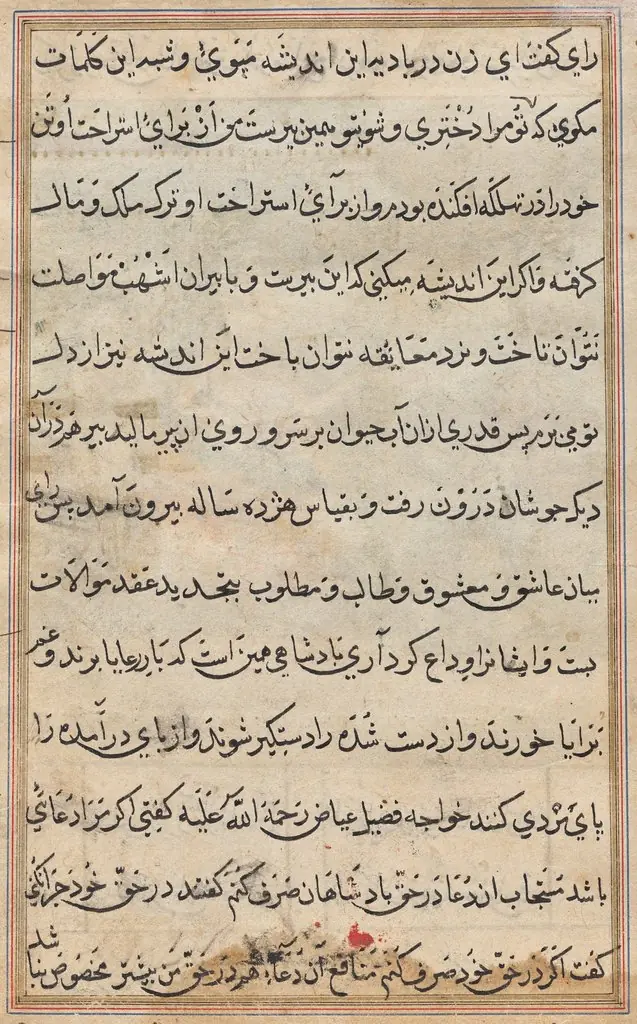 Page from Tales of a Parrot (Tuti-nama): text page
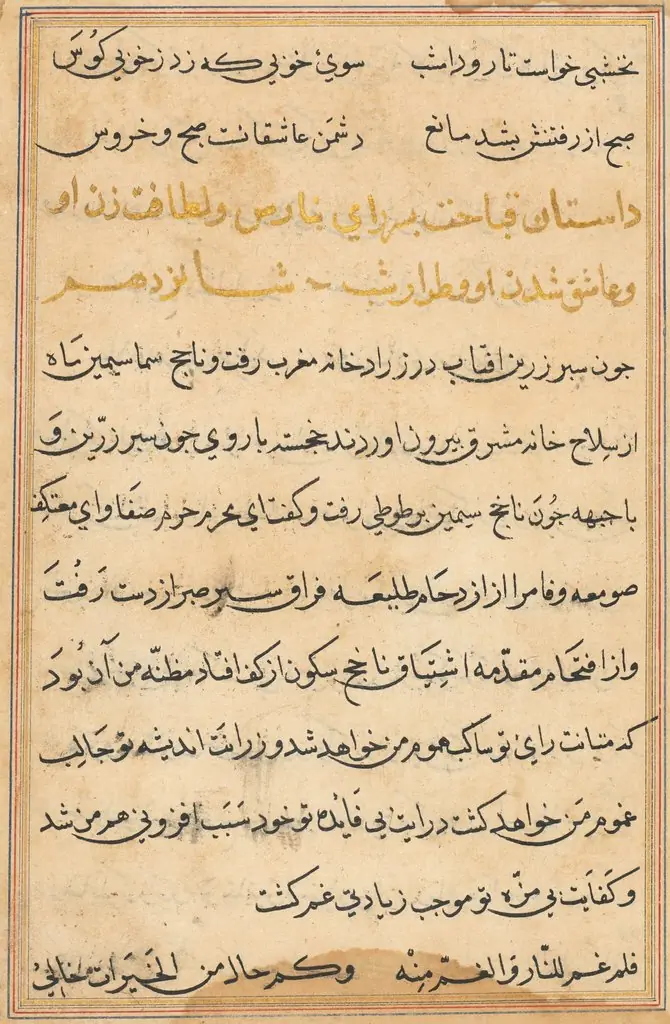 Page from Tales of a Parrot (Tuti-nama): text page
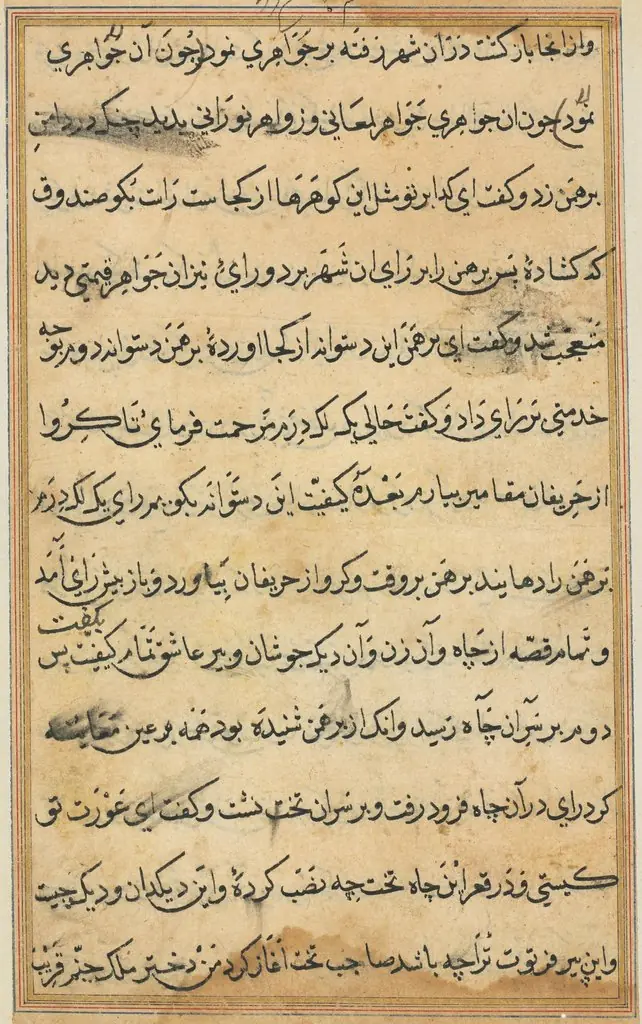 Page from Tales of a Parrot (Tuti-nama): text page
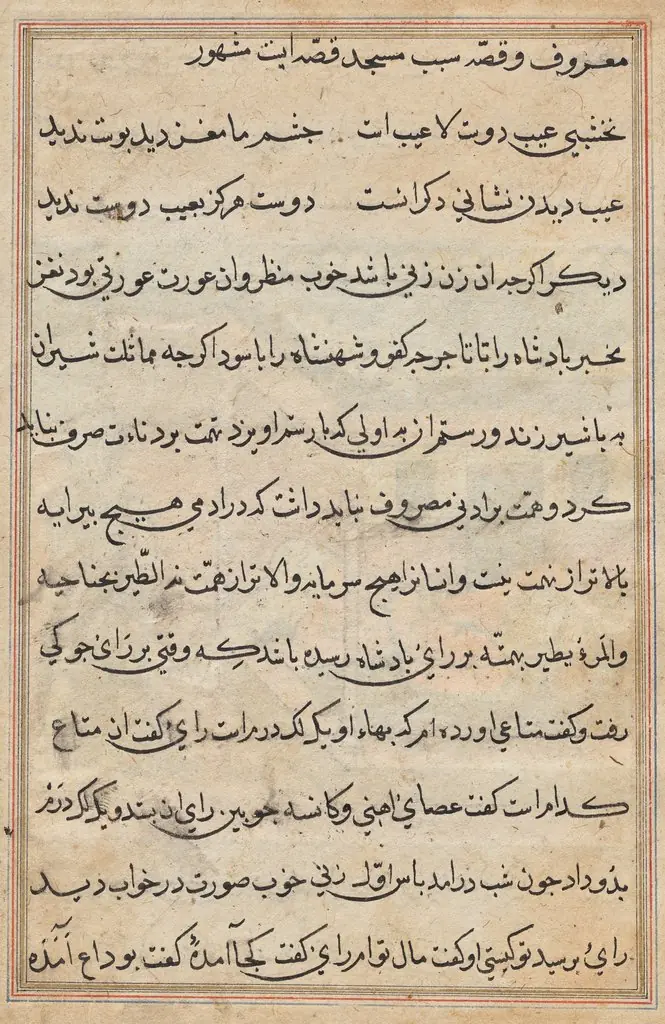 Page from Tales of a Parrot (Tuti-nama): text page
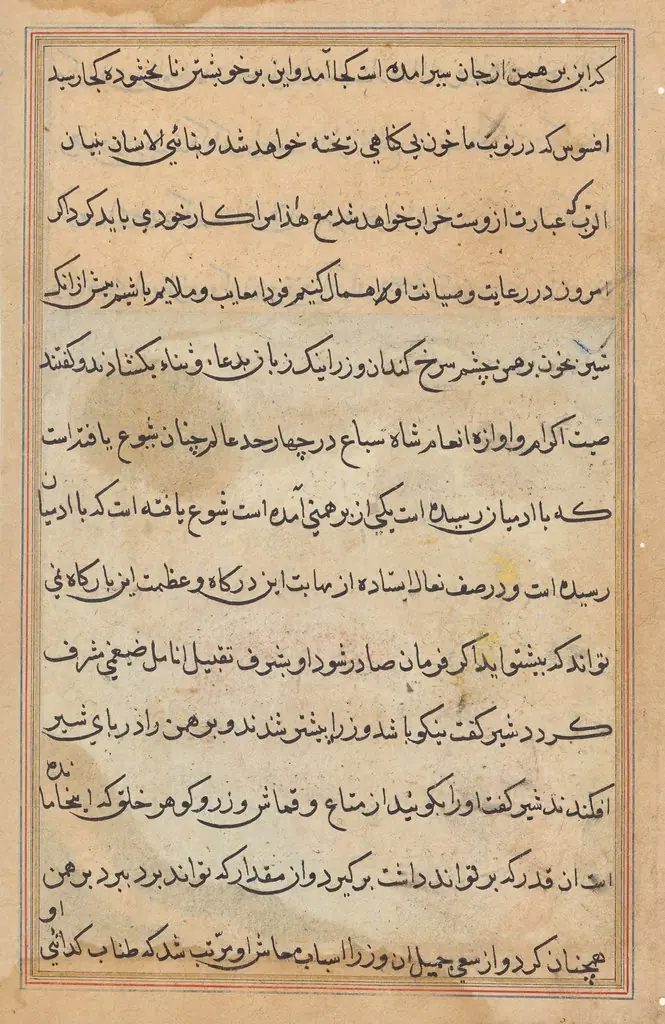 Page from Tales of a Parrot (Tuti-nama): text page
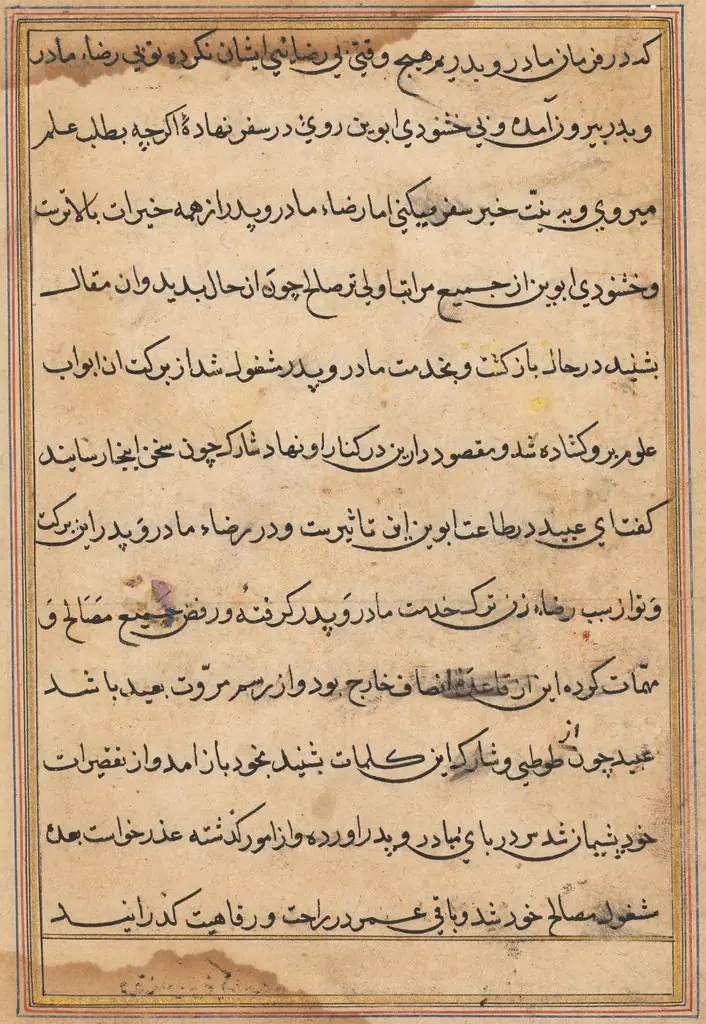 Page from Tales of a Parrot (Tuti-nama): text page