Artwork
Dreifigurige Kreuzigung
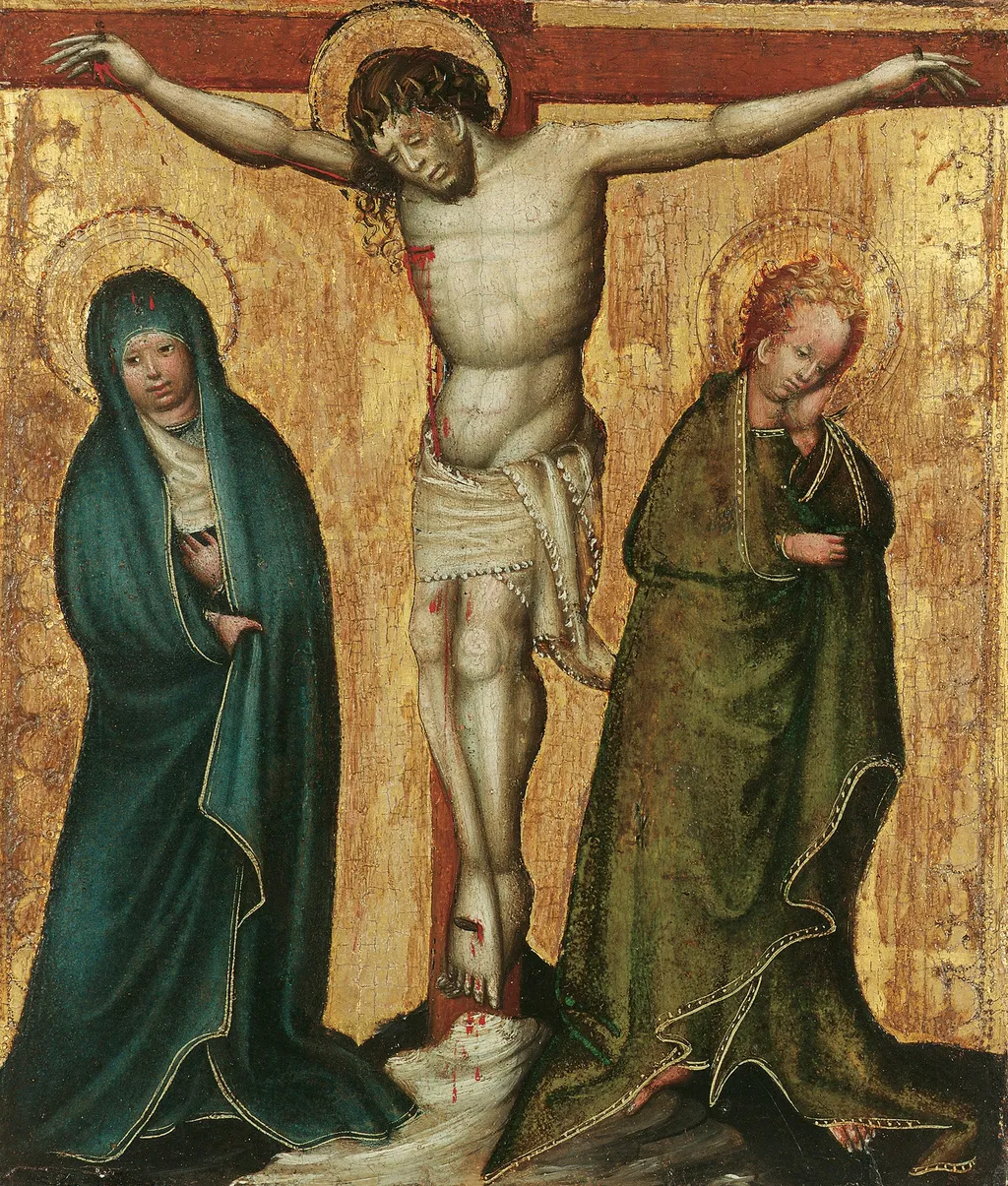
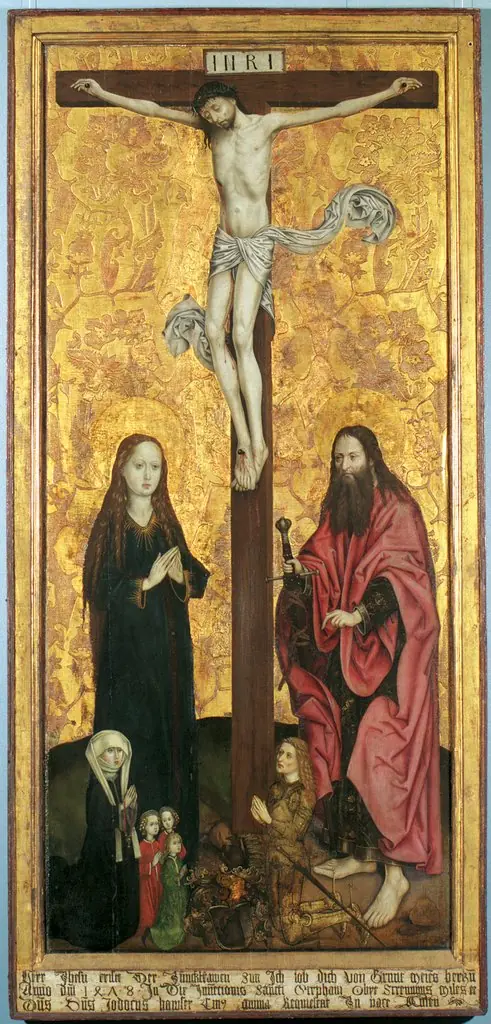
Dreifigurige Kreuzigung is an unspecified painting by the Early Renaissance artist Unknown. It dates from 1430 and is held in the collection of the Kunsthistorisches Museum. This medieval panel painting depicts the Crucifixion with three figures: Christ on the cross and two mourners beside him.
About this work
Overview
The composition is compact, centered on the vertical form of the cross, with a flat, gilded background that suggests a sacred, non-terrestrial space.
This medieval panel painting depicts the Crucifixion with three figures: Christ on the cross and two mourners beside him. The composition is compact, centered on the vertical form of the cross, with a flat, gilded background that suggests a sacred, non-terrestrial space. The figures are rendered with restrained emotion, their postures and expressions conveying solemn reverence rather than dramatic anguish.
Subject & Meaning
The scene illustrates Christ’s sacrifice, framed not as a moment of violent death but as a quiet, enduring act of redemption. The two women, likely the Virgin Mary and Mary Magdalene, observe in silent grief, their presence underscoring the human dimension of divine suffering. Christ’s calm expression and wounded yet composed body emphasize spiritual resignation over physical torment.
Technique & Style
The painting employs tempera on wood, with fine, deliberate brushwork defining the folds of garments and the pallor of skin. Subtle modeling suggests volume without full chiaroscuro, while the gold ground reflects liturgical tradition. Surface wear and fading indicate age and devotional use, with visible brushstrokes adding tactile texture to the robes and flesh.
History & Provenance
Created in the late medieval period, likely for private or monastic devotion, the work shows signs of prolonged handling and exposure. Its preservation suggests it was cherished within a religious context, though its exact origin and early ownership remain undocumented. The faded gold and worn edges point to centuries of veneration in a setting where time and ritual left their mark.
Context
In the late Middle Ages, devotional images of the Crucifixion were common in both public and private worship, designed to inspire contemplation and penitence. This painting aligns with regional traditions that favored emotional restraint over theatricality, prioritizing spiritual presence over narrative intensity. The use of gold leaf and limited palette reflects liturgical aesthetics of the time.
Legacy
Though not widely known today, the work exemplifies the quiet intensity of late medieval religious art. Its emphasis on stillness and endurance influenced later devotional imagery in northern Europe, where emotional restraint remained a valued mode of spiritual expression. The painting survives as a testament to the enduring power of understated sacred representation.
Artist & collection

 Domestic Scene
 Giacomo and Cardinal Marco, investing Andrea, Abbot of San Zeno, with his Benefice
 The Nymph of Fontainebleau
 Portrait of a Woman
 Madonna and Child with Saints in the Enclosed Garden
 Venus and Minerva
 Family Group of Four on Sofa
 Wall painting from Room H of the Villa of P. Fannius Synistor at Boscoreale
 Christ on the Cross
 The Crucifixion
 Crucifixion
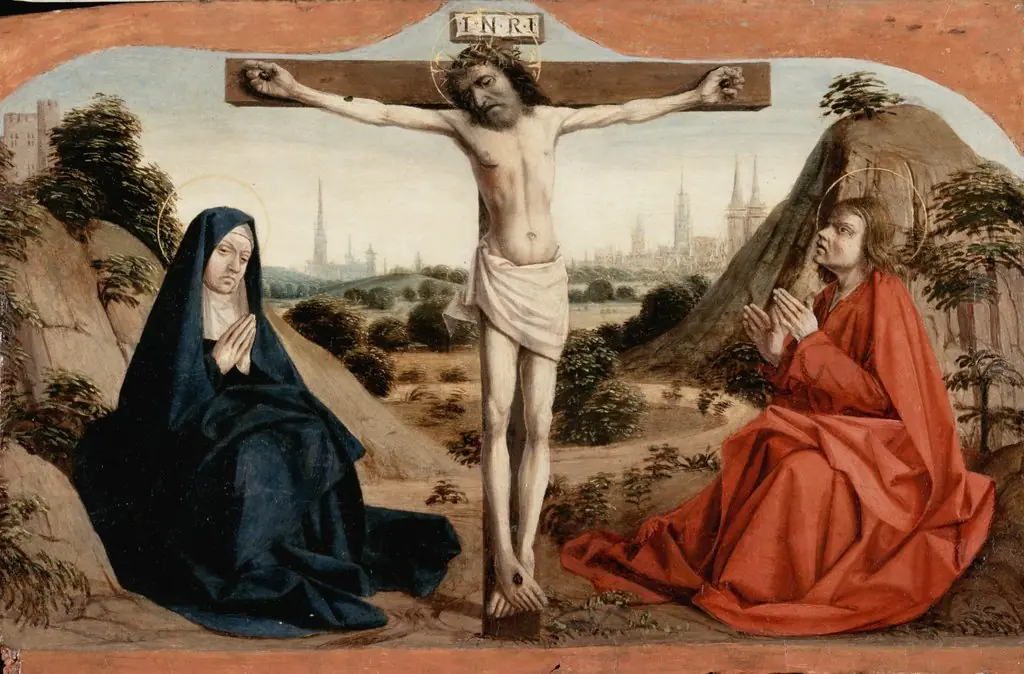 Crucifixion
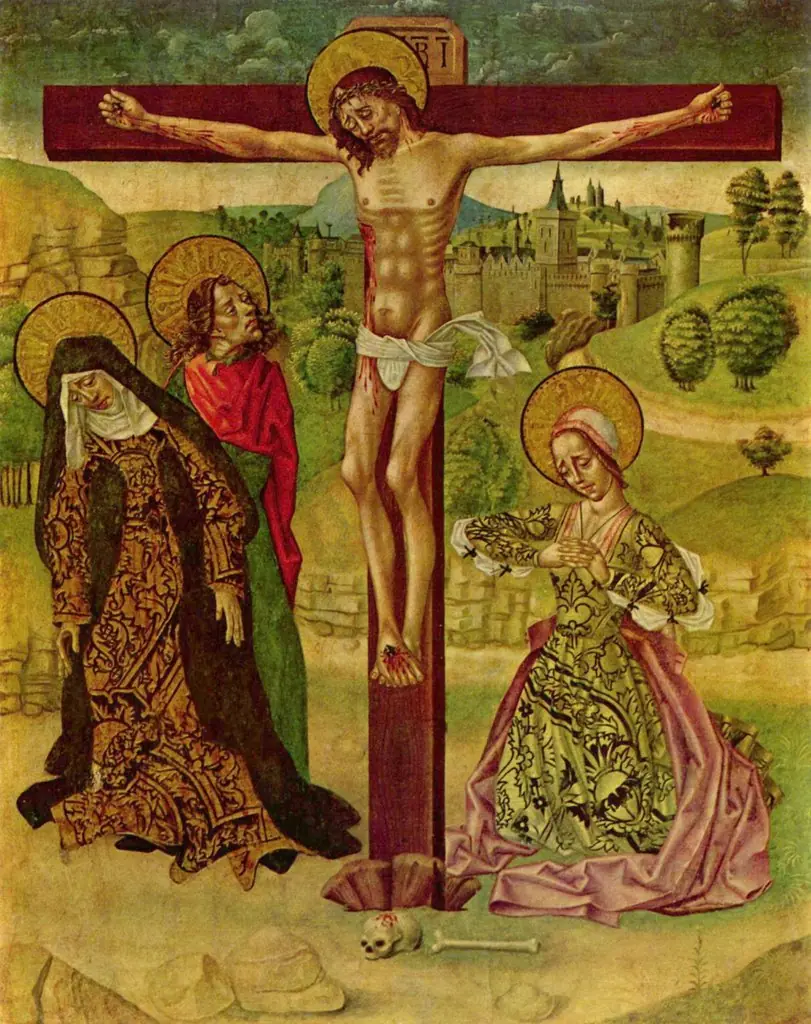 The Crucifixion
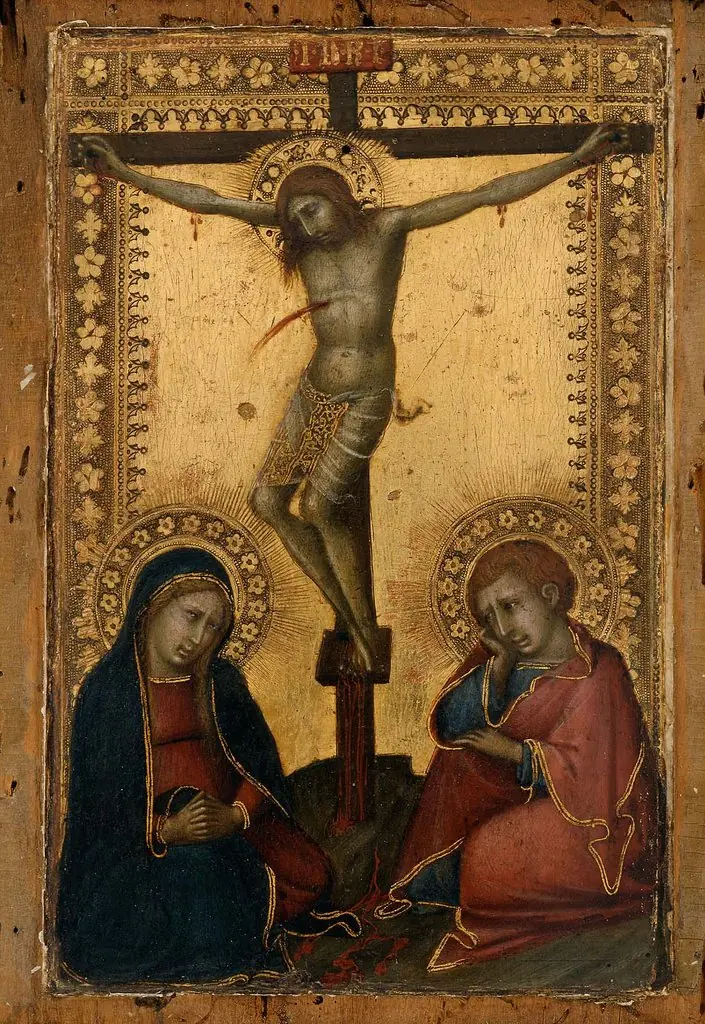 Crucified Christ with the Virgin and Saint John the Evangelist
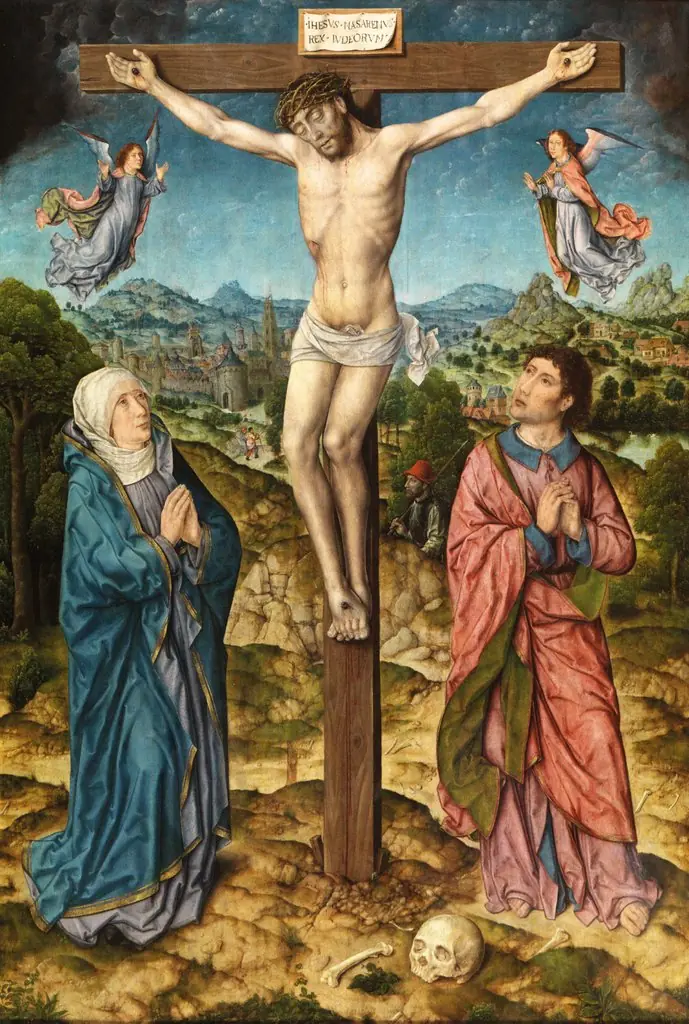 The Crucifixion
 Processional Cross
 The Crucifixion with a Carthusian Monk
 Christ crucified between Mary and John the Evangelist and the saints Adolphus and Ambrosius
 Crucifixion
 Epitaph des Jodok Hauser