Artwork
The Crucifixion
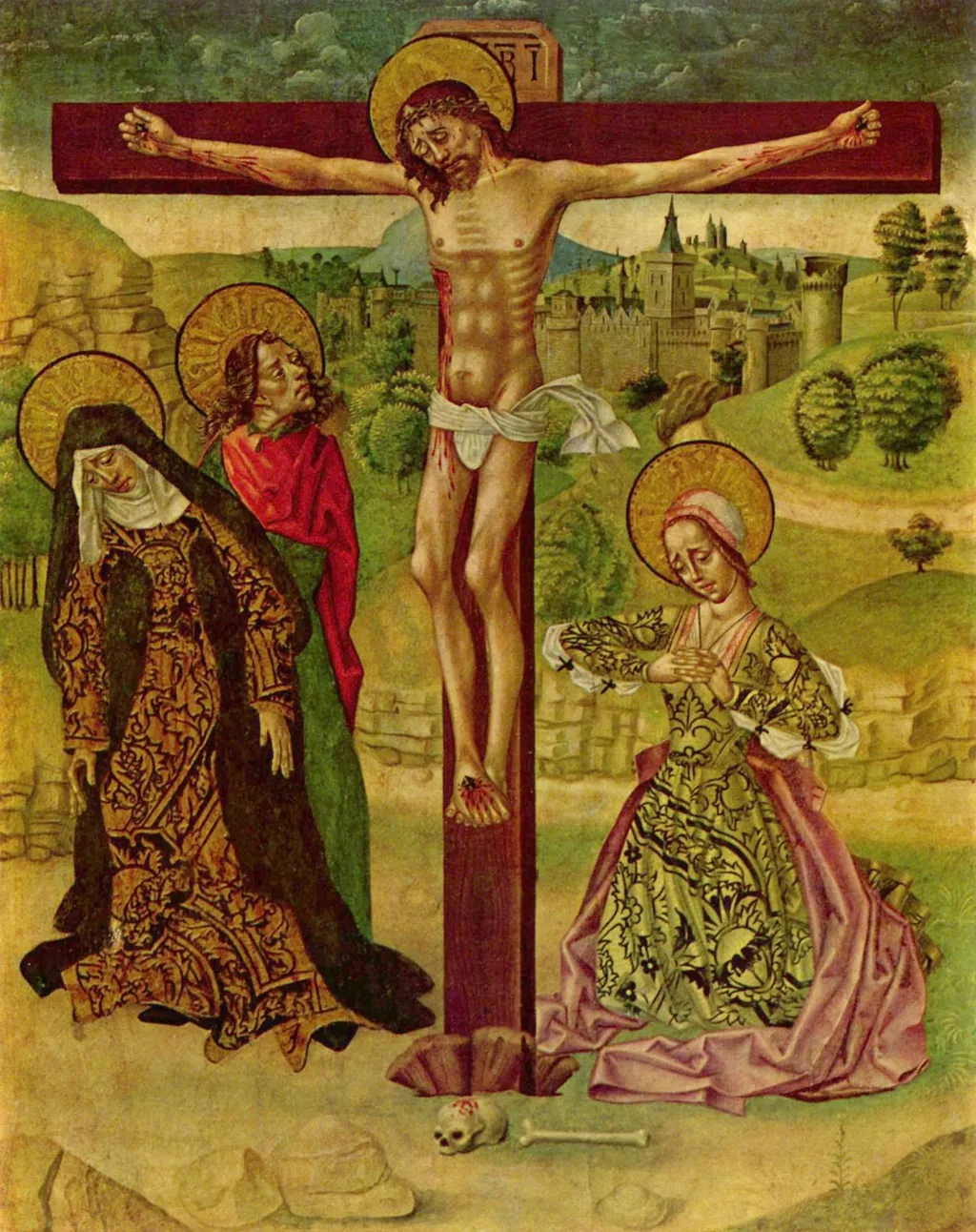
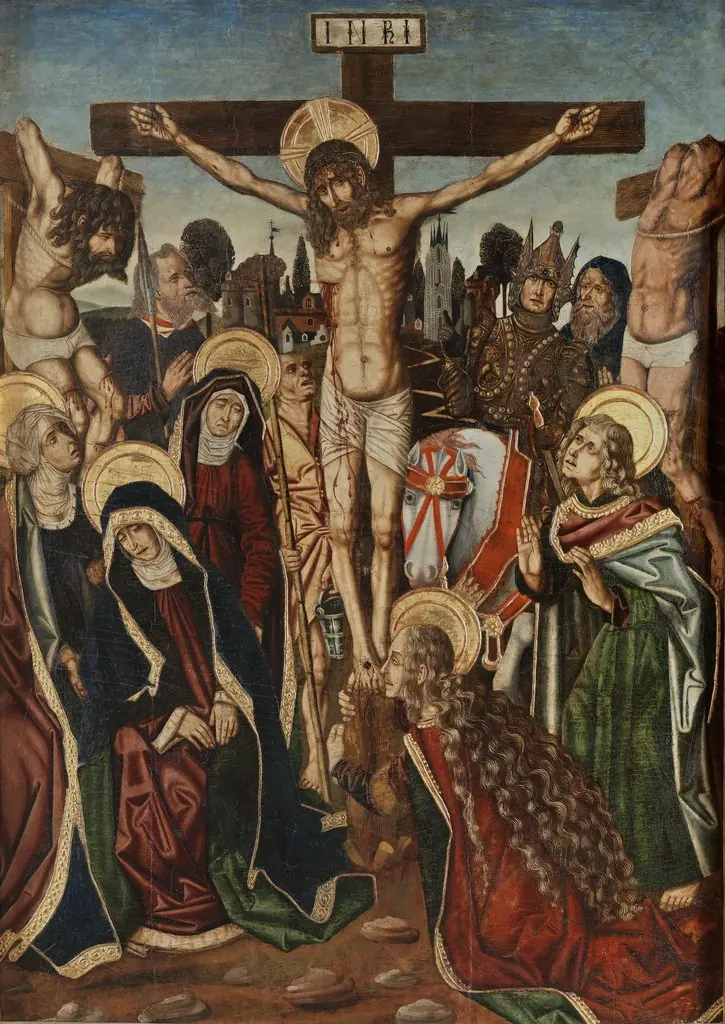
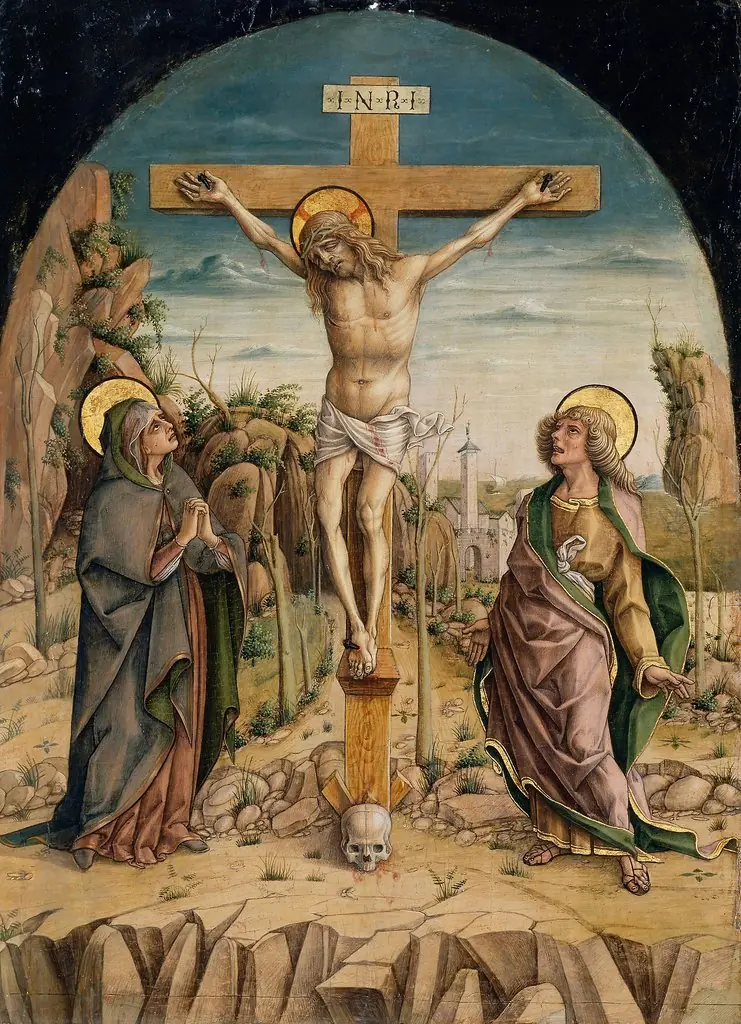
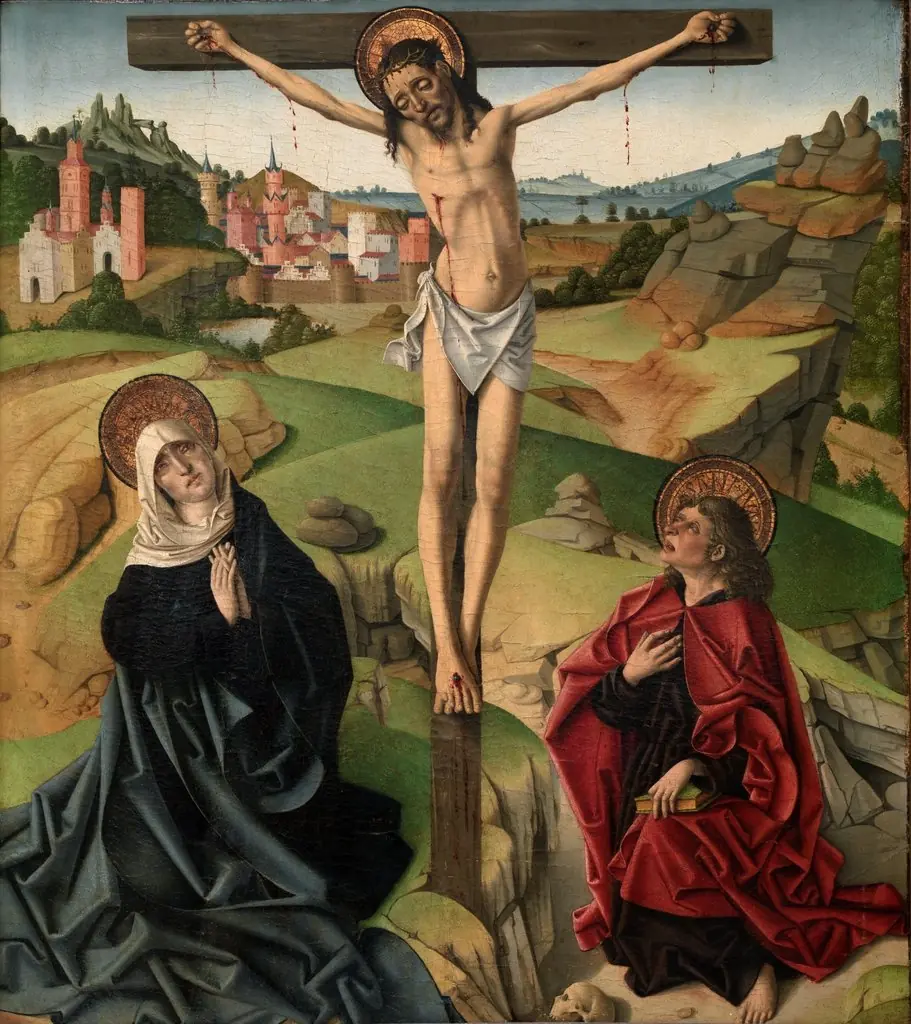
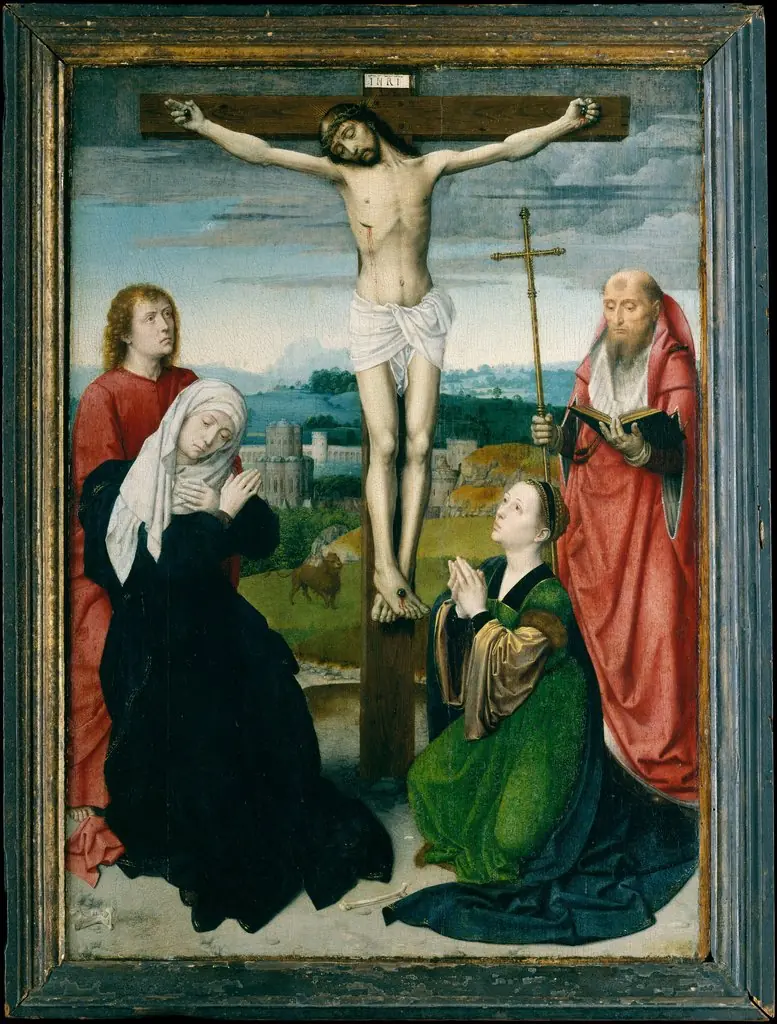
The Crucifixion is an unspecified painting by the Northern Renaissance artist Master of Budapest. It dates from 1500 and is held in the collection of the Museum of Fine Arts, Budapest.
About this work
Overview
Painted around 1500, this work is attributed to the Master of Budapest, an anonymous artist active in the late Gothic tradition.
Painted around 1500, this work is attributed to the Master of Budapest, an anonymous artist active in the late Gothic tradition. It portrays the Crucifixion, a central event in Christian theology, rendered with solemn clarity. The painting resides in the Museum of Fine Arts, Budapest, where it has been held since at least the early 20th century. Its composition follows established iconographic conventions of the period, emphasizing spiritual gravity over narrative detail.
Subject & Meaning
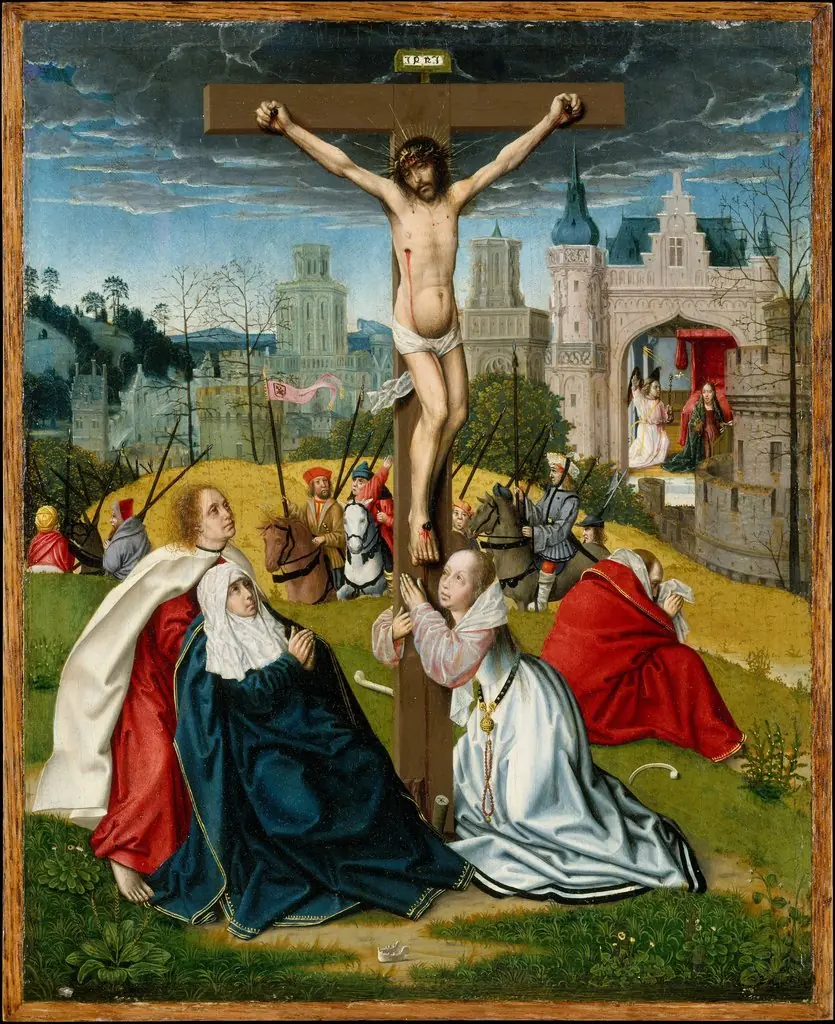
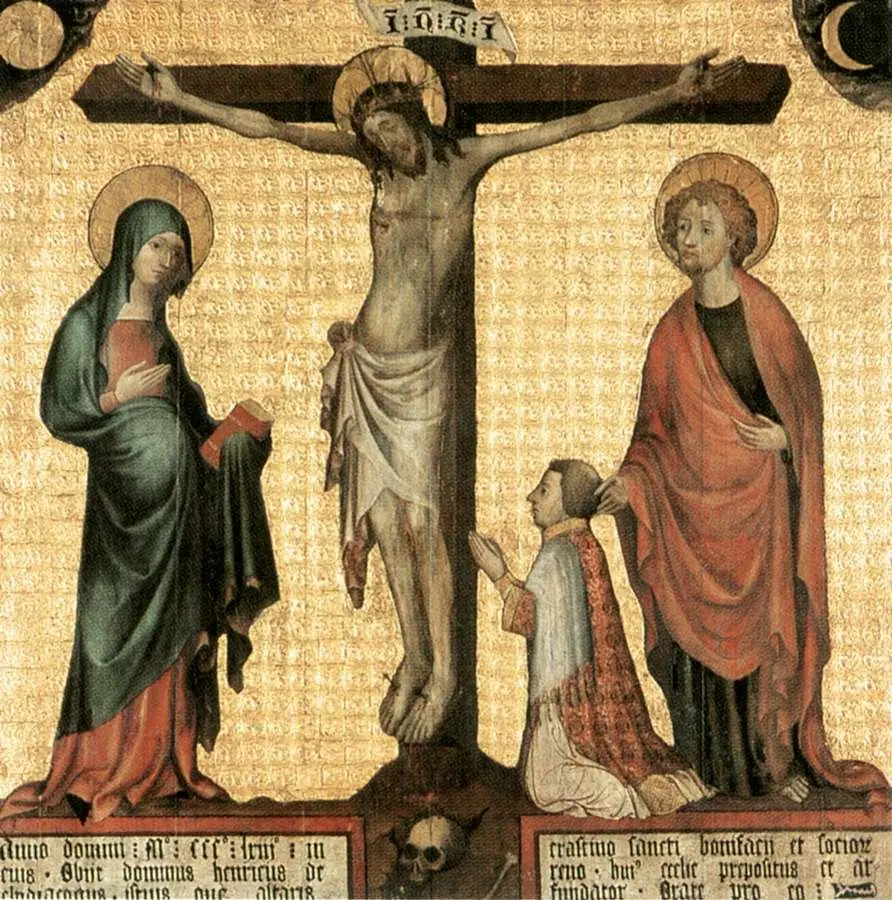
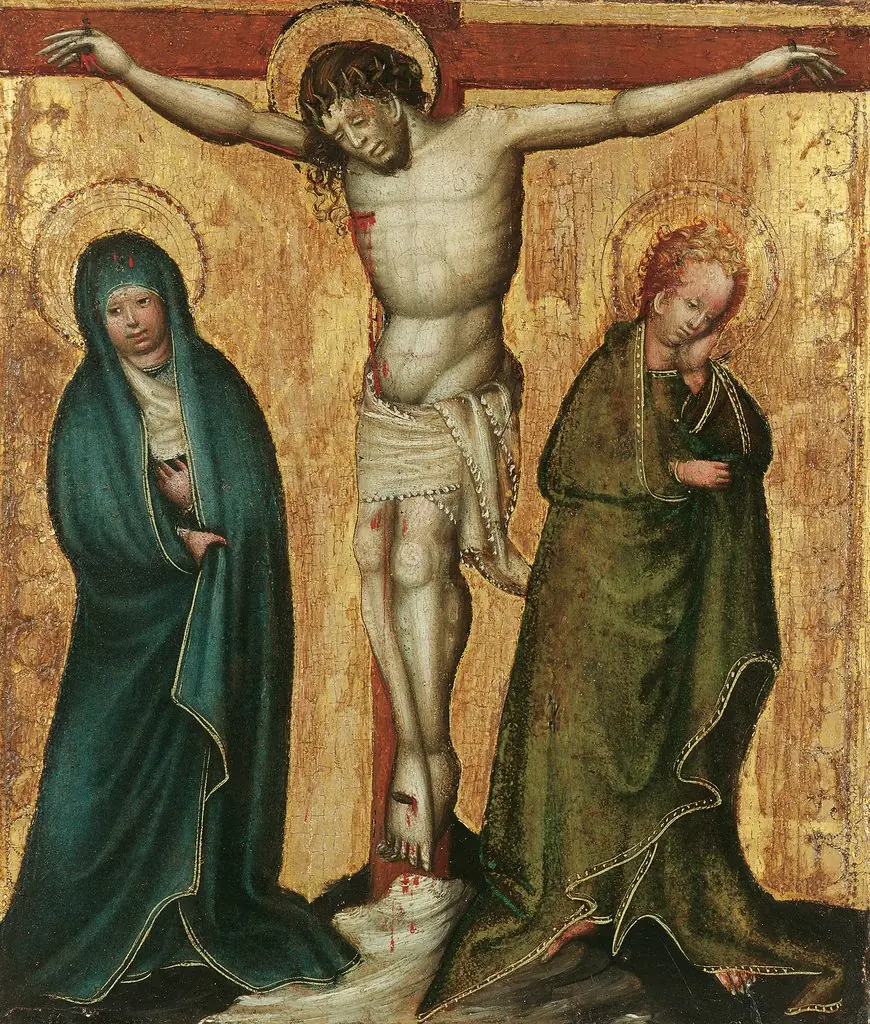
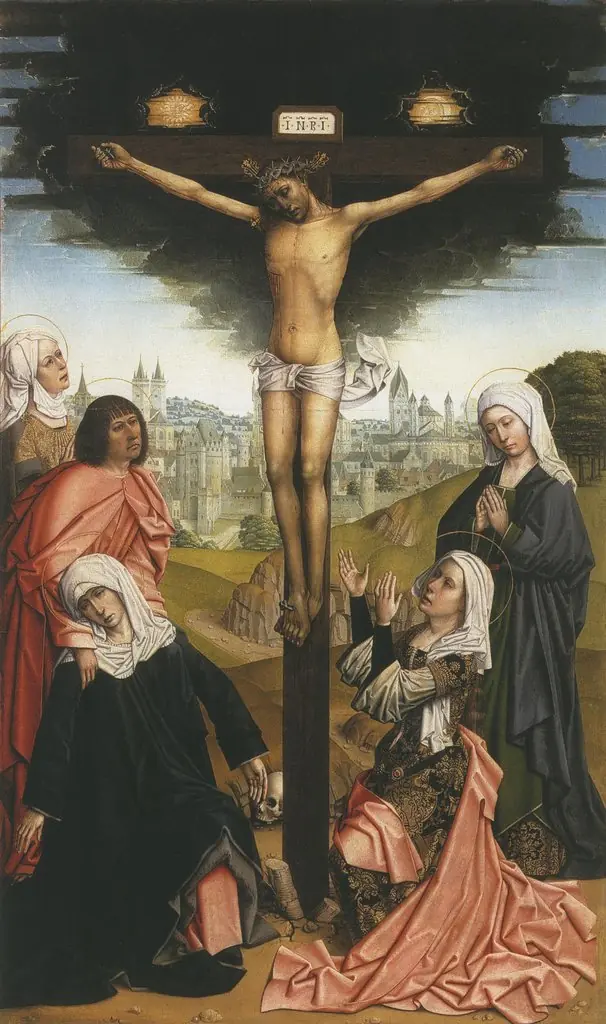
Christ is depicted suspended on the cross, his body marked by the wounds of the Passion. Below, a skull and bones reference Adam’s burial site, symbolizing redemption through Christ’s sacrifice. To the left, two figures in rich garments observe in grief, likely representing Jewish leaders or disciples. On the right, a woman kneels in prayer, embodying penitence and devotion. The scene is not merely a record of death but a meditation on atonement and divine love.
Technique & Style
The artist employs a restrained palette of muted reds, blues, and earth tones to focus attention on Christ’s form. Linear perspective is subtly used to ground the figures within a calm, distant landscape of hills and a walled city. Chiaroscuro is present but subdued, with soft modeling of flesh and fabric rather than dramatic contrasts. The figures are elongated and stylized, typical of late medieval devotional painting, prioritizing symbolic resonance over naturalism.
History & Provenance
The painting entered the collection of the Museum of Fine Arts, Budapest, in the early 1900s, though its earlier ownership remains undocumented. It was likely created for private devotion or a small ecclesiastical setting, given its intimate scale and detailed symbolism. Attribution to the Master of Budapest stems from stylistic comparisons with other unsigned works from the same region and period, as no documentary evidence confirms the artist’s identity.
Context
Created during the transition from Gothic to early Renaissance styles, the painting reflects lingering medieval devotional practices in Central Europe. While Italian artists were advancing naturalism, northern workshops continued emphasizing spiritual symbolism through composition and gesture. This work aligns with regional altarpieces meant to inspire contemplation, where every element—landscape, posture, color—served a theological purpose.
Legacy
Though the artist’s name is lost, the painting remains a representative example of late medieval Hungarian religious art. It contributes to scholarly understanding of how devotional imagery functioned outside major artistic centers. Its preservation in a public museum ensures continued study of regional aesthetics and the enduring visual language of Christian sacrifice in pre-Reformation Europe.
Own this work as a print
Artist & collection