Artwork
Portrait of Fyodor A. Lukov (1761-1813)
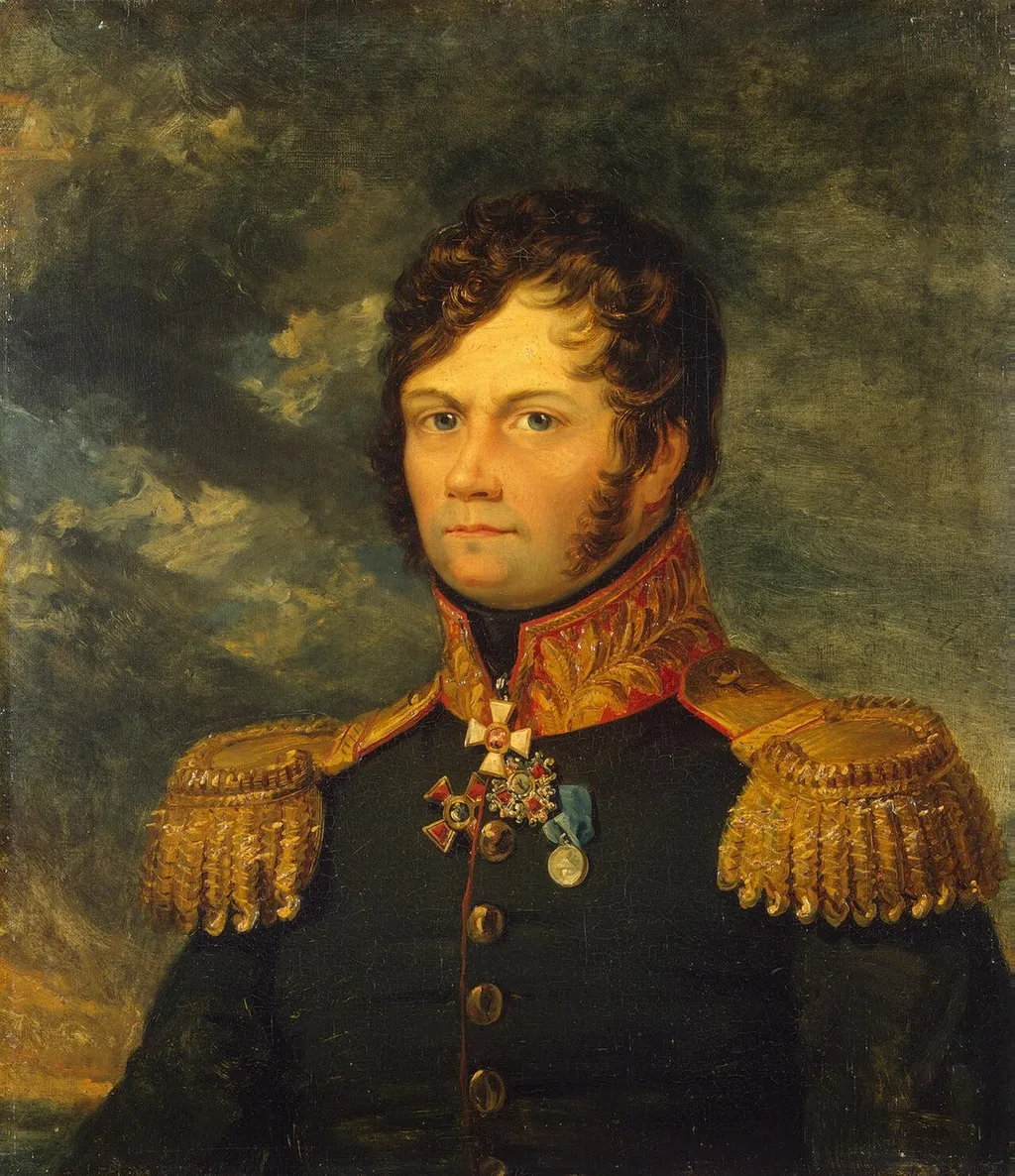
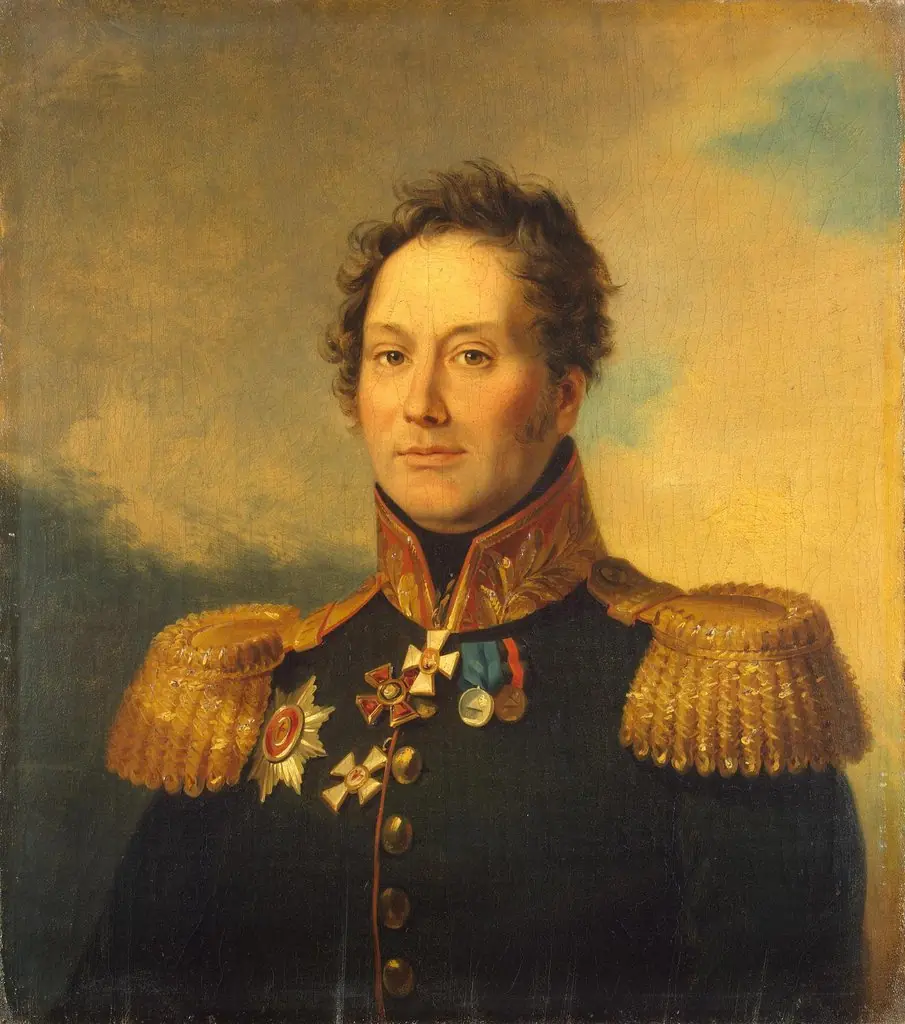
Portrait of Fyodor A. Lukov (1761-1813) is an oil painting by Unknown. It dates from 1822 and is held in the collection of the Hermitage Museum. The oil portrait depicts Fyodor A.
About this work
Overview
The oil portrait depicts Fyodor A. Lukov, a Russian officer who lived from 1761 to 1813. He is presented in a dark military coat accented with bright red trim, gold epaulettes, and a series of medals affixed to his chest. His hair is neatly swept back, and he stands before a muted sky rendered in soft greens and yellows.
Subject & Meaning
Lukov’s attire and the conspicuous display of decorations convey his senior rank and distinguished service. The formal composition, created posthumously, functions as a commemorative image, emphasizing honor and duty rather than personal intimacy.
Technique & Style
Executed in oil on canvas, the work balances detailed rendering of the uniform and medals with a loosely modeled atmospheric background. The muted palette and subtle gradations in the sky create a gentle contrast to the crisp, illuminated figure.
History & Provenance
The portrait was painted after Lukov’s death, likely commissioned by family or a military institution as a tribute. It entered the collection of the State Hermitage Museum, where it is displayed among other 18th‑ and early 19th‑century Russian portraiture.
Context
In the late Imperial Russian tradition, posthumous portraits served to memorialize officers and reinforce the values of the service. Lukov’s depiction aligns with contemporary conventions that highlighted rank through uniform details and medalry, situating him within the broader visual culture of Russian military elite.
Artist & collection

 Domestic Scene
 Giacomo and Cardinal Marco, investing Andrea, Abbot of San Zeno, with his Benefice
 The Nymph of Fontainebleau
 Portrait of a Woman
 Madonna and Child with Saints in the Enclosed Garden
 Venus and Minerva
 Family Group of Four on Sofa
 Wall painting from Room H of the Villa of P. Fannius Synistor at Boscoreale
 Portrait of Fyodor K. Korff (1773/74-1823)
 Portrait of Dmitry P. Lyapunov (1775-1821)
 Portrait of Kirill F. Kazachkovsky (1760-1829)
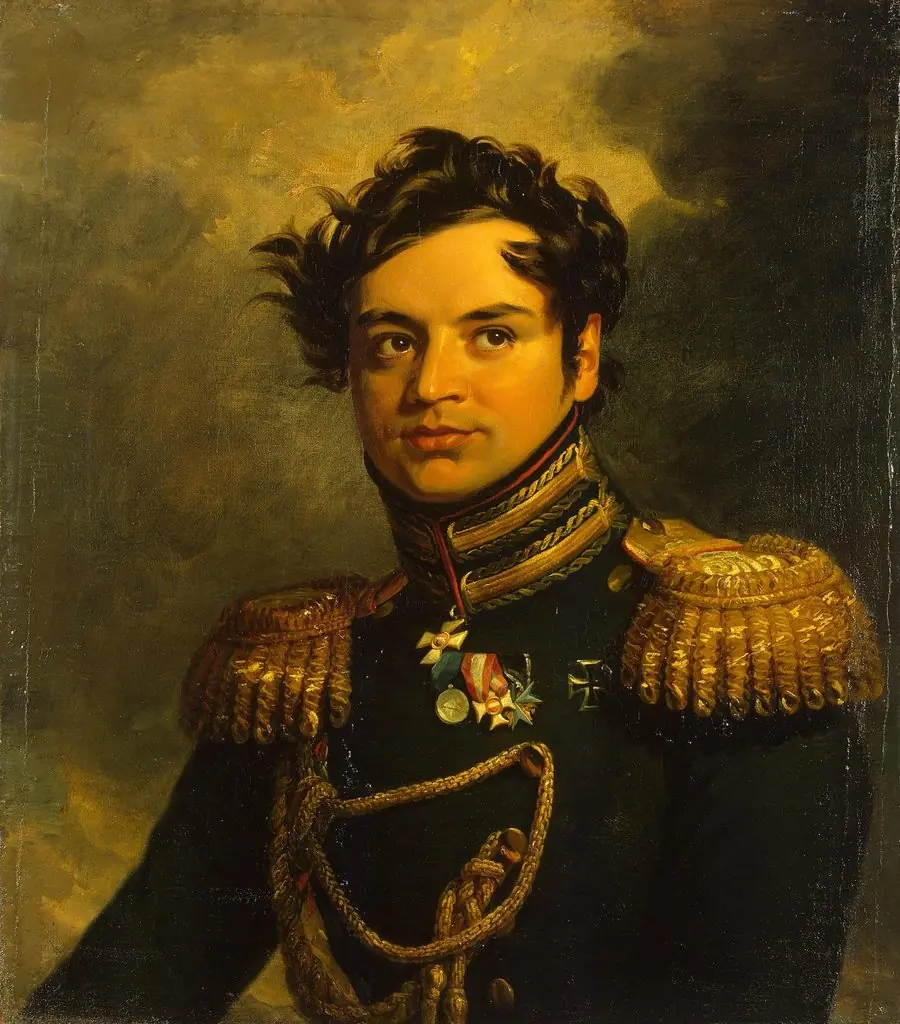 Portrait of Yakov A. Potyomkin (1781-1831)
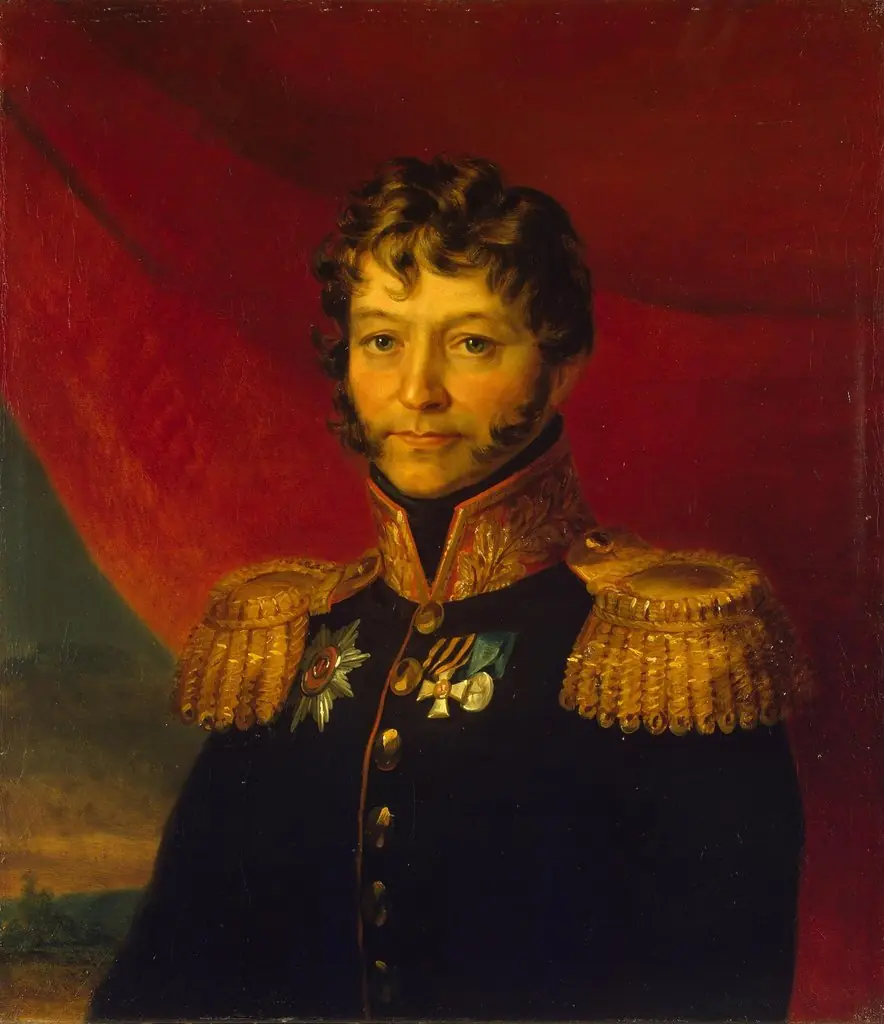 Portrait of Nikolai F. Titov (1758/59-1822)
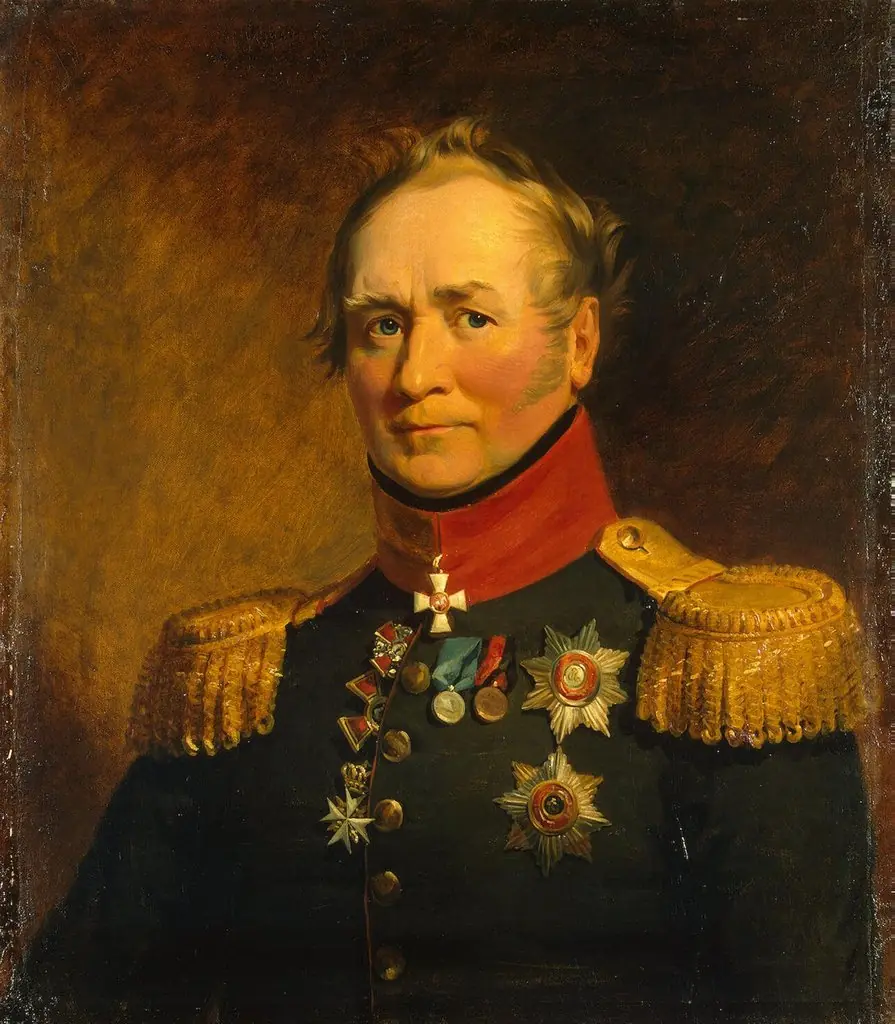 Portrait of Fyodor F. Oerthel (1767/68-1825)
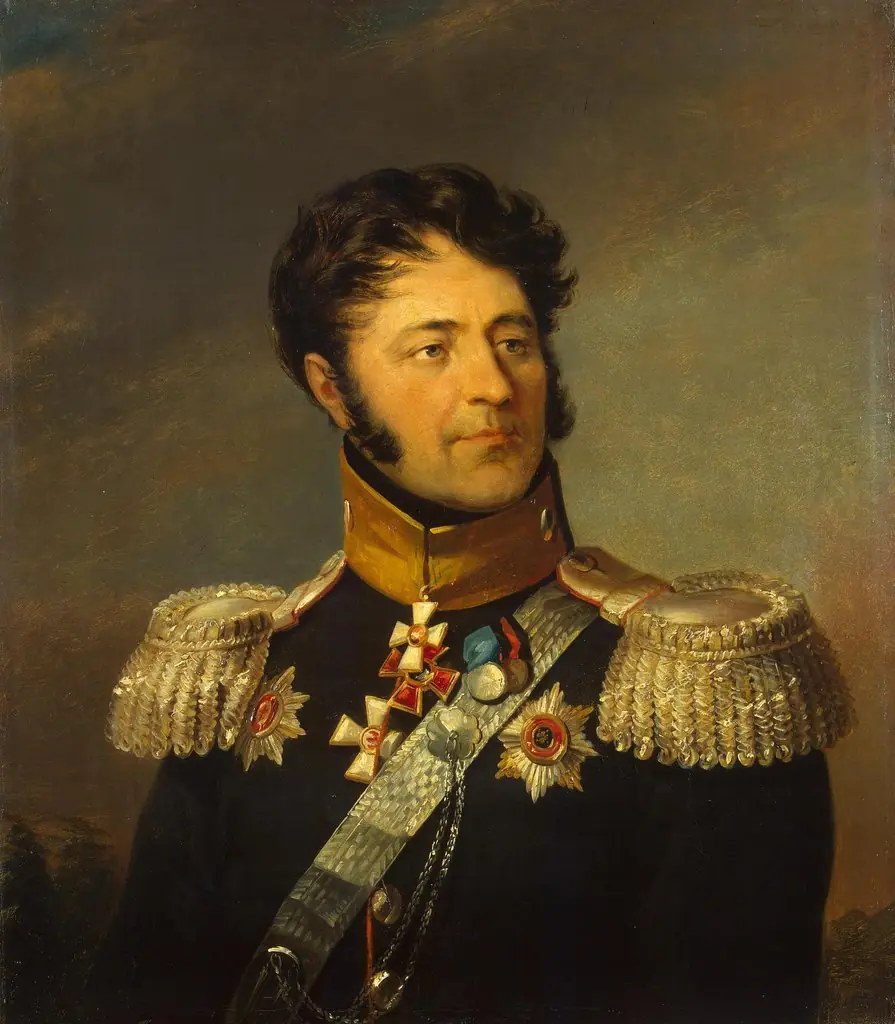 Portrait of Luka A. Denisyev (1762-1846)
 Portrait of Moisey I. Karpenko (1775-1854)