Artwork
Andromeda
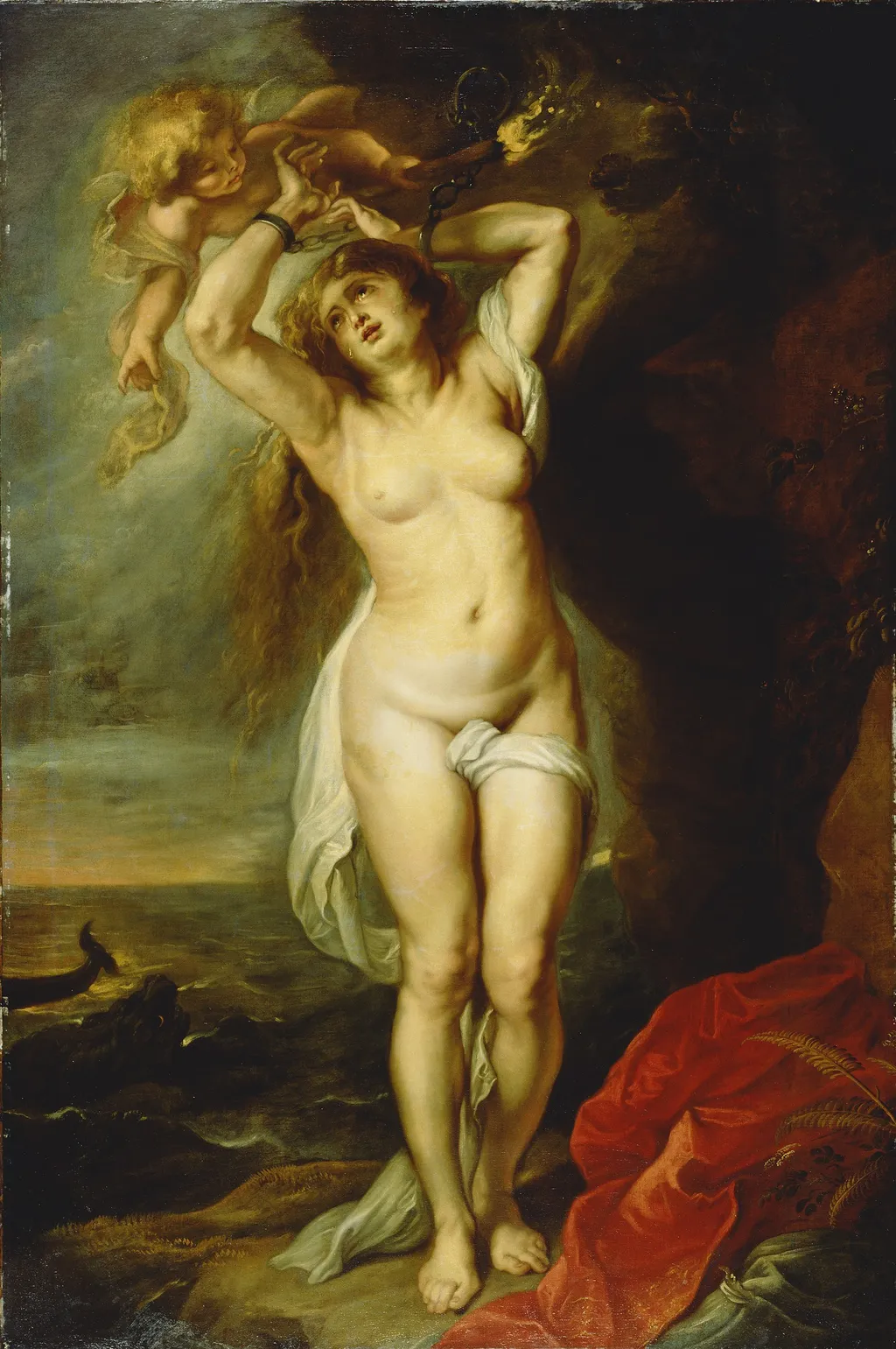
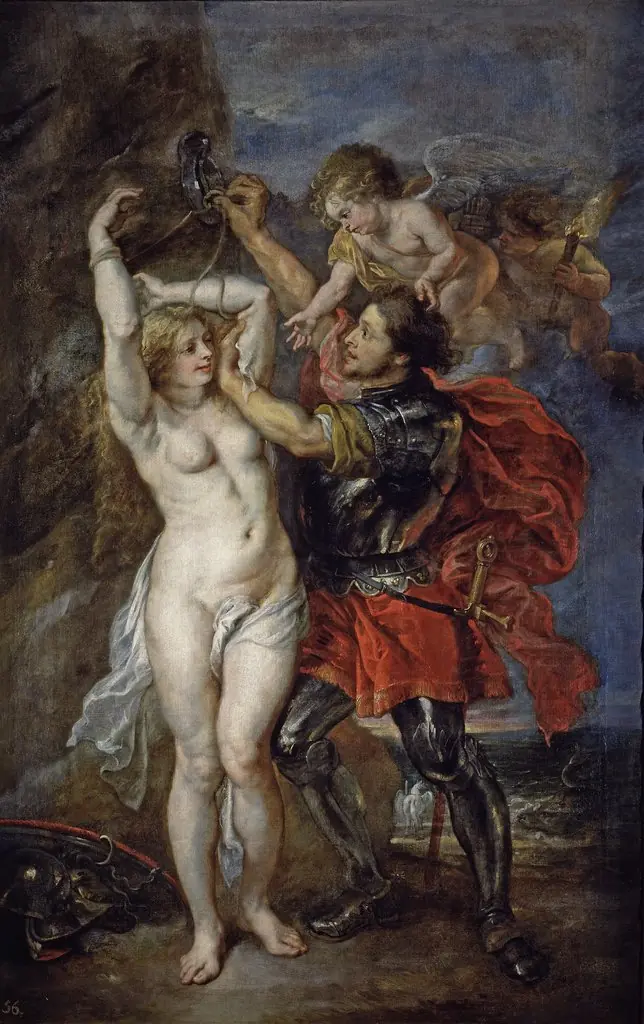
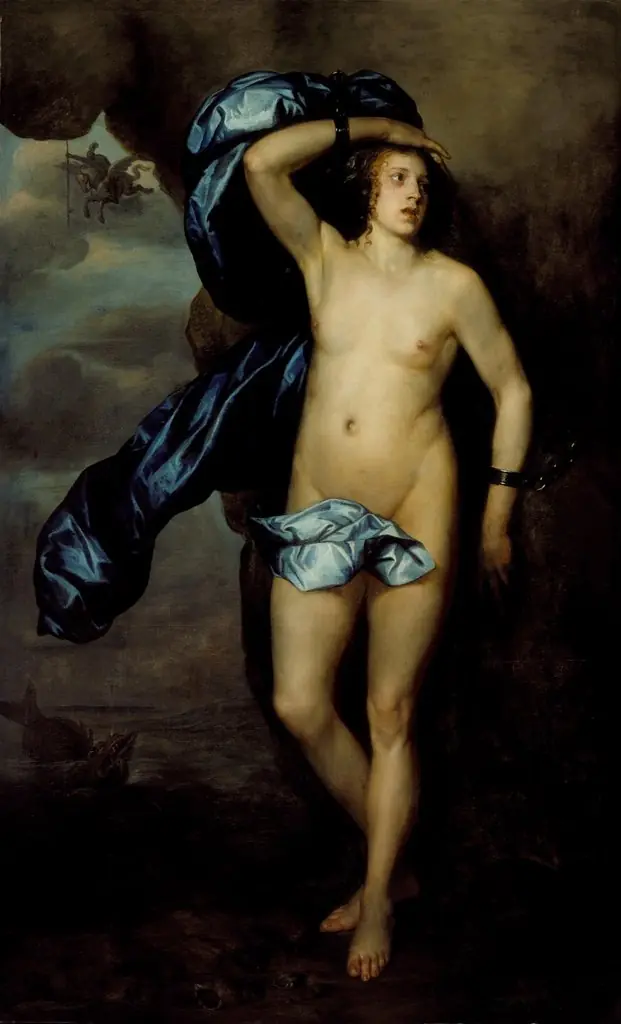
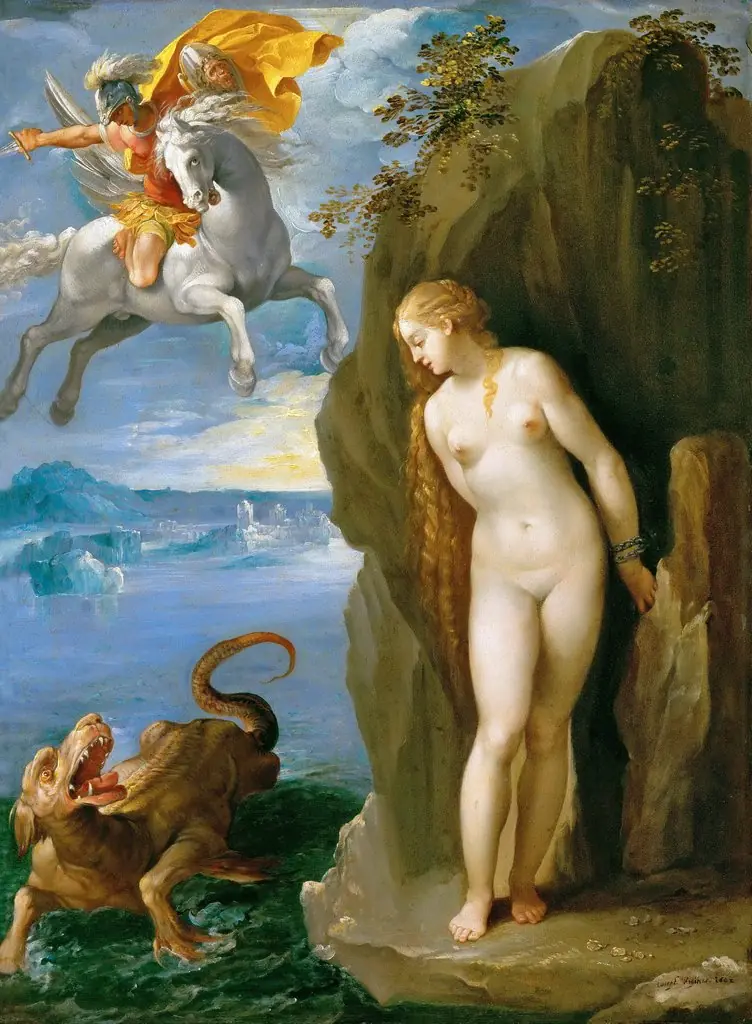
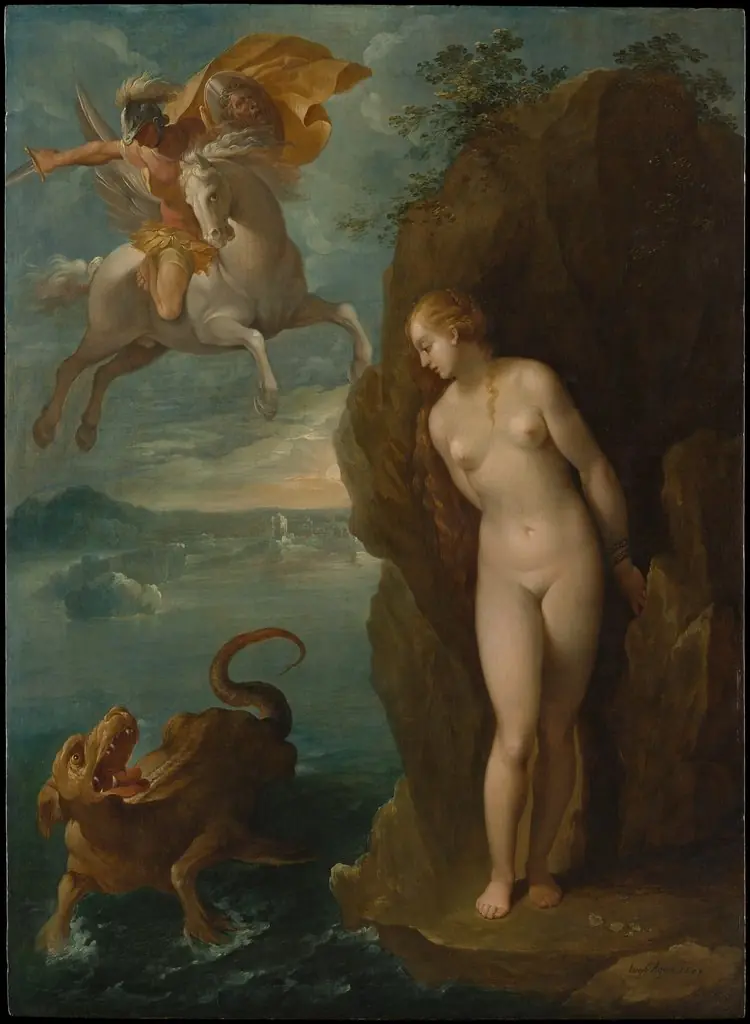
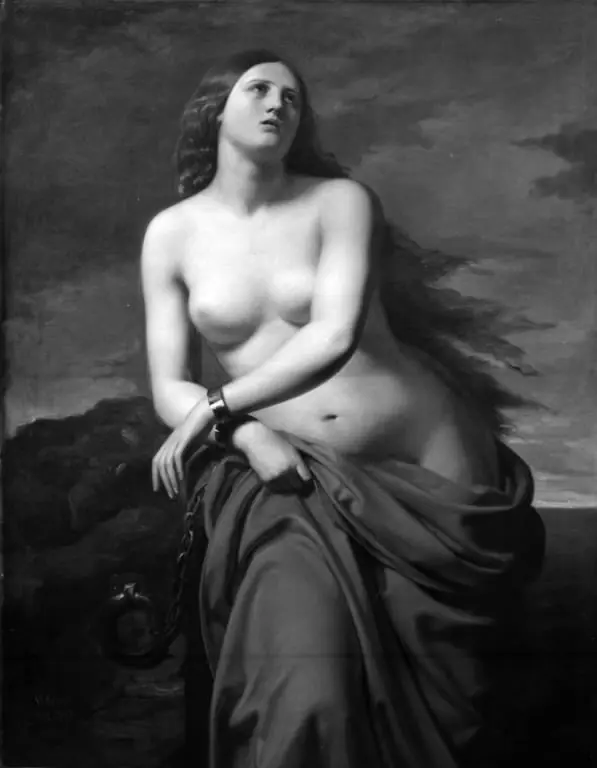
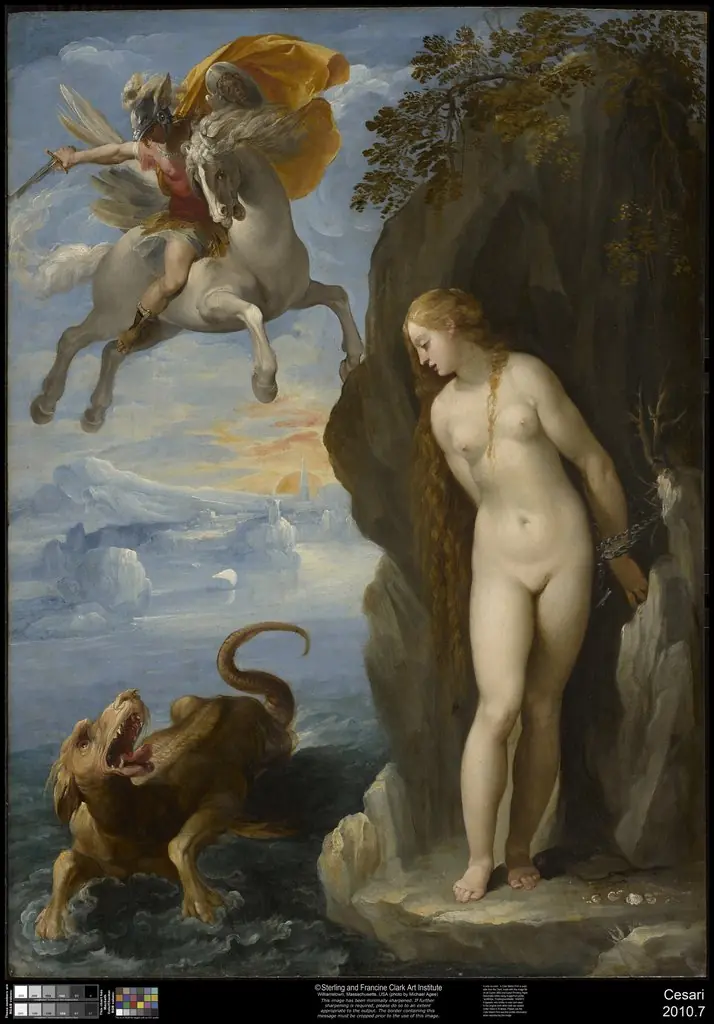
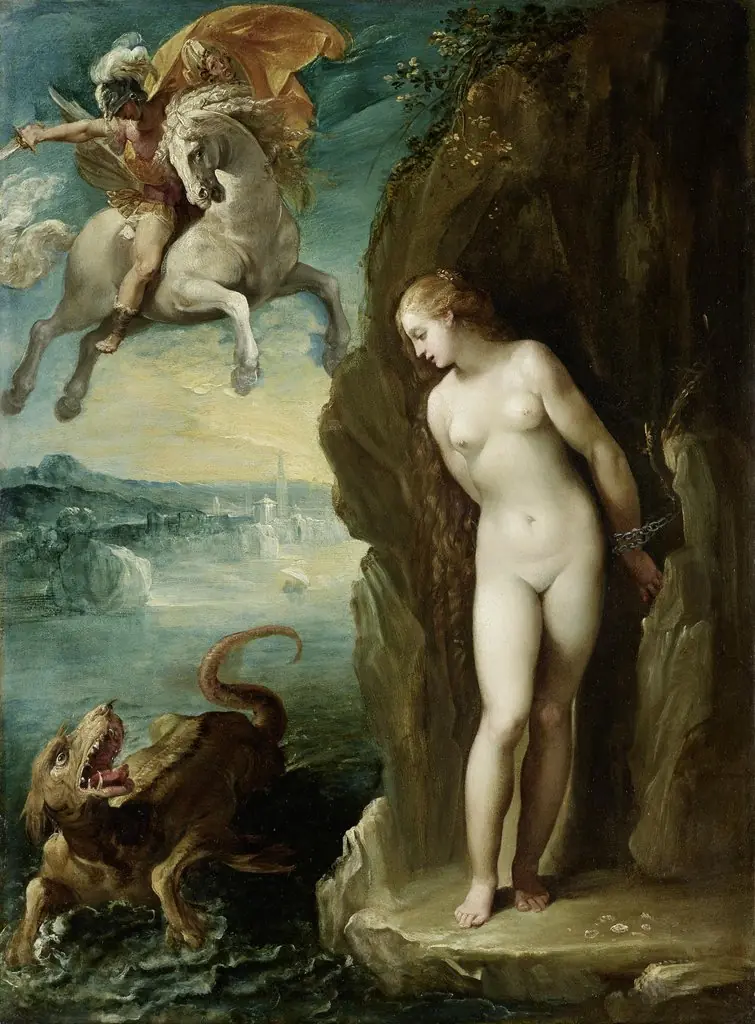
Andromeda is an oil painting by the Early Baroque Italian artist Unknown. It dates from 1640 and is held in the collection of the J. Paul Getty Museum.
About this work
Overview
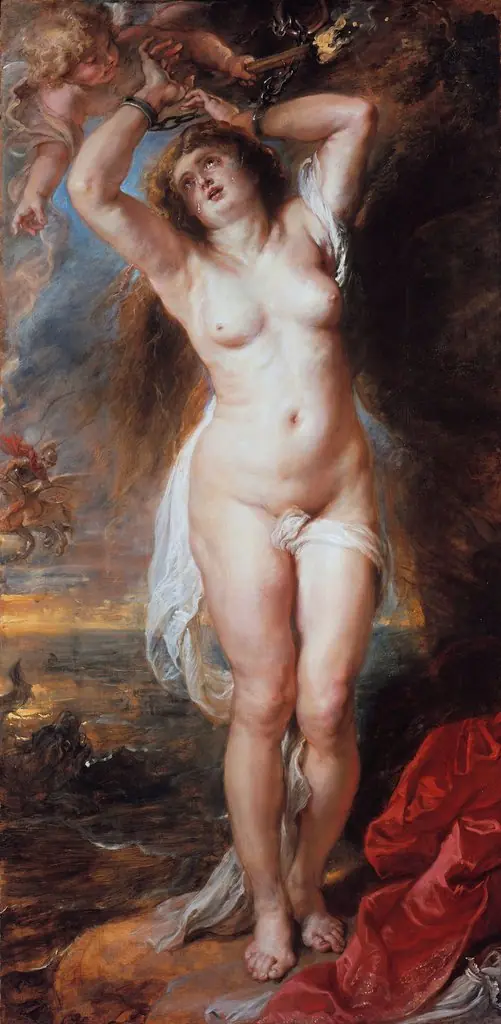
The composition emphasizes verticality and emotional tension, with dramatic lighting isolating her figure from the dark, churning sea and storm-laden heavens.
This oil painting portrays Andromeda, a figure from Greek myth, stranded on a rocky shore. Her nude form is illuminated against a turbulent sky, arms raised as if in supplication or distress. A cherub rests on her right arm, and a red cloth lies discarded at her feet. The composition emphasizes verticality and emotional tension, with dramatic lighting isolating her figure from the dark, churning sea and storm-laden heavens.
Subject & Meaning
Andromeda was chained to a rock as a sacrifice to a sea monster, a punishment for her mother’s hubris. Here, she is shown before rescue, suspended between fate and deliverance. The cherub may symbolize divine intervention or the fragility of her hope. The red cloth, possibly a remnant of her bindings or a garment, adds a note of human vulnerability amid the mythic scale of her predicament.
Technique & Style
The artist employs bold, expressive brushwork and pronounced chiaroscuro to heighten emotional impact. Light falls sharply across Andromeda’s body, defining muscle and hair with sculptural clarity, while the background recedes into shadow. Textured strokes in the sky and water convey movement and unease, contrasting with the smoother rendering of her skin. The palette is restrained, dominated by earth tones and deep blues, with the red cloth as the sole vivid accent.
History & Provenance
The painting is attributed to Peter Paul Rubens, though its exact date and early ownership remain undocumented. It likely originated in the early 17th century, during Rubens’s mature period, when mythological subjects were frequently explored in Antwerp’s artistic circles. No definitive record of its commission or early collectors has surfaced, but its style aligns with his works from the 1620s to 1630s.
Context
In early 17th-century Flanders, mythological scenes like this served both aesthetic and intellectual purposes, reflecting humanist interests in classical literature. Rubens, influenced by Italian Renaissance masters, reinterpreted ancient narratives with dynamic movement and emotional intensity. This work fits within a broader trend of depicting vulnerable female figures from myth, often as metaphors for suffering, endurance, or divine grace.
Legacy
The painting contributes to a lineage of Baroque interpretations of Andromeda, emphasizing psychological depth over idealized beauty. Its emphasis on physicality, motion, and emotional ambiguity influenced later artists exploring mythological themes with greater realism. Though not among Rubens’s most widely reproduced works, it remains a compelling example of his ability to fuse narrative tension with technical mastery.
Artist & collection

 Domestic Scene
 Giacomo and Cardinal Marco, investing Andrea, Abbot of San Zeno, with his Benefice
 The Nymph of Fontainebleau
 Portrait of a Woman
 Madonna and Child with Saints in the Enclosed Garden
 Venus and Minerva
 Family Group of Four on Sofa
 Wall painting from Room H of the Villa of P. Fannius Synistor at Boscoreale