Artwork
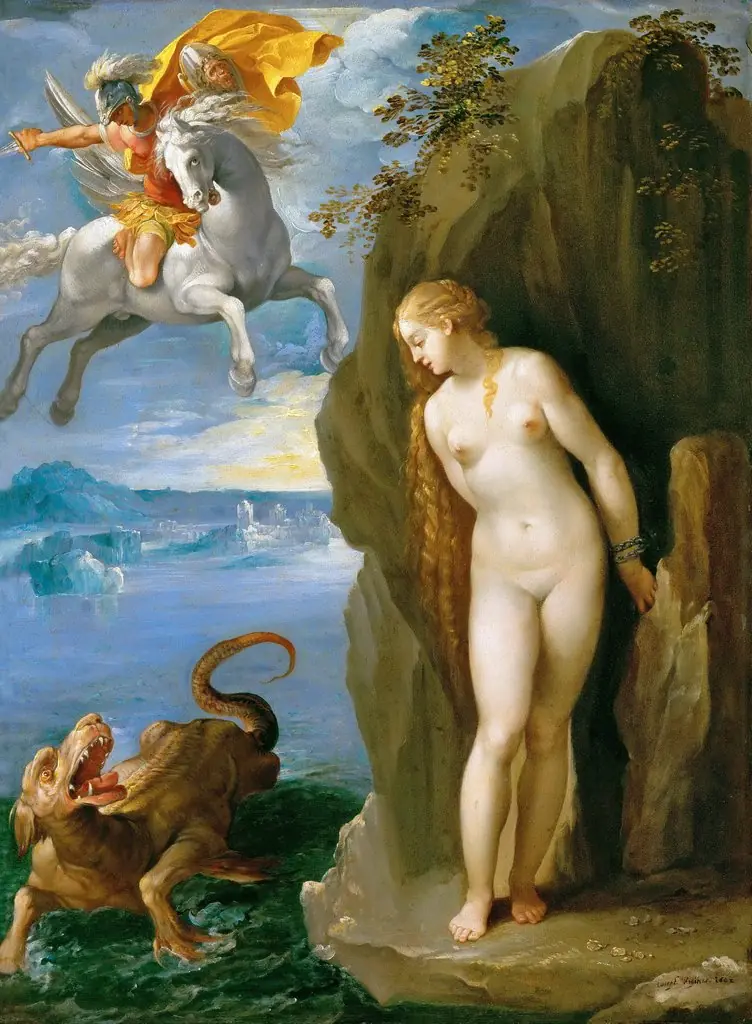
Perseus Freeing Andromeda
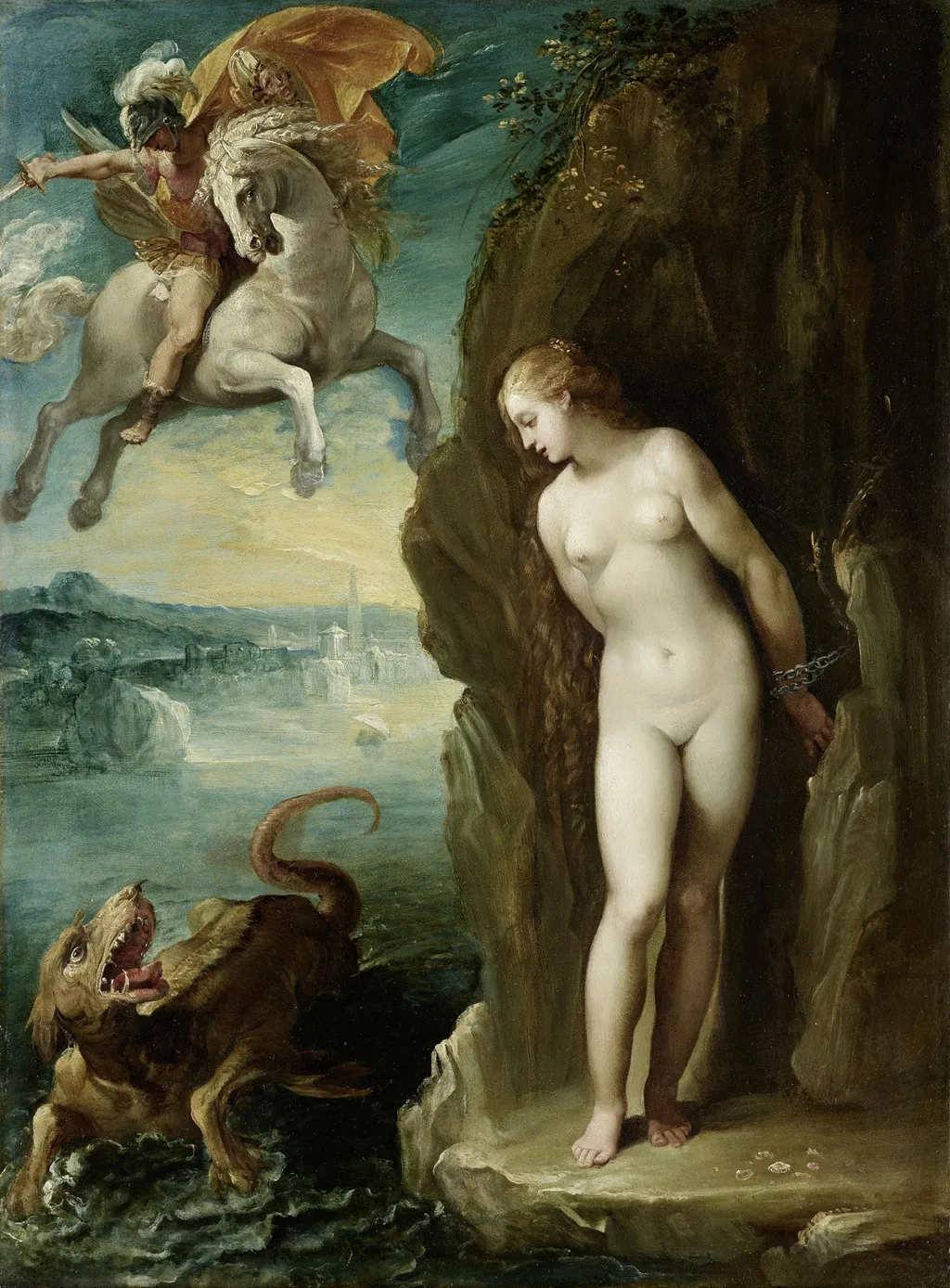
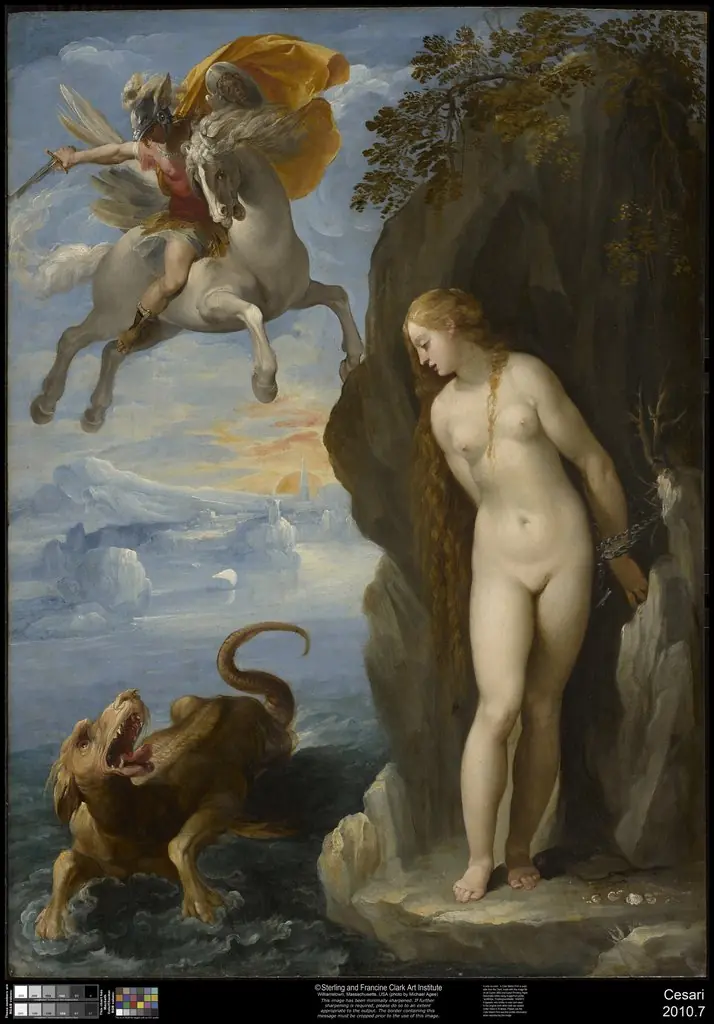
Perseus Freeing Andromeda is an oil painting by the Early Baroque Italian artist Giuseppe Cesari. It dates from 1598 and is held in the collection of the Gemäldegalerie Berlin.
About this work
Overview
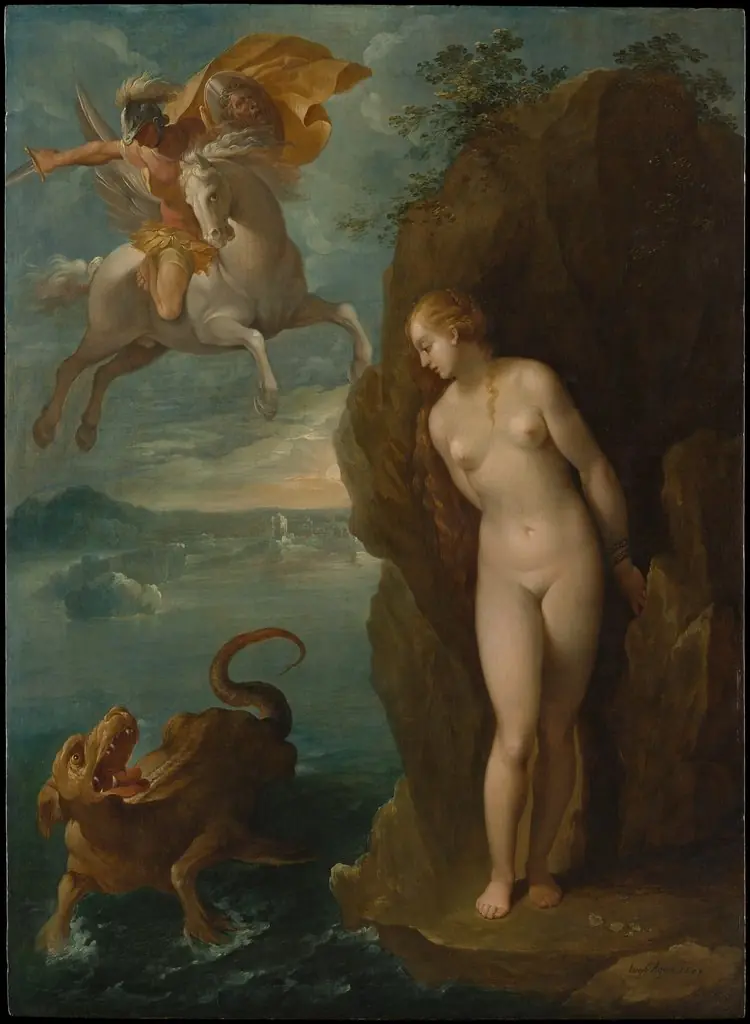
Giuseppe Cesari’s 1598 work, *Perseus Freeing Andromeda*, is executed on slate and presents a dramatic episode from classical mythology. The composition captures the moment when the hero Perseus confronts the sea‑monster threatening the captive Andromeda, set against a muted landscape that includes a distant city and a calm sea under a pale sky.
Subject & Meaning
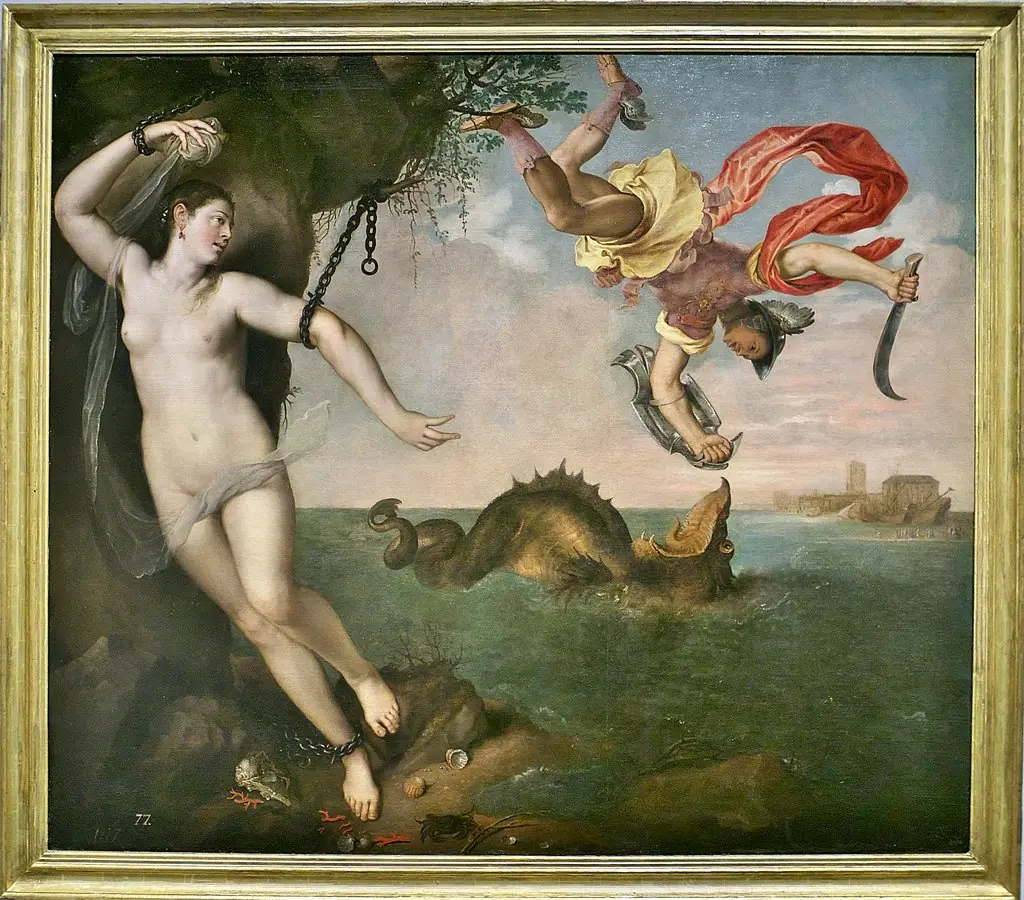
The central narrative shows Andromeda, bound and exposed on a crag, while a chimera with a canine head and lion’s body rises from the water, snarling. Above them, Perseus, mounted on a white horse and cloaked in flowing drapery, readies his sword to strike, embodying the triumph of heroic virtue over monstrous chaos.
Technique & Style
Cesari employs a restrained palette of browns, grays, and subdued blues, allowing the stark contrasts of chiaroscuro to define form and volume. The slate surface contributes a matte, slightly reflective quality, enhancing the interplay of light and shadow that draws attention to the figures and heightens the scene’s tension.
History & Provenance
Created during Cesari’s early Baroque period, the painting reflects his status as a favored court artist of Pope Clement VIII and Pope Sixtus V. The work later entered the collection of the Gemäldegalerie in Berlin, where it remains on display as part of the museum’s Italian holdings.
Context
Cesari, known as Il Giuseppino and Cavaliere d’Arpino, directed a prominent Roman workshop that later hosted Caravaggio as an apprentice. This piece exemplifies the transitional aesthetics of late‑Mannerist to early Baroque art, merging elegant composition with heightened emotional drama characteristic of the era.
Own this work as a print
Artist & collection
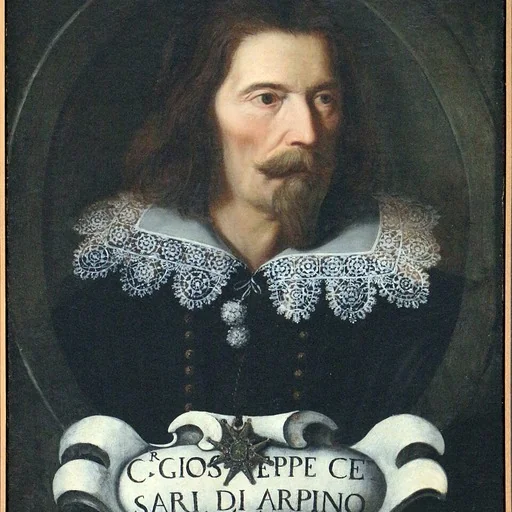
Artist
Giuseppe Cesari (14 February 1568 – 3 July 1640) was an Italian Mannerist painter, also named Il Giuseppino and called Cavaliere d'Arpino, because he was created Knight of the Supreme Order of Christ by his patron Pope Clement VIII.