Artwork
A woman with two children, having abandoned her home, goes into the forest where she encounters a leopard, from a Tuti-nama (Tales of a Parrot): Thirtieth Night
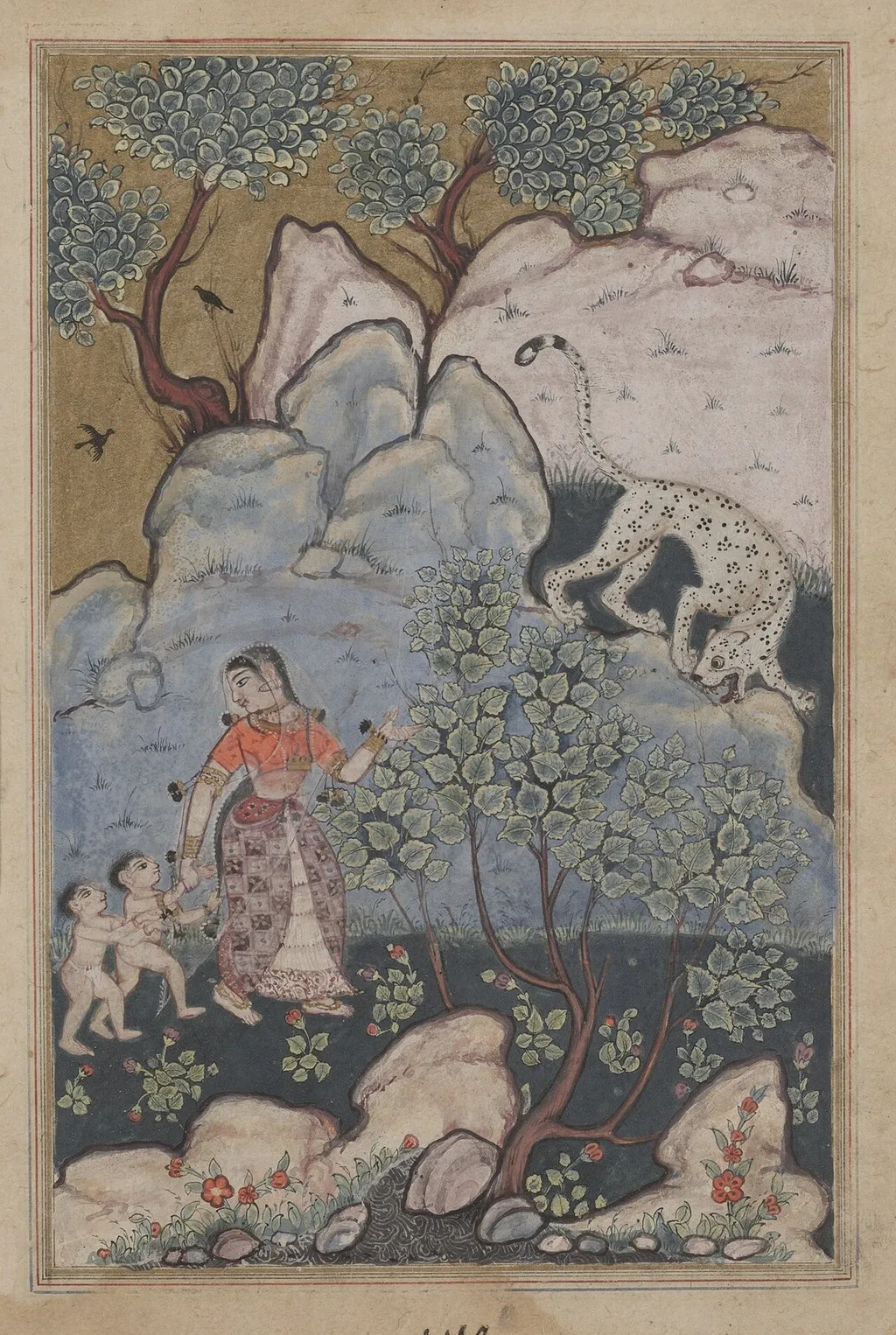
A woman with two children, having abandoned her home, goes into the forest where she encounters a leopard, from a Tuti-nama (Tales of a Parrot): Thirtieth Night is an unspecified painting. It dates from 1560 and is held in the collection of the Cleveland Museum of Art.
About this work
Overview
It captures a woman and her children in a dense forest setting, just as a hidden leopard emerges, introducing a dramatic element of danger into their journey.
This painting, titled "A woman with two children, having abandoned her home, goes into the forest where she encounters a leopard," illustrates a scene from the Tuti-nama, or "Tales of a Parrot." The artwork depicts a perilous moment from the thirtieth night of the manuscript's narrative cycle. It captures a woman and her children in a dense forest setting, just as a hidden leopard emerges, introducing a dramatic element of danger into their journey.
Subject & Meaning
The painting portrays a woman, identifiable by her patterned attire, leading one child while another plays nearby. Unbeknownst to them, a leopard lurks in the undergrowth, its presence signaling an imminent threat. This specific episode, drawn from the thirtieth night of the Tuti-nama manuscript, underscores themes of vulnerability and unexpected peril faced by characters within the larger collection of moralizing and entertaining stories.
Technique & Style
The composition places the figures prominently against a natural backdrop of rocks, diverse plant life, and birds in flight, suggesting a deep forest environment. The artist renders the woman and children with detailed clothing and postures, while the leopard is depicted in a crouched, watchful stance, partially concealed within the foliage. This visual arrangement effectively builds tension, highlighting the contrast between the children's innocence and the unseen danger.
Context
This painting is an integral part of a larger illustrated manuscript known as the Tuti-nama, or "Tales of a Parrot." This collection of stories is structured around a parrot who tells a new tale each night to prevent its mistress from leaving her home. The scene of the woman and children encountering a leopard on the thirtieth night serves as one of many narrative vignettes designed to entertain and impart lessons within the overarching framework of the parrot's nightly storytelling.
Artist & collection

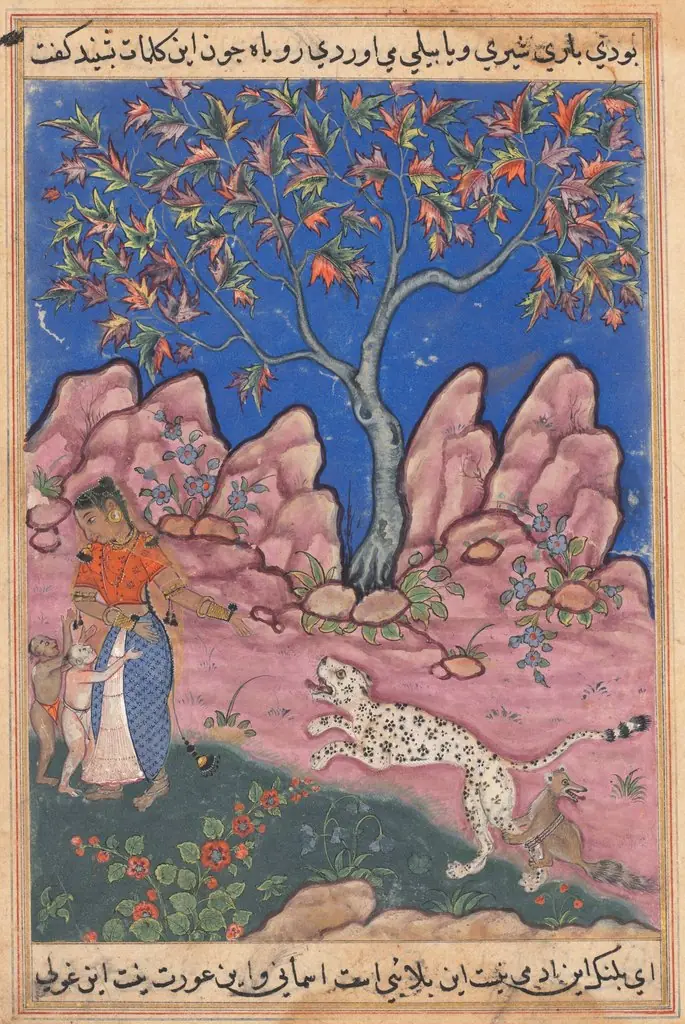 The woman conversing with her children, as the leopard returns, egged on by a fox who is tied to his leg, from a Tuti-nama (Tales of a Parrot): Thirtieth Night
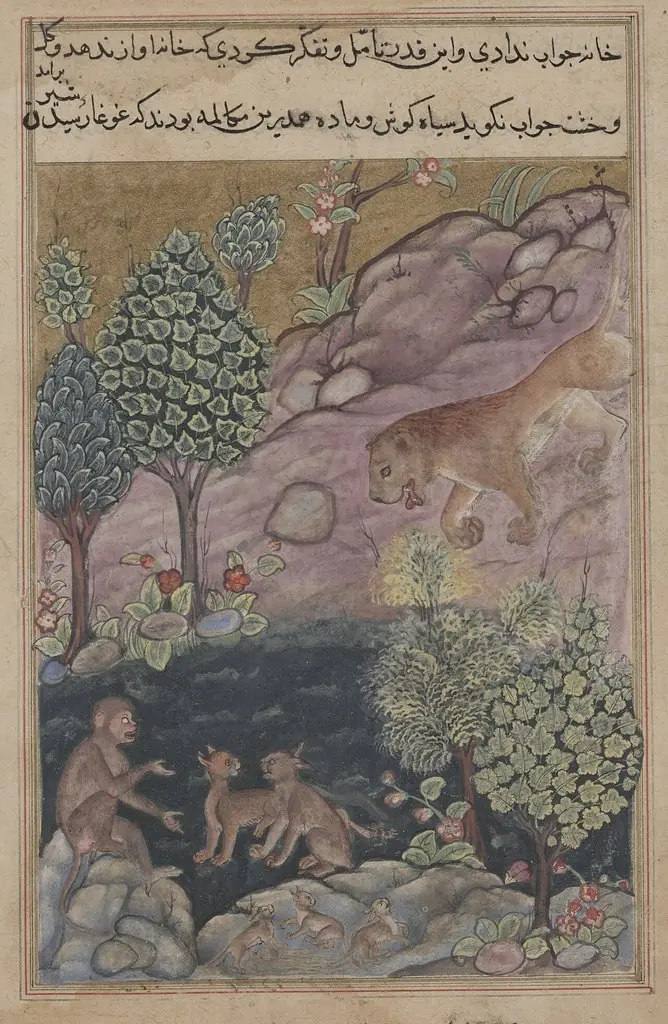 The lion returns to his territory and sees the monkey conversing with the lynx, from a Tuti-nama (Tales of a Parrot): Twenty-ninth Night
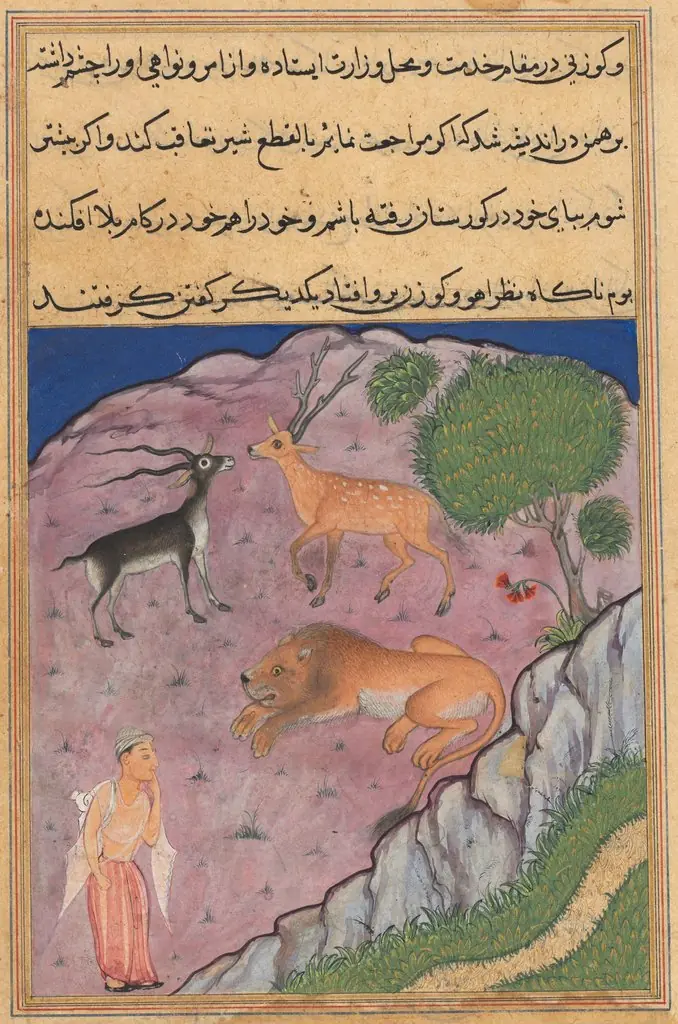 The Brahman comes upon a lion who has a deer and a gazelle as his viziers, from a Tuti-nama (Tales of a Parrot): Twenty-first Night
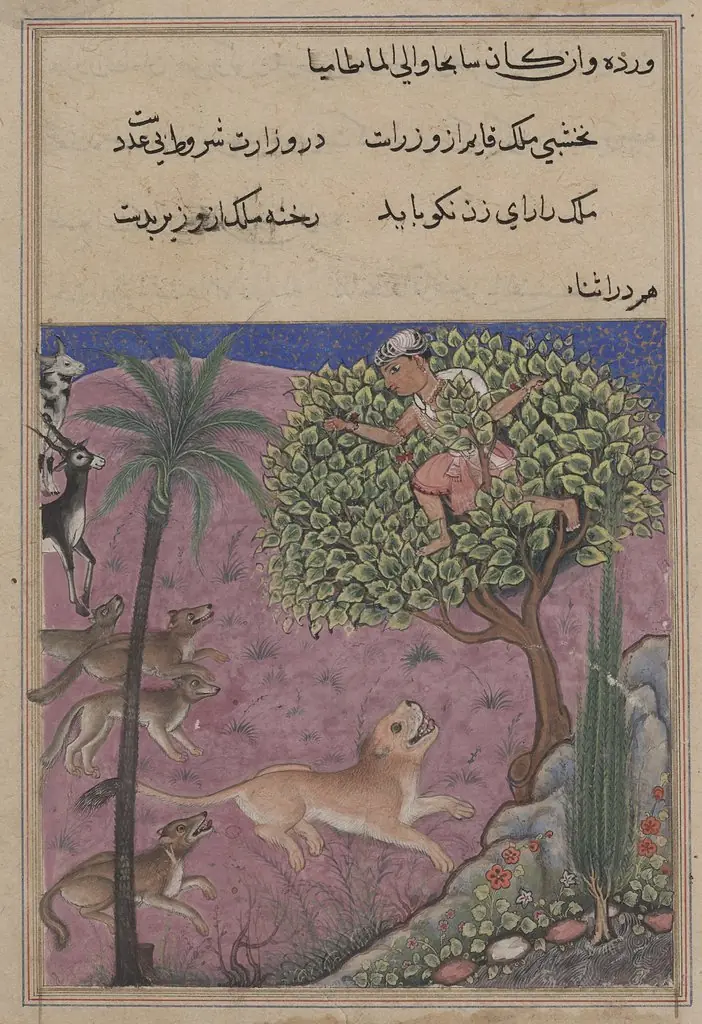 The wolf and the jackal, serving as viziers, instigate the lion who pursues the Brahman up a tree, from a Tuti-nama (Tales of a Parrot): Twenty-first Night
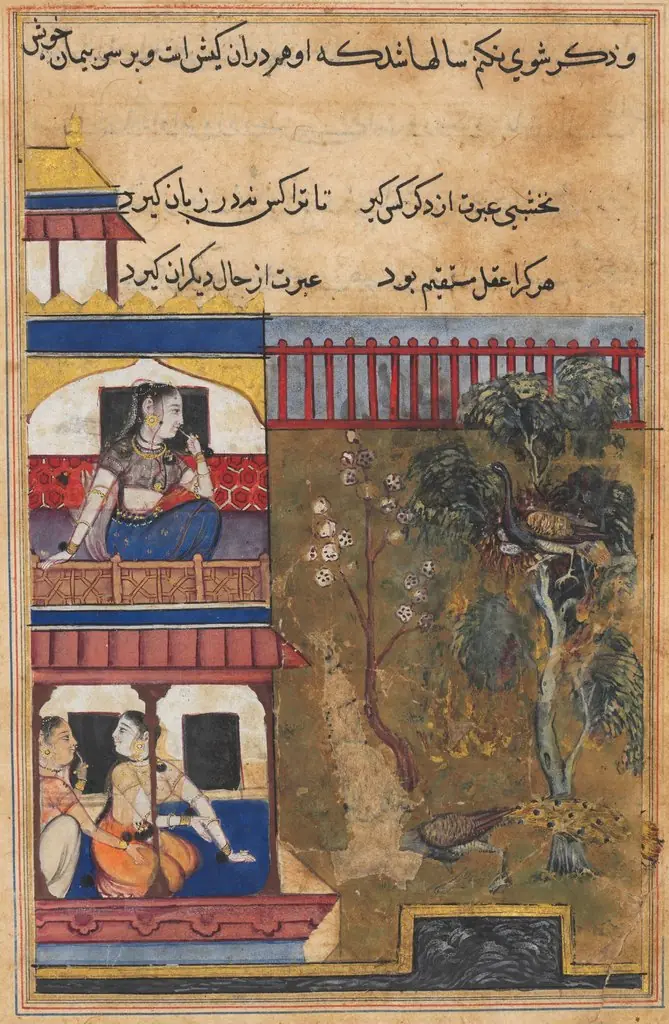 The queen of Rum watches the peahen prefer to burn rather than abandon her eggs while the peacock flees the nest, from a Tuti-nama (Tales of a Parrot): Thirty-ninth Night