Artwork
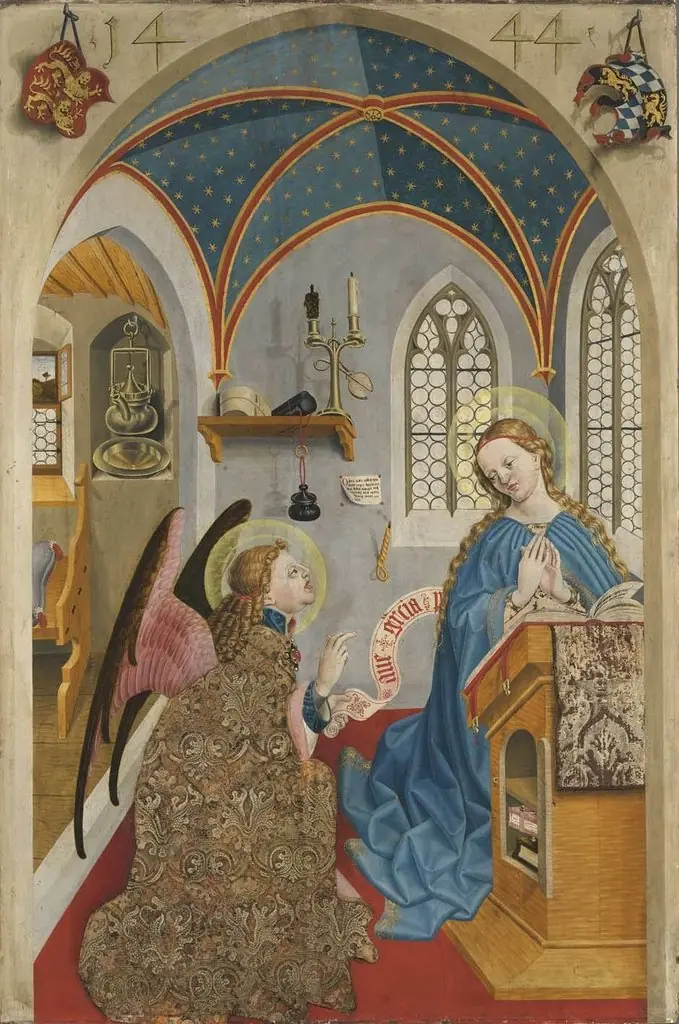
Die Verkündigung an Maria Rückseite: Teil einer Anbetung der Könige
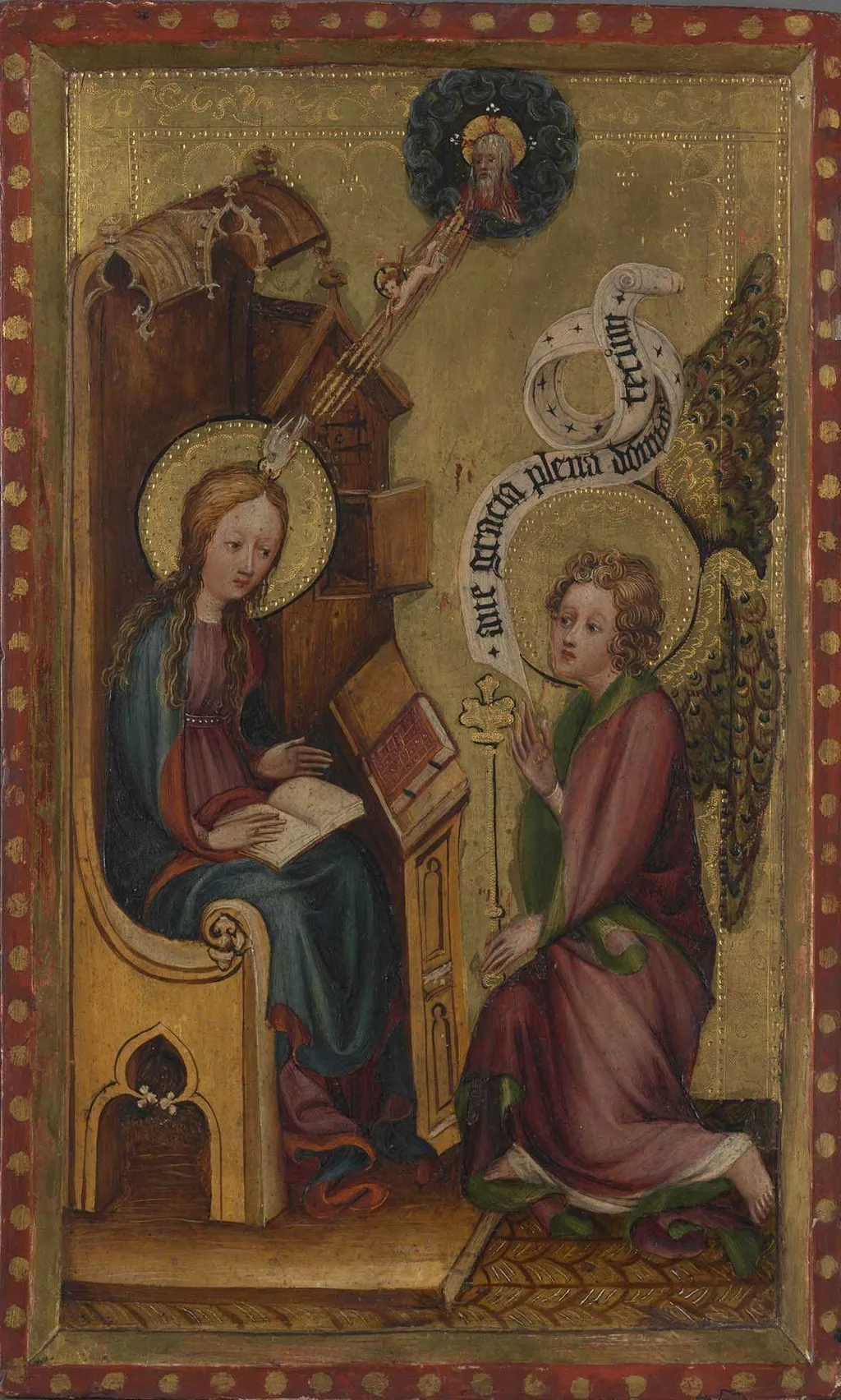
Die Verkündigung an Maria Rückseite: Teil einer Anbetung der Könige is an unspecified painting by the Byzantine icon painting artist Unknown. It dates from 1400 and is held in the collection of the Bavarian State Painting Collections.
About this work
Overview
The panel, titled “Die Verkündigung an Maria – Rückseite,” forms the reverse side of a larger composition depicting the Adoration of the Magi. Executed in tempera on wood and enriched with gold leaf, the work presents a compact, devotional scene rendered in the luminous palette typical of late medieval German painting.
Subject & Meaning
The image portrays the Annunciation: an angel, suspended within a blue aureole and bearing a cross, announces to the Virgin Mary that she will bear the Christ Child. Mary, seated on a chair with a halo, holds an open book, suggesting her contemplation of Scripture, while a kneeling figure—perhaps a priest or donor—receives a scroll inscribed in Latin, emphasizing the theological significance of the moment.
Technique & Style
The artist employed a gilded background of red with gold dots, a common decorative motif in 14th‑ to 15th‑century panel painting. Figures are outlined with fine brushwork, their garments rendered in saturated blues, reds, and greens, and illuminated by the reflective quality of the applied gold leaf, creating a sense of otherworldly radiance.
History & Provenance
Originally part of a multi‑panel altarpiece, the reverse side was later separated and entered the collection of the Alte Pinakothek in Munich. The museum acquired the panel in the early 20th century, where it has been conserved and displayed as an example of devotional imagery from the German Late Middle Ages.
Context
During the period, panels often served dual purposes, presenting a primary narrative on one side and a complementary devotional scene on the reverse. This practice allowed the work to function both as a liturgical object and as a portable aid for private contemplation, reflecting the era’s intertwining of public worship and personal piety.
Legacy
The painting contributes to scholarly understanding of regional workshop practices and iconographic conventions surrounding the Annunciation. Its preservation within the Alte Pinakothek provides insight into the material culture of medieval German art and continues to inform comparative studies of similar devotional panels across Europe.
Artist & collection

 Domestic Scene
 Giacomo and Cardinal Marco, investing Andrea, Abbot of San Zeno, with his Benefice
 The Nymph of Fontainebleau
 Portrait of a Woman
 Madonna and Child with Saints in the Enclosed Garden
 Venus and Minerva
 Family Group of Four on Sofa
 Wall painting from Room H of the Villa of P. Fannius Synistor at Boscoreale
 Annunciazione
 Verkündigung Mariae, Rückseite: Hl. Dorothea
 The Annunciation
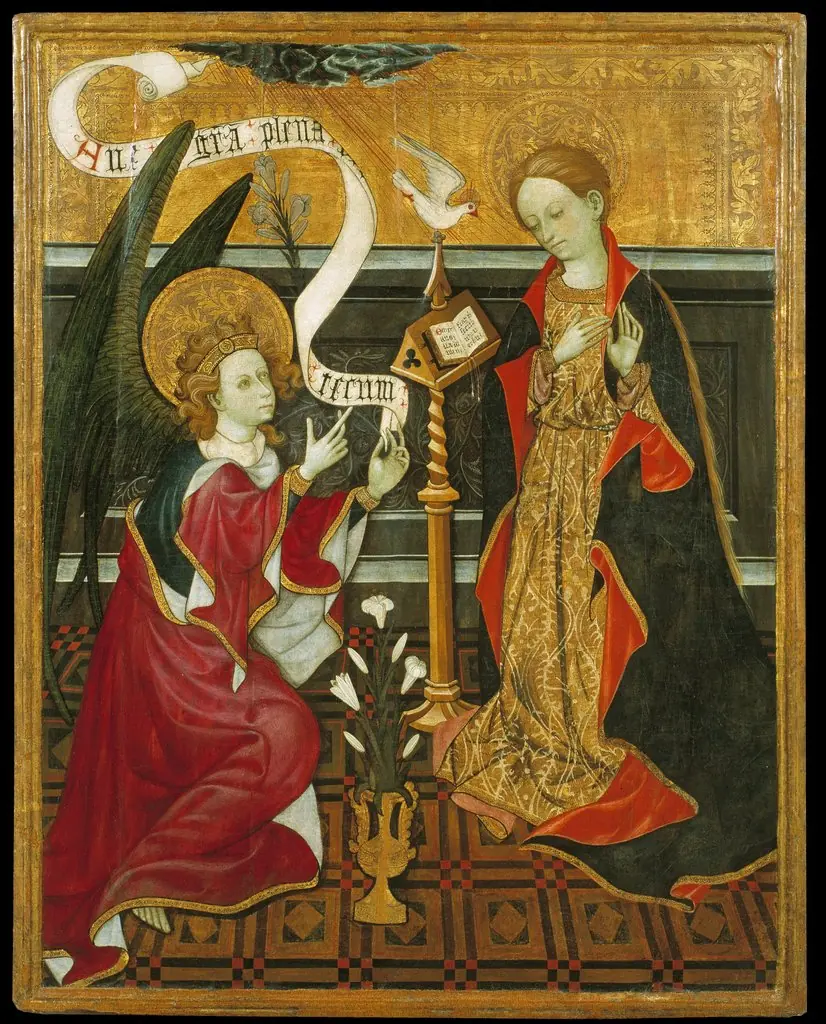 Annunciation
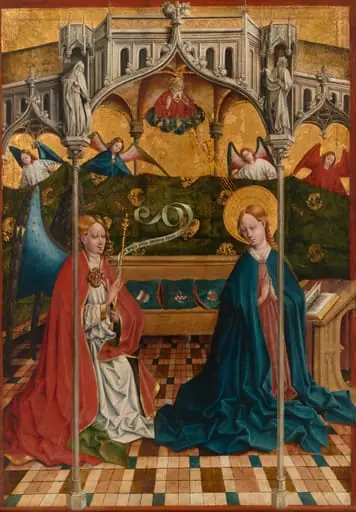 The Annunciation
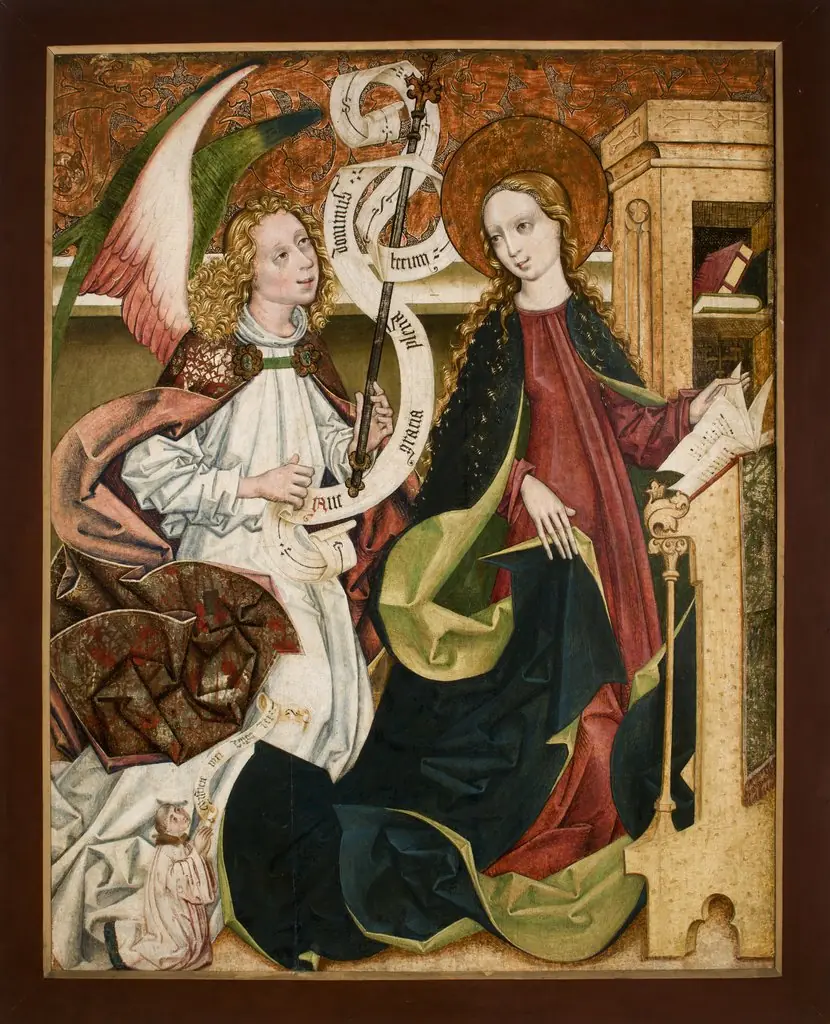 The Annunciation from the Church in Cięcina
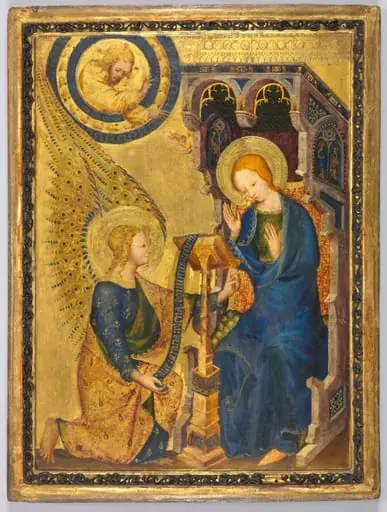 The Annunciation
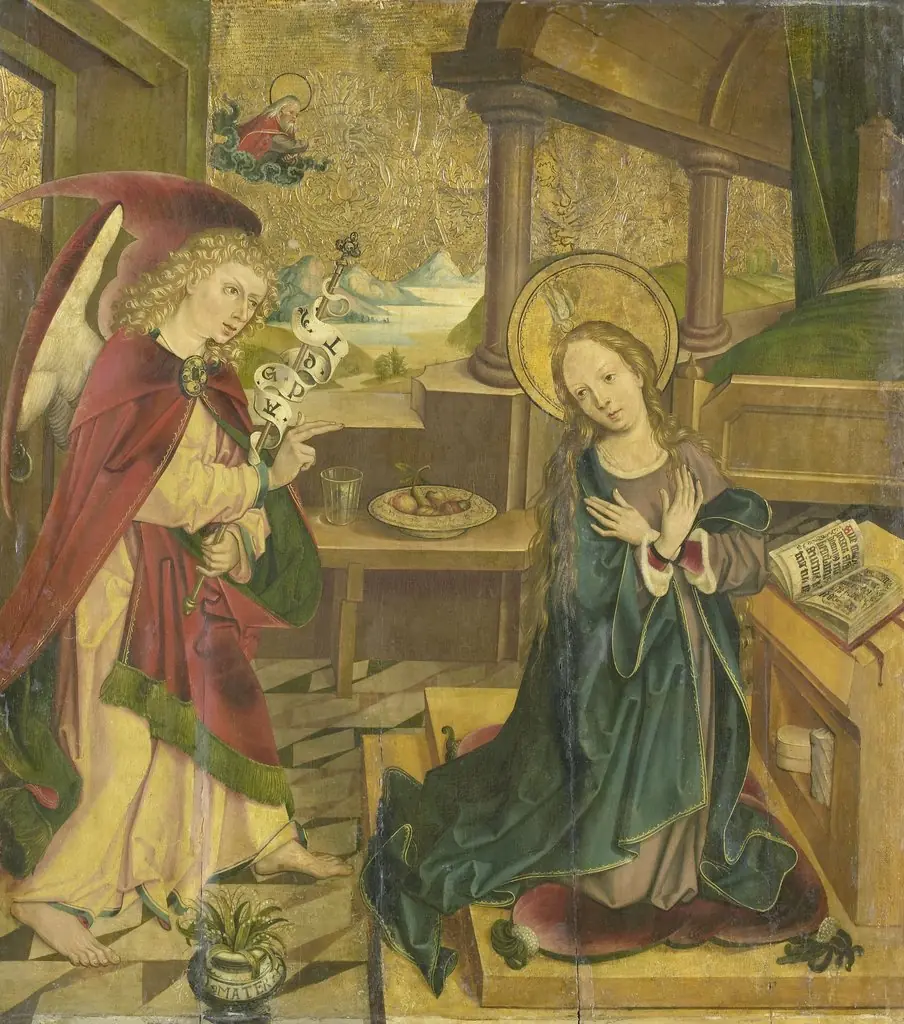 Annunciation to the Virgin
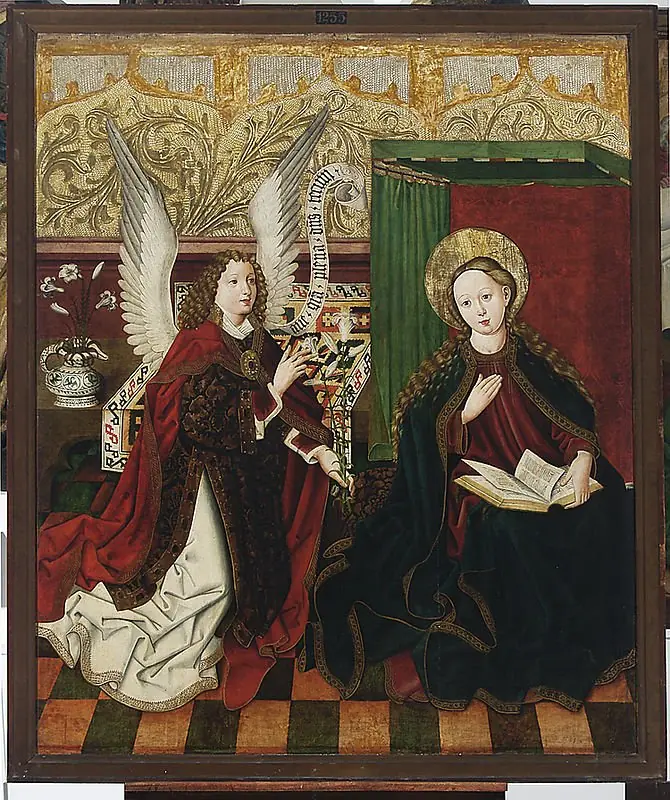 Legnica polyptych - left wing internal - upper panel - obverse: Annunciation; reverse: St Lawrence, St Vincent the Levite. St John the Baptist
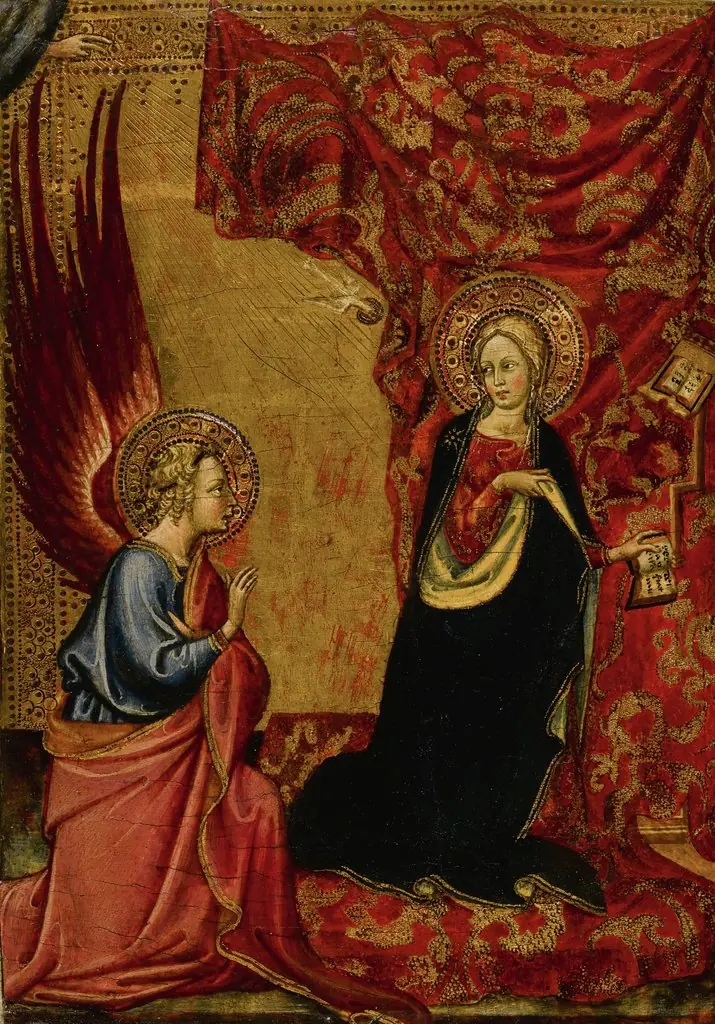 The Annunciation
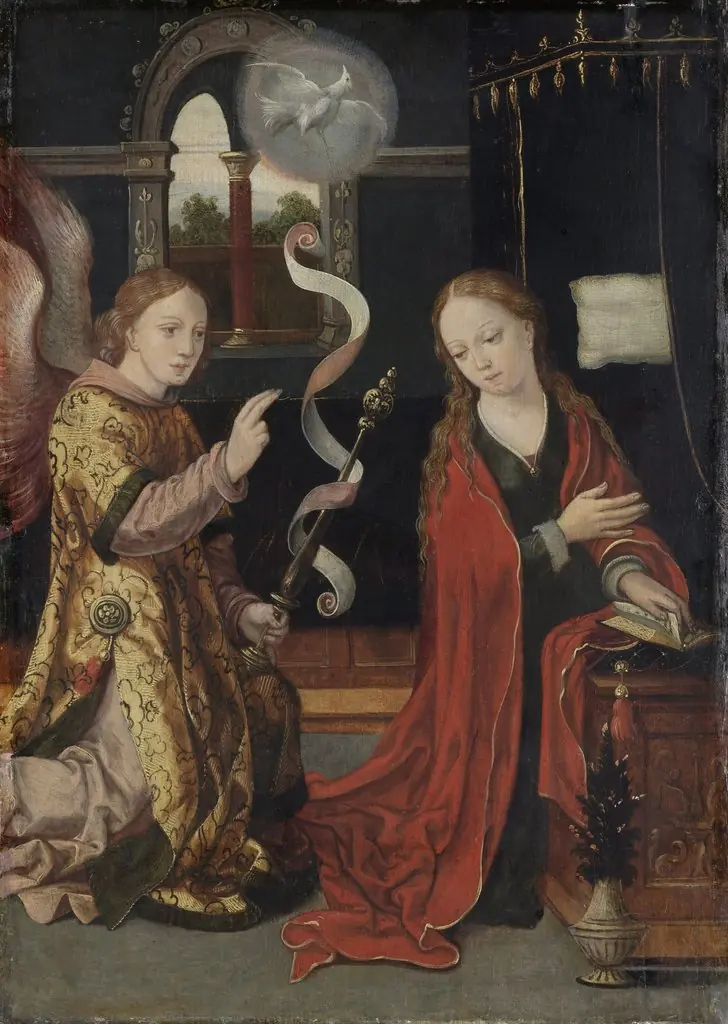 The Annunciation
 Altar of Mary: Annunciation to Mary