Artwork
The Annunciation
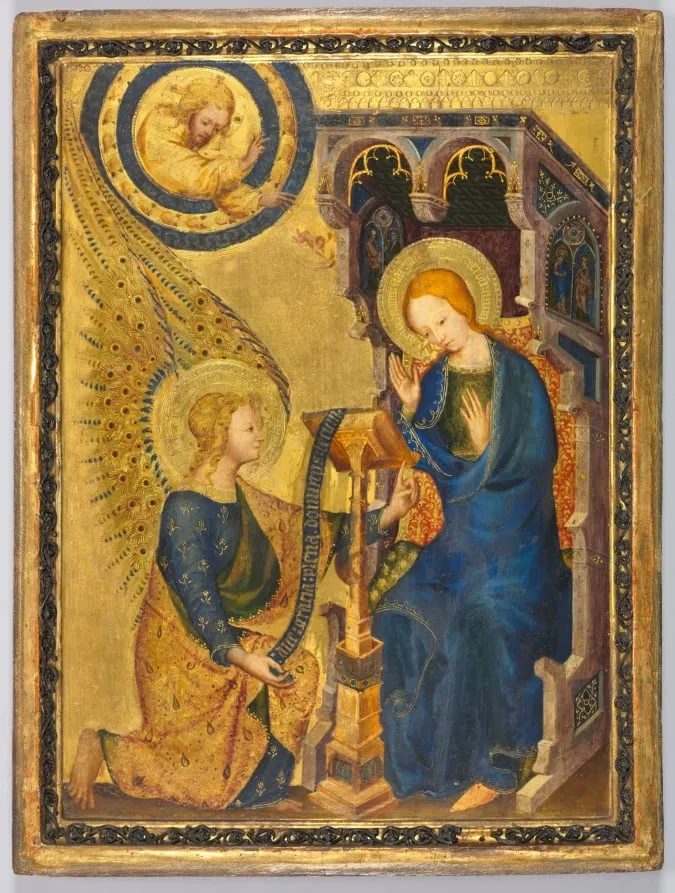
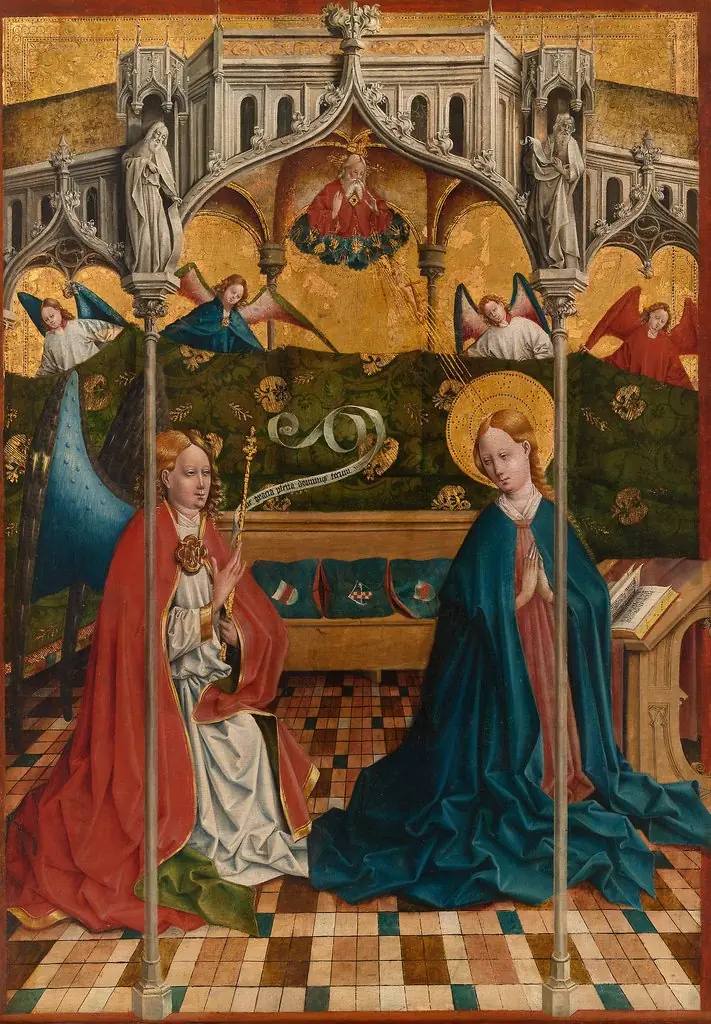
The Annunciation is an unspecified painting by the Byzantine icon painting artist Unknown. It dates from 1384 and is held in the collection of the Cleveland Museum of Art. The work is a small, richly decorated panel painting originally constructed as part of a hinged diptych.
About this work
The fine details—like the angel’s feathered wings—were meant to impress wealthy owners.
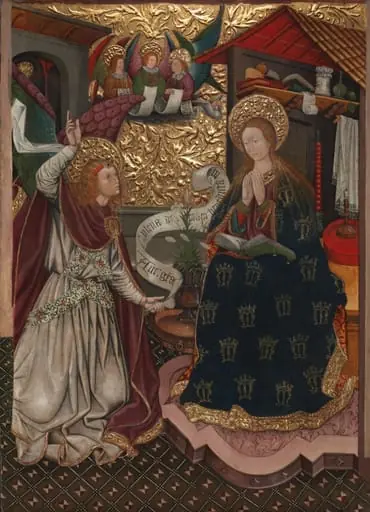
You see an angel kneeling in a garden, telling a young woman she will have a child. Gold leaf glows behind them, and tiny flowers dot the grass.
This painting was made to fold like a book. It was small enough to carry and meant for private prayer. The missing half probably showed Jesus on the cross. The fine details—like the angel’s feathered wings—were meant to impress wealthy owners.
Look up paintings from the subject: netherlands, or possibly france, 14th century.
Overview
The work is a small, richly decorated panel painting originally constructed as part of a hinged diptych. Its dimensions and portable format indicate it was intended for personal devotion, allowing the viewer to open it like a book for prayer and close it for transport.
Subject & Meaning
The surviving panel depicts the biblical Annunciation: an angel, kneeling amid a garden, announces to a young woman that she will bear a child. Gold leaf forms a luminous background, while delicate flowers punctuate the grass, underscoring the scene’s sacred intimacy.
Technique & Style
Executed in a highly refined, ornamental manner, the painting features intricate detailing such as feathered wings and gilded surfaces. The decorative approach aligns with the courtly aesthetic favored by aristocratic patrons around the turn of the 15th century, emphasizing elegance over naturalism.
History & Provenance
The reverse side of the panel bears a composite coat of arms combining the houses of Hainault and Bavaria, suggesting a patron from the merged dynastic line. The identity of this patron remains uncertain, and the companion panel—presumably illustrating a complementary biblical episode such as the Crucifixion—has not been positively identified.
Context
Produced in the late 14th‑early 15th century in the Low Countries or possibly northern France, the piece reflects the period’s trend toward portable, richly ornamented devotional objects for elite private worship, often commissioned by royal or noble families.
Artist & collection

 Domestic Scene
 Giacomo and Cardinal Marco, investing Andrea, Abbot of San Zeno, with his Benefice
 The Nymph of Fontainebleau
 Portrait of a Woman
 Madonna and Child with Saints in the Enclosed Garden
 Venus and Minerva
 Family Group of Four on Sofa
 Wall painting from Room H of the Villa of P. Fannius Synistor at Boscoreale
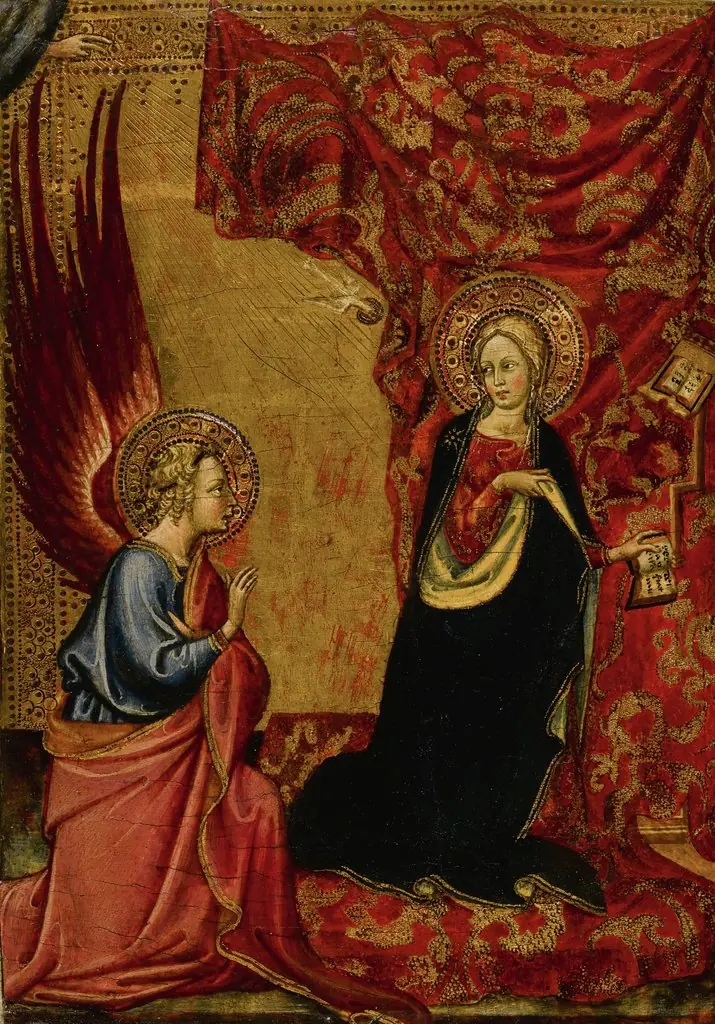 The Annunciation
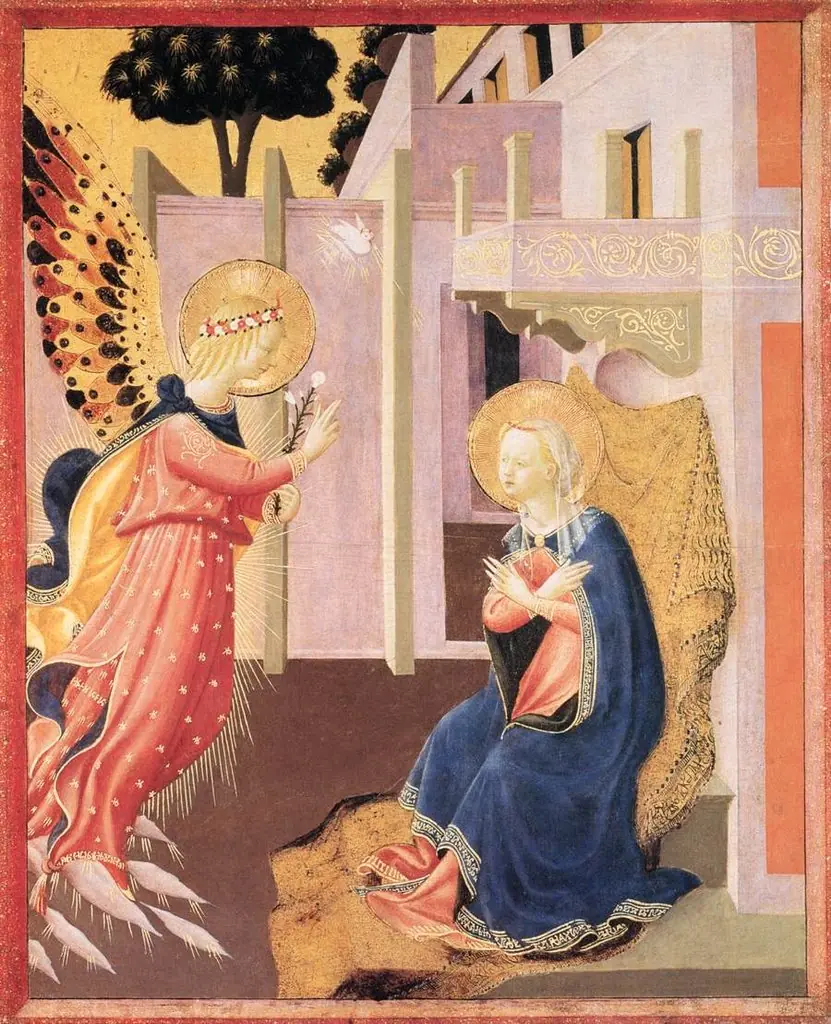 The Annunciation
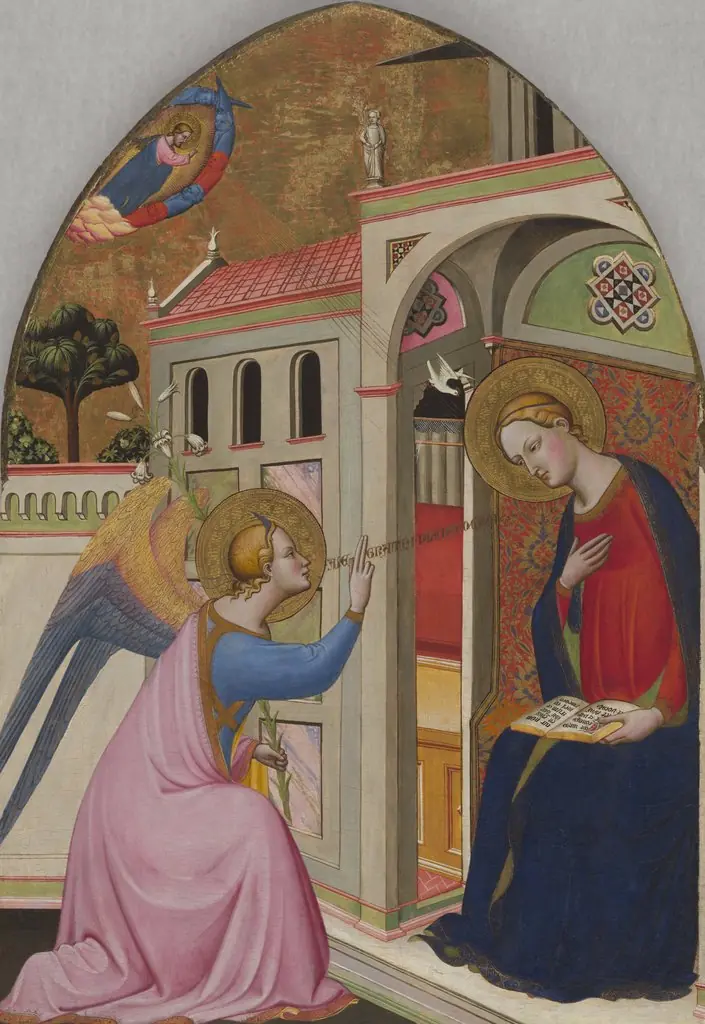 The Annunciation
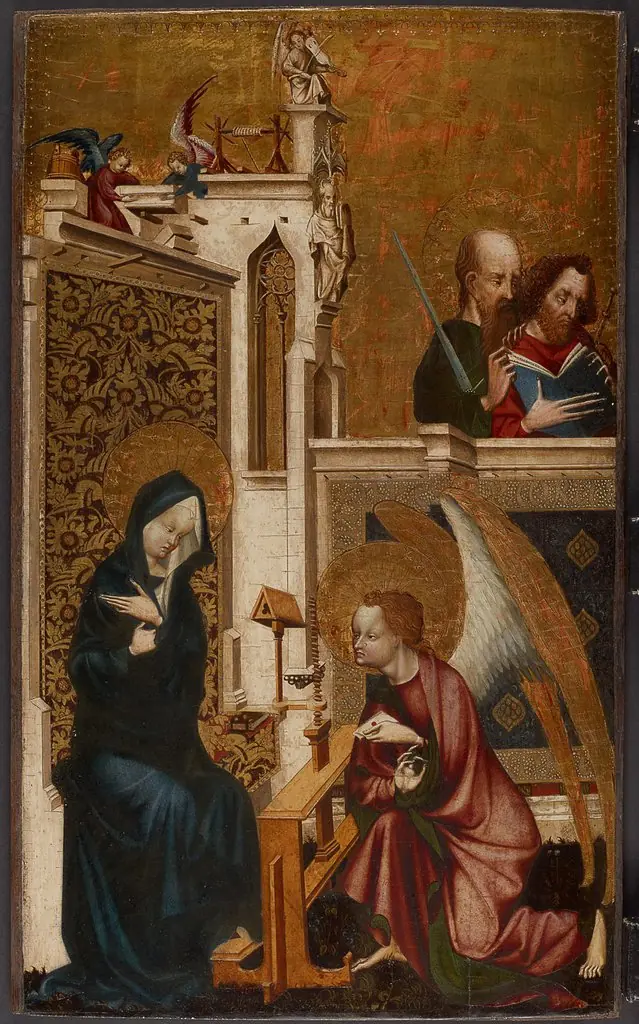 Verkündigung Mariae, Rückseite: Hl. Dorothea
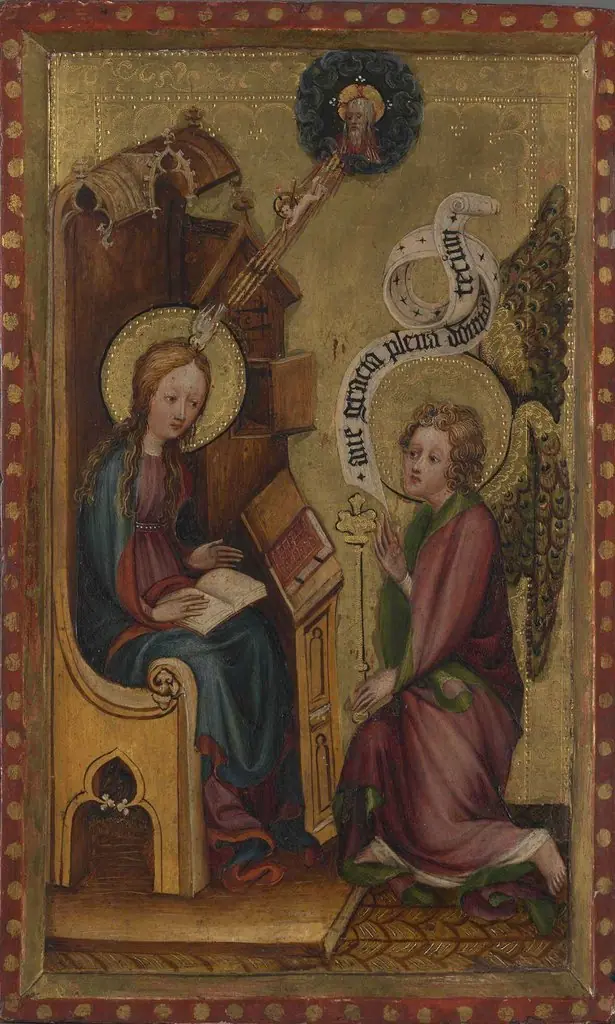 Die Verkündigung an Maria Rückseite: Teil einer Anbetung der Könige
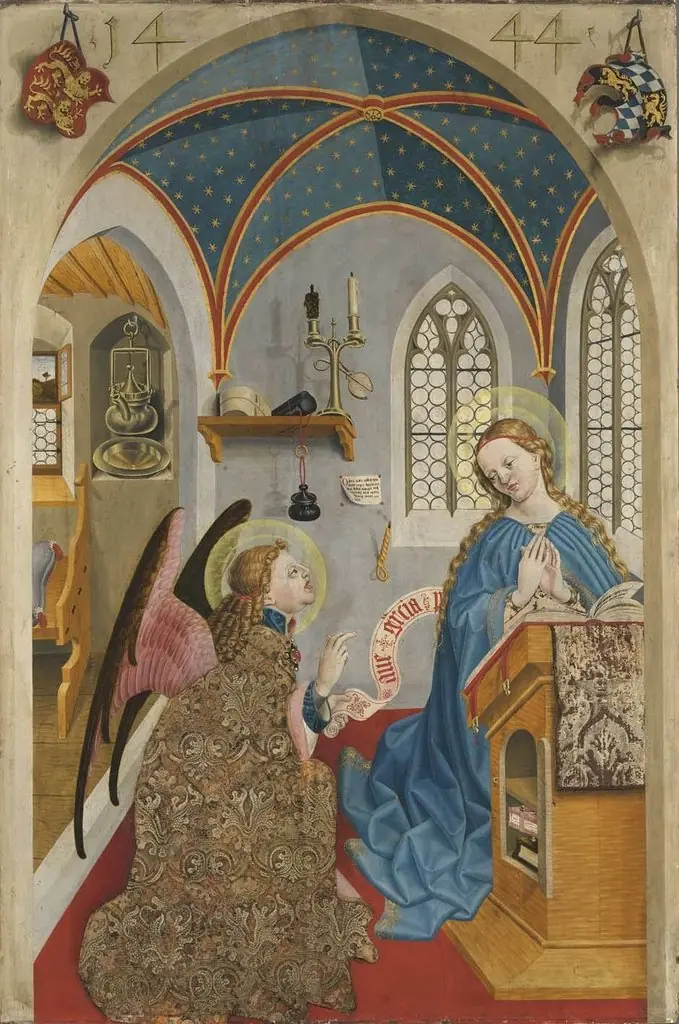 Altar of Mary: Annunciation to Mary
![Madonna of Humility, The Blessing Christ, Two Angels, and a Donor [obverse], by Andrea di Bartolo](https://artifactworldgallery.com/img/andrea-di-bartolo--madonna-of-humility-the-blessing-christ-two-angels-and-a-don--d37c382429905539-w320.webp) Madonna of Humility, The Blessing Christ, Two Angels, and a Donor [obverse]
Madonna of Humility, The Blessing Christ, Two Angels, and a Donor [obverse]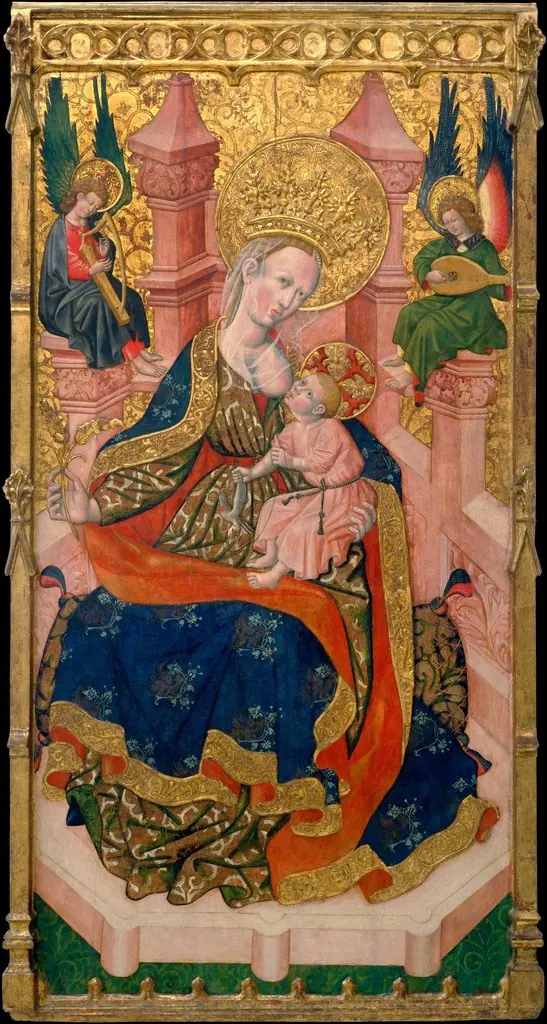 Virgin Suckling the Child
 The Annunciation
 The Annunciation
 Virgin and Child Adored by Saints Mary Magdalene and Nicolas of Bari; Christ Crucified with the Virgin and Saint John the Evangelist
 The Annunciation