Artwork
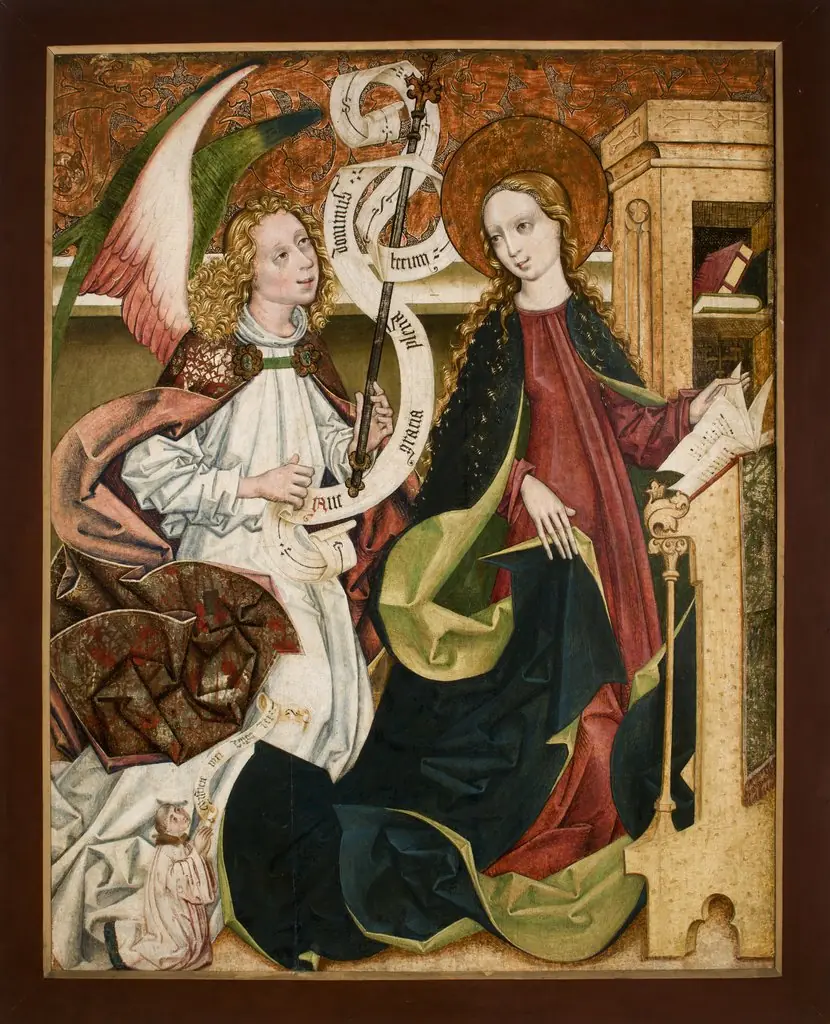
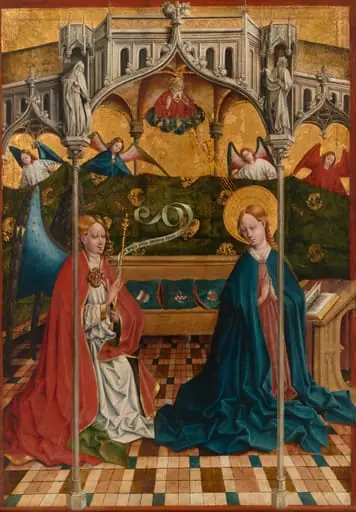
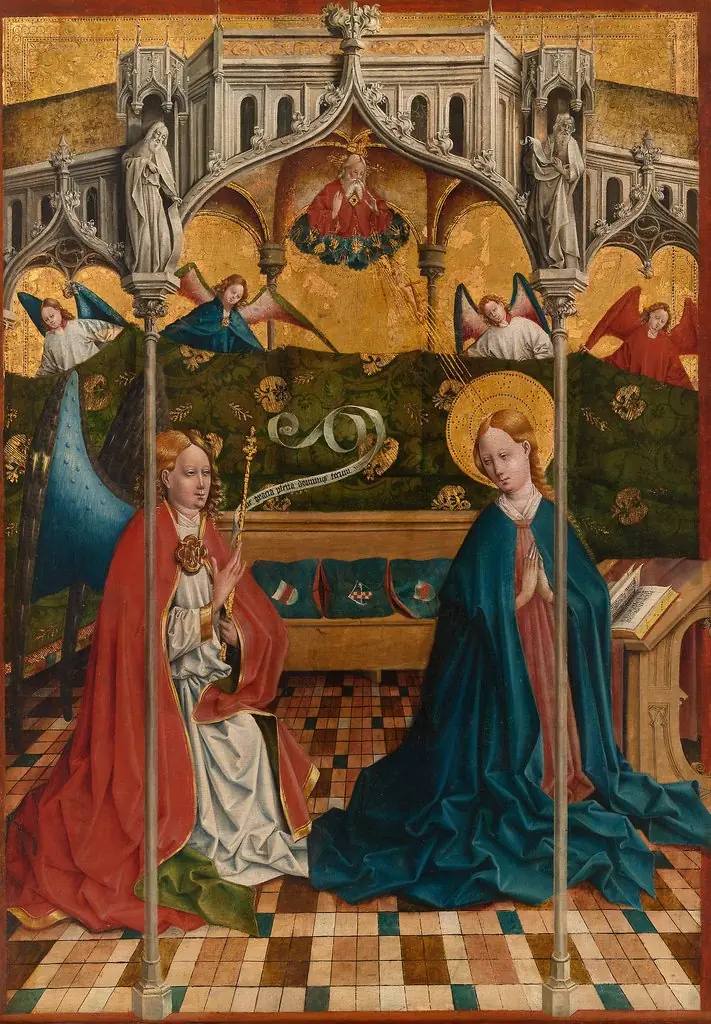
Legnica polyptych - left wing internal - upper panel - obverse: Annunciation; reverse: St Lawrence, St Vincent the Levite. St John the Baptist
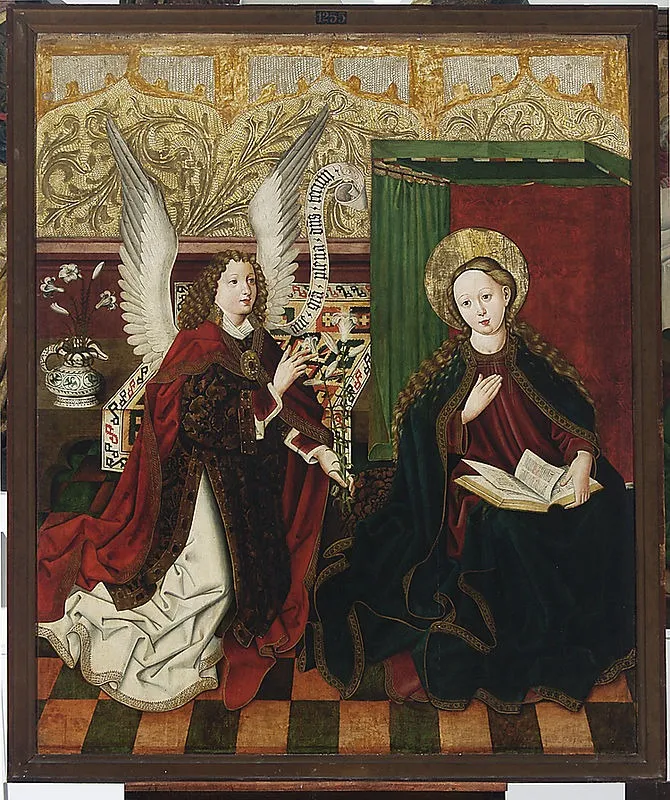
Legnica polyptych - left wing internal - upper panel - obverse: Annunciation; reverse: St Lawrence, St Vincent the Levite. St John the Baptist is an unspecified painting by the Northern Renaissance artist Mikołaj Obilman. It dates from 1466 and is held in the collection of the National Museum in Warsaw.
About this work
Overview
The work is now held in the National Museum in Warsaw, where it is preserved as part of a significant collection of late medieval Polish religious art.
Painted in 1466 by Mikołaj Obilman, this panel forms the upper part of the left wing of a polyptych originally installed in Legnica. It features the Annunciation on the front and two saints on the reverse. The work is now held in the National Museum in Warsaw, where it is preserved as part of a significant collection of late medieval Polish religious art. Its dual-sided design reflects common devotional practices of the period.
Subject & Meaning
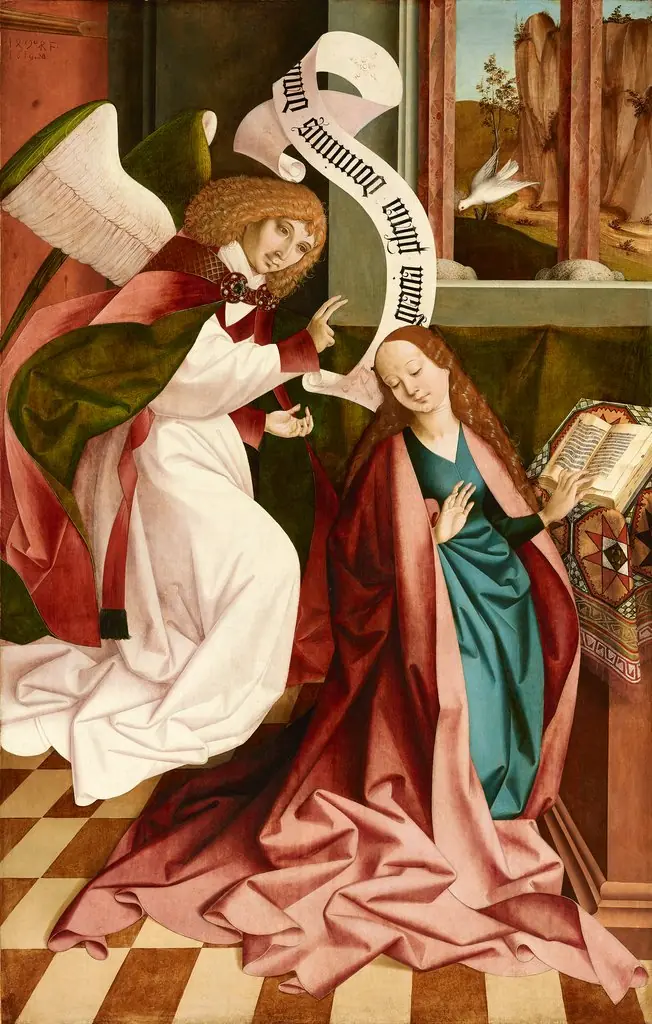
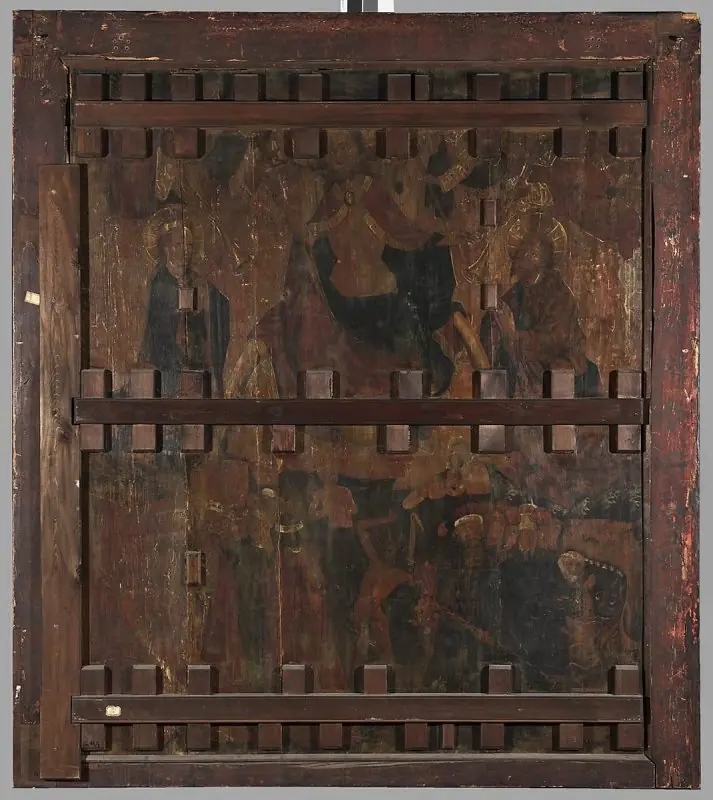
The obverse depicts the Annunciation: the Archangel Gabriel announces to the Virgin Mary that she will bear the Son of God. Gabriel, in a red robe with a white undergarment, gestures toward Mary, who holds a book in quiet contemplation. The reverse shows St. Lawrence, St. Vincent the Levite, and St. John the Baptist, saints associated with service and martyrdom. Together, the imagery reinforces themes of divine revelation and earthly devotion.
Technique & Style
Obilman employed fine brushwork to render fabric folds, metallic halos, and intricate gold leaf patterns that frame the figures. The use of layered pigments and subtle shading creates a sense of volume, while the green curtain and ornate background suggest spatial depth. The palette—rich reds, deep browns, and gold—contrasts with the muted tones of the figures’ garments, directing focus to their gestures and expressions.
History & Provenance
The panel was part of a larger altarpiece commissioned for a church in Legnica, likely for private devotion or liturgical use. After the dissolution of monastic institutions in the 19th century, the polyptych was dispersed. The left wing’s upper panel was acquired by the National Museum in Warsaw, where it was reconstructed from surviving fragments. Its survival is rare, as many such works were lost to war or neglect.
Context
Created during the late Gothic period in Silesia, the painting reflects regional artistic traditions influenced by both German and Bohemian models. The dual-sided format was typical of portable altarpieces used in chapels or monastic settings. The inclusion of St. Vincent and St. Lawrence, both deacons and martyrs, aligns with contemporary devotional emphasis on clerical virtue and sacrifice.
Legacy
As one of the few signed works by Mikołaj Obilman, this panel provides critical insight into the workshop practices of 15th-century Polish painters. Its preservation allows scholars to study regional iconography and the transition from medieval to early Renaissance aesthetics in Central Europe. It remains a key reference for understanding the spiritual and artistic culture of Silesian Christianity.
Artist & collection
Artist
This late-medieval painter created the Legnica polyptych, a five-panel altarpiece from 1466.

 Legnica polyptych - right wing external - lower panel - obverse: Resurrection of Christ; reverse: Last judgement
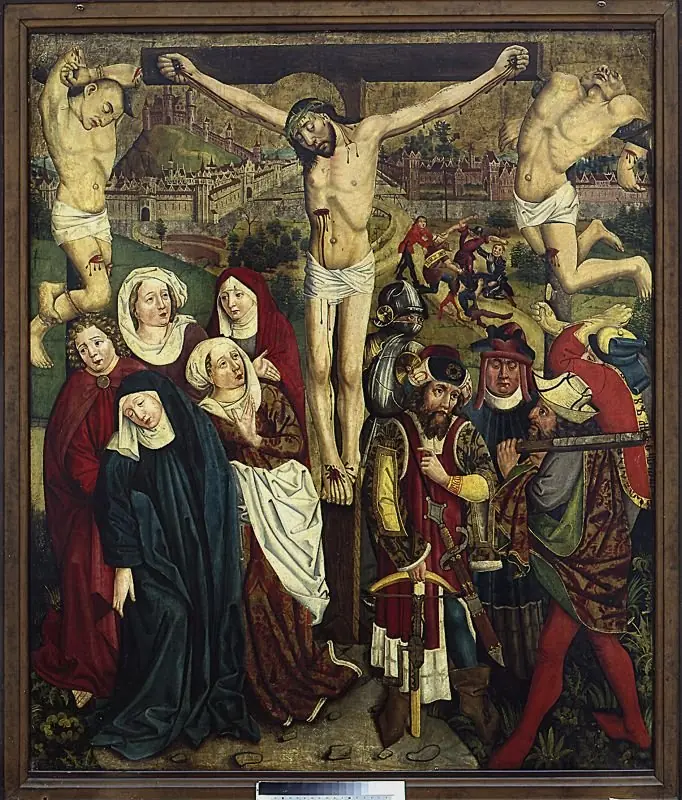 Legnica polyptych
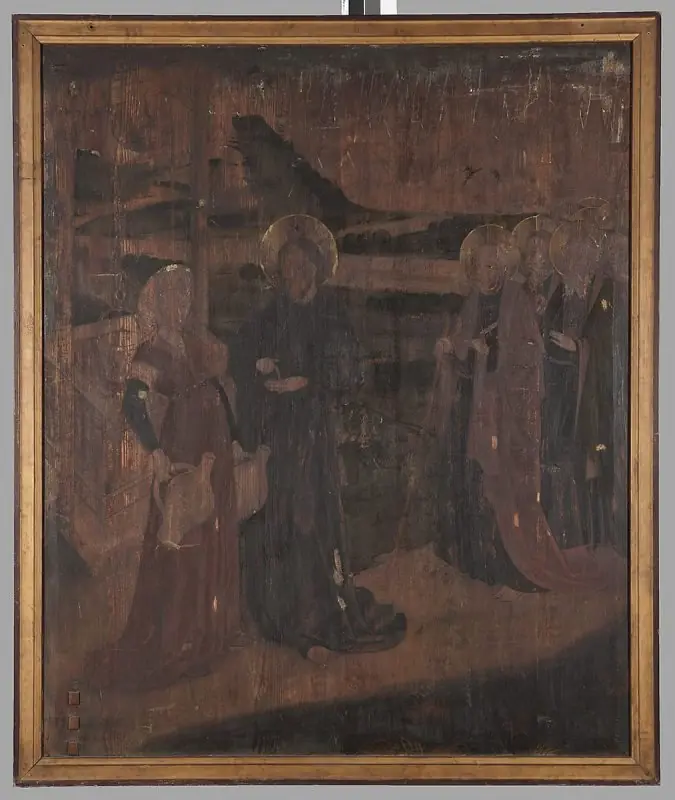 Legnica polyptych - right wing external - upper panel - obverse: St Barbara, St Catherine, St Dorothy; reverse: Christ and the Samaritan
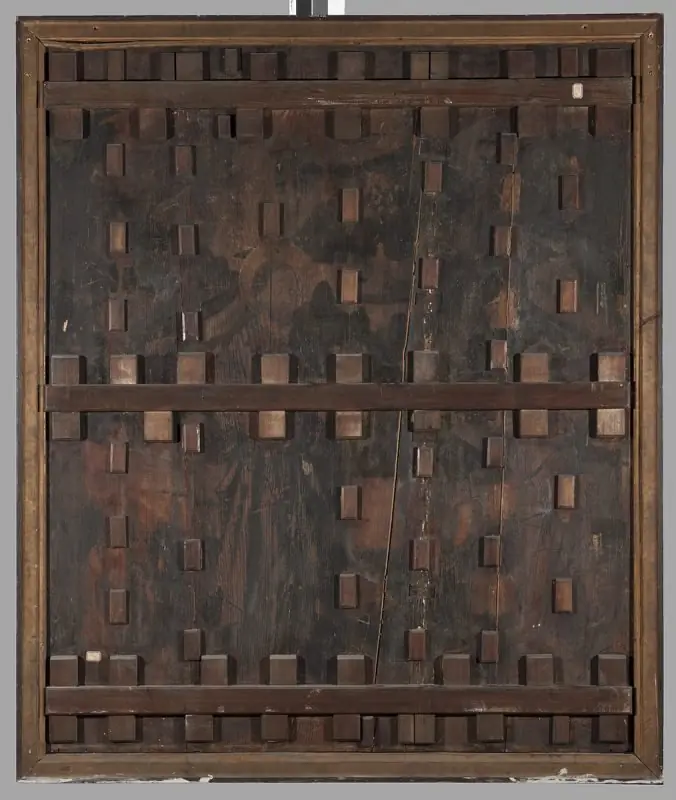 Legnica polyptych - left wing external - upper panel - obverse: St Henry, St Nicholas, St Stephen; reverse: temptation of Christ