Artwork
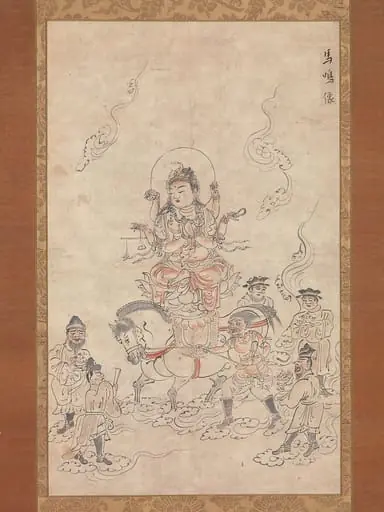
Memyō Bosatsu (Ashvaghosha Bodhisattva) Mounted on a Horse
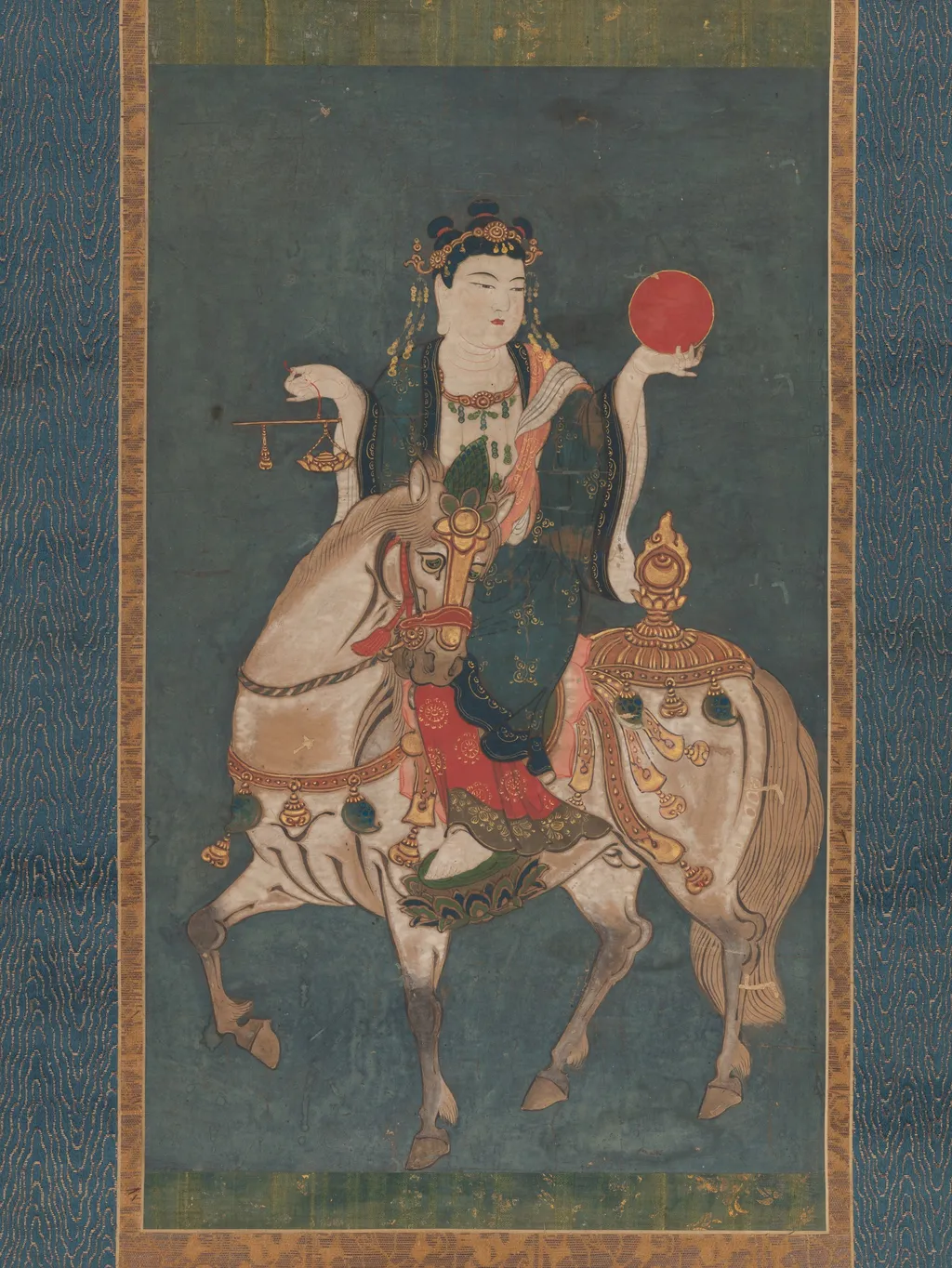
Memyō Bosatsu (Ashvaghosha Bodhisattva) Mounted on a Horse is an unspecified painting by the Northern Renaissance artist Unknown. It dates from 1494 and is held in the collection of the Metropolitan Museum of Art. This painting depicts Memyō Bosatsu (Ashvaghosha Bodhisattva), a Buddhist deity, seated on a horse.
About this work
Overview
This painting depicts Memyō Bosatsu (Ashvaghosha Bodhisattva), a Buddhist deity, seated on a horse. The composition combines vibrant colors and intricate details, set against a dark blue background.
Subject & Meaning
Memyō Bosatsu, a bodhisattva associated with wisdom and poetry, is portrayed in a rare equestrian form. The red ball in their right hand may symbolize spiritual power or a sacred object, while the attire (blue robe with gold designs, red skirt, necklace, and headband with gold ornaments) signifies divine status.
Technique & Style
The work showcases a blend of traditional and ornate elements, evident in the meticulous rendering of the white horse's details, the deity's long black hair, and the elaborate golden saddle and ornaments. The contrast between the dark blue background and the vibrant, gilded accents highlights the artist's use of color to convey importance.
History & Provenance
Provenance details are not provided in the available information, though the piece is currently part of The Metropolitan Museum of Art's collection, suggesting a documented history within the institution's archives.
Context
Equestrian depictions of bodhisattvas like Ashvaghosha are less common in Buddhist art, making this piece unusual. It may reflect influences from various Asian artistic traditions, given the syncretic nature of Buddhist iconography.
Legacy
As part of a major museum's collection, this painting contributes to the global understanding and appreciation of Buddhist art, offering insights into the representation of bodhisattvas in less conventional forms.
Artist & collection

 Domestic Scene
 Giacomo and Cardinal Marco, investing Andrea, Abbot of San Zeno, with his Benefice
 The Nymph of Fontainebleau
 Portrait of a Woman
 Madonna and Child with Saints in the Enclosed Garden
 Venus and Minerva
 Family Group of Four on Sofa
 Wall painting from Room H of the Villa of P. Fannius Synistor at Boscoreale
 Kasuga Deer Mandala
 Buddhist Panel
 Monju Riding Lion with Attendants
 Untitled
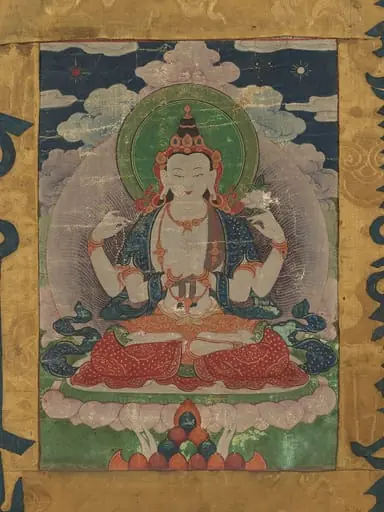 Untitled
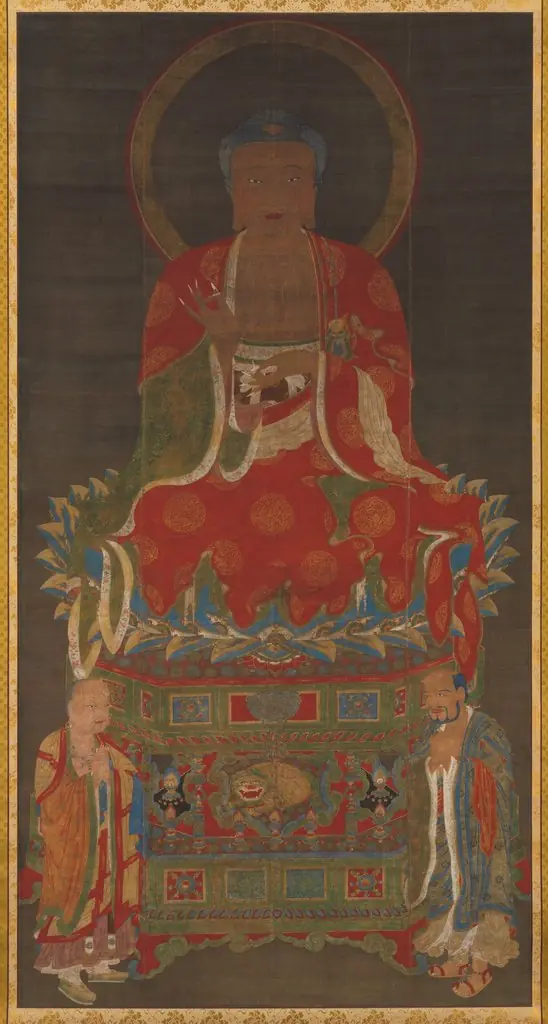 Shakyamuni with two attendants
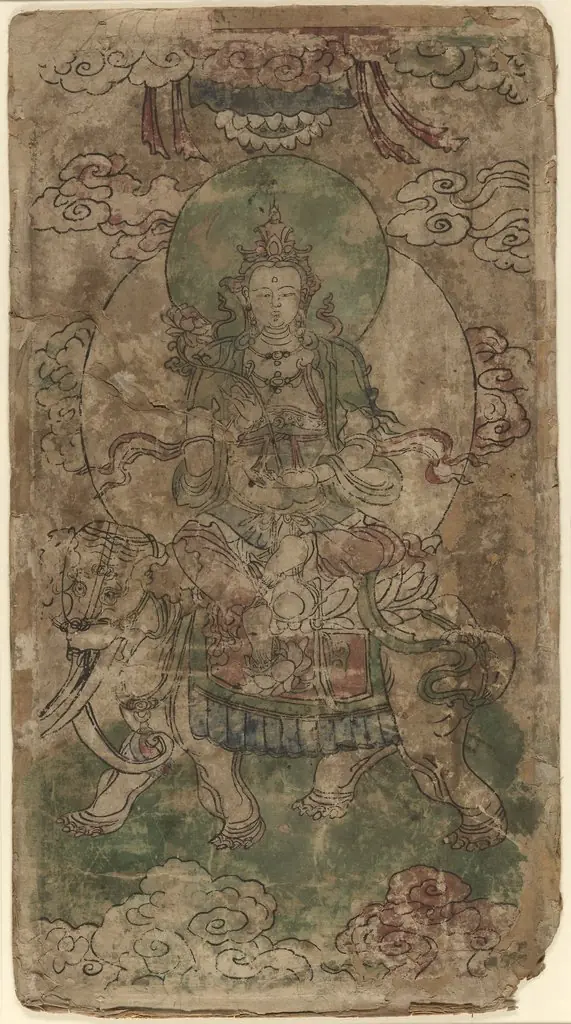 Puxian, the Bodhisattva of Benevolence
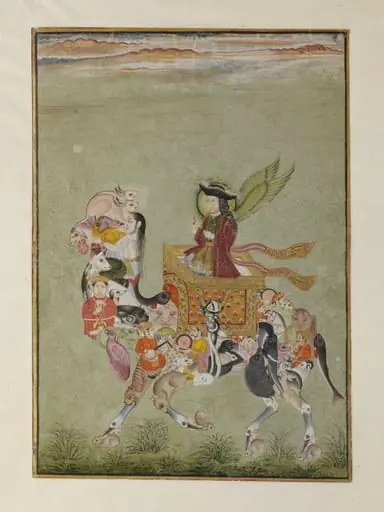 Untitled
 Untitled
 Qasam al-Abbas Arrives from Mecca and Crushes Tahmasp with a Mace
 Bishamonten, the Guardian of the North, with his Retinue
 馬鳴菩薩図像|Iconographic Drawing of the Bodhisattva Memyō (Ashvaghosha)