Artwork
The apotheosis of commerce and science
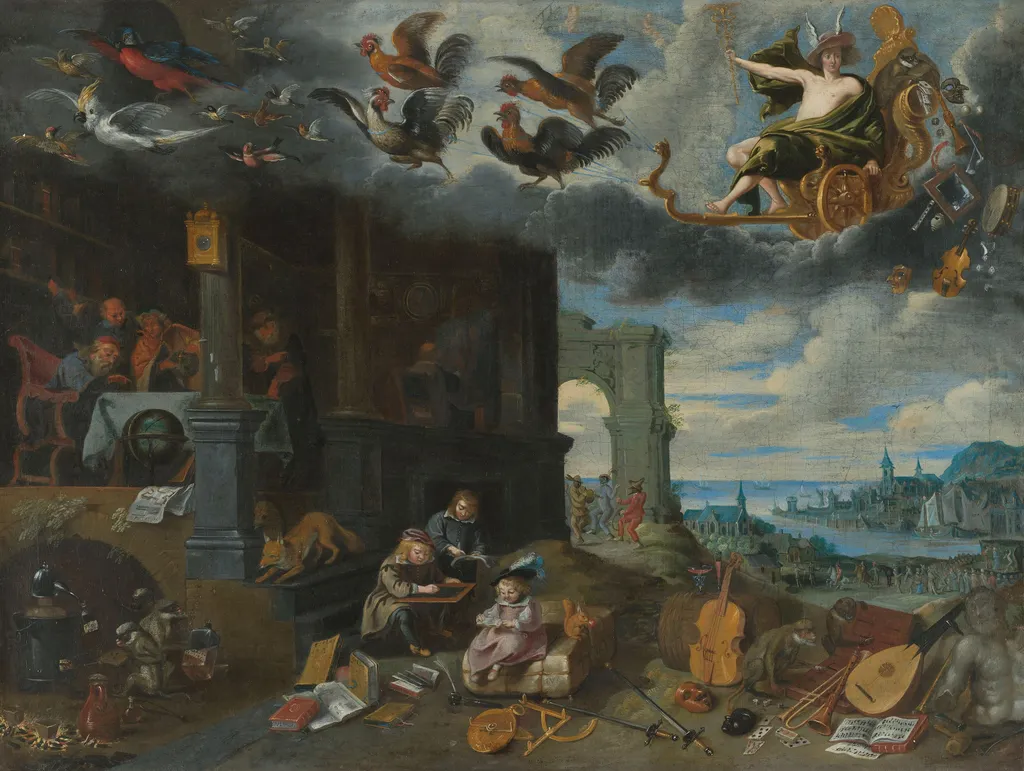
The apotheosis of commerce and science is an oil painting by the Flemish Baroque painting artist Unknown. It dates from 1637 and is held in the collection of the Rijksmuseum. This oil painting presents a layered allegorical scene that intertwines daily life with symbolic figures.
About this work
Overview
The composition juxtaposes the mundane with the fantastical, suggesting a commentary on the elevation of human pursuits.
This oil painting presents a layered allegorical scene that intertwines daily life with symbolic figures. At its center is a celestial woman in a chariot drawn by roosters, ascending through turbulent skies. Below, a domestic setting features books, musical instruments, and a fox, while a man with a globe stands nearby. The composition juxtaposes the mundane with the fantastical, suggesting a commentary on the elevation of human pursuits.
Subject & Meaning
The painting appears to honor commerce and science through symbolic representation. The globe-bearing figure and scholarly objects imply intellectual and economic advancement. The roosters, unusual as celestial牵引, may reference vigilance or the dawn of progress. The fox, often a symbol of cunning, and the family surrounded by culture suggest the interplay of wisdom, industry, and domestic life in societal development.
Technique & Style
The artist employs chiaroscuro to heighten the drama between earthly and celestial realms. Light falls sharply on the floating figure, contrasting with the shadowed ground where ordinary objects lie. Details are rendered with precision—each instrument, book, and feather is carefully defined. The crowded composition invites close viewing, rewarding attention with layered narratives and subtle contrasts in texture and tone.
History & Provenance
The painting’s origins trace to a period when allegorical works were common in academic circles, though its specific commission and early ownership remain undocumented. Its unusual iconography—particularly the roosters—distinguishes it from standard mythological depictions. It has passed through private collections before entering its current institutional holding, with no record of public exhibition prior to the 20th century.
Context
Created during an era when Enlightenment ideals elevated reason and trade, the painting reflects contemporary fascination with progress. While classical allegories often used horses or eagles, the choice of roosters may nod to civic symbolism or local heraldry. The inclusion of domestic life alongside celestial imagery aligns with broader trends in 18th-century art that sought to connect intellectual achievement with everyday experience.
Legacy
Though not widely reproduced or studied, the painting offers a distinctive example of allegorical painting that resists conventional symbolism. Its eccentric elements—particularly the roosters—have sparked scholarly interest in regional interpretations of progress. It remains a quiet but compelling artifact of how visual culture encoded complex ideas about knowledge and society in an age of transformation.
Artist & collection

 Domestic Scene
 Giacomo and Cardinal Marco, investing Andrea, Abbot of San Zeno, with his Benefice
 The Nymph of Fontainebleau
 Portrait of a Woman
 Madonna and Child with Saints in the Enclosed Garden
 Venus and Minerva
 Family Group of Four on Sofa
 Wall painting from Room H of the Villa of P. Fannius Synistor at Boscoreale
 The Children of the Planet Mercury
 The Temptation of Saint Anthony
 Air
Air The Prophecy of Isaiah
 Witches' sabbath
 Allegory of Air and Fire
 Allegory
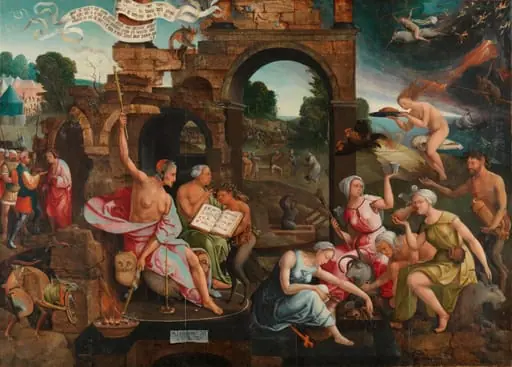 Saul and the Witch of Endor
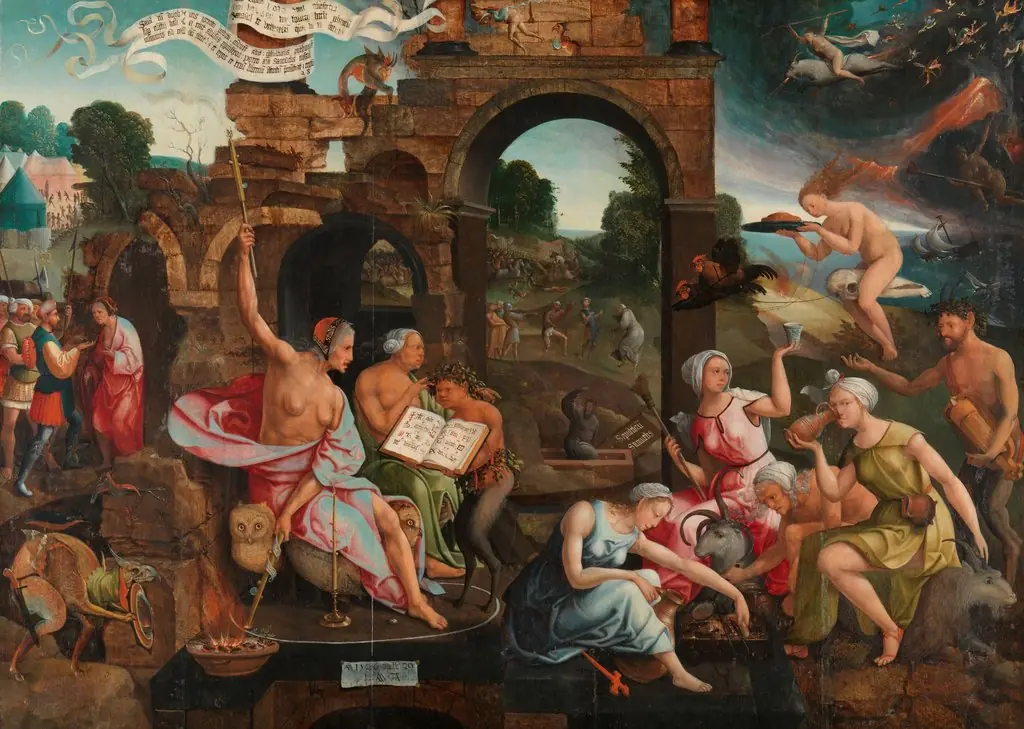 Saul and the Witch of Endor
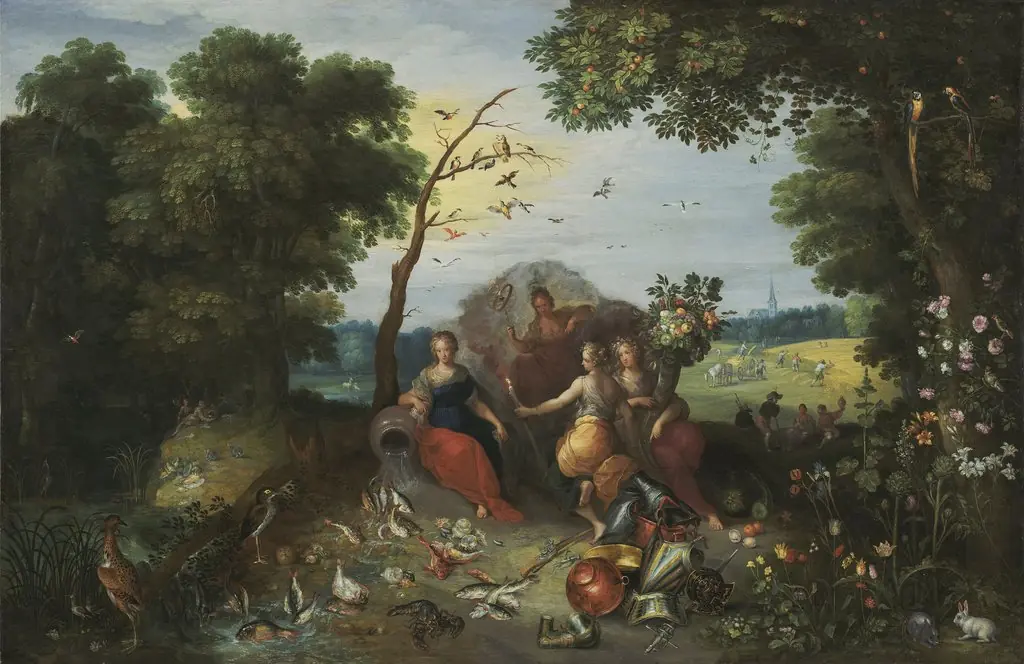 Landscape with Allegories of the Four Elements
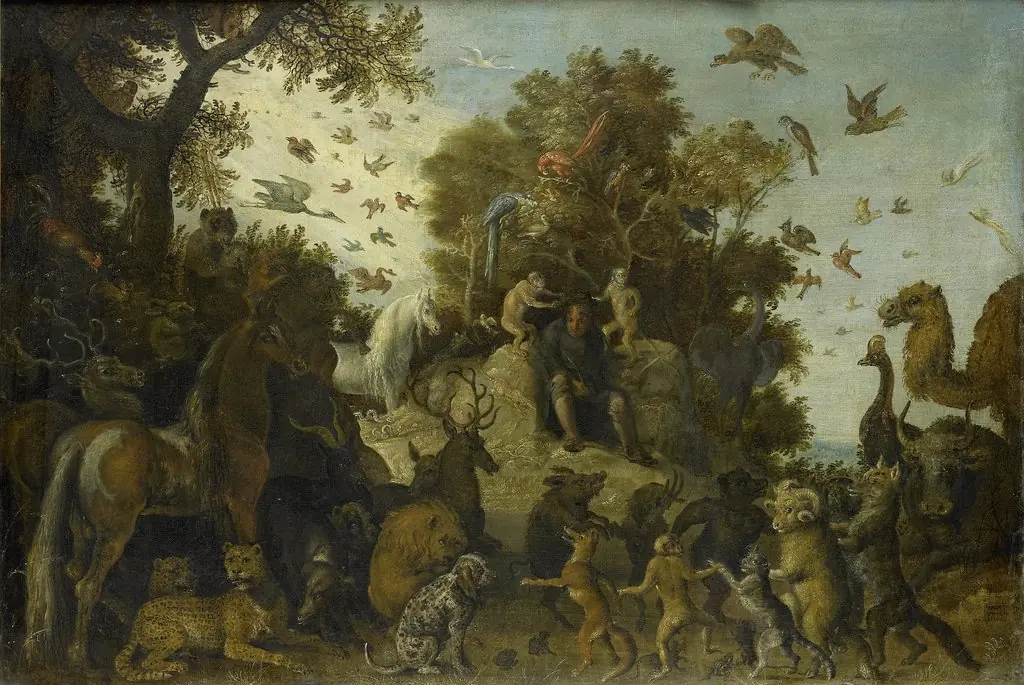 The poet crowned by two apes at the feast of the animals
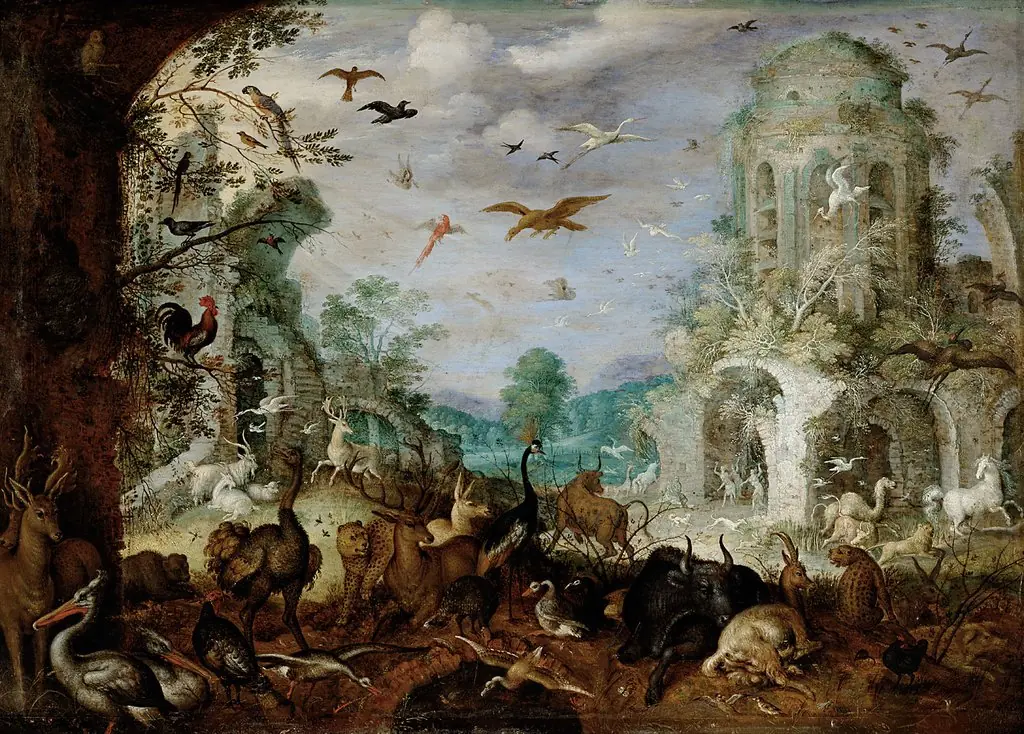 Landscape with Wild Beasts