Artwork
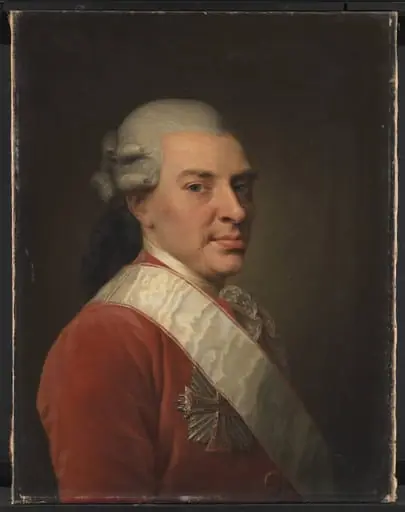
Portrait of Mikołaj Tyszkiewicz, Leliwa coat of arms (?–1796 or 1798), canon in Vilnius
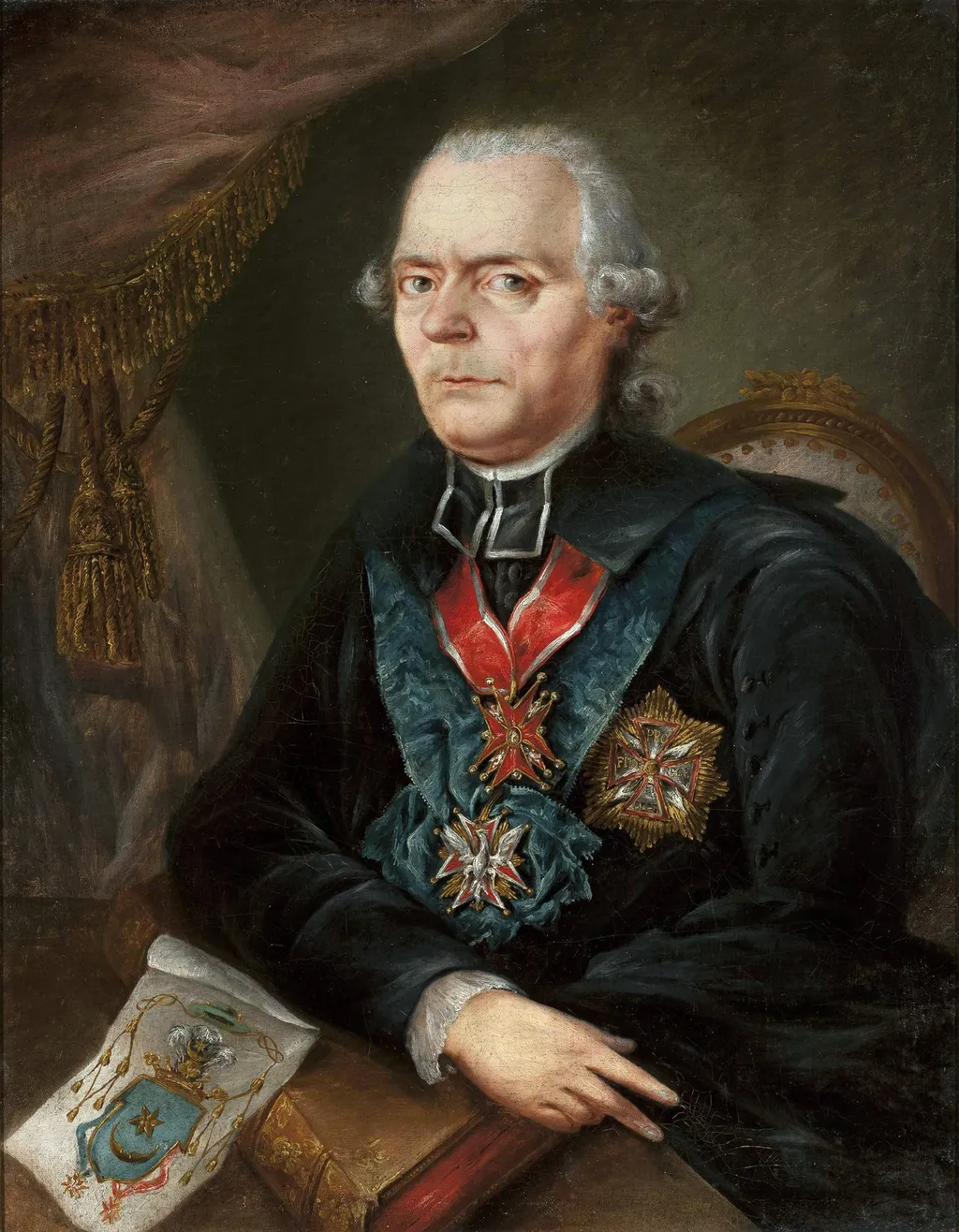
Portrait of Mikołaj Tyszkiewicz, Leliwa coat of arms (?–1796 or 1798), canon in Vilnius is an oil painting by Unknown. It dates from 1798 and is held in the collection of the National Museum in Warsaw. The oil painting portrays Mikołaj Tyszkiewicz, a canon from Vilnius who lived until the late 1790s.
About this work
Overview
The oil painting portrays Mikołaj Tyszkiewicz, a canon from Vilnius who lived until the late 1790s. He is shown with white hair, dressed in a dark blue coat trimmed with red and gold, a white shirt, and a black tie. His right hand rests on an open book, and he stands before a brown wall that includes a gold‑framed mirror and a draped curtain with gold tassels.
Subject & Meaning
Tyszkiewicz’s attire and the presence of a book suggest both his clerical rank and scholarly interests. The coat of arms Leliwa, displayed on his clothing, signals his noble lineage, while the book may allude to theological study or administrative duties typical of a canon in the Polish‑Lithuanian Commonwealth.
Technique & Style
Executed in oil on canvas, the work employs a restrained palette of deep blues, muted browns, and metallic highlights. The brushwork renders the fabric’s texture and the reflective surface of the mirror with subtle chiaroscuro, creating a modest three‑dimensional presence against the plain background.
History & Provenance
The portrait is dated to the final years of Tyszkiewicz’s life, around 1796–1798. It likely originated in a private family collection of the Tyszkiewicz lineage before entering a public institution, though specific acquisition records are not documented.
Context
In the late eighteenth century, portraiture of clergy and aristocracy in the Polish‑Lithuanian Commonwealth often combined personal likeness with symbols of rank. The inclusion of the Leliwa coat of arms aligns with contemporary practices of affirming noble identity within ecclesiastical portraiture.
Legacy
The painting serves as a visual record of the Tyszkiewicz family’s status and the aesthetic conventions of its era, offering scholars insight into the intersection of noble heraldry and ecclesiastical representation in late‑enlightenment Lithuania.
Artist & collection

 Domestic Scene
 Giacomo and Cardinal Marco, investing Andrea, Abbot of San Zeno, with his Benefice
 The Nymph of Fontainebleau
 Portrait of a Woman
 Madonna and Child with Saints in the Enclosed Garden
 Venus and Minerva
 Family Group of Four on Sofa
 Wall painting from Room H of the Villa of P. Fannius Synistor at Boscoreale
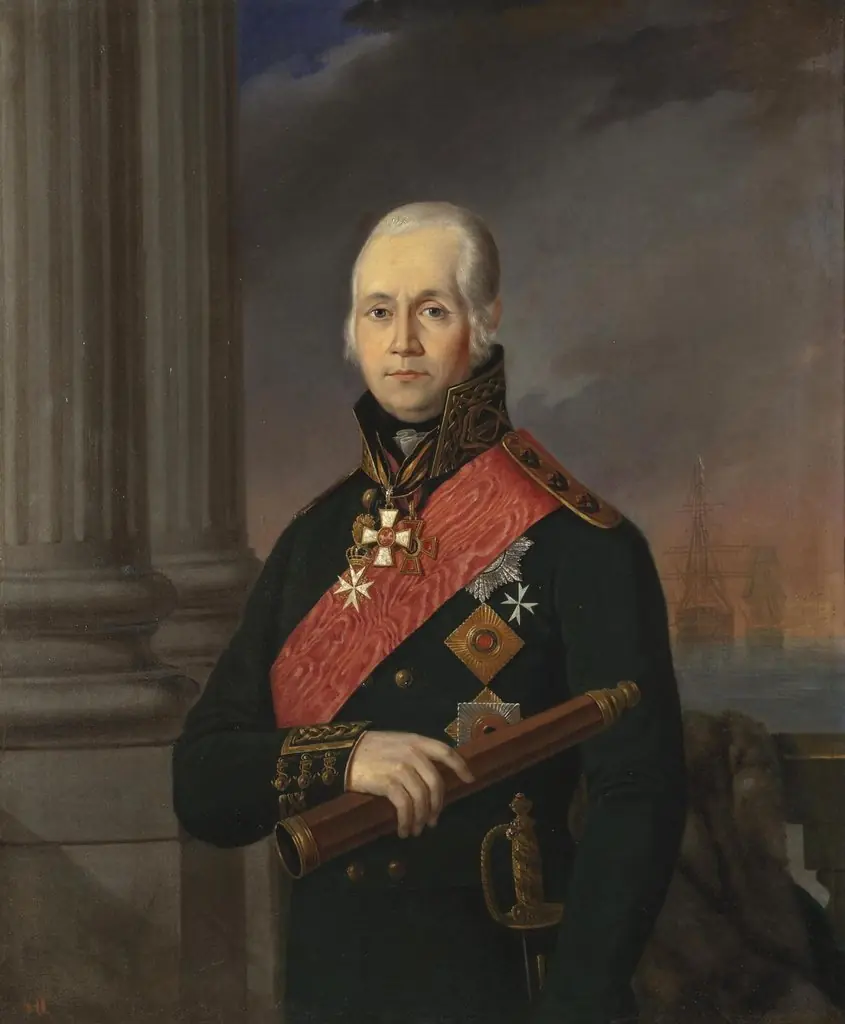 Portrait of Admiral F.F.Ushakov
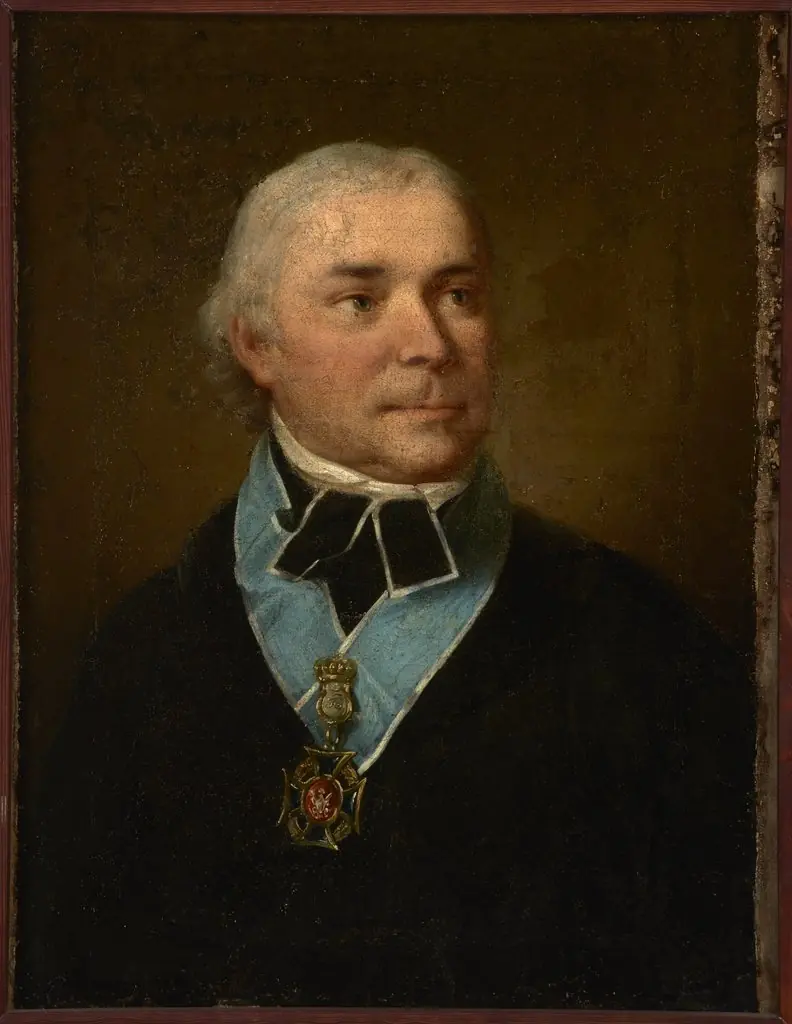 Portret Jana Kantego Wodzickiego (ok. 1740-1821), kanonika krakowskiego i prezydenta Trybunału Koronnego
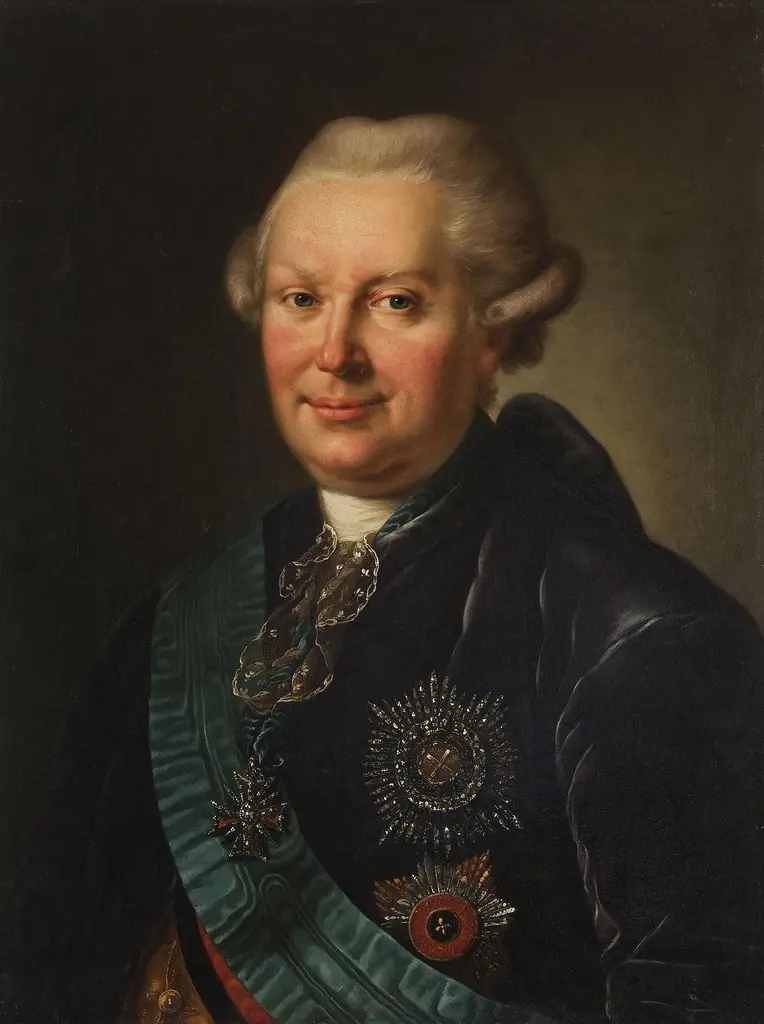 Portrait of Procurator-General Alexander Vyazemsky
 Portrait of a Nobleman
 Untitled
 Portrait of Antoni Kruszewski, prelate
 Portrait of P. Kartsev
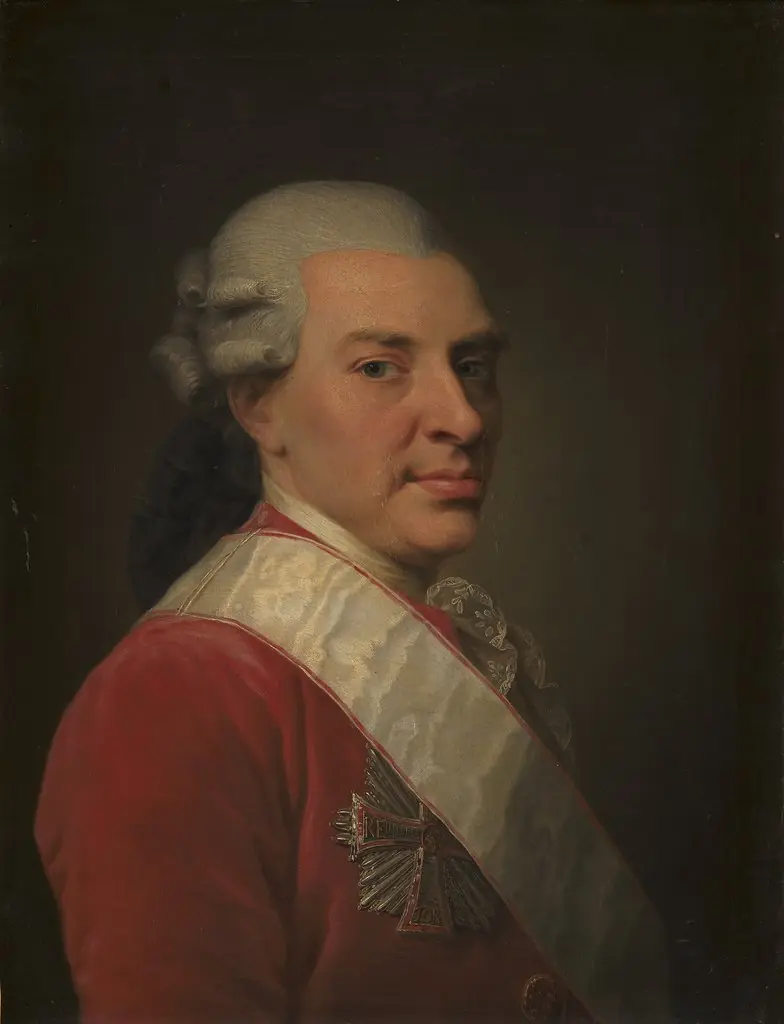 Geheimeråd Henrik Hielmstierne
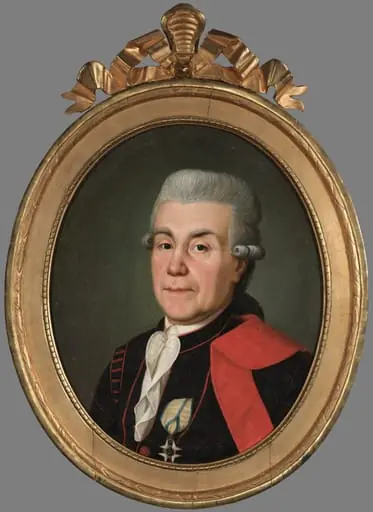 Anders de Bruce (1723-1787)
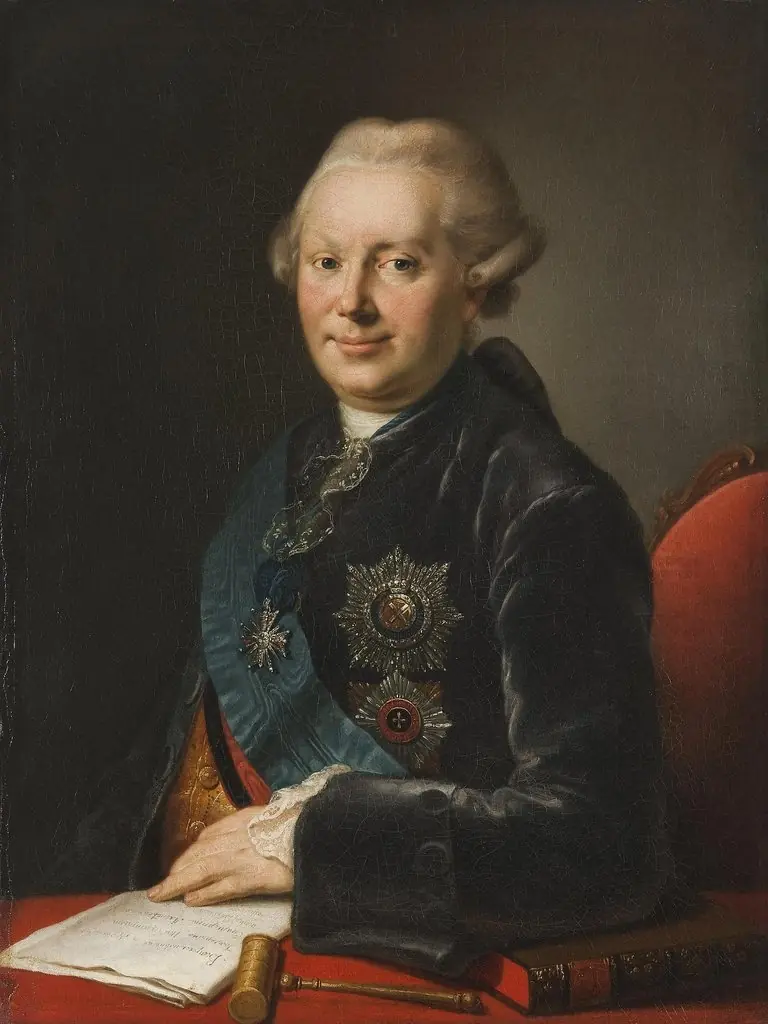 Portrait of Procurator-General Alexander Vyazemsky
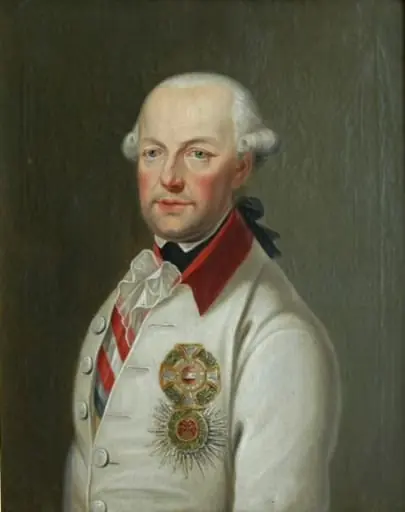 Împăratul Leopold al II-lea
 Geheimeråd Henrik Hielmstierne