Artwork
The Sacrifice of Abraham
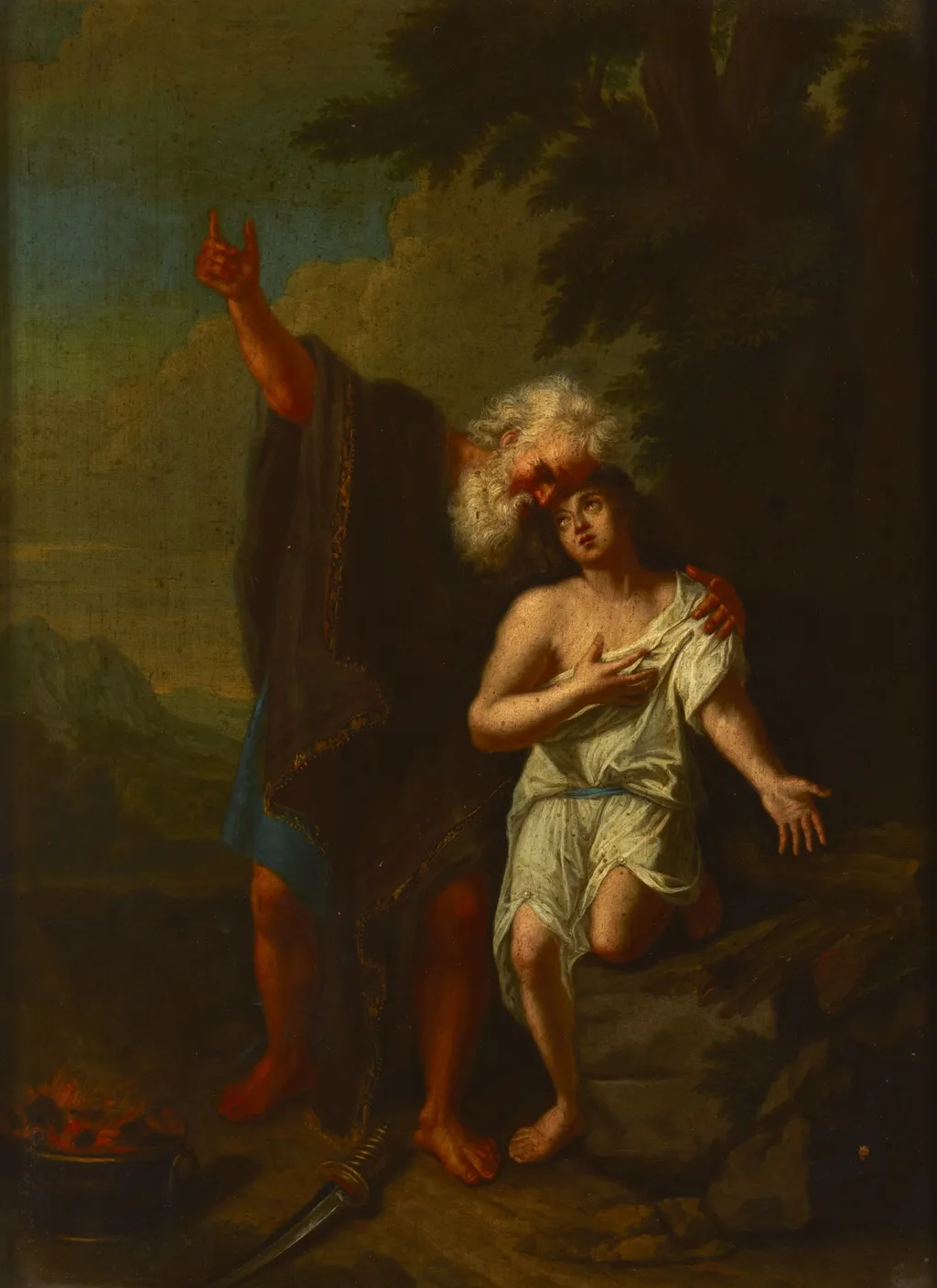
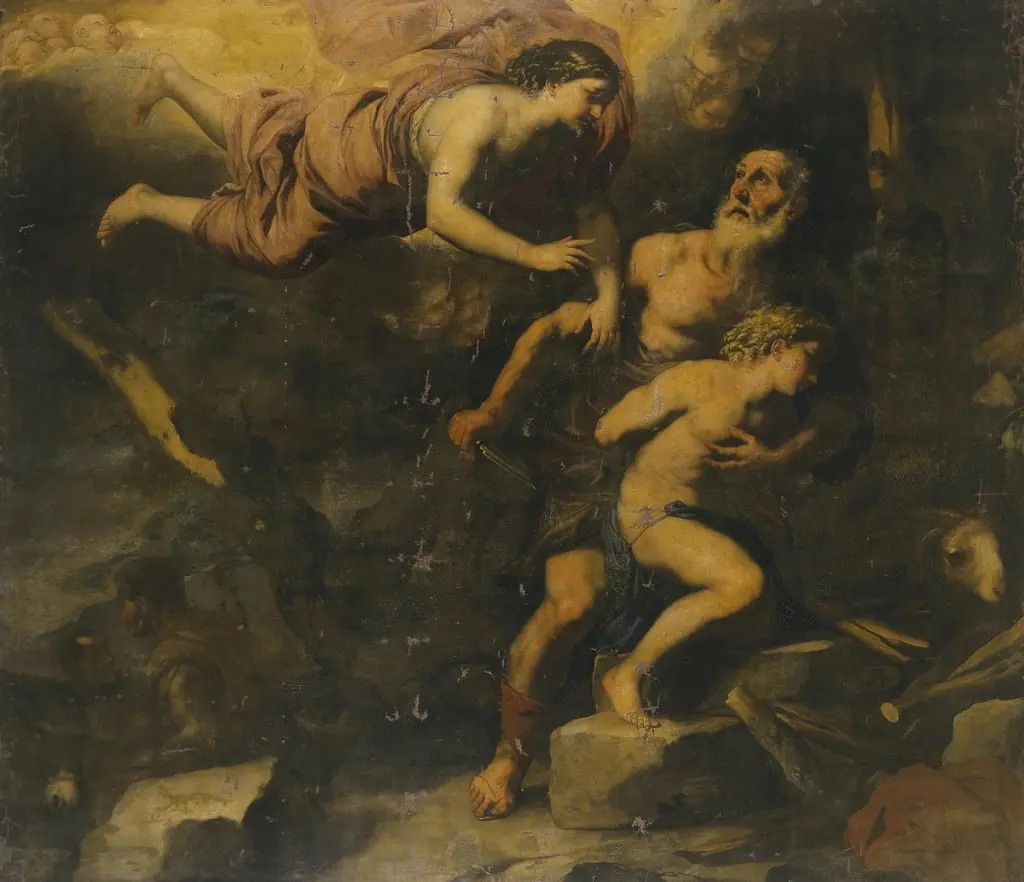
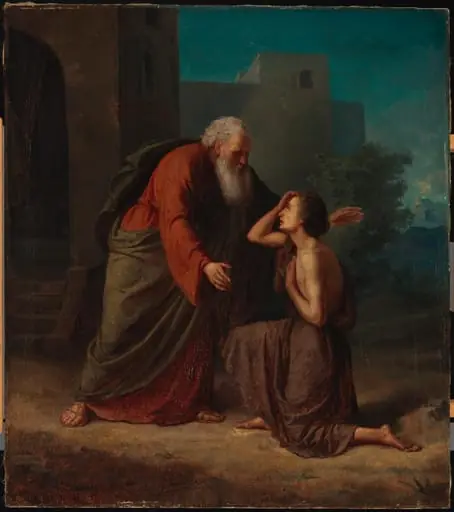
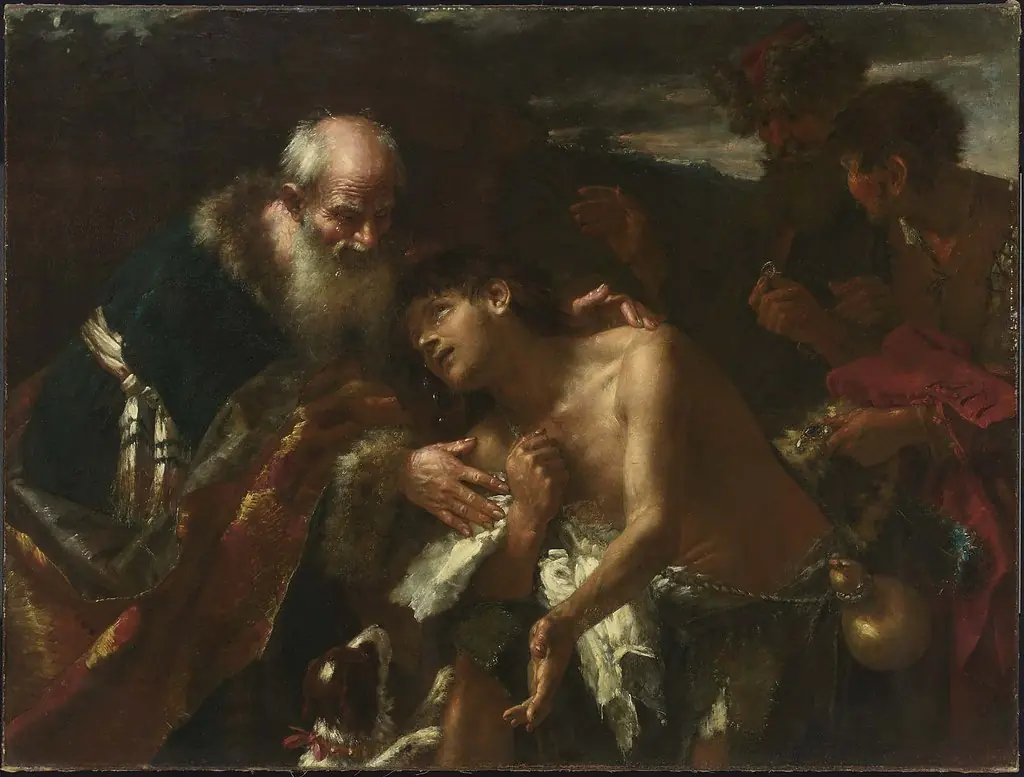
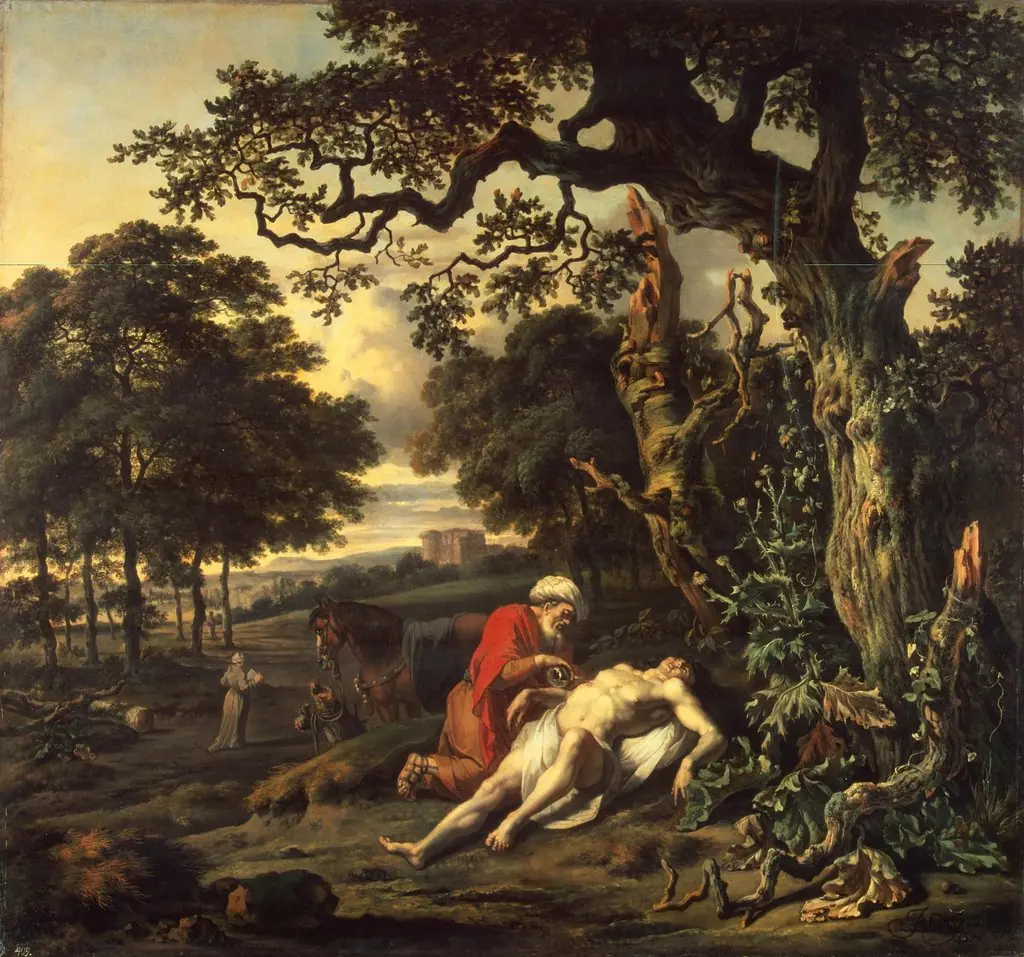
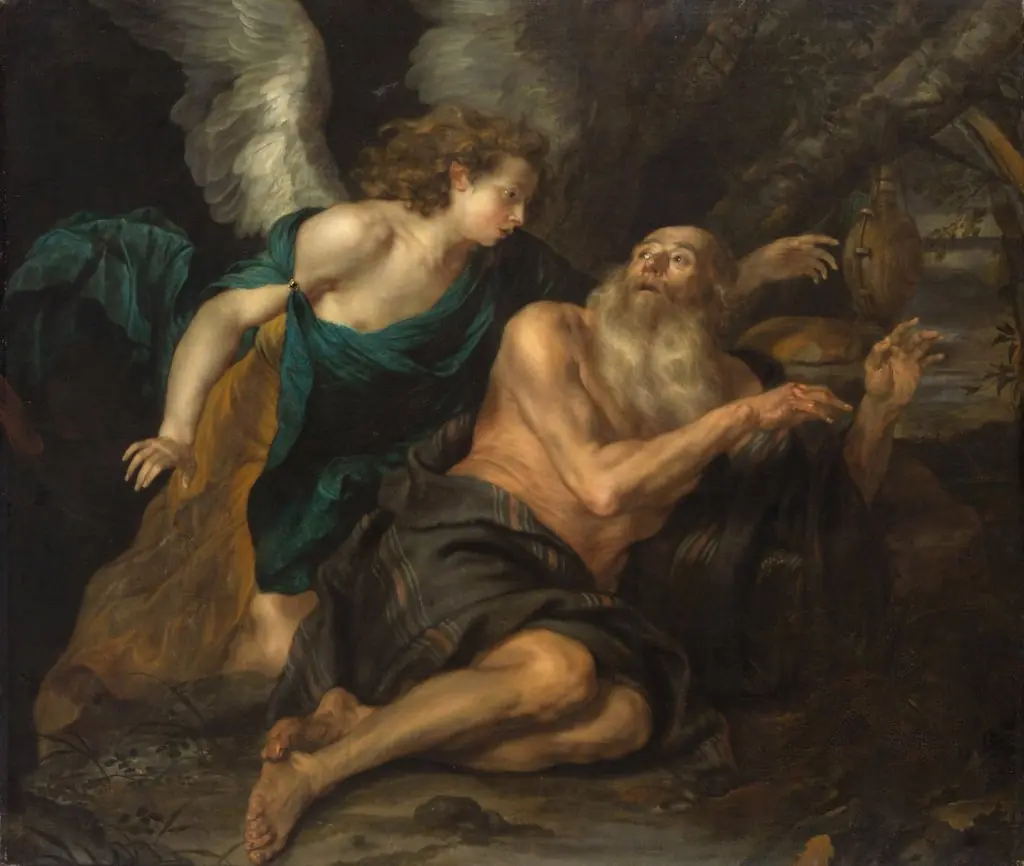
The Sacrifice of Abraham is an oil painting by the Spanish Baroque Tenebrist artist Unknown. It dates from 1700 and is held in the collection of the National Museum in Kraków. This oil painting illustrates the biblical moment when Abraham is halted from sacrificing his son Isaac.
About this work
Overview
This oil painting illustrates the biblical moment when Abraham is halted from sacrificing his son Isaac. The scene is composed with quiet intensity, focusing on the figures against a calm natural backdrop. The artist employs chiaroscuro to model forms and heighten emotional gravity, drawing attention to the father’s gesture and the abandoned sword.
Subject & Meaning
The painting captures the divine intervention in Abraham’s trial of faith. The raised hand directs gaze upward, signaling divine command, while the hand on the son’s chest conveys restraint and tenderness. The extinguished fire and discarded weapon suggest the sacrifice is averted, underscoring themes of obedience and mercy.
Technique & Style
Chiaroscuro defines the figures’ volumes, contrasting the dark robe and shadowed terrain with the son’s luminous tunic. Brushwork is controlled, favoring smooth transitions over texture. The landscape recedes softly, reinforcing the figures’ isolation and the moment’s solemnity without distracting detail.
History & Provenance
The painting’s origin and early ownership are not documented in available records. It appears to be a 17th-century interpretation of a widely depicted biblical episode, consistent with devotional art of the period, though the artist’s identity remains unconfirmed.
Context
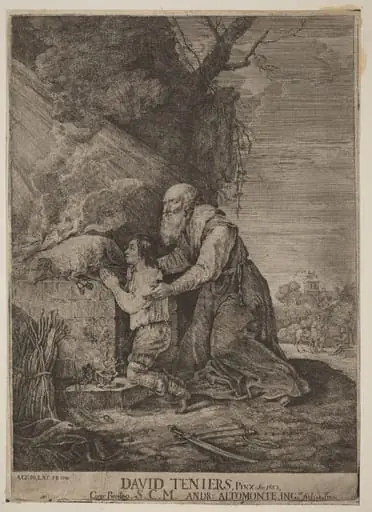
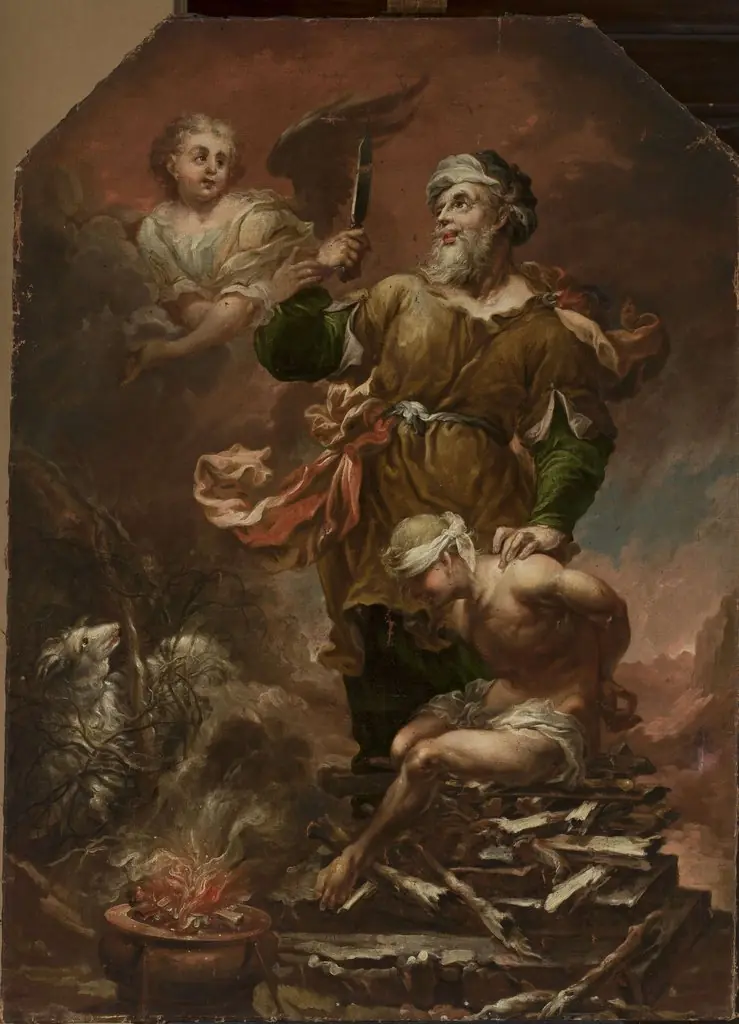
Depictions of Abraham’s sacrifice were common in European religious art, often used to illustrate divine mercy and human submission. This version avoids dramatic violence, instead emphasizing psychological stillness, aligning with quieter, contemplative trends in post-Reformation devotional imagery.
Legacy
The work contributes to a tradition of restrained biblical narratives that prioritize emotional nuance over spectacle. While not widely reproduced or studied, it reflects the enduring power of the story to inspire visual meditation on faith, duty, and divine intervention.
Artist & collection

 Domestic Scene
 Giacomo and Cardinal Marco, investing Andrea, Abbot of San Zeno, with his Benefice
 The Nymph of Fontainebleau
 Portrait of a Woman
 Madonna and Child with Saints in the Enclosed Garden
 Venus and Minerva
 Family Group of Four on Sofa
 Wall painting from Room H of the Villa of P. Fannius Synistor at Boscoreale