Artwork
Screen of Two Dancers (Bugi zu byōbu)
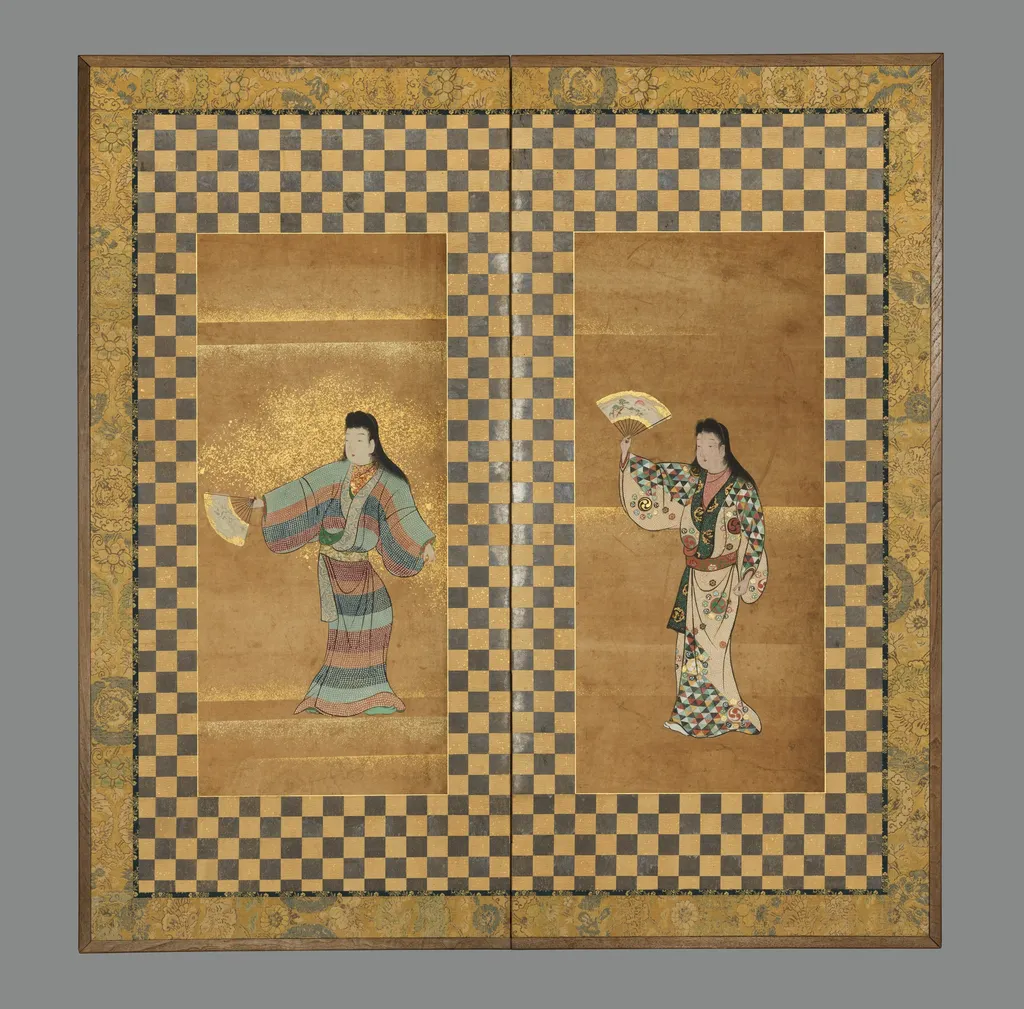
Screen of Two Dancers (Bugi zu byōbu) is an unspecified painting. It dates from 1716 and is held in the collection of the Metropolitan Museum of Art.
About this work
Overview
Screen of Two Dancers (Bugi zu byōbu) is a Japanese folding screen painting that depicts a pair of women in traditional costume. The composition is set on a checkered floor, creating spatial depth, while each figure holds a fan—one in the right hand, the other in the left. The work is executed in a restrained palette, emphasizing line and pattern over vivid coloration.
Subject & Meaning
The two figures are presented as dancers, their poised stances and fan gestures suggesting a ceremonial or performative context. Their elaborate kimono designs, rendered with fine detail, reflect the aesthetic values of courtly attire and the cultural importance of dance as a refined art form in historical Japan.
Technique & Style
Executed with delicate brushwork, the painting employs muted tones that allow the intricate textile patterns to emerge subtly. The checkered floor, rendered with precise linear perspective, adds a sense of three‑dimensionality uncommon in earlier flat compositions, indicating an awareness of spatial conventions that developed in Edo‑period screen painting.
Context
Folding screens (byōbu) served both functional and decorative purposes, partitioning interior spaces while showcasing artistic skill. This piece aligns with the tradition of screen paintings that combine narrative scenes with ornamental design, often displayed in aristocratic or tea‑house settings where the elegance of the depicted dancers would complement the refined atmosphere.
Artist & collection

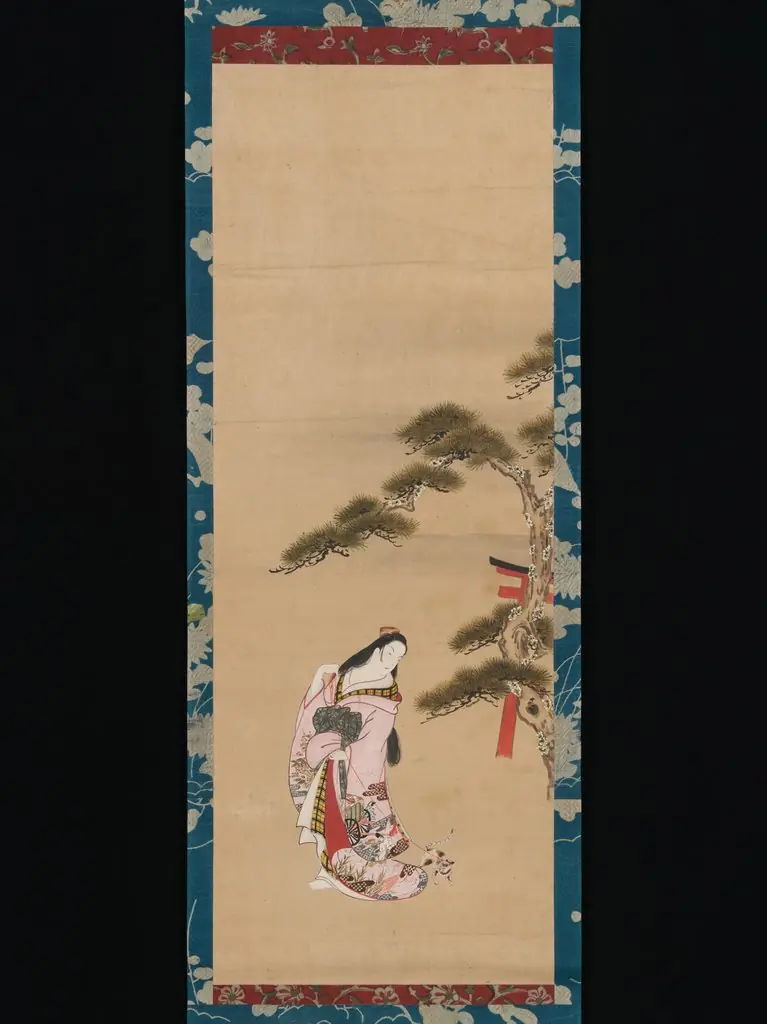 The Third Princess and a Cat, from the "New Herbs I" (Wakana I) chapter The Tale of Genji (Genji monogatari}
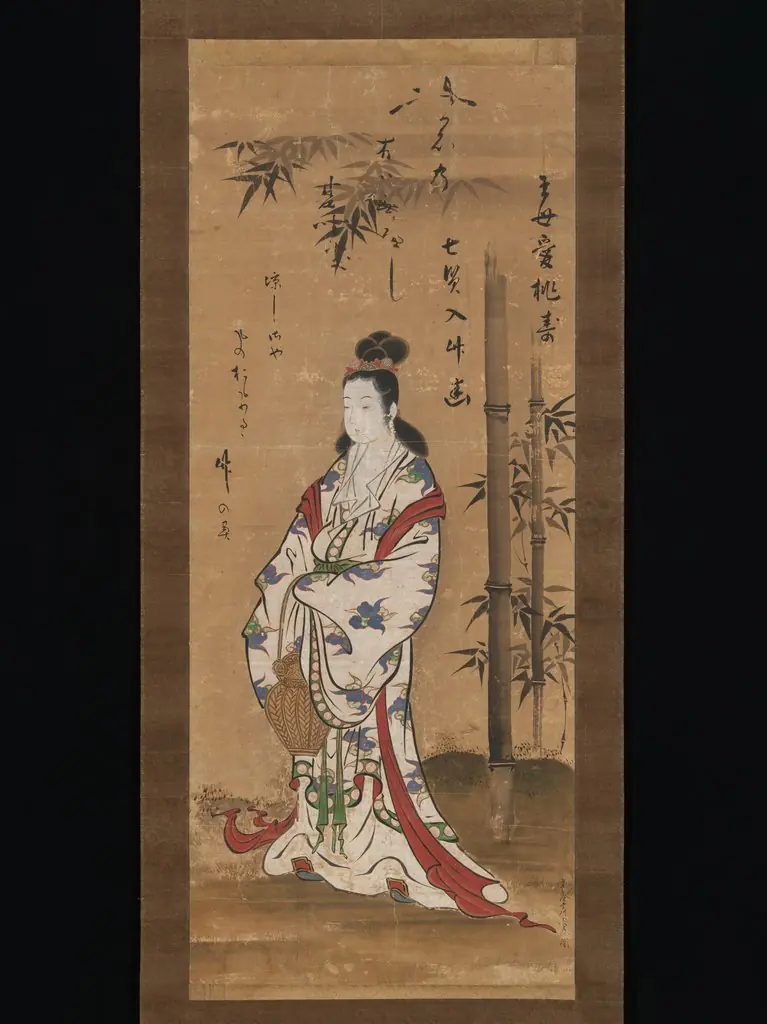 Gyoran Kannon
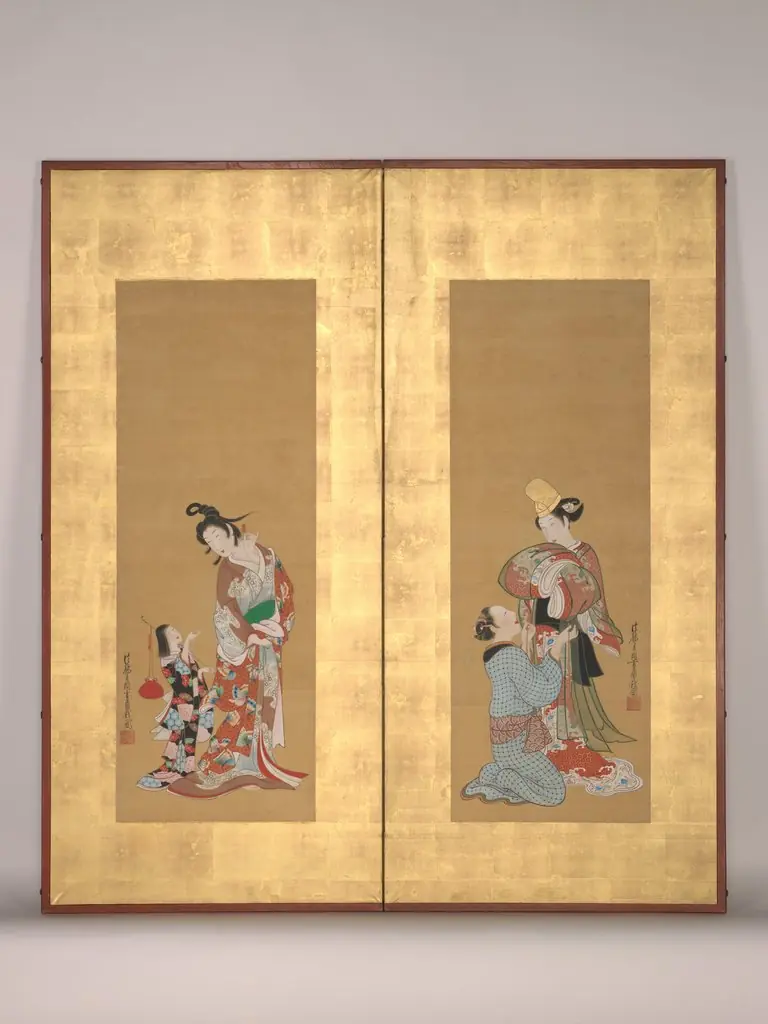 Shirabyōshi Dancer and Female Servant; Courtesan and Girl Attendant
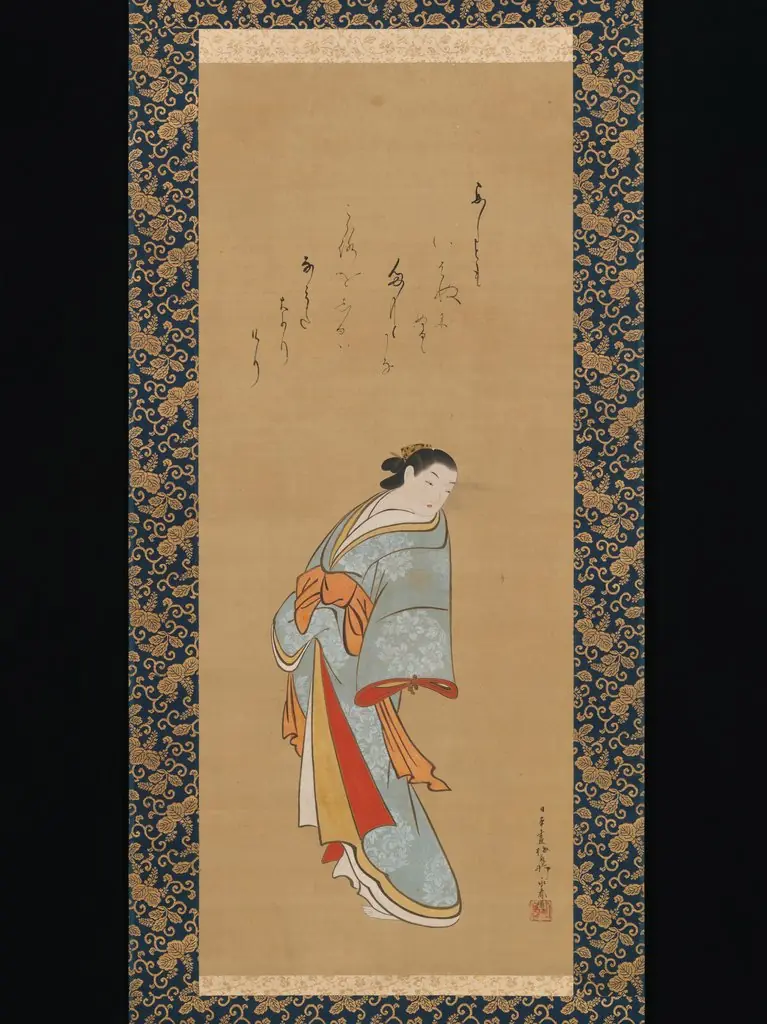 Standing Courtesan
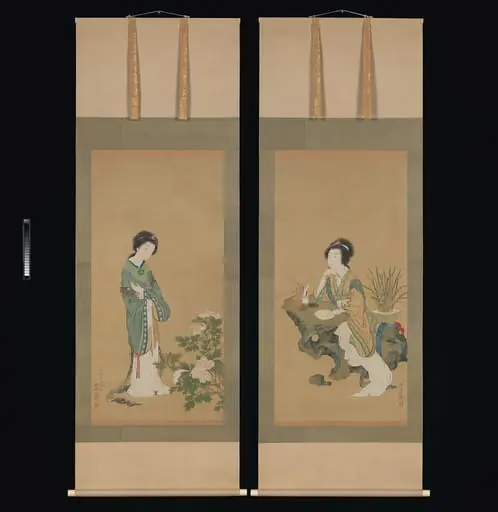 源琦筆 燕姞・楊貴妃図|Yanji with Orchids and Yang Guifei with Peonies
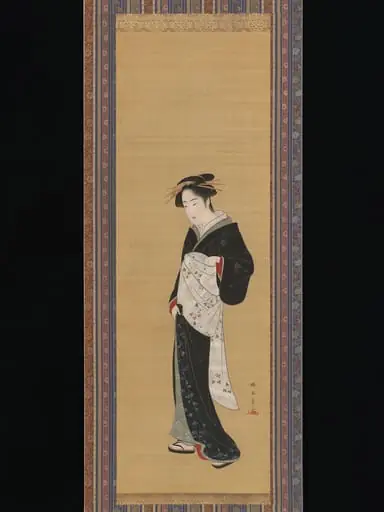 勝川春章筆 立姿美人図|Woman in a Black Kimono
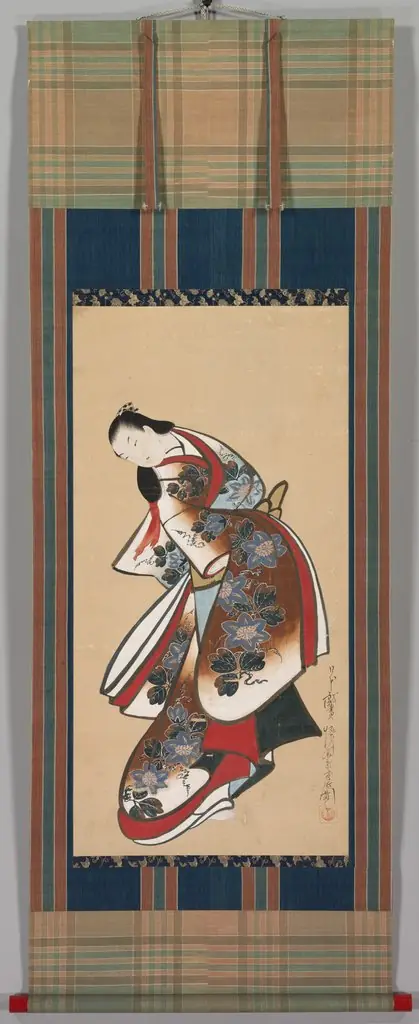 Courtesan
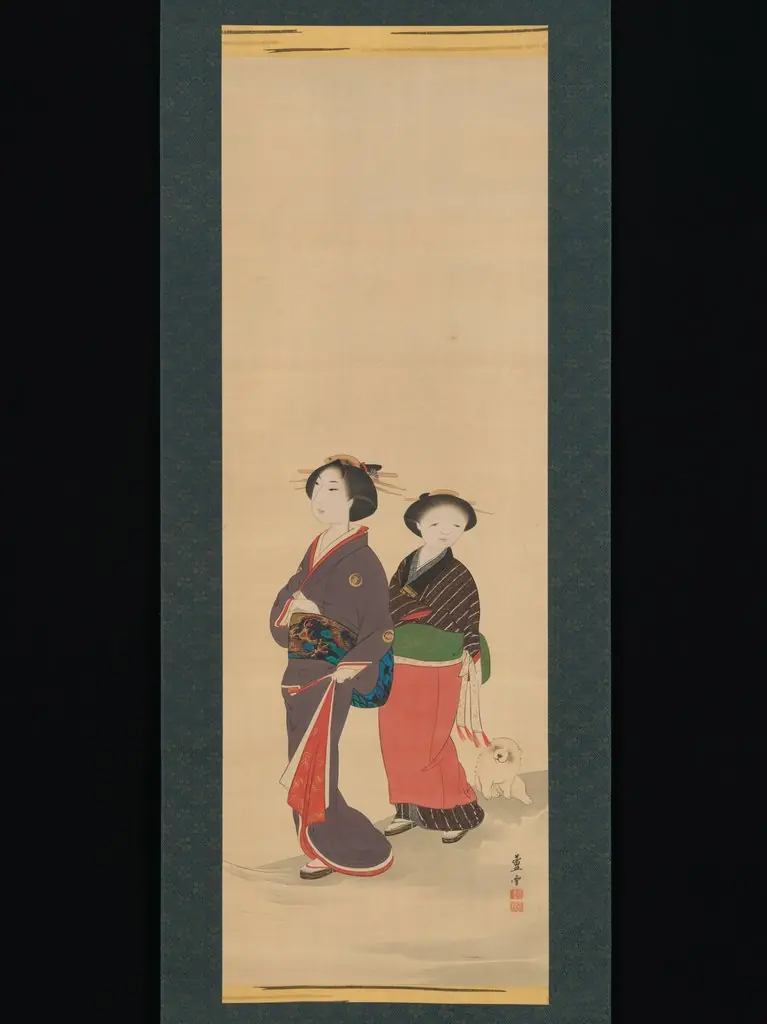 Two Women and a Puppy
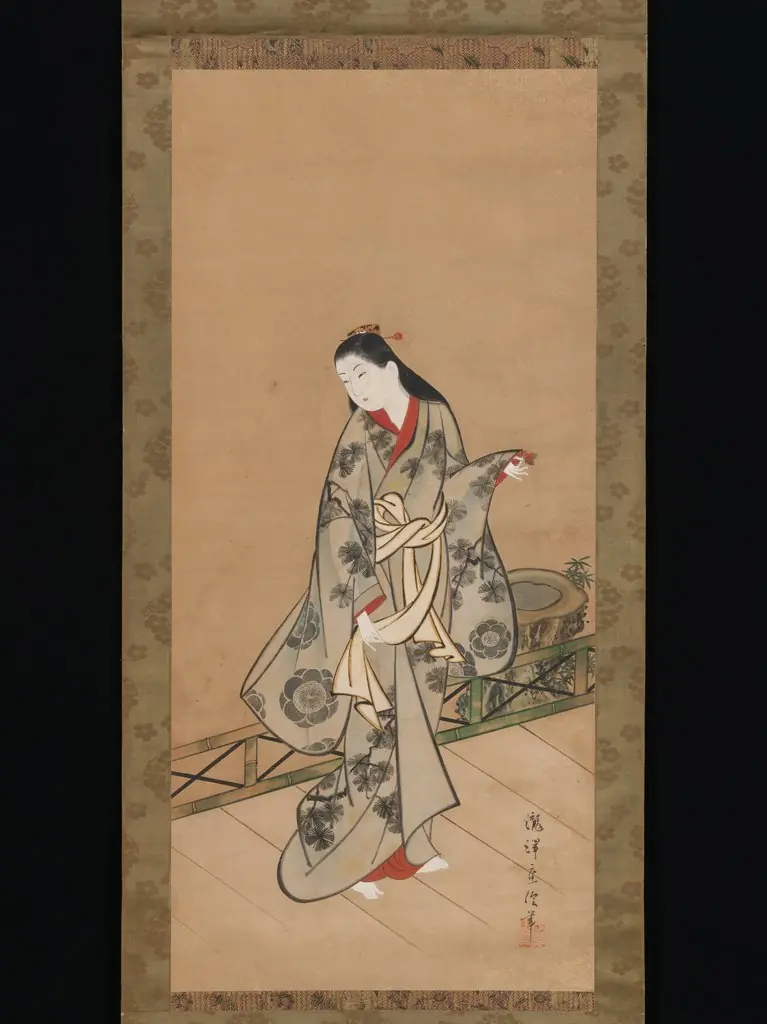 Woman on Veranda
 Untitled
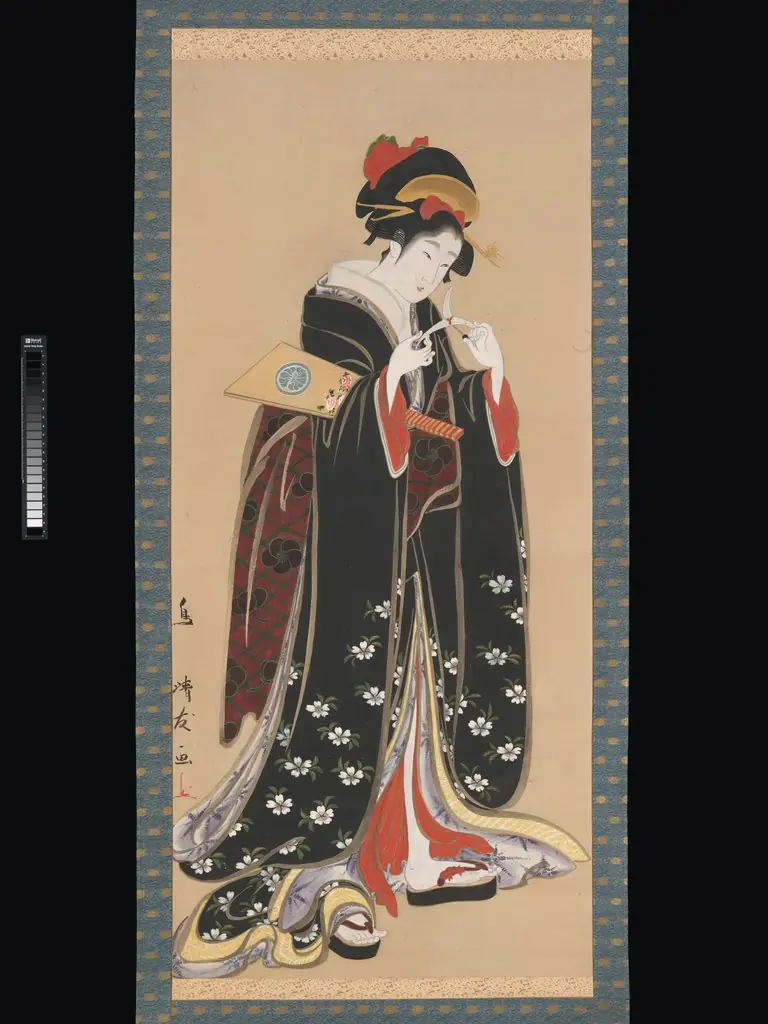 Woman with Battledore and Shuttlecock