Artwork
Woman with Battledore and Shuttlecock
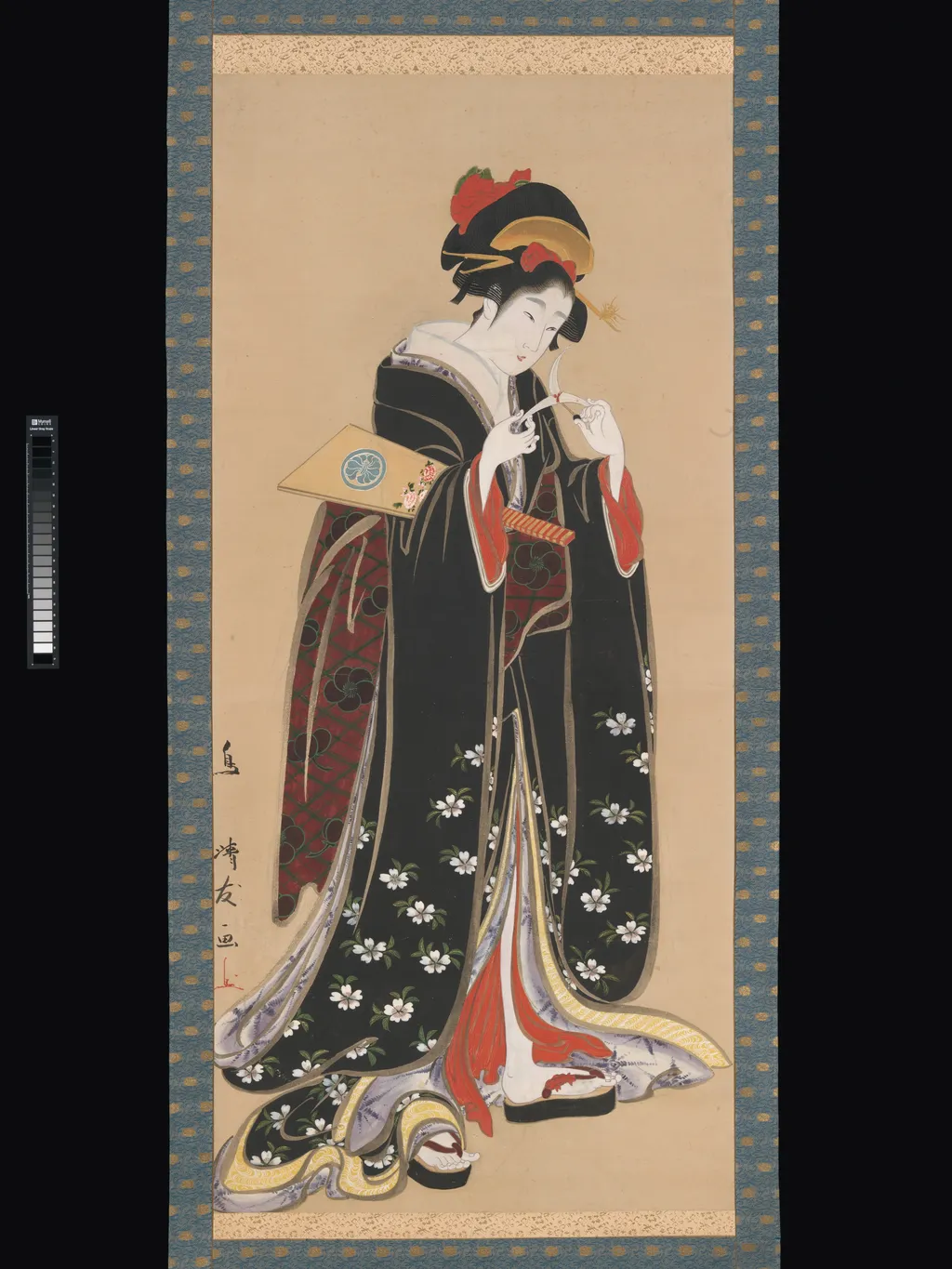
Woman with Battledore and Shuttlecock is an unspecified painting by the Ukiyo-e artist Torii Kiyotomo. It dates from 1817 and is held in the collection of the Metropolitan Museum of Art.
About this work
Overview
Created in 1817 by Torii Kiyotomo, this small-scale painting portrays a solitary female figure engaged in a leisurely game. The work is part of the collection of the Metropolitan Museum of Art, where it is displayed among other examples of early‑nineteenth‑century Japanese genre painting.
Subject & Meaning
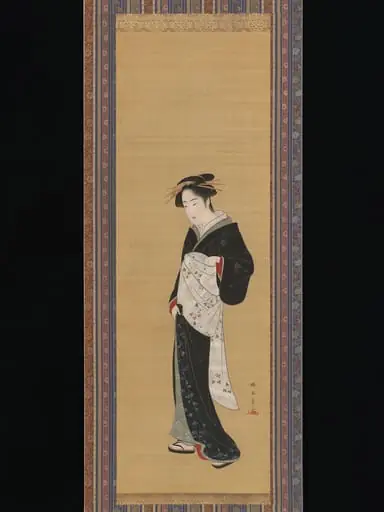
The central figure wears a long black kimono patterned with red and white blossoms, a crisp white collar, and a vivid red sash. She holds a thin wooden paddle in one hand and a feathered shuttlecock in the other, her gaze directed downward as if concentrating on the next strike. The scene captures a moment of quiet recreation, suggesting the everyday pleasures of Edo‑period leisure.
Technique & Style
Executed in ink and color on paper, the composition relies on a plain, unadorned background that isolates the subject and emphasizes the bright hues of her attire. Kiyotomo’s brushwork delineates the flowing folds of the robe and the delicate details of the hat, whose tall, multicolored form is edged with gold, adding a subtle decorative flourish.
Context
The painting belongs to the ukiyo‑e tradition of depicting scenes from the ‘floating world,’ where ordinary activities were rendered with elegance and restraint. By focusing on a simple game of battledore and shuttlecock, the work reflects contemporary interests in pastimes that were popular among women of the merchant class during the late Edo period.
Artist & collection