Artwork
Saint Andrew
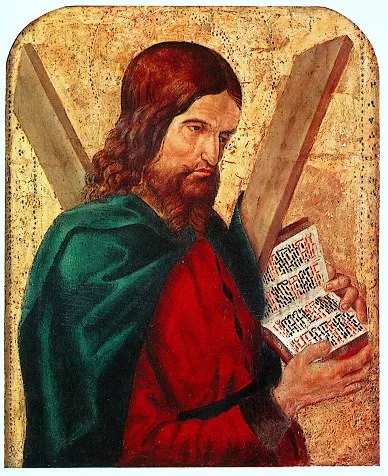
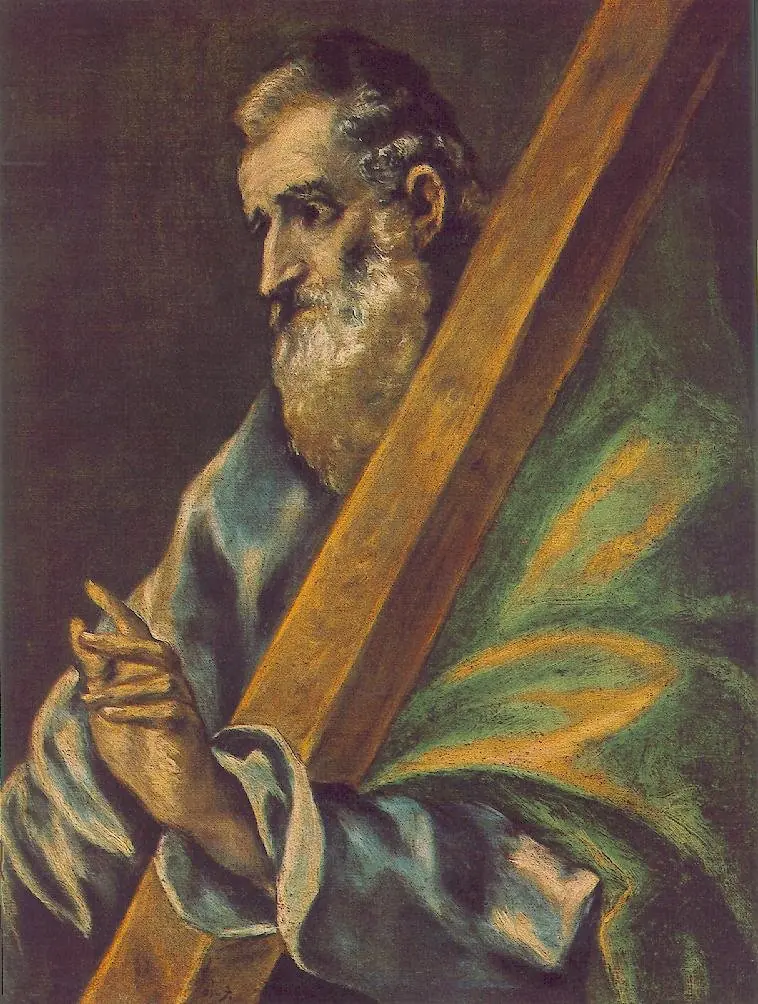
Saint Andrew is a tempera painting by the Early Renaissance artist Unknown. It dates from 1500 and is held in the collection of the National Museum of Ancient Art. The work portrays a solitary figure, a man with long wavy brown hair and a full beard, dressed in a red robe beneath a green cloak.
About this work
Overview
The work portrays a solitary figure, a man with long wavy brown hair and a full beard, dressed in a red robe beneath a green cloak. He holds an open book in his left hand and a tall, slender cross in his right, his gaze lowered in quiet contemplation. The background consists of a warm, textured beige that recedes gently, framing the central figure.
Subject & Meaning
The composition suggests a religious identity, likely Saint Andrew, indicated by the presence of the cross—a traditional attribute of the apostle—and the open book, symbolizing scripture or teaching. The downward look and thoughtful expression convey a moment of prayerful reflection, emphasizing the saint’s humility and devotion.
Technique & Style
Executed in tempera, the painting achieves a layered surface where fine brushwork builds subtle depth and tactile quality. The medium’s quick-drying nature allows for precise detailing of the hair, facial features, and the folds of the garments, while the warm beige ground enhances the contrast between the vivid red and green attire and the subdued background.
History & Provenance
No specific dates or ownership records accompany the piece, and its attribution rests on stylistic analysis of the saint’s iconography and tempera technique. The work remains catalogued as a tempera painting titled “Saint Andrew,” without further documented exhibition history.
Artist & collection

 Domestic Scene
 Giacomo and Cardinal Marco, investing Andrea, Abbot of San Zeno, with his Benefice
 The Nymph of Fontainebleau
 Portrait of a Woman
 Madonna and Child with Saints in the Enclosed Garden
 Venus and Minerva
 Family Group of Four on Sofa
 Wall painting from Room H of the Villa of P. Fannius Synistor at Boscoreale
 Christ carrying the cross
 Ecce Homo
 Carrying of the Cross
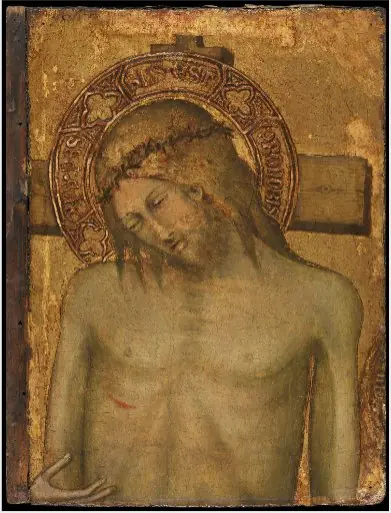 Christ on the Cross, (fragment)
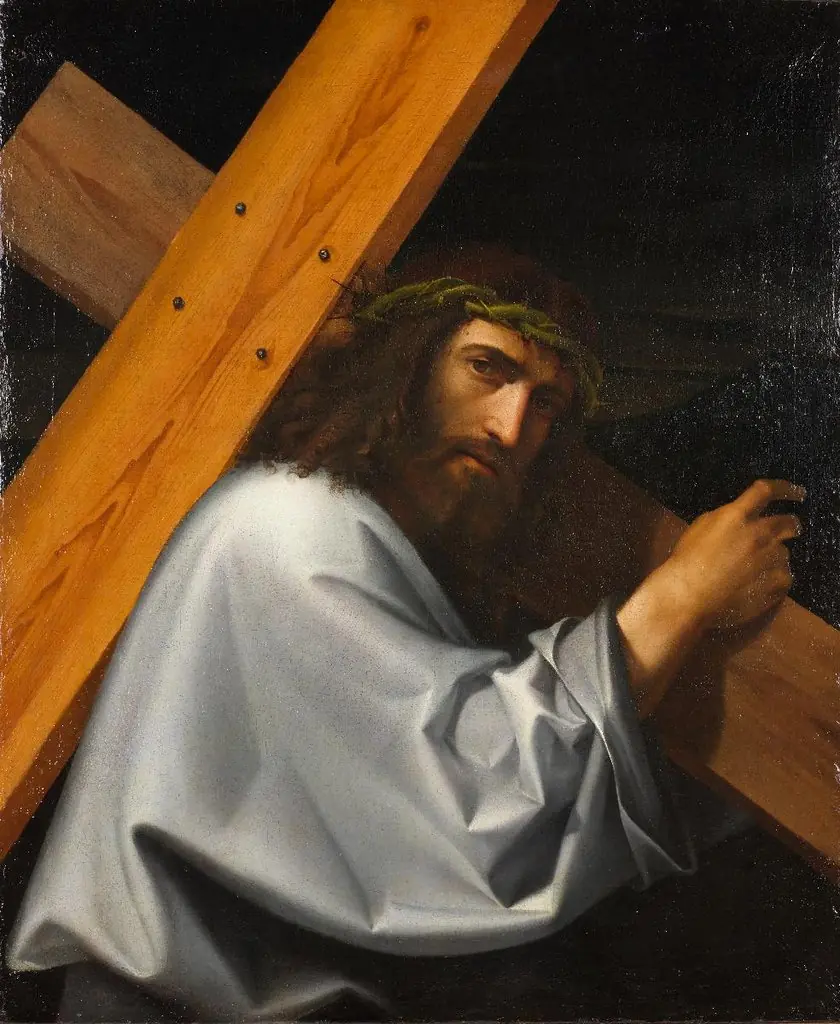 Cristo portacroce
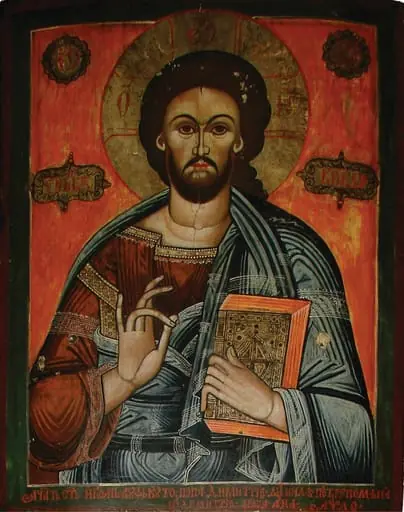 Iisus Hristos Învățător
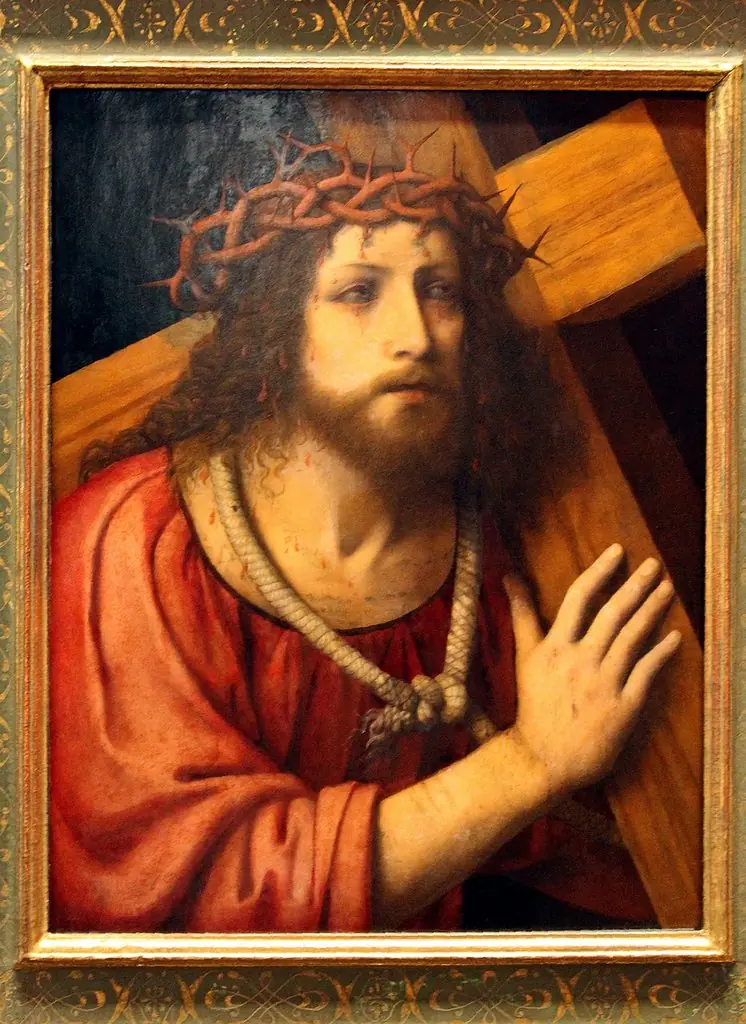 Kreuztragender Christus
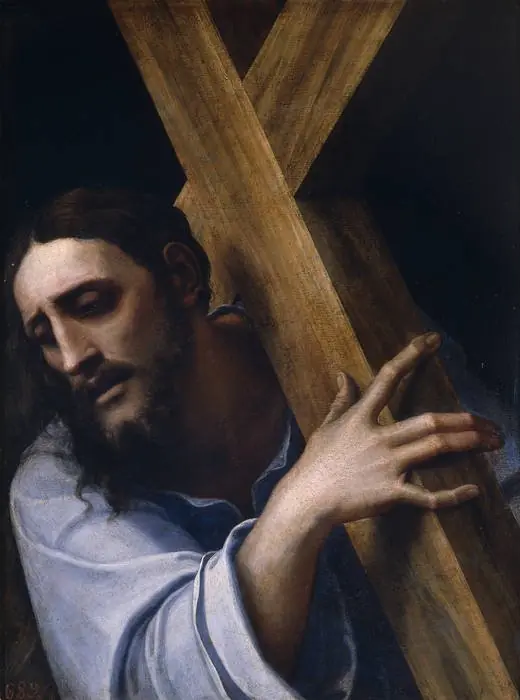 Christ carrying the Cross
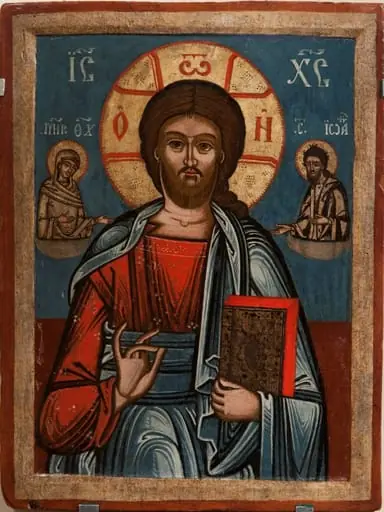 “Mica Deisis” ; Icoană împărătească Mica Deisis; Icoană împărătească
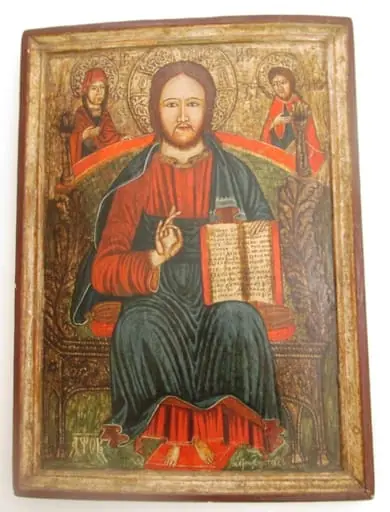 Iisus Binecuvântând
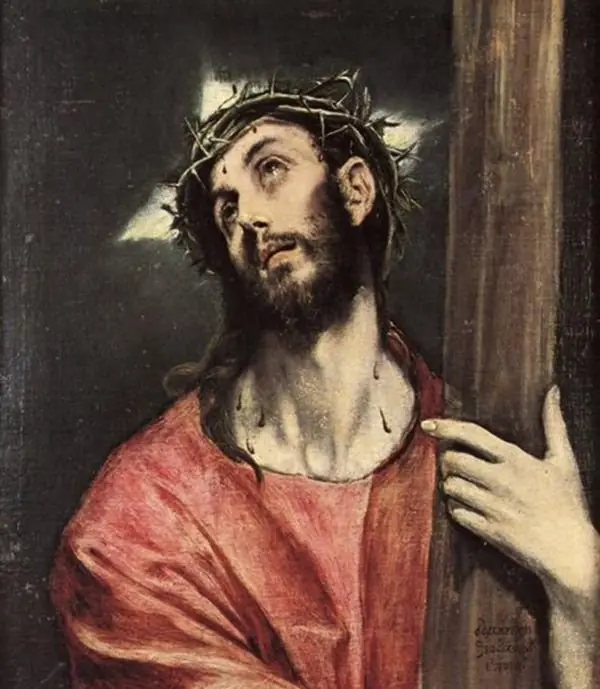 Christ with the Cross
 The Apostle Saint Andrew