Artwork
The Apostle Saint Andrew
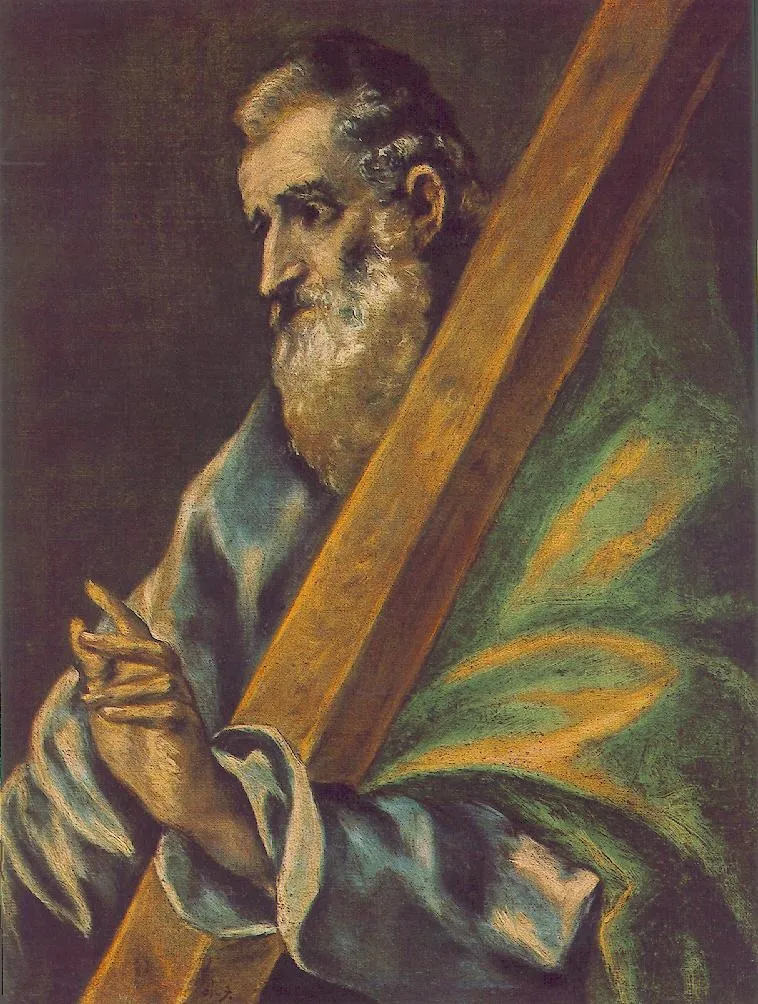
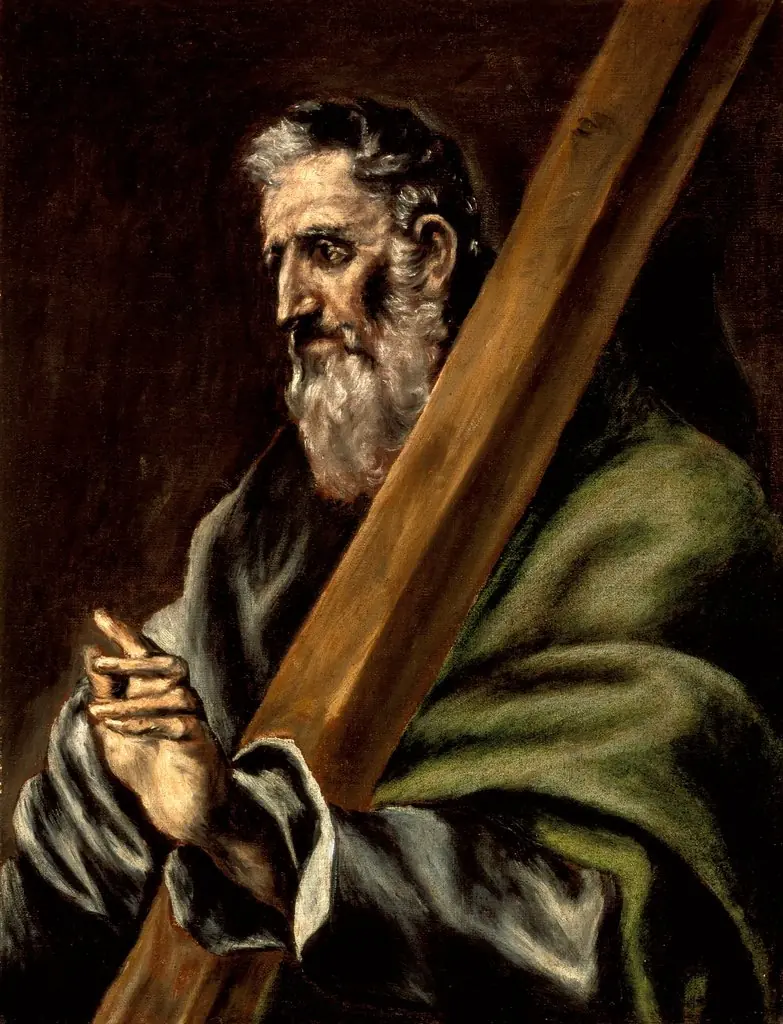
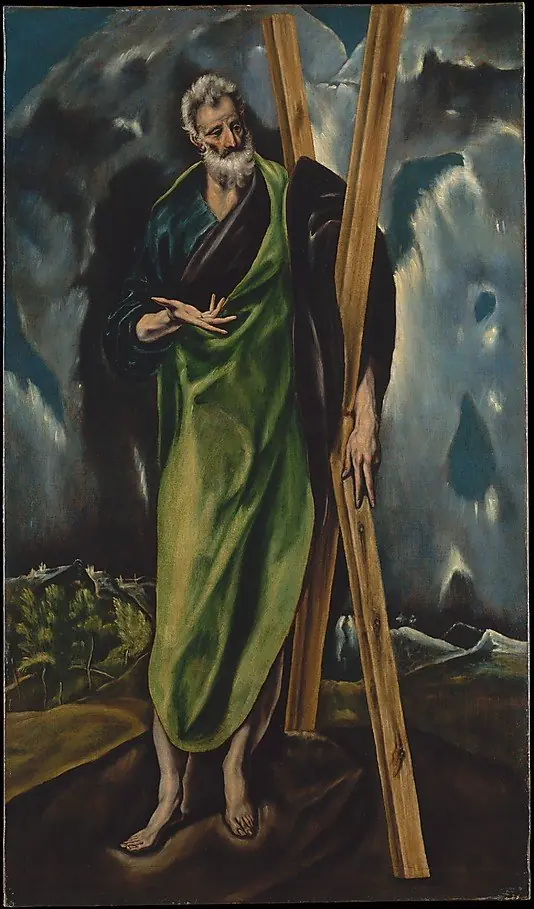
The Apostle Saint Andrew is an oil painting by the Mannerist artist El Greco. It dates from 1610 and is held in the collection of the Museum of Fine Arts, Budapest.
About this work
Overview
El Greco’s oil painting titled *The Apostle Saint Andrew* was executed around 1610. The work presents the apostle in a solemn pose, his figure illuminated against a dark backdrop. Currently the canvas belongs to the collection of the Museum of Fine Arts in Budapest, where it is displayed among the museum’s European holdings.
Subject & Meaning
The composition centers on Saint Andrew, identifiable by his long white beard and hair, clothed in a blue robe with a green mantle draped over his shoulder. He grasps a sizable wooden cross, his hands joined in prayer, while his gaze falls downward, suggesting contemplation of his martyrdom and spiritual devotion.
Technique & Style
El Greco employs a pronounced chiaroscuro, allowing the illuminated face and hands to emerge from the surrounding gloom, creating a three‑dimensional presence. The brushwork suggests a thick impasto, especially in the rendering of the fabric and the cross, while the elongated figures and expressive contours reflect the artist’s mature Mannerist idiom.
History & Provenance
Painted near the end of El Greco’s long career, the work entered the Hungarian national collection in the early twentieth century, though precise acquisition details remain sparse. Its presence in Budapest highlights the broader European interest in the Spanish master’s late religious output and provides a comparative point for his other apostolic portraits.
Artist & collection
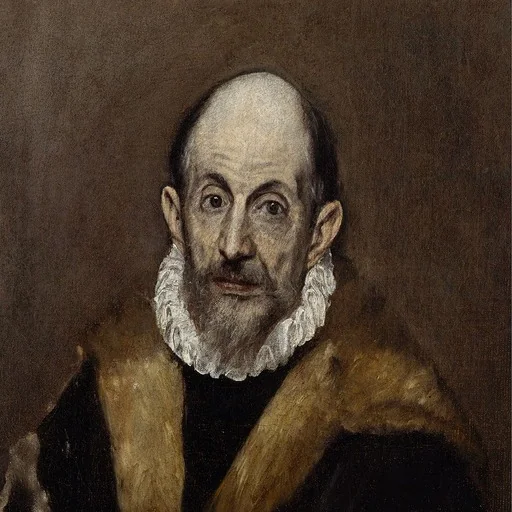
Artist
Doménikos Theotokópoulos was born in 1541 in Candia (modern Heraklion), the capital of Venetian-ruled Crete, where he was trained in the post-Byzantine tradition of icon painting.