Artwork
Copy of Painting inside the Caves of Ajanta (cave 17)
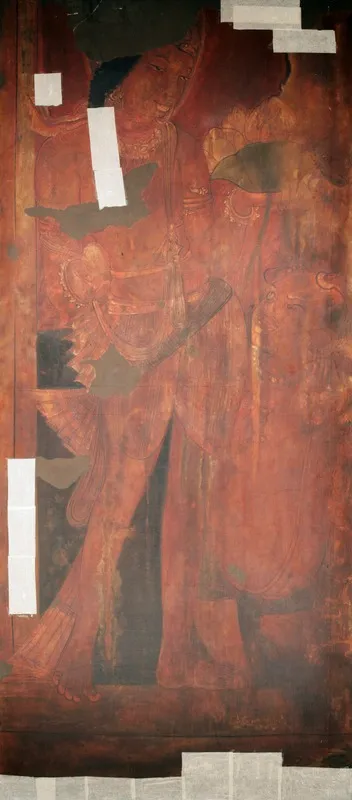
Copy of Painting inside the Caves of Ajanta (cave 17) is an oil painting by the Orientalist artist Unknown. It dates from 1890 and is held in the collection of the Victoria and Albert Museum. This oil painting is a 19th-century reproduction of a mural from Cave 17 at Ajanta, India.
About this work
Overview
Created to document and preserve the original frescoes, it captures the composition and mood of the ancient work with muted tones of red, orange, and brown.
This oil painting is a 19th-century reproduction of a mural from Cave 17 at Ajanta, India. Created to document and preserve the original frescoes, it captures the composition and mood of the ancient work with muted tones of red, orange, and brown. The dark background enhances the central figures, emphasizing their stillness and quiet presence. Though not an original, it serves as a historical record of a site whose pigments have deteriorated over centuries.
Subject & Meaning
The central figures—a woman on the left and a man on the right—likely represent courtly or devotional figures from a Buddhist narrative. Their poised postures and elaborate attire suggest nobility or spiritual significance. The absence of dramatic action and the calm gaze of the figures convey contemplation, aligning with the meditative ethos of Ajanta’s Buddhist iconography. Their relationship remains ambiguous, possibly symbolizing harmony or ritual companionship.
Technique & Style
The artist employed oil paint to mimic the layered pigments of the original frescoes, though the medium alters the surface quality. Colors are subdued, reflecting both the faded state of the source and the limitations of replication. Brushwork is soft and blended, avoiding sharp outlines to preserve the atmospheric depth of the Ajanta style. The dark background isolates the figures, echoing the original cave’s dim lighting and enhancing their sculptural presence.
History & Provenance
This copy was likely made during the British colonial period, when European artists and scholars systematically documented Indian heritage sites. It may have been produced for the Victoria and Albert Museum, which collected such reproductions to preserve knowledge of artworks inaccessible to Western audiences. The painting reflects 19th-century practices of cultural preservation through replication, prioritizing accuracy over artistic innovation.
Context
The original Ajanta murals, created between the 2nd century BCE and 6th century CE, adorned Buddhist monastic caves and illustrated Jataka tales. Their vibrant pigments, now faded, once depicted courtly life, spiritual devotion, and naturalistic detail. This oil copy emerges from a broader 19th-century effort to study and archive South Asian art, bridging colonial interest with emerging archaeological scholarship in India.
Legacy
As a reproduction, this work preserves visual details of Ajanta’s deteriorating murals, offering insight into their original appearance. It stands as a testament to early conservation efforts and the global interest in non-Western artistic traditions. While not an original artifact, it contributes to the scholarly understanding of Ajanta’s visual language and its transmission beyond its physical setting.
Artist & collection

 Domestic Scene
 Giacomo and Cardinal Marco, investing Andrea, Abbot of San Zeno, with his Benefice
 The Nymph of Fontainebleau
 Portrait of a Woman
 Madonna and Child with Saints in the Enclosed Garden
 Venus and Minerva
 Family Group of Four on Sofa
 Wall painting from Room H of the Villa of P. Fannius Synistor at Boscoreale
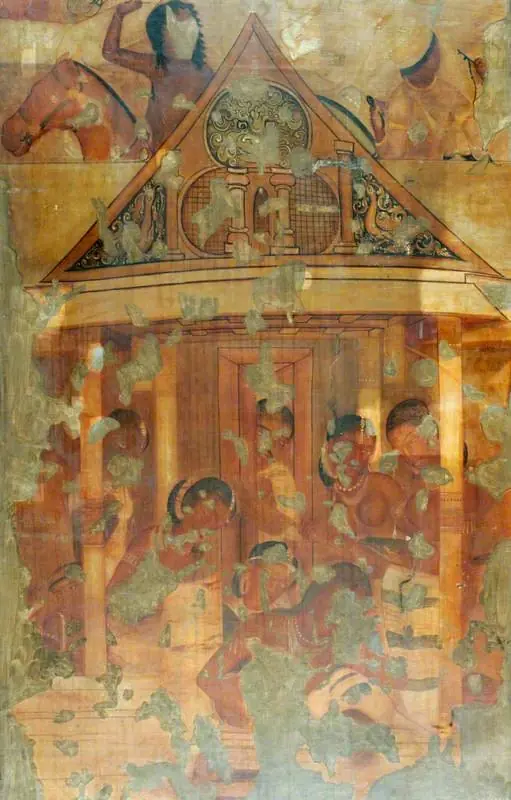 Copy of Painting inside the Caves of Ajanta (cave 17)
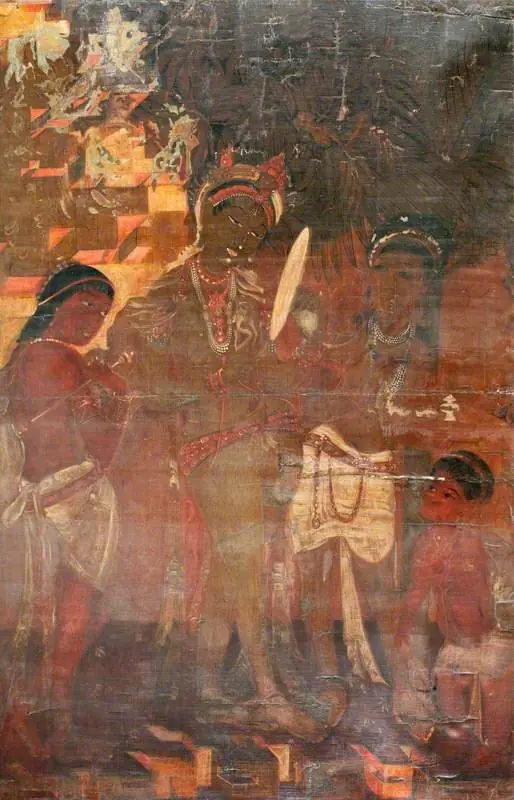 Copy of Painting inside the Caves of Ajanta (cave 17)
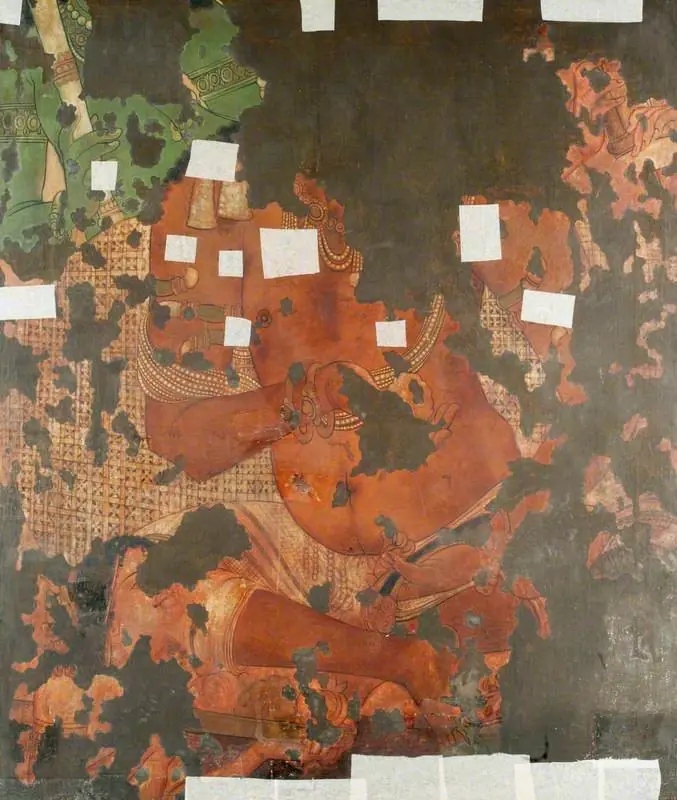 Copy of Painting inside the Caves of Ajanta (cave 16)
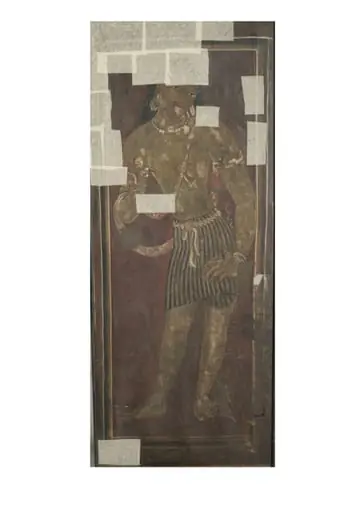 Copy of painting in the caves of Ajanta (cave 17)
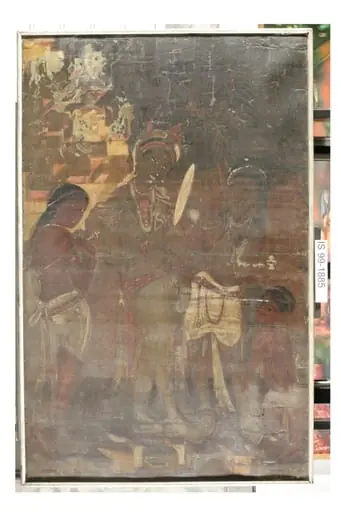 Copy of painting inside the caves of Ajanta (cave 17)
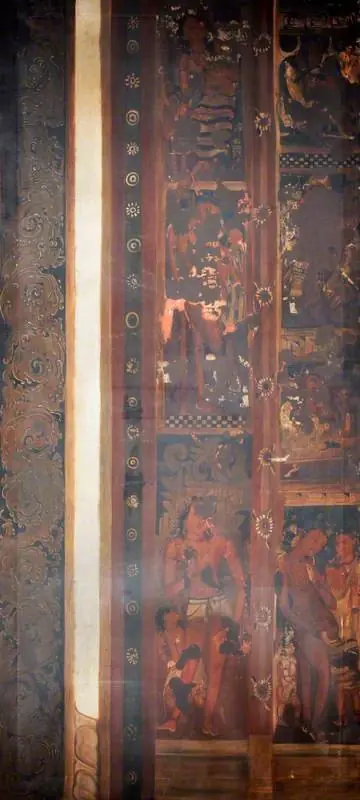 Copy of Painting inside the Caves of Ajanta (cave 6)
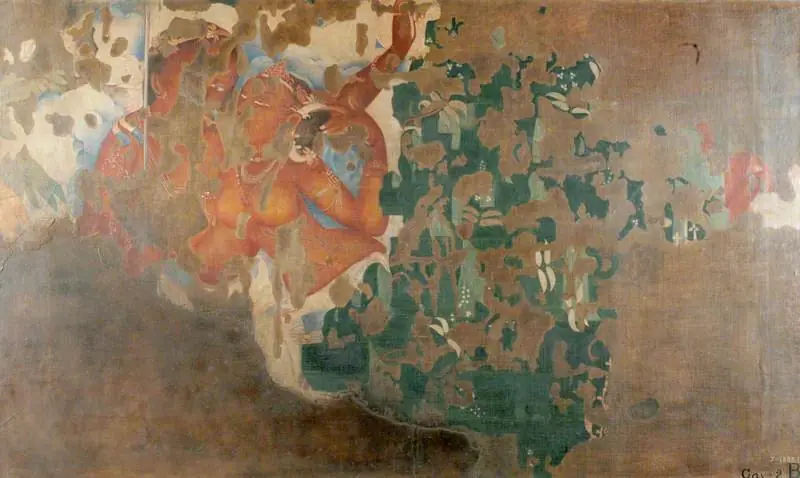 Copy of Painting inside the Caves of Ajanta (cave 2)
 Copy of Painting inside the Caves of Ajanta (cave 1)
 Copy of painting inside the caves of Ajanta (cave 16)
 Copy of Painting inside the Caves of Ajanta (cave 1)
 Copy of painting inside the caves of Ajanta (cave 11)