Artwork
Copy of painting in the caves of Ajanta (cave 17)
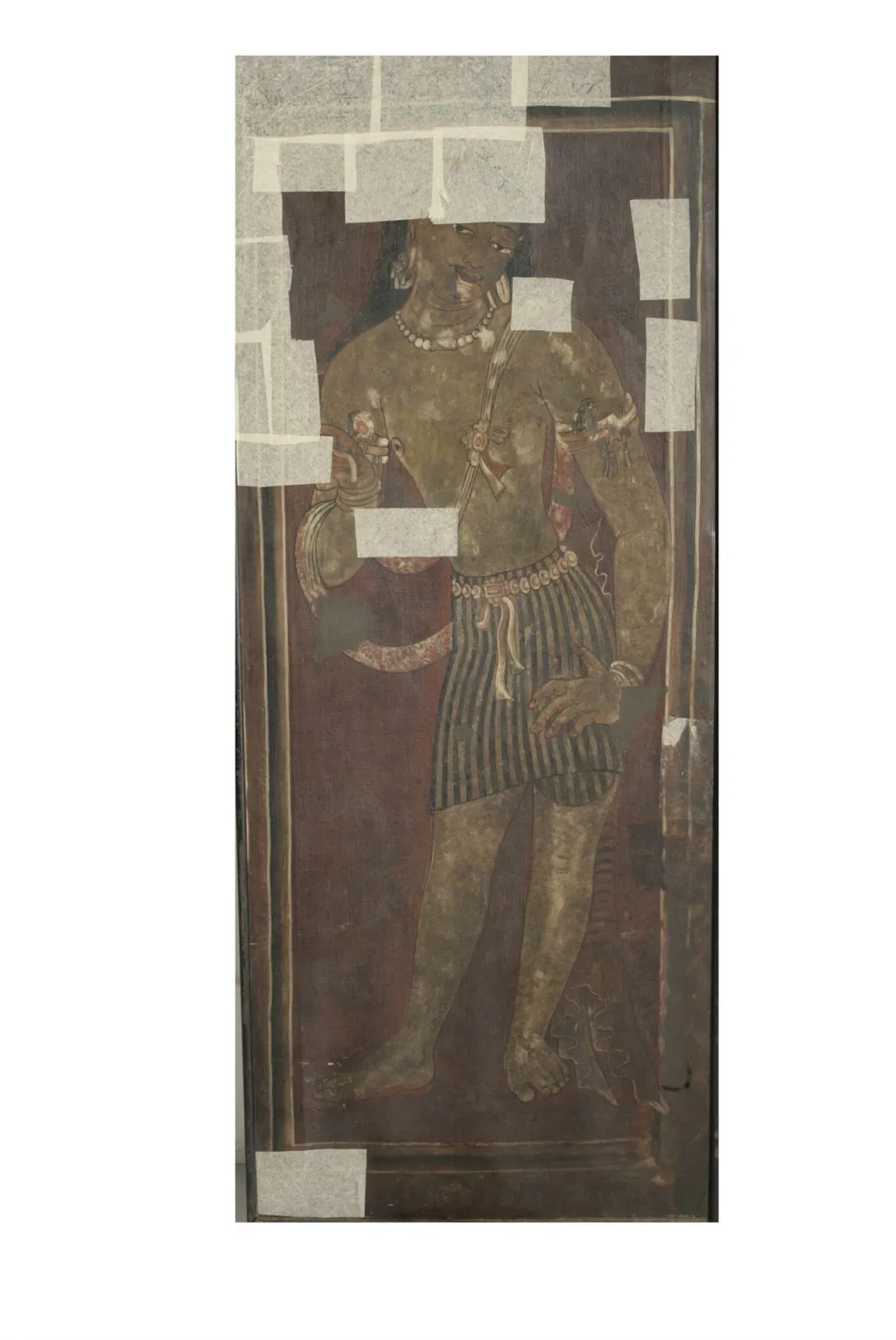
Copy of painting in the caves of Ajanta (cave 17) is an oil painting by the British Romanticist artist John Griffiths. It dates from 1882 and is held in the collection of the Victoria and Albert Museum.
About this work
Overview
This oil painting is a copy of an ancient mural from Cave 17 at Ajanta, created by John Griffiths and his students from the Bombay School of Art. The original, painted by unknown Indian artists, dates back around 2,000 years.
Subject & Meaning
The painting depicts a standing figure, likely a yaksha, a nature spirit, with a simple halo and draped robes. The original mural illustrates stories from the lives of the Buddha, including the jatakas.
Technique & Style
Griffiths attempted to replicate the faded colors and worn lines of the original mural. His technique was influenced by the limitations of pre-photographic documentation methods.
History & Provenance
The Ajanta cave complex was rediscovered in 1819. Griffiths and his students worked on copying the murals from 1872 for 13 years, producing around 300 paintings. Their work was necessitated by the loss of earlier copies by Major Robert Gill in a fire in 1866.
Context
The original Ajanta murals, created between the 1st century BC and AD 480, are among the oldest surviving examples of Indian painting. They were executed by unknown Indian artists on the cave walls.
Legacy
Most of Griffiths' copies, including this one, are now significant as records of the original murals, some of which have deteriorated further since his time. The white patches on this painting indicate areas requiring conservation.
Artist & collection
Artist
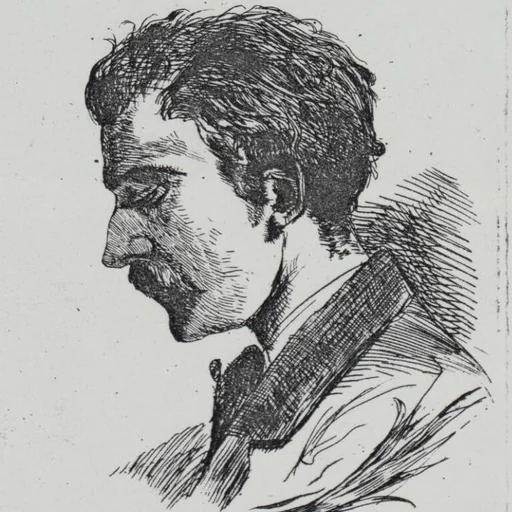
John Griffiths (29 November 1837 – 1 December 1918) was a Welsh artist who worked in India, noted for his Orientalist works.

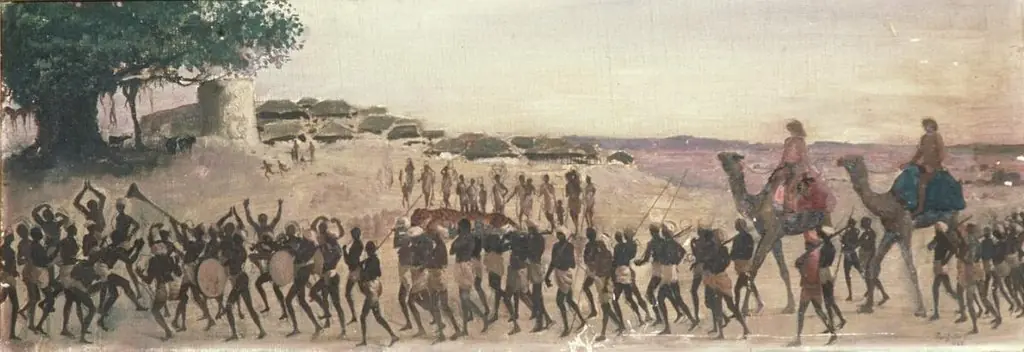 Tiger shooting in East Berar
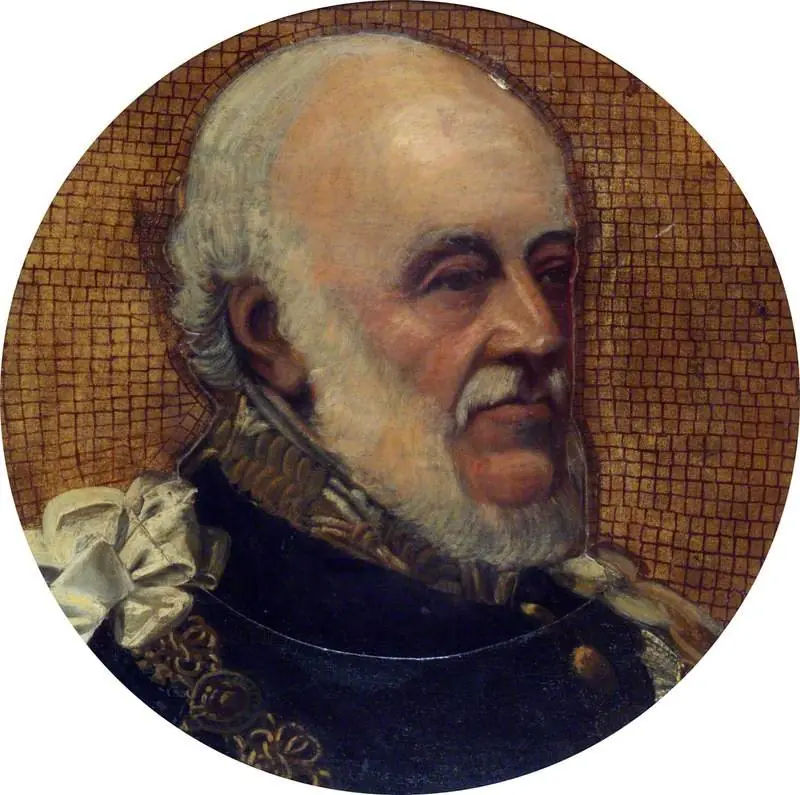 The Marquis of Salisbury (1791–1868)
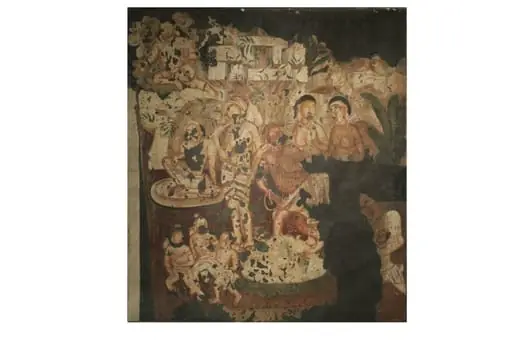 Copy of painting inside the caves of Ajanta (Cave 2)
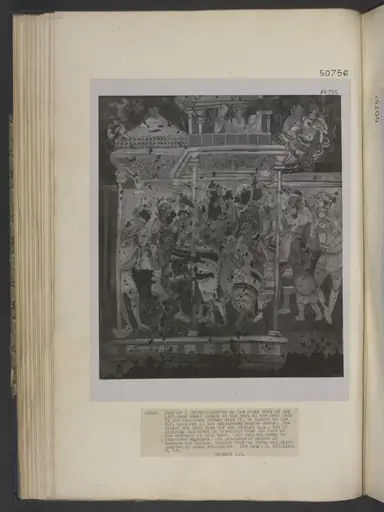 Copy of painting in the caves of Ajanta (cave 2)
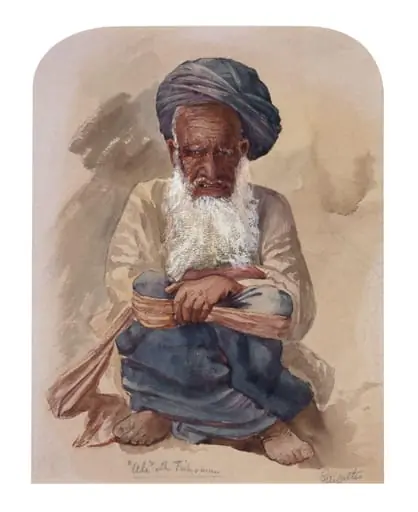 Ali the fisherman
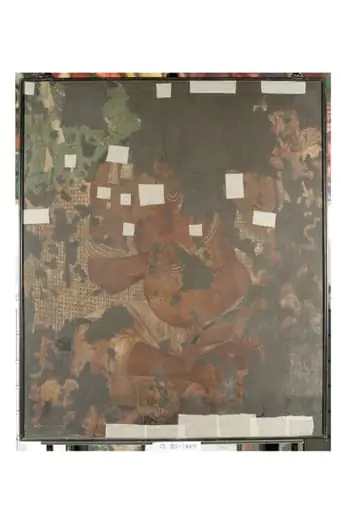 Copy of painting inside the caves of Ajanta (cave 16)
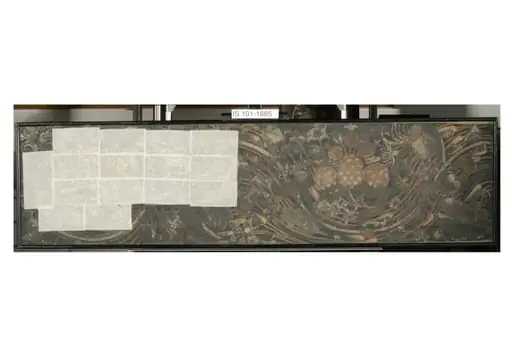 Copy of painting inside the caves of Ajanta (Cave 9)
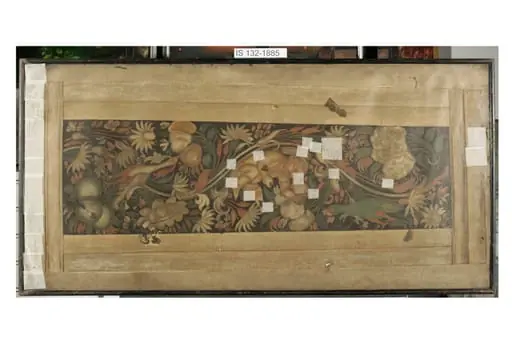 Copy of painting inside the caves of Ajanta (cave 1)
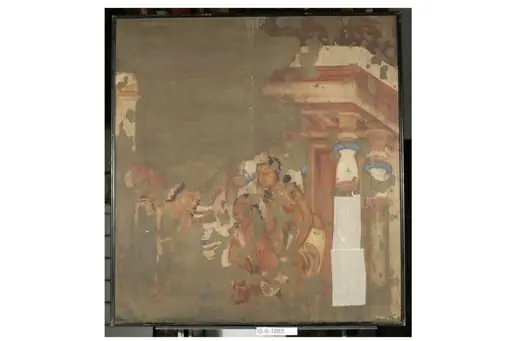 Copy of painting inside the caves of Ajanta (Cave 1)
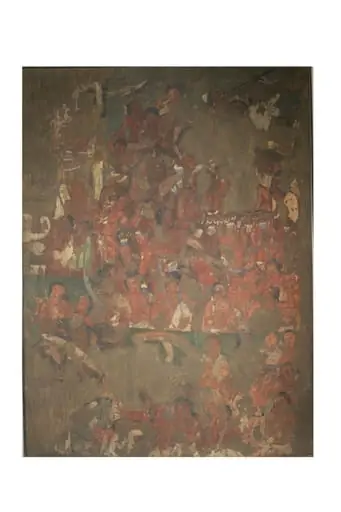 Untitled
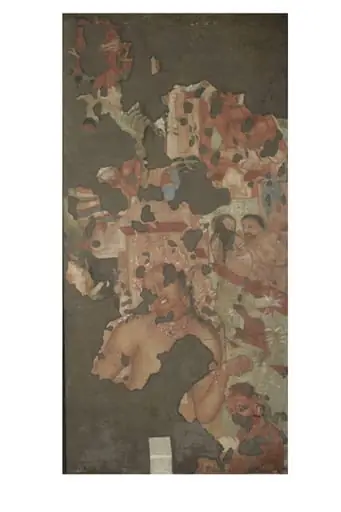 Copy of painting inside the caves of Ajanta (cave 9)
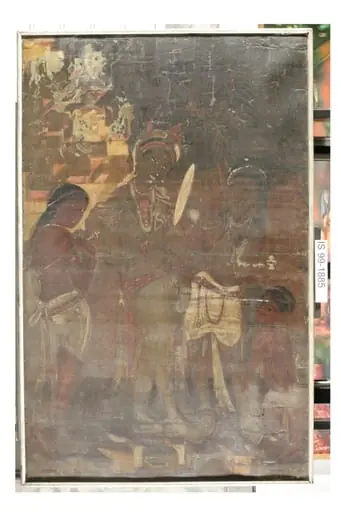 Copy of painting inside the caves of Ajanta (cave 17)
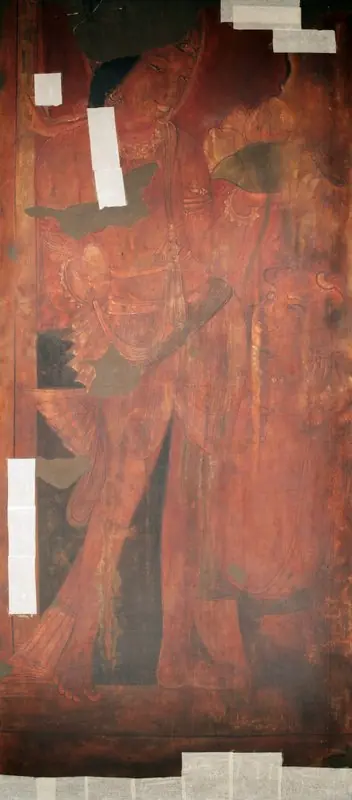 Copy of Painting inside the Caves of Ajanta (cave 17)
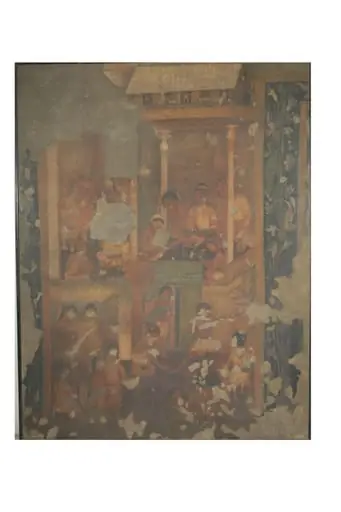 Copy of painting in the caves of Ajanta (cave 16)
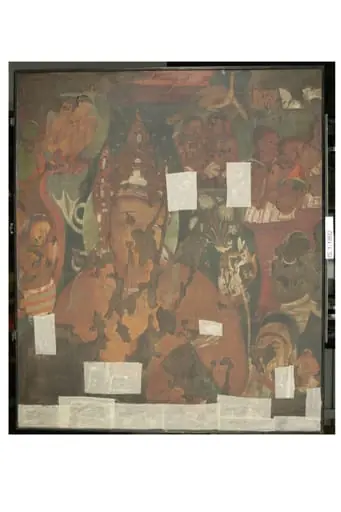 Copy of painting inside the caves of Ajanta (cave 11)
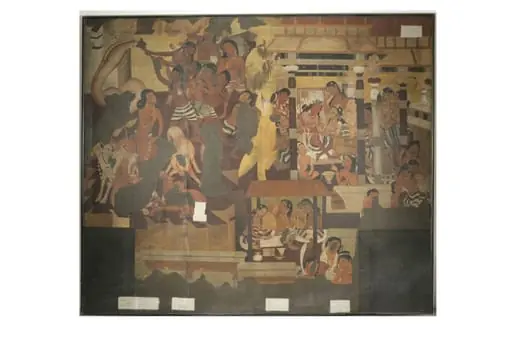 Copy of painting inside the caves of Ajanta (cave 1)
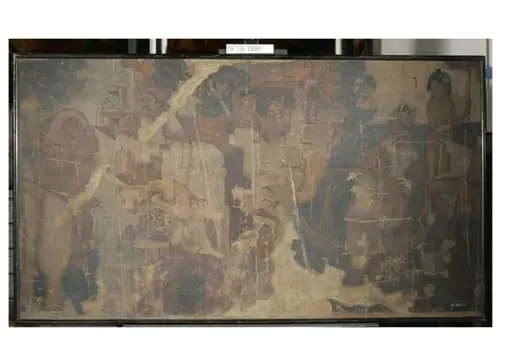 Copy of painting inside the Ajanta caves (cave 10)