Artwork
Page from Tales of a Parrot (Tuti-nama): text page
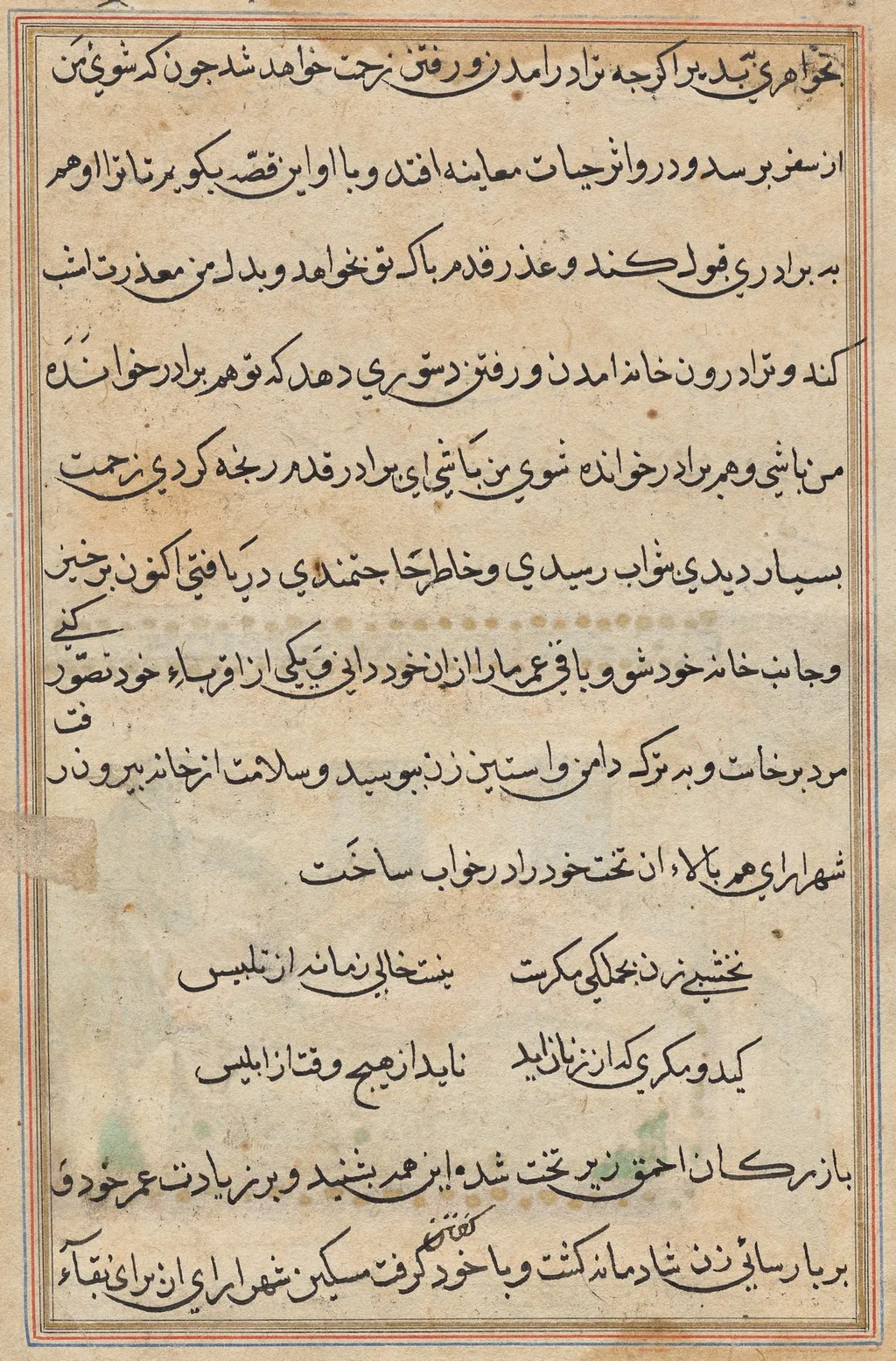
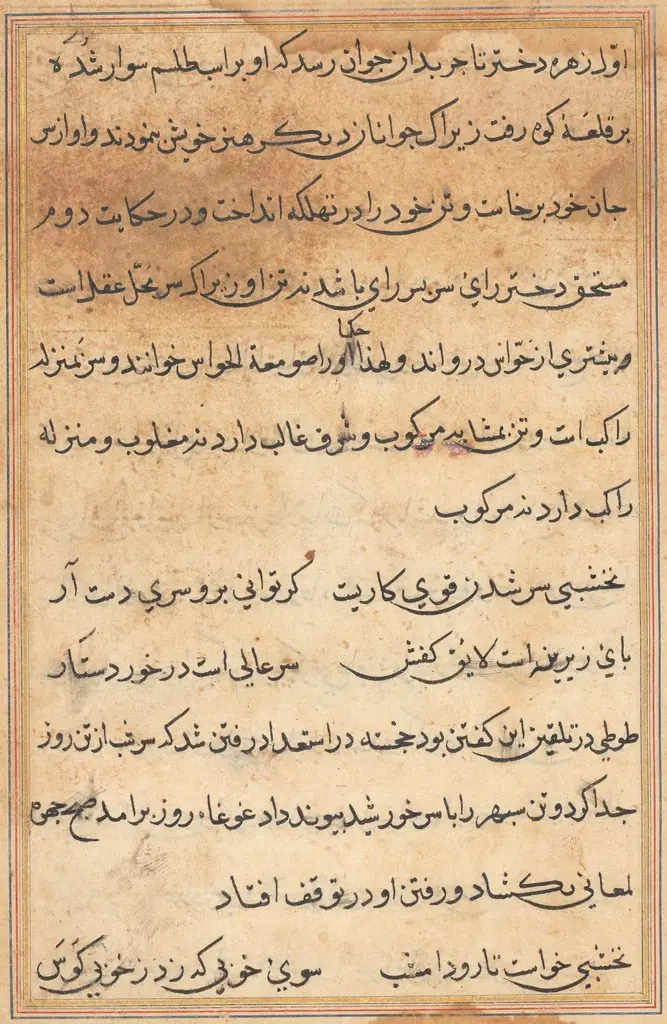
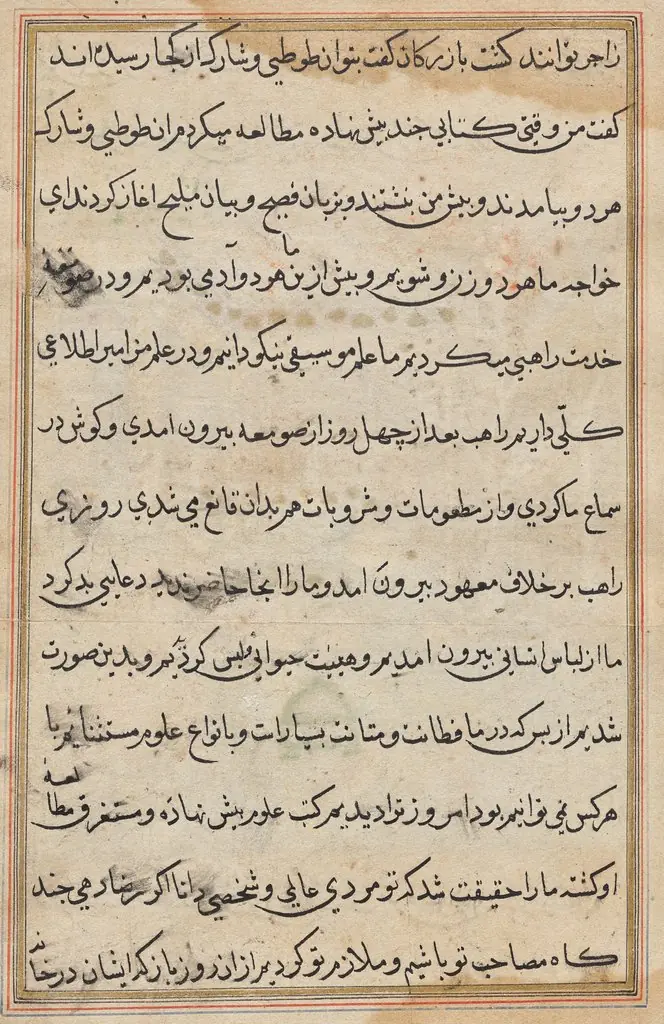
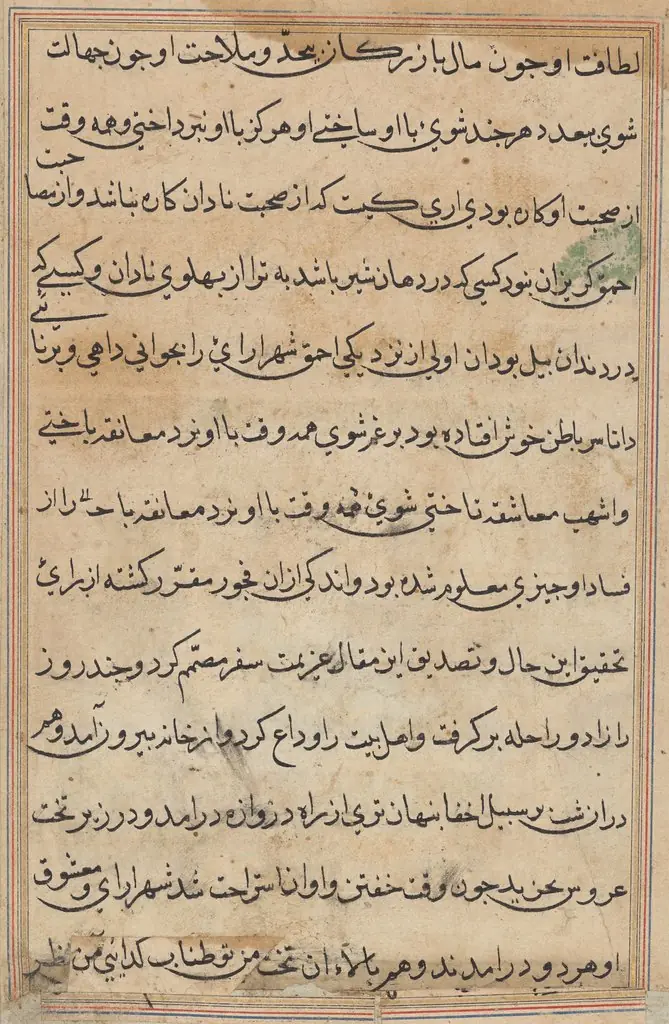
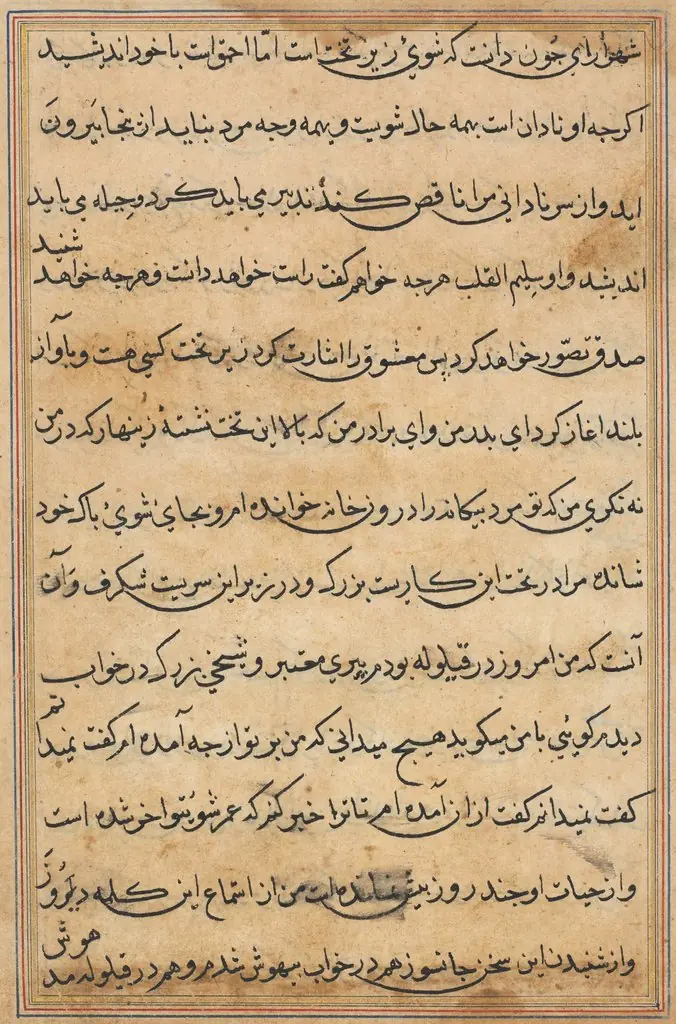
Page from Tales of a Parrot (Tuti-nama): text page is an unspecified painting. It dates from 1560 and is held in the collection of the Cleveland Museum of Art. The object is a single page from the Persian illustrated manuscript known as *Tuti‑nama* (Tales of a Parrot).
About this work
Overview
The object is a single page from the Persian illustrated manuscript known as *Tuti‑nama* (Tales of a Parrot). Executed as a painted sheet of paper, it is covered entirely with dense black calligraphic text arranged in tight, orderly rows. The page measures roughly the size of a standard manuscript folio and displays a faintly aged, warm‑toned surface marked by subtle brown specks.
Subject & Meaning
The narrative recorded on the page recounts the story of a loquacious parrot, a popular motif in Persian literature that often serves as a vehicle for moral instruction and courtly wit. The text was composed for a patron named Prince Salim, indicating a personalized commission that linked the allegorical tale to the prince’s own cultural milieu.
Technique & Style
Thin red and blue lines run along the margins, forming a decorative border that frames the text without detracting from its legibility.
The script is rendered in a deliberate, flowing black hand, characterized by elegant curves, loops, and varying letter heights that create a rhythmic visual pattern. Thin red and blue lines run along the margins, forming a decorative border that frames the text without detracting from its legibility. The paper’s warm hue and subtle staining suggest an aged material typical of 17th‑century Persian book production.
History & Provenance
The page originates from a manuscript produced for Prince Salim, a member of the Safavid court. Over time the folio became separated from its original codex and entered the collection of the Cleveland Museum of Art, where it is now conserved and displayed as part of the museum’s holdings of Islamic art.
Context
*Tuti‑nama* belongs to a tradition of Persian didactic literature that blends storytelling with ethical instruction, often illustrated with miniature paintings. Such works were commonly commissioned by royalty and aristocracy, reflecting both personal taste and the broader cultural emphasis on literary refinement during the Safavid era.
Artist & collection

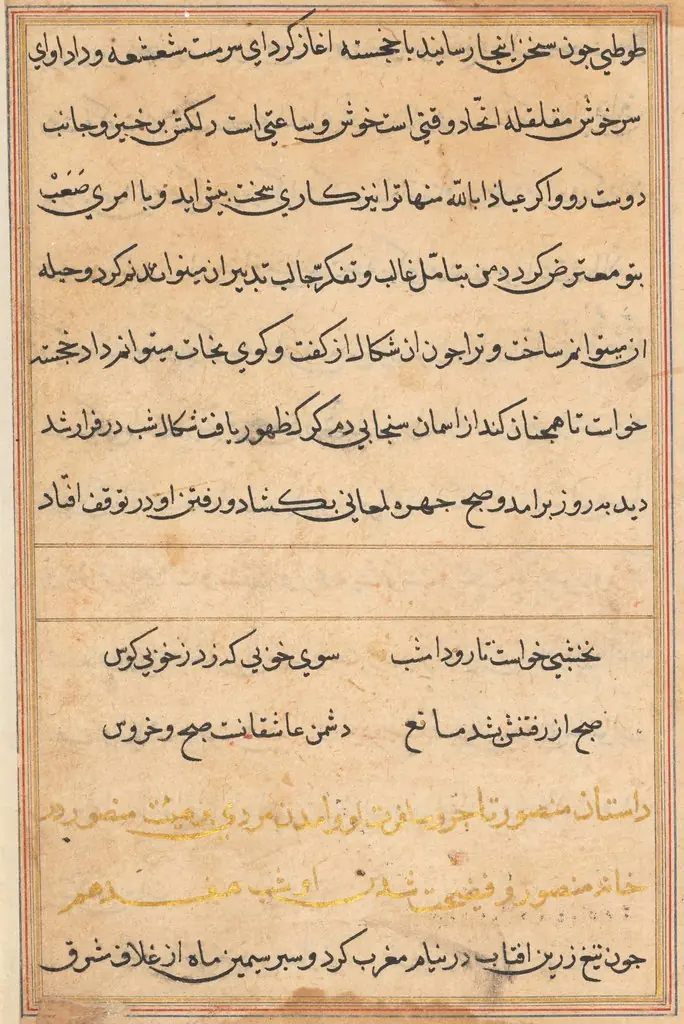 Page from Tales of a Parrot (Tuti-nama): text page
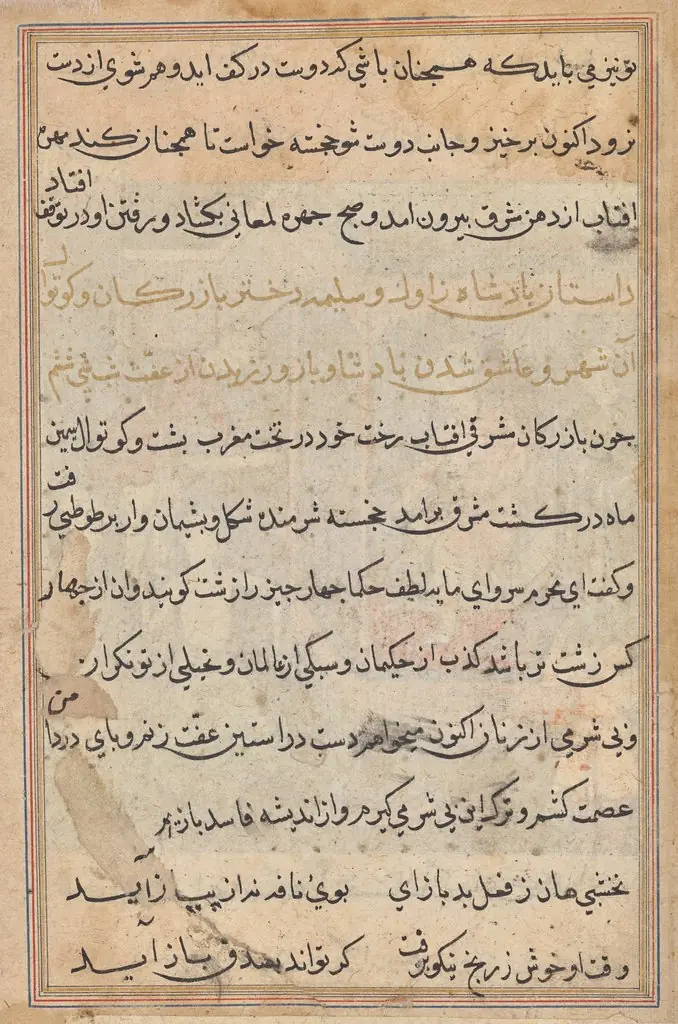 Page from Tales of a Parrot (Tuti-nama): text page
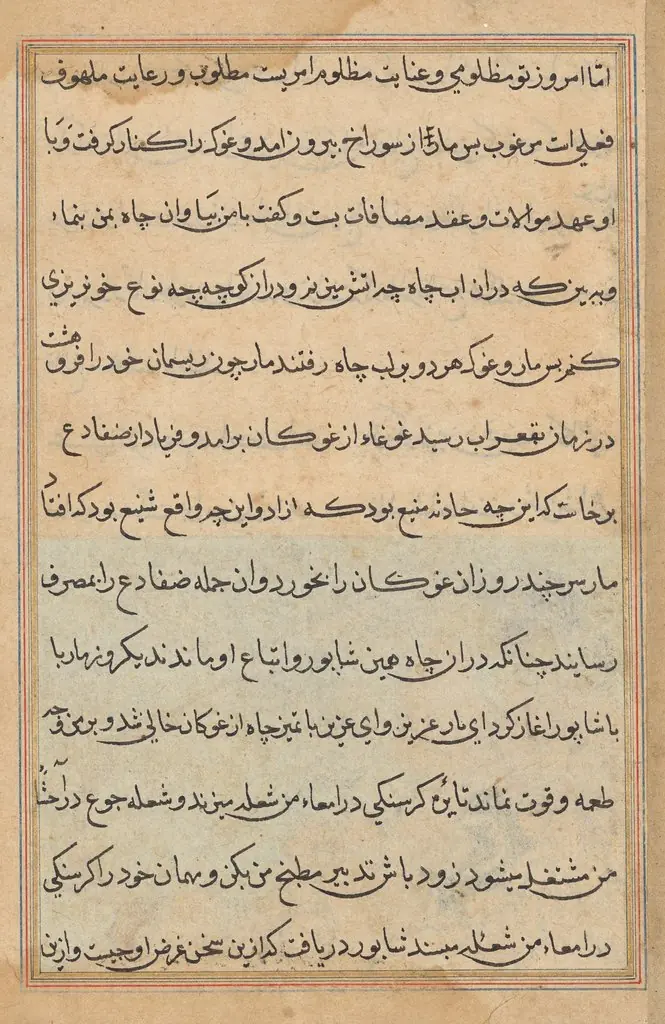 Page from Tales of a Parrot (Tuti-nama): text page
 Page from Tales of a Parrot (Tuti-nama): text page
 Page from Tales of a Parrot (Tuti-nama): text page
 Page from Tales of a Parrot (Tuti-nama): text page
 Page from Tales of a Parrot (Tuti-nama): text page
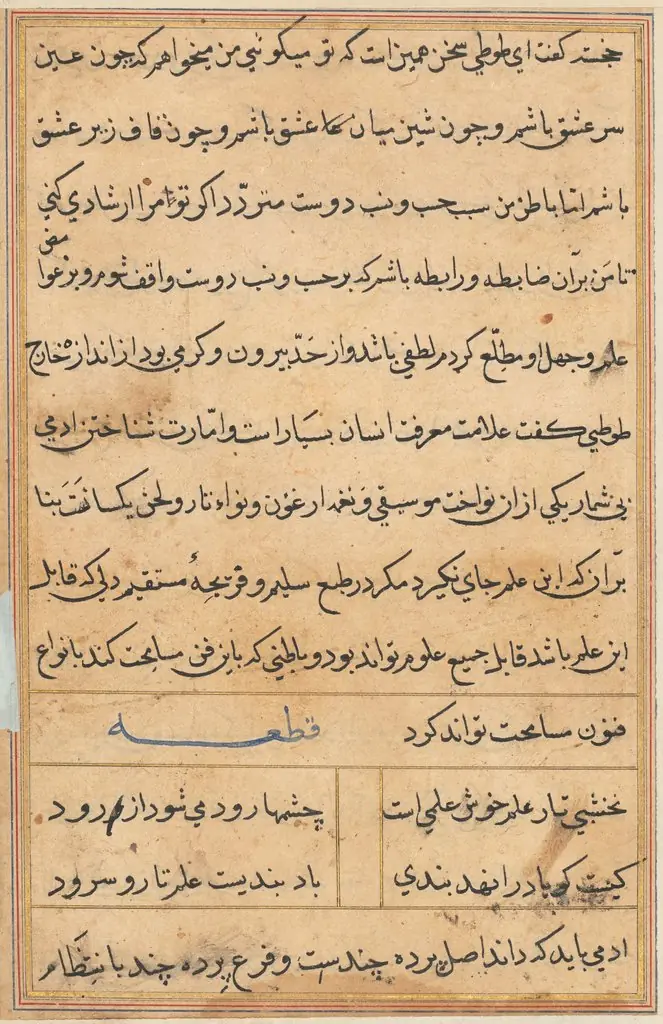 Page from Tales of a Parrot (Tuti-nama): text page
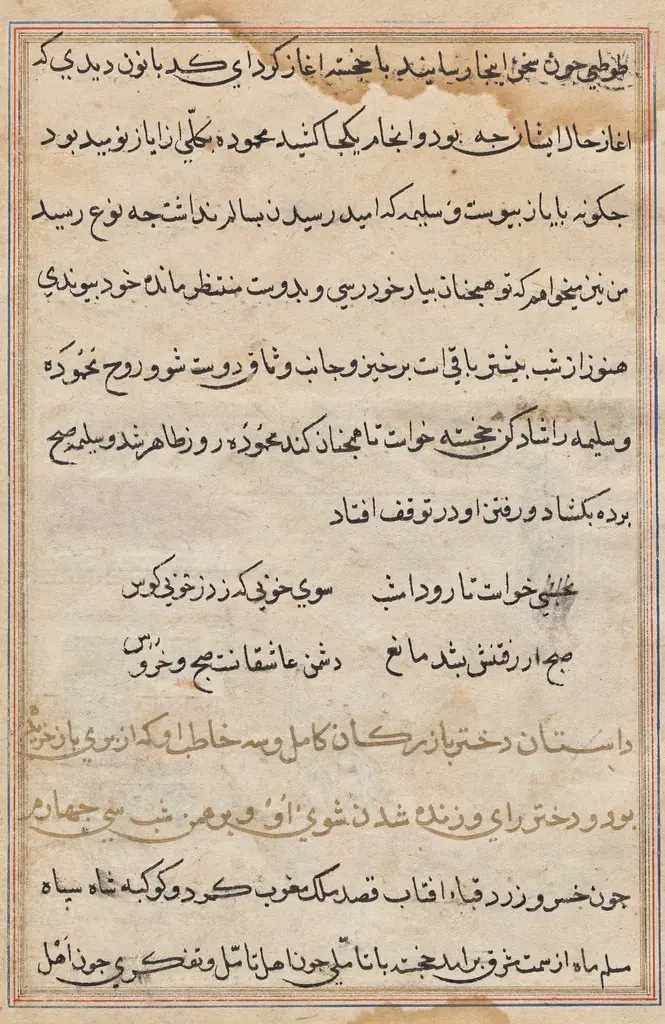 Page from Tales of a Parrot (Tuti-nama): text page
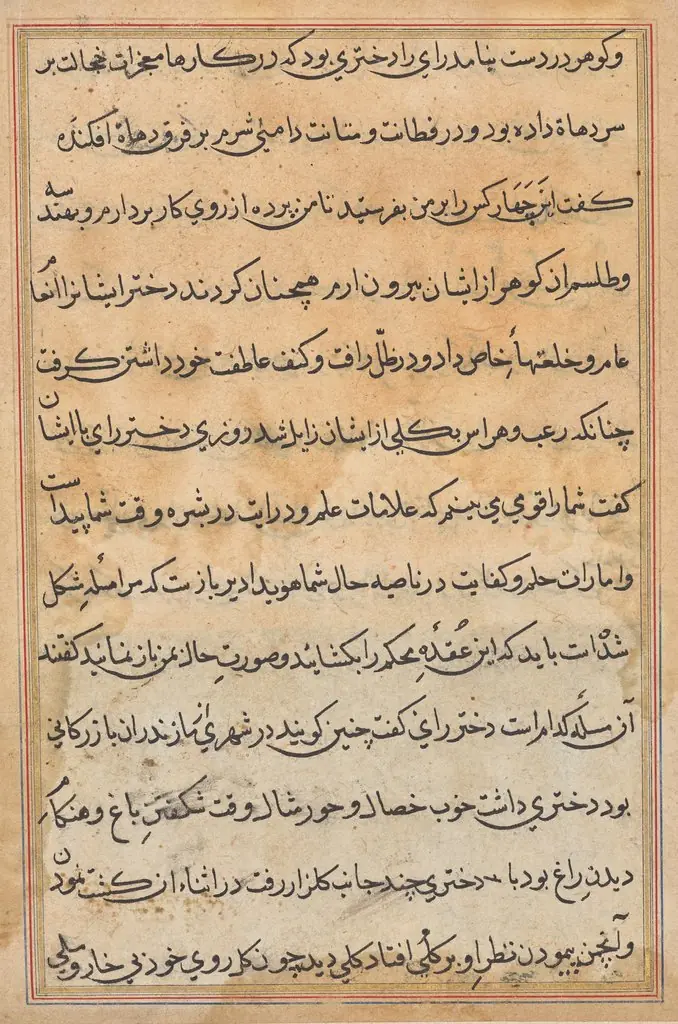 Page from Tales of a Parrot (Tuti-nama): text page
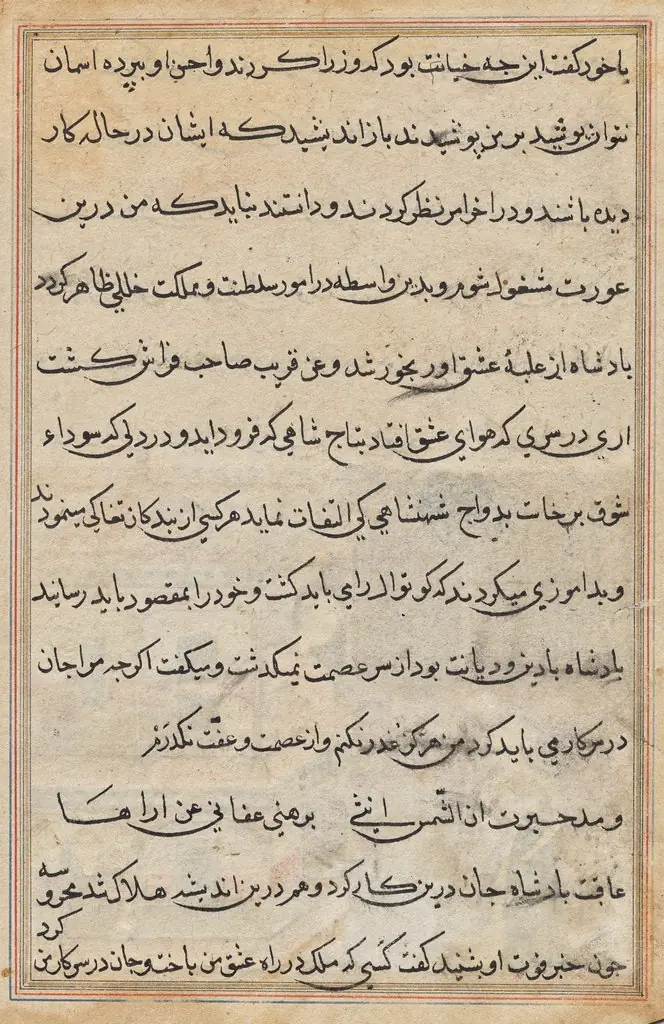 Page from Tales of a Parrot (Tuti-nama): text page