Artwork
Page from Tales of a Parrot (Tuti-nama): text page
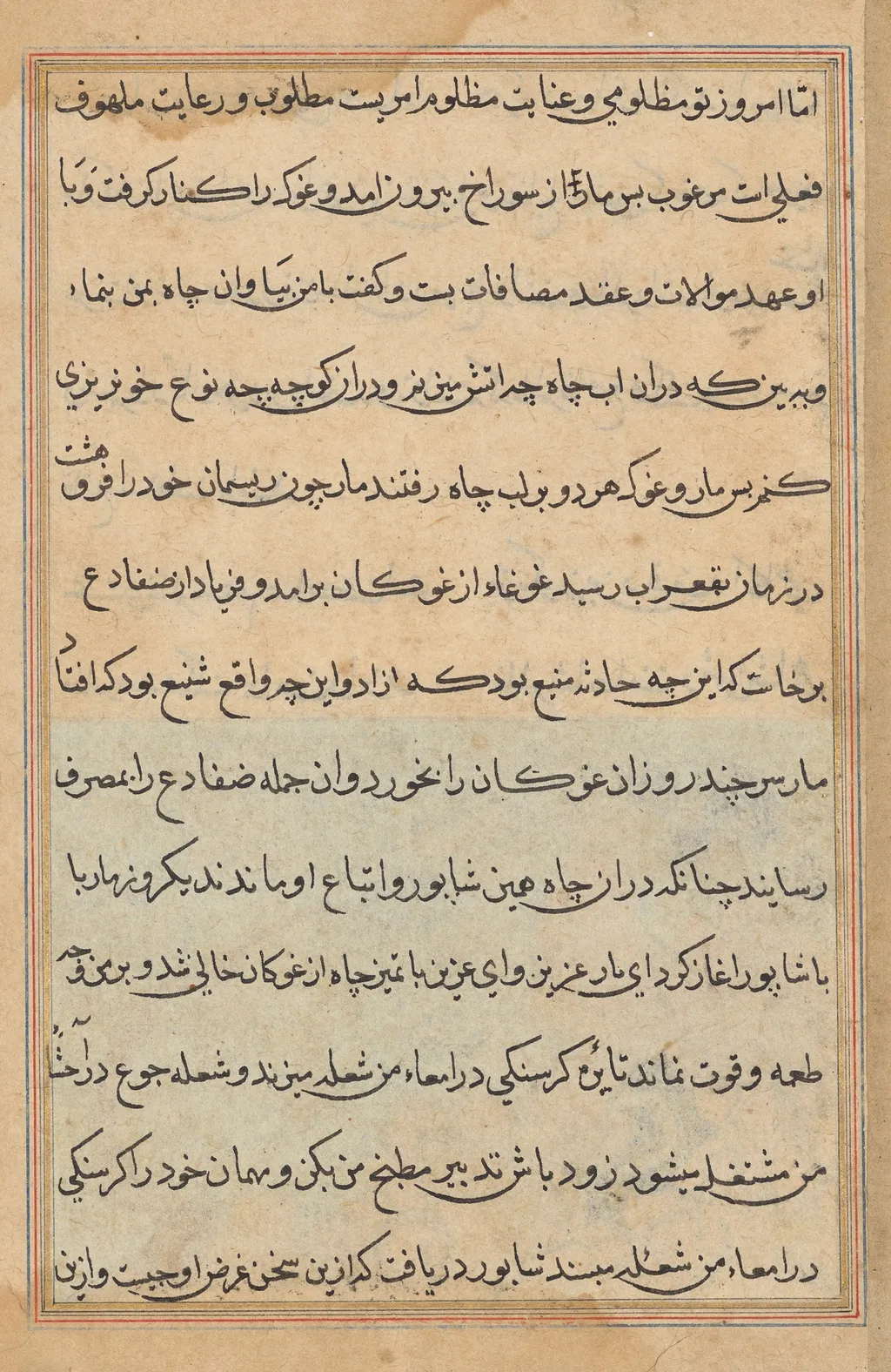
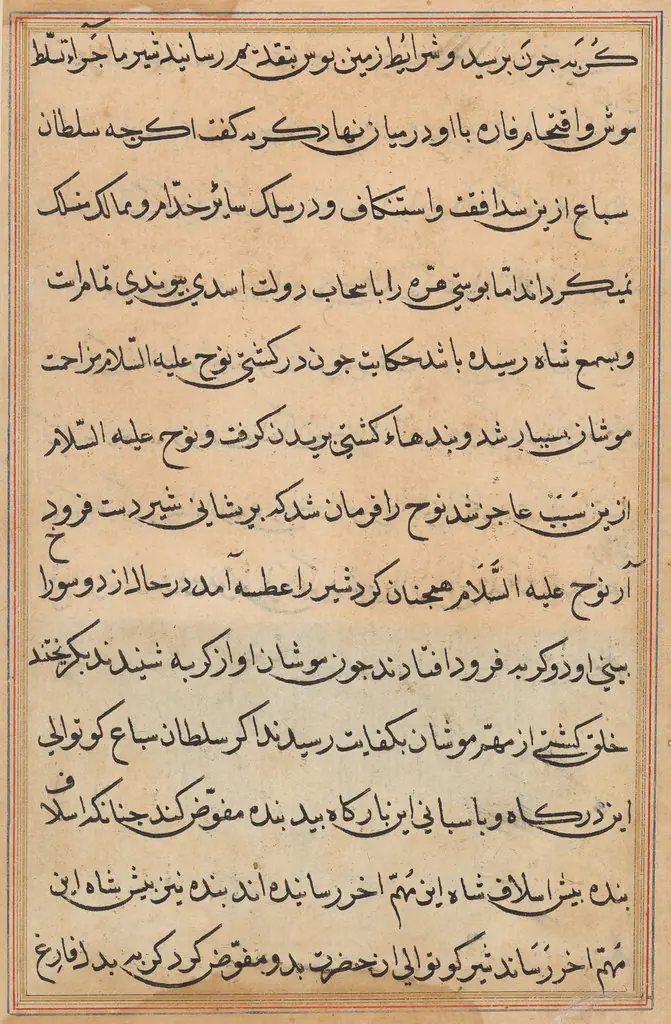
Page from Tales of a Parrot (Tuti-nama): text page is an unspecified painting. It dates from 1560 and is held in the collection of the Cleveland Museum of Art. The object is a single folio from the illustrated manuscript known as *Tales of a Parrot* (Tuti‑nama).
About this work
Overview
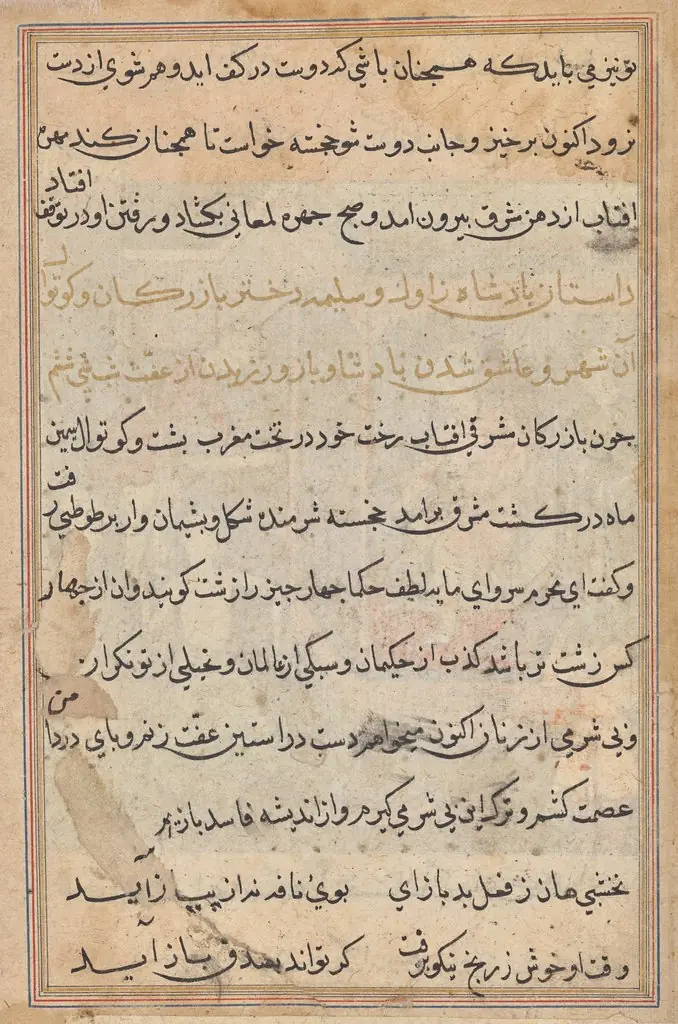
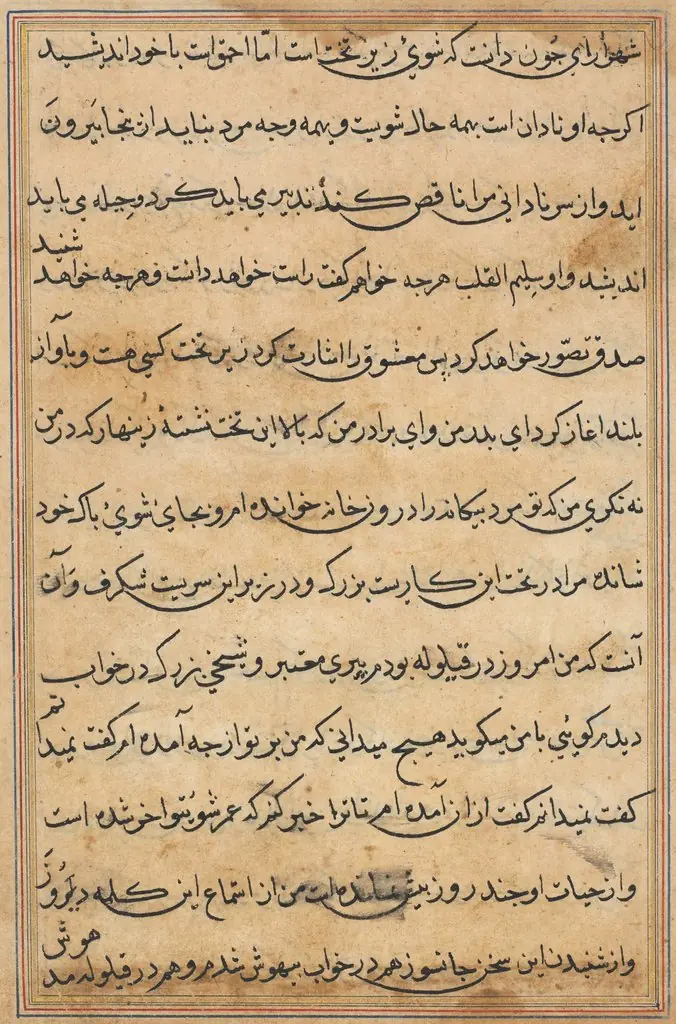
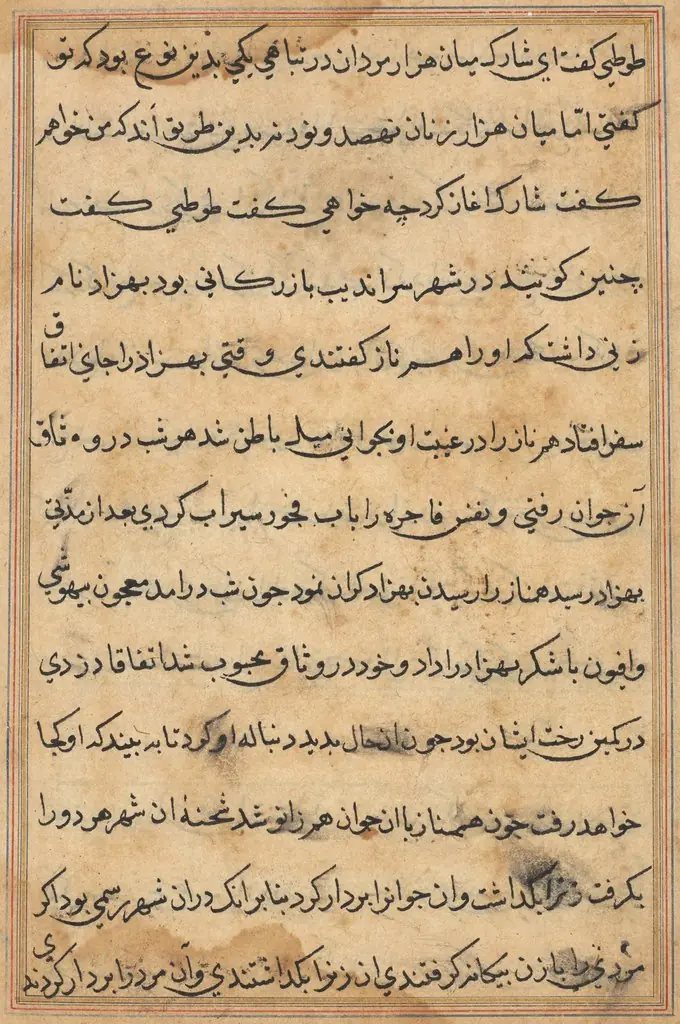
The object is a single folio from the illustrated manuscript known as *Tales of a Parrot* (Tuti‑nama). The page consists of dense black Persian calligraphy set against an aged, yellowed paper surface, edged with a narrow red border that frames the text.
Subject & Meaning
The inscription records a narrative addressed to a young prince named Salim, conveying moral or courtly themes typical of Persian literary tradition. Though the content is not reproduced here, the dedication suggests the work functioned as an educational or entertainment piece for royal audiences.
Technique & Style
The script is executed in a precise, decorative hand, with tightly arranged lines that fill the entire page. The calligrapher employs fluid curves and a consistent stroke weight, creating a visual rhythm reminiscent of puzzle‑like interlocking forms. The red border, likely painted with mineral pigments, provides a subtle visual counterpoint to the monochrome text.
History & Provenance
The folio originates from a Persian manuscript tradition that flourished between the 14th and 16th centuries, though its exact date and place of production remain unspecified. The page now resides in the collection of the Cleveland Museum of Art, where it is catalogued as a painted manuscript fragment.
Context
*Tuti‑nama* manuscripts were popular courtly entertainments, combining prose, poetry, and illustration to convey stories of love, adventure, and moral instruction. The use of Persian language and elaborate calligraphy reflects the cultural prestige of the Persian literary canon within the broader Islamic world.
Artist & collection

 Page from Tales of a Parrot (Tuti-nama): text page
 Page from Tales of a Parrot (Tuti-nama): text page
 Page from Tales of a Parrot (Tuti-nama): text page
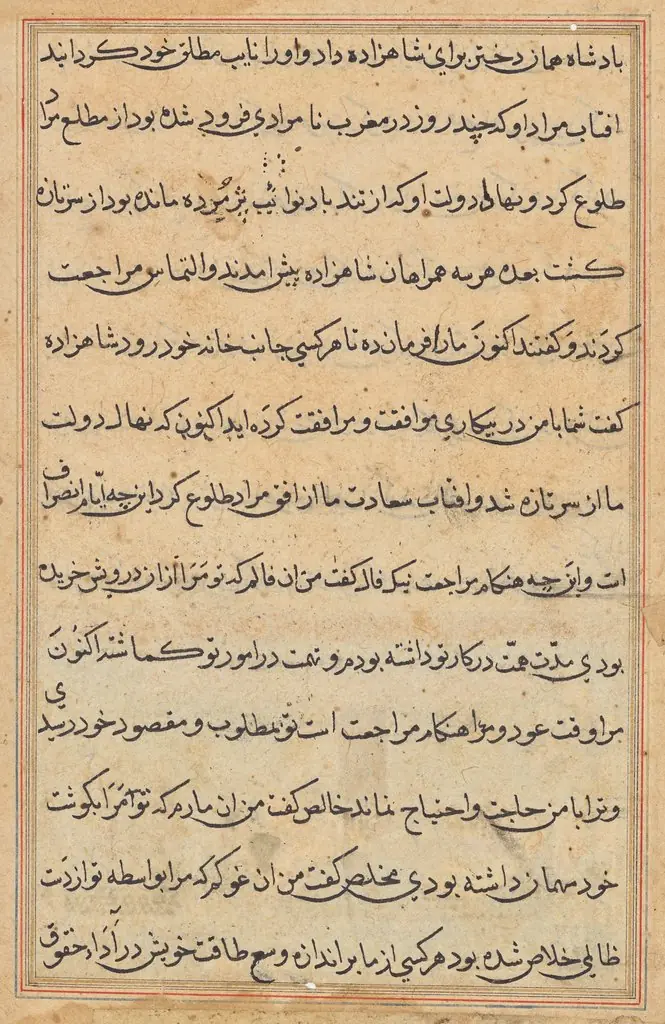 Page from Tales of a Parrot (Tuti-nama): text page
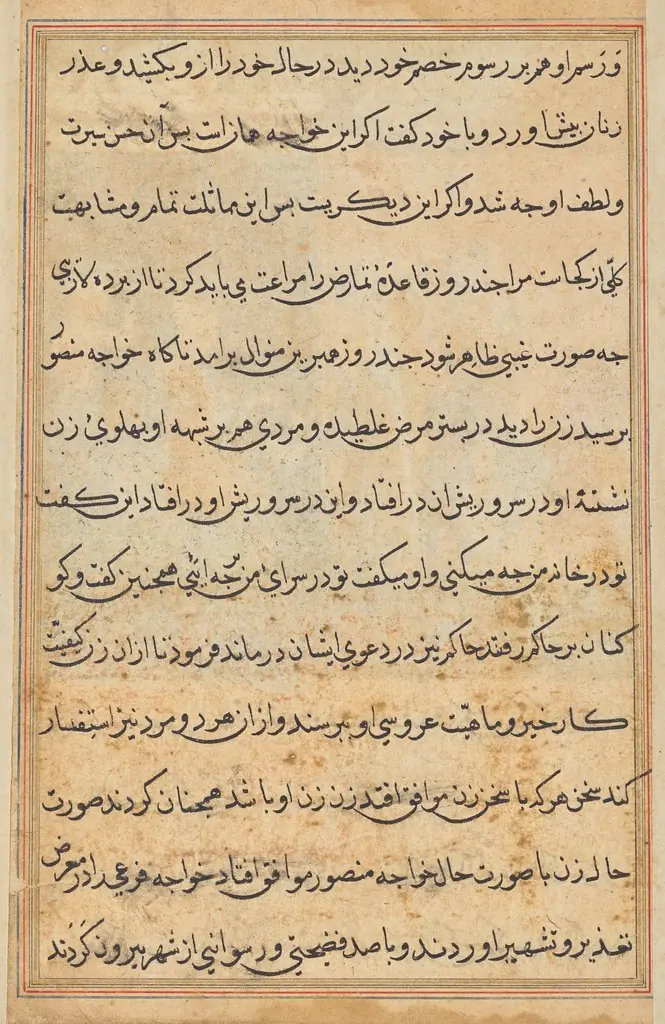 Page from Tales of a Parrot (Tuti-nama): text page
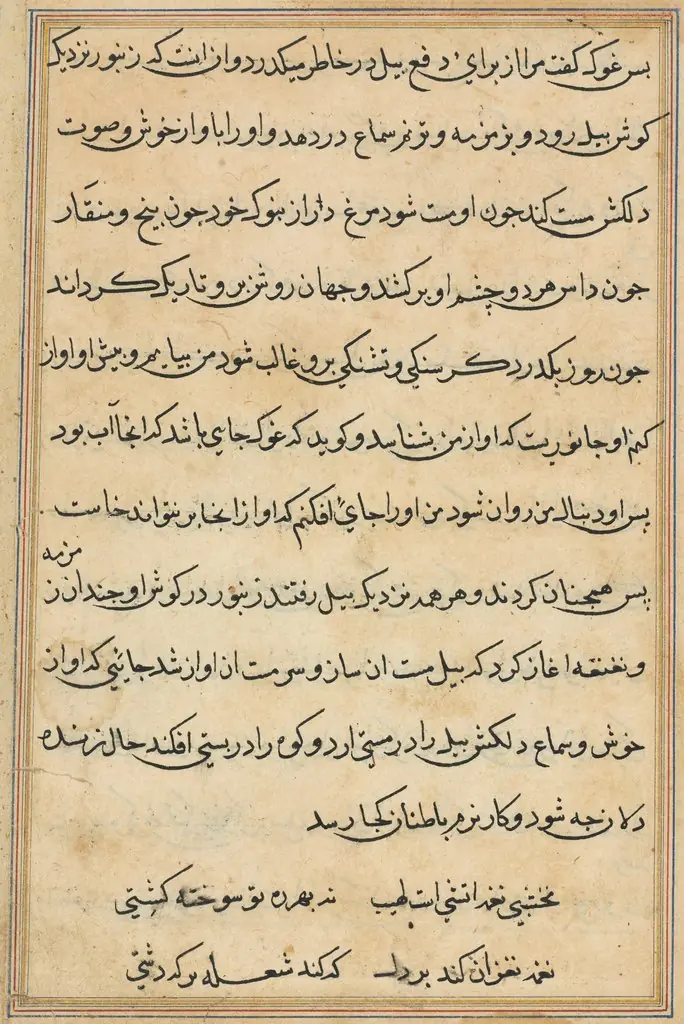 Page from Tales of a Parrot (Tuti-nama): text page
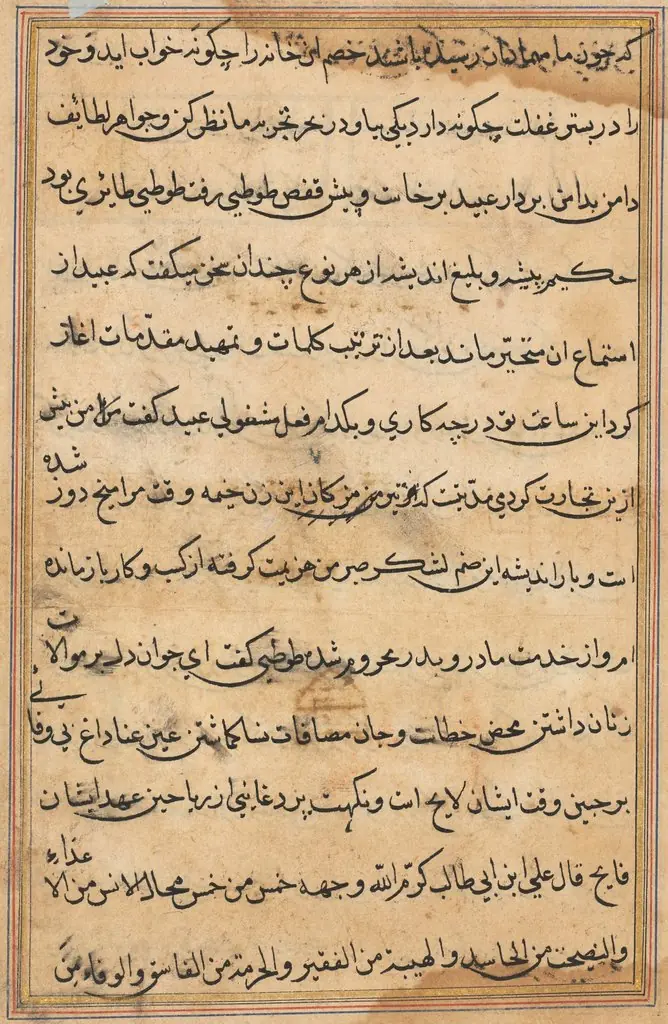 Page from Tales of a Parrot (Tuti-nama): text page
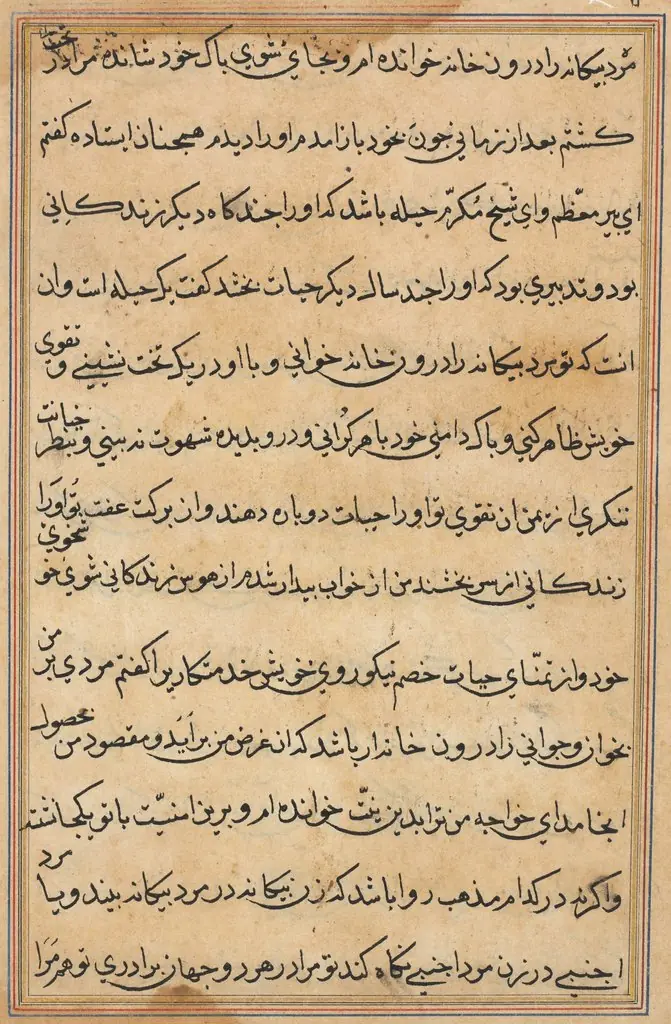 Page from Tales of a Parrot (Tuti-nama): text page
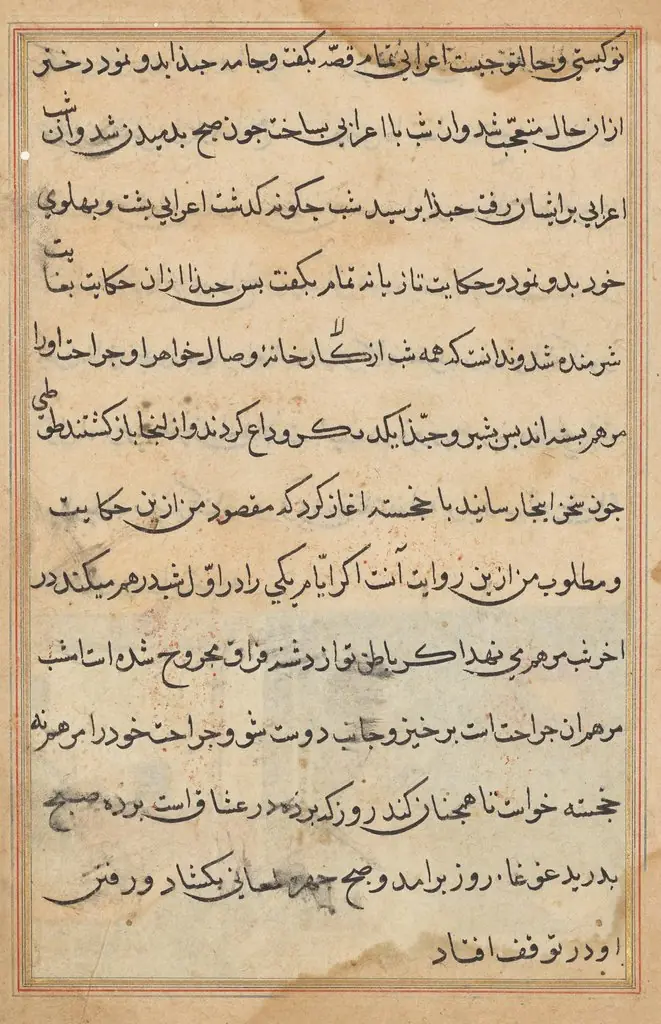 Page from Tales of a Parrot (Tuti-nama): text page
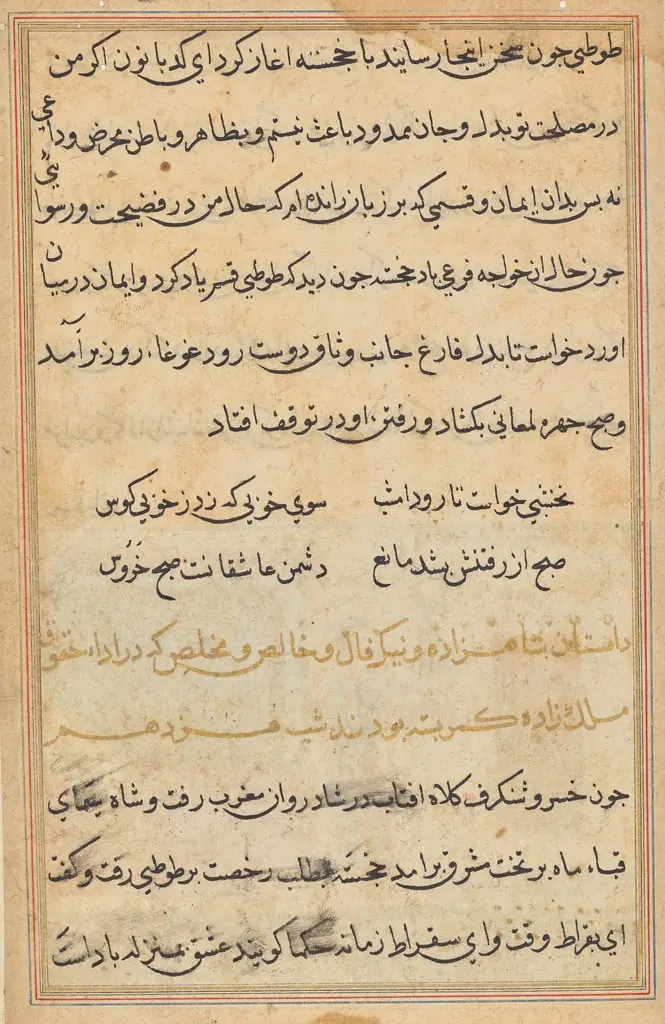 Page from Tales of a Parrot (Tuti-nama): text page
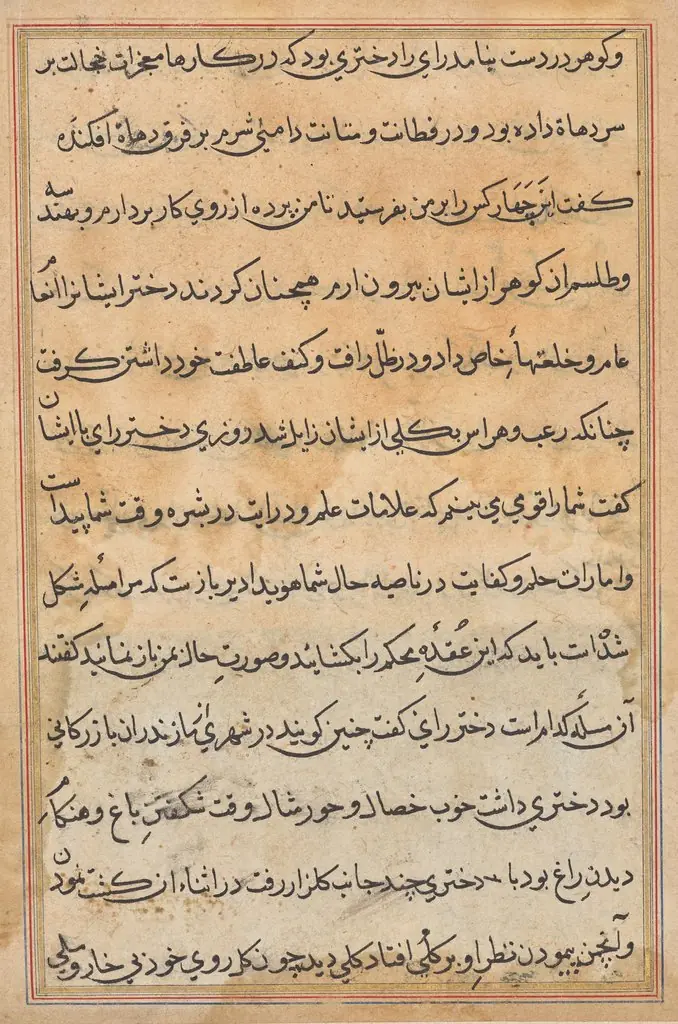 Page from Tales of a Parrot (Tuti-nama): text page
 Page from Tales of a Parrot (Tuti-nama): text page