Artwork
Bildnis der Erzherzogin Maria Theresia von Österreich, spätere Kaiserin (1717-1780) (Replik)
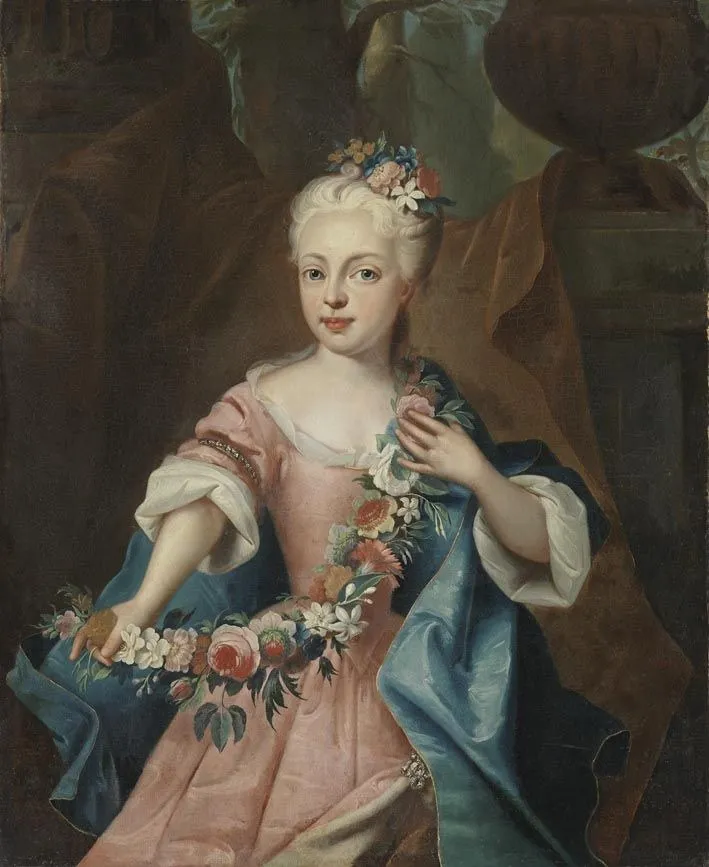
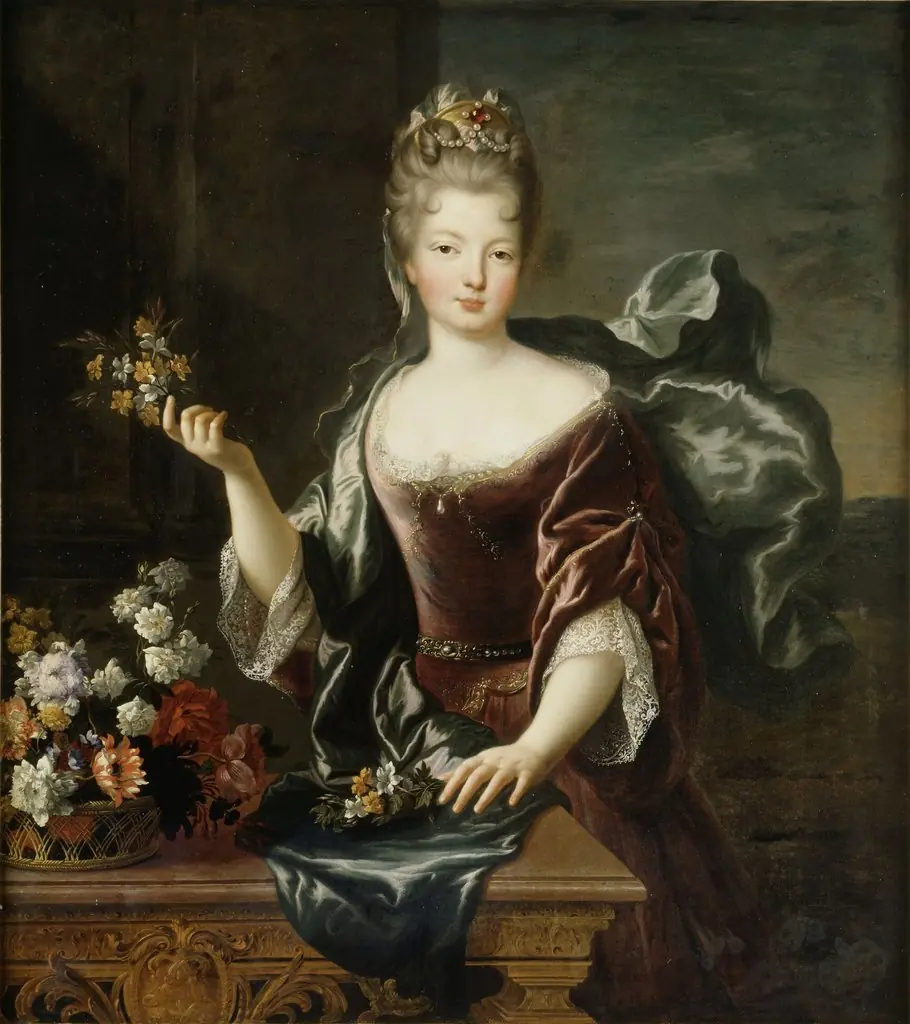
Bildnis der Erzherzogin Maria Theresia von Österreich, spätere Kaiserin (1717-1780) (Replik) is an unspecified painting by the Rococo painting artist Unknown. It dates from 1735 and is held in the collection of the Bavarian State Painting Collections. This portrait depicts Archduchess Maria Theresia of Austria (1717-1780), later Empress, in a formal, ornate setting.
About this work
Overview
This portrait depicts Archduchess Maria Theresia of Austria (1717-1780), later Empress, in a formal, ornate setting. The subject is rendered in meticulous detail, showcasing her attire and accessories against a subdued background.
Subject & Meaning
The painting captures Maria Theresia in a symbolic pose, holding a lavish bouquet of detailed flowers (including roses and foliage with a hidden bird), and wearing a pink gown with blue sleeves, topped with a floral crown in her white-blonde hair. These elements may allude to her status, youth, and impending imperial role.
Technique & Style
The artist employed a realistic approach, particularly in the soft, tactile depiction of flower petals, contrasting with the darker, more blurred background and draped curtain, which recede in emphasis. The overall style suggests a blend of precision and subtle depth.
History & Provenance
Noted as a replica (Replik), the original's date and artist are implied to be from Maria Theresia's lifetime (1717-1780), though specific provenance details are not provided here.
Context
Works like this were typical of 18th-century European portraiture, emphasizing the subject's nobility and future prominence. The level of detail on the flowers and clothing reflects the era's attention to symbolic and aesthetic elements in royal portraiture.
Legacy
The painting's style and subject matter place it within a tradition of royal portraiture that continues to be appreciated in museums like the Alte Pinakothek, which houses similar works of the period.
Artist & collection

 Domestic Scene
 Giacomo and Cardinal Marco, investing Andrea, Abbot of San Zeno, with his Benefice
 The Nymph of Fontainebleau
 Portrait of a Woman
 Madonna and Child with Saints in the Enclosed Garden
 Venus and Minerva
 Family Group of Four on Sofa
 Wall painting from Room H of the Villa of P. Fannius Synistor at Boscoreale
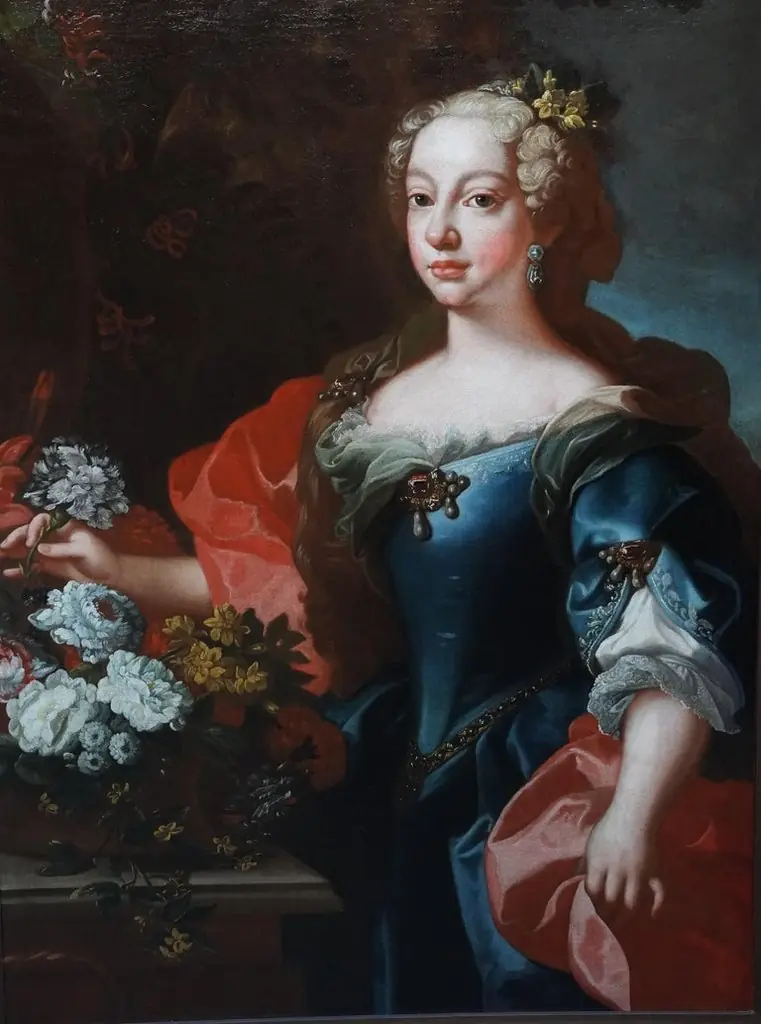 Portrait of Mariana Victoria of Spain
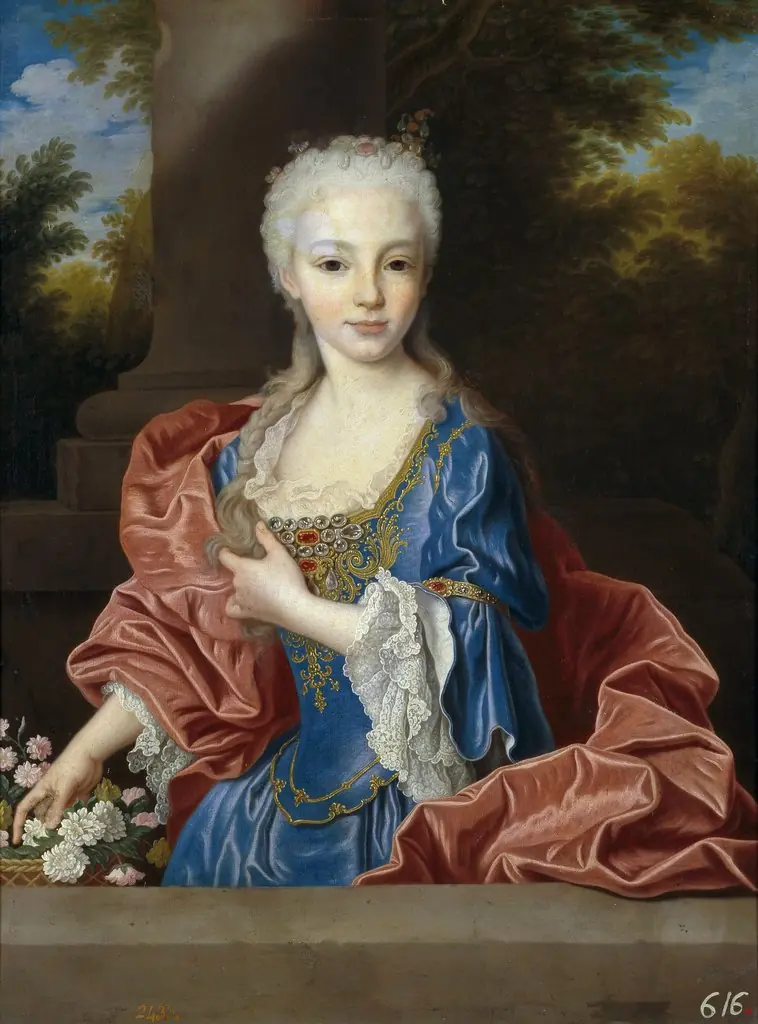 María Ana Victoria de Borbón
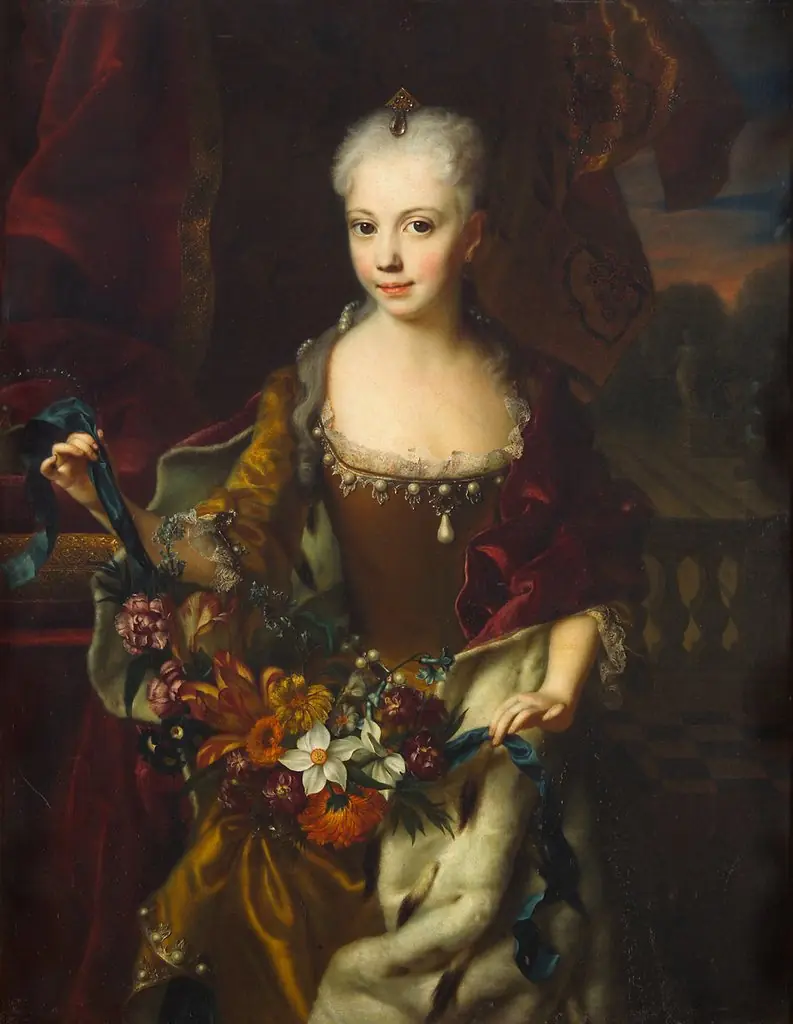 Erzherzogin Maria Anna (1718-1744), Tochter von Karl VI. im Alter von neun Jahren, Kniestück
 Friederike Charlotte Fürstin Lubomirska (1701-1755)
 Portrait of Maria Theresia at the age of six.
 Naisen muotokuva
 Portrait of Claudine van Royen (born 1712), Wife of Pieter Teding van Berkhout
 Maria Ana Victoria of Bourbon (Future Queen of Portugal) as a Child
 Portrait of Elisabeth Christine von Braunschweig-Wolfenbüttel
 Maria Teresa of Bourbon Infanta of Spain (Future Dauphine of France)
 Marcybela Ogiński
 Françoise-Marie de Bourbon, Mademoiselle de Blois, Duchess of Orleans