Artwork
Guardsmen of Company E
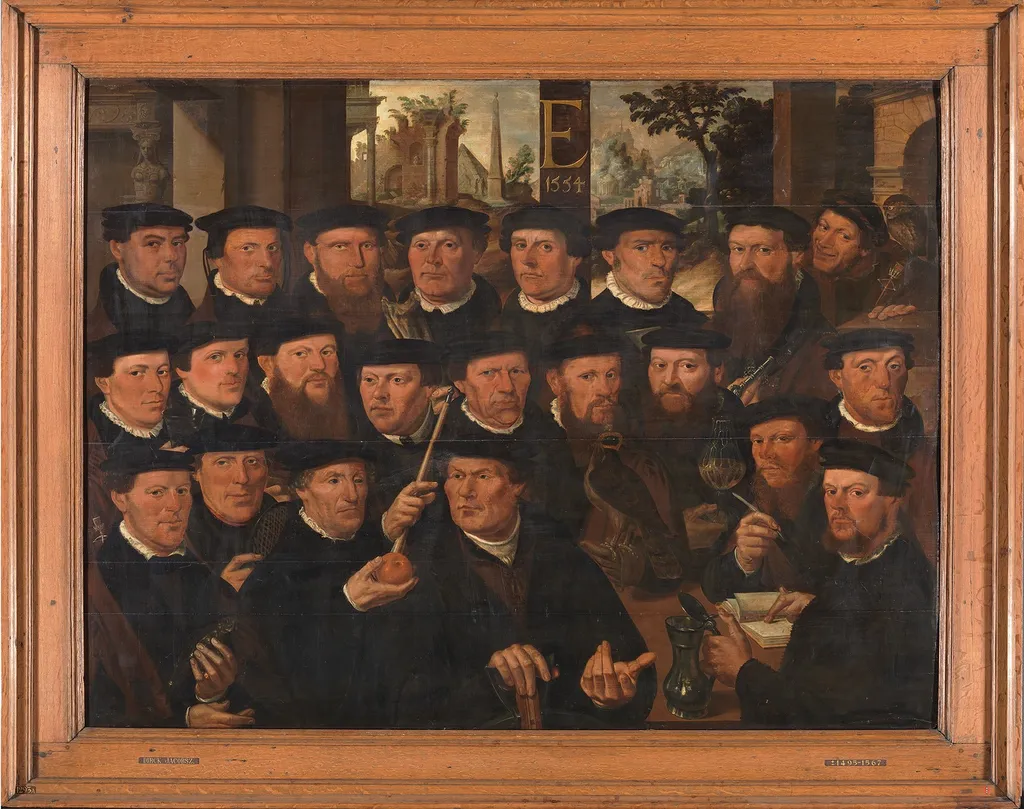
Guardsmen of Company E is an oil painting. It dates from 1554 and is held in the collection of the Rijksmuseum.
About this work
The men look like a group of guards or soldiers, all dressed the same but with different expressions.
This painting shows 21 men in black hats and clothes, packed close together. Some hold objects—a pipe, a glass, a book—while others just gesture or stare straight ahead. The background has a dark room with small landscapes behind a big "E" and the year 1554.
The men look like a group of guards or soldiers, all dressed the same but with different expressions. The artist used light and shadow to make their faces stand out against the dark background.
Next, look up chiaroscuro to see how this lighting trick works.
Overview
The oil painting titled *Guardsmen of Company E* depicts a tightly grouped assembly of twenty‑one figures, each clad in identical black hats and garments. The men are positioned in a dim interior, their faces illuminated by a stark contrast of light and shadow that emphasizes individual expressions despite their uniform attire.
Subject & Meaning
The work presents a cohort of guards or soldiers, suggested by their coordinated dress and the presence of personal items such as a pipe, a glass, and a book held by some figures. Their varied gestures and direct gazes convey a sense of collective presence while hinting at individual character within the regiment.
Technique & Style
The artist employs chiaroscuro, a lighting technique that juxtaposes bright illumination against deep darkness, to model the faces and hands of the subjects. This approach creates a three‑dimensional effect, allowing the figures to emerge from the shadowy backdrop and drawing the viewer’s eye to the nuanced details of each guard’s countenance.
History & Provenance
Embedded within the composition is a large letter “E” accompanied by the date 1554, indicating the work’s creation in the mid‑sixteenth century. The inscription suggests a possible link to a specific military unit or patron, though further documentation of the painting’s ownership history is not provided.
Context
The painting reflects the period’s interest in portraying organized military bodies, a theme common in European art of the 1500s. The use of a dark interior and the focus on individual faces align with contemporary trends that emphasized realism and psychological depth within group portraiture.
Artist & collection

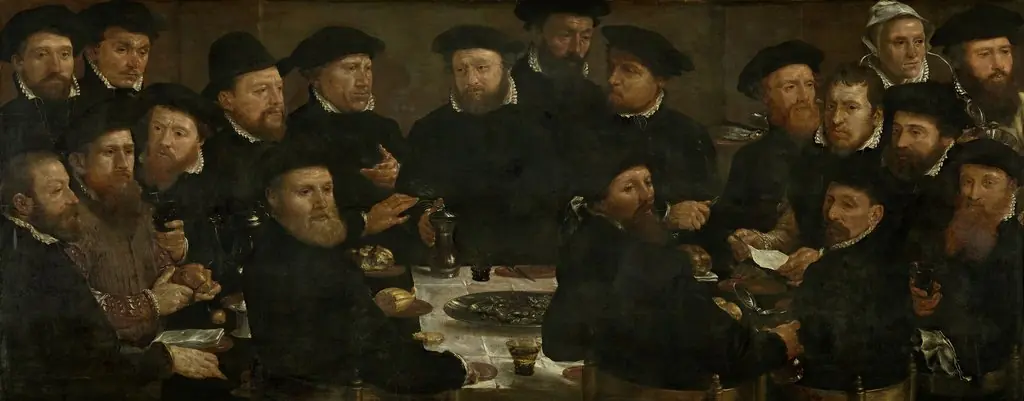 Meal of the Amsterdam militia
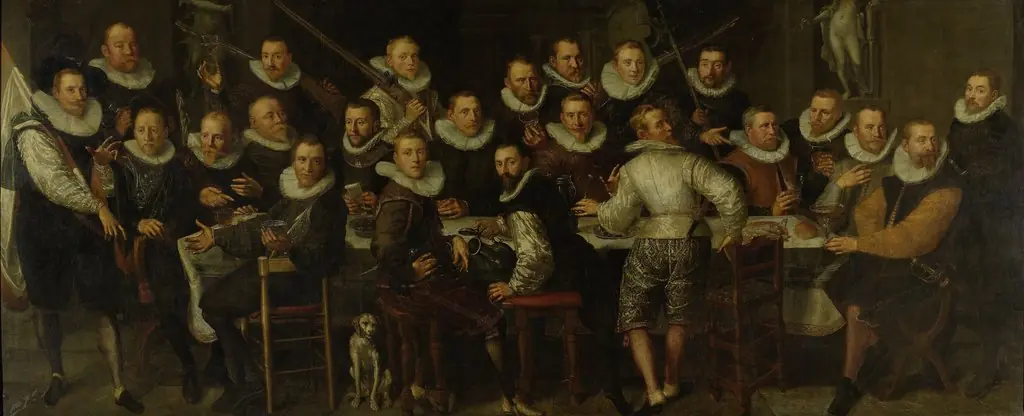 The Company of Captain Gillis Jansz Valckenier and Lieutenant Pieter Jacobsz Bas, Amsterdam, 1599
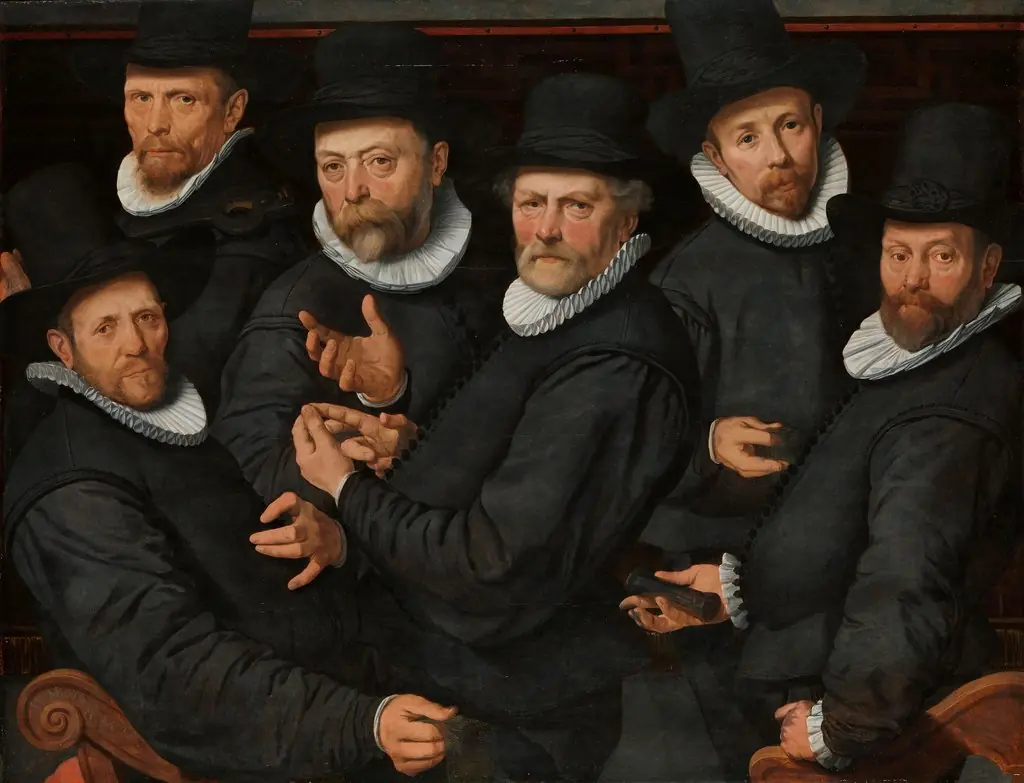 Six Wardens of the Drapers’ Guild
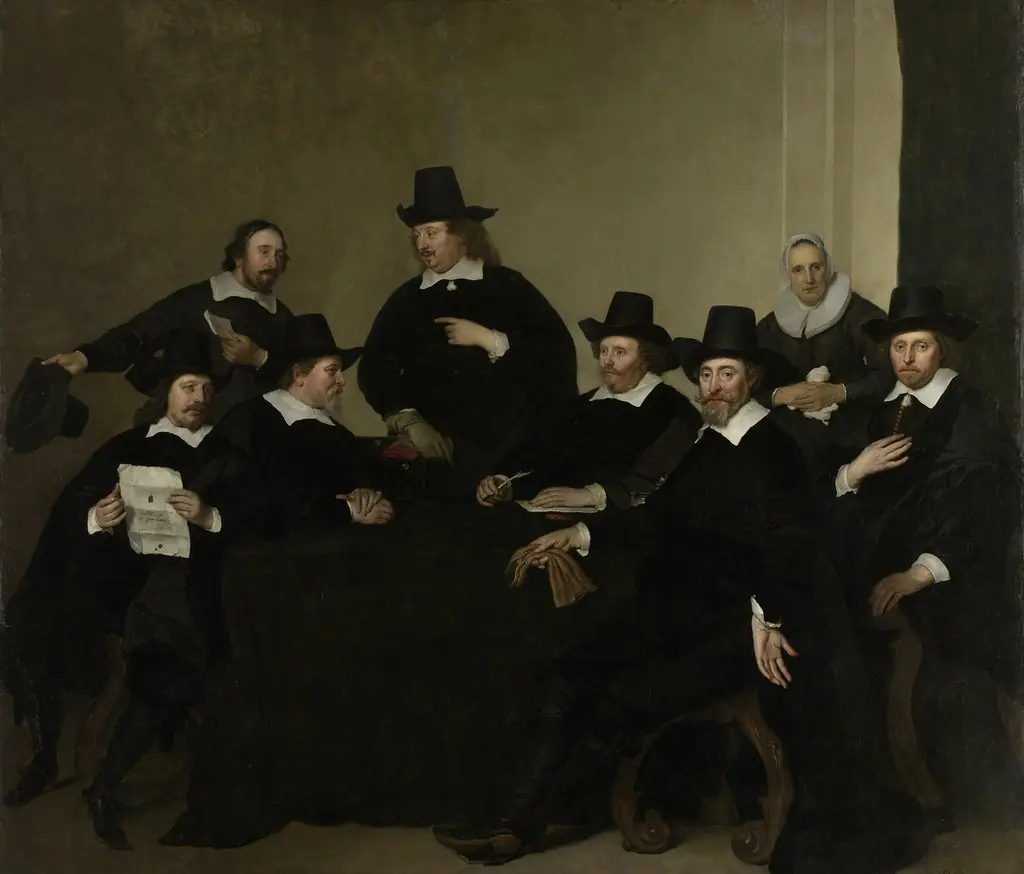 The regents of the Nieuwe Zijds institute for the outdoor relief of the poor, Amsterdam, ca 1650
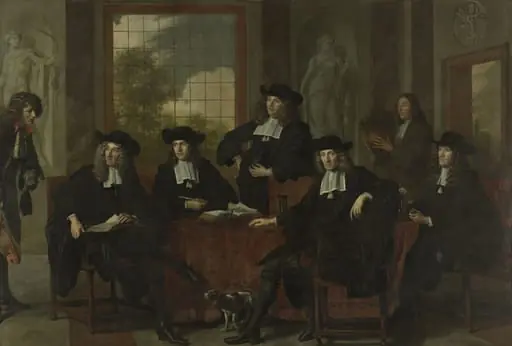 The Superintendents of the Collegium Medicum in Amsterdam, 1683
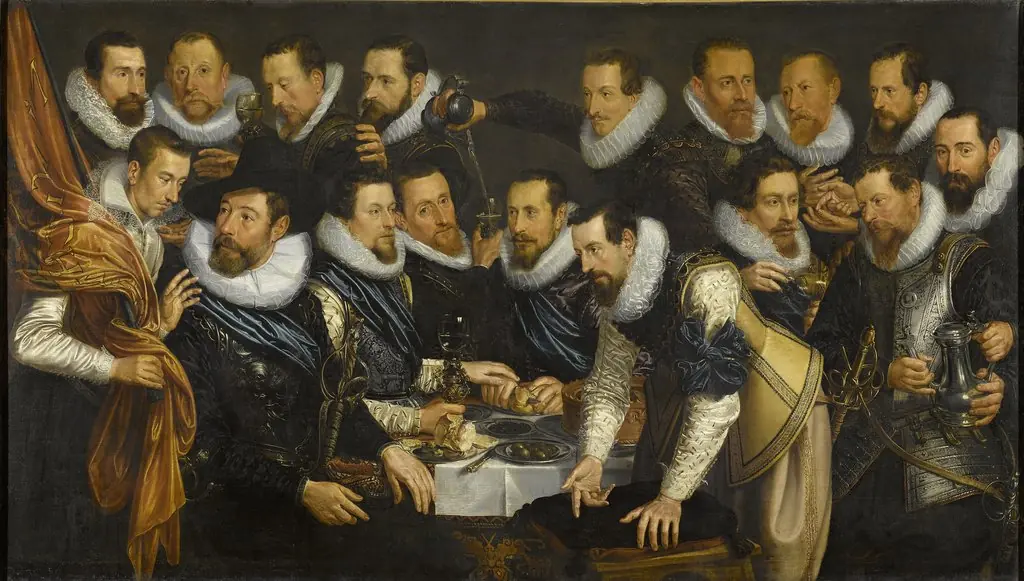 Officers and other civic guardsmen of the XIth District of Amsterdam, under the command of Captain Geurt Dircksz van Beuningen and Lieutenant Pieter Martensz Hoeffijser
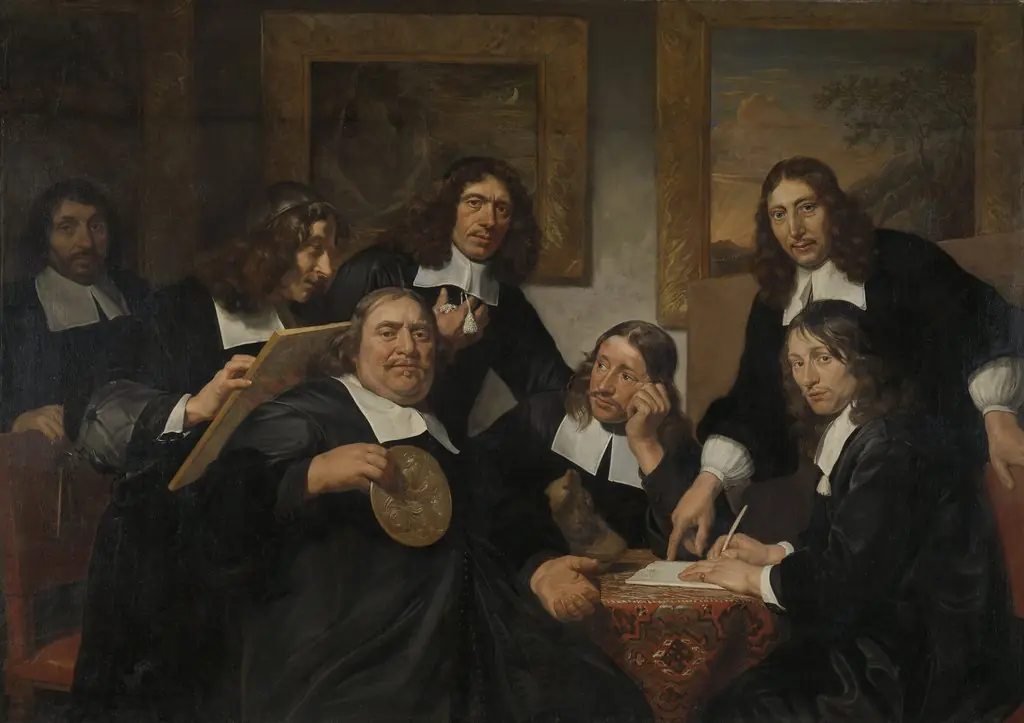 The governors of the guild of St. Luke, Haarlem, 1675