Artwork
St Jerome in the Desert
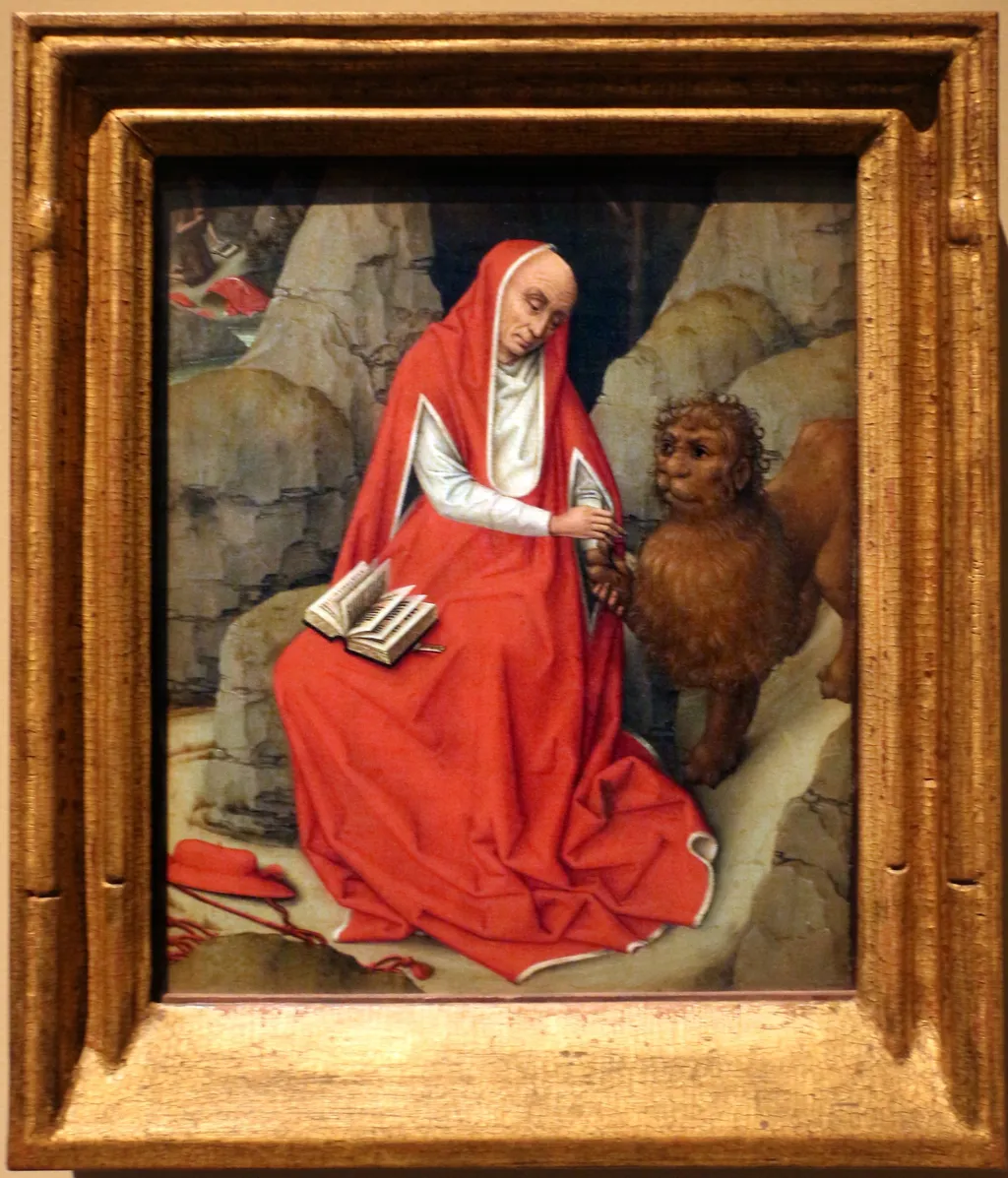
St Jerome in the Desert is an unspecified painting by the Northern Renaissance artist Unknown. It dates from 1450 and is held in the collection of the Detroit Institute of Arts. The work portrays a solitary figure clad in a vivid red garment, kneeling on a barren, rocky terrain.
About this work
Overview
The work portrays a solitary figure clad in a vivid red garment, kneeling on a barren, rocky terrain. His hands are pressed together, and his expression conveys a blend of anguish and reverence. A lion rests nearby, its gaze directed toward the man, while a book and a hat lie on the ground, completing the austere composition.
Subject & Meaning
The central figure is traditionally identified as Saint Jerome, a hermit scholar renowned for translating biblical texts. The presence of the lion references the legend of Jerome’s taming of a wild beast, while the book underscores his scholarly labor. The stark desert setting emphasizes the saint’s withdrawal from worldly comforts in pursuit of spiritual contemplation.
Technique & Style
Rendered in oil on canvas, the painting employs a limited palette of muted earth tones contrasted by the striking red of the robe. The artist uses chiaroscuro to model the figure’s form against the rugged backdrop, creating depth through subtle gradations of light and shadow. The lion is depicted with a smooth, almost tactile surface, balancing the roughness of the surrounding rocks.
Context
The composition reflects a long-standing iconographic tradition in Western art that presents Jerome in isolation, often accompanied by a lion. Such depictions were popular in the late medieval and Renaissance periods, serving both devotional and didactic purposes within monastic settings and private chapels.
Artist & collection

 Domestic Scene
 Giacomo and Cardinal Marco, investing Andrea, Abbot of San Zeno, with his Benefice
 The Nymph of Fontainebleau
 Portrait of a Woman
 Madonna and Child with Saints in the Enclosed Garden
 Venus and Minerva
 Family Group of Four on Sofa
 Wall painting from Room H of the Villa of P. Fannius Synistor at Boscoreale
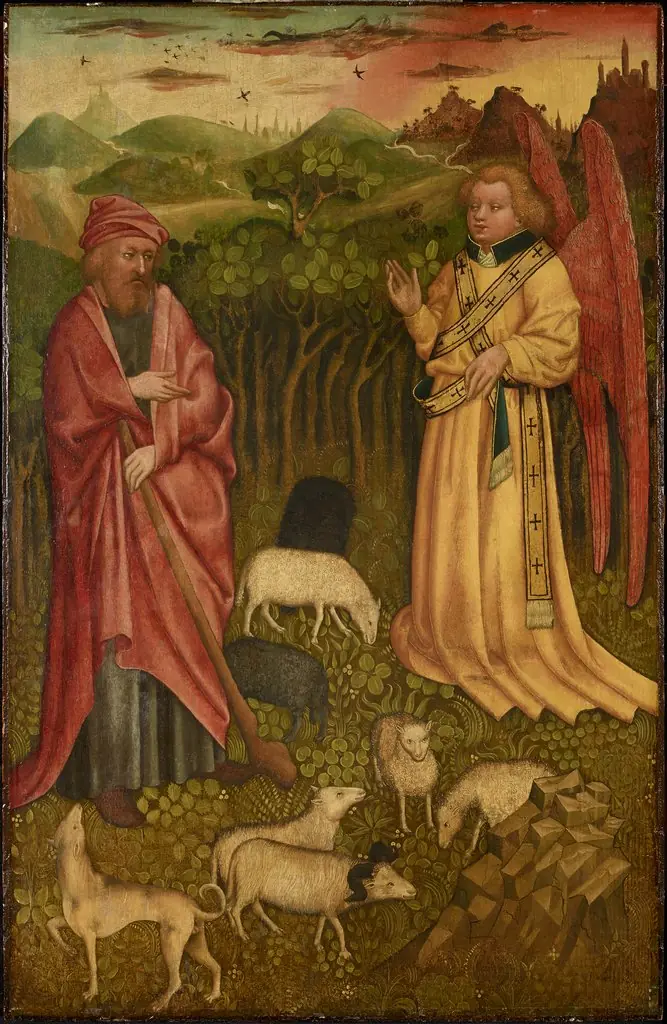 Botschaft des Engels an Joachim
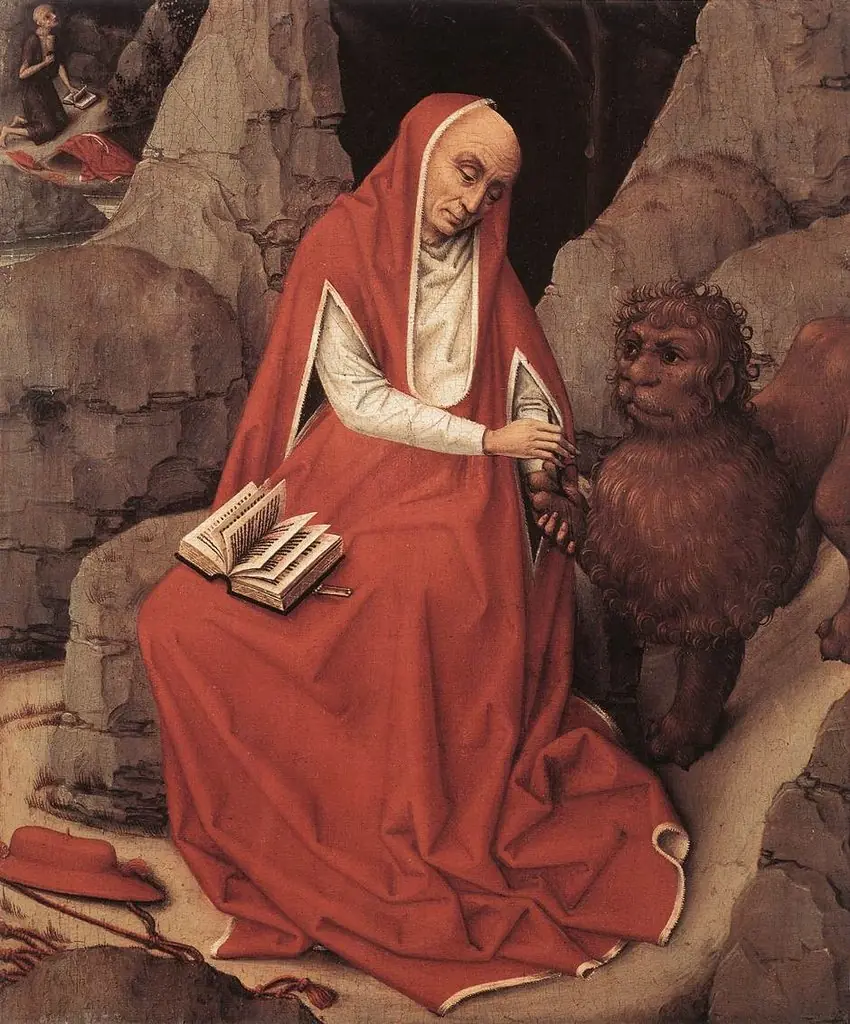 St Jerome and the Lion
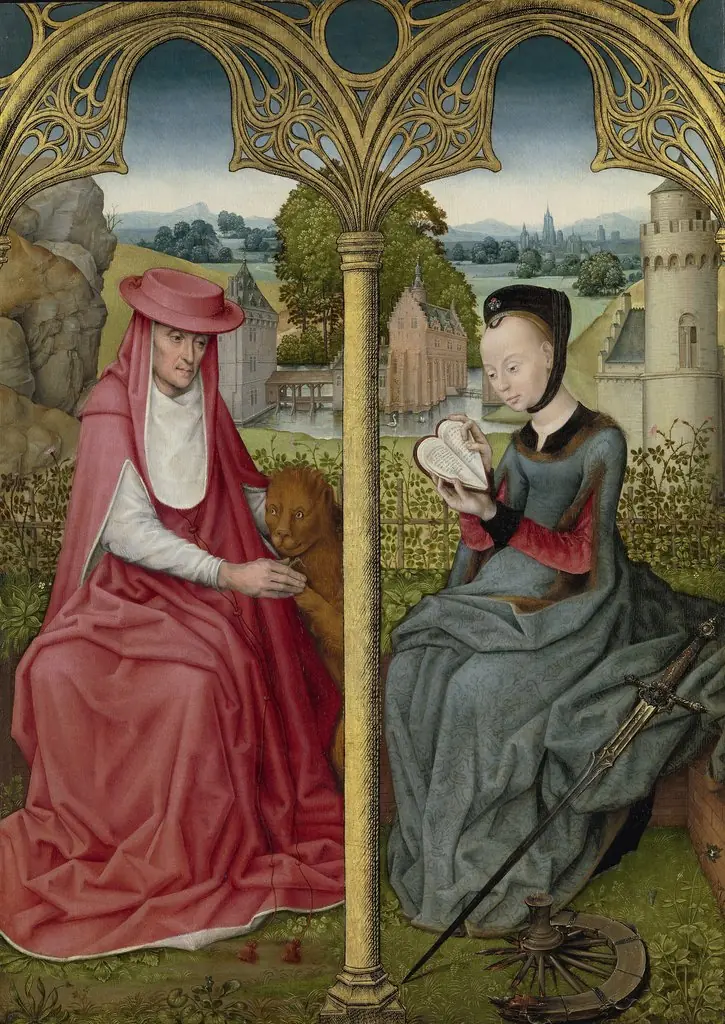 St Jerome and St Catherine of Alexandria
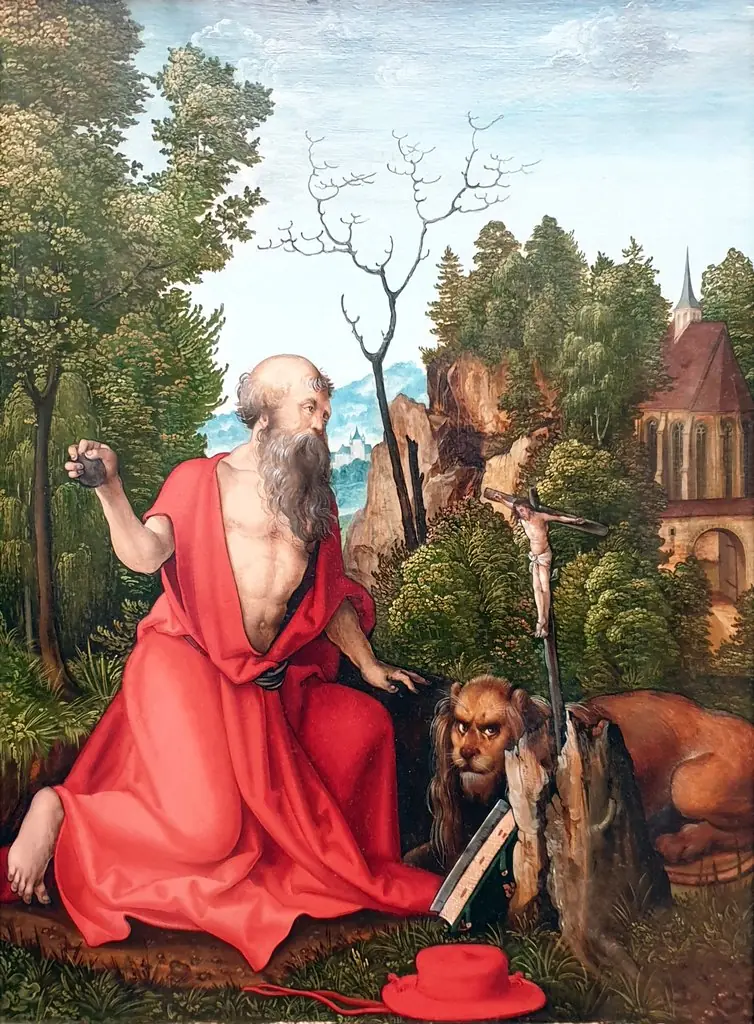 Saint Jerome
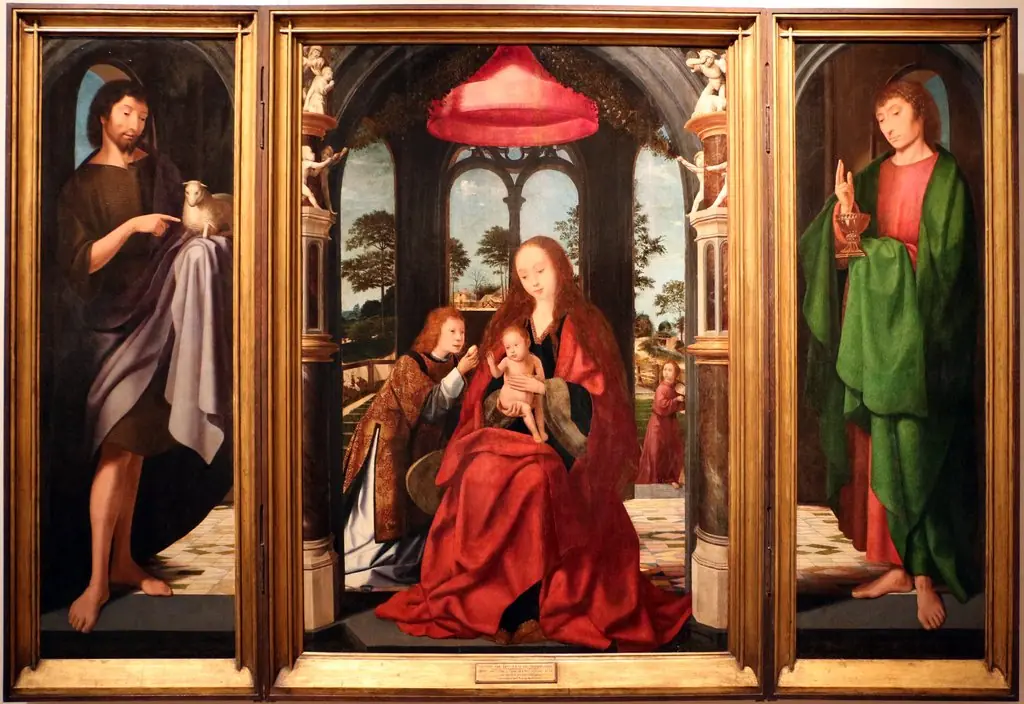 Triptych of the Virgin with the Child and Angels, St. John the Baptist and St. John the Evangelist
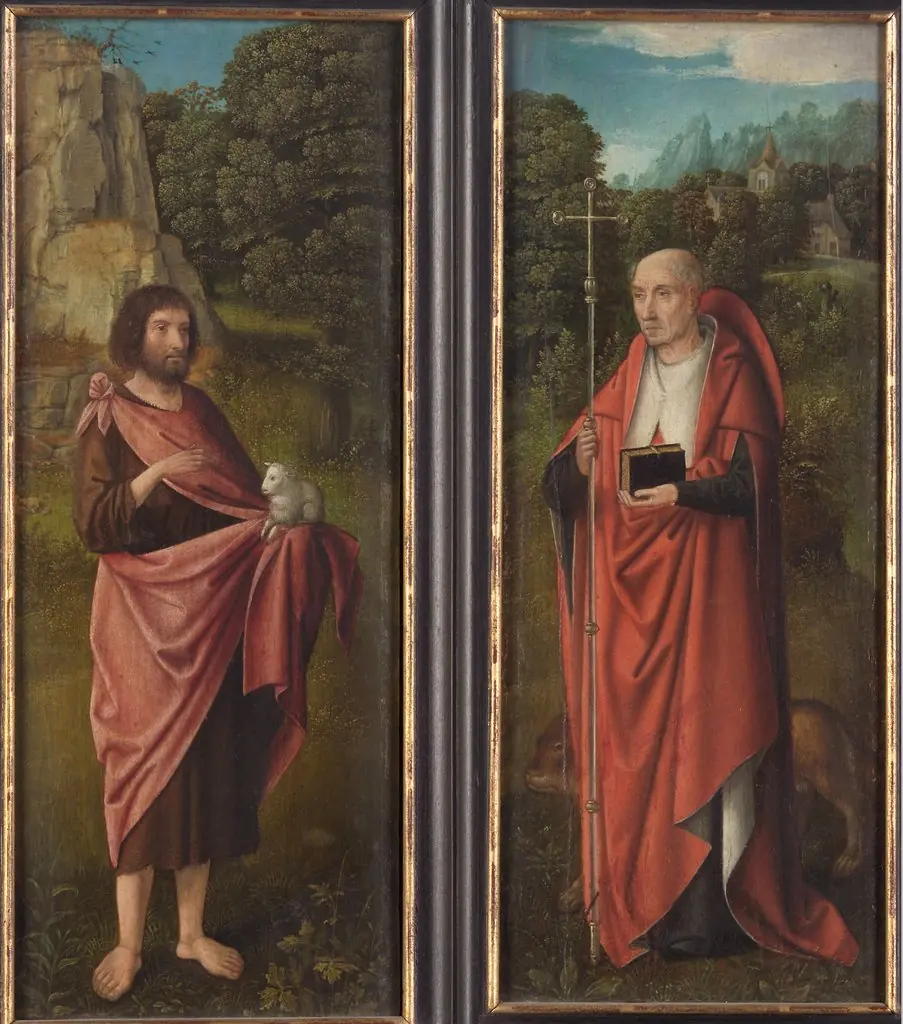 Saint John the Baptist and Saint Jerome
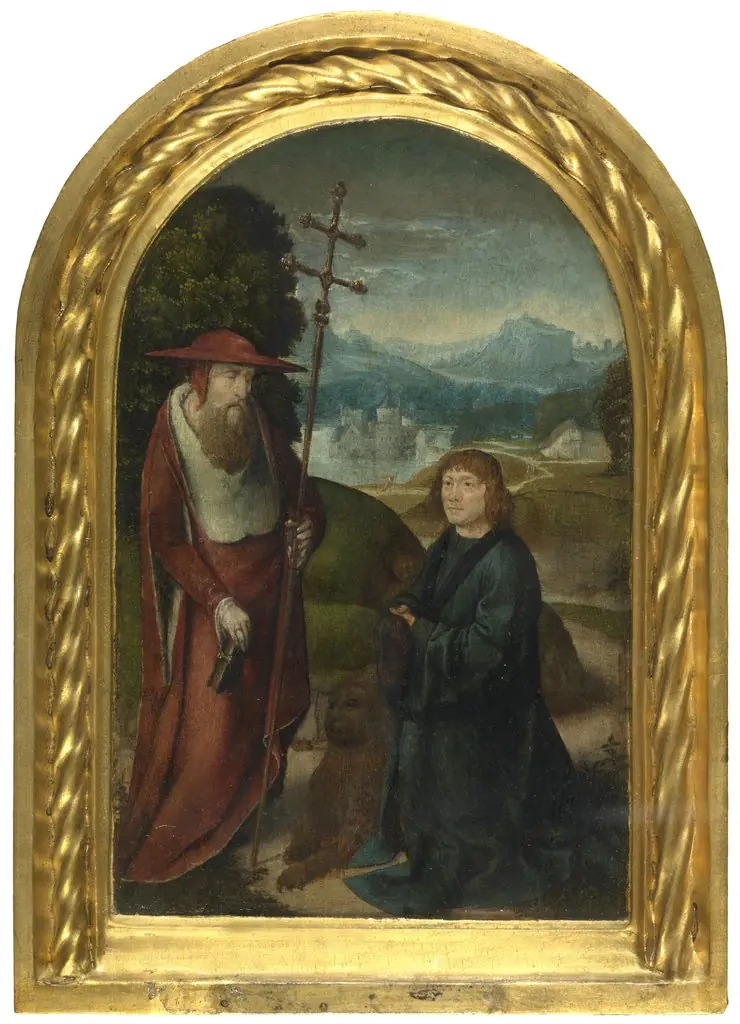 Saint Jerome and Donor
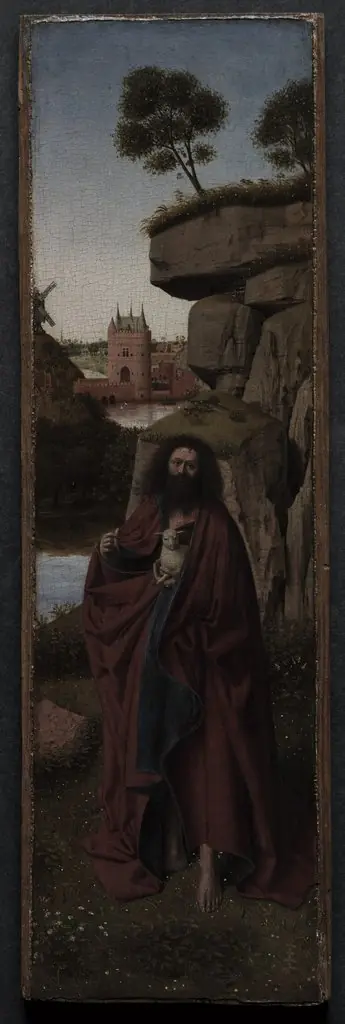 Saint John the Baptist in a Landscape
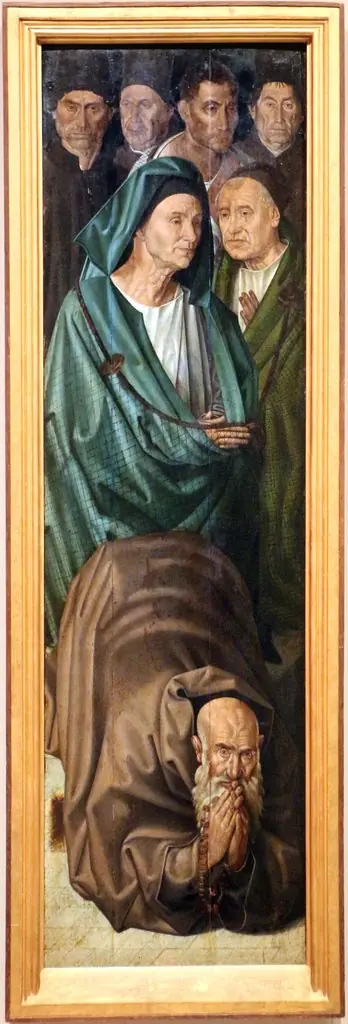 Saint Vincent Panels, second panel
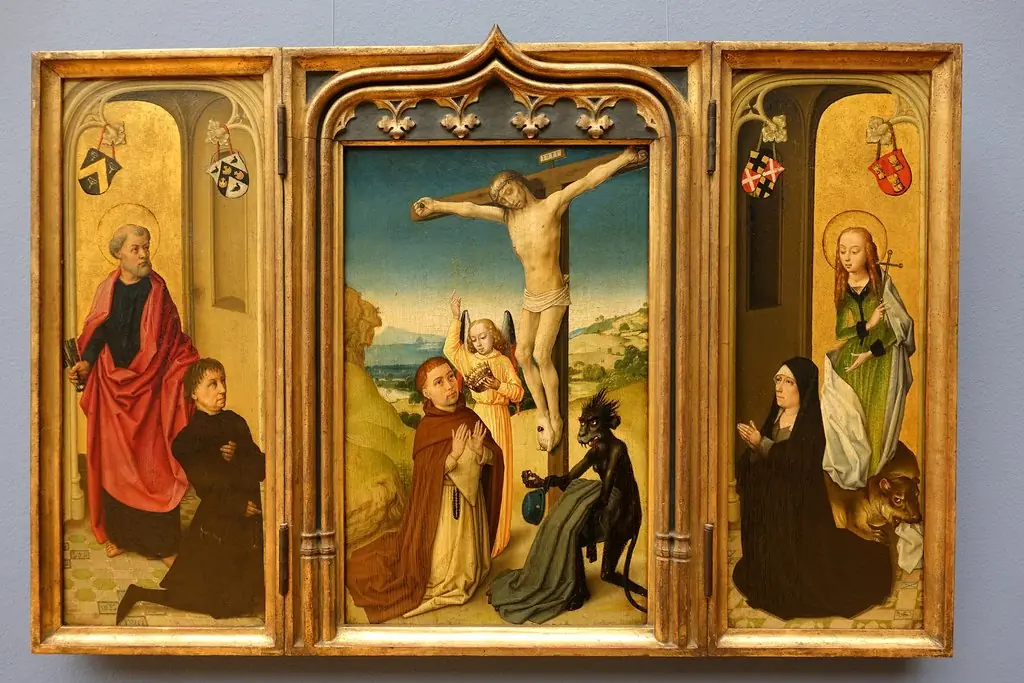 Triptychon des Pieter van de Woestyne
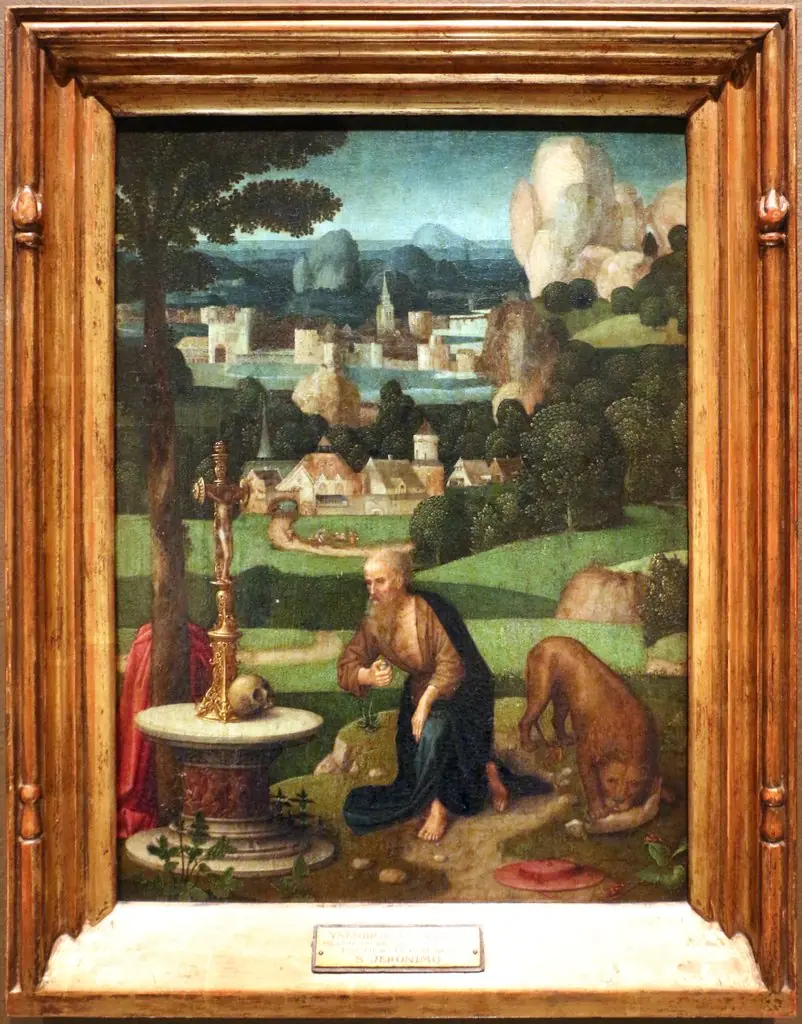 São Jerónimo
 God the Father