Artwork
Calvary Amongst Portraits
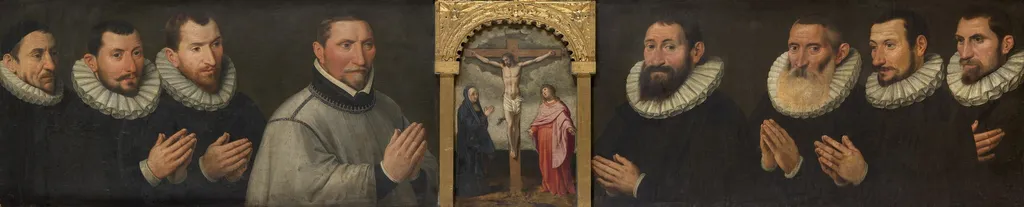
Calvary Amongst Portraits is an oil painting by the Mannerist artist Unknown. It dates from 1596 and is held in the collection of the Royal Museum of Fine Arts Antwerp. This oil painting depicts a solemn gathering of men and women gathered before a crucifix.
About this work
Overview
The figures are arranged in two rows, their postures unified in prayer, while the central crucifix serves as the visual and spiritual anchor.
This oil painting depicts a solemn gathering of men and women gathered before a crucifix. The figures are arranged in two rows, their postures unified in prayer, while the central crucifix serves as the visual and spiritual anchor. Dark, uniform robes contrast with the illuminated figures and the crucifix, enhancing the scene’s gravity. The medium’s richness allows for fine detail in fabric and expression, reinforcing the quiet intensity of the moment.
Subject & Meaning
The scene portrays a devotional moment centered on Christ’s crucifixion. The men, dressed in identical dark robes with white collars, suggest a religious brotherhood or confraternity. The two women, identified as the Virgin Mary and another figure, stand beside the cross, their presence underscoring grief and reverence. The composition emphasizes collective contemplation, inviting viewers into a shared act of spiritual reflection.
Technique & Style
Chiaroscuro is employed to heighten emotional resonance, with light falling sharply on the crucifix and faces while the background recedes into shadow. Oil paint allows for subtle gradations in skin tone and fabric texture, particularly in the luminous collars and the folds of the central figure’s lighter robe. The controlled lighting directs focus without theatricality, preserving the scene’s introspective mood.
History & Provenance
The painting’s origins are tied to a religious community that valued private devotion and communal prayer. Its composition aligns with early modern devotional practices in regions where confraternities maintained private chapels. Though exact provenance is undocumented, its style and subject suggest a Northern European origin, likely from the late 16th or early 17th century.
Context
During this period, private religious imagery flourished among lay confraternities seeking personal piety outside formal liturgy. Scenes of the crucifixion surrounded by mourners were common, but the inclusion of uniformed male figures in prayer reflects a specific devotional culture. The absence of narrative detail or landscape focuses attention on the emotional weight of the moment rather than historical context.
Legacy
The painting exemplifies a quiet, non-dramatic approach to sacred imagery, distinct from the grandeur of Counter-Reformation altarpieces. Its emphasis on collective prayer and restrained emotion influenced later devotional works within smaller religious communities. Though not widely known, it remains a testament to the role of intimate, group-based spirituality in early modern religious life.
Artist & collection

 Domestic Scene
 Giacomo and Cardinal Marco, investing Andrea, Abbot of San Zeno, with his Benefice
 The Nymph of Fontainebleau
 Portrait of a Woman
 Madonna and Child with Saints in the Enclosed Garden
 Venus and Minerva
 Family Group of Four on Sofa
 Wall painting from Room H of the Villa of P. Fannius Synistor at Boscoreale
 Crucified Christ with Mary, John and Mary Magdalene
 Altarpiece with The Passion of Christ
 Christus am Kreuz
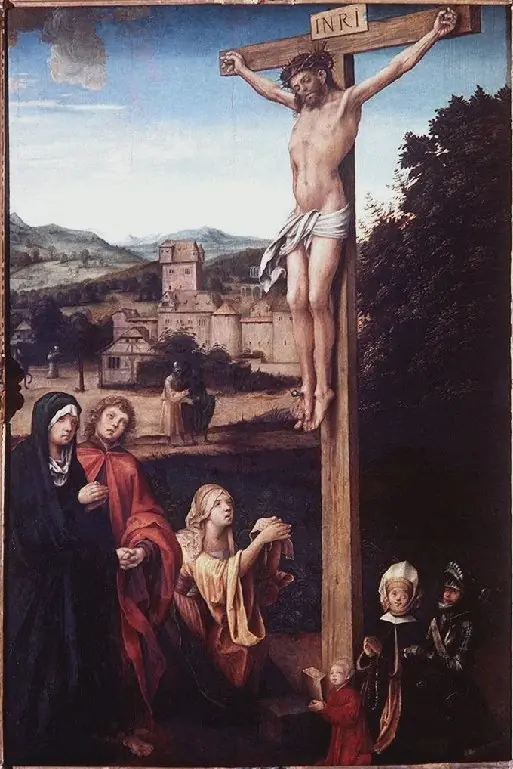 Crucifixion of Christ
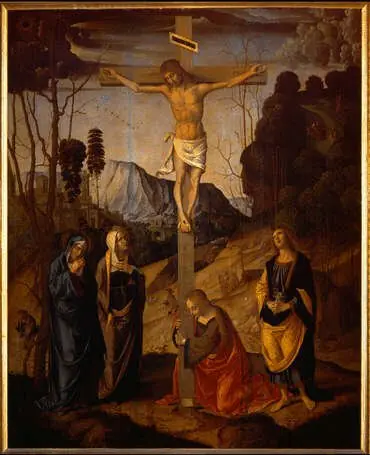 Crucifixion
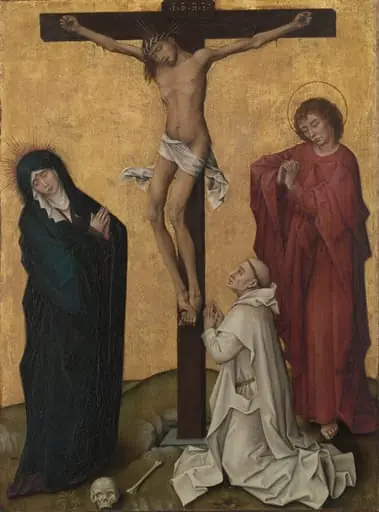 The Crucifixion with a Carthusian Monk
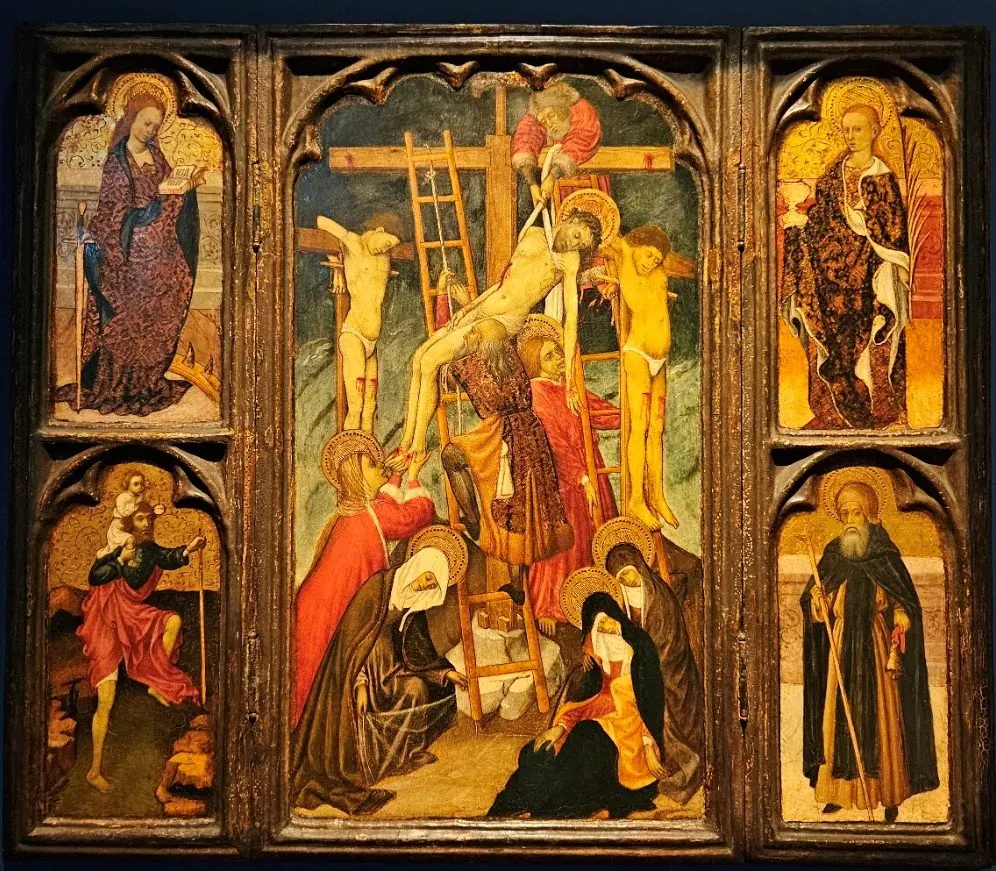 Triptych of the Descent from the Cross
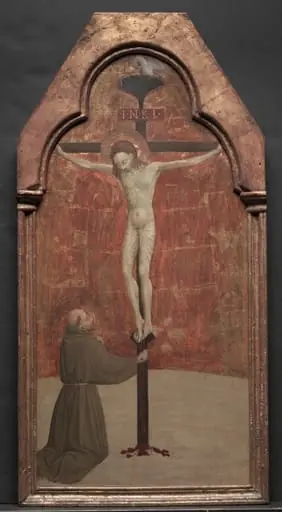 St. Francis Kneeling before Christ on the Cross
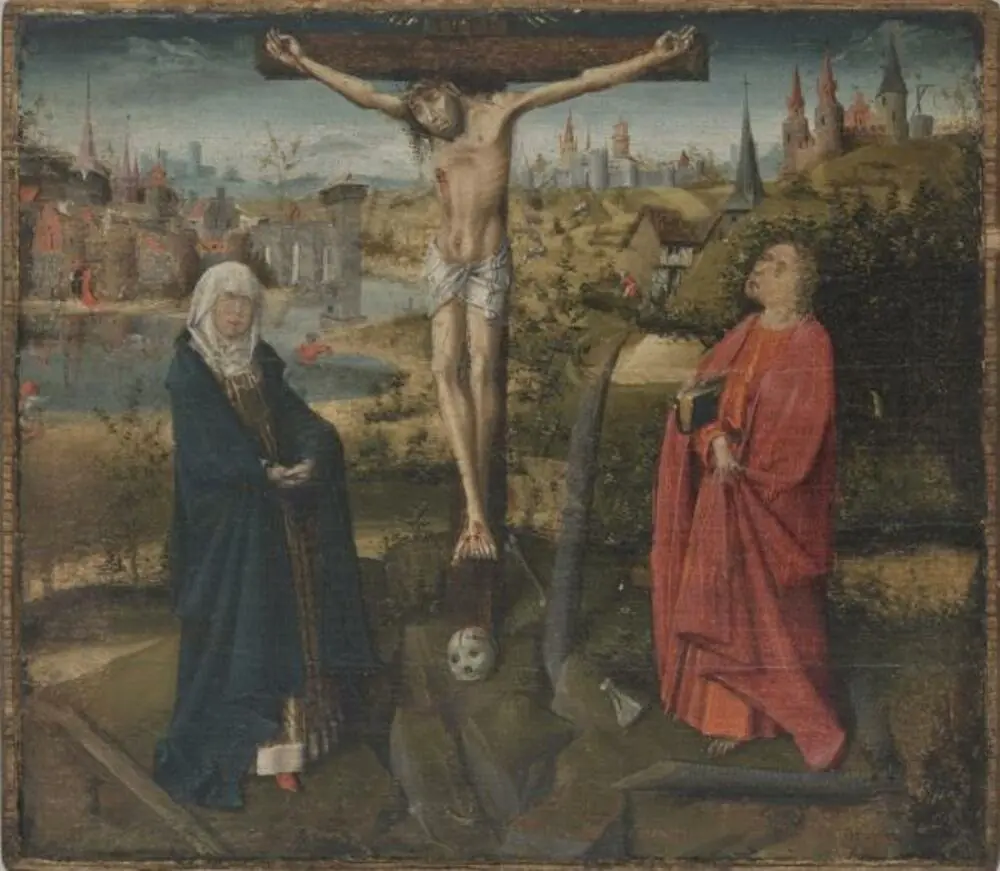 The Crucifixion
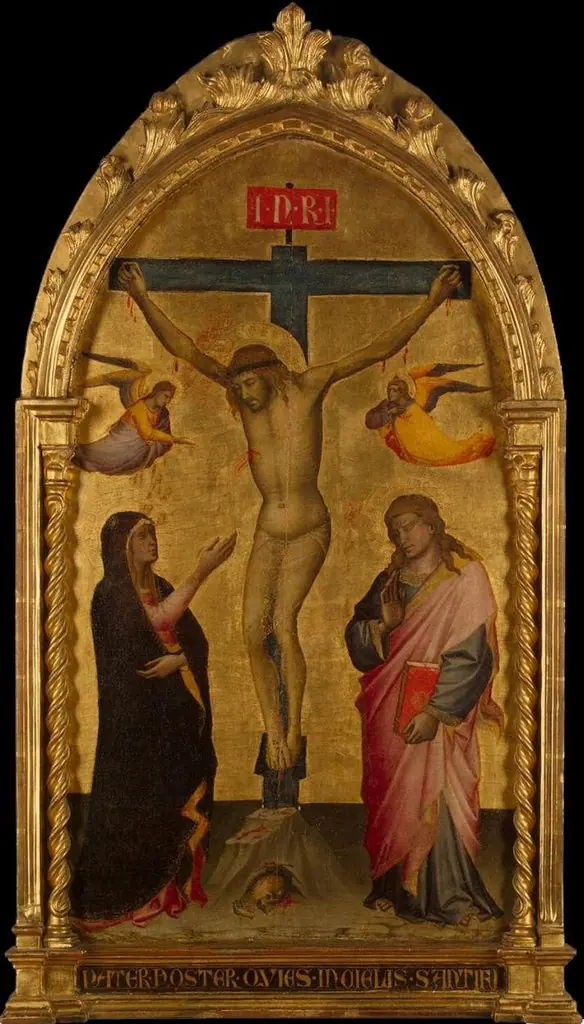 Crucifixion with the Virgin and St John