Artwork
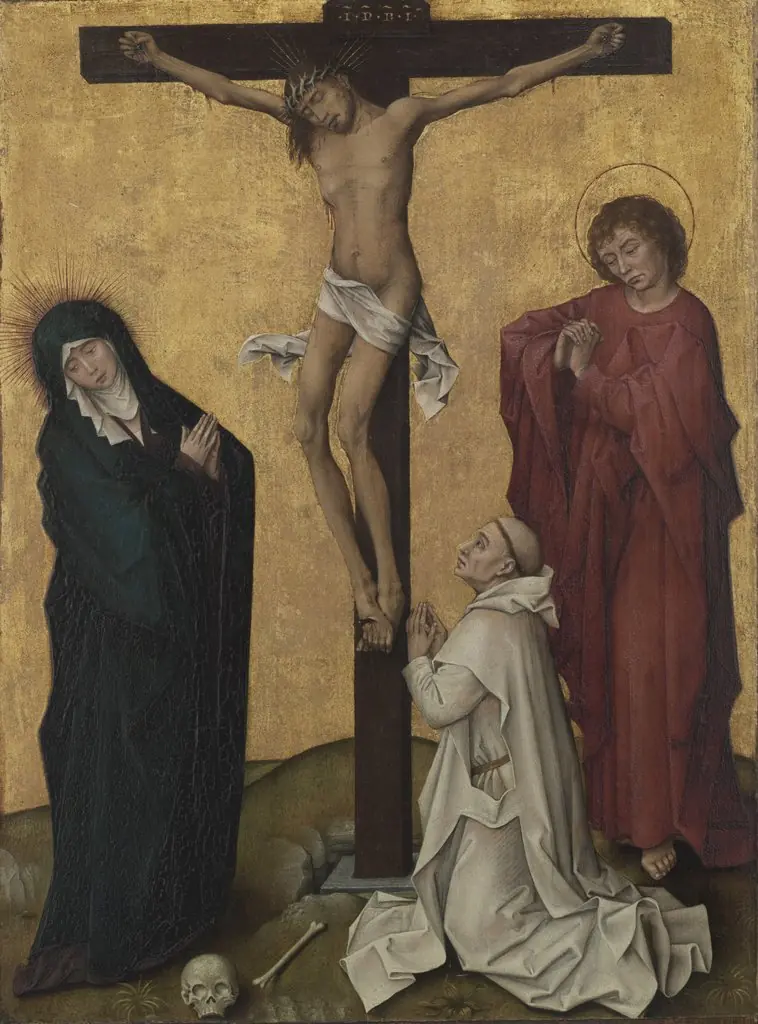
The Crucifixion with a Carthusian Monk
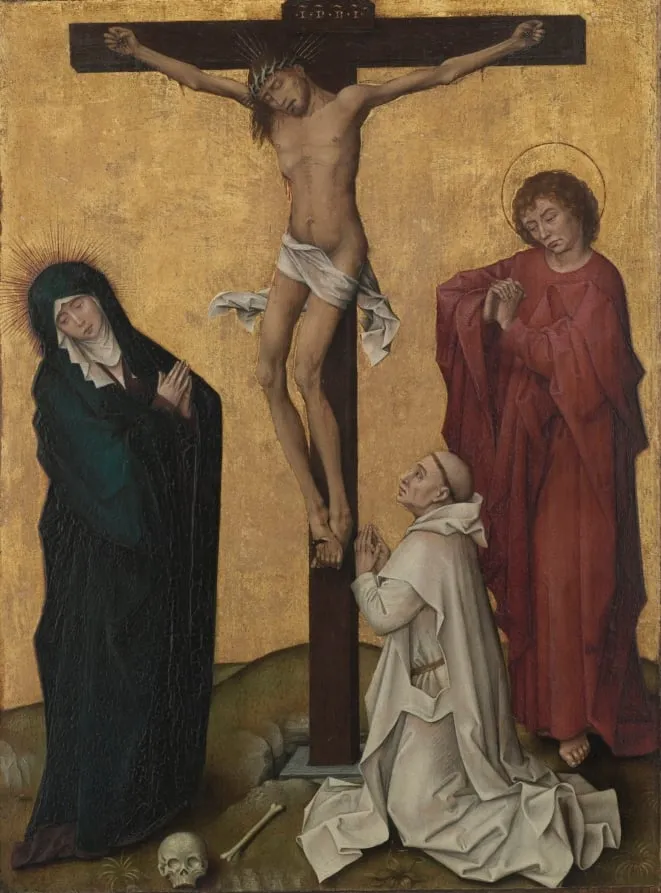
The Crucifixion with a Carthusian Monk is an unspecified painting by the Renaissance artist Rogier van der Weyden. It dates from 1460 and is held in the collection of the Cleveland Museum of Art.
About this work
Overview
This painting depicts a Carthusian monk in contemplative prayer before a Crucifixion scene, likely created for private devotion in a monk's cell within an unidentified monastery.
Subject & Meaning
The kneeling monk, dressed in the distinctive white Carthusian scapular, engages in serene, intimate communion with Christ on the cross, reflecting the order's deep devotion to the Passion.
Technique & Style
The work features a simplified background of gold leaf and a dark sky, with the figure of the monk rendered in a style that emphasizes calmness, possibly incorporating subtle techniques like sfumato to achieve soft, realistic edges.
History & Provenance
Originating from an unknown monastery, the panel's artist remains unidentified. It was likely part of the devotional imagery provided for each monk's cell, characteristic of the Carthusian practice.
Context
Created for the contemplative environment of a Carthusian cell, this painting was meant for solitary, private prayer, aligning with the order's founding principles of isolation, silence, and strict religious observance since its establishment by Saint Bruno in 1084.
Artist & collection
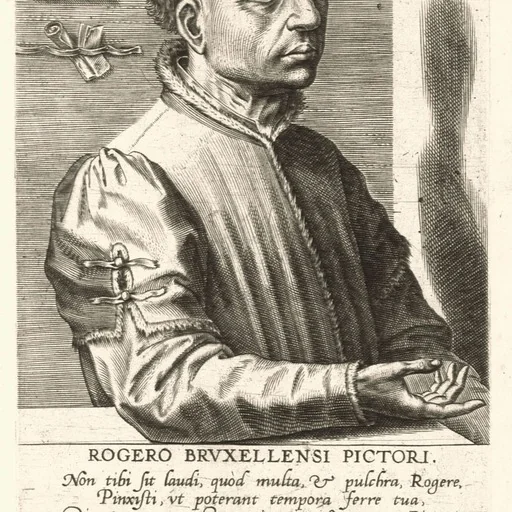
Artist
Rogier van der Weyden (Dutch: ; 1399 or 1400 – 18 June 1464), initially known as Roger de la Pasture (French: ), was an early Netherlandish painter whose surviving works consist mainly of religious triptychs,…