Artwork
Page from Tales of a Parrot (Tuti-nama): text page
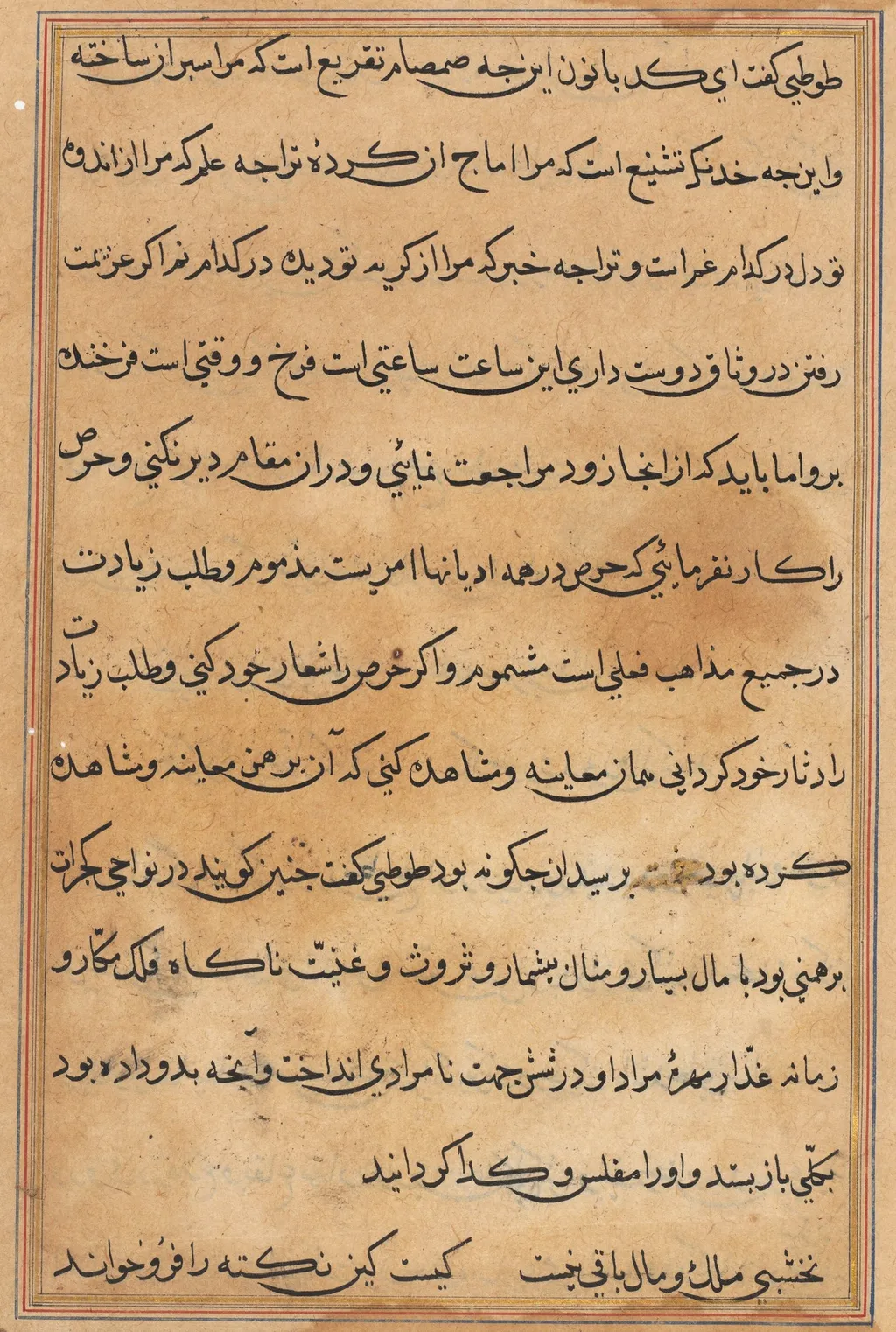
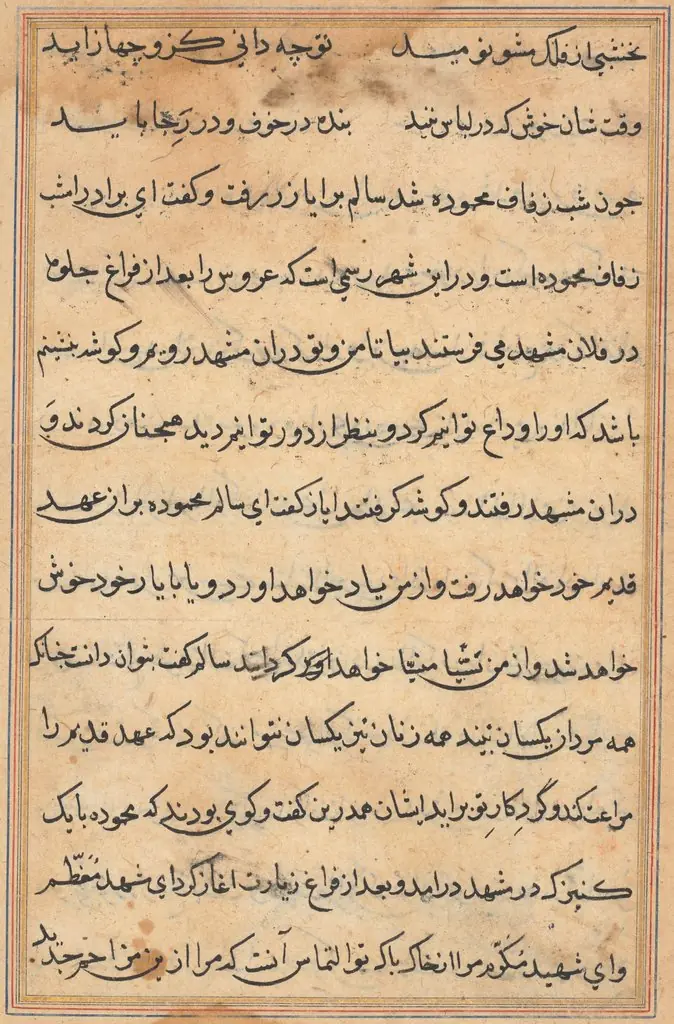
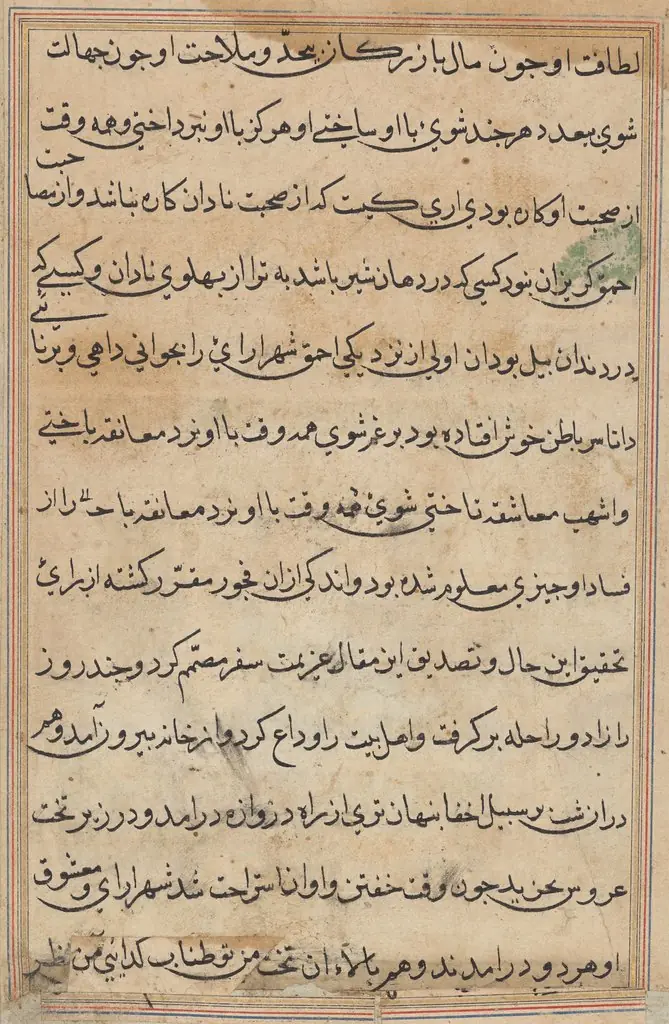
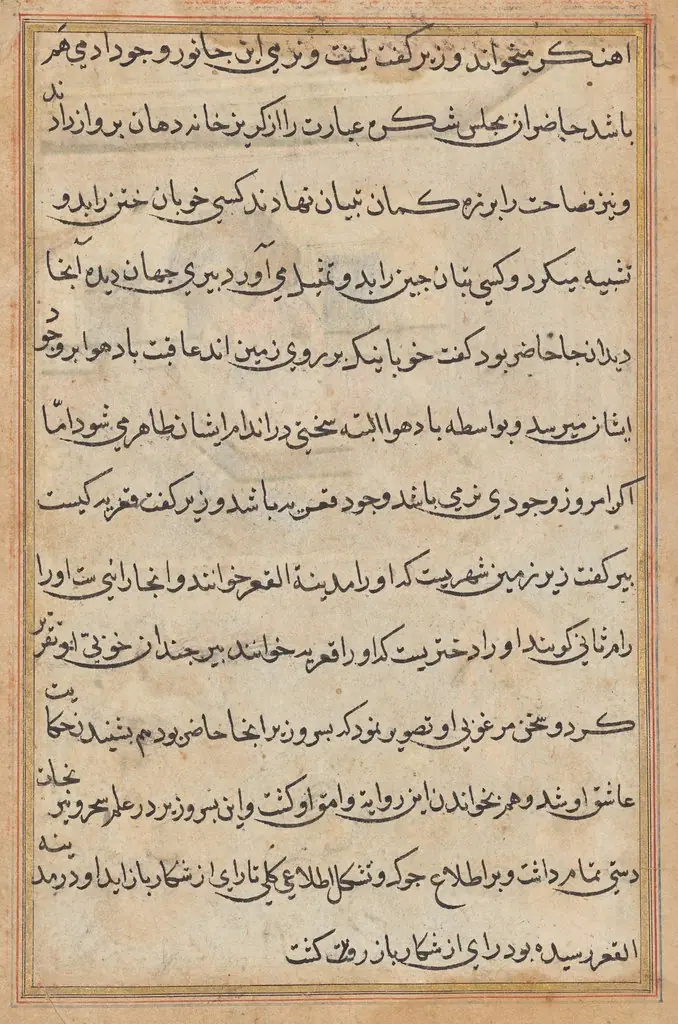
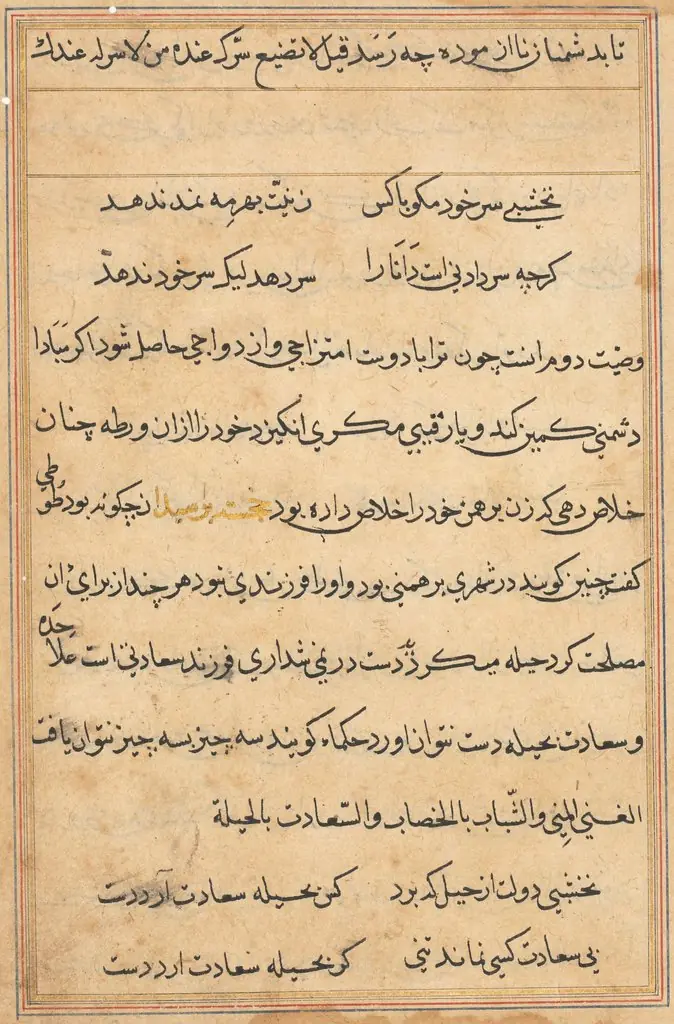
Page from Tales of a Parrot (Tuti-nama): text page is an unspecified painting. It dates from 1560 and is held in the collection of the Cleveland Museum of Art. This object is a single folio from the Persian manuscript known as the *Tuti‑nama* or *Tales of a Parrot*.
About this work
Overview
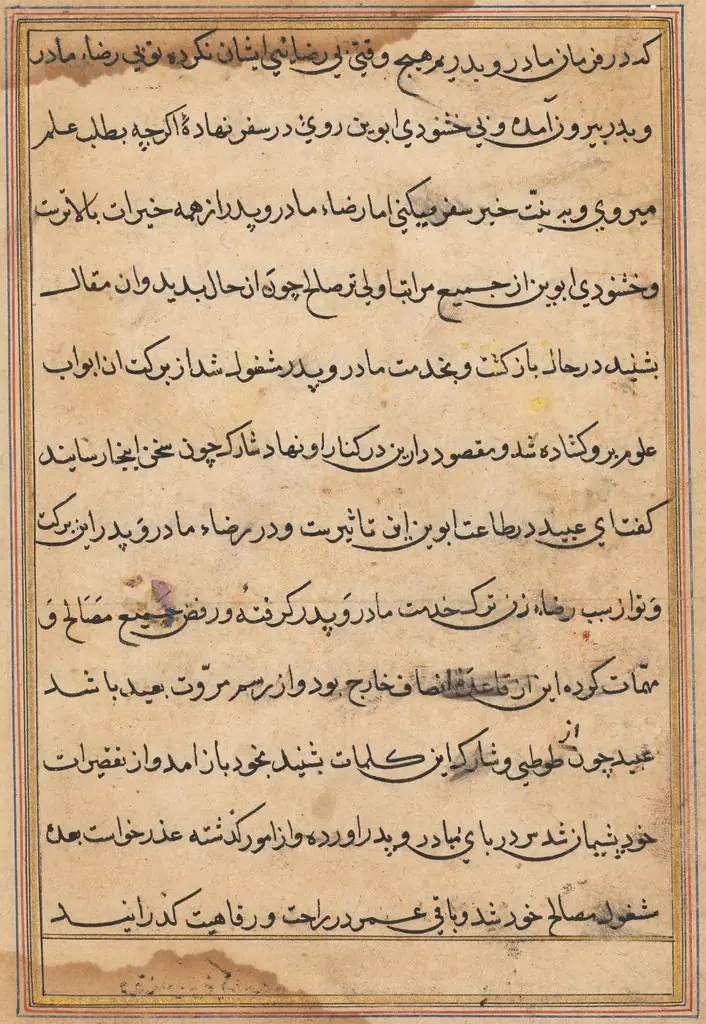
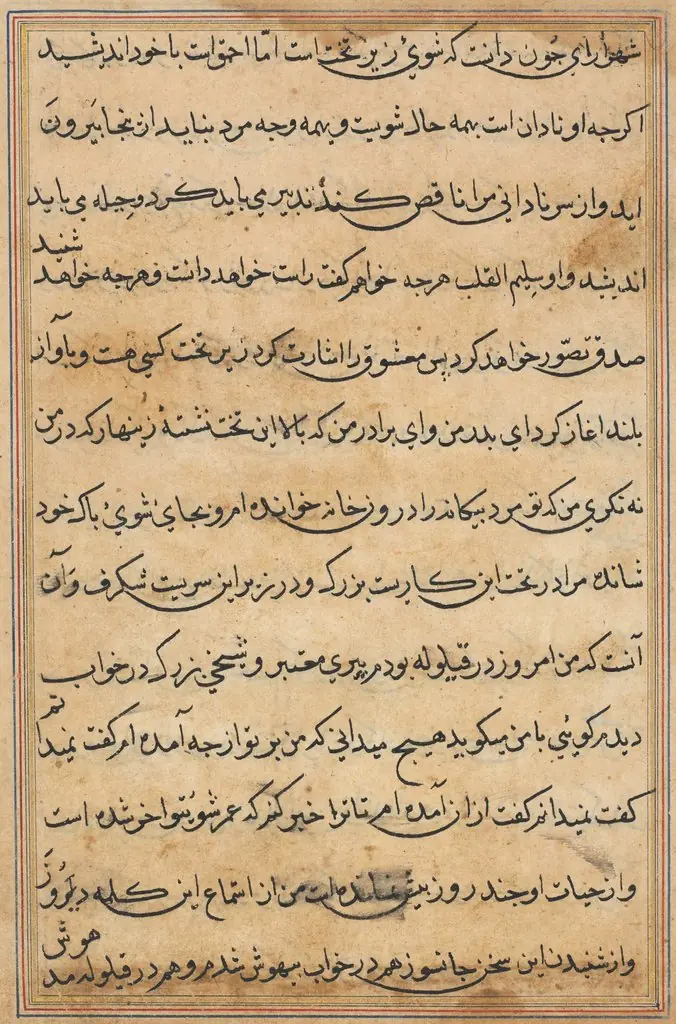
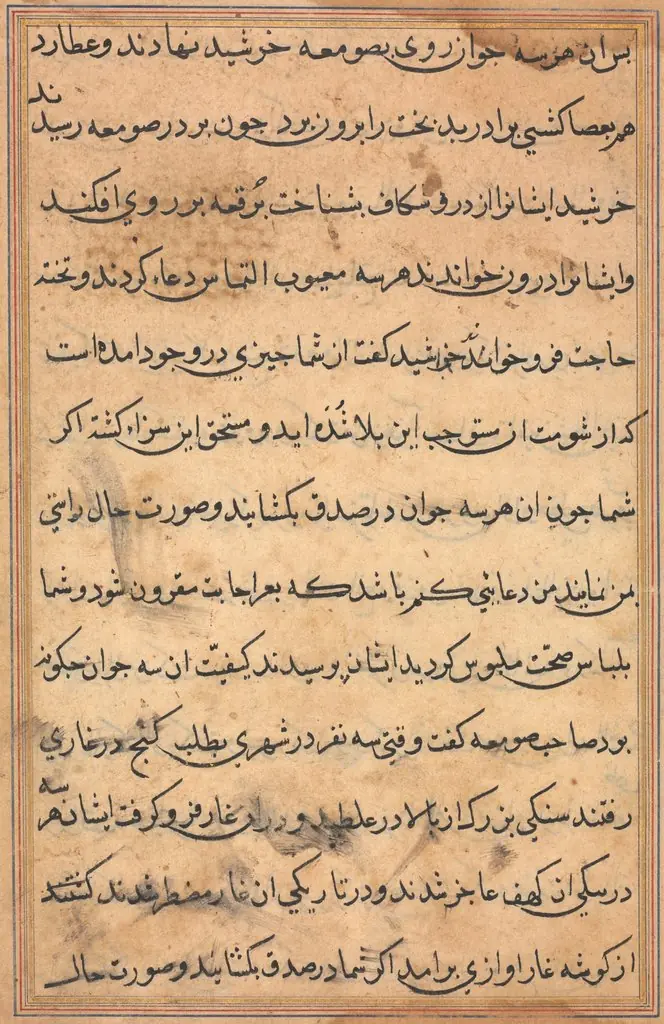
This object is a single folio from the Persian manuscript known as the *Tuti‑nama* or *Tales of a Parrot*. It consists of a page of text rendered in elegant calligraphy, framed by a decorative border that enhances its visual composition. The folio is part of the Cleveland Museum of Art’s collection and was originally produced for the Mughal prince Salim, later Emperor Jahangir.
Subject & Meaning
The *Tuti‑nama* is a collection of moral and didactic stories narrated by a parrot to a king, a literary tradition that blends entertainment with ethical instruction. The page displayed contains a segment of this narrative, its content intended to convey virtues such as wisdom and justice, reflecting the courtly interest in moral exempla during the Mughal era.
Technique & Style
The calligraphic text is executed in a single ink hue, employing a flowing, cursive script that balances legibility with ornamental grace. The border surrounding the text is composed of fine linear motifs, adding a subtle decorative frame without overwhelming the script. The overall design emphasizes harmony between text and ornament, characteristic of high‑quality Persian manuscript production.
History & Provenance
Commissioned for Prince Salim in the early 17th century, the folio remained within the Mughal court before eventually entering the European art market. It was acquired by the Cleveland Museum of Art, where it now serves as a representative example of Mughal manuscript art and the cultural exchanges that brought such objects to Western collections.
Artist & collection

 Page from Tales of a Parrot (Tuti-nama): text page
 Page from Tales of a Parrot (Tuti-nama): text page
 Page from Tales of a Parrot (Tuti-nama): text page
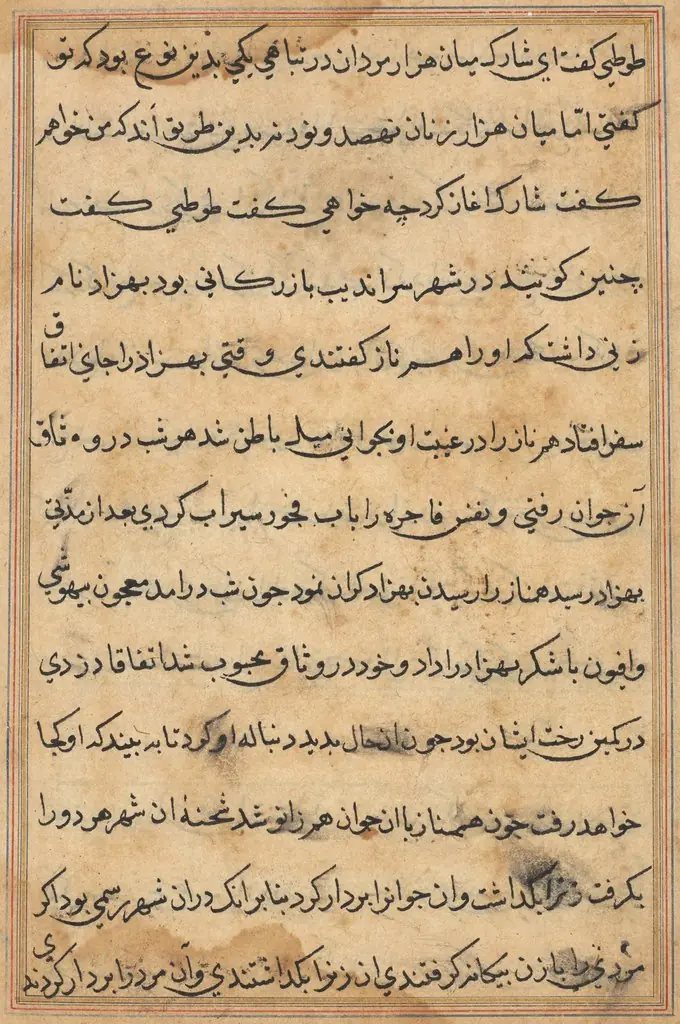 Page from Tales of a Parrot (Tuti-nama): text page
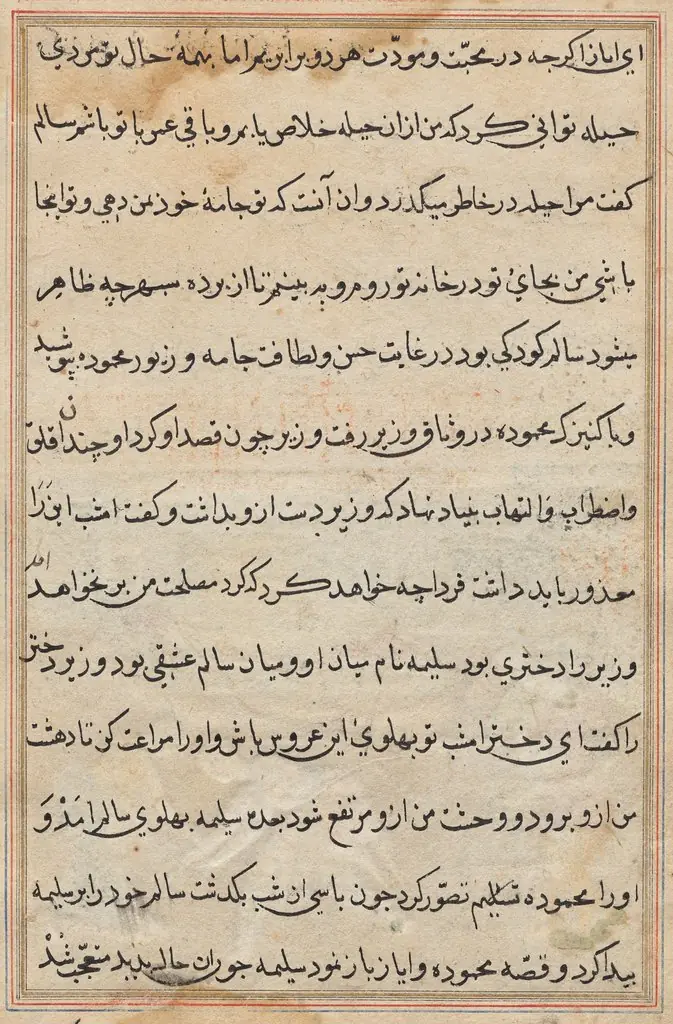 Page from Tales of a Parrot (Tuti-nama): text page
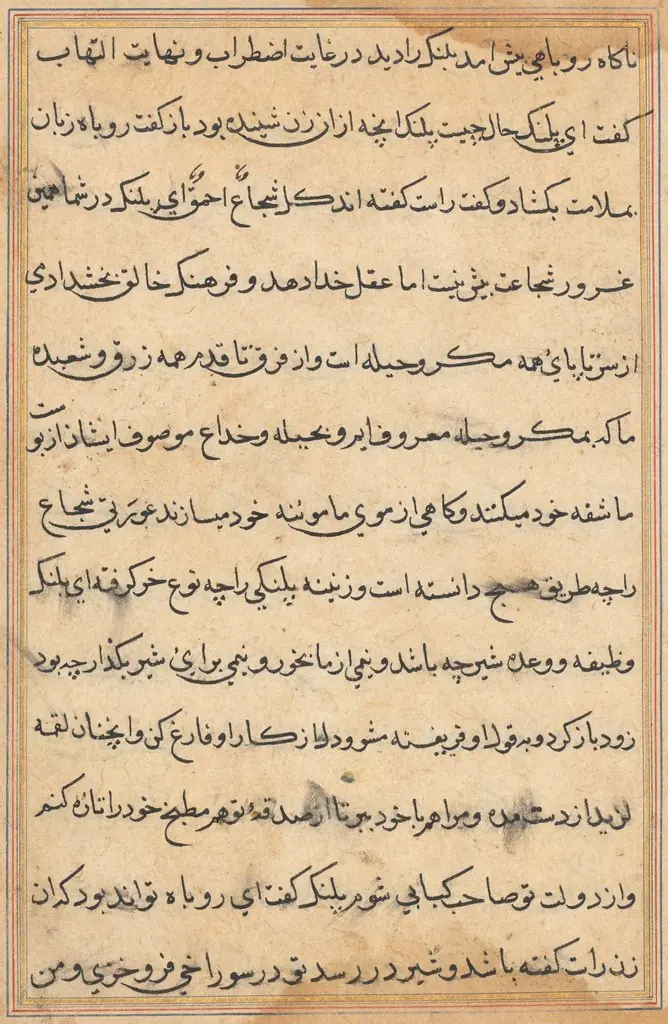 Page from Tales of a Parrot (Tuti-nama): text page
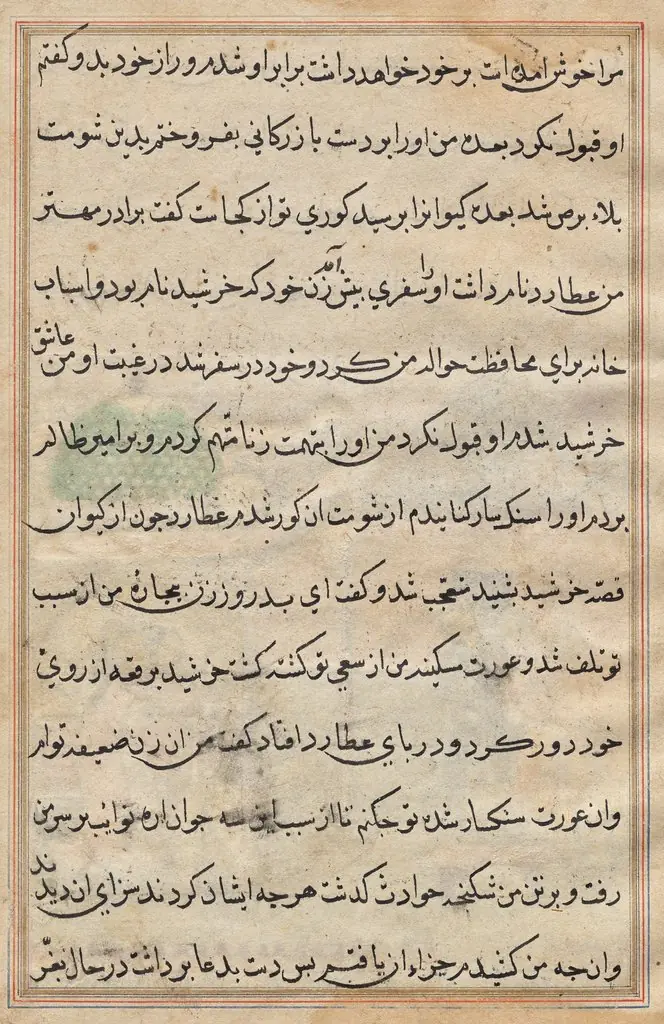 Page from Tales of a Parrot (Tuti-nama): text page