Artwork
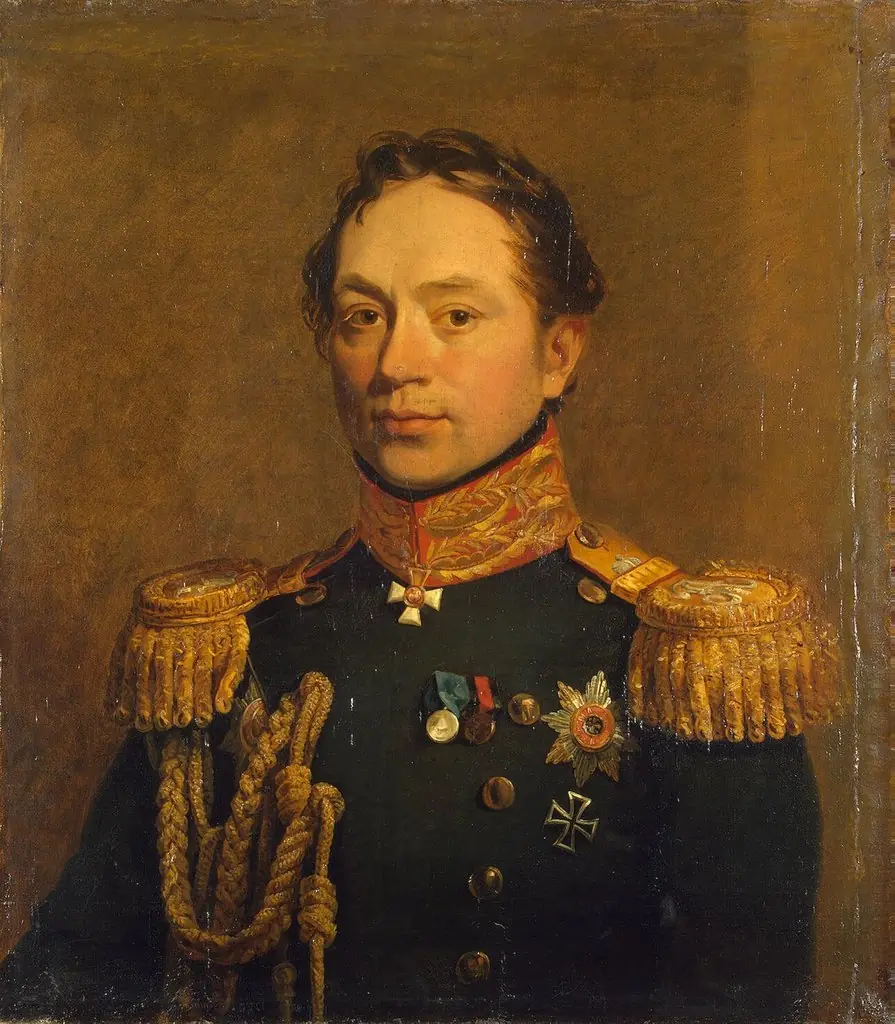
Portrait of Baron G.V. Rosen
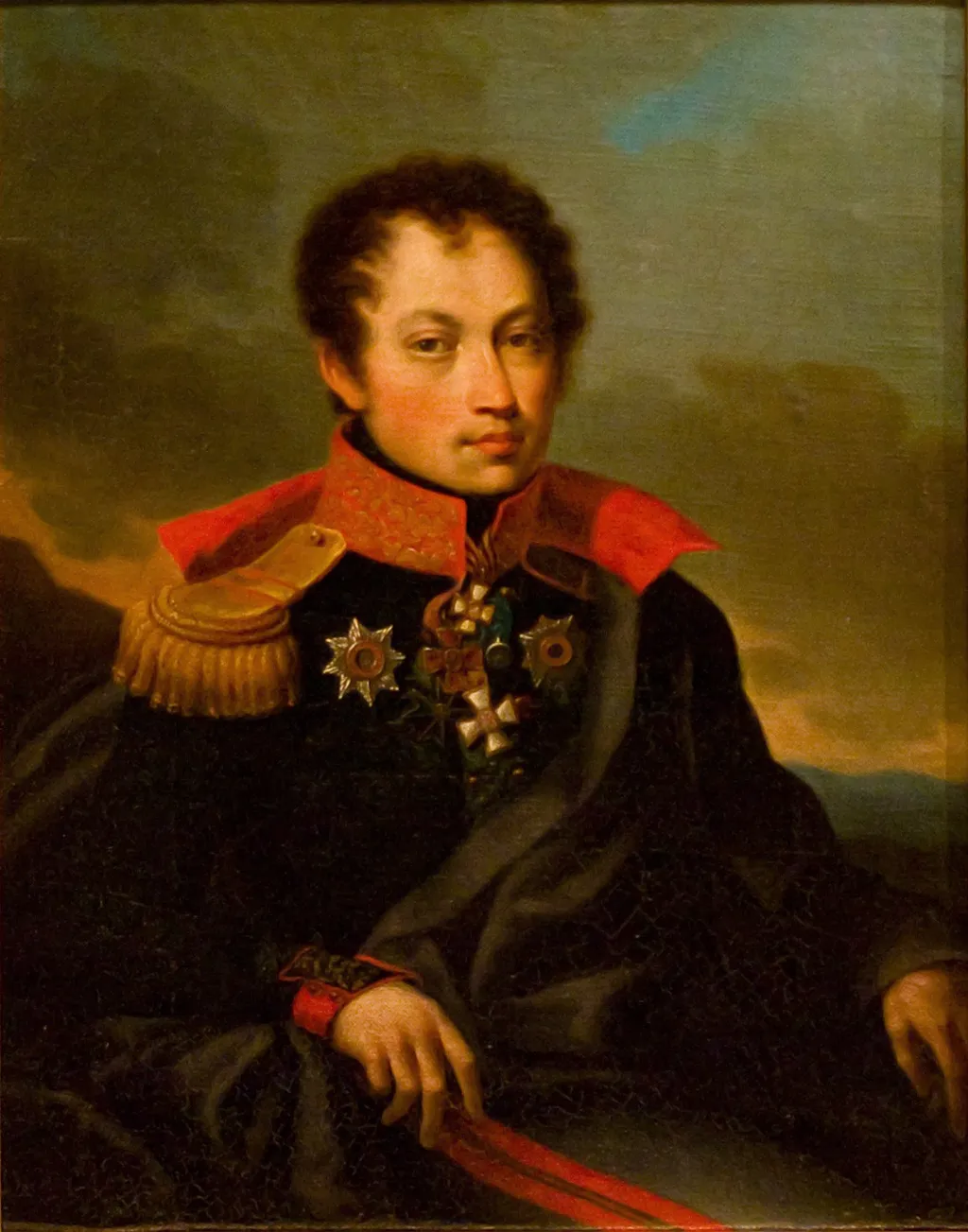
Portrait of Baron G.V. Rosen is an oil painting by the Biedermeier artist Unknown. It dates from 1817 and is held in the collection of the Hermitage Museum. This oil painting depicts Baron G.
About this work
Overview
The lighting is carefully controlled to emphasize his facial features and the texture of his attire, creating a strong sense of three-dimensionality.
This oil painting depicts Baron G.V. Rosen, a Russian military officer, in full uniform. The composition is tightly focused on his figure, set against a deep, unadorned background that eliminates distractions. The lighting is carefully controlled to emphasize his facial features and the texture of his attire, creating a strong sense of three-dimensionality. The restrained setting directs attention entirely to the subject’s presence and status.
Subject & Meaning
Baron Rosen is portrayed in his military regalia, adorned with gold medals and a black sash, symbols of rank and service. The uniform’s rich details suggest his high standing within the imperial hierarchy. His expression is composed, neither overtly proud nor subdued, reflecting the dignity expected of his position. The portrait functions as a formal record of authority, aligning with 19th-century conventions of official portraiture in Russia.
Technique & Style
The artist employs chiaroscuro to model the figure with dramatic contrasts between light and shadow. Light falls sharply on the face and shoulders, lifting them from the dark background, while the folds of the coat and metallic embellishments catch subtle highlights. Brushwork is precise but not overly refined, balancing realism with a sense of immediacy. The technique enhances the subject’s physical presence without embellishment.
History & Provenance
The portrait was likely commissioned during Rosen’s service in the Russian imperial court, possibly in the mid-19th century. It remained within family or state collections until entering a public museum’s holdings. Documentation is limited, but its formal style and subject suggest official patronage. No records indicate significant alterations or reworkings after its completion.
Context
This portrait aligns with the tradition of Russian aristocratic and military portraiture prevalent in the 1800s, where attire and insignia conveyed social and political identity. Artists of the period often worked under state or noble patronage, producing images that reinforced hierarchy and duty. The plain background reflects a shift toward psychological realism, moving away from elaborate settings toward focused individual representation.
Legacy
The portrait endures as a representative example of mid-19th-century Russian official portraiture. It illustrates how visual cues—uniform, lighting, posture—were used to communicate status without overt symbolism. While not widely exhibited outside specialized collections, it remains a valuable reference for studying the intersection of military identity and artistic convention in imperial Russia.
Artist & collection

 Domestic Scene
 Giacomo and Cardinal Marco, investing Andrea, Abbot of San Zeno, with his Benefice
 The Nymph of Fontainebleau
 Portrait of a Woman
 Madonna and Child with Saints in the Enclosed Garden
 Venus and Minerva
 Family Group of Four on Sofa
 Wall painting from Room H of the Villa of P. Fannius Synistor at Boscoreale
 Portrait of Major General I.I. Sabir
 Portrait of Alexey N. Bakhmetev (1774-1841) (1st)
 Portrait of Moisey I. Karpenko (1775-1854)
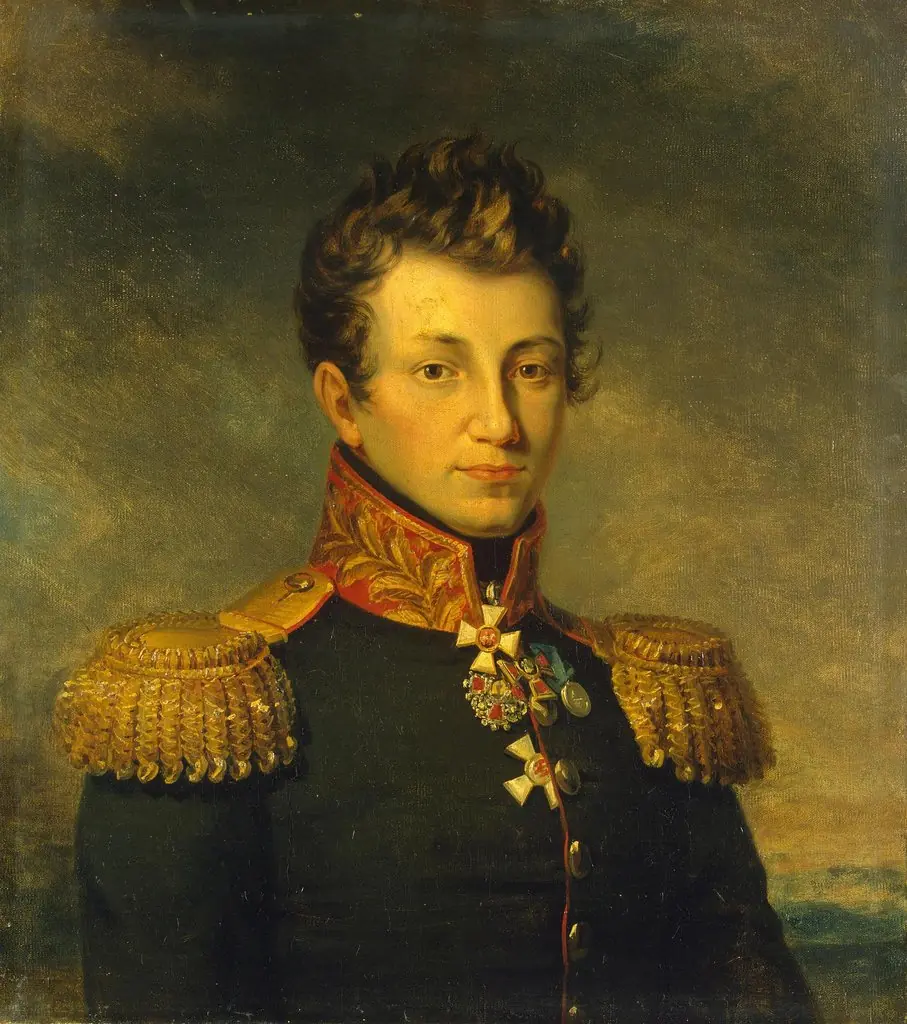 Portrait of Nikolai D. Myakinin (1787-1814)
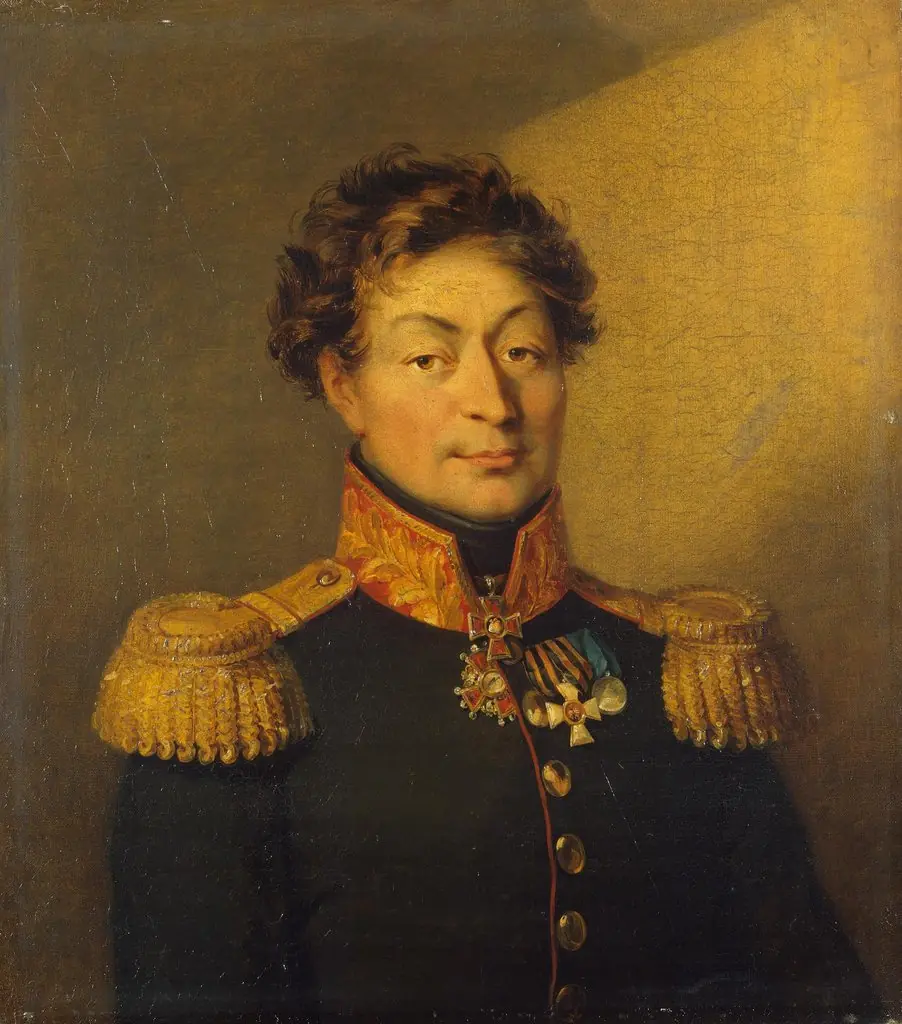 Portrait of Mikhail M. Volkov (1776-1820)
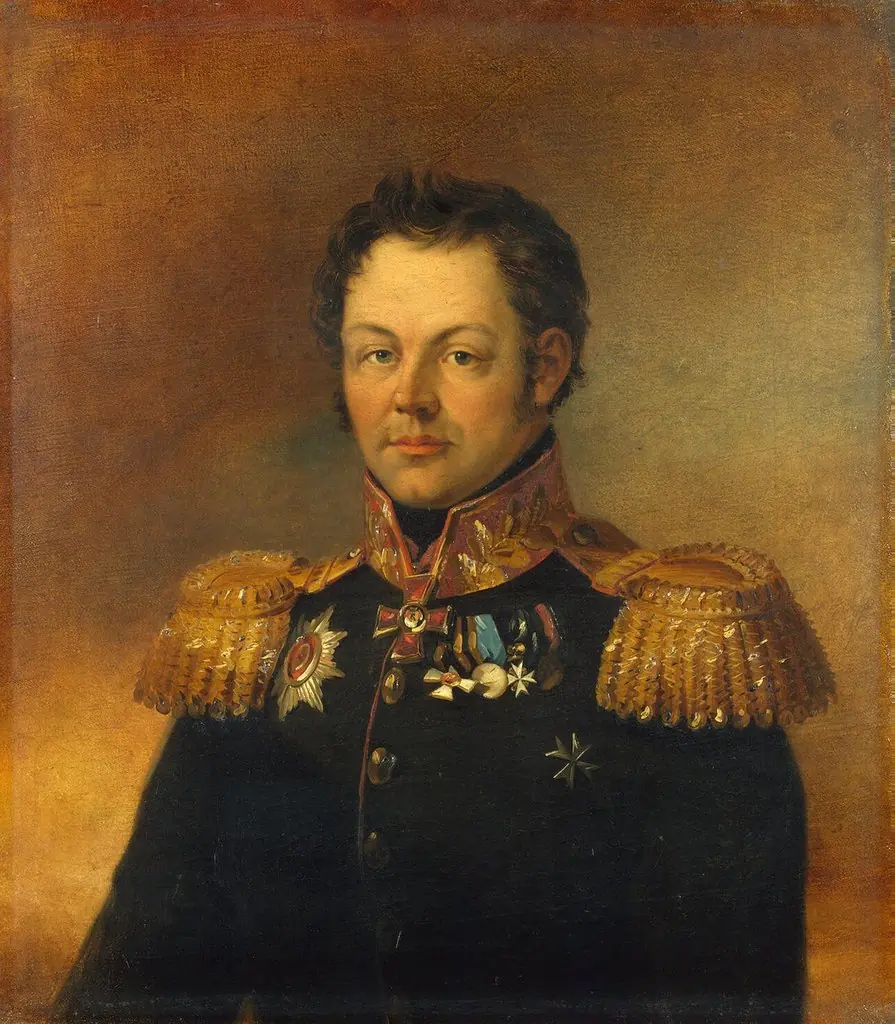 Portrait of Alexander E. Pyker (1776-1834)
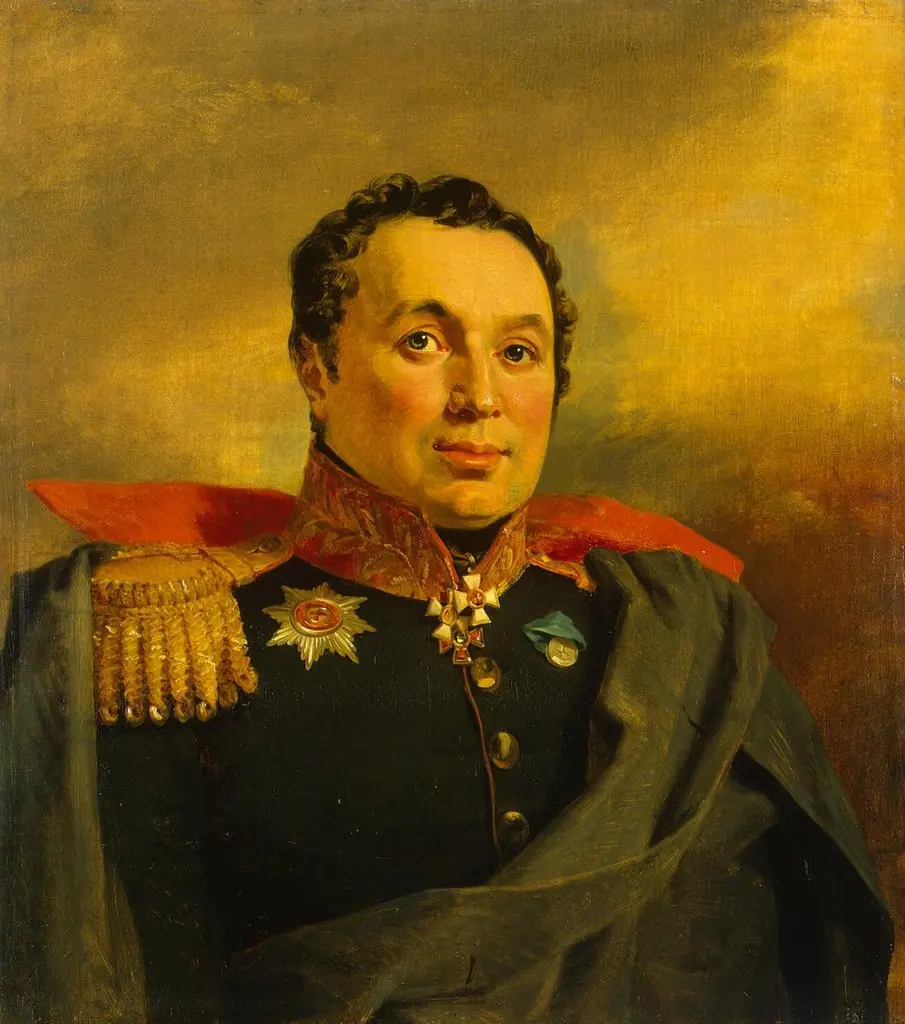 Portrait of Afanasy I. Krasovsky (1781-1843)
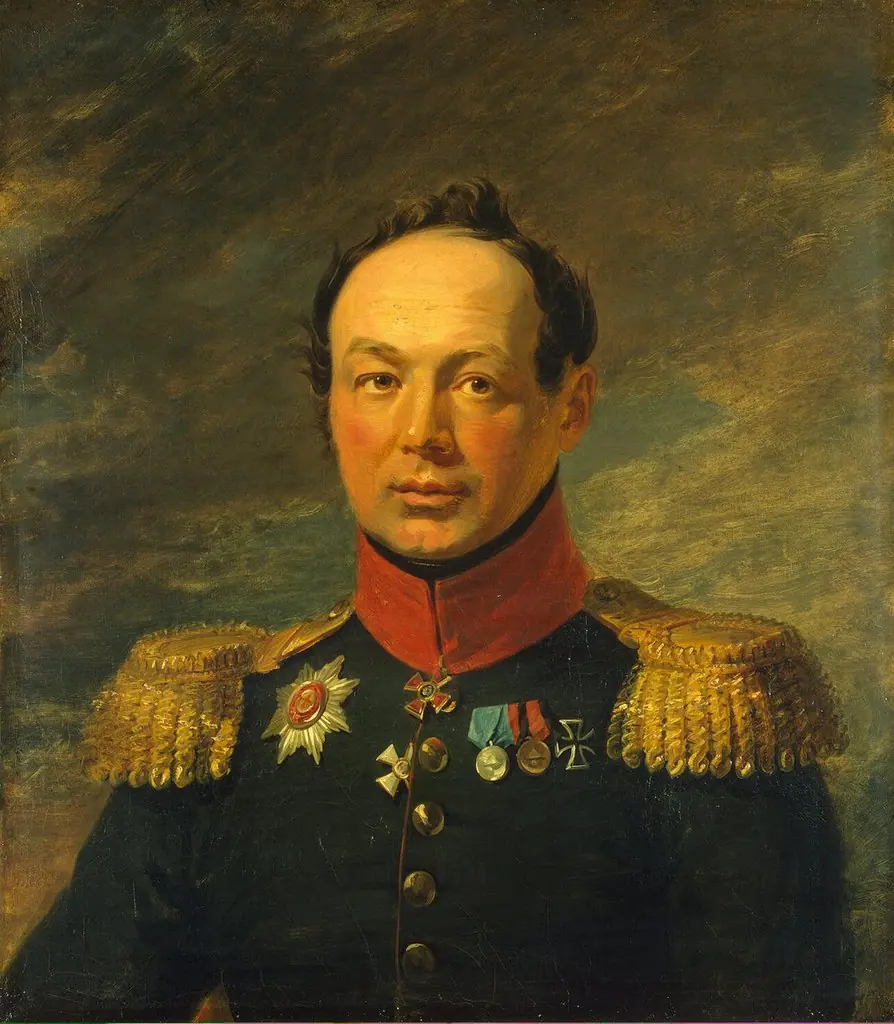 Portrait of Ivan A. Nabokov (1787-1852)
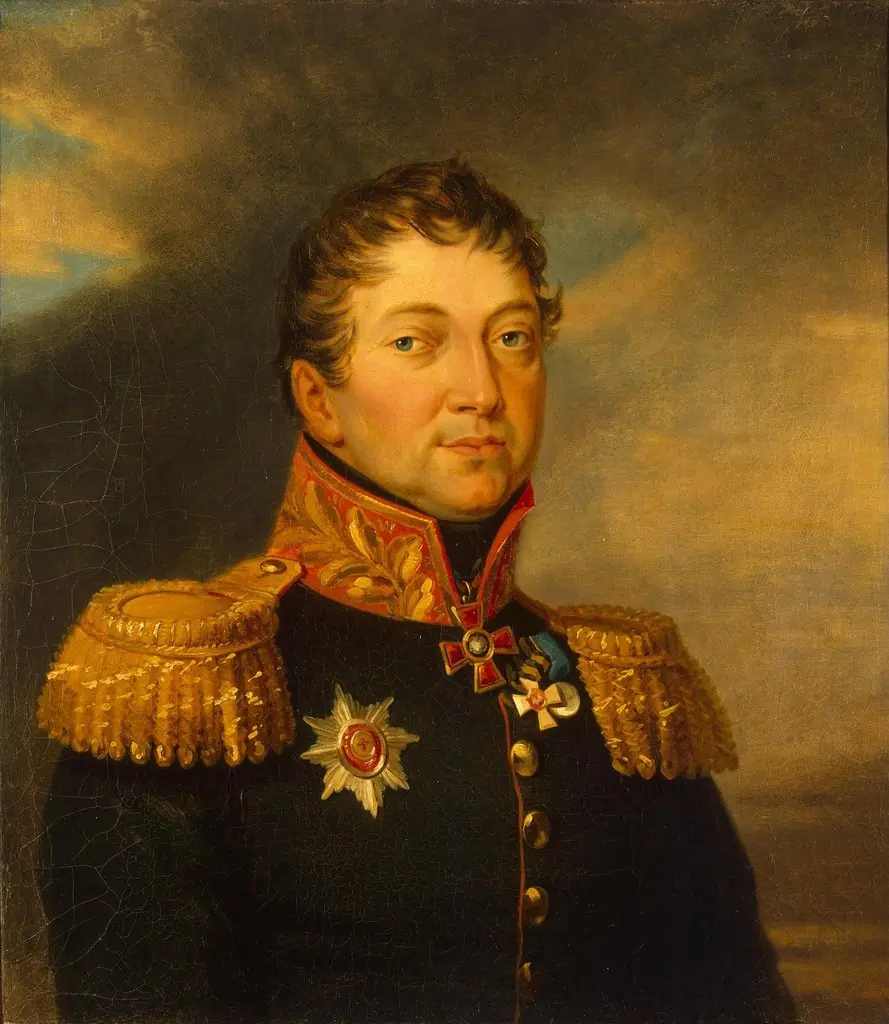 Portrait of Otto F. von Knorring (1759-1812)
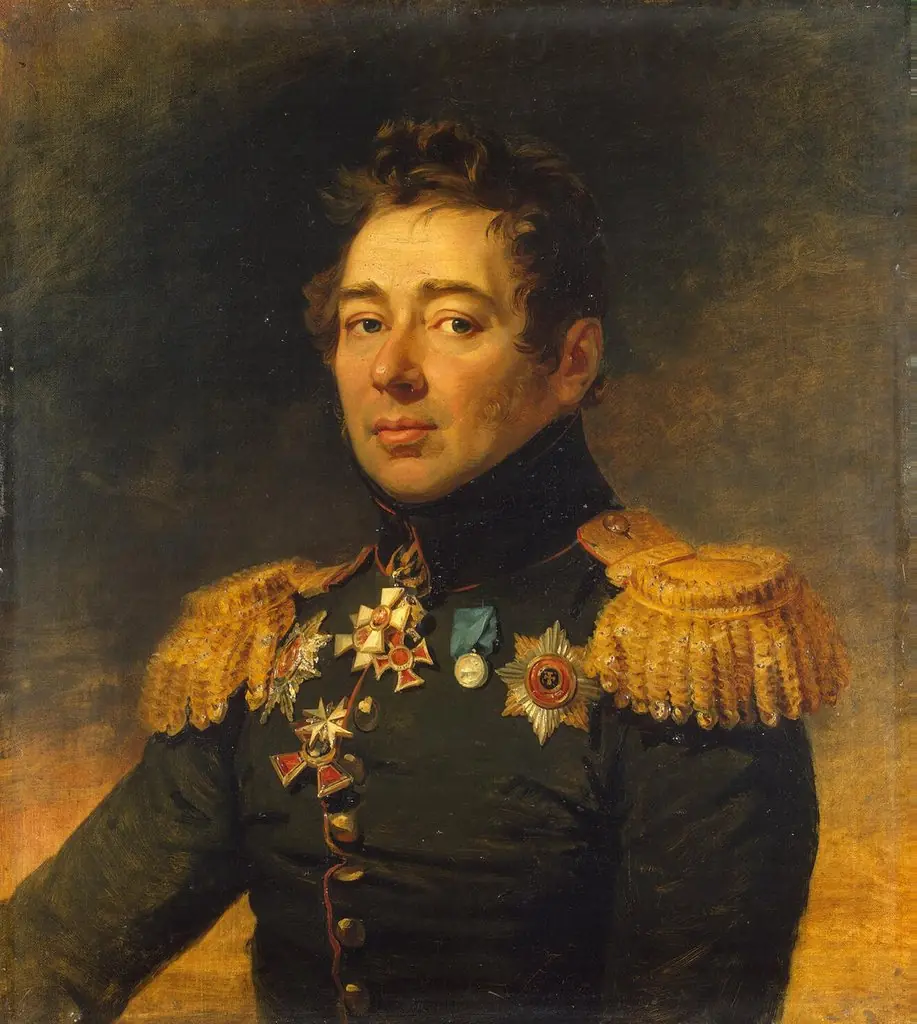 Portrait of Alexey P. Nikitin (1777-1858)
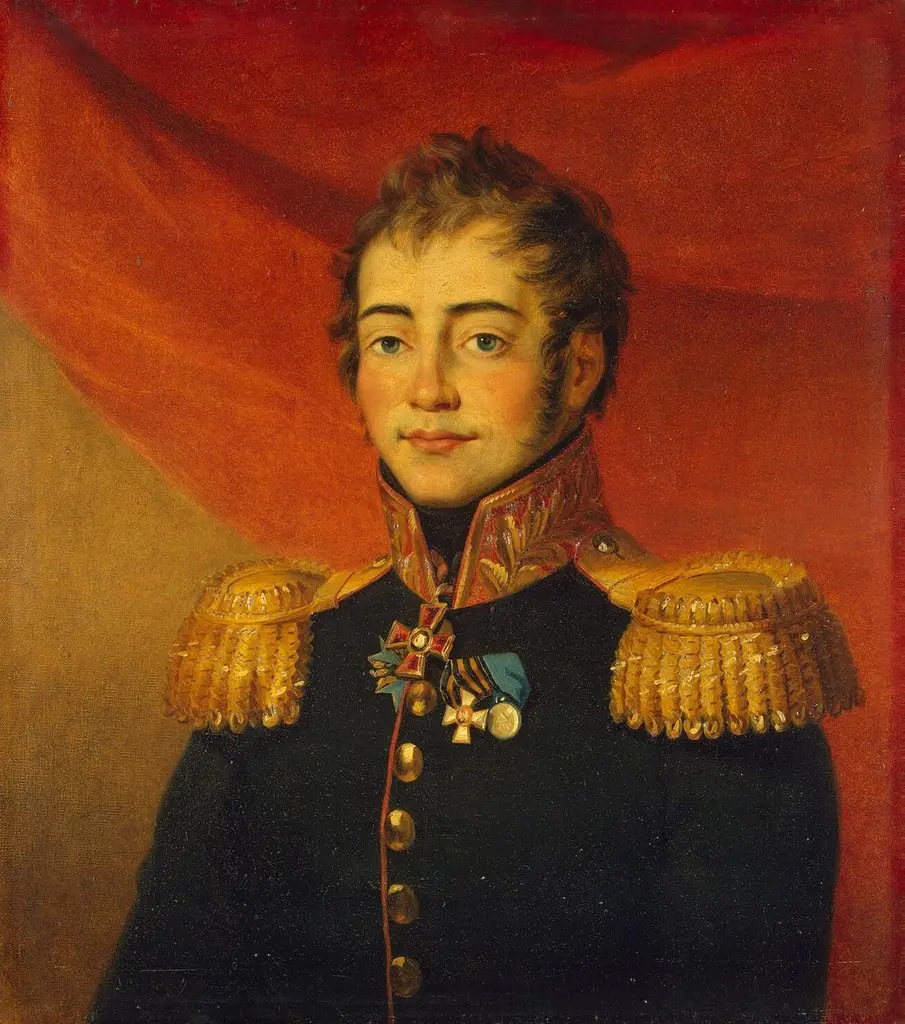 Portrait of Dmitry P. Lyapunov (1775-1821)
 Portrait of Grigory V. Rosen (1782-1841) (1st)