Artwork
Mogao Christian painting
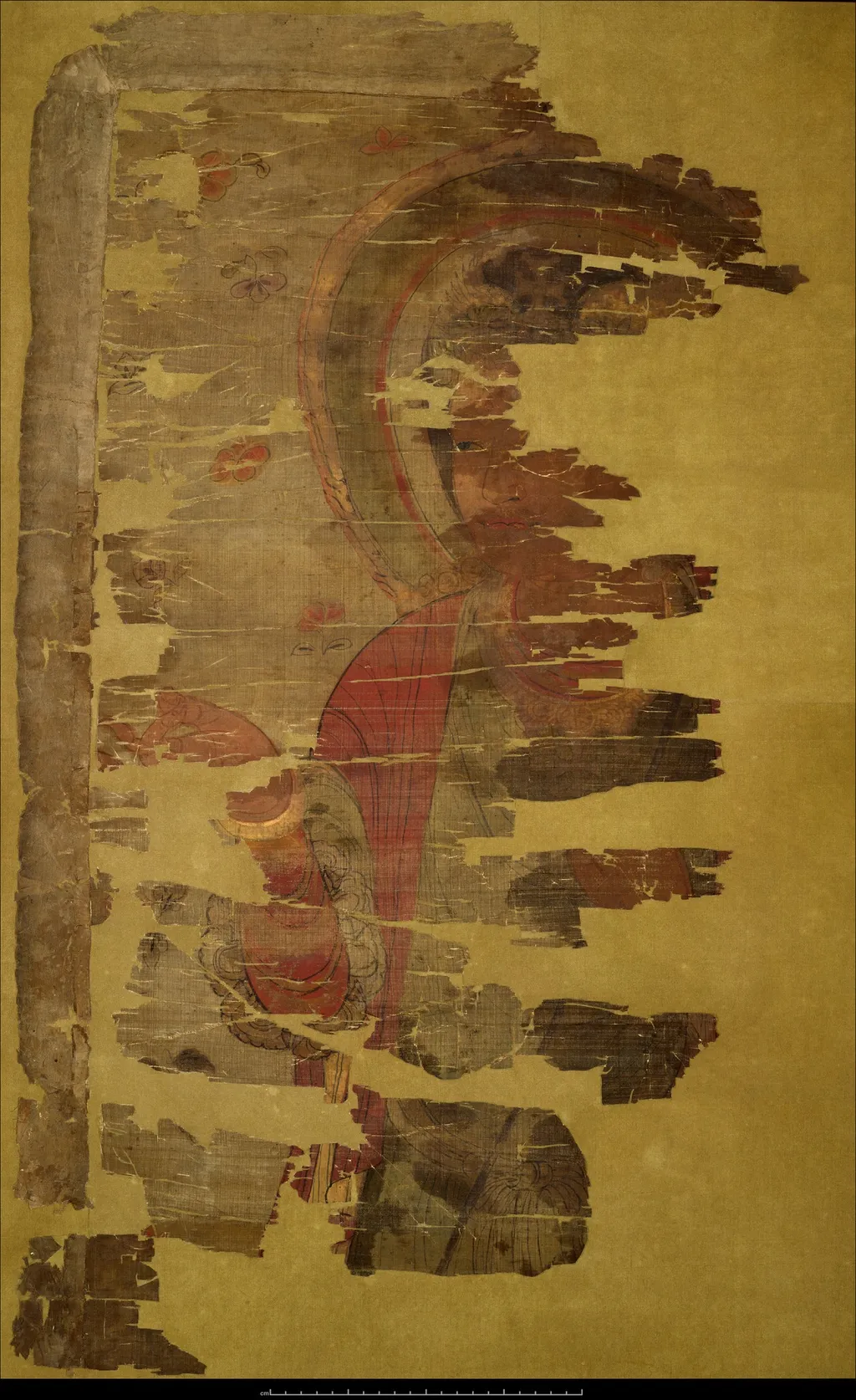
Mogao Christian painting is an unspecified painting by the Byzantine icon painting artist Unknown. It dates from 900 and is held in the collection of the British Museum. The fragment is a silk painting from the late ninth century, depicting a solitary figure surrounded by a luminous halo.
About this work
The medium is unknown, but the piece shows a haloed man with crosses on his head and chest, thought to be a Christian figure linked to the Church of the East.
Title: Mogao Christian painting is a fragmentary silk work from the end of the 9th century. The medium is unknown, but the piece shows a haloed man with crosses on his head and chest, thought to be a Christian figure linked to the Church of the East.
It comes from the Guiyi‑ruled Dunhuang under the Zhang family and was uncovered by archaeologist Aurel Stein in 1908 in the Library Cave of the Mogao Caves.
The painting is now in London. museum: British Museum.
Overview
The fragment is a silk painting from the late ninth century, depicting a solitary figure surrounded by a luminous halo. The figure bears small cross motifs on both the crown and the torso, suggesting a Christian identity. Though only a portion of the original work survives, the surviving image provides a rare glimpse into the visual language of early Christian communities in medieval China.
Subject & Meaning
Scholars identify the central figure as a Christian saint or perhaps a representation of Christ, based on the halo and the prominent cross symbols. The iconography aligns with the theological traditions of the Church of the East, which had established a presence along the Silk Road. The work likely functioned as a devotional image, intended to inspire reverence among believers in a multicultural environment.
Technique & Style
Executed on silk, the painting employs mineral pigments that retain a vivid yet subdued palette. The figure is rendered with delicate line work and a restrained use of color, characteristic of Buddhist and Taoist mural traditions adapted for Christian subjects. The halo and cross motifs are stylized in a manner that integrates local artistic conventions with foreign religious symbols.
History & Provenance
The piece originates from Dunhuang during the Guiyi period, when the Zhang family governed the oasis town. It was uncovered in 1908 by the explorer Aurel Stein within the Library Cave, a repository of manuscripts and artworks. After its removal, the fragment entered the collection of the British Museum, where it remains on display as part of the museum’s Silk Road holdings.
Context
During the ninth century, Dunhuang served as a cultural crossroads where Buddhist, Taoist, and foreign religious communities intersected. The presence of a Christian image reflects the active missionary activity of the Church of the East along the trade routes. This painting thus illustrates the syncretic artistic environment that allowed diverse faiths to adopt and adapt local visual idioms.
Artist & collection

 Domestic Scene
 Giacomo and Cardinal Marco, investing Andrea, Abbot of San Zeno, with his Benefice
 The Nymph of Fontainebleau
 Portrait of a Woman
 Madonna and Child with Saints in the Enclosed Garden
 Venus and Minerva
 Family Group of Four on Sofa
 Wall painting from Room H of the Villa of P. Fannius Synistor at Boscoreale
 Samantabhadra
 Three Heads (fragment of a wall painting)
 Buddha in the Preaching Attitude
 Guardian Kings: Dhrtarastra and Virupaksa
 Untitled
 Untitled
 Fragmentary Playing Card
 Myriad Chakrasamvara and Vajravarahi
 Untitled
 Portrait of Yan Emperor of the South
 Lohans
 Avalokiteshvara (Guanyin), the Bodhisattva of Compassion