Artwork
Portrait of Yan Emperor of the South
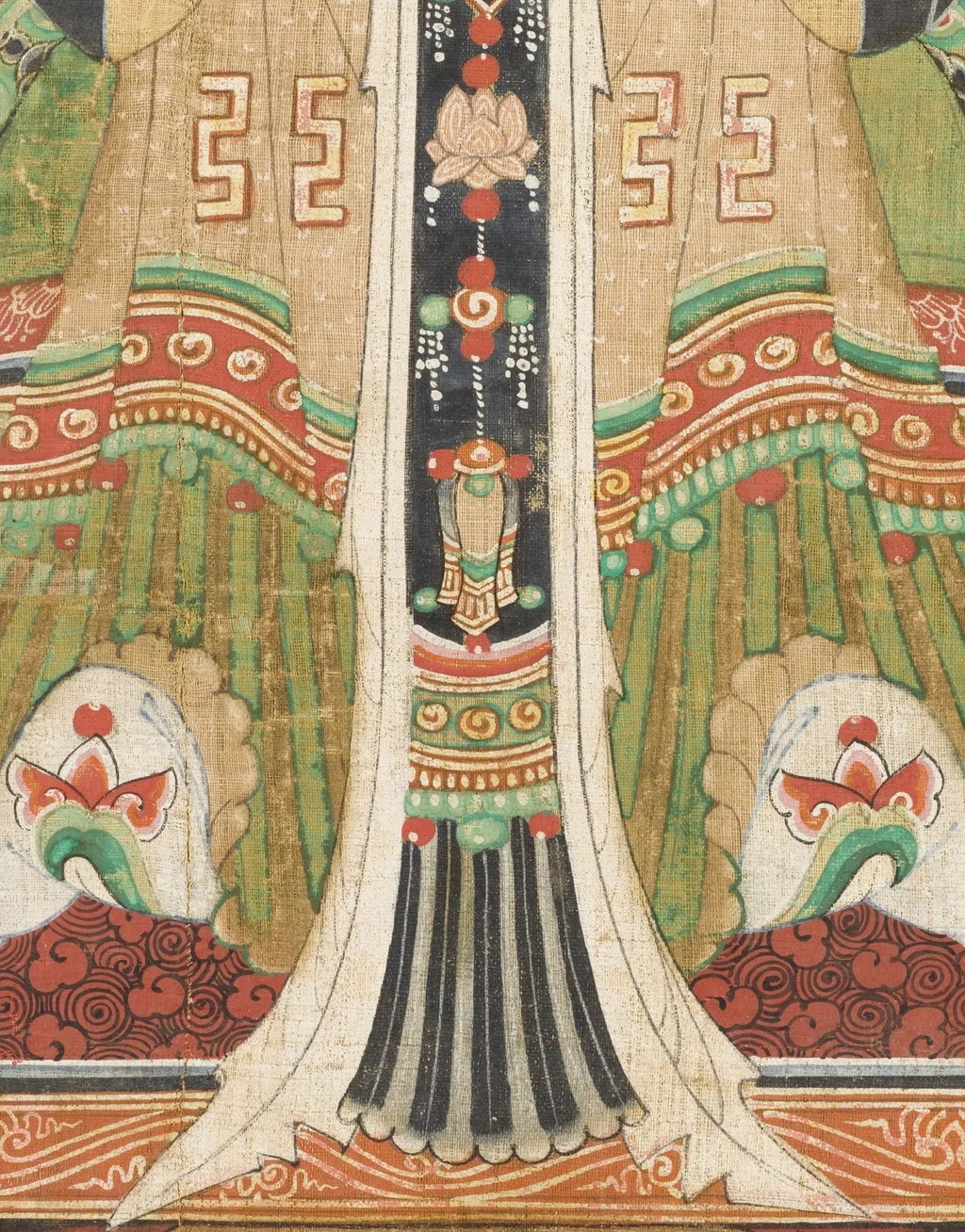
Portrait of Yan Emperor of the South is an unspecified painting by Unknown. It dates from 1750 and is held in the collection of the Los Angeles County Museum of Art. This painting depicts a figure identified as the Yan Emperor of the South, rendered in traditional Chinese court attire.
About this work
Overview
The artist employs subtle gradations and fine brushwork to suggest volume and texture, avoiding overt drama in favor of restrained solemnity.
This painting depicts a figure identified as the Yan Emperor of the South, rendered in traditional Chinese court attire. The composition emphasizes stillness and dignity, with the subject centered against a richly patterned background of green, red, and gold. The artist employs subtle gradations and fine brushwork to suggest volume and texture, avoiding overt drama in favor of restrained solemnity.
Subject & Meaning
The Yan Emperor of the South is a mythological ruler associated with fire, summer, and southern direction in ancient Chinese cosmology. The portrait conveys imperial authority through formal posture and regal garments, not through overt symbolism. The serene expression and composed stance reflect ideals of cosmic harmony and moral order attributed to legendary sage-kings.
Technique & Style
The artist uses fine, controlled brushstrokes to define the folds of the robe and the contours of the hat, creating a sense of weight and movement. Colors are applied in layered washes, allowing underlying tones to subtly show through. Background patterns are rendered with precision but remain secondary, directing focus to the figure’s presence and stillness.
History & Provenance
The painting’s origins are undocumented in public records, and no known artist or dynasty is definitively linked to its creation. It likely dates to the late imperial period, when mythological emperors were frequently depicted in ritual or scholarly contexts. Its survival suggests it was preserved within a private or temple collection, though its early ownership remains unknown.
Context
Portraits of legendary rulers like the Yan Emperor were not intended as historical likenesses but as embodiments of cosmological principles. They appeared in scholarly collections and ancestral halls, serving as visual anchors for Confucian and Daoist ideals of governance and natural order. This work aligns with a broader tradition of symbolic portraiture in Chinese art.
Legacy
The painting contributes to a visual language that links mythic authority with aesthetic restraint. While not widely reproduced or studied, it reflects enduring conventions in Chinese portraiture: the elevation of inner virtue over physical realism, and the use of color and pattern to signify spiritual rather than temporal power.
Artist & collection

 Domestic Scene
 Giacomo and Cardinal Marco, investing Andrea, Abbot of San Zeno, with his Benefice
 The Nymph of Fontainebleau
 Portrait of a Woman
 Madonna and Child with Saints in the Enclosed Garden
 Venus and Minerva
 Family Group of Four on Sofa
 Wall painting from Room H of the Villa of P. Fannius Synistor at Boscoreale
 Bodhisattva
 Buddhist Panel
 Shakyamuni with two attendants
 Spirit of a Noble Woman (Probably Princess Pari) and Attendant
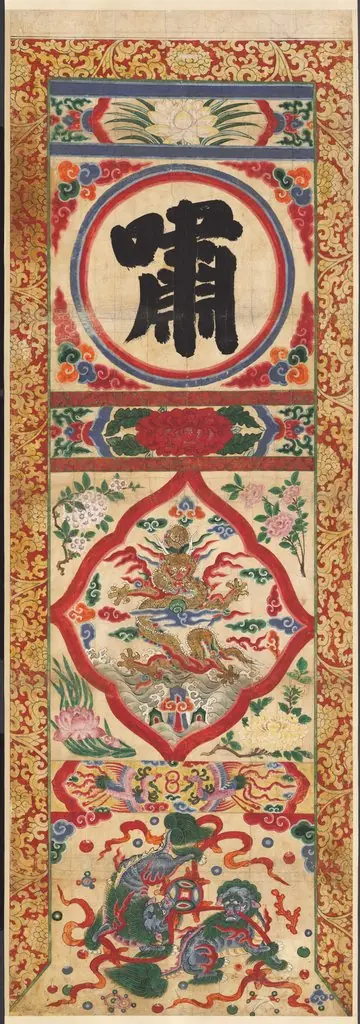 Painted Panel of Character "Whistle"
![The Guardian Generals of the Directions (Lokapalas) Dhritarashtra (East) [top] and Virudhaka (South) [bottom], by Unknown](https://artifactworldgallery.com/img/unknown--the-guardian-generals-of-the-directions-lokapalas-dhritarash--26a8da85b3fb4c5a-w320.webp) The Guardian Generals of the Directions (Lokapalas) Dhritarashtra (East) [top] and Virudhaka (South) [bottom]
The Guardian Generals of the Directions (Lokapalas) Dhritarashtra (East) [top] and Virudhaka (South) [bottom]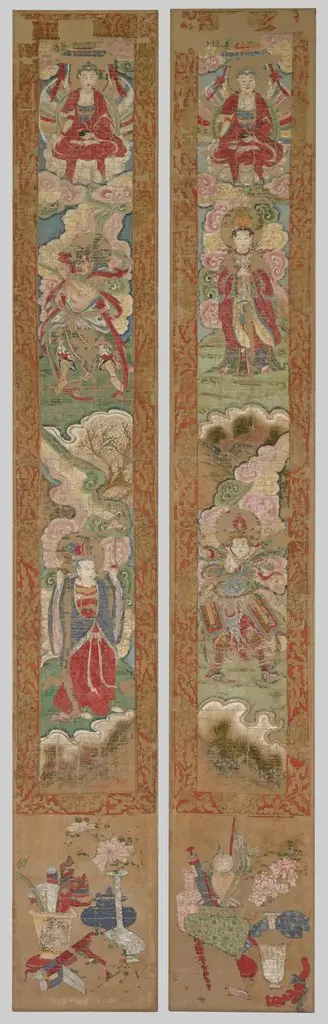 Buddhist Panel
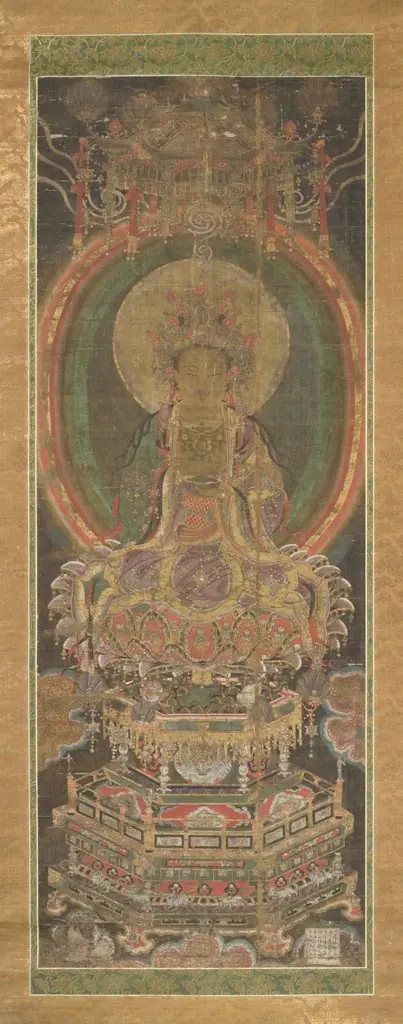 Avalokiteshvara (Guanyin), the Bodhisattva of Compassion
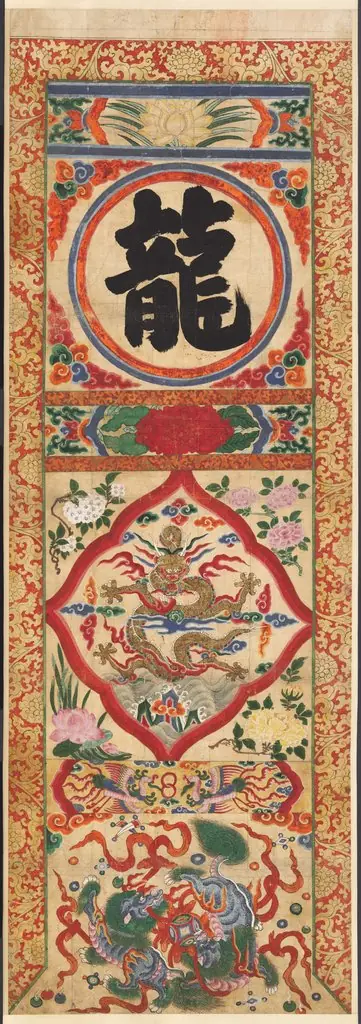 Painted Panel of Character "Dragon"
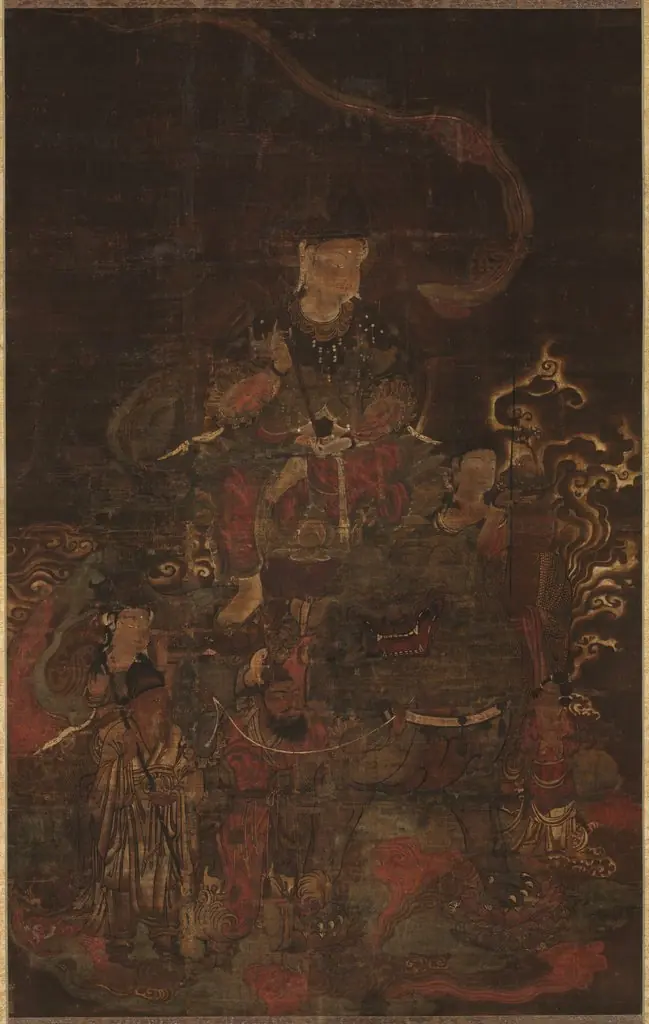 Monju Riding Lion with Attendants
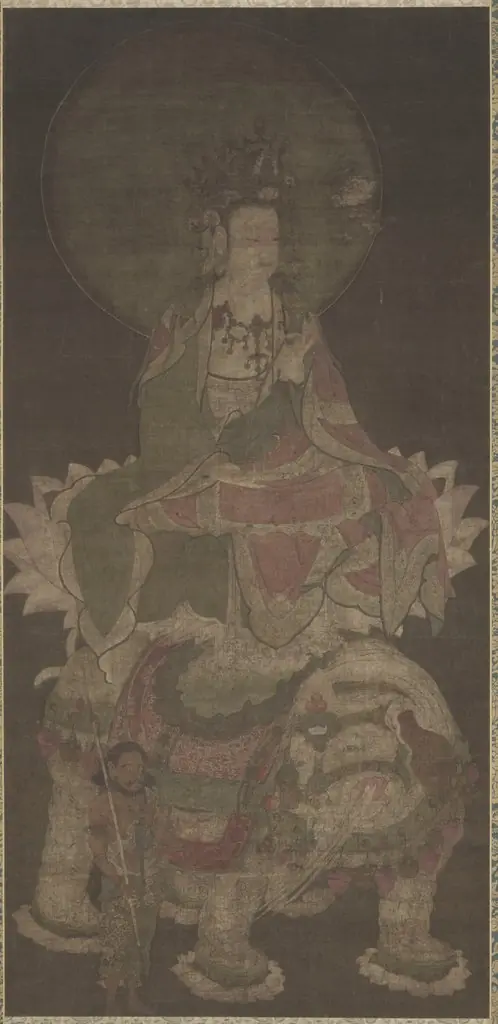 Samantabhadra
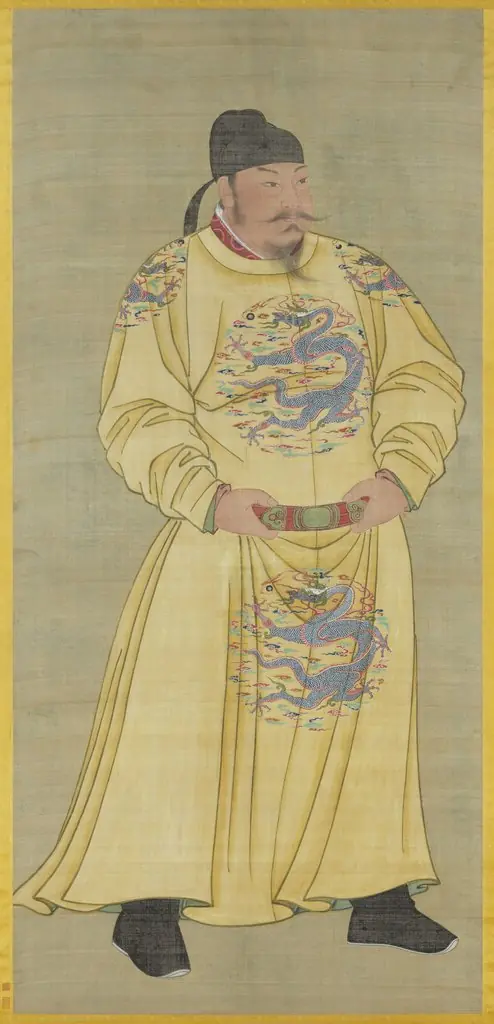 Standing Portrait of Emperor Tang Taizong (I)