Artwork
Portrait of Empress Catherine I
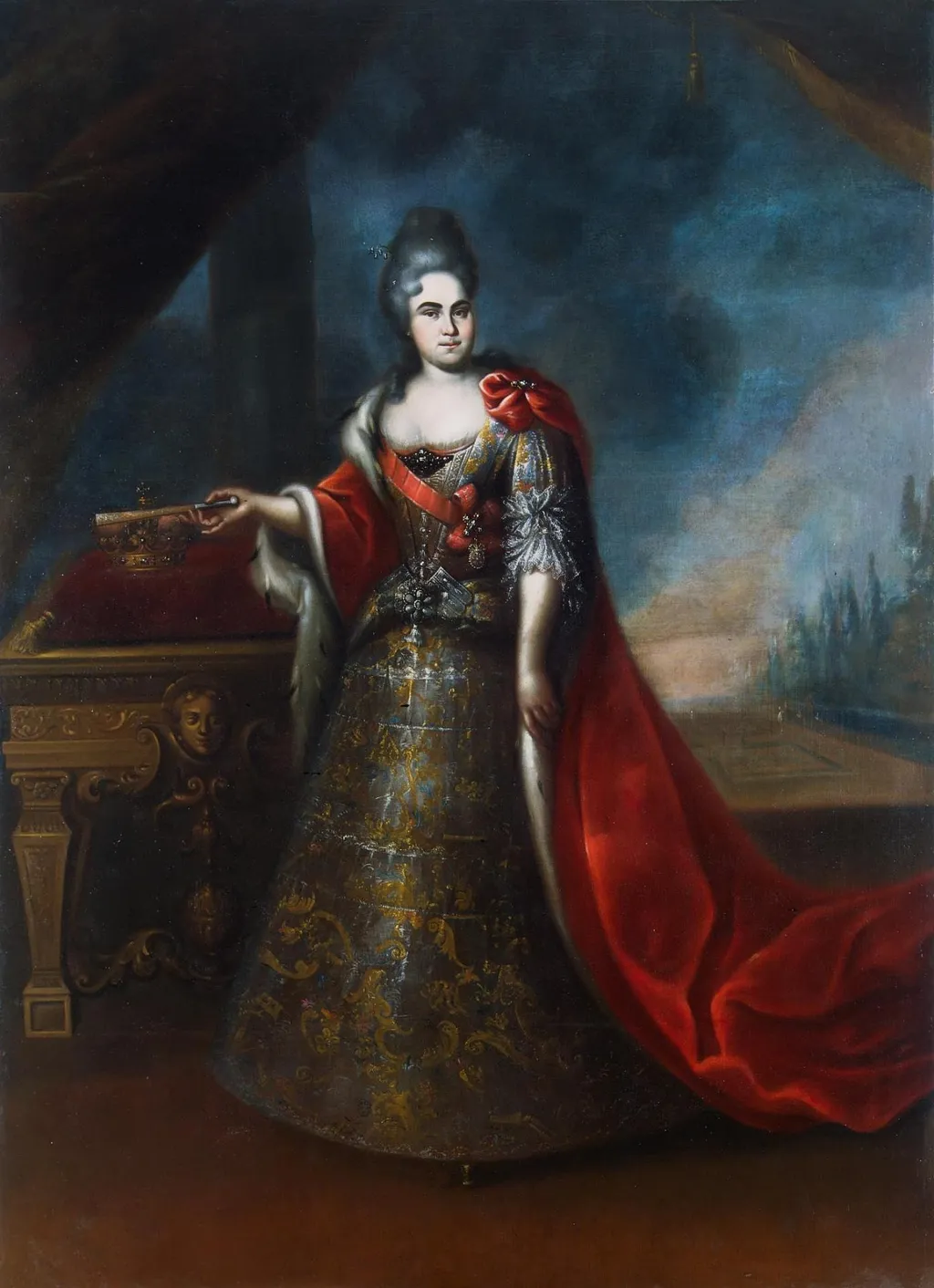
Portrait of Empress Catherine I is an oil painting by Unknown. It dates from 1724 and is held in the collection of the Hermitage Museum. This oil painting presents Empress Catherine I of Russia in formal attire, rendered with careful attention to texture and light.
About this work
Overview
The composition centers on her poised figure against a dark, muted background, emphasizing her presence through controlled illumination.
This oil painting presents Empress Catherine I of Russia in formal attire, rendered with careful attention to texture and light. The composition centers on her poised figure against a dark, muted background, emphasizing her presence through controlled illumination. The use of chiaroscuro enhances the three-dimensionality of her form and the luxurious materials of her clothing, directing focus toward her expression and the objects held in her hand.
Subject & Meaning
Catherine I, the second wife of Peter the Great and Russia’s first female ruler, is depicted in imperial regalia, conveying authority through symbolic elements. The gold and silver embroidery, red sash, and ornate bow signify her status and connection to imperial power. Her serious expression and restrained gesture suggest gravitas, aligning with the expectations of monarchical representation during her reign.
Technique & Style
The artist employs chiaroscuro to model the empress’s form, contrasting deep shadows with subtle highlights from a right-side light source. Fine brushwork captures the sheen of metallic thread and the weight of fabric, while the dark background isolates the figure and intensifies the luminosity of her attire. The rendering is precise but not overly decorative, favoring dignity over flamboyance.
History & Provenance
Created during Catherine I’s reign in the early 18th century, the portrait likely served as an official image to affirm her legitimacy as ruler. It may have been commissioned for a state residence or diplomatic gift. The painting remained within Russian imperial collections, later entering a state museum, where it continues to document the visual culture of the Petrine era.
Context
In early 18th-century Russia, portraiture became a tool of political assertion following Peter the Great’s westernizing reforms. Catherine’s image reflects the fusion of European courtly conventions with Russian imperial identity. Her depiction in elaborate Western-style dress, rather than traditional attire, signals alignment with European monarchies and the new cultural direction of the state.
Legacy
The portrait stands as one of the earliest formal depictions of a Russian empress, setting a precedent for subsequent imperial imagery. Its restrained elegance and emphasis on authority over ornament influenced later court portraits. As a historical document, it captures the transition of Russian monarchy into a more centralized, European-style autocracy.
Artist & collection

 Domestic Scene
 Giacomo and Cardinal Marco, investing Andrea, Abbot of San Zeno, with his Benefice
 The Nymph of Fontainebleau
 Portrait of a Woman
 Madonna and Child with Saints in the Enclosed Garden
 Venus and Minerva
 Family Group of Four on Sofa
 Wall painting from Room H of the Villa of P. Fannius Synistor at Boscoreale
 Portrait of E. Biron (nee Princess Yusupova)
 Bildnis einer Fürstin
 Portrait of Johanna Elisabeth, Princess of Anhalt-Zerbst
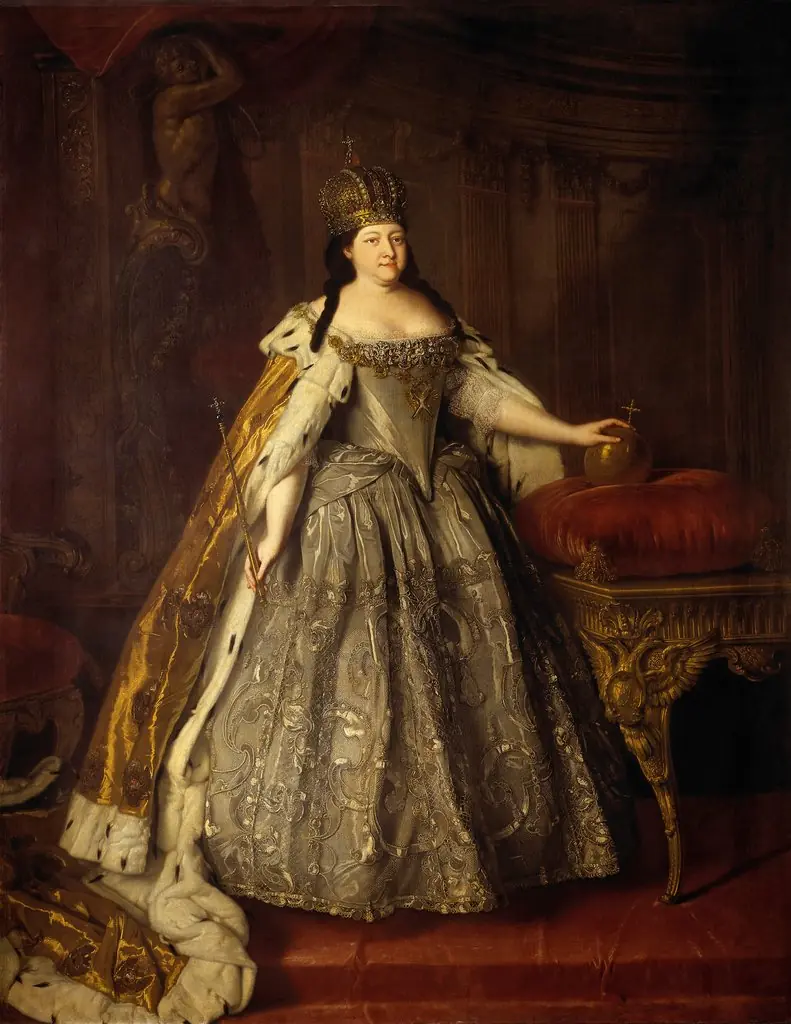 Portrait of Empress Anna Ioannovna
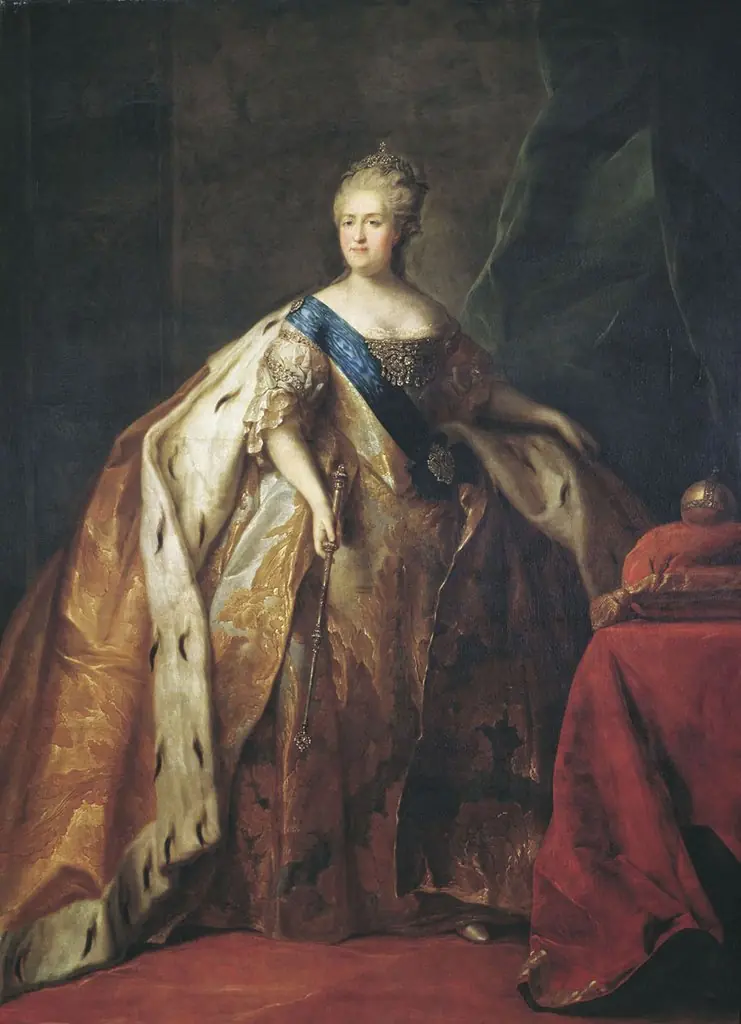 Portrait of Catherine II of Russia (1729-1796)
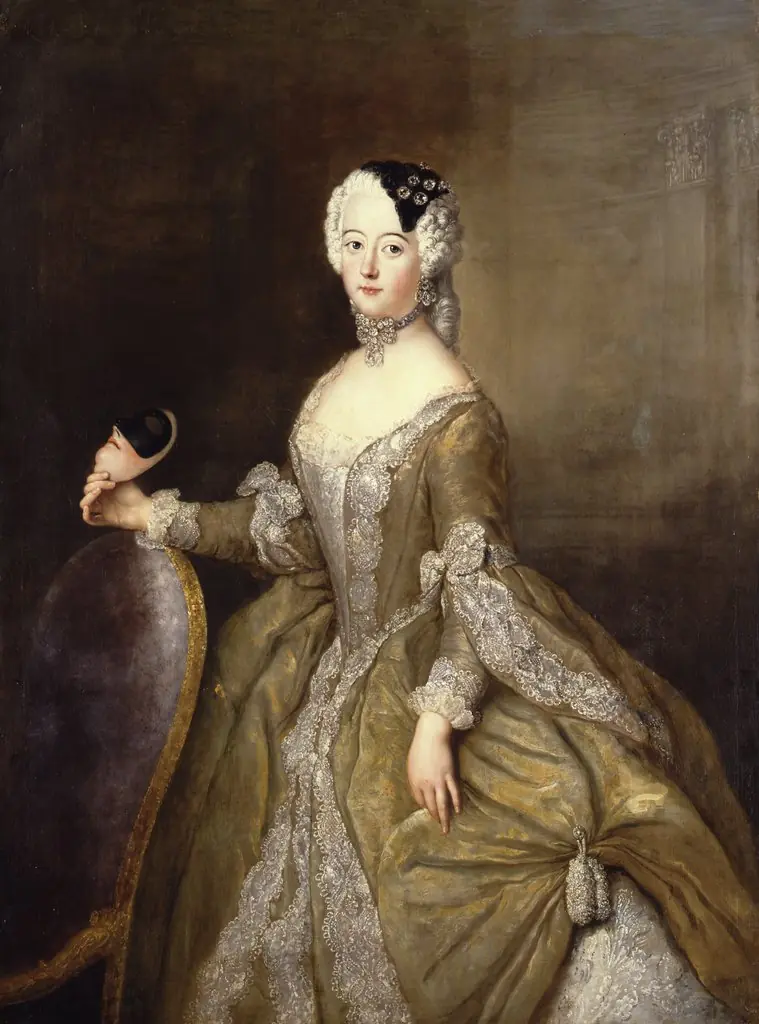 Princess Luise Ulrike of Prussia (1720-1782)
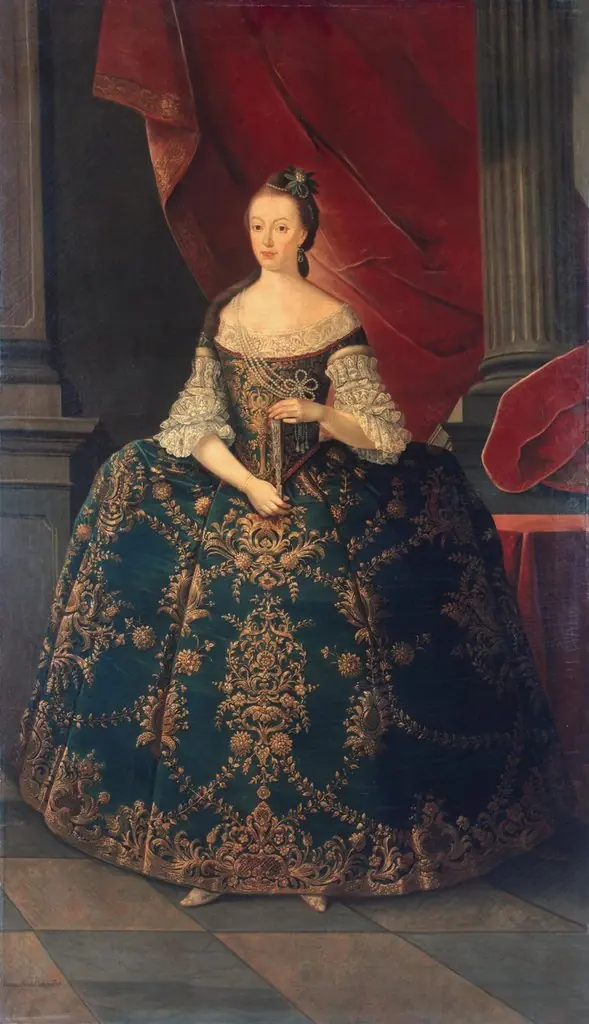 Portrait of Maria Francisca, Princess of Brasil and Beira
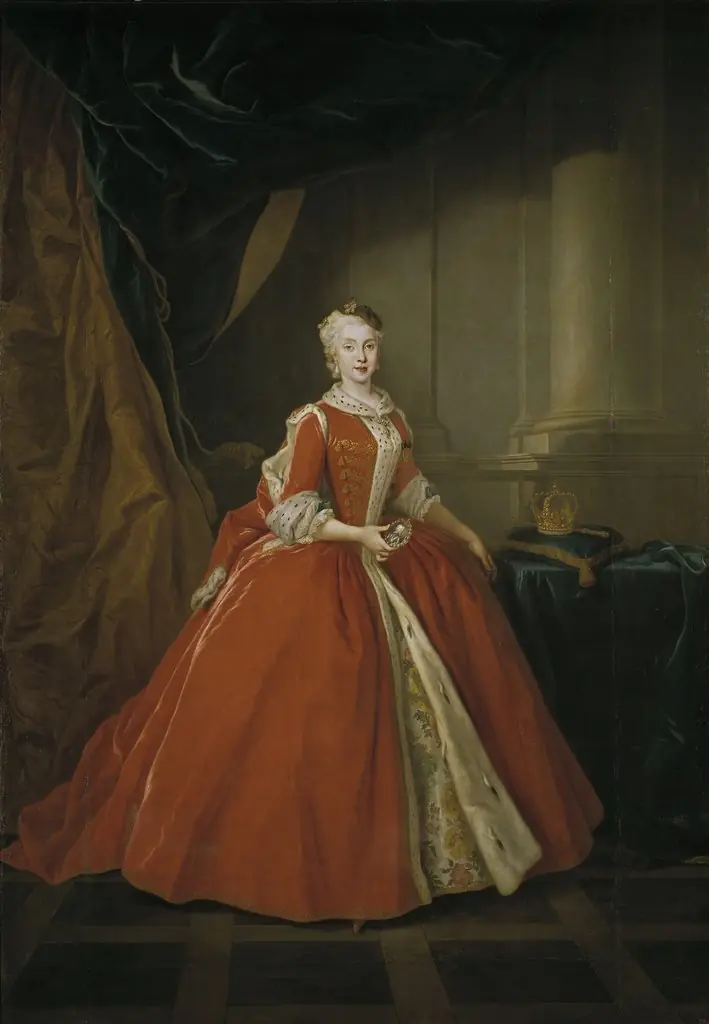 Maria Amalia de Saxony
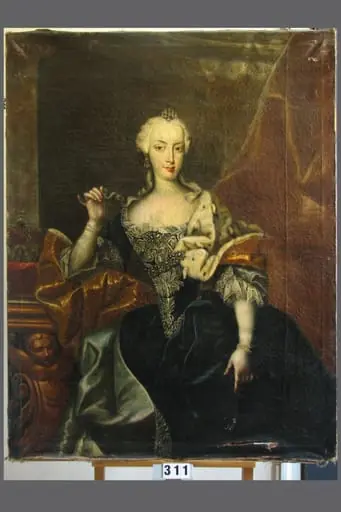 Maria Theresia, arhiducesă de Austria ; în registrul inventar: Prințesă în haină albastră