Artwork
The parrot addresses Khujasta at the beginning of the thirty-seventh night, from a Tuti-nama (Tales of a Parrot)
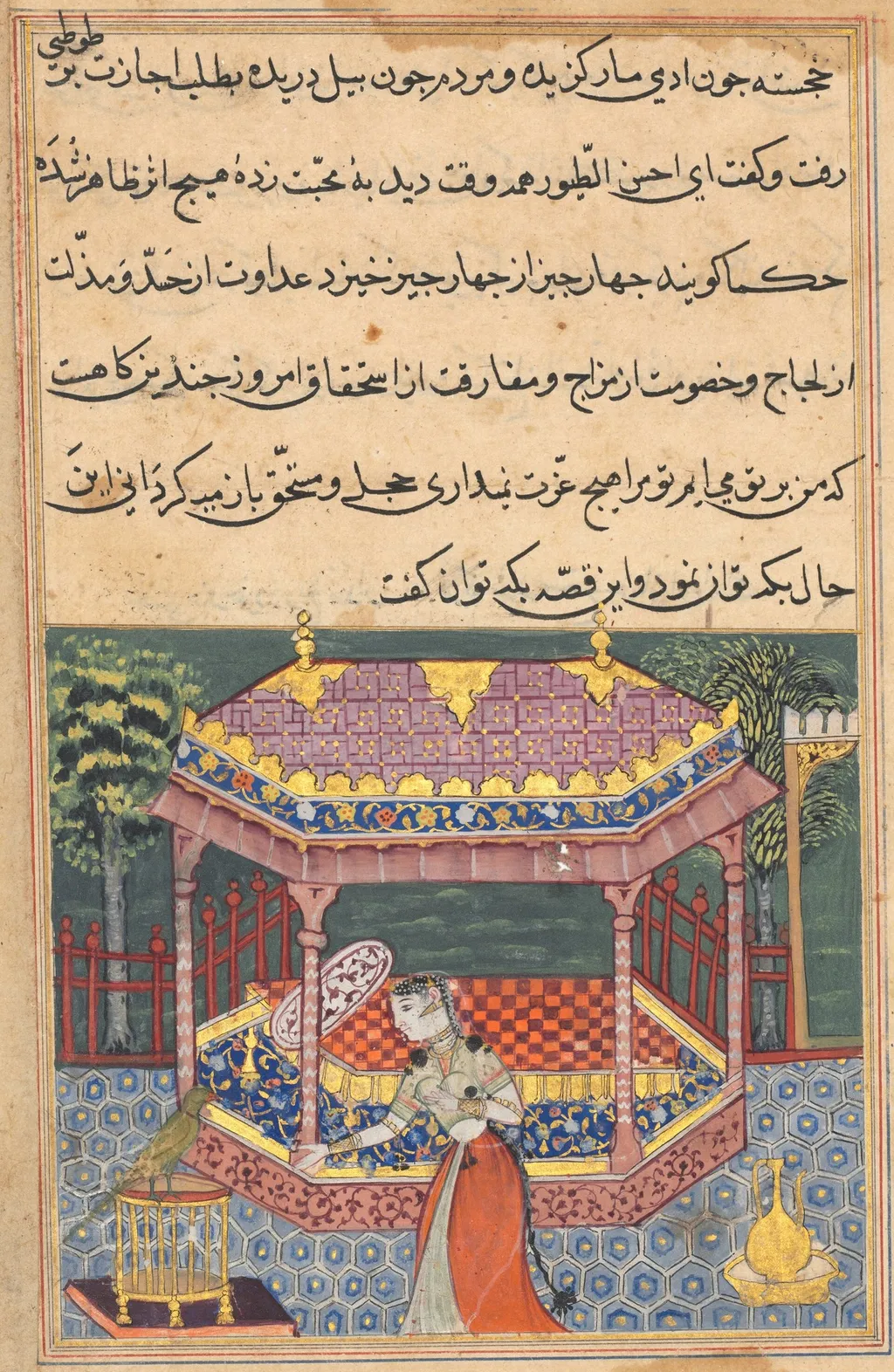
The parrot addresses Khujasta at the beginning of the thirty-seventh night, from a Tuti-nama (Tales of a Parrot) is an unspecified painting. It dates from 1560 and is held in the collection of the Cleveland Museum of Art. The work depicts a woman in a vivid red garment seated beneath an elaborately decorated pavilion.
About this work
Overview
The work depicts a woman in a vivid red garment seated beneath an elaborately decorated pavilion. A small parrot rests on her arm, appearing to address her, while a second bird perches on a cage nearby and a golden pitcher lies on the tiled floor. The composition is framed by a patterned roof edged in gold and blue, set against geometric tile work.
Subject & Meaning
The scene illustrates an episode from the Persian narrative collection known as the Tuti‑nama, in which a talking parrot conveys stories to a princess. The interaction between the bird and the female figure suggests a moment of storytelling or counsel, reflecting the tale’s emphasis on the parrot as a messenger of wisdom and entertainment.
Technique & Style
Executed in a richly saturated palette, the painting employs bold reds, deep blues, and luminous golds to create a lively visual impact. The decorative architecture and intricate tile patterns are rendered with precise linear detail, while the figures are stylized in a manner characteristic of miniature manuscript illustration, emphasizing ornamental surface over naturalistic modeling.
Context
The Tuti‑nama, a collection of moral and romantic stories featuring a talkative parrot, was popular in Persian literary circles from the 14th century onward. Visual adaptations of its episodes were common in courtly art, serving both decorative and didactic purposes within elite domestic spaces.
Legacy
Works derived from the Tuti‑nama narrative contribute to the broader tradition of Persian illustrated manuscripts, influencing later South Asian and Ottoman visual cultures. The painting’s vivid coloration and narrative focus exemplify the enduring appeal of storytelling motifs in decorative art.
Artist & collection

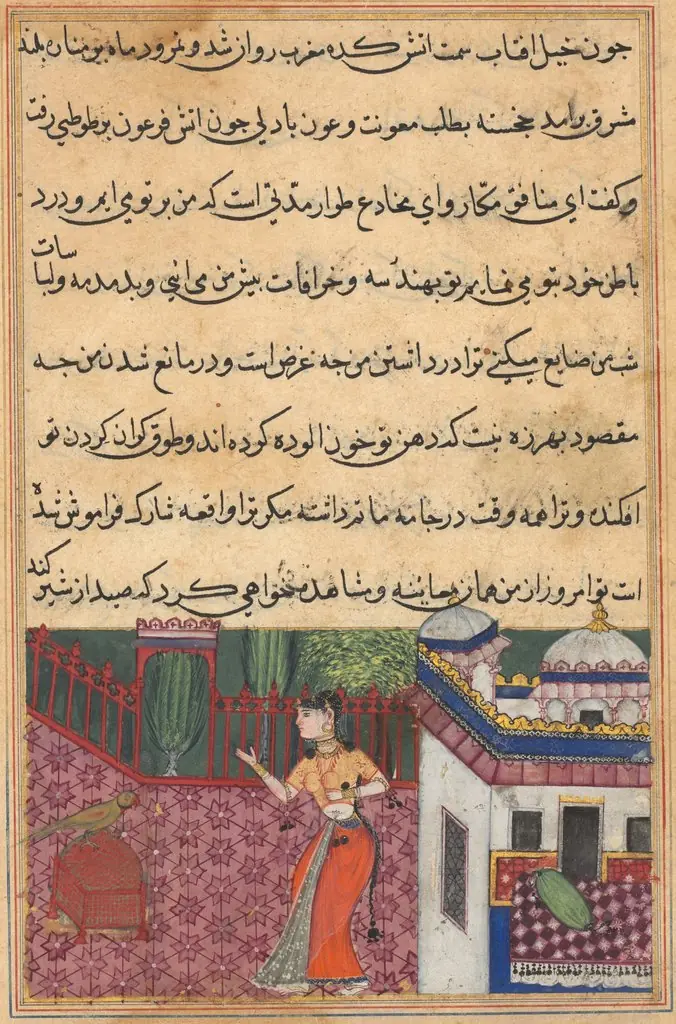 The parrot addresses Khujasta at the beginning of the thirty-third night, from a Tuti-nama (Tales of a Parrot)
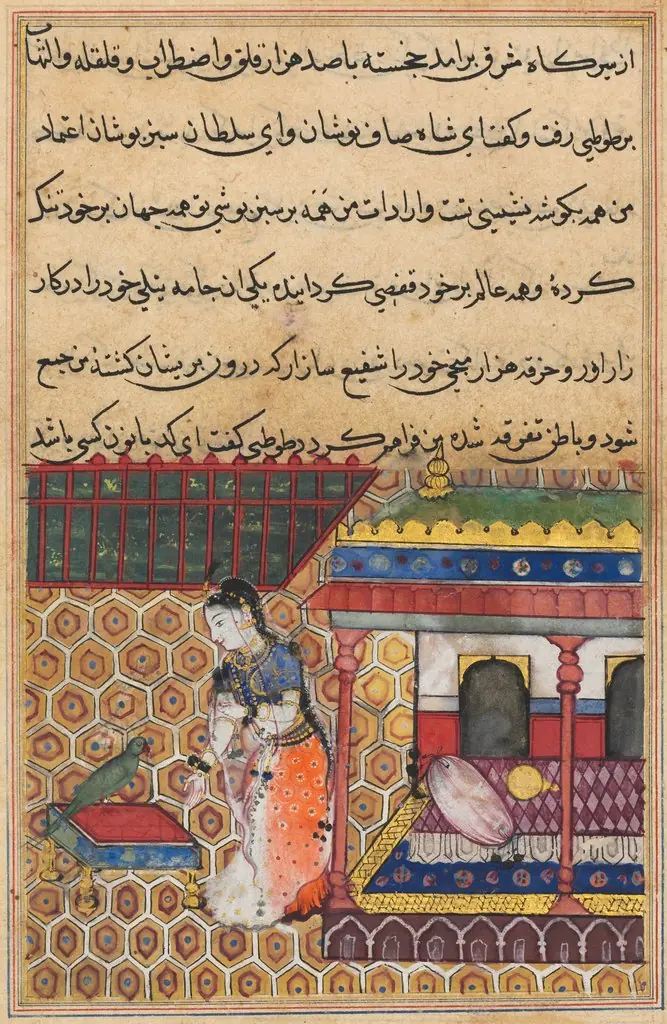 The parrot addresses Khujasta at the beginning of the thirty-eighth night, from a Tuti-nama (Tales of a Parrot)
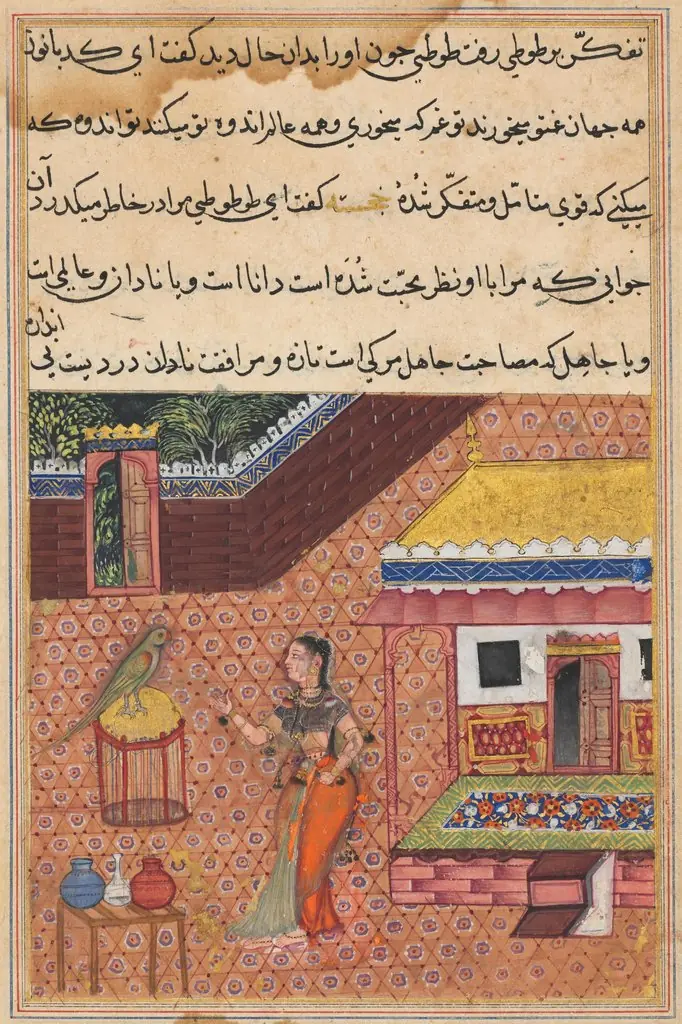 The parrot addresses Khujasta at the beginning of the thirty-fourth night, from a Tuti-nama (Tales of a Parrot)
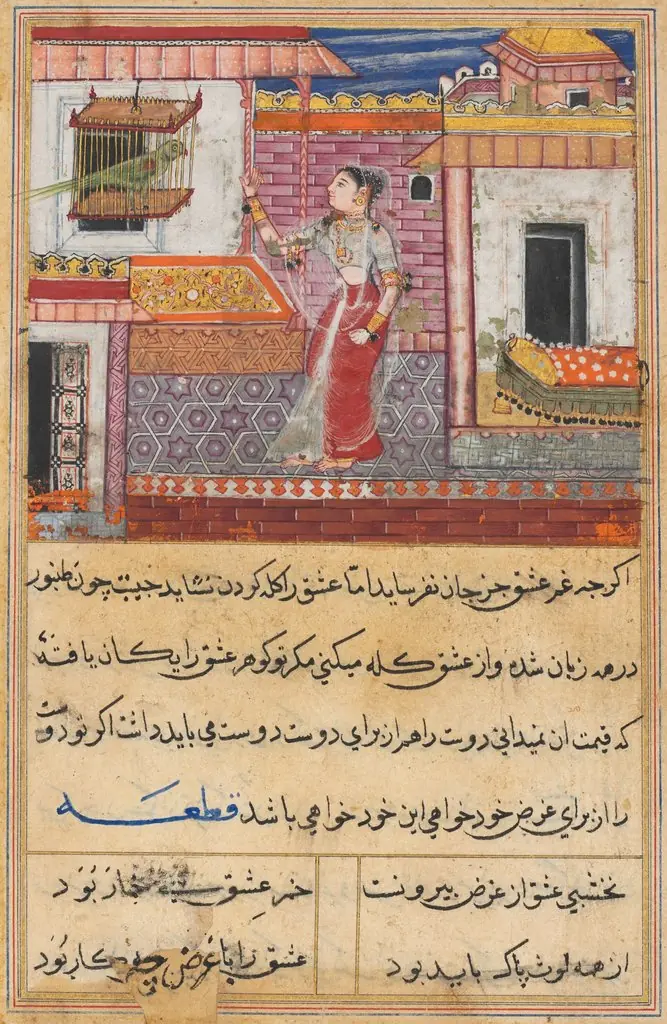 The Parrot Addresses Khujasta at the Beginning of the Thirteenth Night, from a Tuti-nama (Tales of a Parrot)
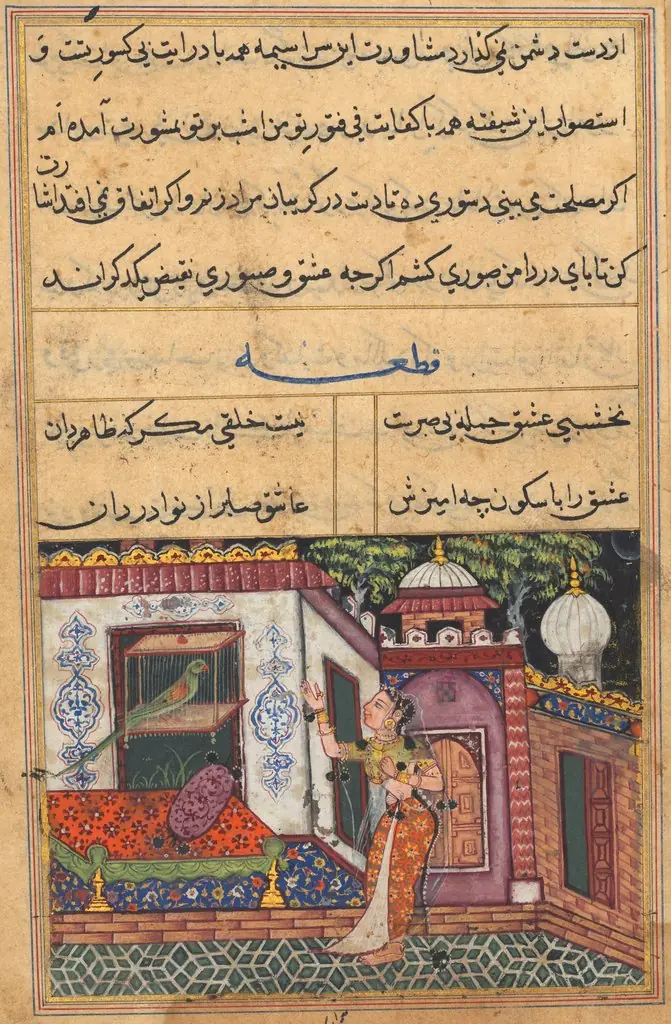 The Parrot Addresses Khujasta at the Beginning of the Eleventh Night, from a Tuti-nama (Tales of a Parrot)
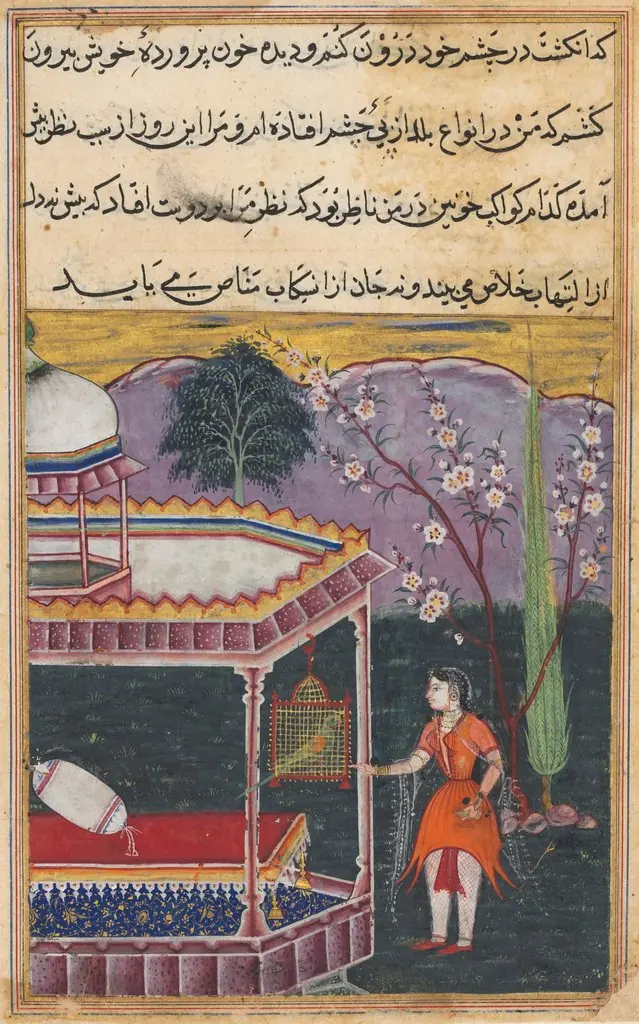 The Parrot Addresses Khujasta at the Beginning of the Eighth Night, from a Tuti-nama (Tales of a Parrot)
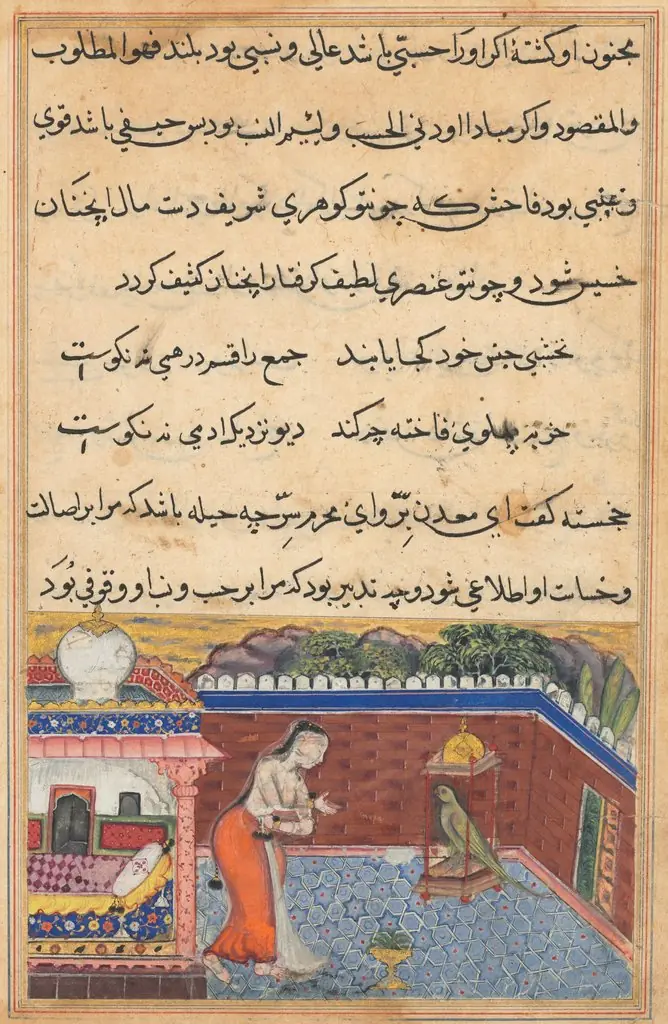 The parrot addresses Khujasta at the beginning of the thirty-first night, from a Tuti-nama (Tales of a Parrot)
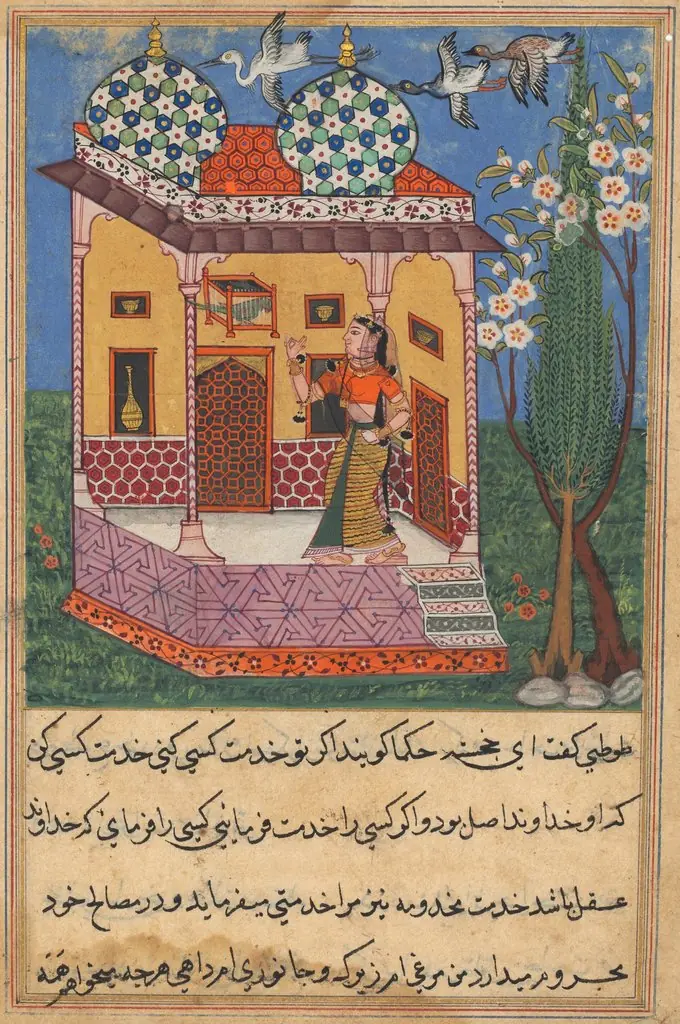 The Parrot Addresses Khujasta at the Beginning of the Twenty-sixth Night, from a Tuti-nama (Tales of a Parrot)
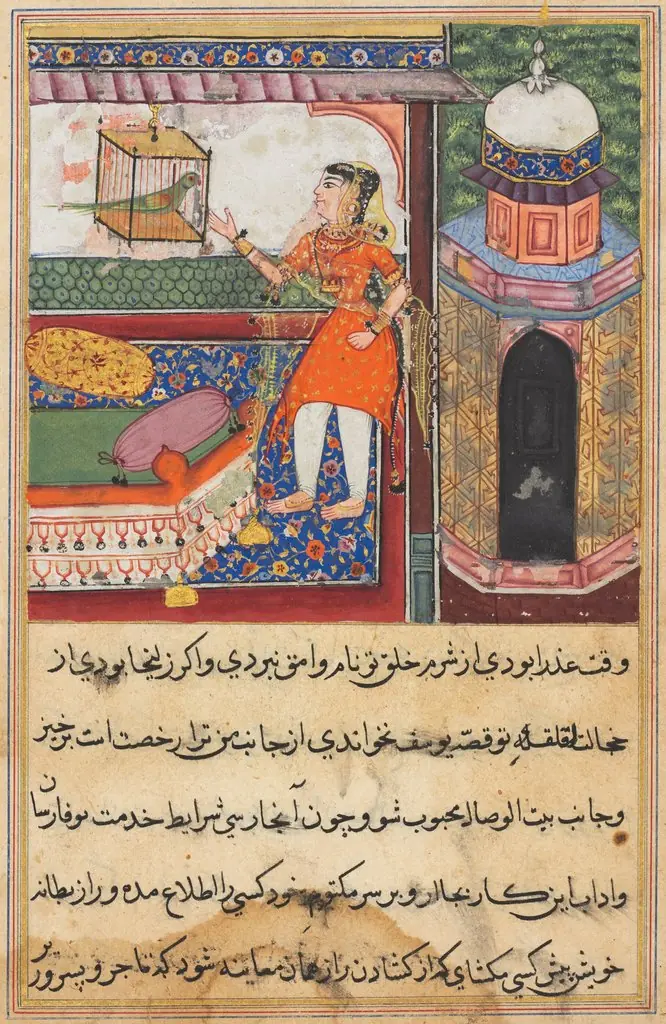 The Parrot Addresses Khujasta at the Beginning of the Tenth Night, from a Tuti-nama (Tales of a Parrot)
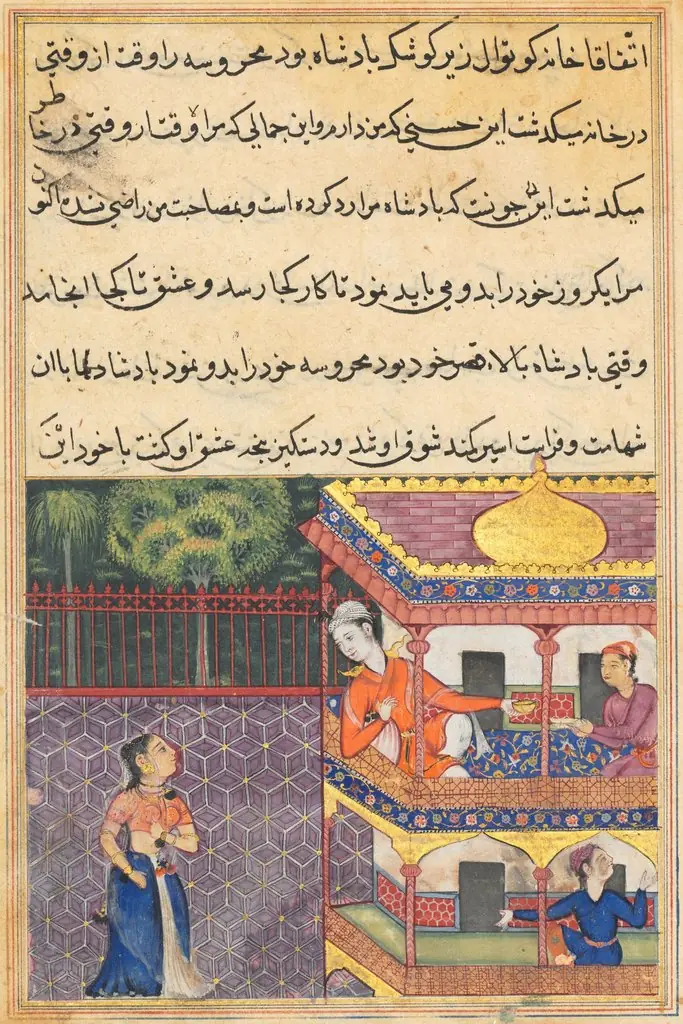 The king of Zabul sees Mahrusa from his palace balcony, from a Tuti-nama (Tales of a Parrot): Thirty-sixth Night
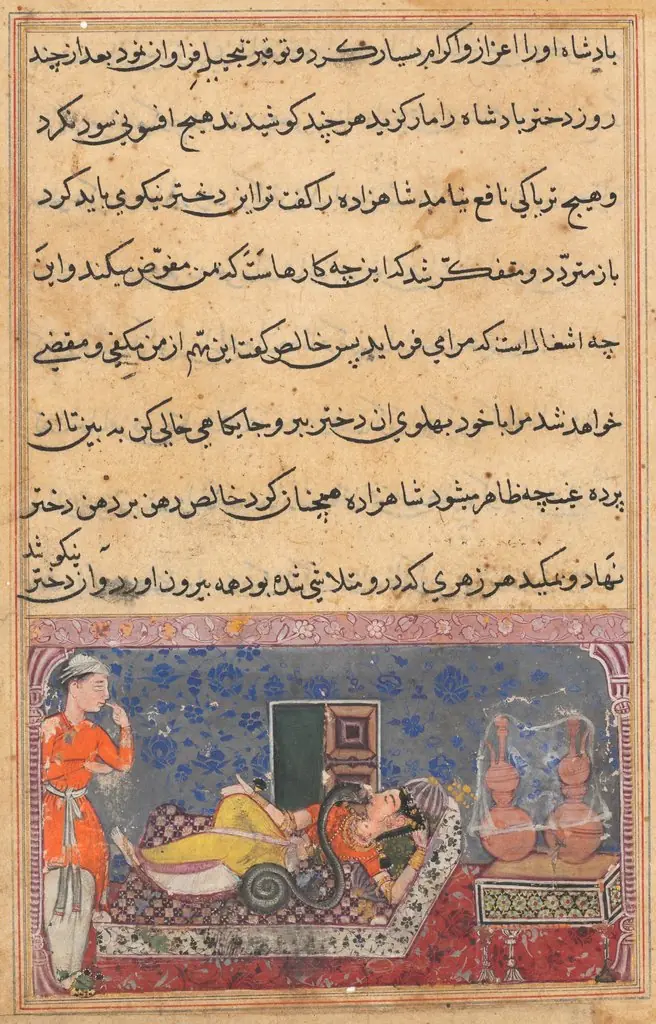 Khalis repays the prince for his kindness by changing into a snake and sucking the poison from the king’s daughter, from a Tuti-nama (Tales of a Parrot): Eighteenth Night
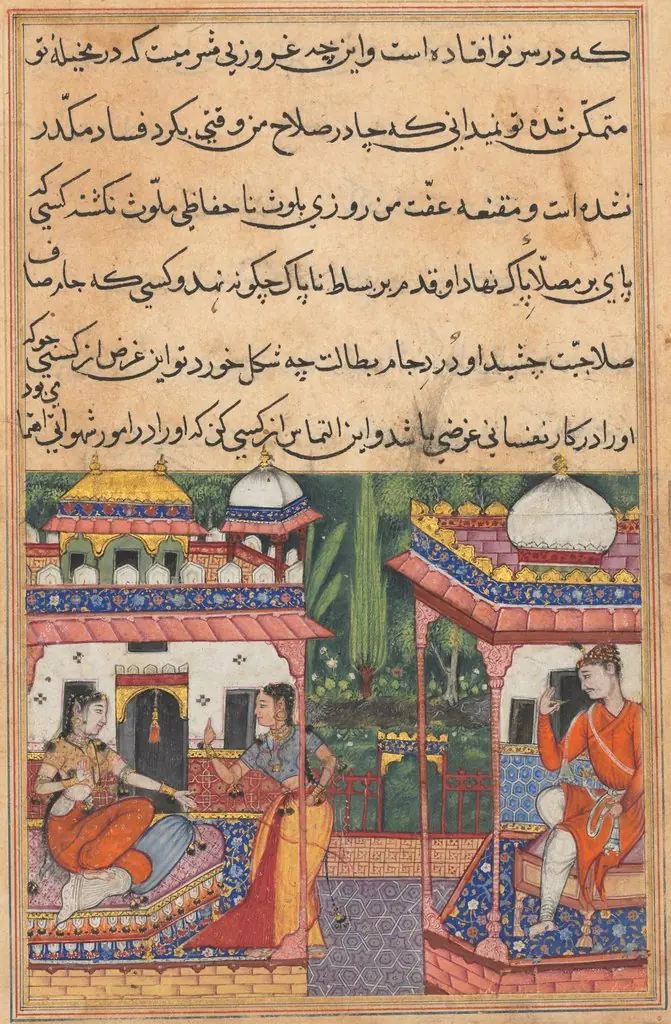 Kaiwan sends a message of love to Khurshid, wife of his brother Utarid who is away on a journey, from a Tuti-nama (Tales of a Parrot): Thirty-second Night
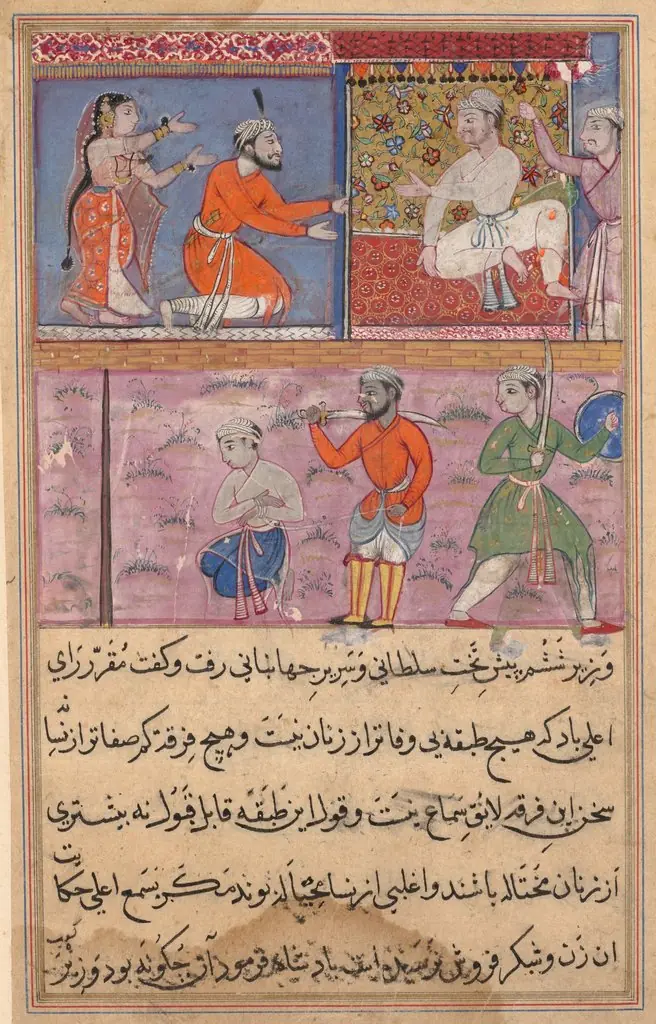 Page from Tales of a Parrot (Tuti-nama): text page