Artwork
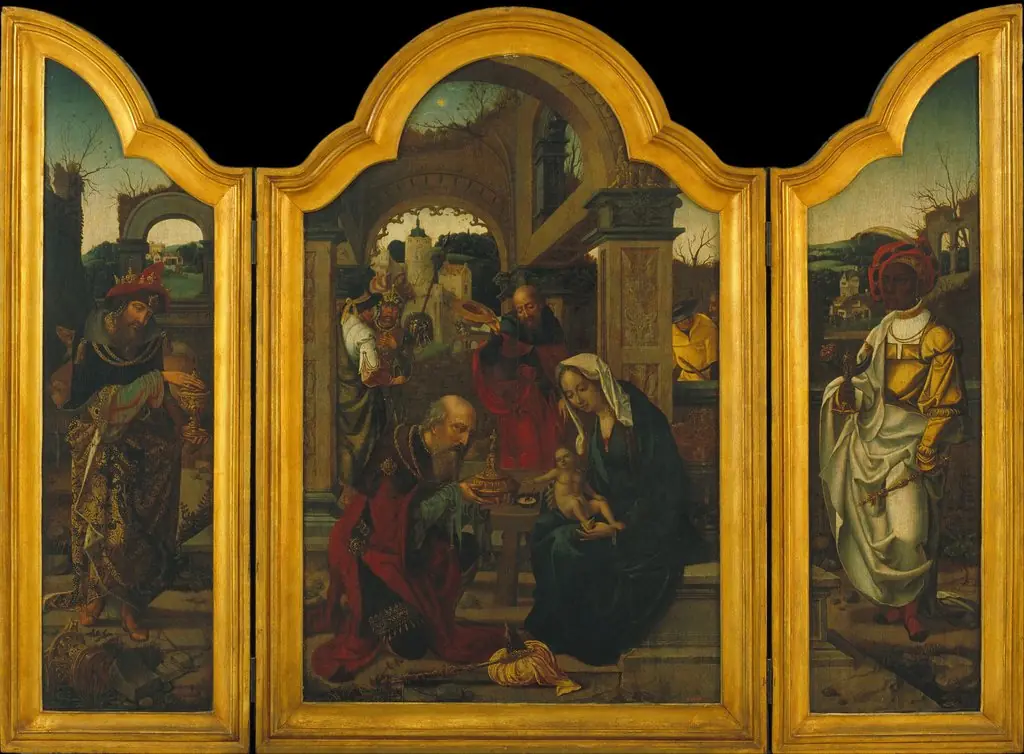
Flügelaltar; Mittelbild: Anbetung der Könige; linker Flügel: Anbetung der Hirten; rechter Flügel: Ruhe auf der Flucht nach Ägypten
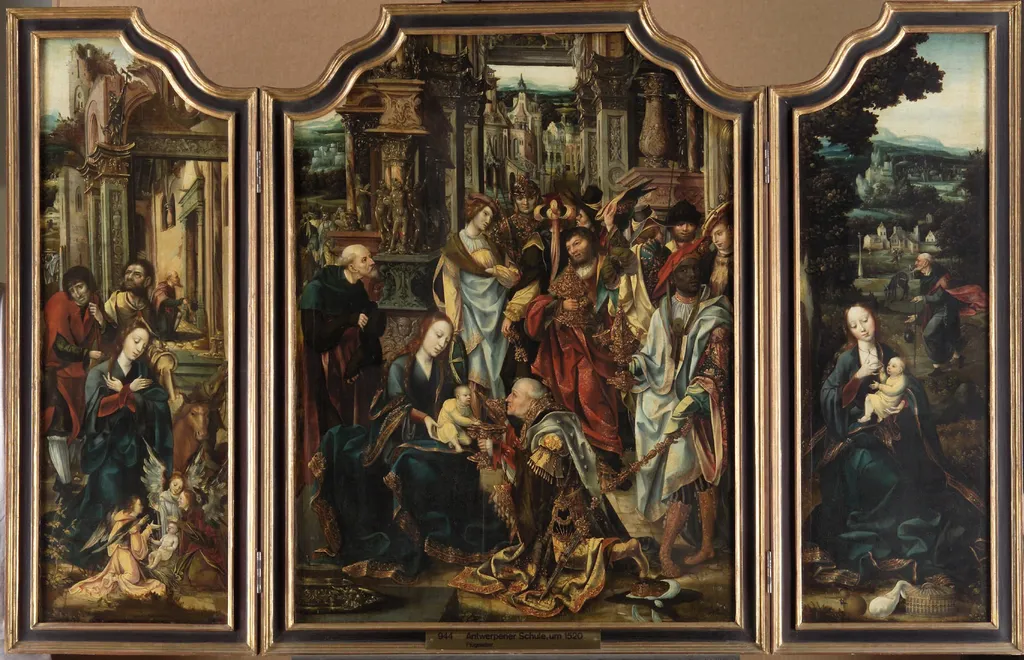
Flügelaltar; Mittelbild: Anbetung der Könige; linker Flügel: Anbetung der Hirten; rechter Flügel: Ruhe auf der Flucht nach Ägypten is an unspecified painting by the Mannerist artist Unknown. It dates from 1520 and is held in the collection of the Kunsthistorisches Museum. This triptych, known as the Flügelaltar, consists of three painted panels that together depict key episodes from the infancy of Christ.
About this work
Overview
This triptych, known as the Flügelaltar, consists of three painted panels that together depict key episodes from the infancy of Christ.
This triptych, known as the Flügelaltar, consists of three painted panels that together depict key episodes from the infancy of Christ. The central panel portrays the Adoration of the Magi, while the left and right wings show the Adoration of the Shepherds and the Rest on the Flight into Egypt, respectively. Executed with meticulous detail, the work combines religious narrative with richly rendered landscapes and figures, characteristic of early Netherlandish painting. It is currently held in the collection of the Kunsthistorisches Museum.
Subject & Meaning
The three panels collectively trace the early life of Jesus, emphasizing divine recognition by both humble shepherds and royal visitors. The central scene highlights the Magi’s homage, symbolizing the universal acknowledgment of Christ’s kingship. The left panel underscores humility through the shepherds’ quiet reverence, while the right panel captures a moment of tender pause during the Holy Family’s flight, suggesting divine protection amid peril. Together, they frame Christ’s infancy as both sacred and human.
Technique & Style
The painting employs fine brushwork and layered glazes to achieve luminous color and intricate texture, particularly in the fabrics of the figures’ garments and the architectural details of the cityscape. Atmospheric perspective is used to suggest depth, with distant buildings rendered in softer tones. The figures are arranged with deliberate symmetry in the central panel, while the side panels offer more intimate, naturalistic compositions. Light falls evenly, enhancing the clarity of each scene without dramatic contrast.
History & Provenance
The triptych was likely commissioned for private devotion in the late 15th or early 16th century, possibly in the Low Countries. It entered the Kunsthistorisches Museum’s collection in the 19th century, having passed through several private and ecclesiastical hands. Its preservation is notable, with minimal restoration, allowing the original pigments and brushwork to remain largely intact. Its provenance reflects the widespread veneration of Marian and Christological themes in Northern European households.
Context
Created during a period of heightened devotional imagery in Northern Europe, the triptych aligns with trends favoring detailed, narrative altarpieces for domestic or chapel use. The inclusion of the Flight into Egypt—less common in public altarpieces—suggests a private, contemplative function. The work reflects the influence of artists like Jan van Eyck and Rogier van der Weyden, who elevated everyday realism within sacred subjects, blending spiritual gravity with observable detail.
Legacy
As a well-preserved example of early Netherlandish triptych painting, it contributes to the understanding of how religious stories were visualized for personal meditation. Its composition and technique influenced later generations of painters in the region, particularly in the integration of landscape and narrative. Though unsigned and unattributed to a specific master, it stands as a representative work of its time, valued for its quiet precision and devotional clarity.
Artist & collection

 Domestic Scene
 Giacomo and Cardinal Marco, investing Andrea, Abbot of San Zeno, with his Benefice
 The Nymph of Fontainebleau
 Portrait of a Woman
 Madonna and Child with Saints in the Enclosed Garden
 Venus and Minerva
 Family Group of Four on Sofa
 Wall painting from Room H of the Villa of P. Fannius Synistor at Boscoreale
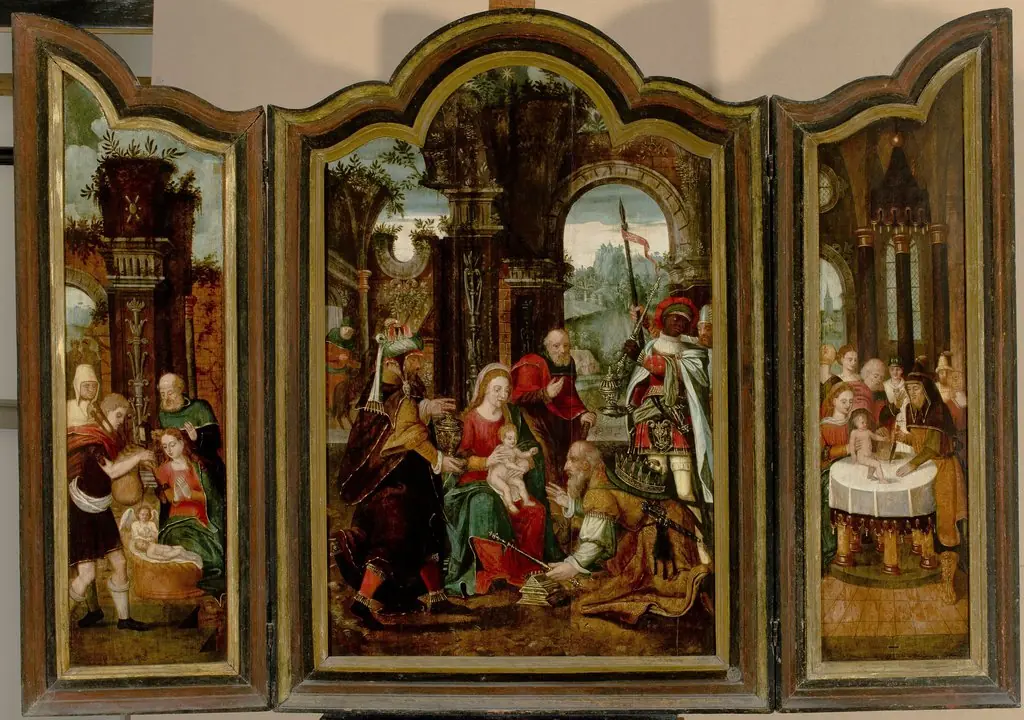 Triptych: Adoration of the Magi, Adoration of the Shepherds, Circumcision
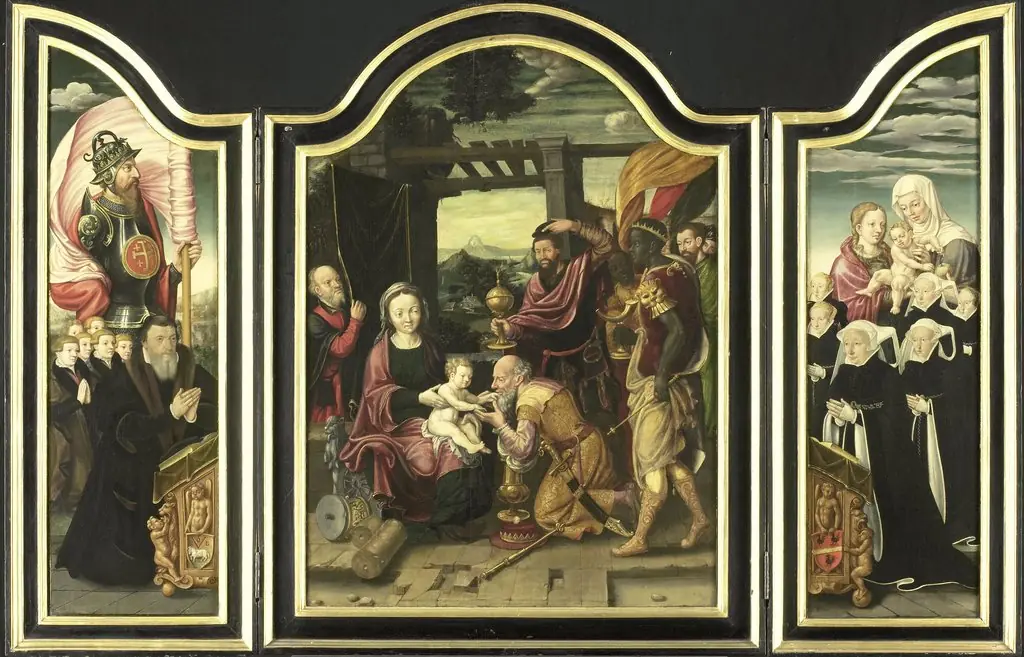 Triptych with the Adoration of the Magi
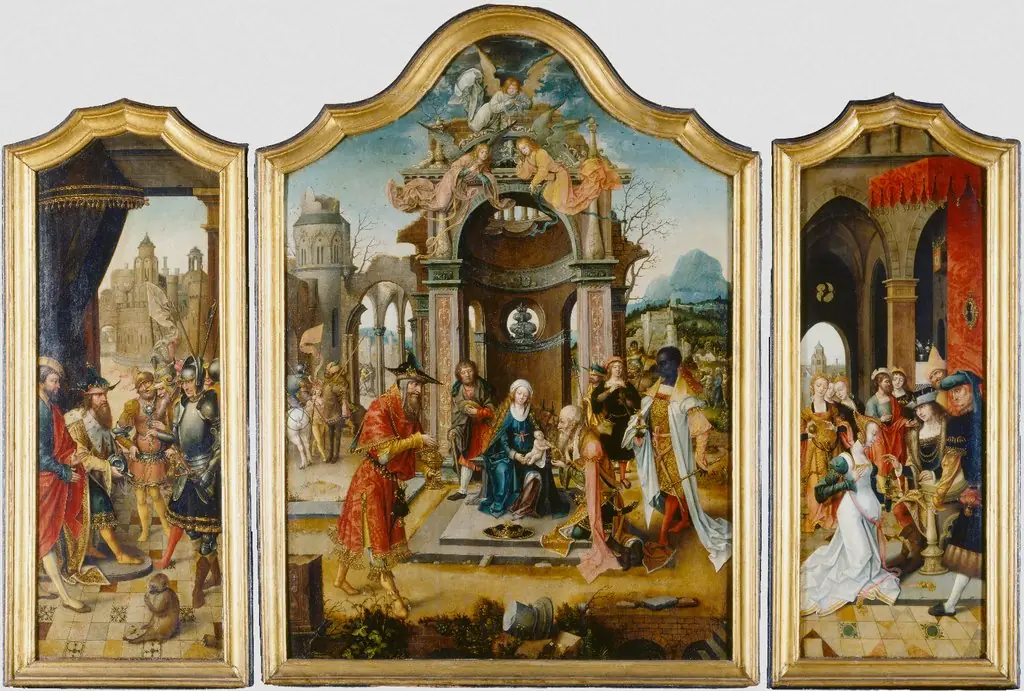 Triptych of the Adoration of the Magi
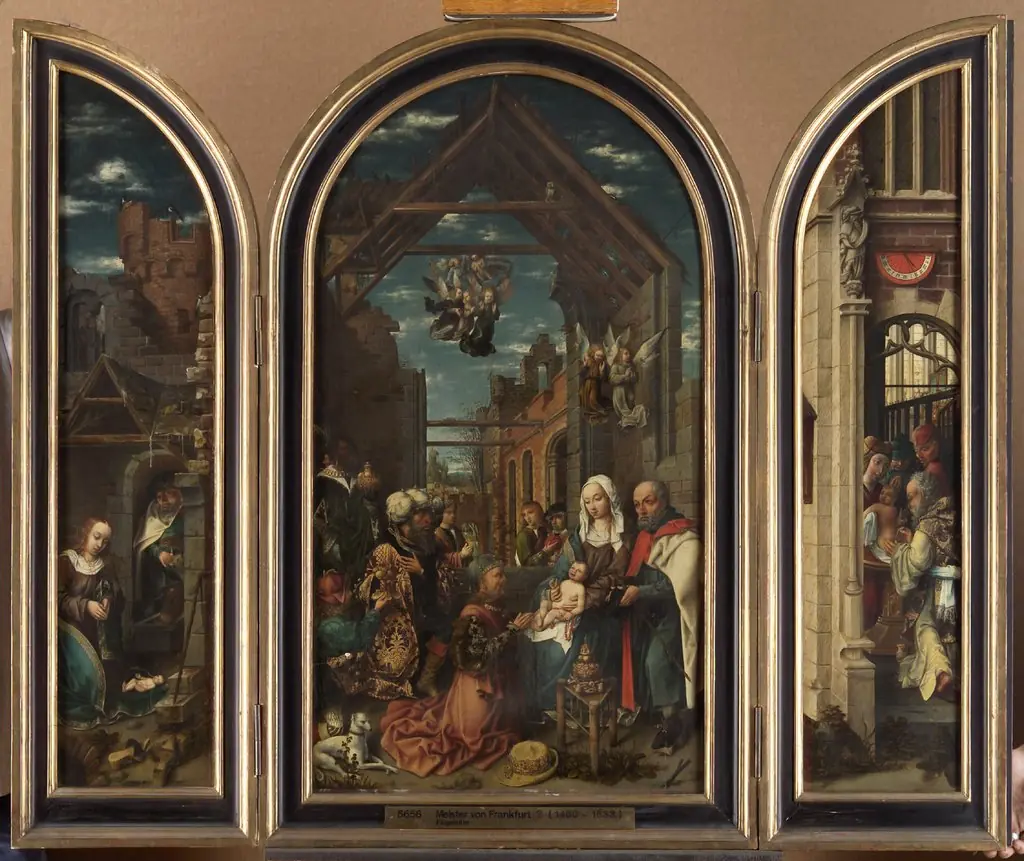 Triptych of the adoration of the magi
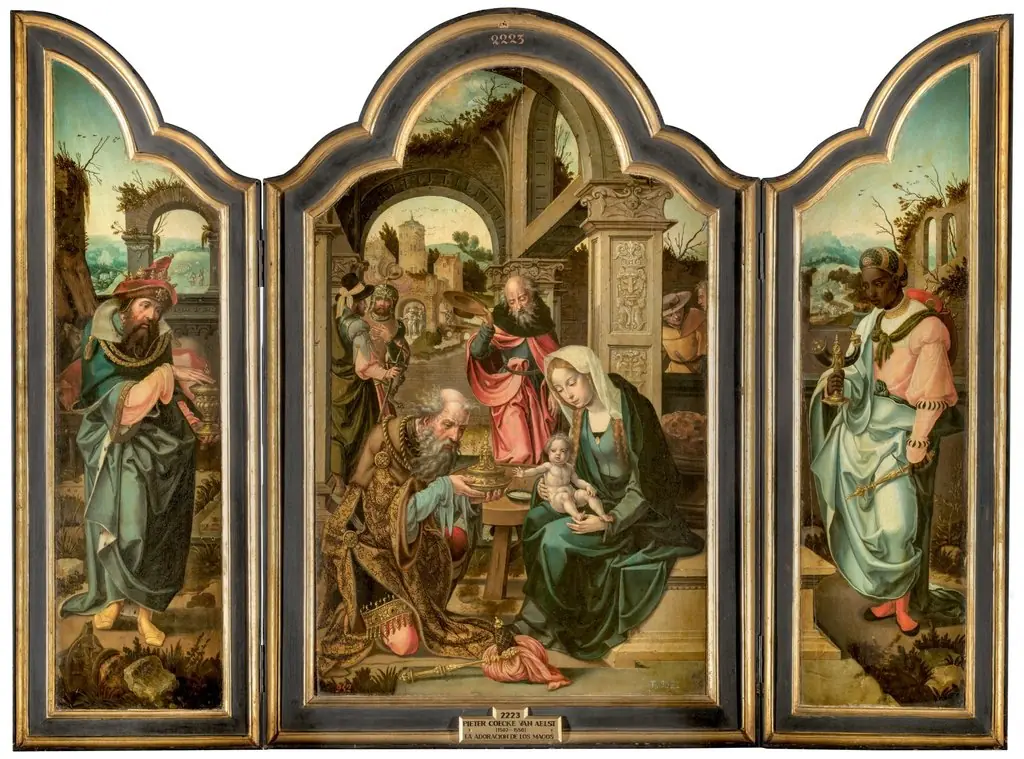 The Adoration of the Magi
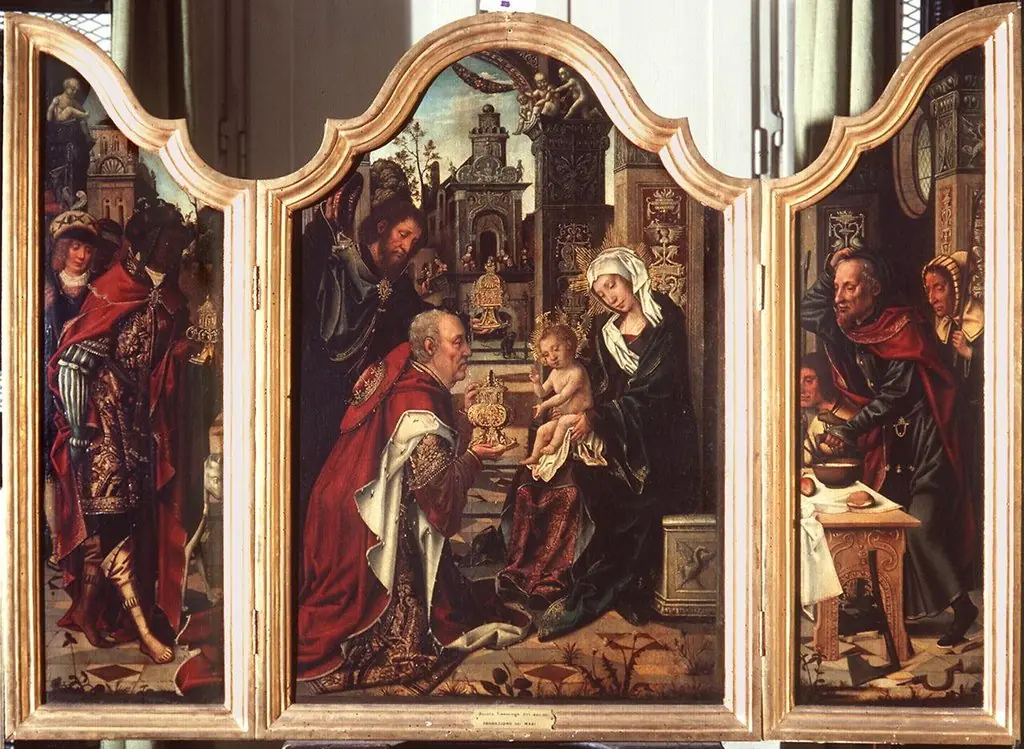 Triptych of the Adoration of the Magi
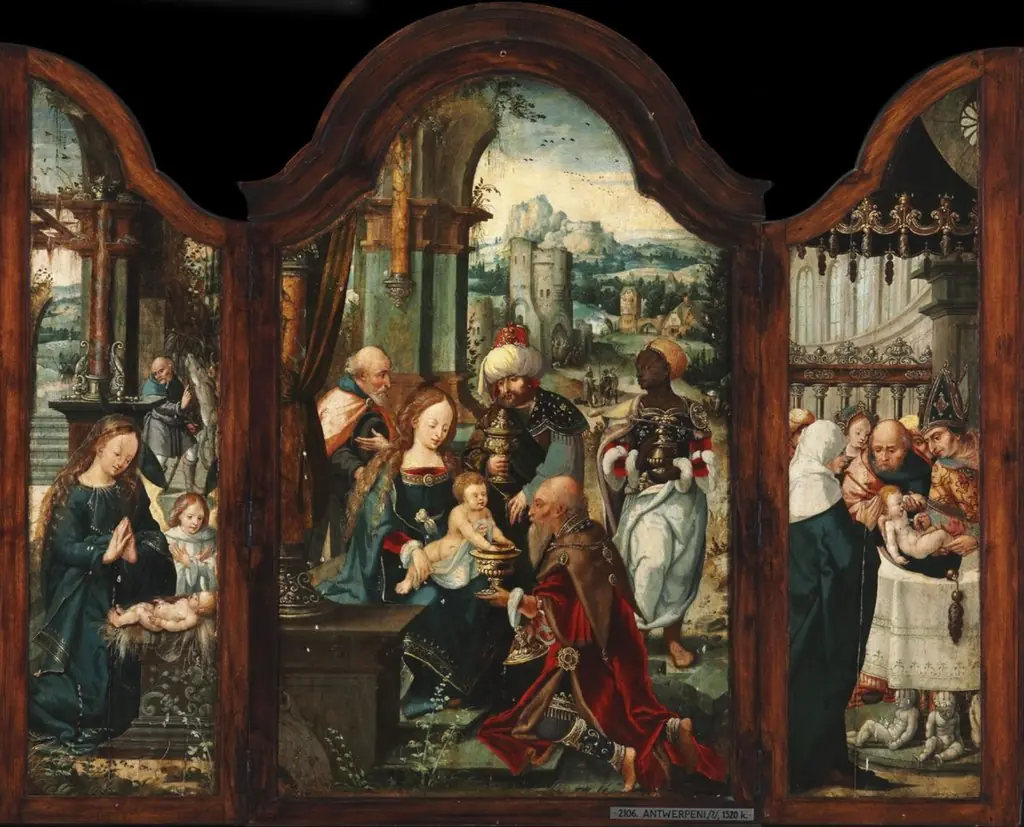 Triptych. Central panel: The Adoration of the Magi; left wing: The Nativity; right wing: The Circumcision
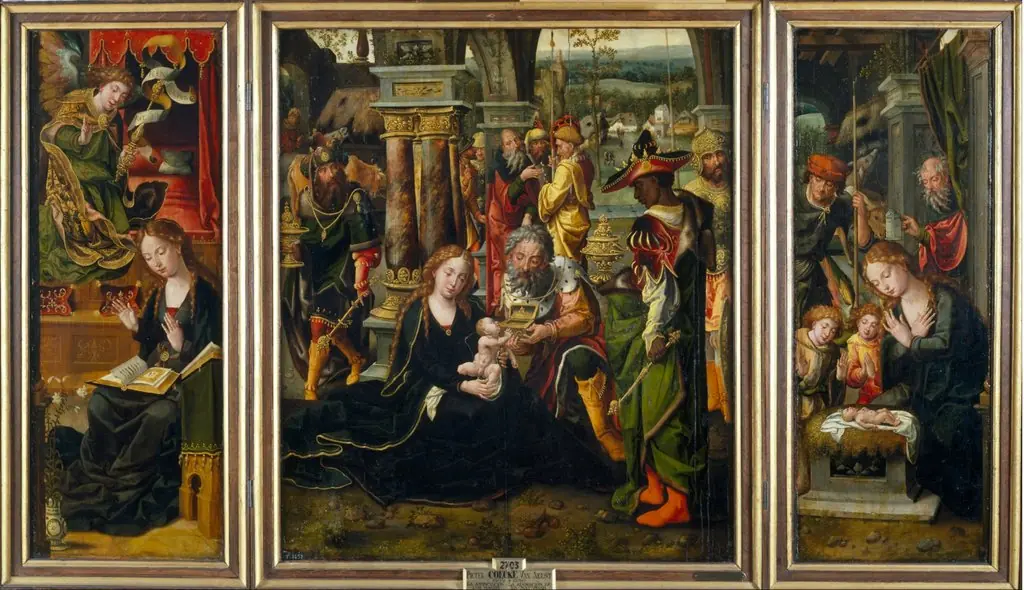 Triptych with the Annunciation, the Adoration of the Magi and the Nativity with Angels and Shepherds
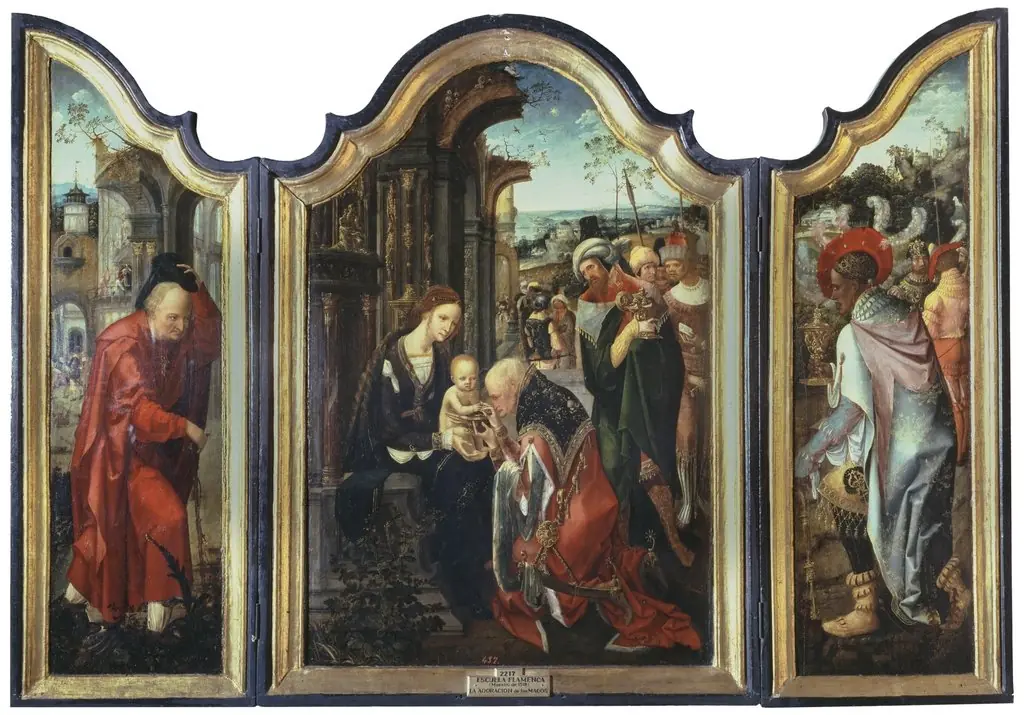 Adoration of the Magi
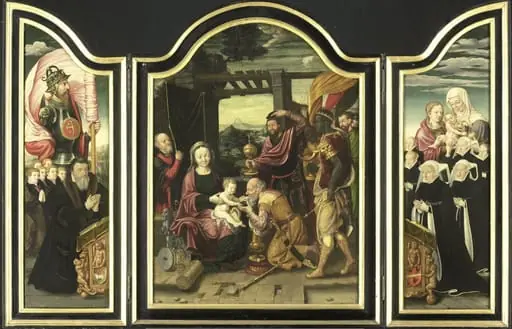 Triptych with the Adoration of the Magi
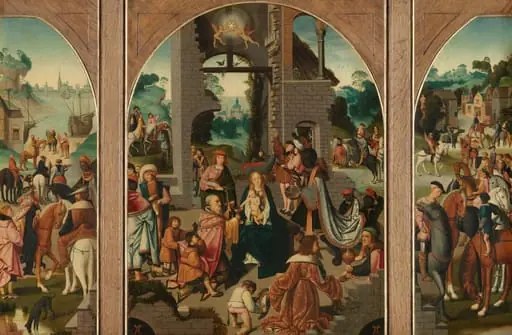 Triptych with Adoration of the Magi (center and inner wings), Saint Antony Abbot (left, outer wing) and Saint Adrian (right, outer wing)
 Triptych with the Epiphany