Artwork
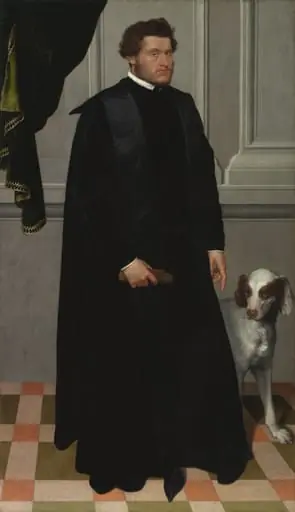
Portrait of a Man.
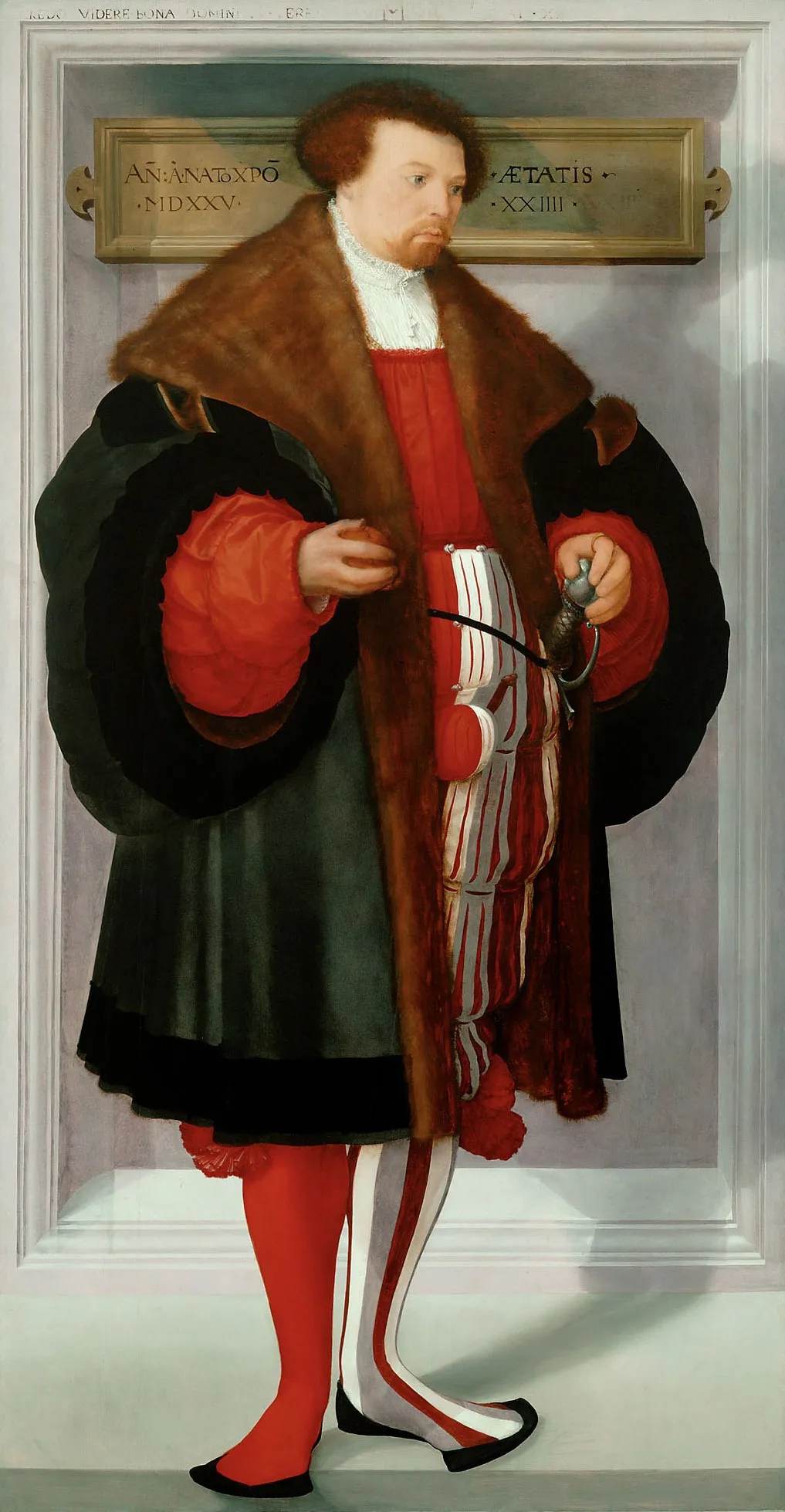
Portrait of a Man. is an oil painting by the Early Baroque Italian artist Christoph Amberger. It dates from 1525 and is held in the collection of the Kunsthistorisches Museum.
About this work
Overview
Painted in 1525 by Christoph Amberger of Augsburg, this oil portrait captures a man of apparent status. Though sometimes associated with early Baroque trends, its style aligns more closely with Northern Renaissance conventions. The work resides in the Kunsthistorisches Museum, Vienna, and reflects the regional artistic practices of southern Germany during the Reformation era.
Subject & Meaning
The sitter, dressed in a black fur-lined coat with red sleeves and stockings, holds a sword and a red hat, symbols of nobility and personal authority.
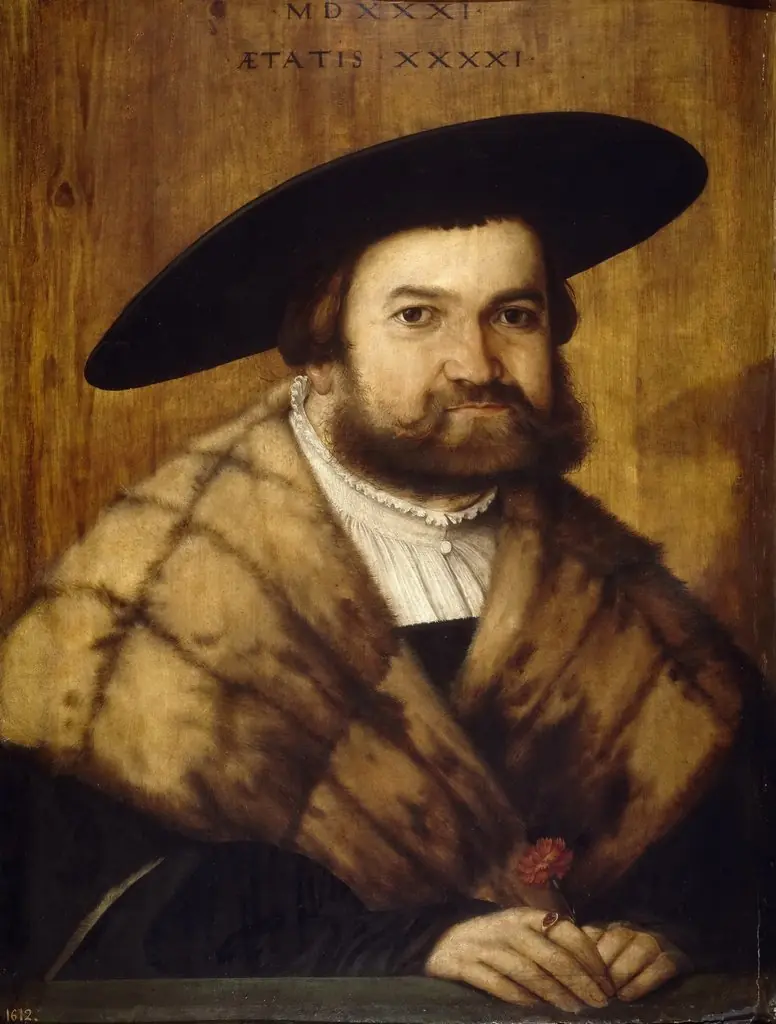
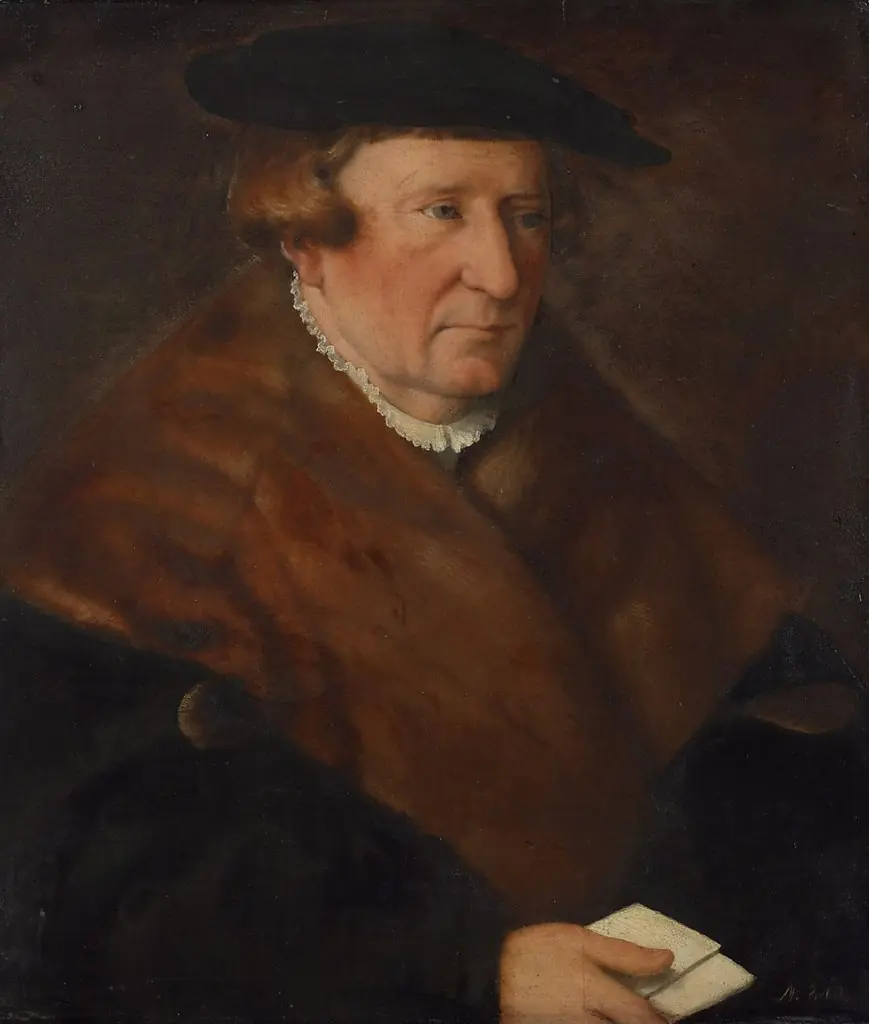
The sitter, dressed in a black fur-lined coat with red sleeves and stockings, holds a sword and a red hat, symbols of nobility and personal authority. His stern expression and formal posture suggest a man of social standing, likely a civic or military official. The inscribed markings above his head may indicate his age and the year of execution, offering a rare personal detail in a portrait of this period.
Technique & Style
Amberger employed oil paint with careful attention to texture, particularly in the fur trim and fabric folds. The dark, unadorned background focuses attention on the figure’s attire and facial expression. The rendering of the ruff collar and metallic sword hilt demonstrates a precise, almost meticulous handling of light and material, characteristic of Holbein-influenced portraiture.
History & Provenance
The painting entered the Kunsthistorisches Museum’s collection through imperial Habsburg holdings, likely acquired during the 16th or early 17th century. Its attribution to Amberger, a documented follower of Holbein, is supported by stylistic parallels in his other known works. No earlier provenance records are publicly documented, but its preservation suggests it remained in elite circles after its creation.
Context
In early 16th-century Germany, portraiture served as a tool for asserting identity among the rising merchant and noble classes. Amberger’s work reflects this trend, blending Italian compositional clarity with Northern European attention to detail. The inclusion of personal insignia—sword, hat, and inscribed date—aligns with contemporary practices of self-representation among urban elites.
Legacy
Though Amberger’s oeuvre is limited, this portrait remains a key example of Augsburg’s artistic output during the Reformation. It illustrates how Northern artists adapted humanist ideals into visual form, preserving individual identity with restrained dignity. The work continues to inform studies of secular portraiture in Central Europe before the full emergence of Baroque grandeur.
Artist & collection
Artist
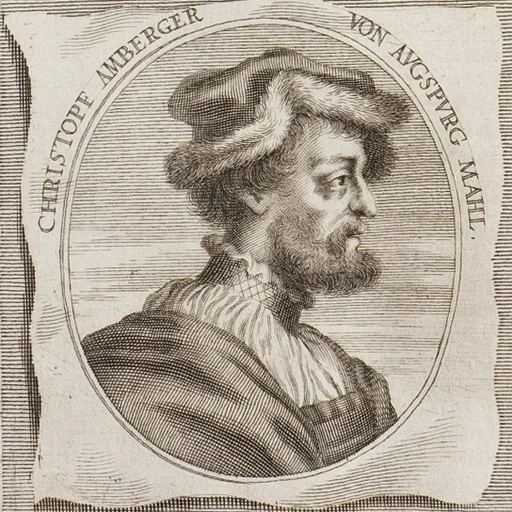
Christoph Amberger (c. 1505 – 1562) was a painter of Augsburg in the sixteenth century, a disciple of Hans Holbein, his principal work being the history of Joseph in twelve pictures.

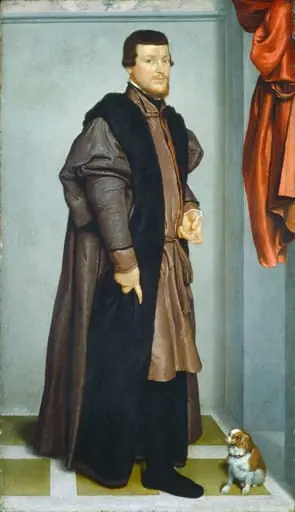 Gian Federico Madruzzo
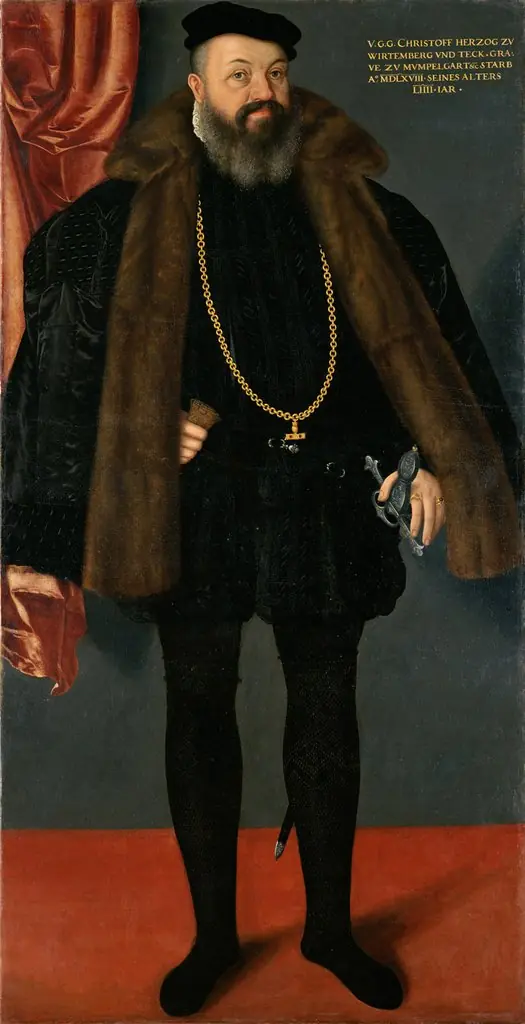 Portrait of Duke Christoph von Württemberg (1515-1568) in Spanish costume
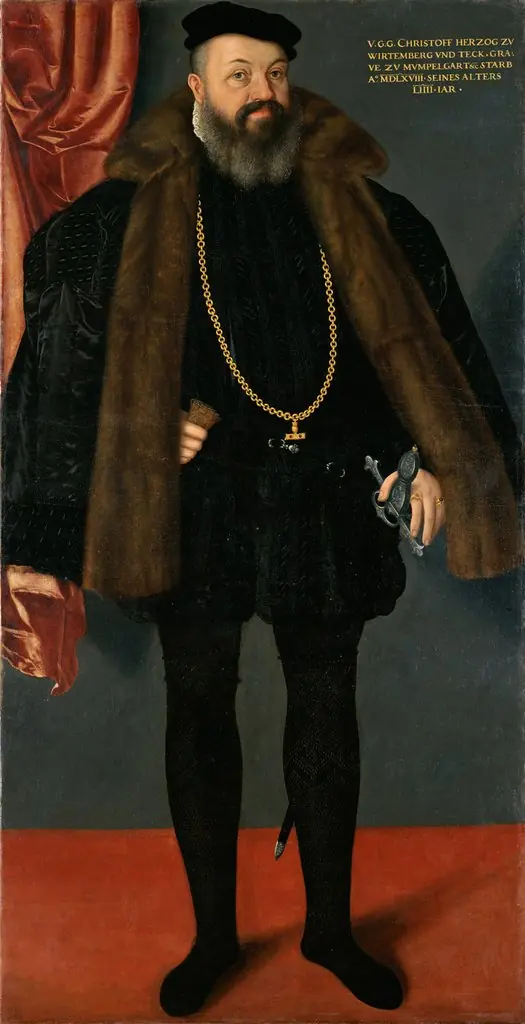 Herzog Christoph von Württemberg (1515-1568) in spanischer Tracht
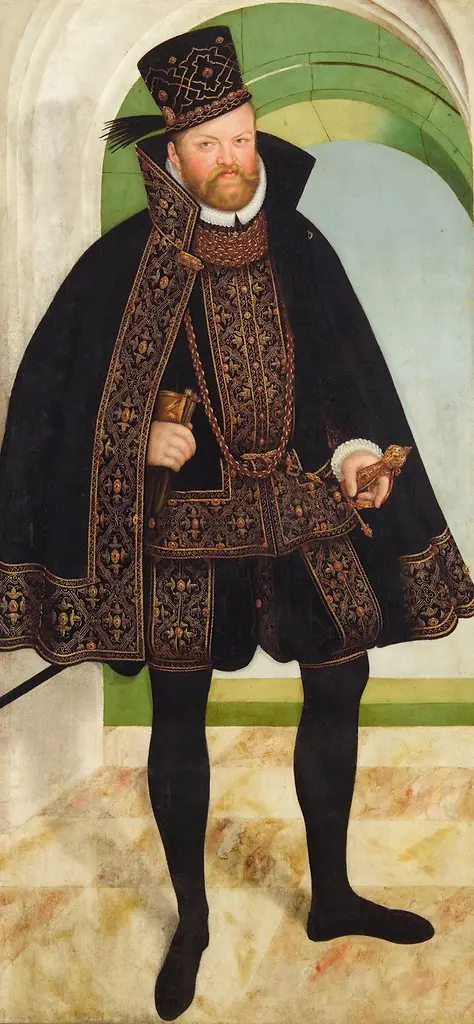 Augustus, Elector of Saxony (1526-1586)
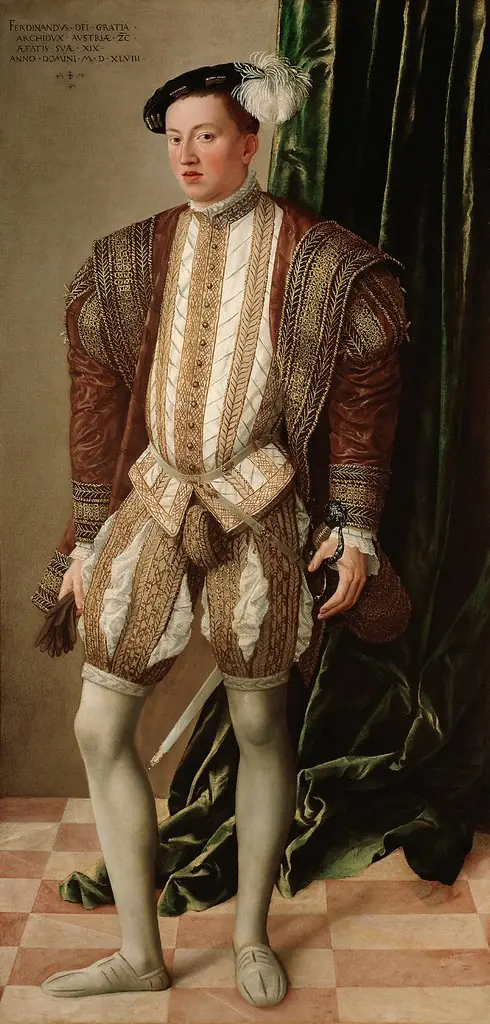 Erzherzog Ferdinand von Tirol (1529-1595)
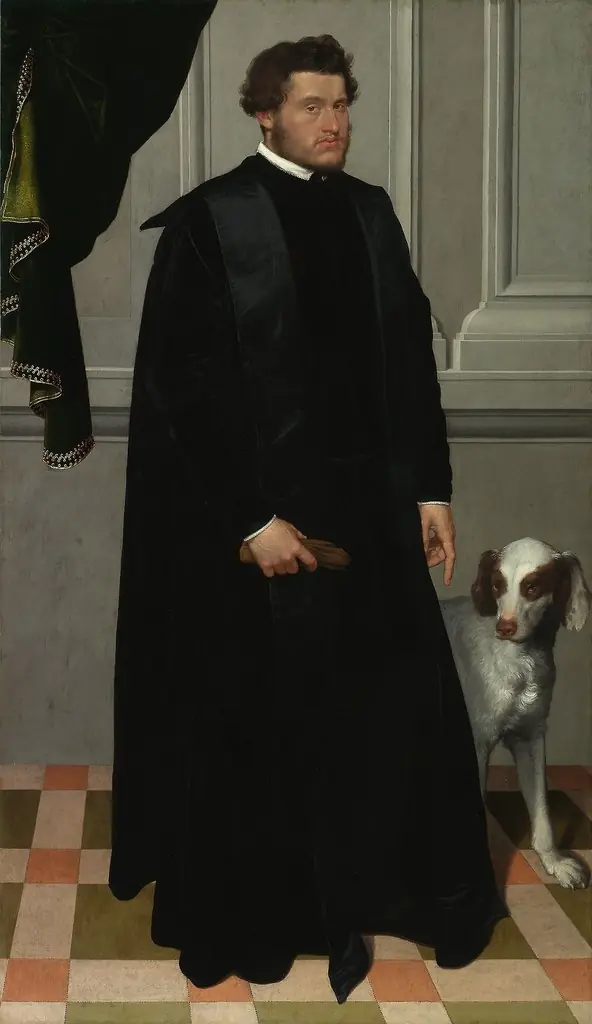 Portrait of Ludovico Madruzzo
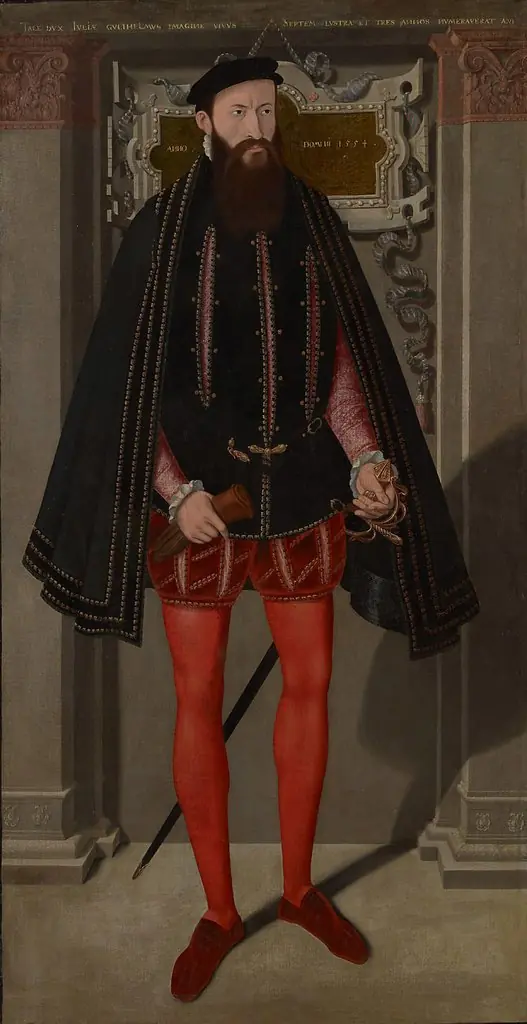 Herzog Wilhelm V. (1516-1592) von Jülich-Cleve-Berg, in ganzer Figur
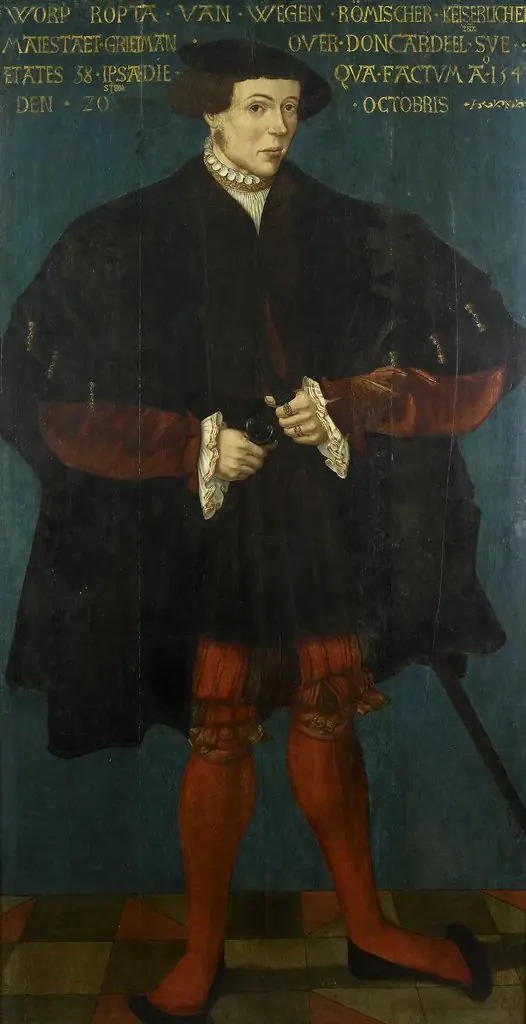 Portrait of Worp van Ropta, Chief Magistrate of East Dongeradeel
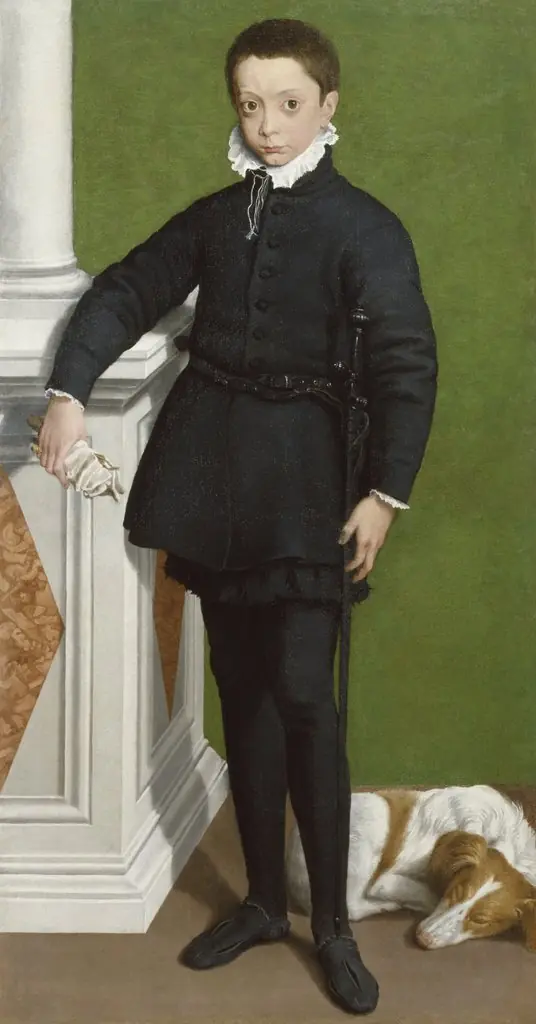 Portrait of Marquess Massimiliano Stampa
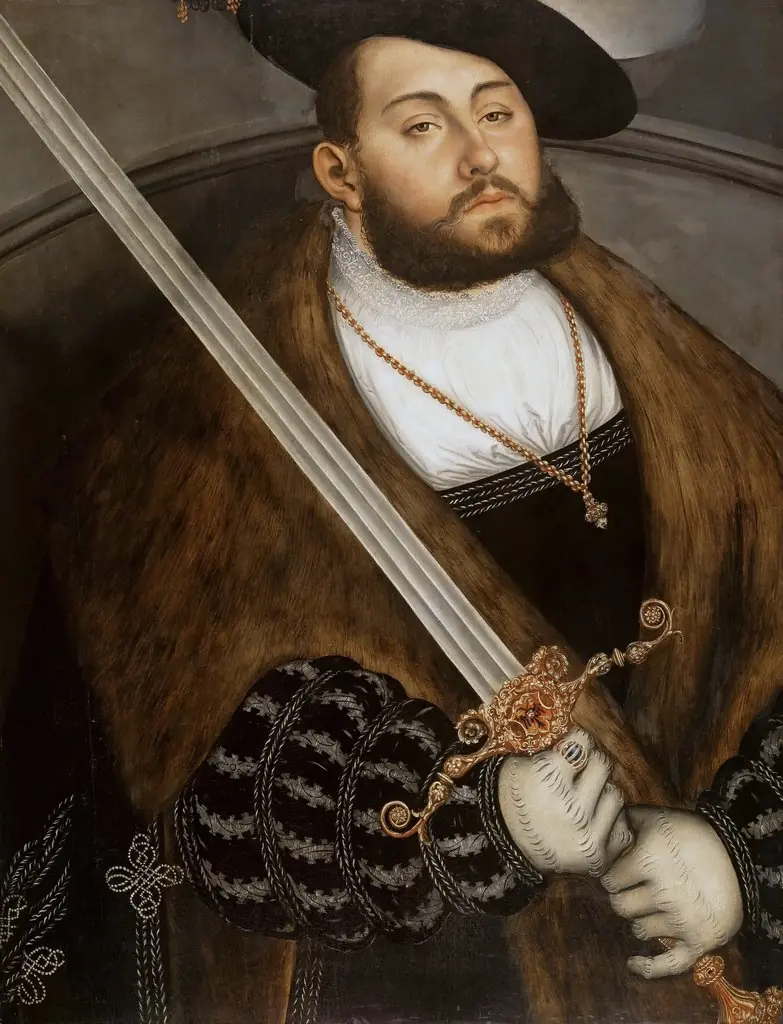 Johann Friedrich I, the Magnanimous, Elector of Saxony
 Gian Lodovico Madruzzo
 Der Riese Bartlmä Bona mit dem Zwerg Thomele