Artwork
Page from Tales of a Parrot (Tuti-nama): text page
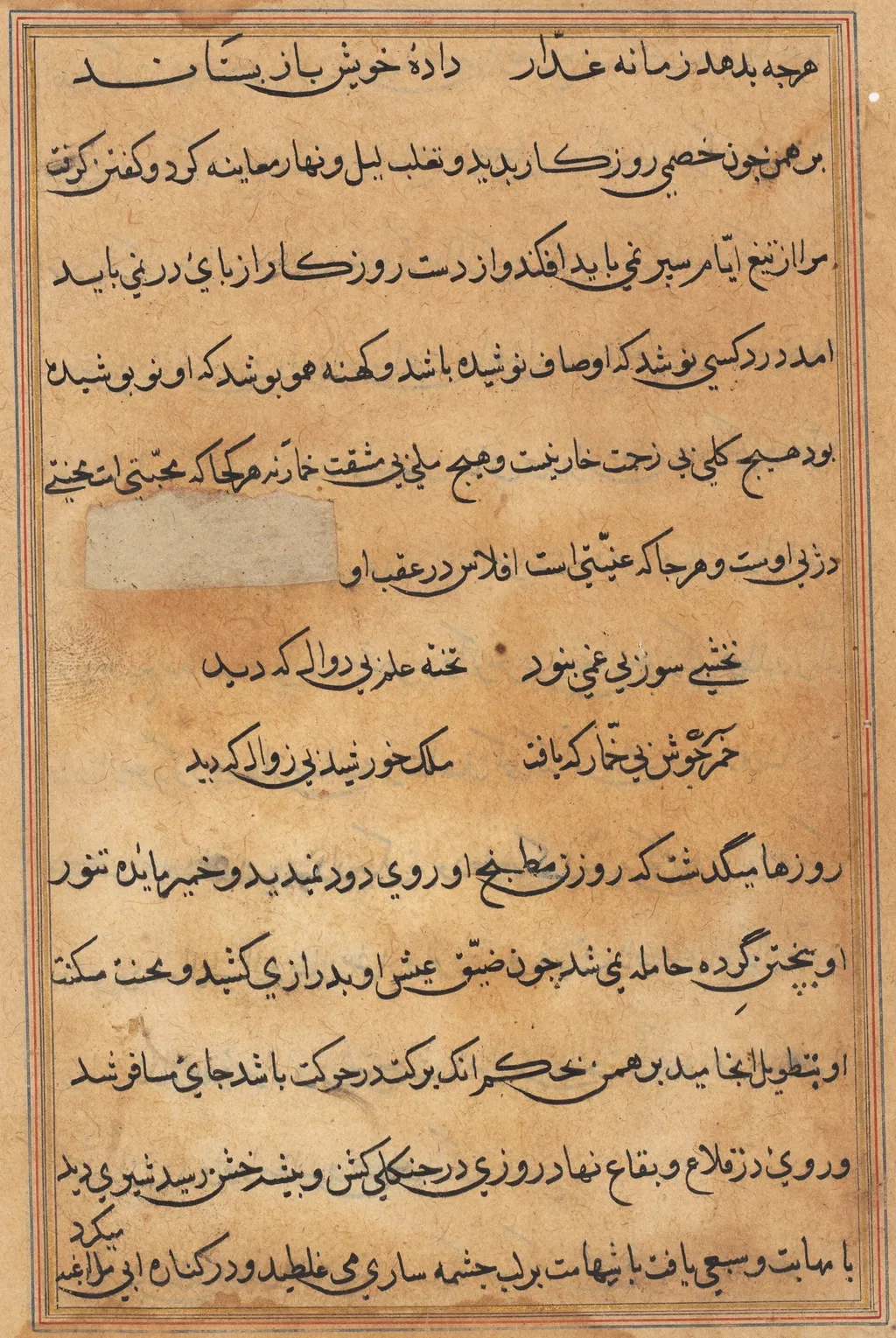
Page from Tales of a Parrot (Tuti-nama): text page is an unspecified painting. It dates from 1560 and is held in the collection of the Cleveland Museum of Art. The object is a single folio from the illustrated manuscript known as *Tuti‑nama* (Tales of a Parrot).
About this work
Overview
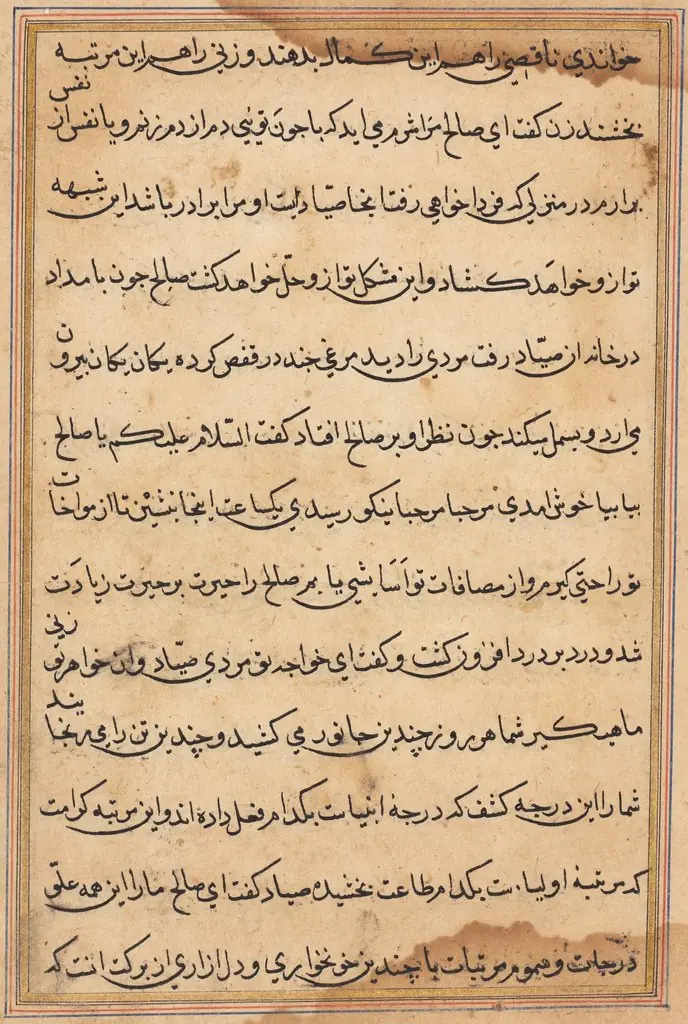
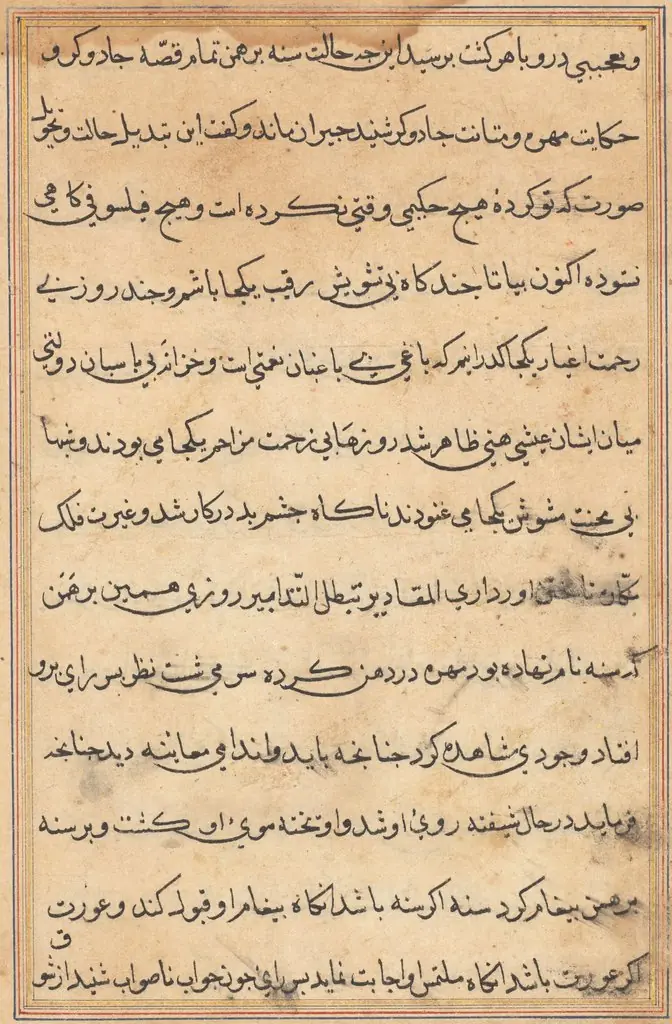
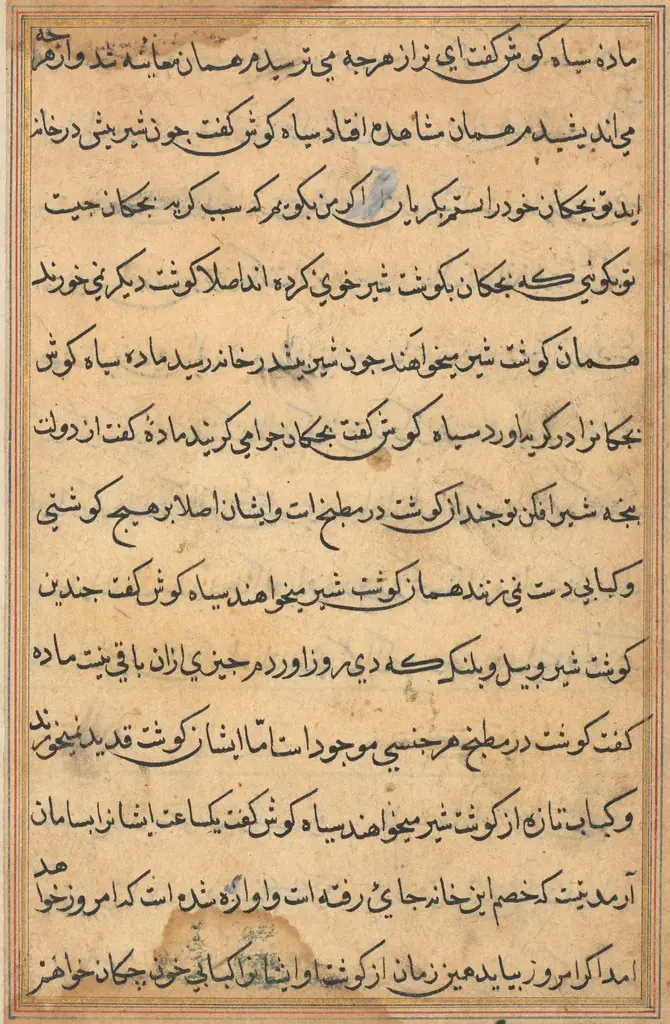
The object is a single folio from the illustrated manuscript known as *Tuti‑nama* (Tales of a Parrot). It consists of a page of text rendered in black ink upon a yellow‑brown paper support, with decorative marginal elements framing the composition.
Subject & Meaning
The page contains a narrative passage in a cursive script derived from Arabic‑Persian calligraphy. The text forms part of a larger collection of moral and romantic stories traditionally attributed to a talking parrot, a popular literary motif in Persianate cultures.
Technique & Style
The calligrapher employed a flowing, naskh‑type hand, emphasizing legibility while integrating ornamental flourishes that intertwine with the letters. The ink is uniformly dark, and the paper exhibits a warm, aged hue; marginal doodles consist of simple geometric motifs that echo contemporary manuscript decoration.
History & Provenance
The folio originates from a manuscript produced in the Persianate world, likely between the 16th and 18th centuries. It entered the museum collection through a mid‑20th‑century acquisition of South Asian and Middle Eastern manuscripts, though the precise previous owners are not recorded.
Context
*Tuti‑nama* belongs to a genre of illustrated books that combined prose with ornamental calligraphy, serving both educational and entertainment purposes. Such works were often commissioned for elite patrons and used as exemplars of refined literary taste within courtly and scholarly circles.
Artist & collection

 Page from Tales of a Parrot (Tuti-nama): text page
 Page from Tales of a Parrot (Tuti-nama): text page
 Page from Tales of a Parrot (Tuti-nama): text page
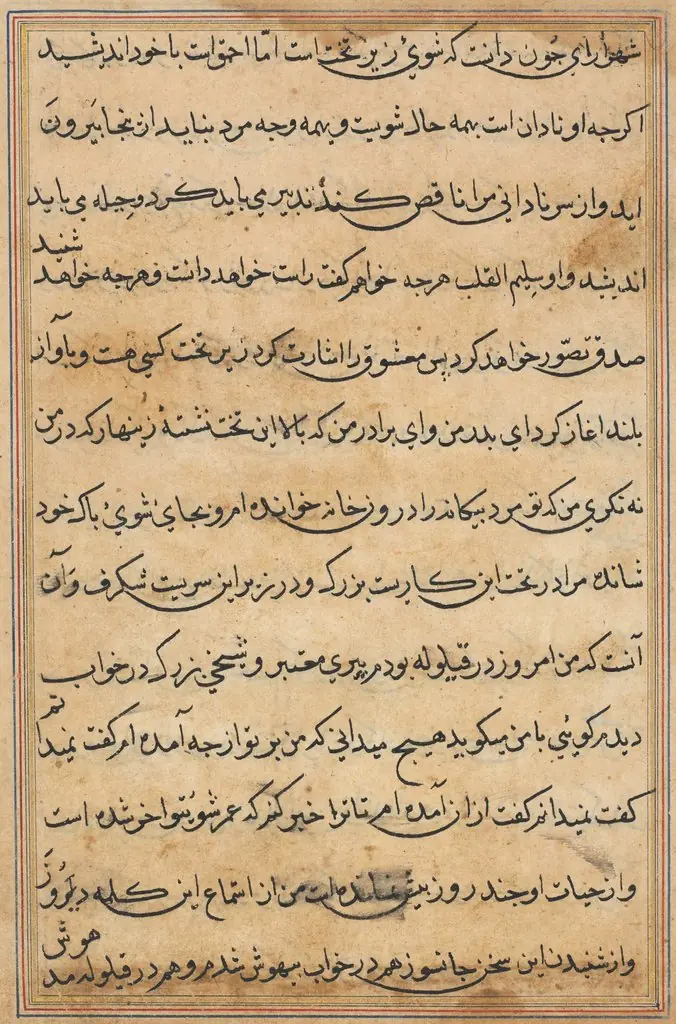 Page from Tales of a Parrot (Tuti-nama): text page
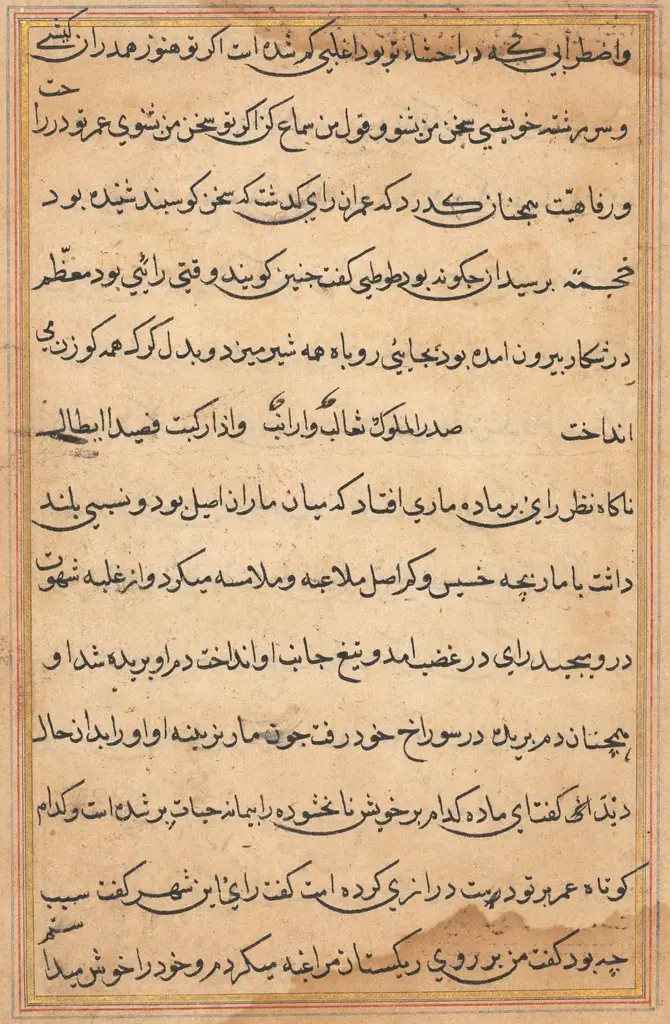 Page from Tales of a Parrot (Tuti-nama): text page
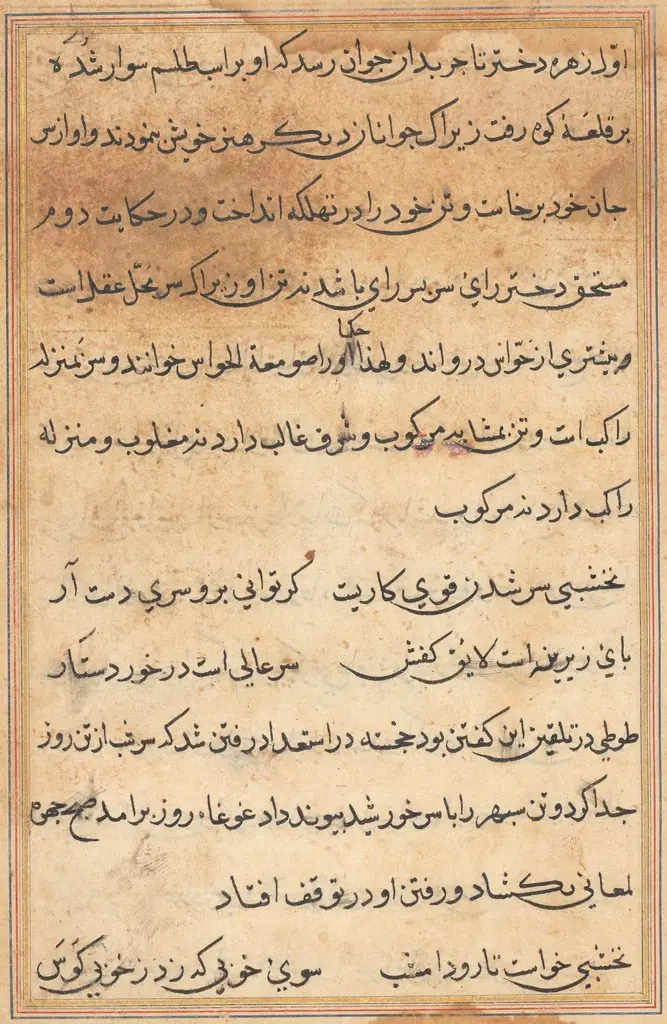 Page from Tales of a Parrot (Tuti-nama): text page
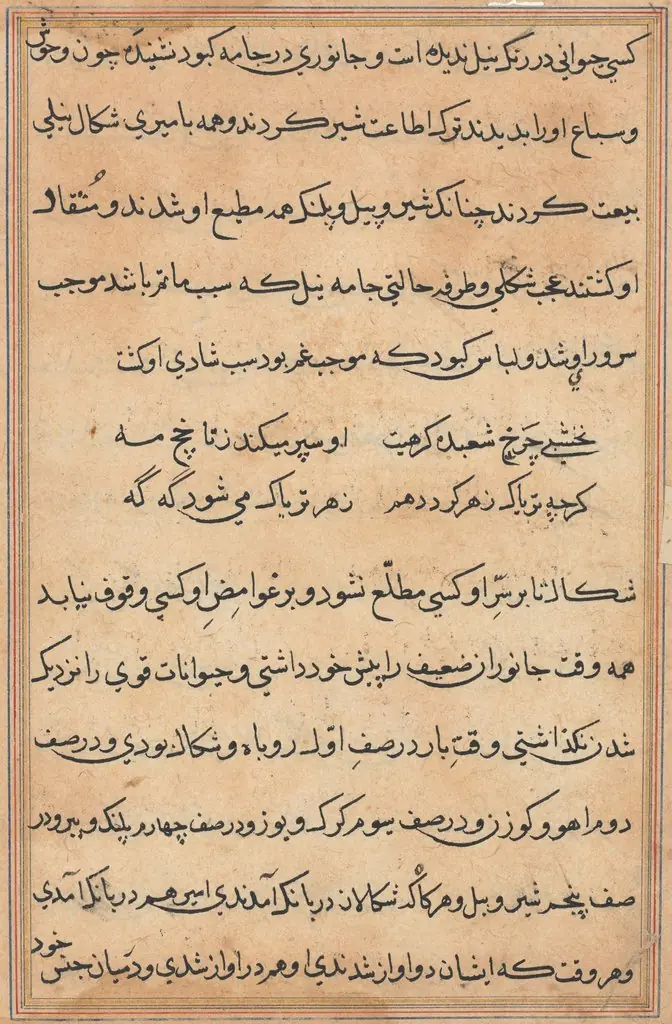 Page from Tales of a Parrot (Tuti-nama): text page
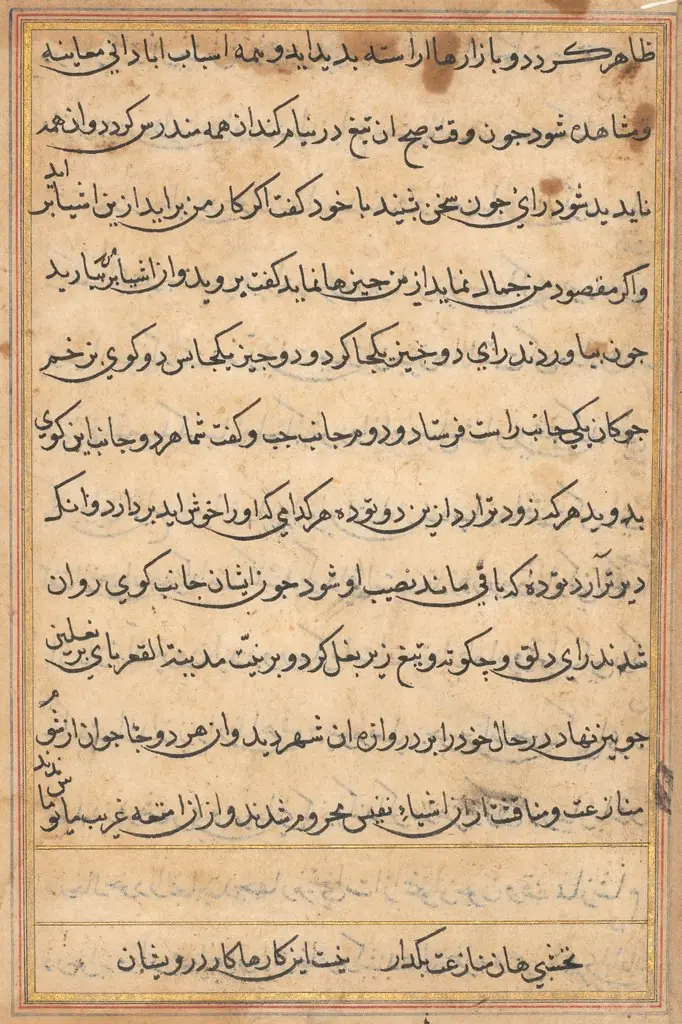 Page from Tales of a Parrot (Tuti-nama): text page
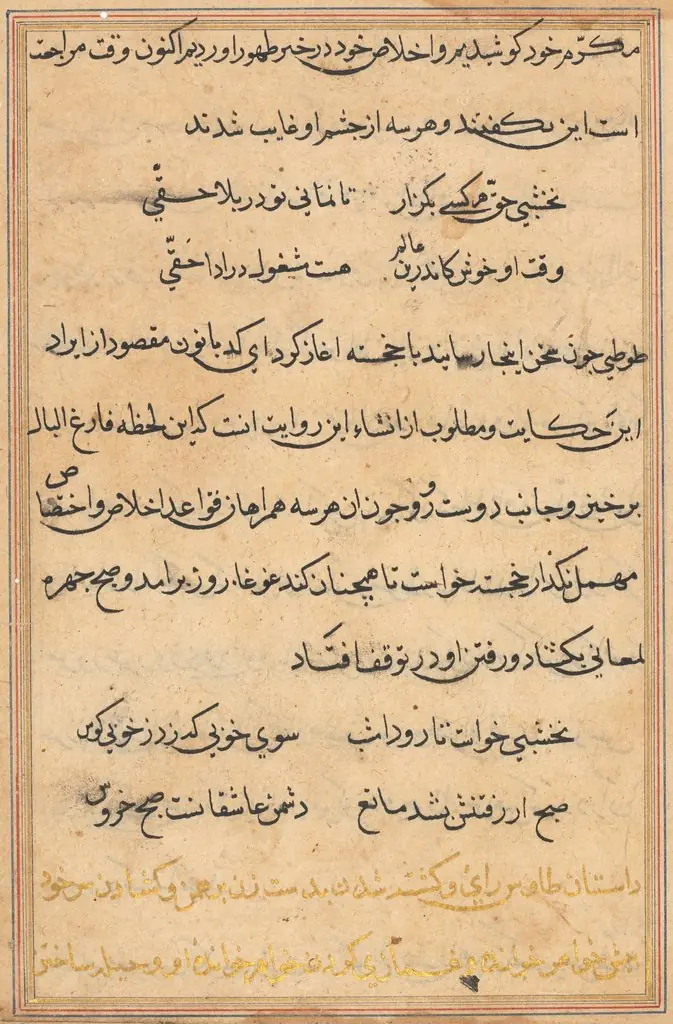 Page from Tales of a Parrot (Tuti-nama): text page
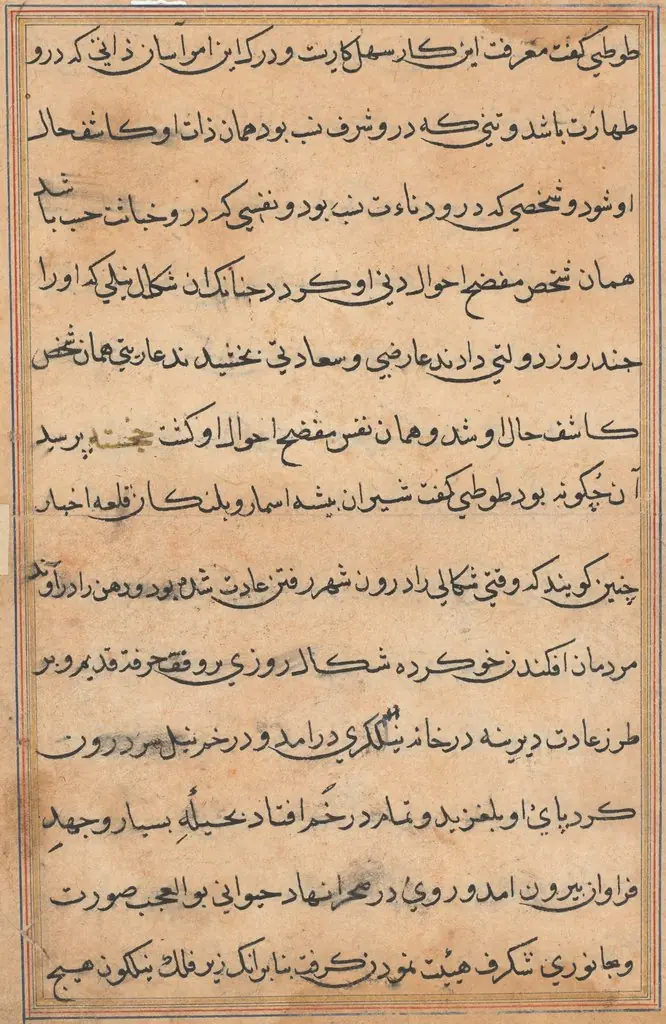 Page from Tales of a Parrot (Tuti-nama): text page
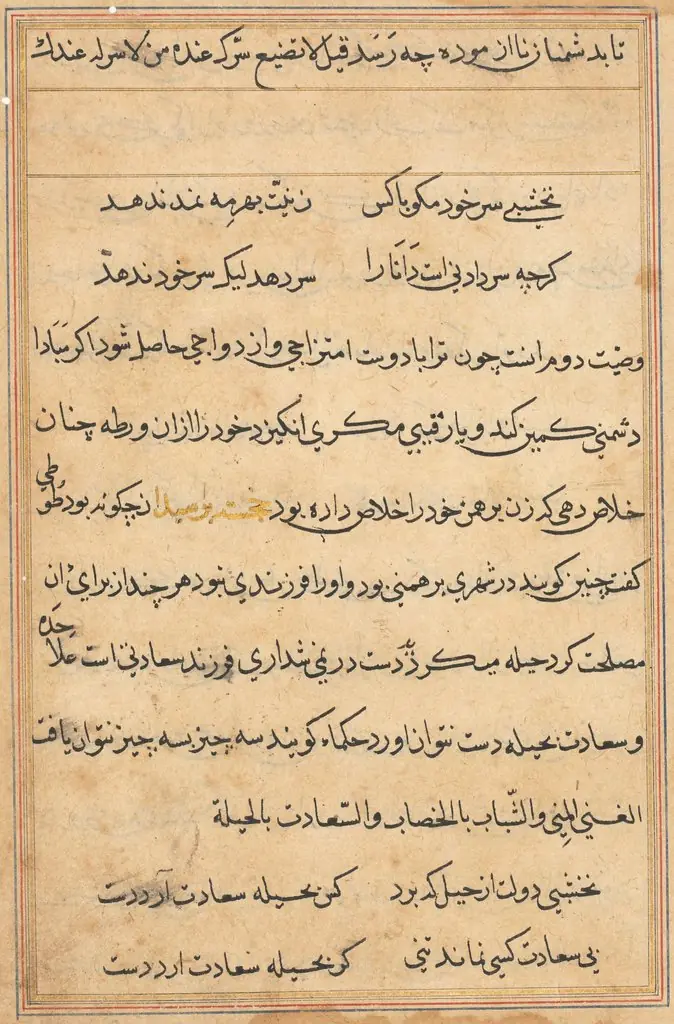 Page from Tales of a Parrot (Tuti-nama): text page