Artwork
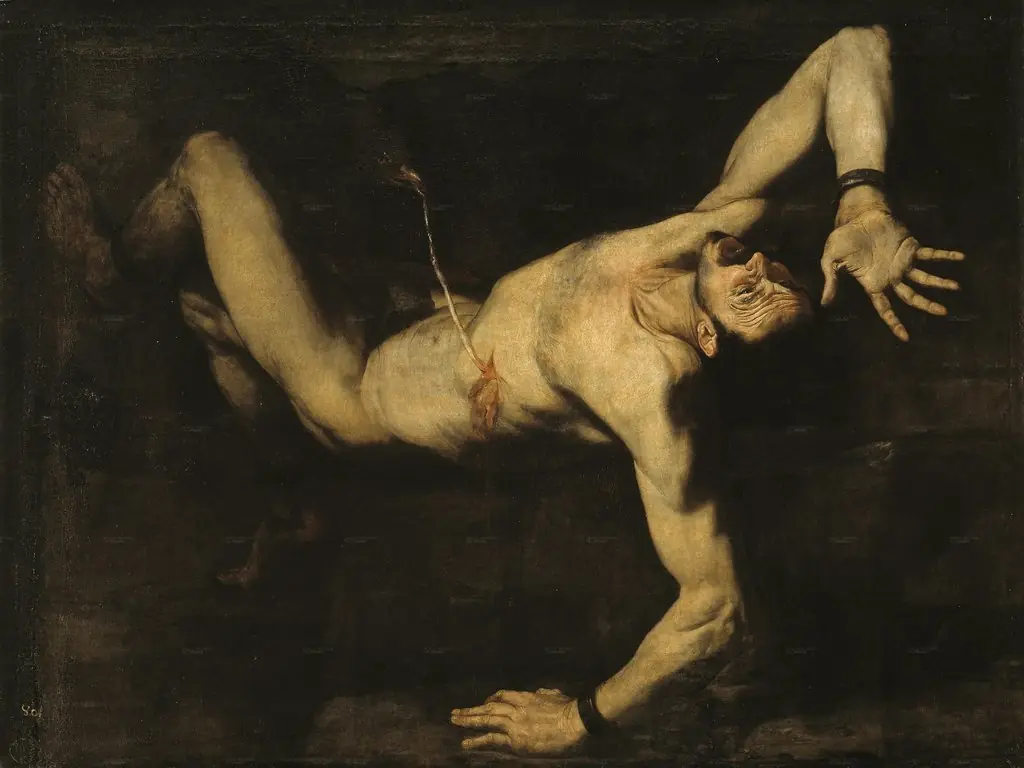
Tantalus
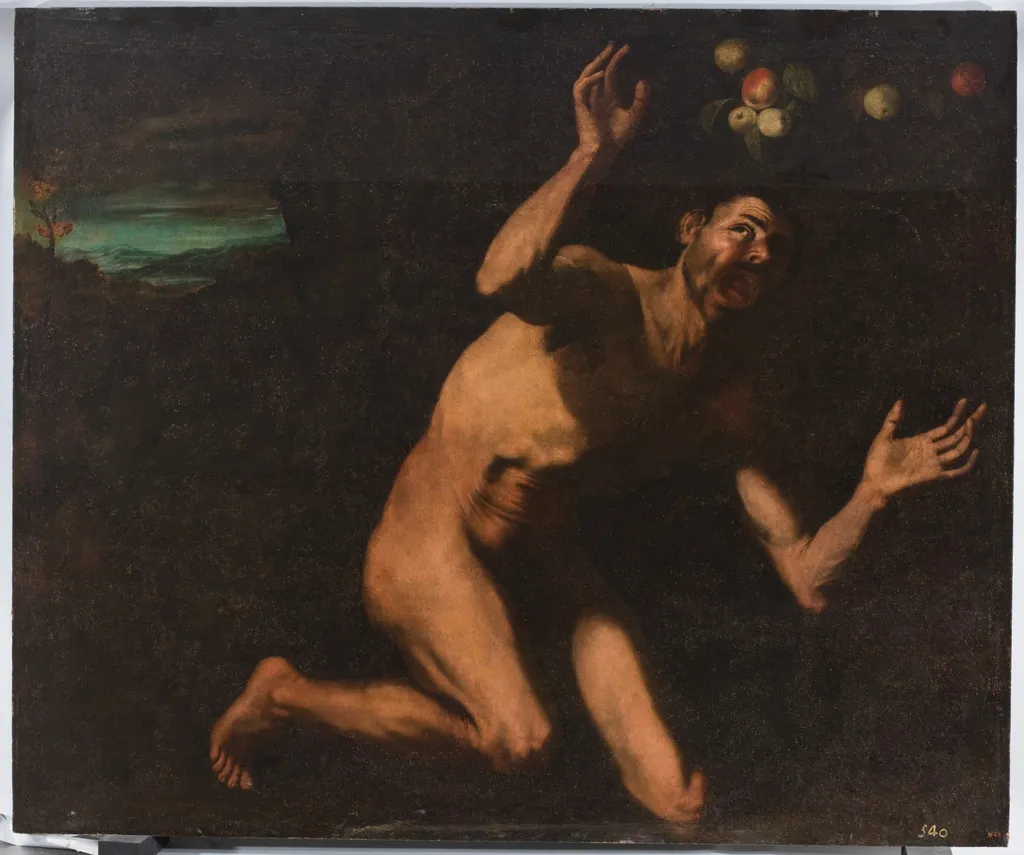
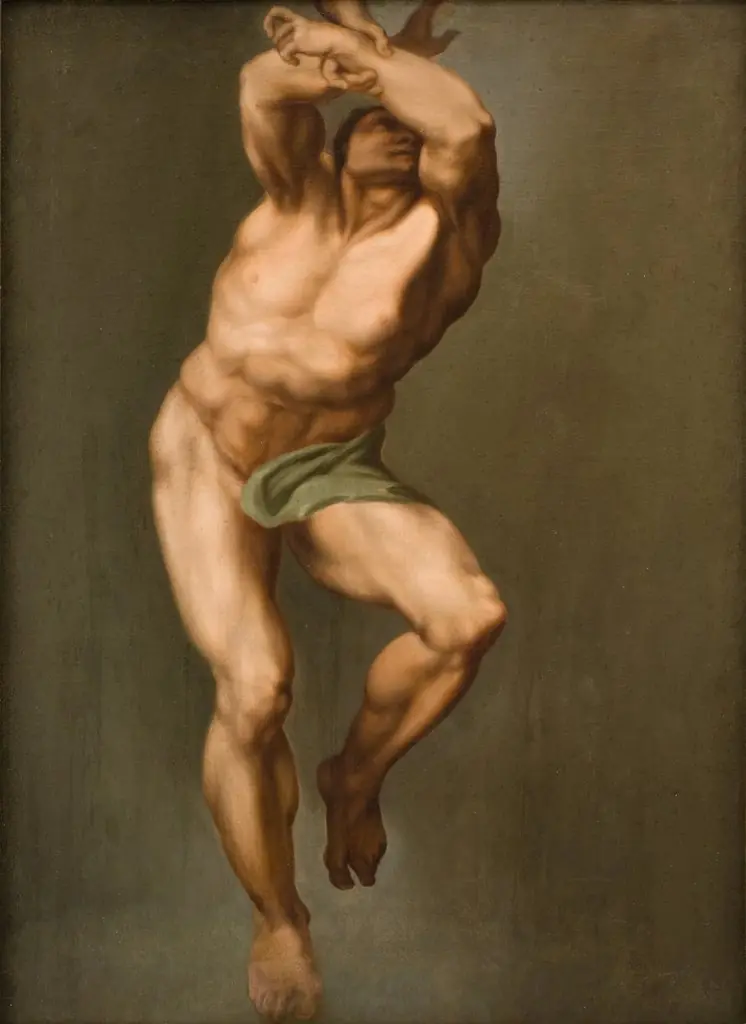
Tantalus is an oil painting by the Early Baroque Italian artist Unknown. It dates from 1601 and is held in the collection of the Museo del Prado.
About this work
Overview
The oil painting titled “Tantalus” presents a nude male figure captured in a moment of dynamic motion. His torso twists, arms stretch outward, and his legs bend as if he is leaping or descending, with his feet suspended above a darkened backdrop. The composition conveys a strong sense of kinetic energy, emphasizing the body's muscular definition and the sudden, startled expression on his face.
Subject & Meaning
The central figure appears to embody the mythological character Tantalus, whose punishment involved perpetual longing and unreachable desire. The inclusion of a few apples and leaves in the upper right corner alludes to the fruit that Tantalus could never attain, reinforcing the theme of unattainable reward and the tension between aspiration and frustration.
Technique & Style
The artist employs chiaroscuro to model the figure, allowing light to carve out the contours of muscle, tendon, and vein against a deep, shadowy background. This contrast creates a three‑dimensional presence, while the limited palette focuses attention on the illuminated body. The brushwork suggests a controlled yet vigorous handling of paint, enhancing the sense of movement.
History & Provenance
The work is recorded as an oil on canvas, though specific details about its creation date, artist, or ownership history are not provided in the available description. Consequently, its provenance remains undocumented within the supplied information.
Artist & collection

 Domestic Scene
 Giacomo and Cardinal Marco, investing Andrea, Abbot of San Zeno, with his Benefice
 The Nymph of Fontainebleau
 Portrait of a Woman
 Madonna and Child with Saints in the Enclosed Garden
 Venus and Minerva
 Family Group of Four on Sofa
 Wall painting from Room H of the Villa of P. Fannius Synistor at Boscoreale