Artwork
Habbaza meets Bashir under a tree, from a Tuti-nama (Tales of a Parrot): Twenty-fourth Night
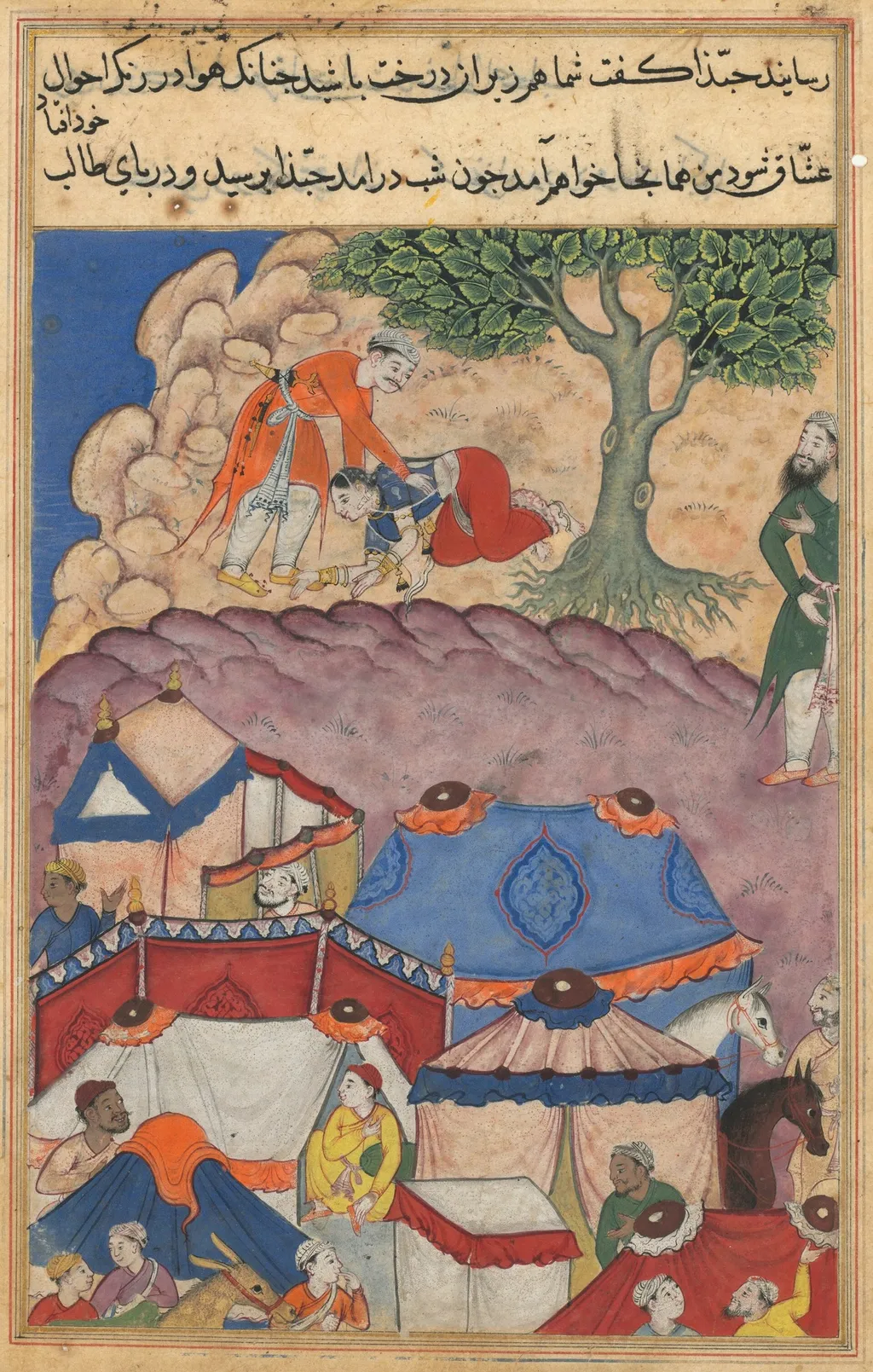
Habbaza meets Bashir under a tree, from a Tuti-nama (Tales of a Parrot): Twenty-fourth Night is an unspecified painting. It dates from 1560 and is held in the collection of the Cleveland Museum of Art. The work depicts a bustling outdoor gathering centered around a red tent, set against a modest hill and a large tree.
About this work
Overview
The work depicts a bustling outdoor gathering centered around a red tent, set against a modest hill and a large tree. Figures in vivid red, orange, blue and green garments occupy the scene, some climbing the slope while others sit or stand beneath the canopy. A horse is positioned to the right, and the sky is dotted with fluffy white clouds, creating a lively atmosphere.
Subject & Meaning
The composition illustrates a moment from the "Tuti‑nama" (Tales of a Parrot), specifically the twenty‑fourth night in which Habbaza meets Bashir beneath a tree. The gathering suggests a social encounter or storytelling event, with the tent and the surrounding figures emphasizing hospitality and communal interaction typical of the narrative’s setting.
Technique & Style
Rendered in bright, saturated pigments, the painting employs a flat decorative approach characteristic of Persian miniature traditions.
Rendered in bright, saturated pigments, the painting employs a flat decorative approach characteristic of Persian miniature traditions. Figures are outlined with fine lines, and patterned turbans and garments display intricate detailing. The use of bold reds and oranges against cooler blues and greens creates visual contrast, while the stylized clouds and foliage convey a sense of ornamental space rather than realistic depth.
History & Provenance
The piece originates from a manuscript illustration of the "Tuti‑nama," a Persian literary work popular in the medieval Islamic world. It is now part of the collection of the Cleveland Museum of Art, which acquired it as part of its holdings of illustrated manuscripts, though the precise acquisition date and previous ownership remain undocumented in the available records.
Artist & collection

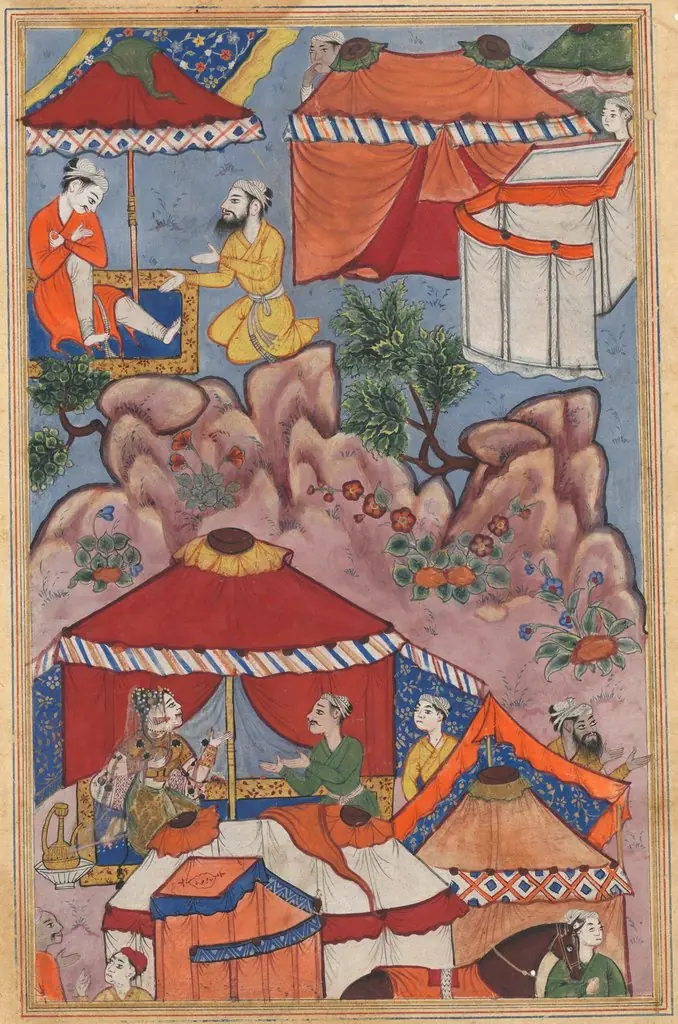 Bashir confides his love for Habbaza to an Arab friend, and sends him to her with a message, from a Tuti-nama (Tales of a Parrot): Twenty-fourth Night
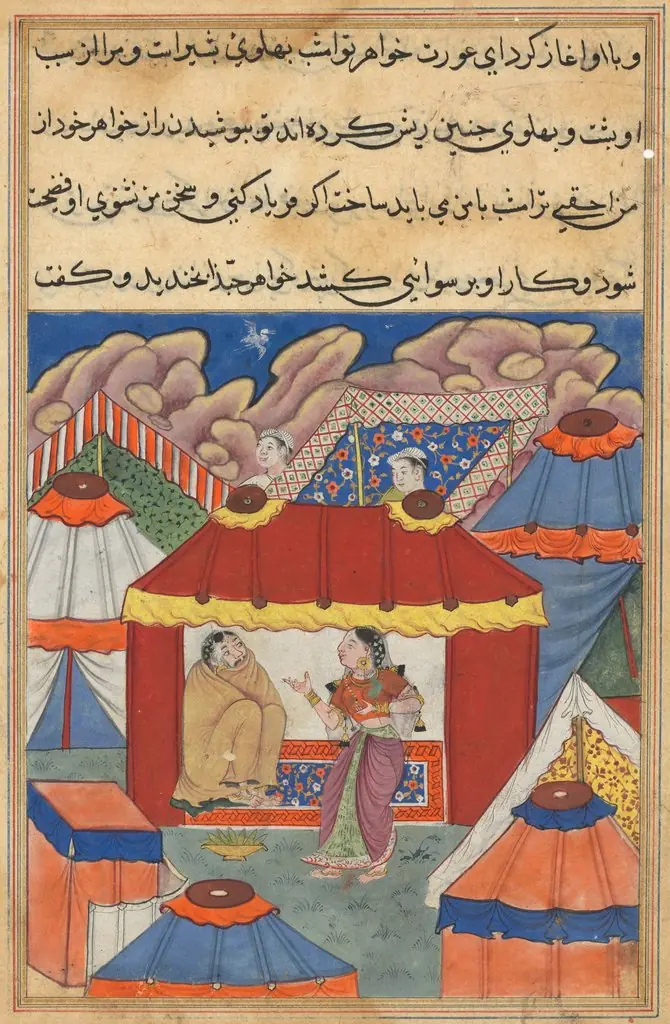 Habbaza’s sister, who is sent to console her, discovers the disguised Arab in her place, from a Tuti-nama (Tales of a Parrot): Twenty-fourth Night
 Tuti-Nama (Tales of a Parrot)
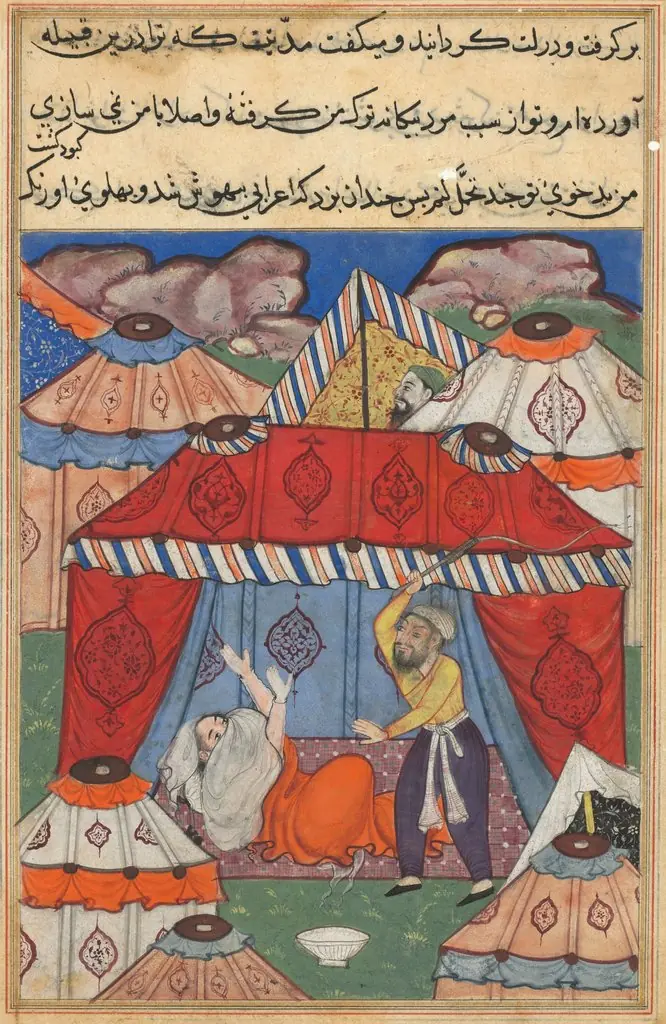 The disguised Arab, substituting for Habbaza, is whipped by her husband for refusing a bowl of milk, from a Tuti-nama (Tales of a Parrot): Twenty-fourth Night
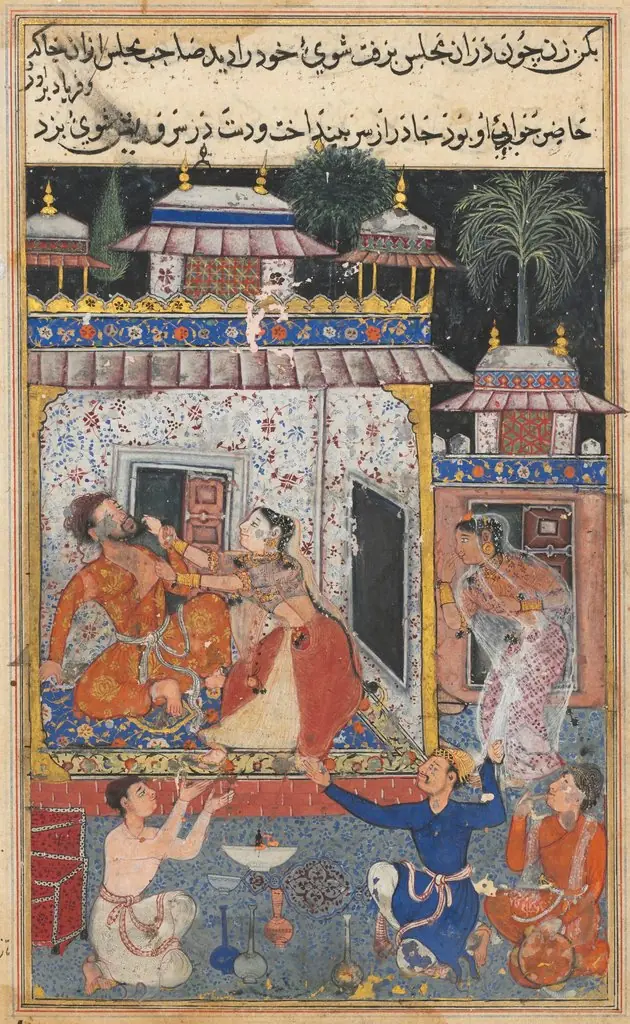 The deceitful wife assaults her erring husband, from a Tuti-nama (Tales of a Parrot): Eighth Night
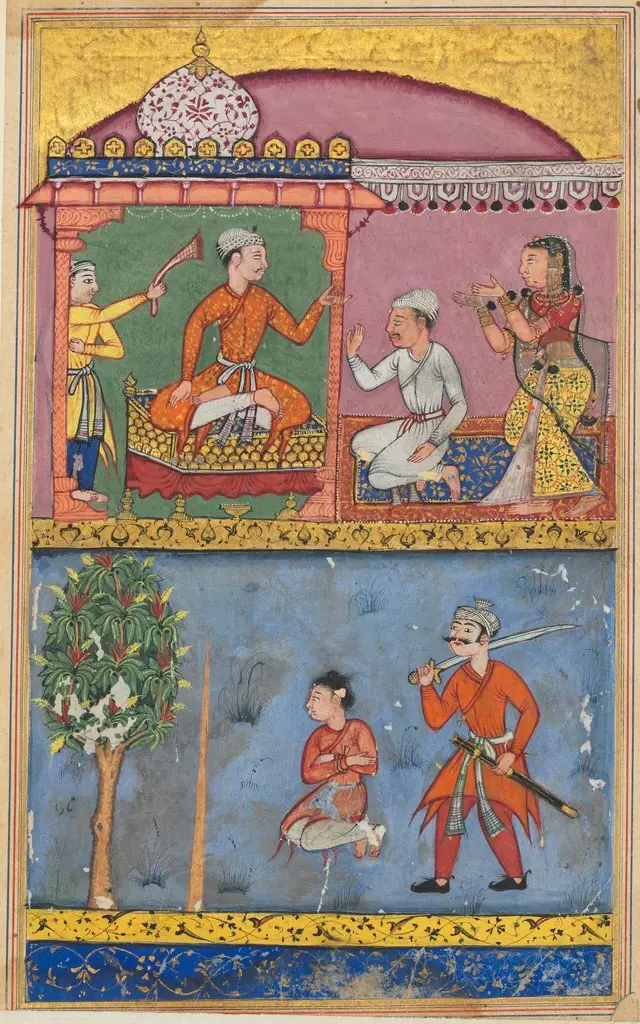 The handmaiden appeals for justice and the prince is taken to the execution site for the fourth time, from a Tuti-nama (Tales of a Parrot): Eighth Night