Artwork
Habbaza’s sister, who is sent to console her, discovers the disguised Arab in her place, from a Tuti-nama (Tales of a Parrot): Twenty-fourth Night
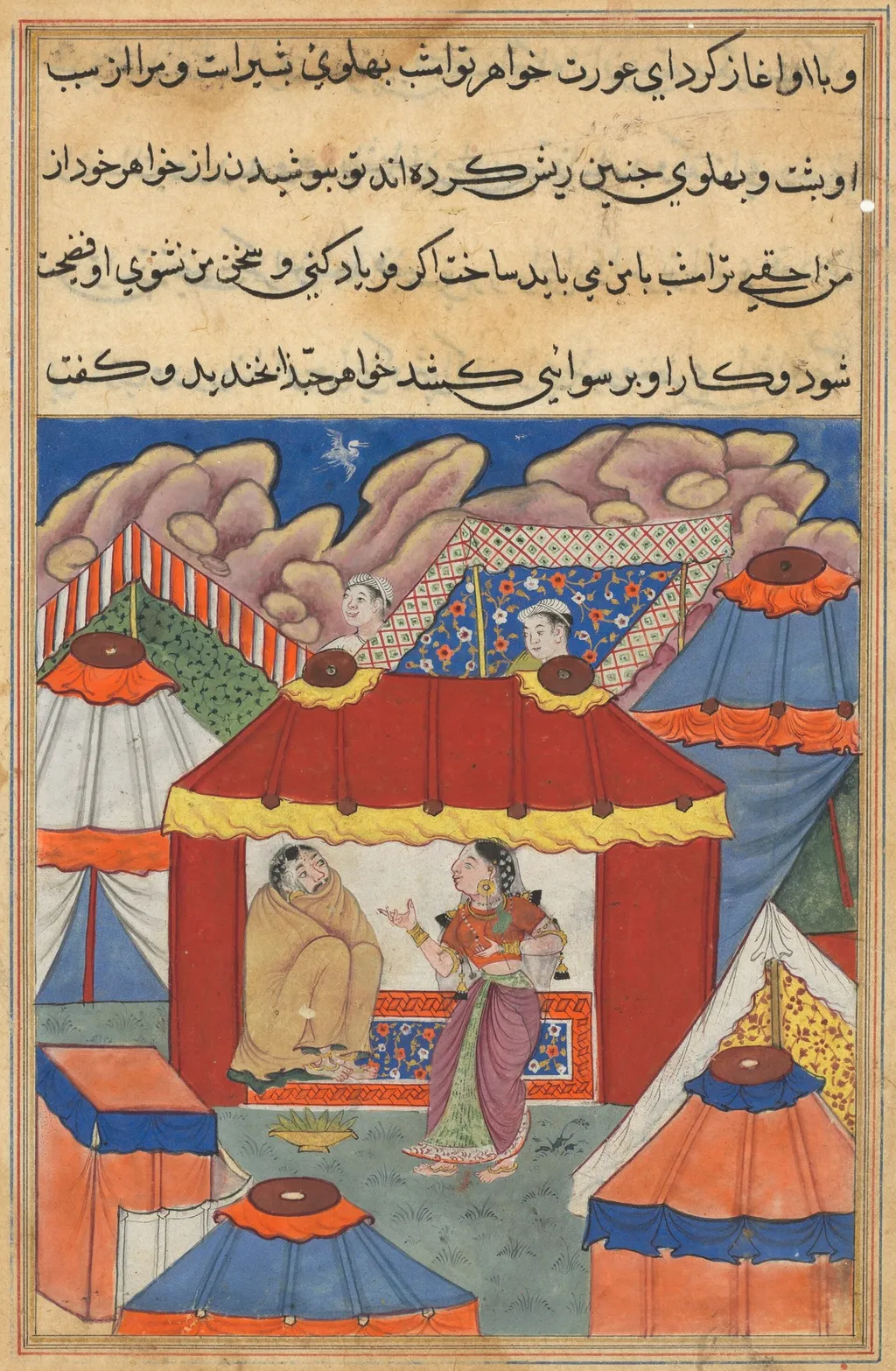
Habbaza’s sister, who is sent to console her, discovers the disguised Arab in her place, from a Tuti-nama (Tales of a Parrot): Twenty-fourth Night is an unspecified painting. It dates from 1560 and is held in the collection of the Cleveland Museum of Art. The work depicts an interior scene set within a vividly colored red tent trimmed in yellow.
About this work
Overview
The work depicts an interior scene set within a vividly colored red tent trimmed in yellow. A woman dressed in green stands beside a seated man, cradling an infant, while outside three additional tents—red, orange, and blue—are arranged beneath a sky dotted with soft clouds. The composition is dominated by bold hues of red, blue, and gold, and the fabrics are richly patterned.
Subject & Meaning
The narrative illustrated derives from the twenty‑fourth night of the Tuti‑nama, a collection of parrot tales. It shows the sister of Habbaza arriving to console her sibling, only to discover that an Arab, disguised as a woman, has taken her place. The woman's startled gesture and the man's surprised expression convey a moment of confusion and revelation within the story.
Technique & Style
Executed in a flat, decorative manner, the painting employs strong, saturated colors and stylized patterns that emphasize surface ornamentation over naturalistic depth. The use of bold outlines and simplified forms aligns with a manuscript illustration tradition, while the vivid palette and patterned textiles reflect a decorative aesthetic typical of Persian narrative art.
Context
Tents serve as a recurring motif in Persian and Central Asian visual culture, symbolizing temporary dwellings, caravans, and social gatherings. In this piece, the red tent interior functions as a stage for the narrative, while the external tents frame the scene, reinforcing the setting’s itinerant, storytelling atmosphere.
Artist & collection

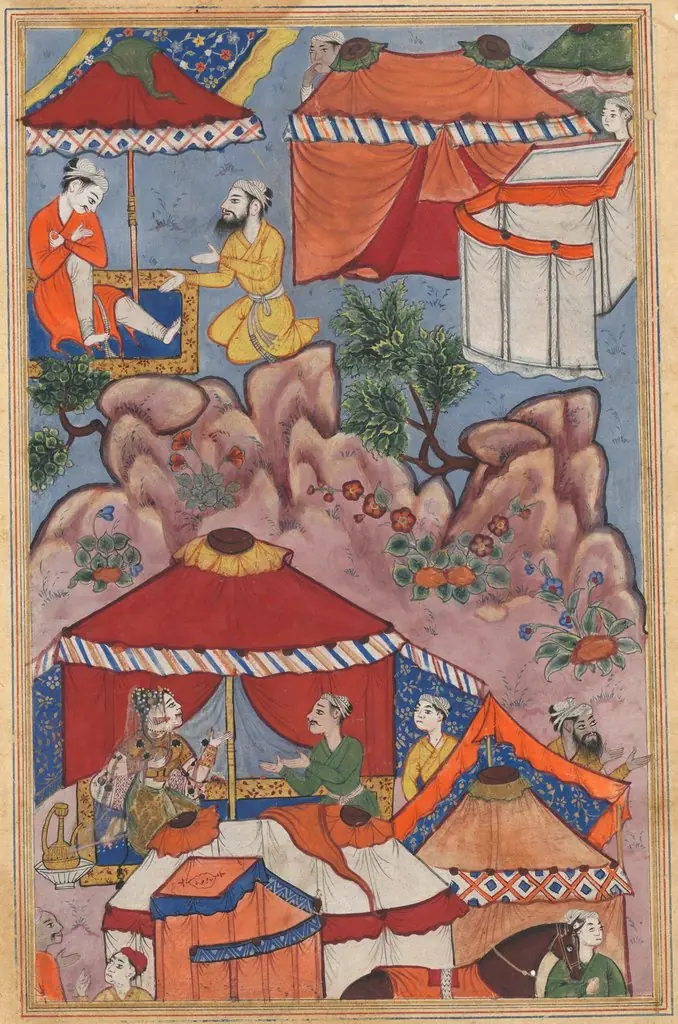 Bashir confides his love for Habbaza to an Arab friend, and sends him to her with a message, from a Tuti-nama (Tales of a Parrot): Twenty-fourth Night
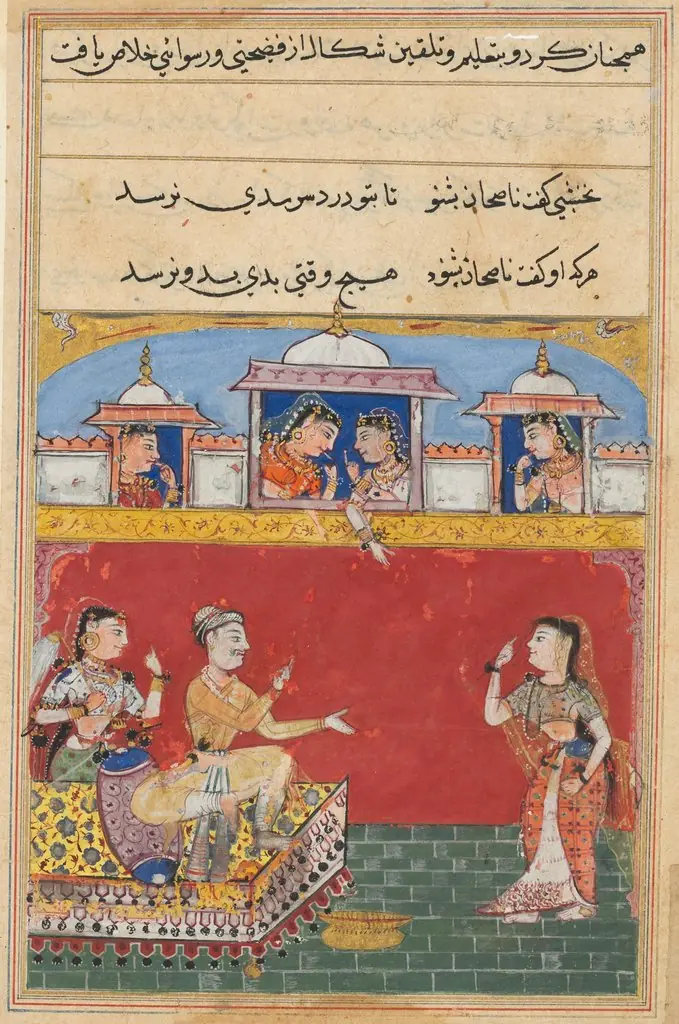 The daughter-in-law returns from her misadventure, feigning insanity, from a Tuti-nama (Tales of a Parrot): Sixteenth Night
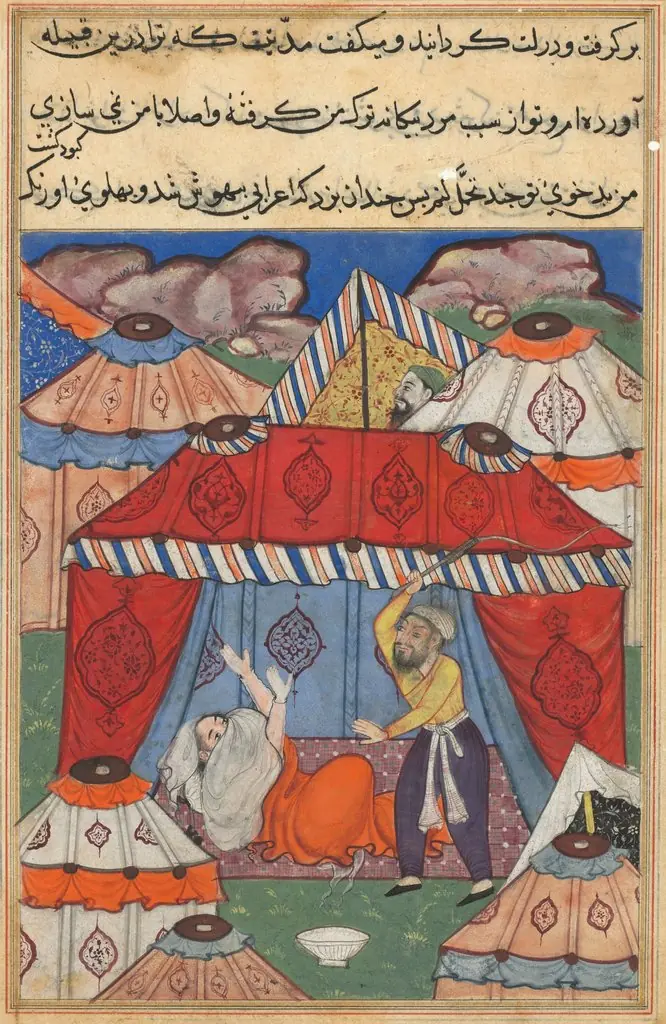 The disguised Arab, substituting for Habbaza, is whipped by her husband for refusing a bowl of milk, from a Tuti-nama (Tales of a Parrot): Twenty-fourth Night
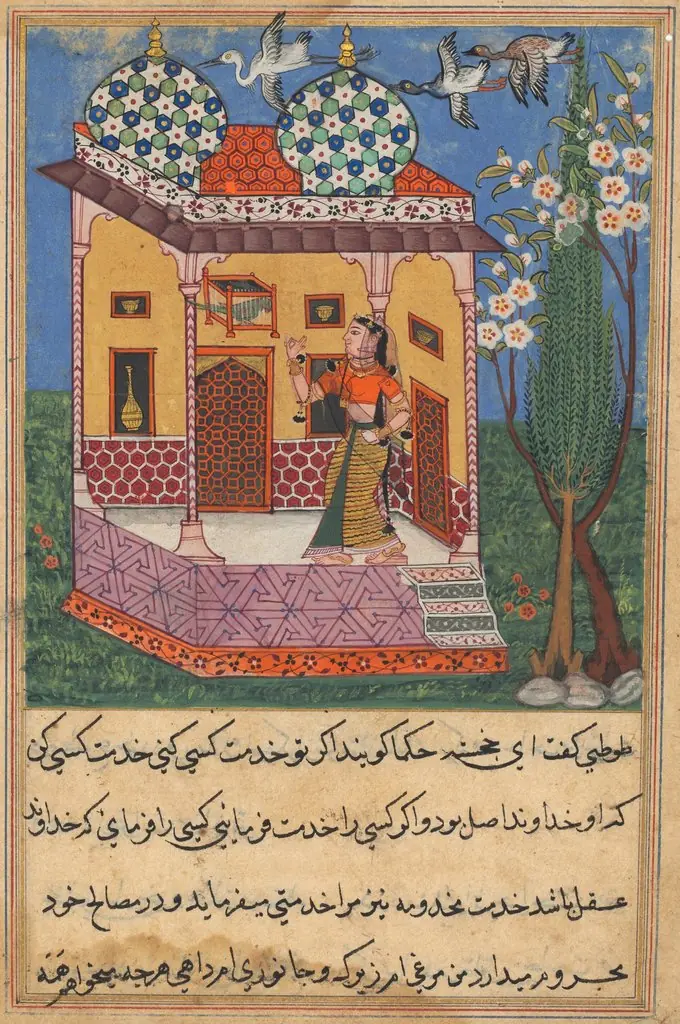 The Parrot Addresses Khujasta at the Beginning of the Twenty-sixth Night, from a Tuti-nama (Tales of a Parrot)
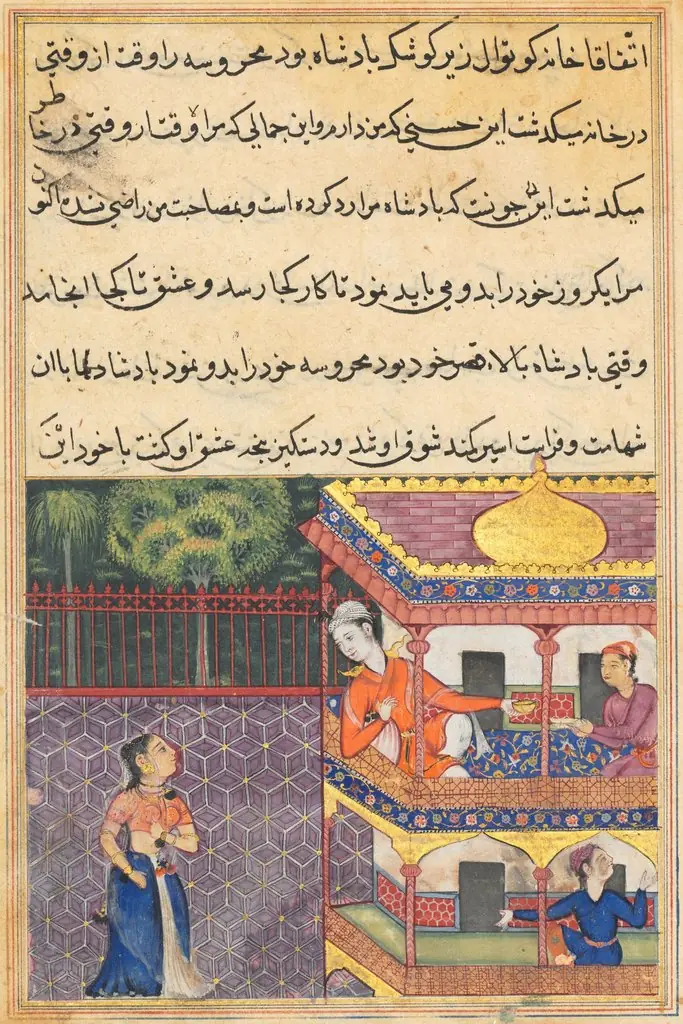 The king of Zabul sees Mahrusa from his palace balcony, from a Tuti-nama (Tales of a Parrot): Thirty-sixth Night
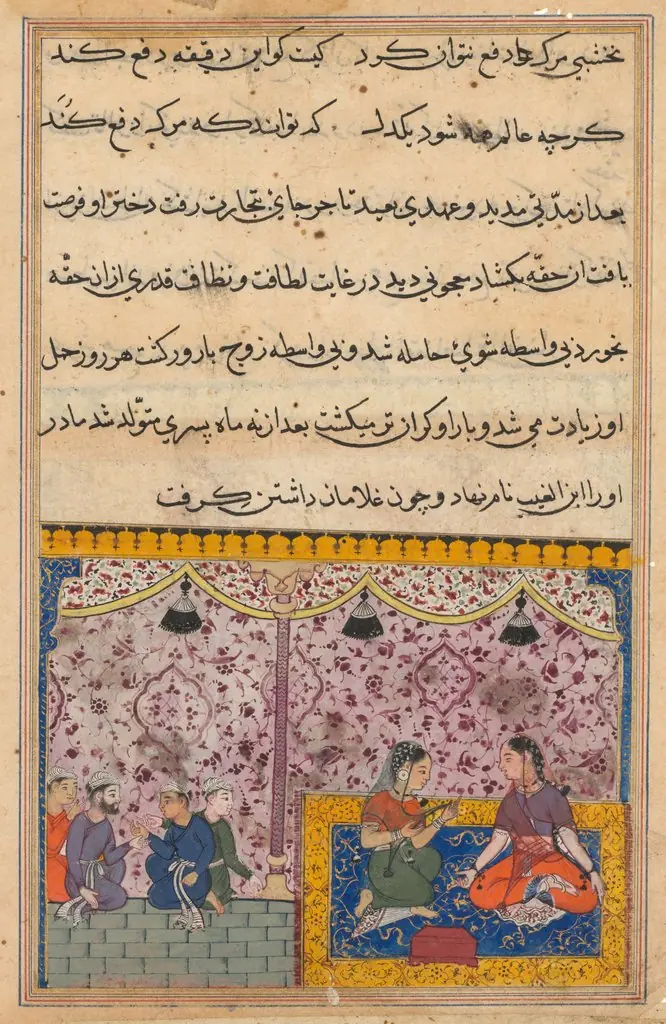 The merchant’s daughter gives birth to a son as a result of eating out of the box. The clever child recognizes the false gems from true, from a Tuti-nama (Tales of a Parrot): Twenty-third Night
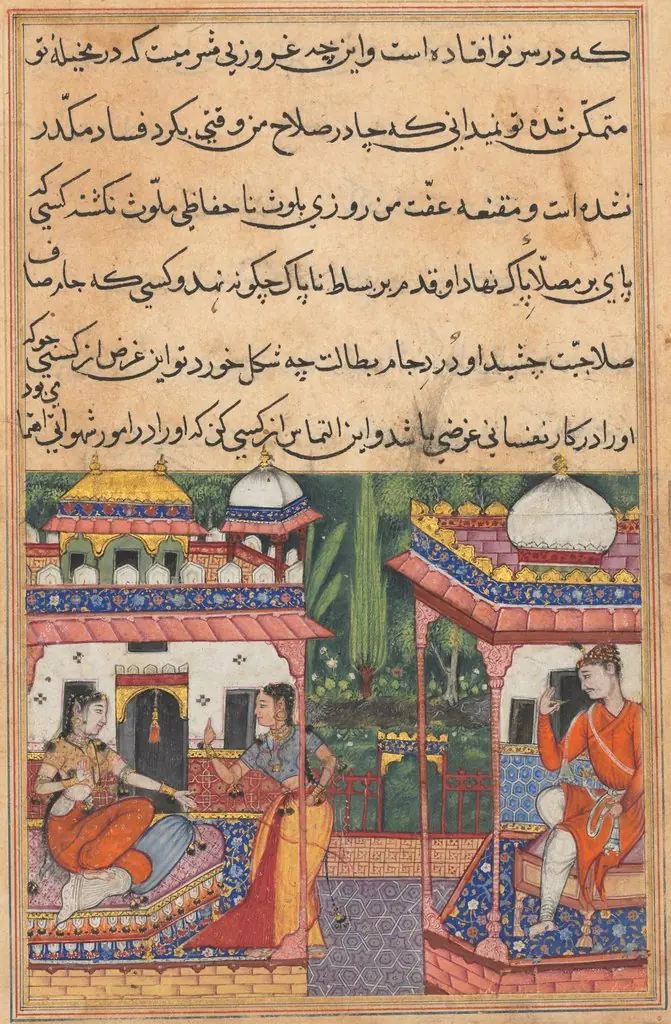 Kaiwan sends a message of love to Khurshid, wife of his brother Utarid who is away on a journey, from a Tuti-nama (Tales of a Parrot): Thirty-second Night
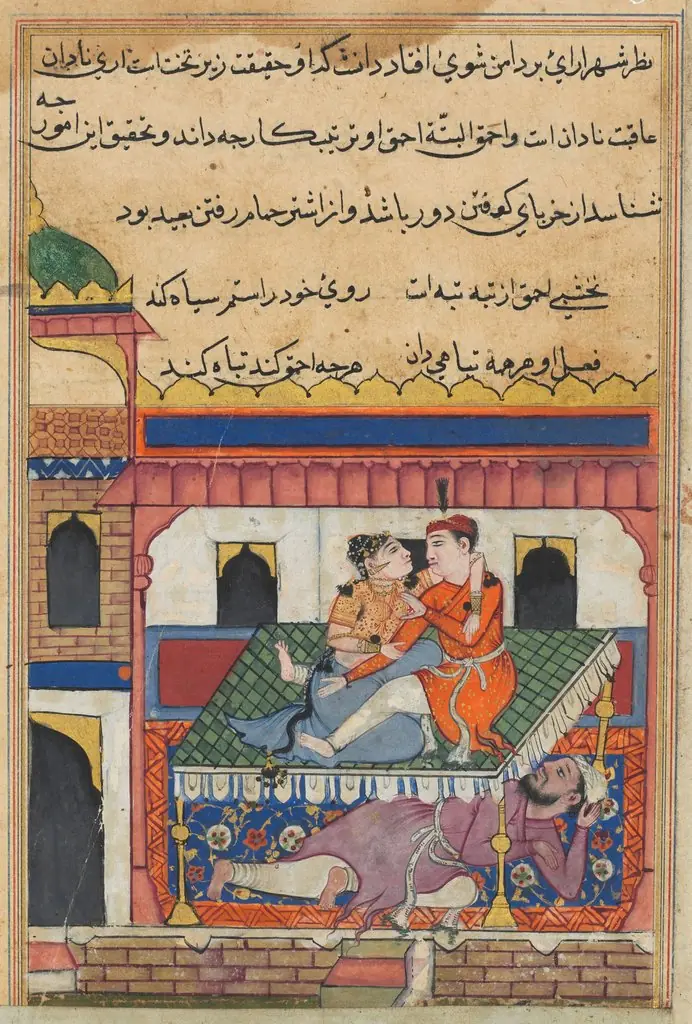 Shahr-Arai and her lover dallying on a bed beneath which is concealed her husband, from a Tuti-nama (Tales of a Parrot): Fortieth Night
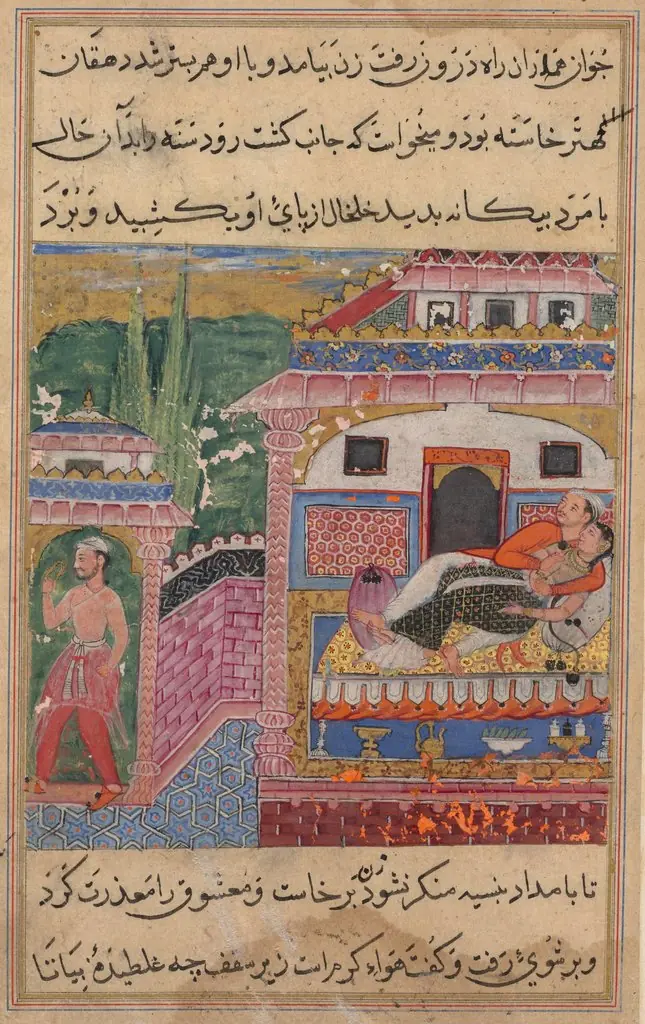 The deceitful wife persuades her husband to sleep in the same place where she had previously slept with her lover, from a Tuti-nama (Tales of a Parrot): Eighth Night
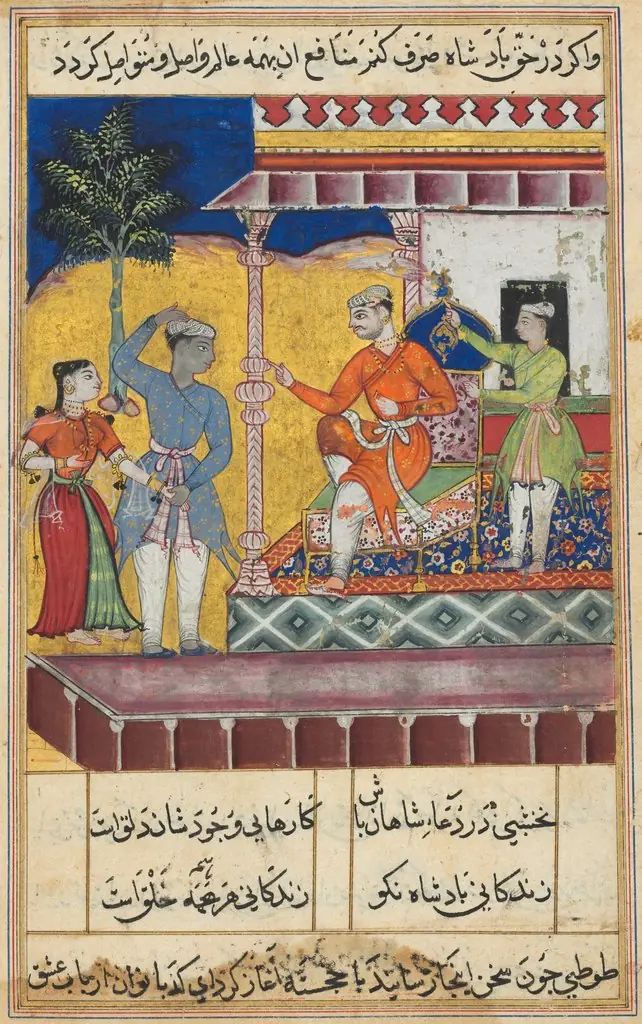 The rejuvenated old man and the daughter of the king of the jinns take leave of the King of Kings, from a Tuti-nama (Tales of a Parrot): Seventh Night