Artwork
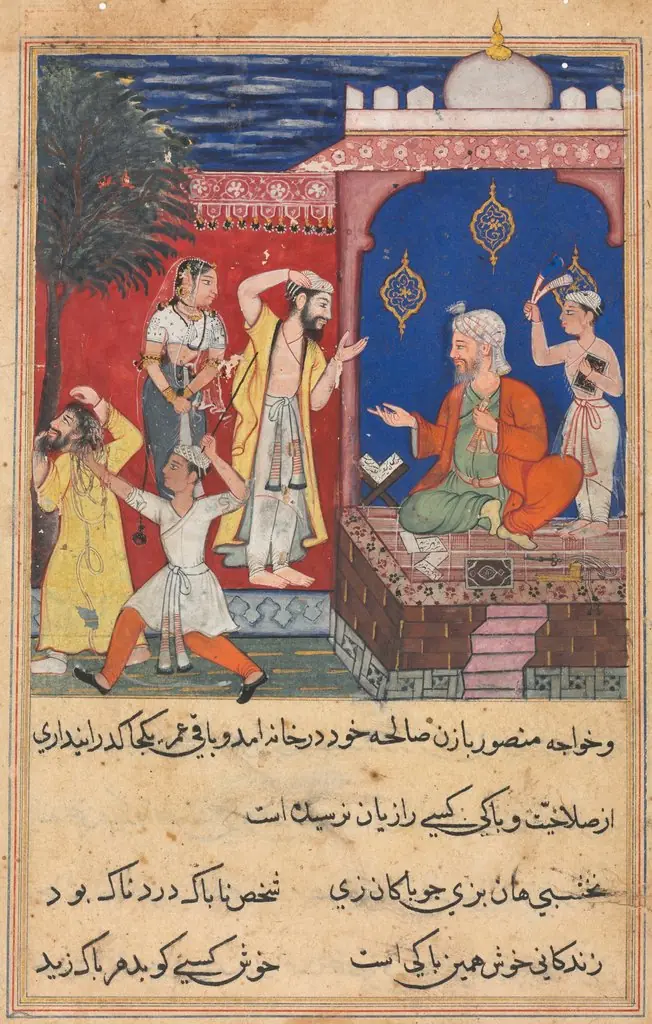
The disguised Arab, substituting for Habbaza, is whipped by her husband for refusing a bowl of milk, from a Tuti-nama (Tales of a Parrot): Twenty-fourth Night
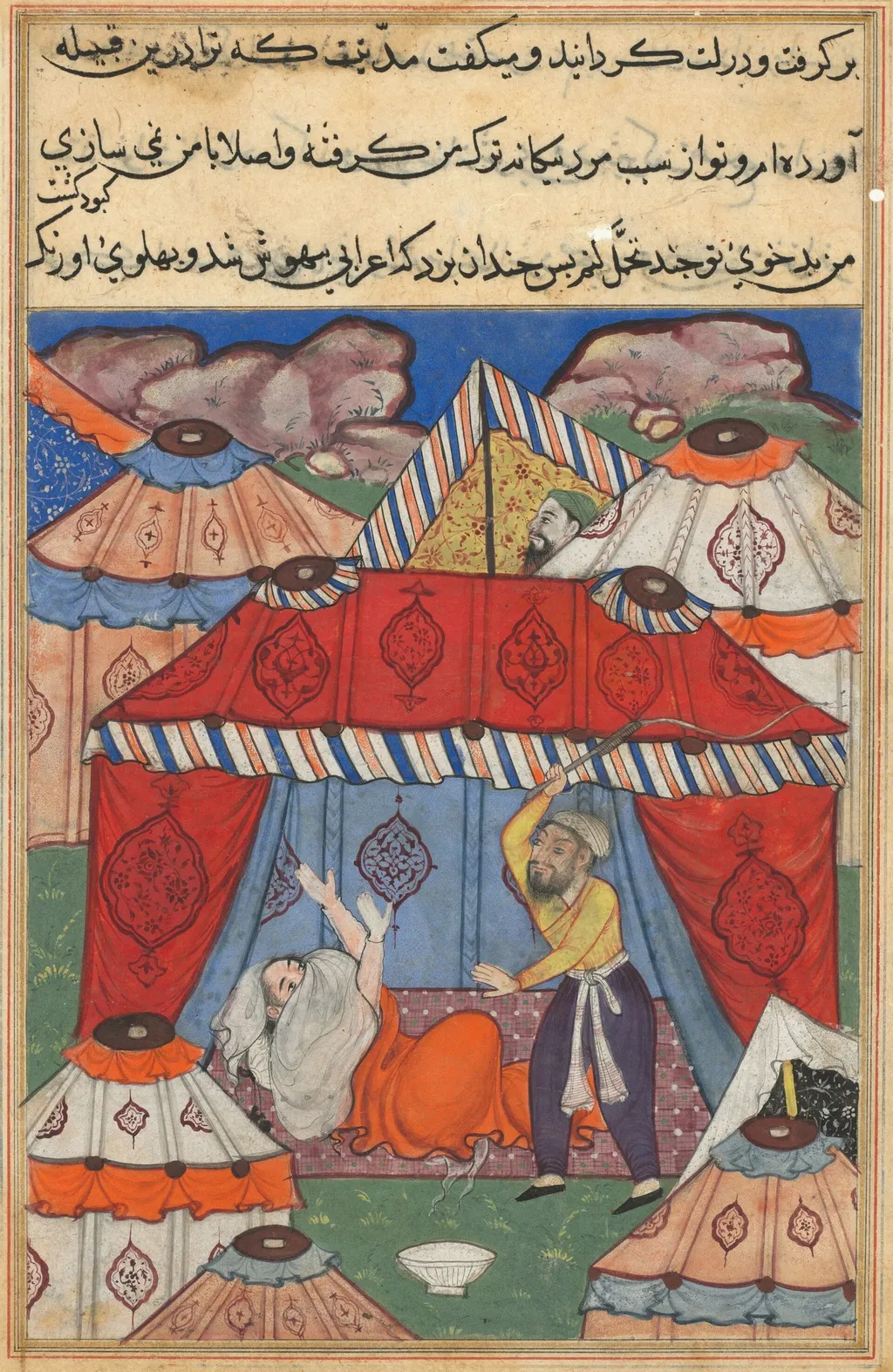
The disguised Arab, substituting for Habbaza, is whipped by her husband for refusing a bowl of milk, from a Tuti-nama (Tales of a Parrot): Twenty-fourth Night is an unspecified painting. It dates from 1560 and is held in the collection of the Cleveland Museum of Art. The work depicts a tense encounter within a vivid red tent.
About this work
Overview
The work depicts a tense encounter within a vivid red tent. A man dressed in a yellow robe gestures upward while a kneeling woman raises her arms in a posture of submission. Striped orange‑and‑white tents line the background, and two large eyes peer from behind them. Above, a blue sky dotted with white clouds frames Arabic calligraphy that arches across the top of the composition.
Subject & Meaning
The scene illustrates a domestic dispute drawn from a Tuti‑nama, a collection of moral tales featuring a parrot narrator.
The scene illustrates a domestic dispute drawn from a Tuti‑nama, a collection of moral tales featuring a parrot narrator. The woman, identified as a disguised Arab substituting for Habbaza, is being chastised by her husband for refusing a bowl of milk, a refusal that leads to her being whipped. The narrative serves as a cautionary example about obedience and hospitality within the story’s cultural context.
Technique & Style
Executed in a flat, illustrative manner, the painting employs bold, saturated colors—particularly the dominant red of the tent and the bright yellow of the male figure’s robe. Linear Arabic script crowns the scene, while simplified forms and decorative patterns convey a storybook quality rather than naturalistic detail. The composition balances a central action with patterned background elements that guide the viewer’s eye.
Context
The image originates from a Tuti‑nama, a genre of illustrated manuscripts popular in Persianate societies that combined prose, poetry, and moral instruction. Such works often featured vivid scenes designed to convey ethical lessons to a broad audience, using familiar domestic settings and recognizable gestures to communicate the narrative.
Legacy
Illustrations from Tuti‑nama collections have informed modern understandings of everyday life, gender dynamics, and didactic storytelling in pre‑modern Islamic cultures. By preserving visual representations of these moral tales, the painting contributes to scholarly insight into the interplay of art, literature, and social norms in its originating tradition.
Artist & collection

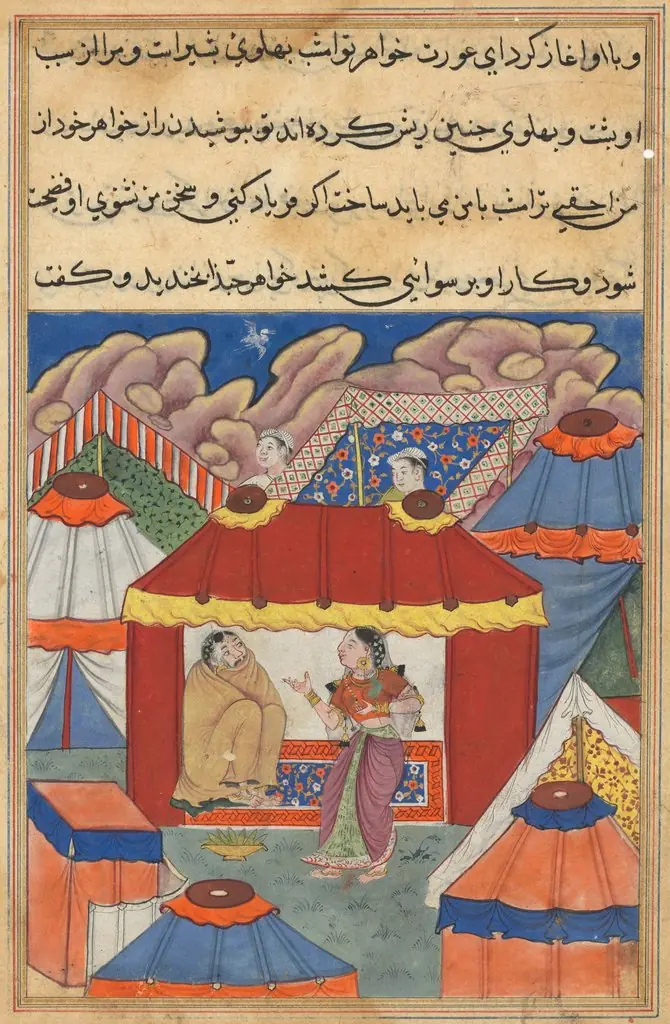 Habbaza’s sister, who is sent to console her, discovers the disguised Arab in her place, from a Tuti-nama (Tales of a Parrot): Twenty-fourth Night
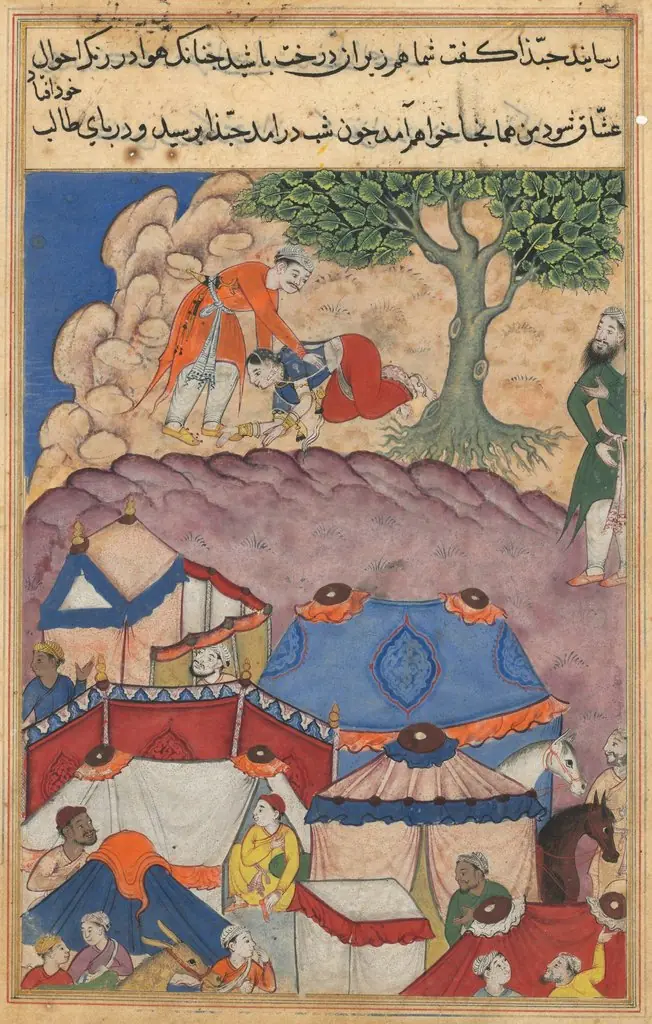 Habbaza meets Bashir under a tree, from a Tuti-nama (Tales of a Parrot): Twenty-fourth Night
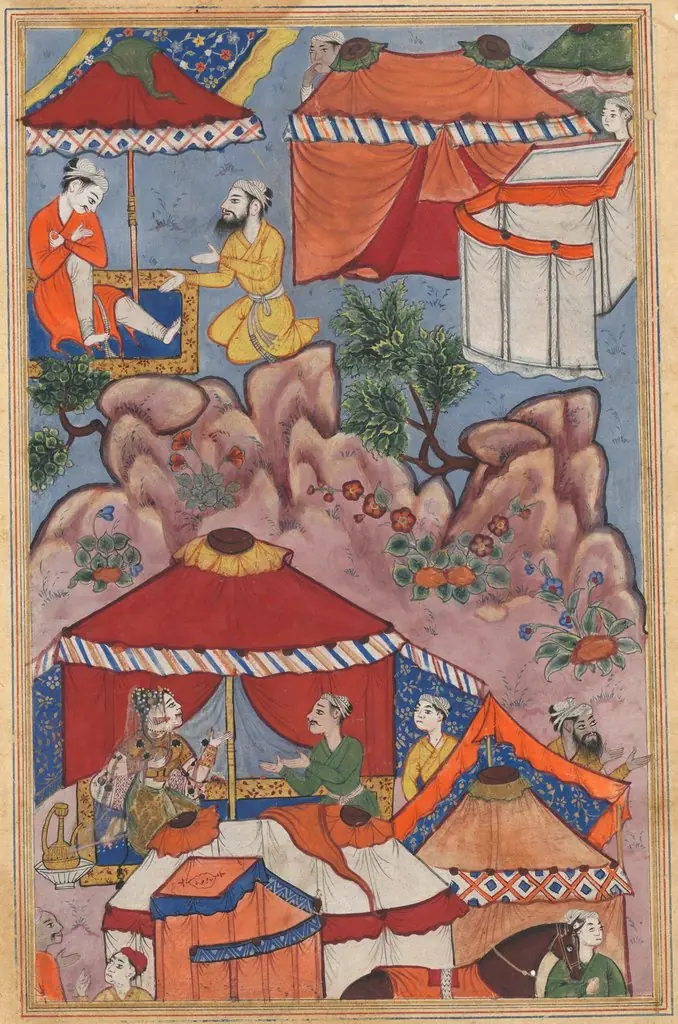 Bashir confides his love for Habbaza to an Arab friend, and sends him to her with a message, from a Tuti-nama (Tales of a Parrot): Twenty-fourth Night
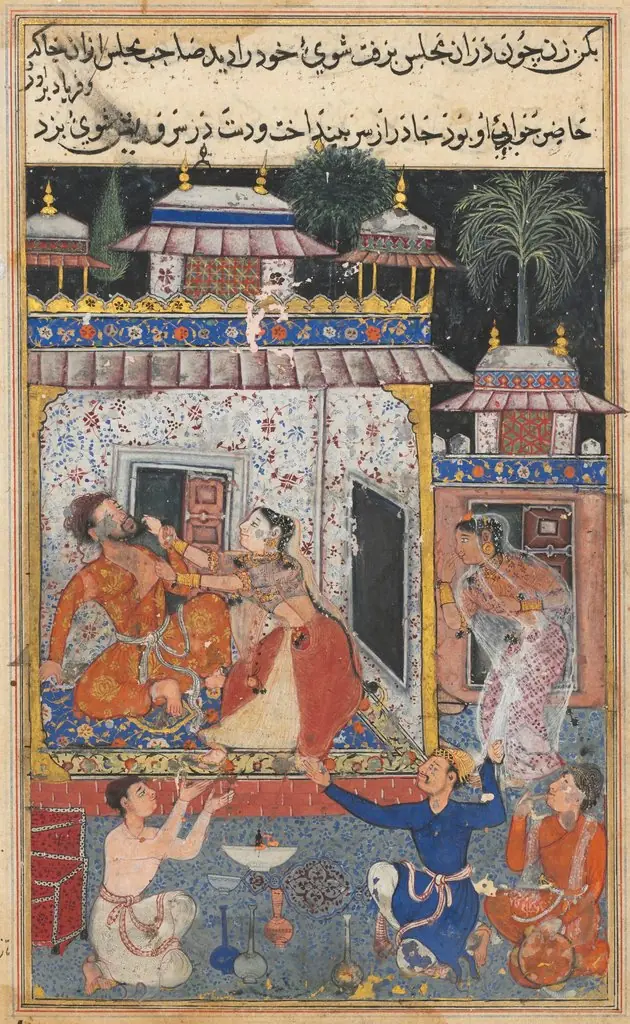 The deceitful wife assaults her erring husband, from a Tuti-nama (Tales of a Parrot): Eighth Night
 The deceitful wife persuades her husband to sleep in the same place where she had previously slept with her lover, from a Tuti-nama (Tales of a Parrot): Eighth Night
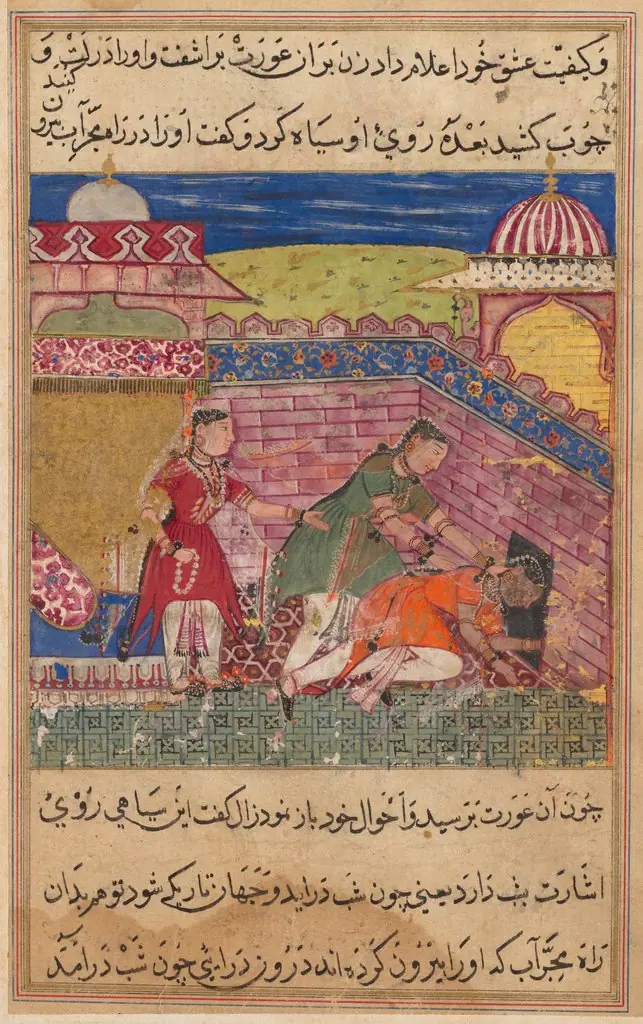 The deceitful wife ejects the procuress after blackening her face, from a Tuti-nama (Tales of a Parrot): Eighth Night
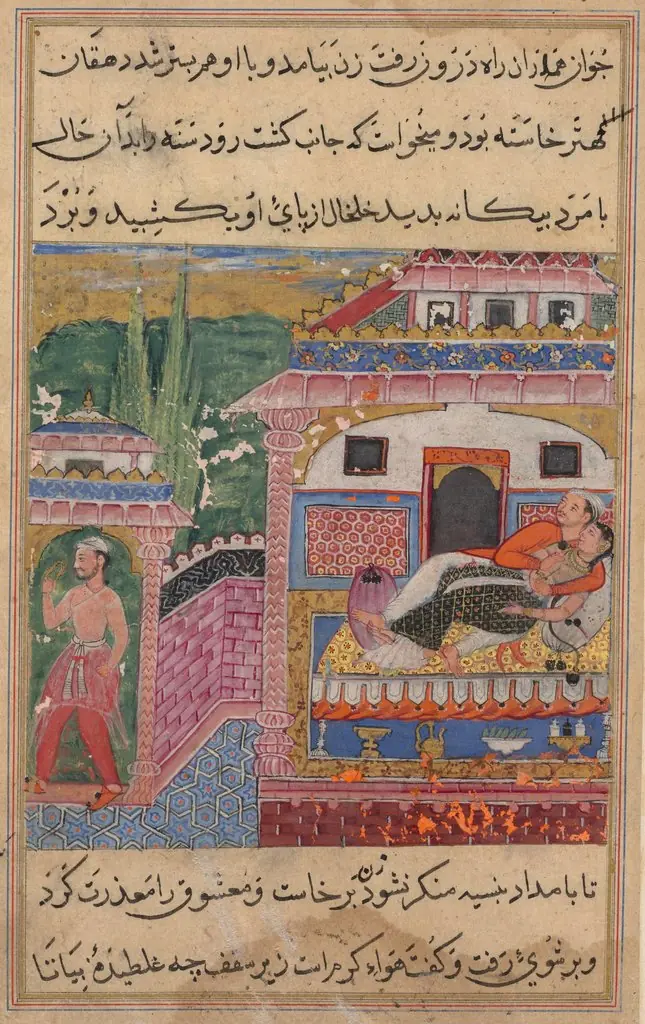
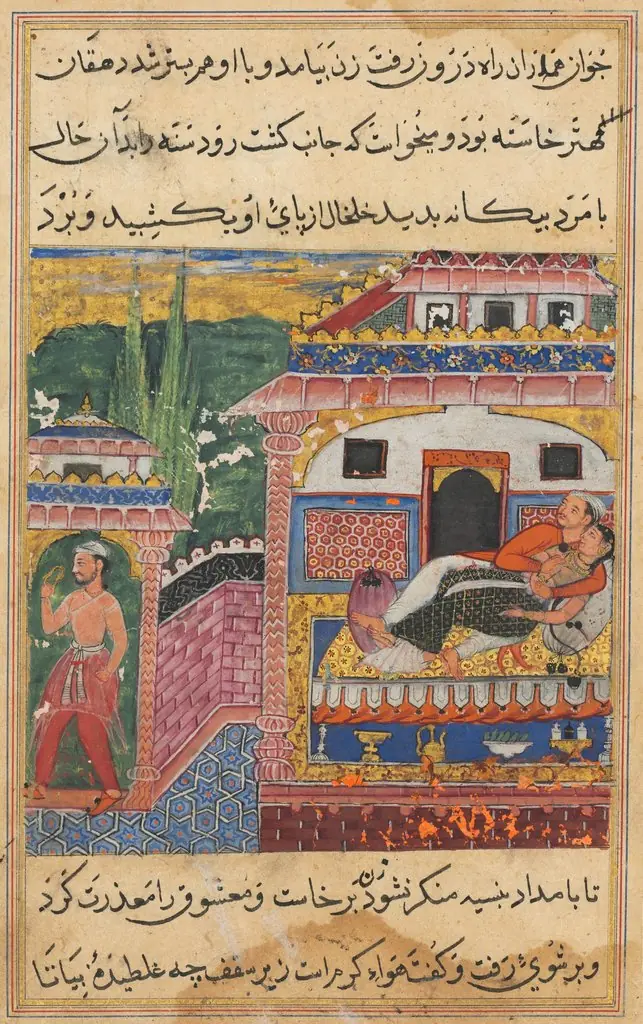 The farmer, father of the son with the deceitful wife, steals away with her anklet while she is in bed with her lover, from a Tuti-nama (Tales of a Parrot): Eighth Night
 The false Mansur punished before the judge and expelled from the city, from a Tuti-nama (Tales of a Parrot): Seventeenth Night