Artwork
The daughter-in-law returns from her misadventure, feigning insanity, from a Tuti-nama (Tales of a Parrot): Sixteenth Night
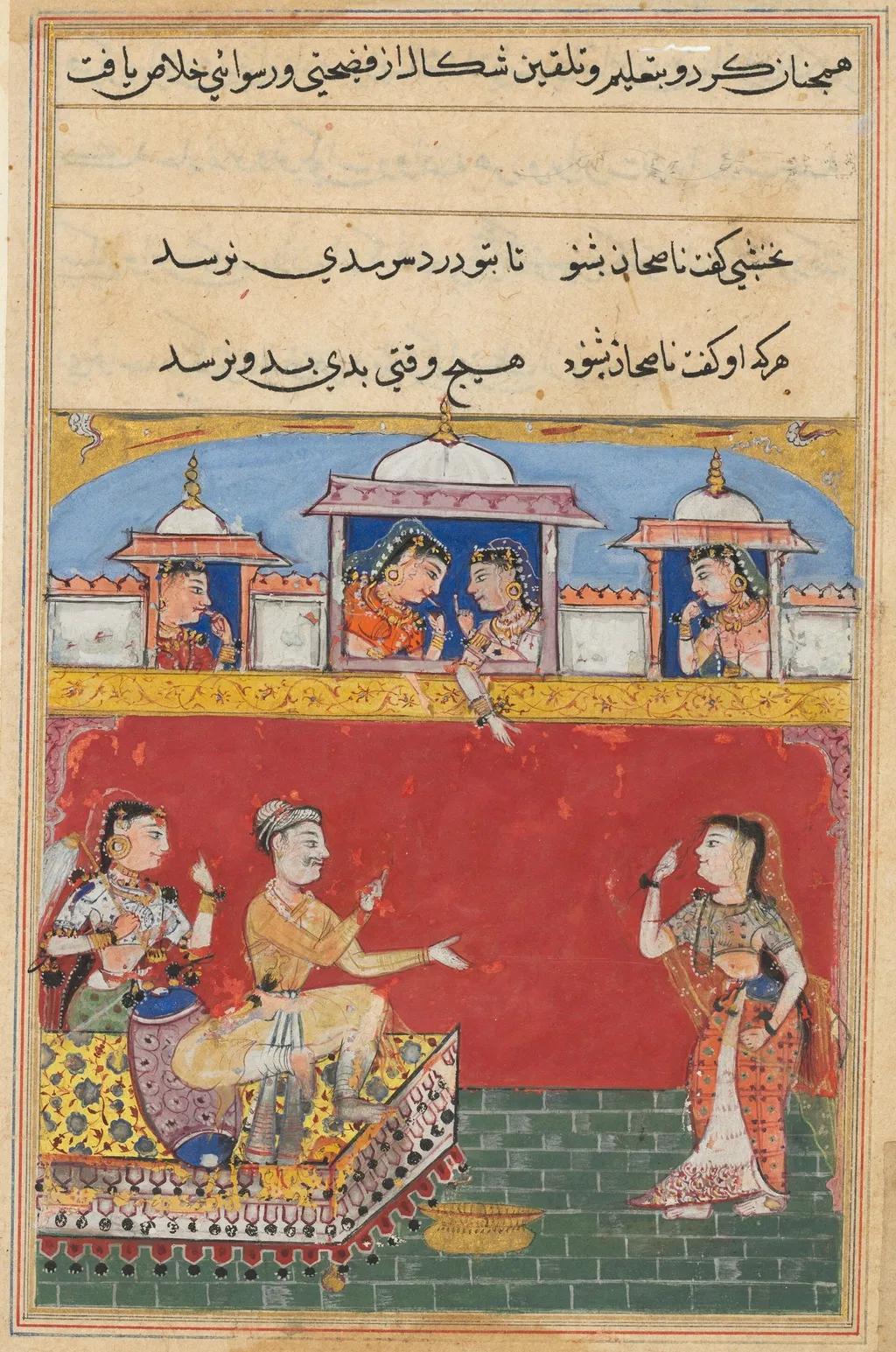
The daughter-in-law returns from her misadventure, feigning insanity, from a Tuti-nama (Tales of a Parrot): Sixteenth Night is an unspecified painting. It dates from 1560 and is held in the collection of the Cleveland Museum of Art.
About this work
Overview
Created around 1560, this folio illustrates the Sixteenth Night from the Tuti-nama, a Persian manuscript of tales translated into Persian from Sanskrit.
Created around 1560, this folio illustrates the Sixteenth Night from the Tuti-nama, a Persian manuscript of tales translated into Persian from Sanskrit. The painting depicts the narrative moment where the daughter-in-law returns from her misadventure, feigning insanity to escape a dangerous situation. Compositionally, the scene is organized within a distinct architectural setting featuring a balcony and an interior courtyard. On the right, the protagonist stands wearing a long dress, her hand raised to her head in a gesture of feigned madness. In the foreground, a seated male figure on a vibrant, patterned rug gestures toward her, reacting to her performance. Two female observers watch the interaction from the balcony above, adding a layer of voyeuristic tension to the scene. The work exemplifies the transitional style of the Mughal school under Emperor Akbar, blending Persian compositional traditions with emerging Indian naturalism and vibrant color palettes. This specific folio is part of a celebrated series commissioned to entertain the young emperor, showcasing the manuscript's role in the development of early Mughal painting.
Subject & Meaning
A seated man on a richly patterned rug gestures toward the woman, suggesting a dialogue or accusation, while two women on a balcony observe the exchange. The gestures and expressions convey tension and possible misunderstanding, reflecting the story’s theme of feigned madness as a protective ruse.
Technique & Style
The painter employs vivid, saturated hues—red walls, green flooring, and a blue sky visible beyond the balcony—to heighten the drama. Fine detailing in the textiles and architectural elements creates a sense of depth, while the bright palette emphasizes the emotional intensity of the scene.
Context
Tuti‑nama, a 14th‑century Persian collection of moral tales narrated by a parrot, was a popular source for visual storytelling in South Asian art. This episode, the sixteenth night, was frequently depicted in miniature paintings, illustrating the moral complexities of family dynamics and deception.
Artist & collection

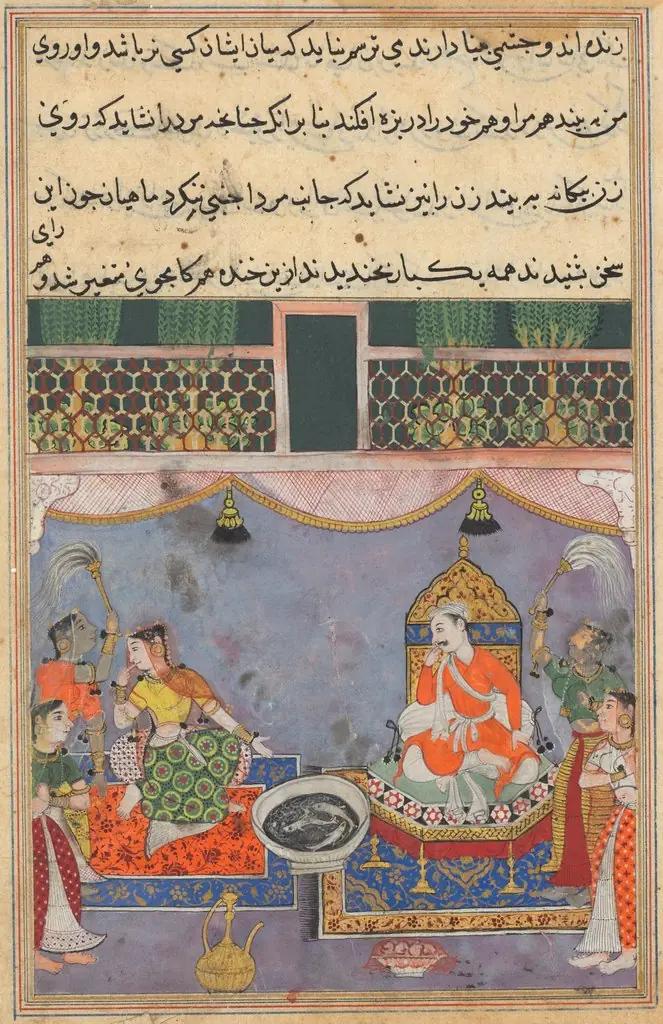 Kamjuy, the wife of the Raja, averts her face from the fishes, from a Tuti-nama (Tales of a Parrot): Twenty-third Night
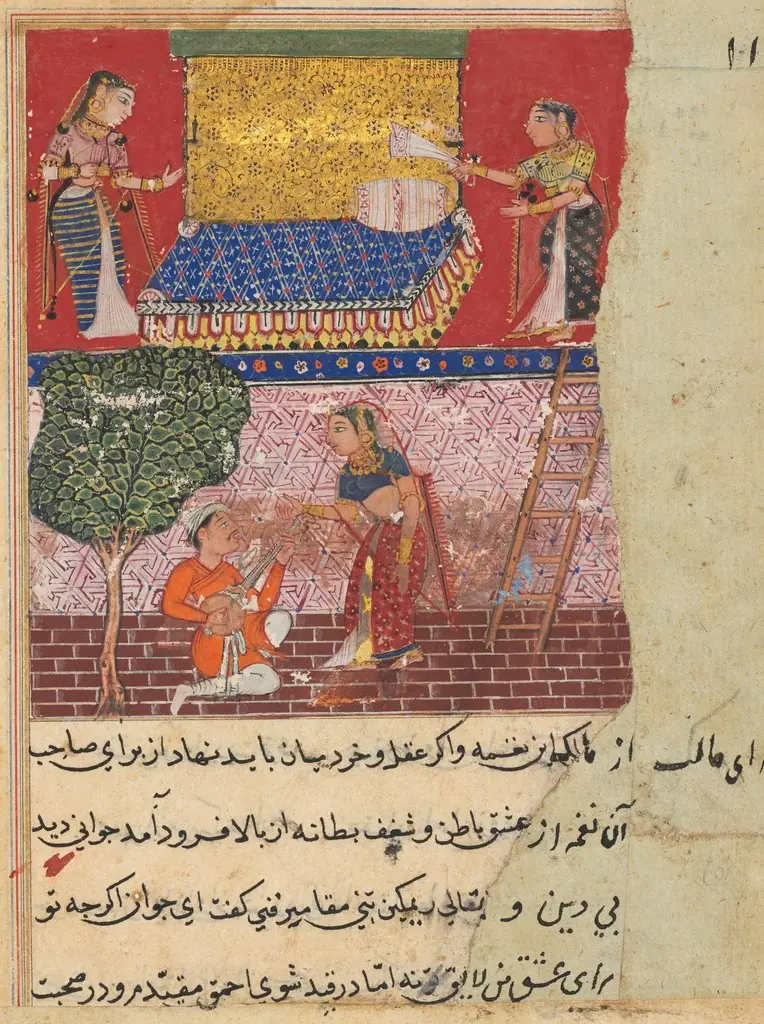 The daughter-in-law of the king of Banaras, charmed by the music of a vagabond, comes down to meet him, from a Tuti-nama (Tales of a Parrot): Sixteenth Night
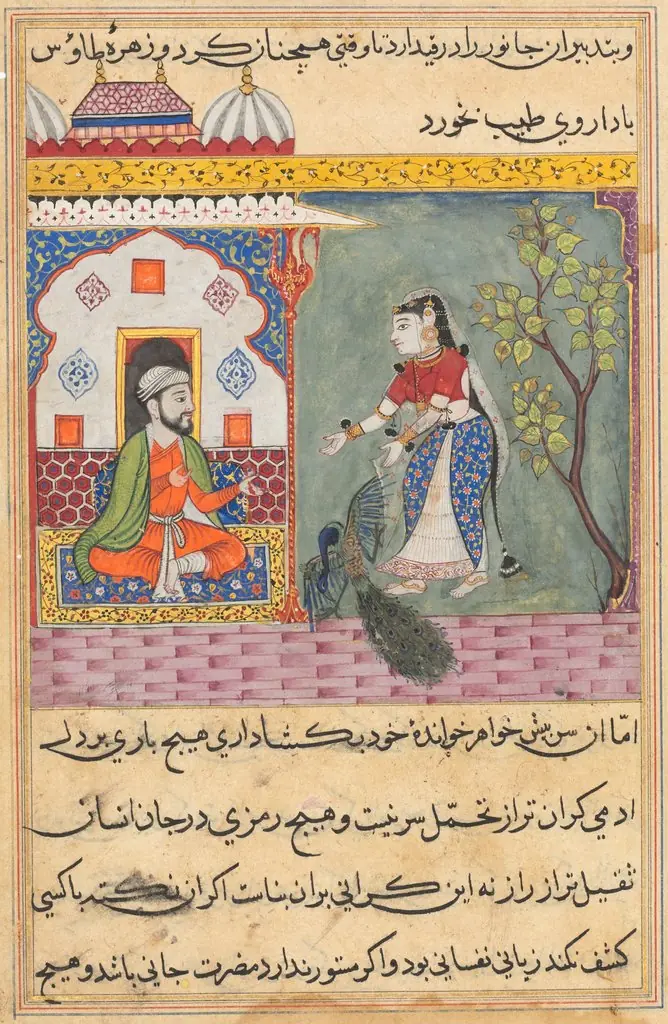 The Brahman’s wife who killed a peacock and ate its gallbladder on the physician’s advice, from a Tuti-nama (Tales of a Parrot): Nineteenth Night
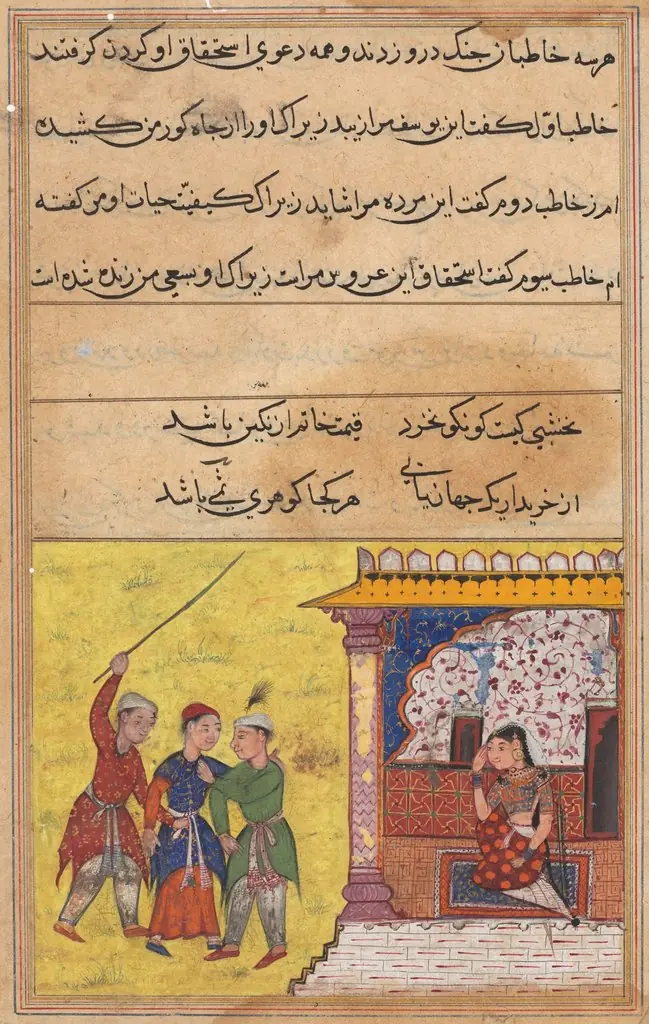 The three suitors again begin to quarrel among themselves for the hand of the devotee’s daughter, from a Tuti-nama (Tales of a Parrot): Twentieth Night
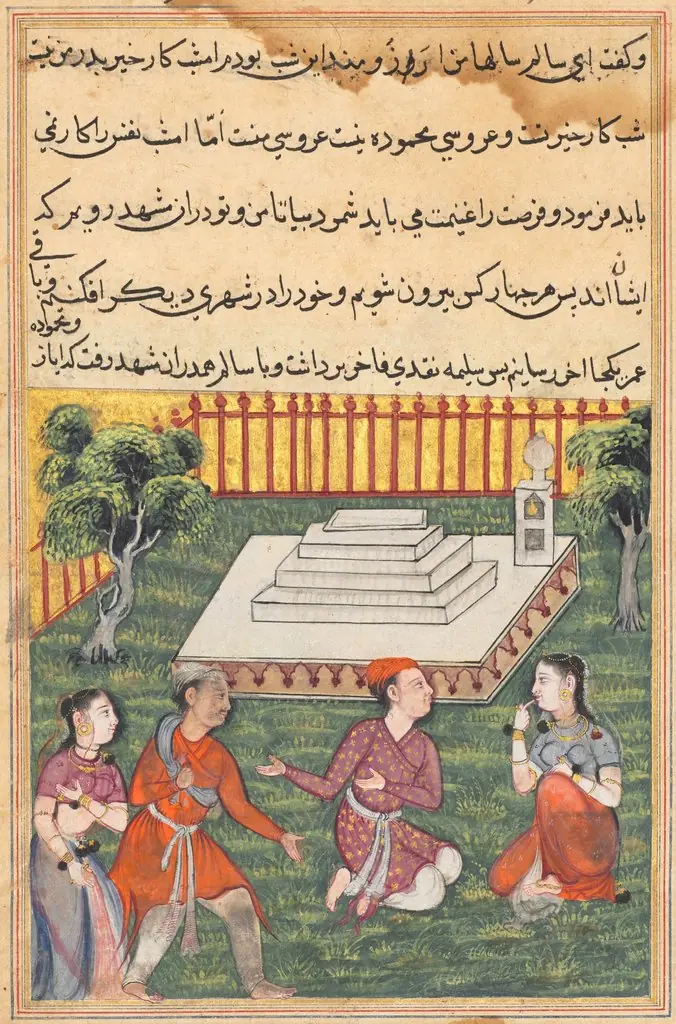 Salim and Salima return to Ayaz and Mahmuda in the sanctuary, from a Tuti-nama (Tales of a Parrot): Thirty-third Night
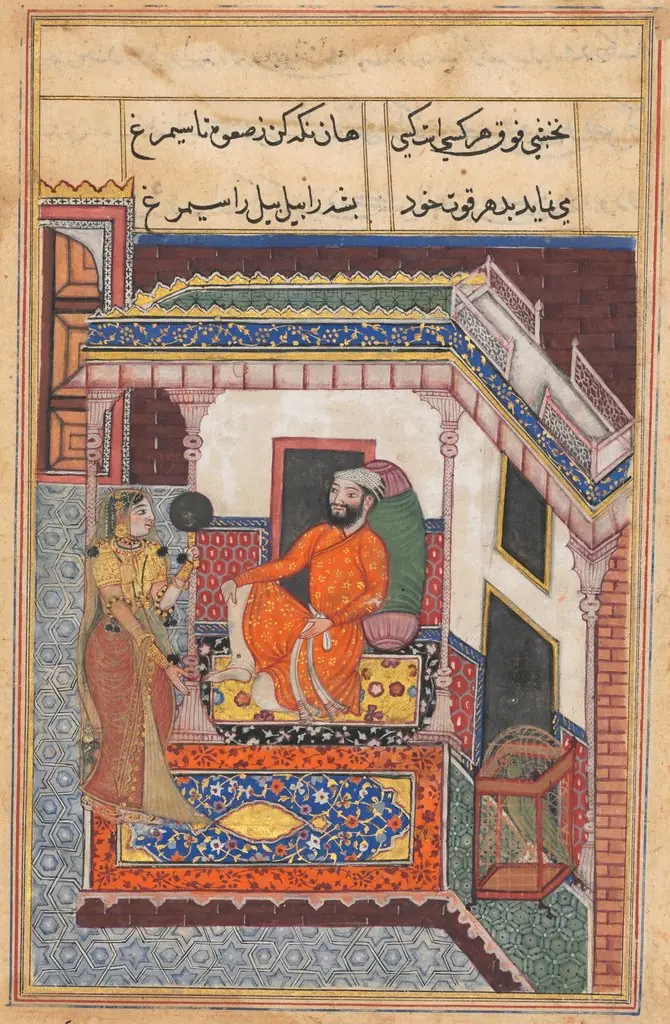 The parrot laughs on hearing the Raja of Ujjain’s wife admire her beauty in a mirror, from a Tuti-nama (Tales of a Parrot: Forty-sixth Night
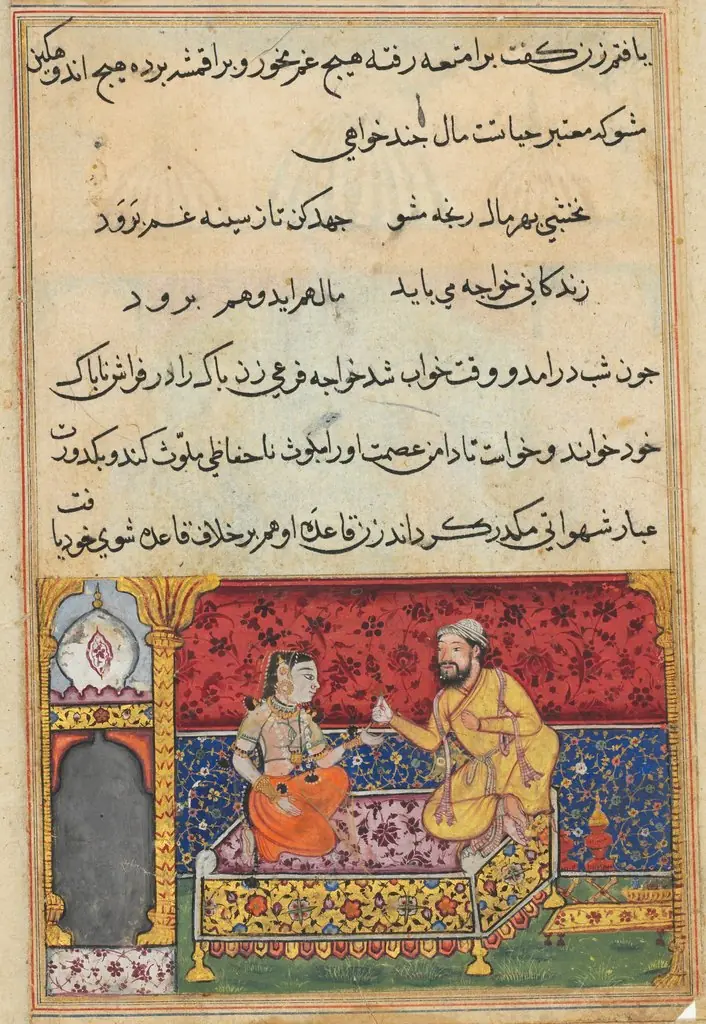 The young man changes himself to look like Mansur, and thus inveigles himself into the bed of Mansur’s wife, but is put off by her, from a Tuti-nama (Tales of a Parrot): Seventeenth Night
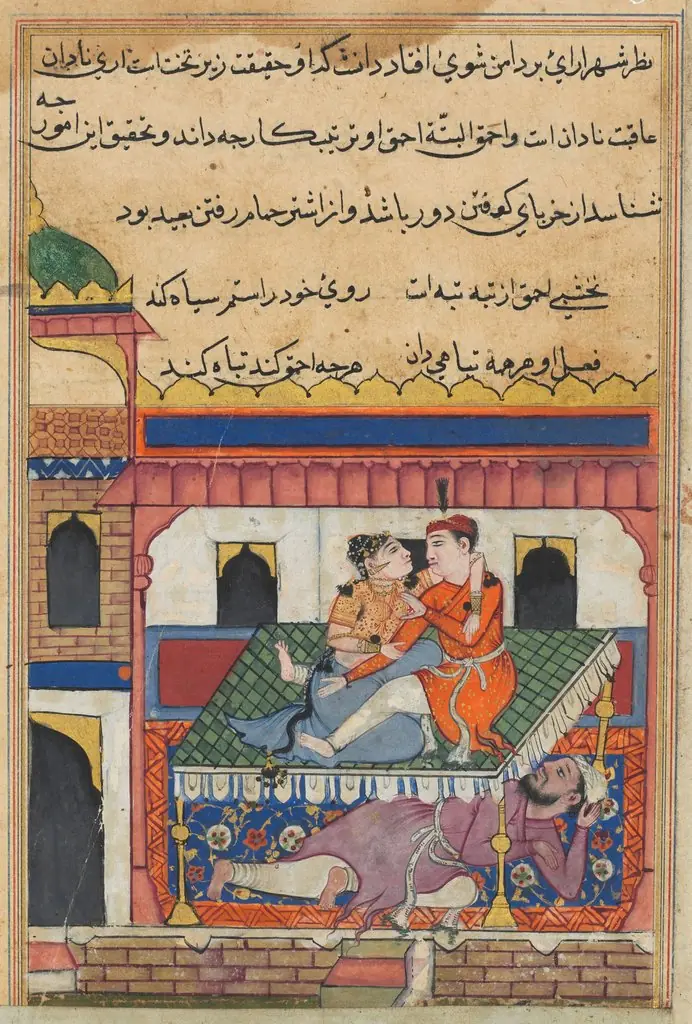 Shahr-Arai and her lover dallying on a bed beneath which is concealed her husband, from a Tuti-nama (Tales of a Parrot): Fortieth Night
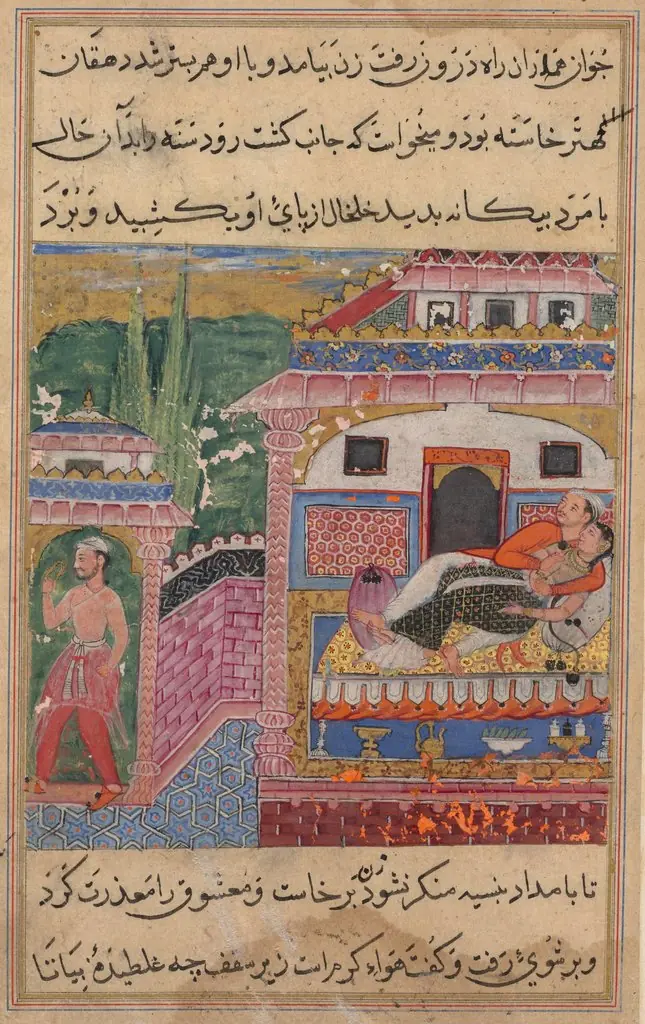 The deceitful wife persuades her husband to sleep in the same place where she had previously slept with her lover, from a Tuti-nama (Tales of a Parrot): Eighth Night
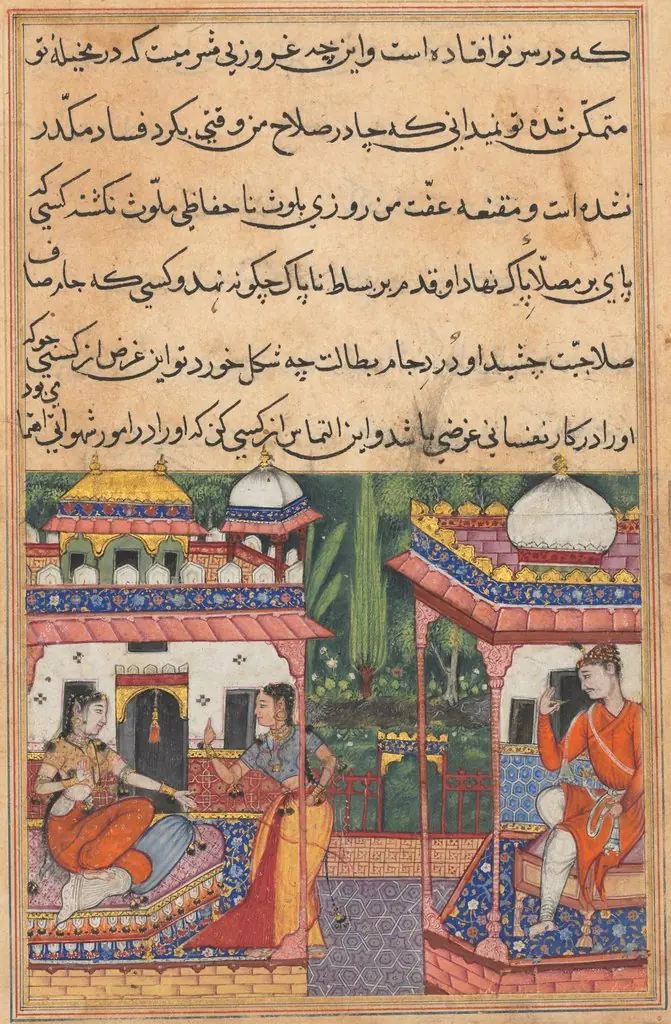 Kaiwan sends a message of love to Khurshid, wife of his brother Utarid who is away on a journey, from a Tuti-nama (Tales of a Parrot): Thirty-second Night
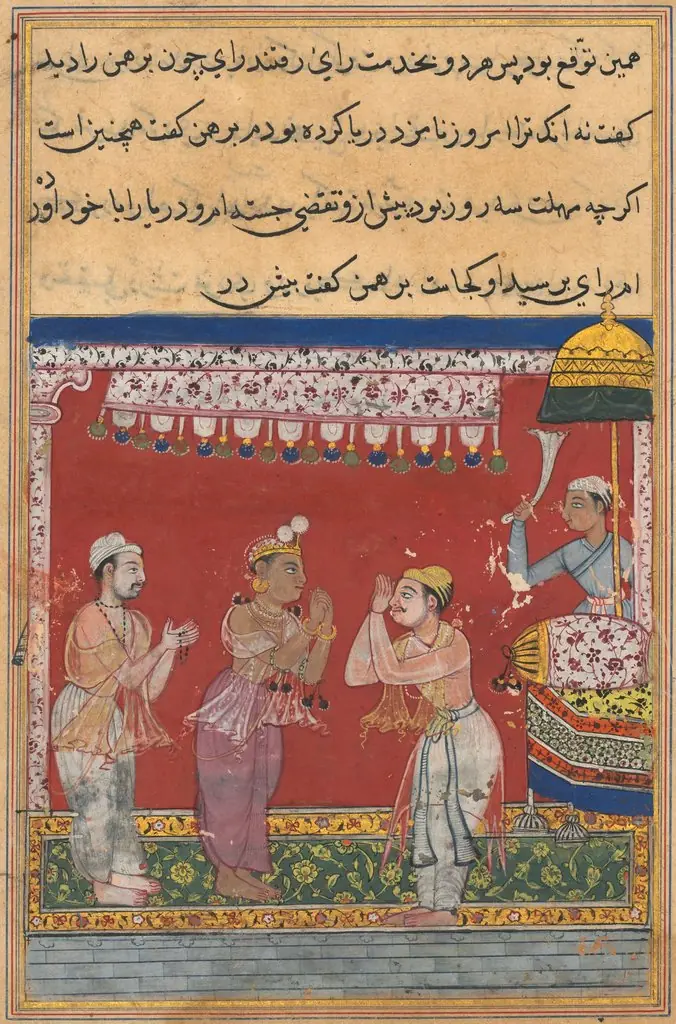 The king of the Ocean, having assumed human form, arrives at the court of the Raja, from a Tuti-nama (Tales of a Parrot): Eleventh Night
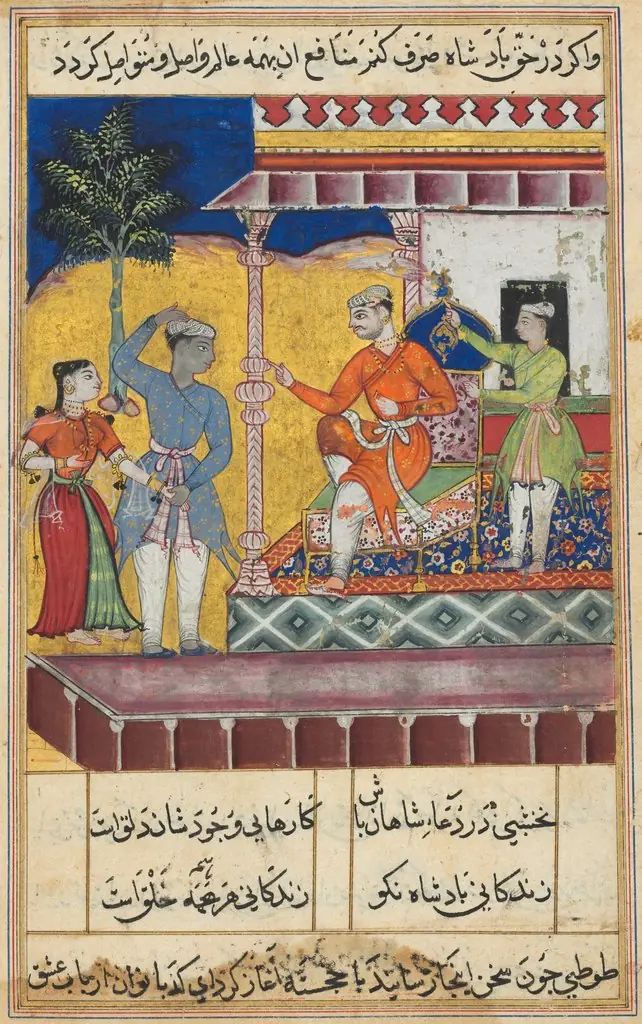 The rejuvenated old man and the daughter of the king of the jinns take leave of the King of Kings, from a Tuti-nama (Tales of a Parrot): Seventh Night
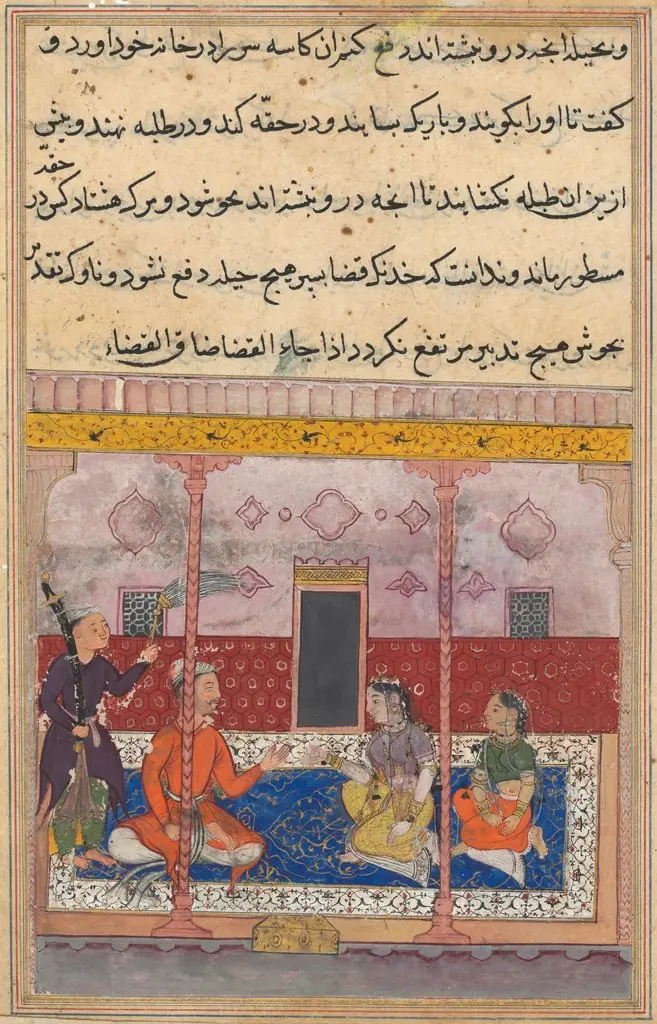 The merchant has the hateful skull ground and put into a box, from a Tuti-nama (Tales of a Parrot): Twenty-third Night
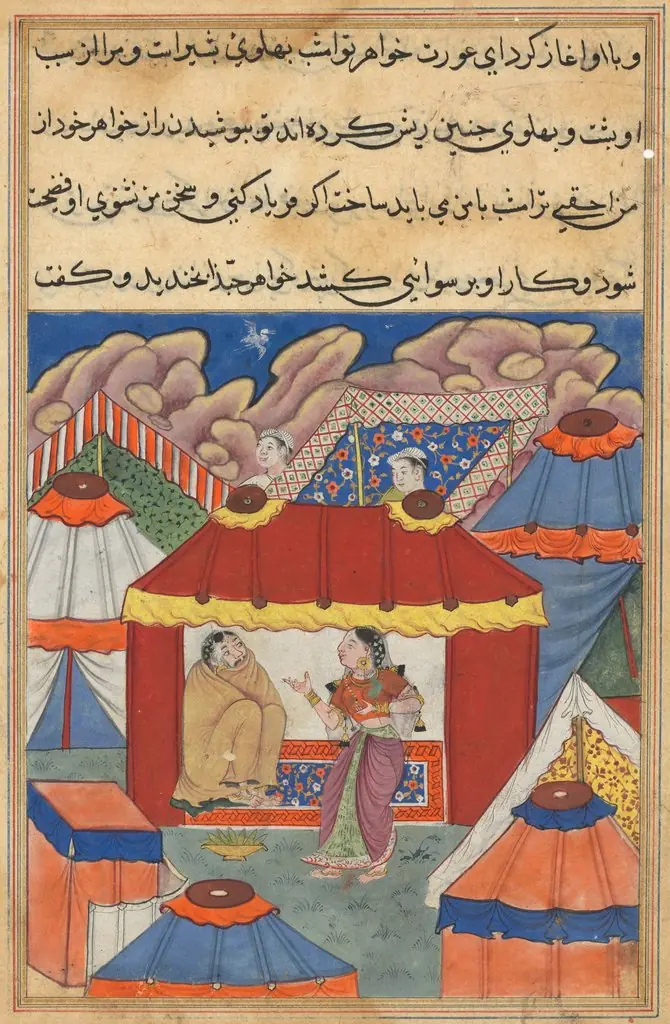 Habbaza’s sister, who is sent to console her, discovers the disguised Arab in her place, from a Tuti-nama (Tales of a Parrot): Twenty-fourth Night
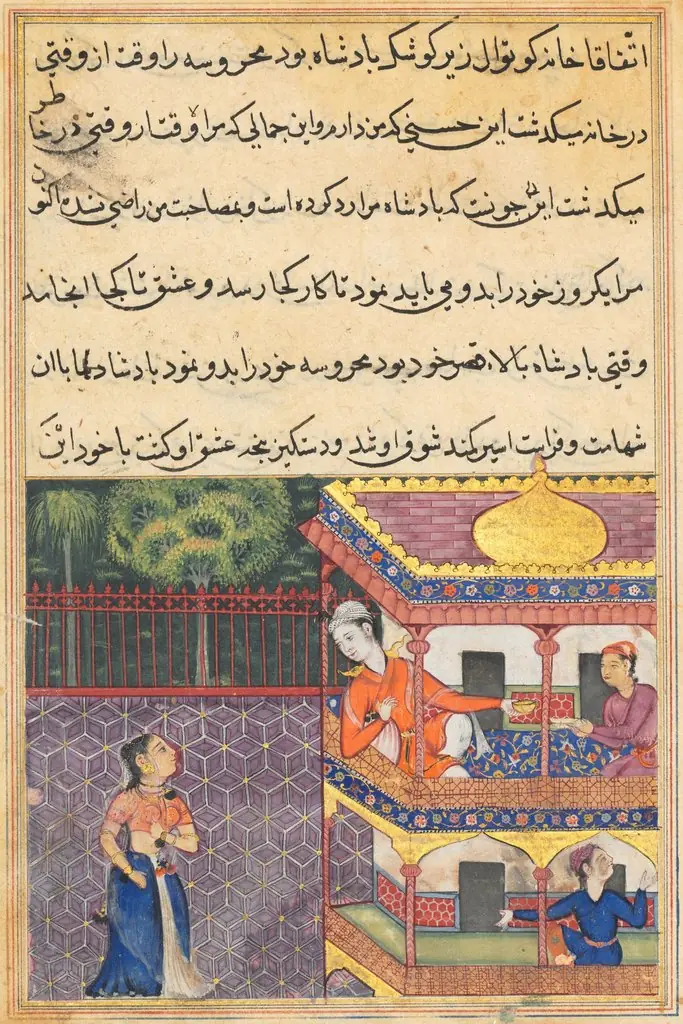 The king of Zabul sees Mahrusa from his palace balcony, from a Tuti-nama (Tales of a Parrot): Thirty-sixth Night