Artwork
Prinzessin Hedwig Elisabeth Amalie
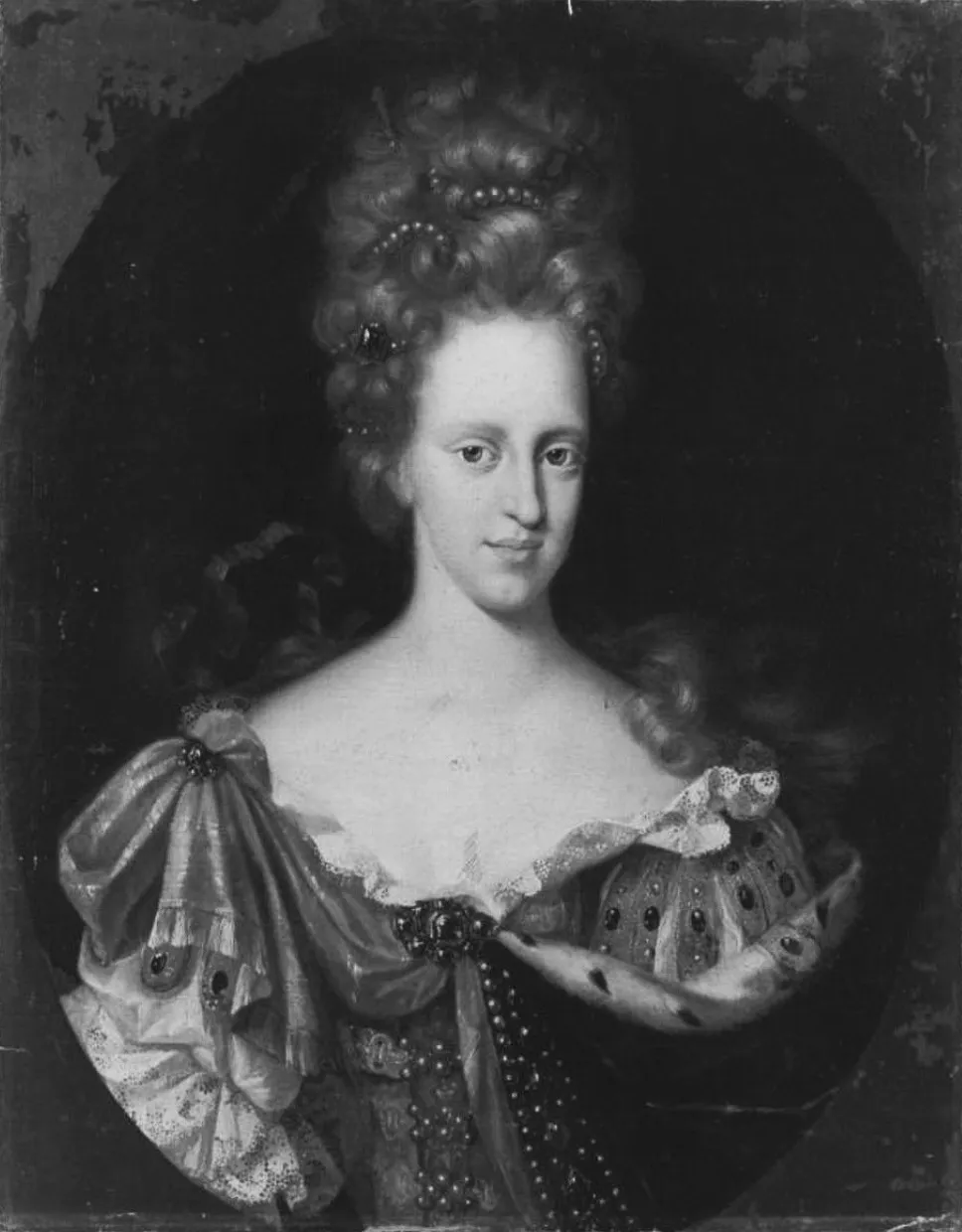
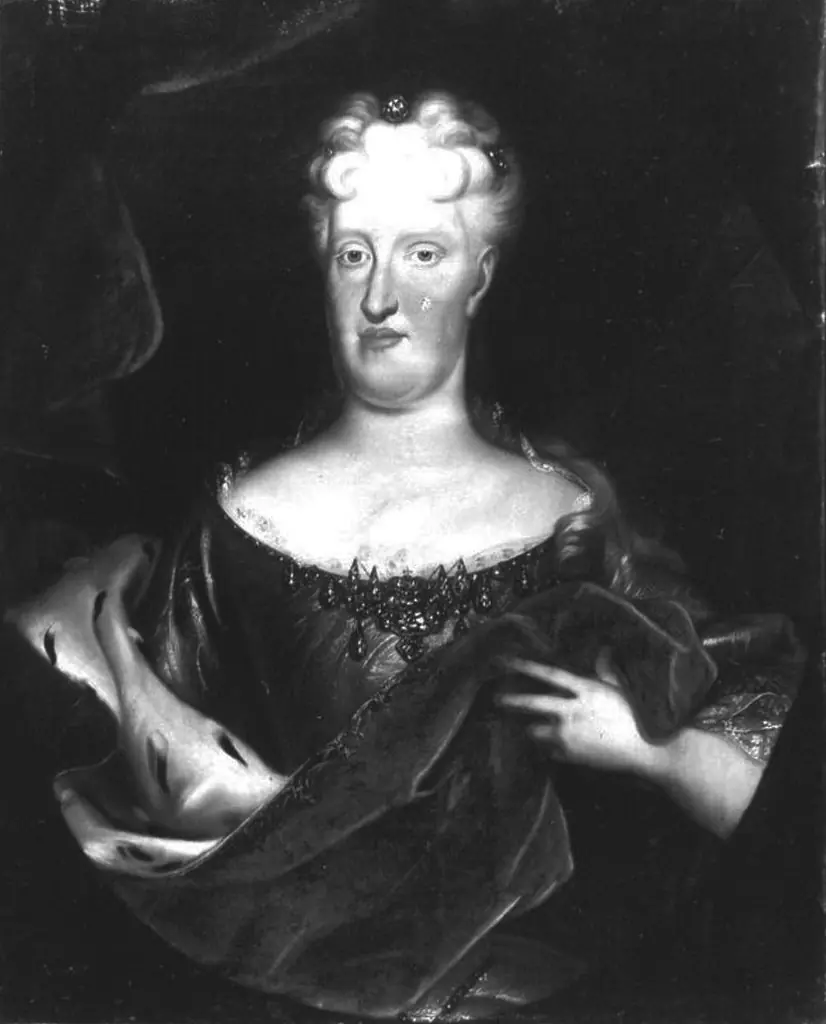
Prinzessin Hedwig Elisabeth Amalie is an oil painting by the Rococo painting artist Unknown. It dates from 1696 and is held in the collection of the Bavarian State Painting Collections. This oil painting portrays Hedwig Elisabeth Amalie, a member of European nobility, rendered in formal portraiture style.
About this work
Overview
This oil painting portrays Hedwig Elisabeth Amalie, a member of European nobility, rendered in formal portraiture style. The composition focuses on her upper body, with careful attention to her attire and coiffure. Her left arm is cropped from view, directing focus to the ornate details of her dress and hair. The work is held in the collection of the Alte Pinakothek in Munich.
Subject & Meaning
The subject, Princess Hedwig Elisabeth Amalie, is depicted with symbols of aristocratic refinement: pearls, a central brooch, and an elaborate updo. These elements signal status and lineage rather than personal expression. The cropped composition and restrained pose reflect conventions of court portraiture, emphasizing social role over individuality.
Technique & Style
The style aligns with late 18th-century German court portraiture, prioritizing elegance over emotional depth.
The artist employs smooth brushwork to render the textures of silk, lace, and pearls with precision. Light falls evenly across the figure, minimizing shadow to enhance clarity of detail. The palette is muted yet rich, with cool tones dominating the dress and warm highlights on skin and hair. The style aligns with late 18th-century German court portraiture, prioritizing elegance over emotional depth.
History & Provenance
The painting entered the Alte Pinakothek’s collection as part of the Bavarian royal holdings. Its origins trace to the court of the Electorate of Bavaria, likely commissioned to affirm the princess’s public image. No record of the artist has been definitively established, though the work reflects the hand of a skilled court painter active in the late 1700s.
Context
During the late 18th century, noblewomen were frequently portrayed in elaborate dress to reinforce dynastic prestige. This portrait aligns with broader European trends where jewelry, fabric, and hairstyle served as visual codes of rank. The absence of background or props underscores the focus on the sitter’s identity as a symbol of lineage rather than a narrative figure.
Legacy
The portrait remains a representative example of aristocratic portraiture in Southern Germany. It contributes to the Alte Pinakothek’s documentation of courtly visual culture, offering insight into how nobility presented themselves through dress and demeanor. While not widely known outside academic circles, it holds value as a material record of social hierarchy in pre-revolutionary Europe.
Artist & collection

 Domestic Scene
 Giacomo and Cardinal Marco, investing Andrea, Abbot of San Zeno, with his Benefice
 The Nymph of Fontainebleau
 Portrait of a Woman
 Madonna and Child with Saints in the Enclosed Garden
 Venus and Minerva
 Family Group of Four on Sofa
 Wall painting from Room H of the Villa of P. Fannius Synistor at Boscoreale
 Pfalzgräfin Hedwig Elisabeth Amalie, Gemahlin des Prinzen Jacob Ludwig
 Anna Cathrine Hauch, født von der Maase
 Anna Cathrine Hauch, født von der Maase
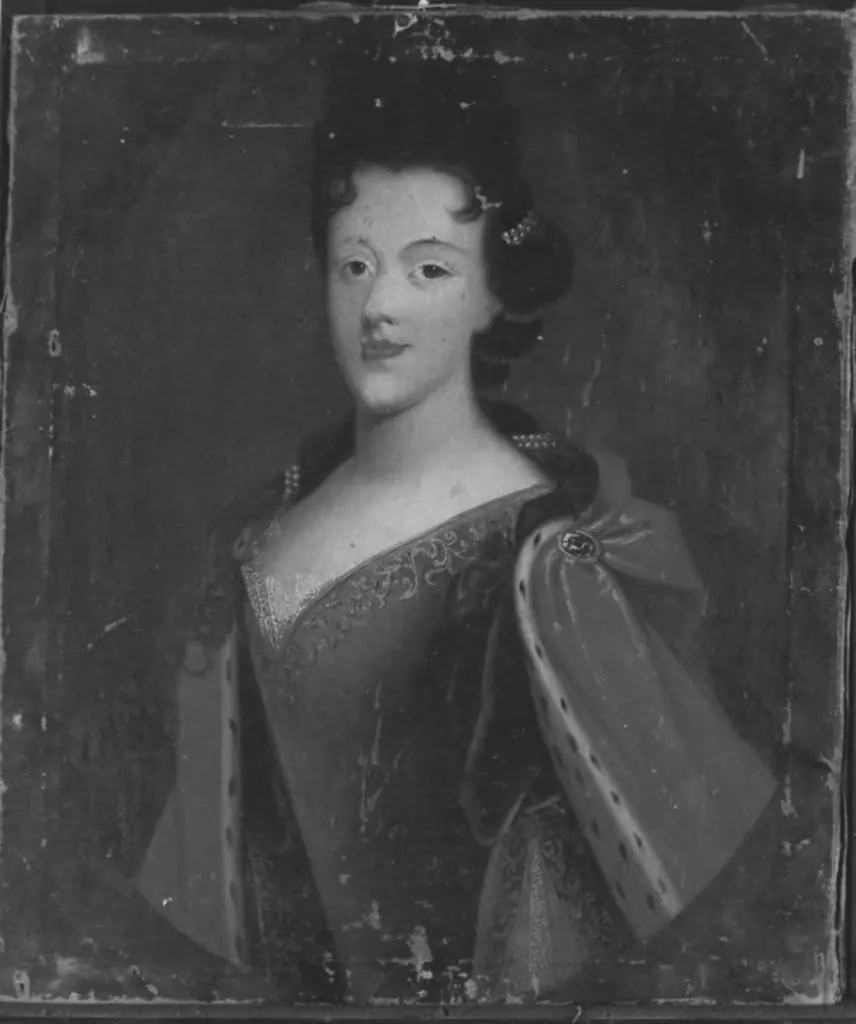 Bildnis einer Fürstin
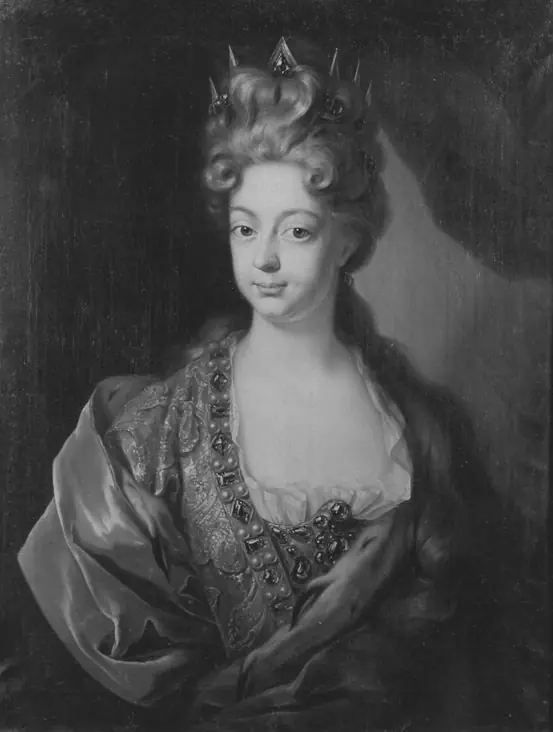 Portrait of Wilhelmine Amalie of Braunschweig-Lüneburg
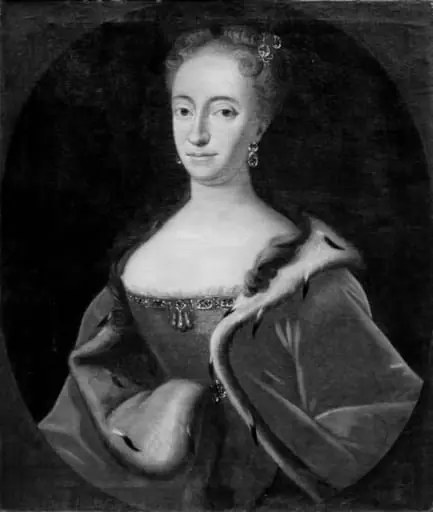 Prinsesse Sofie Hedevig ?
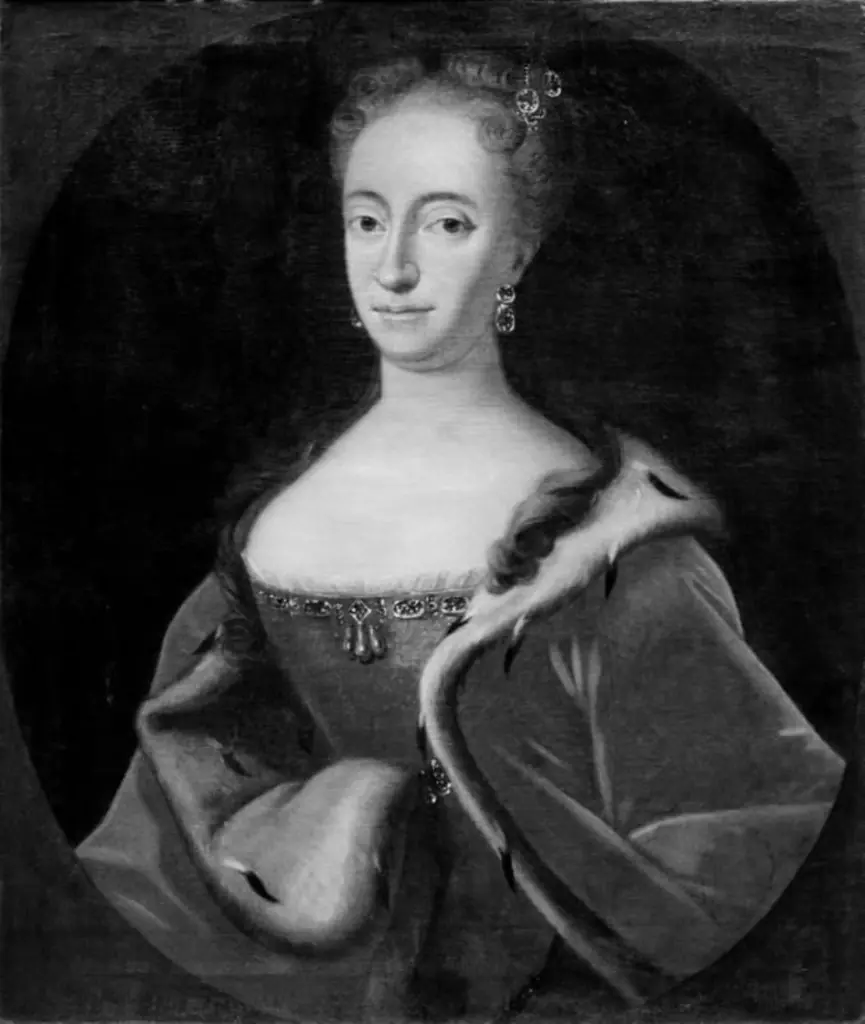 Prinsesse Sofie Hedevig ?
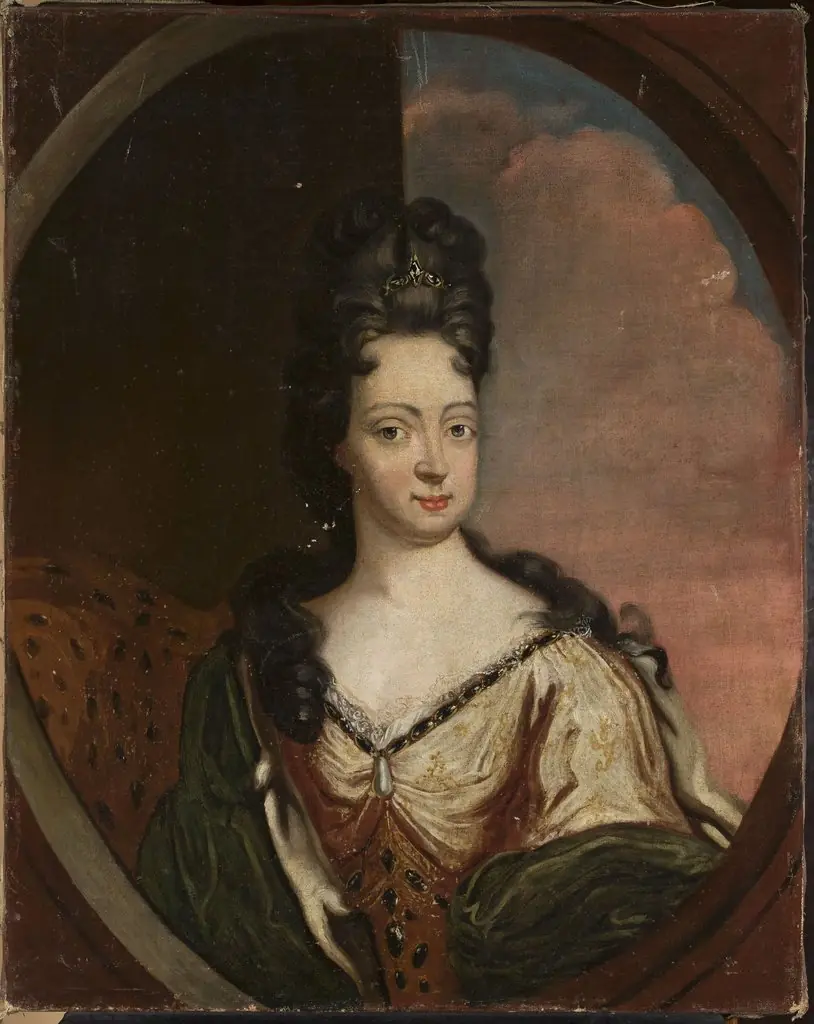 Elisabeth Christine of Brunswick-Wolfenbüttel (1691–1750), wife of emperor Charles VI, against clouds
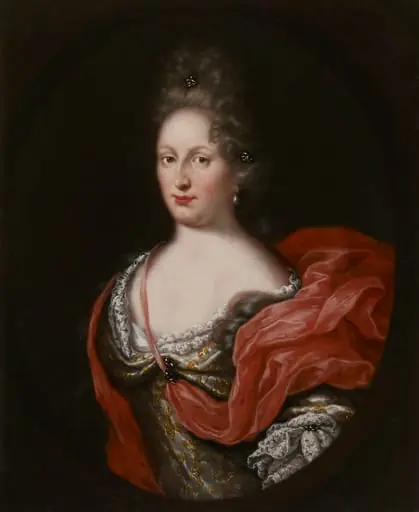 Kreivitär Ingeborg Posse
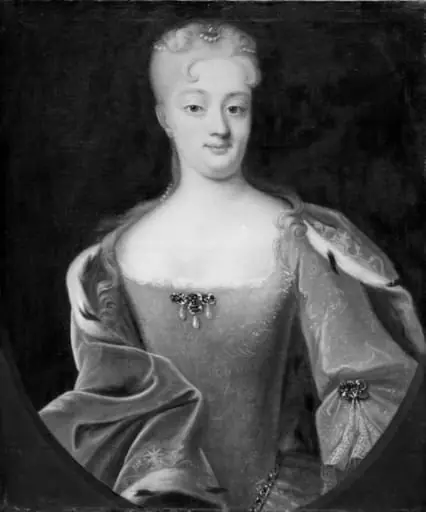 Dronning Sophie Magdalene
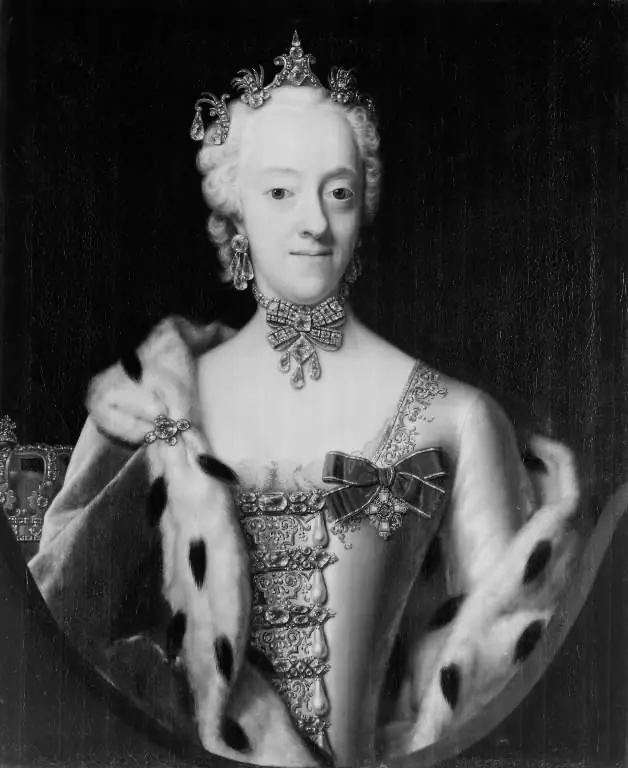 Princess Charlotte Amalie, Daughter of Frederik IV
 Bildnis einer Fürstin