Artwork
A Seated Old Man, Pointing with his Right Hand and Other Figures
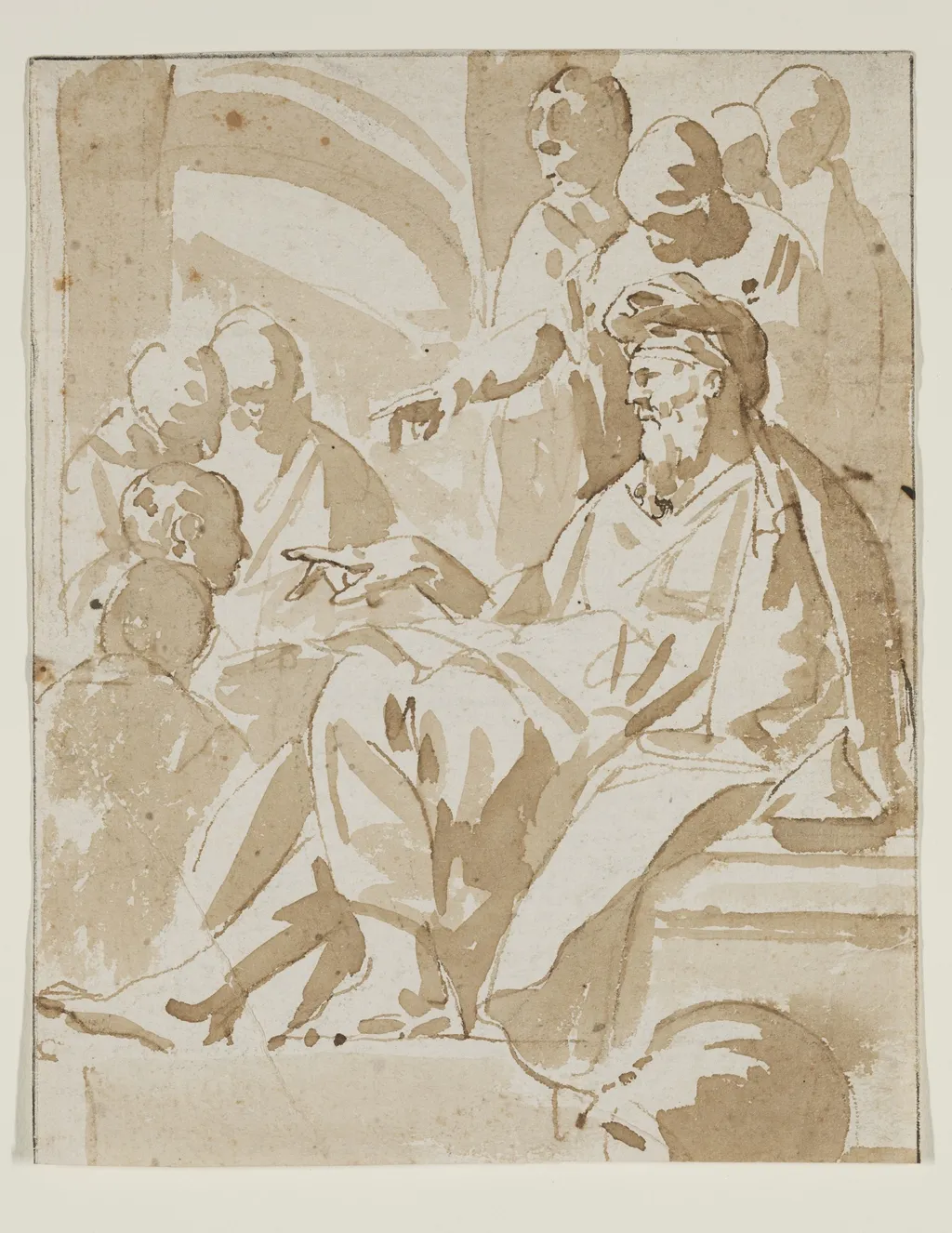
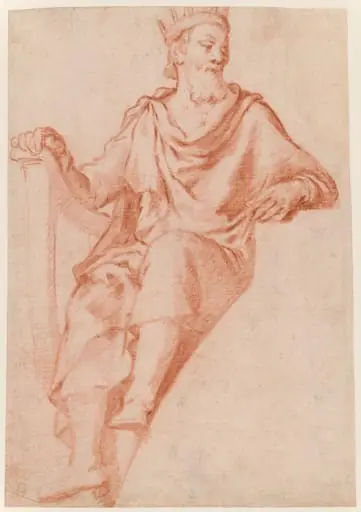
A Seated Old Man, Pointing with his Right Hand and Other Figures is an unspecified painting by Unknown. It is held in the collection of the Detroit Institute of Arts. This painting depicts an elderly man seated and gesturing with his right hand, surrounded by less defined figures who echo his motion.
About this work
Overview
This painting depicts an elderly man seated and gesturing with his right hand, surrounded by less defined figures who echo his motion.
This painting depicts an elderly man seated and gesturing with his right hand, surrounded by less defined figures who echo his motion. Rendered with loose, rapid brushwork and minimal detail, the composition emphasizes movement over precision. The figure’s attire—a robe and head covering—suggests a figure of authority or spiritual significance. The scene’s unfinished appearance invites interpretation rather than narrative clarity.
Subject & Meaning
The central figure, an aged man with a long white beard, directs attention outward, beyond the picture’s edge. His gesture, repeated by surrounding figures, implies a shared focus or revelation. While no specific religious or historical narrative is confirmed, the composition evokes themes of instruction, witness, or communal revelation. The ambiguity of the pointed direction preserves the work’s open-ended character.
Technique & Style
The painting employs a sketch-like technique with energetic, uneven brushstrokes and sparse modeling. Forms are suggested rather than rendered in detail, and color is subdued, allowing the gestural lines to dominate. This approach reflects a focus on immediacy and expression over finish, aligning with practices seen in preparatory studies or works influenced by spontaneous draftsmanship.
History & Provenance
The painting is held in the collection of the Detroit Institute of Arts. Its origins are not fully documented, but stylistic analysis suggests it may stem from a 17th-century Dutch or Flemish workshop. It likely began as a study or compositional sketch, possibly linked to larger religious or allegorical projects, though no definitive preparatory records survive.
Context
In the 17th century, artists often produced figure studies to explore gesture and expression before committing to finished works. This painting’s rough execution fits within that tradition, where rapid sketches captured dynamic poses and emotional intensity. Such works were rarely intended for public display, making its preservation and current presentation unusual.
Legacy
Though not widely reproduced or studied, the painting offers insight into the working methods of early modern artists who valued expressive gesture over polished finish. Its presence in a major museum underscores a shift in appreciation toward process and spontaneity, valuing the artist’s hand as much as the final composition.
Artist & collection

 Domestic Scene
 Giacomo and Cardinal Marco, investing Andrea, Abbot of San Zeno, with his Benefice
 The Nymph of Fontainebleau
 Portrait of a Woman
 Madonna and Child with Saints in the Enclosed Garden
 Venus and Minerva
 Family Group of Four on Sofa
 Wall painting from Room H of the Villa of P. Fannius Synistor at Boscoreale
 Study for "The Four Doctors of the Church"
 Seated Prophet
 The Prophets Hosea and Jonah
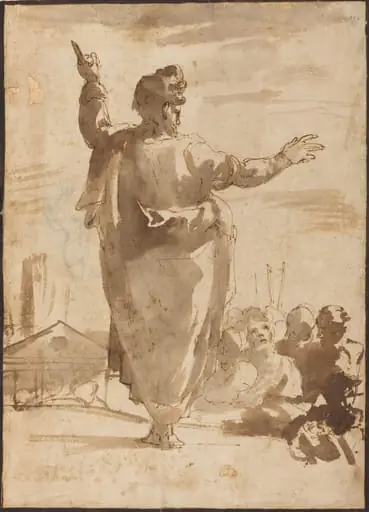 Saint Paul Preaching
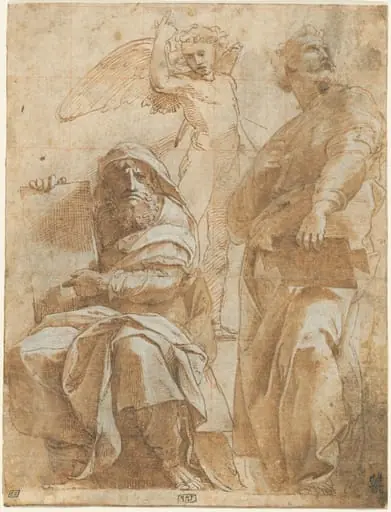 The Prophets Hosea and Jonah
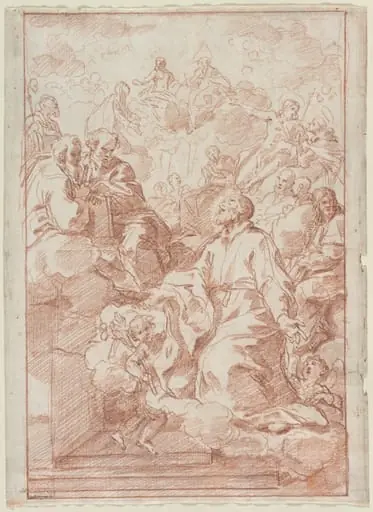 Vision of St. Philip Neri
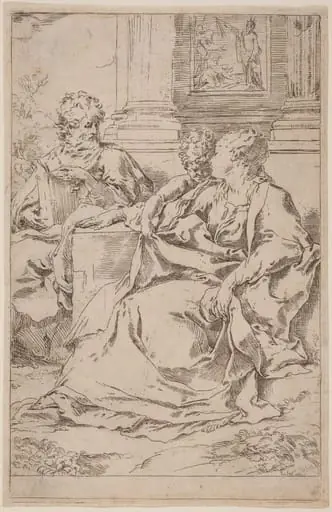 Holy Family
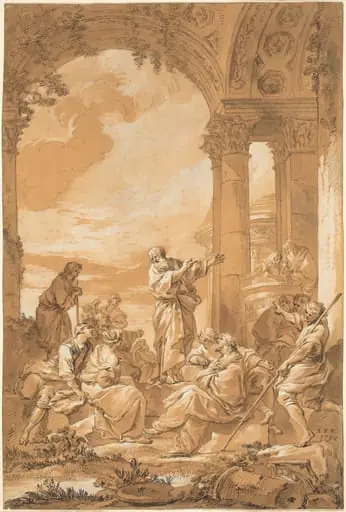 Saint Paul Preaching in Athens
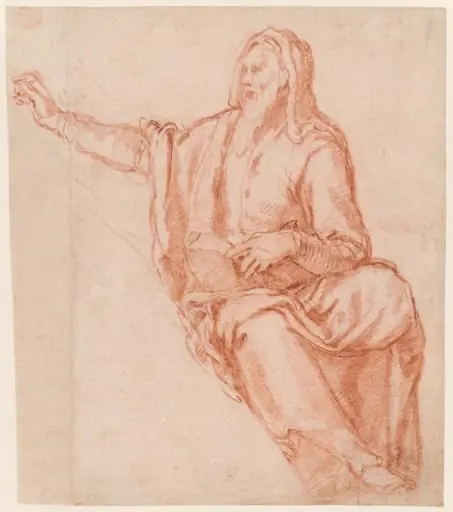 Jeremiah (Design for a Lunette)
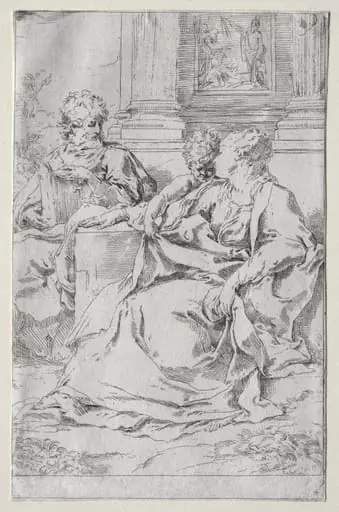 The Holy Family
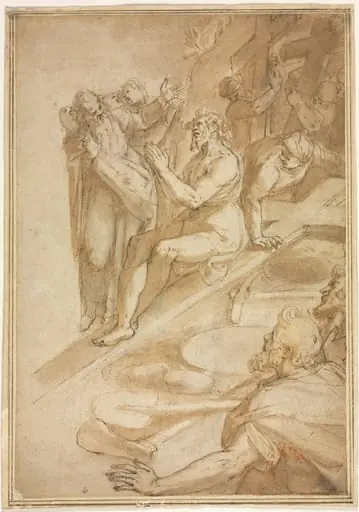 The Verification of the True Cross
 King David (Design for a Lunette)